News

Troops neutralise 17 terrorists, arrest 85 suspects, rescue 10 victims in 48 hours

By Anas Abbas

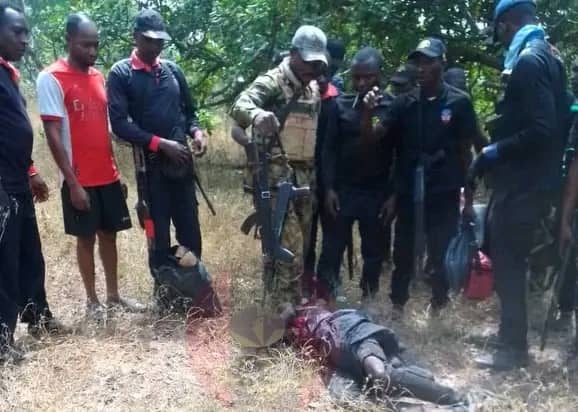
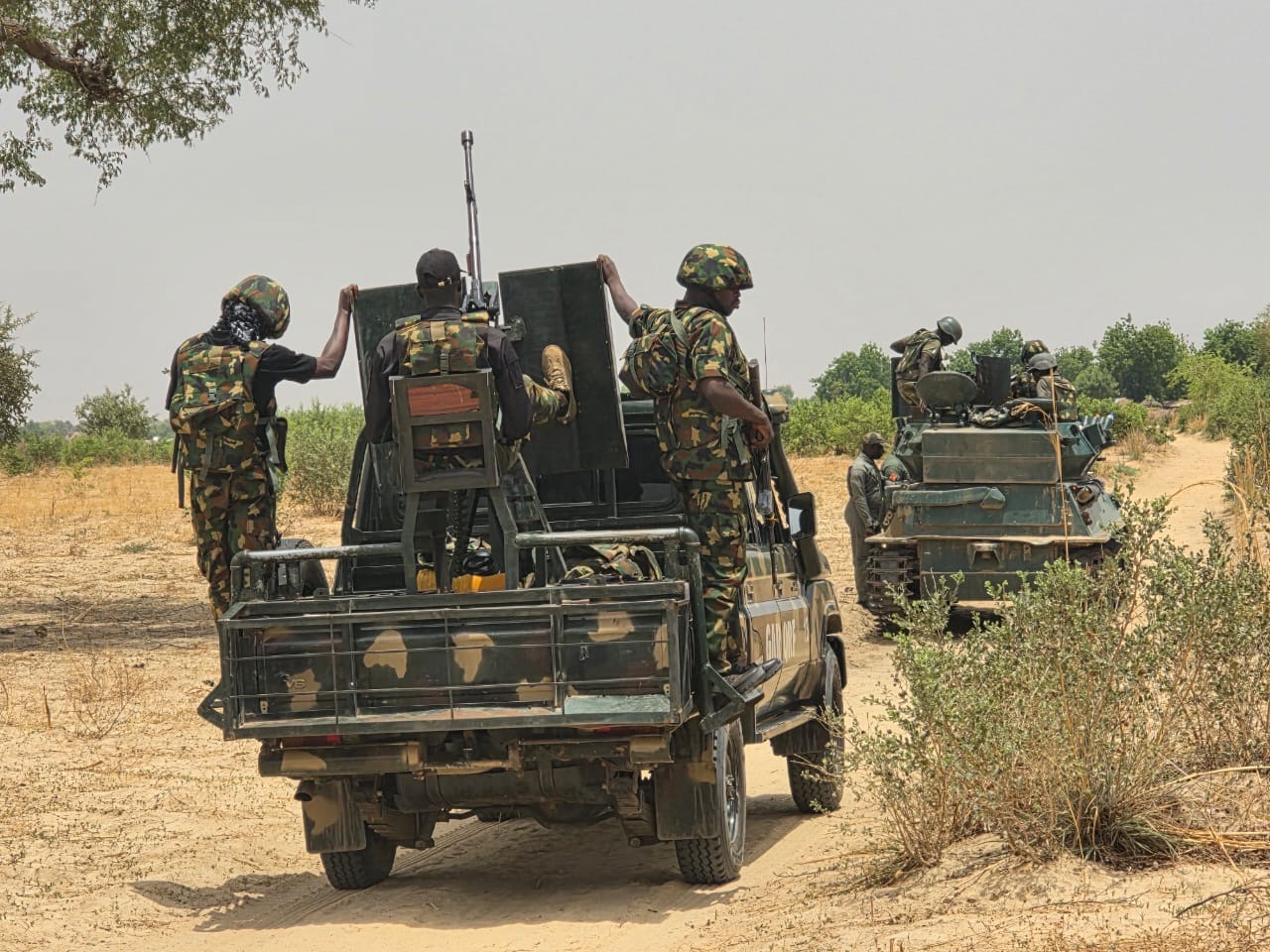
Troops of the Nigerian Army have neutralised 17 terrorists, arrested 85 criminal suspects, and rescued 10 kidnapped victims in a series of coordinated operations across the country within the past 48 hours.

A top military source at the Army Headquarters told the News Agency of Nigeria (NAN) that the operations were carried out across various theatres, yielding significant breakthroughs in the fight against terrorism, kidnapping, and other criminal activities.

According to the source, those arrested include Boko Haram informants, logistics suppliers, terrorist collaborators, drug traffickers, and kidnappers.

The rescued victims have been evacuated and are currently undergoing medical checks and profiling.

In the North-East, troops under Operation “Hadin Kai” sustained offensive operations under Desert Sanity IV and Diligent Search, engaging Boko Haram and ISWAP fighters in multiple encounters across Borno and Adamawa States.

The source said troops of the 202 and 222 Battalions successfully repelled an ambush around Goni Kurmi and Kashomri villages in Konduga Local Government Area of Borno State, killing several insurgents.

Similarly, operatives of the 195 Battalion, in collaboration with the Department of State Services (DSS), apprehended a notorious Boko Haram informant and ransom collector at the Customs IDP Camp in Jere.

The suspect was tracked through monitored calls and bank transactions.Troops also recovered an AK-47 rifle stolen by terrorists, rescued two kidnapped escapees, and intercepted three logistics suppliers conveying food items to ISWAP cells in Alagarno.

In Adamawa, troops of 144 Battalion seized seven vehicles and nine motorcycles transporting 368 bags of cement suspected to be heading for terrorist enclaves in Madagali.

Elsewhere, troops recovered N4.77 million, six mobile phones, and two bicycles abandoned by fleeing insurgents along the Maiduguri–Damboa Road.

In the North-West, under Operation Fansan Yamma, troops conducted clearance operations in Sokoto and Zamfara States, arresting 69 suspected drug dealers and five terrorist collaborators.

One civilian injured during a terrorist attack along the Faru–Bagabbuzi Road in Zamfara was also rescued.

In the North-Central region, troops of Operation Enduring Peace rescued a kidnapped victim in Barkin Ladi, Plateau State, and recovered several weapons, including two AK-47 rifles, a G3 rifle, a revolver pistol, and over 1,200 rounds of ammunition.

Similarly, Operation Whirl Stroke operatives apprehended two suspected kidnappers in Doma Local Government Area of Nasarawa State and destroyed a terrorist camp in Benue.In the South-South, troops of Operation Delta Safe intensified efforts against oil theft.

A patrol team intercepted a wooden boat loaded with 840 litres of illegally refined kerosene in Rivers State and arrested one suspect. Another patrol in Delta State seized a vehicle transporting 2,500 litres of illegal condensate.

Across all operational theatres, troops recovered at least 15 assorted weapons, 21 magazines, and large quantities of ammunition, cash, and logistics materials.

The source reaffirmed the Army’s commitment to sustaining the momentum against terrorists and criminal elements nationwide, adding that troops remain motivated and professional in their conduct.

Security operatives disperse Sowore-led #FreeNnamdiKanuNow protest in Abuja

By Anas Abbas

A joint team of security operatives on Monday dispersed protesters participating in the Omoyele Sowore-led #FreeNnamdiKanuNow demonstration in the Maitama area of Abuja.

The protesters, including human rights activist Omoyele Sowore and Nnamdi Kanu’s lead counsel, Barrister Aloy Ejimakor, had gathered near the headquarters of the Nigerian Communications Commission (NCC), chanting “Free Nnamdi Kanu Now.”

Eyewitnesses said the demonstrators were warning police officers against the use of tear gas when gunshots were suddenly fired, forcing the crowd to flee for safety.

The protest, which called for the release of the detained leader of the Indigenous People of Biafra (IPOB), came despite a court order restricting demonstrations around sensitive government areas in the Federal Capital Territory.

Details later

I do not support Biafra separatist agenda—Soludo

By Sabiu Abdulahi

Governor of Anambra State, Professor Charles Soludo, has restated that he does not believe in the separatist agitation for Biafra, stressing that the Igbo people and Nigeria are interdependent.

Speaking during an interview with Channels Television on Sunday, Soludo made it clear that while he is proud of his Igbo identity, he does not support the idea of dividing the country.

“For me, I believe very strongly that, of course, the agitation and separatist view in Igboland – for me, as a full-blooded Igbo man, I don’t believe that. But I want us to have a discussion. I am of the view that the Igbo man needs Nigeria; Nigeria needs the Igbo man,” he said.

The governor, who is seeking reelection in the forthcoming Anambra governorship election, said he plans to meet with the detained leader of the Indigenous People of Biafra (IPOB), Nnamdi Kanu, to discuss a new direction for the South-East after his release.

“When Nnamdi Kanu comes out, we are all going to sit down at a round table and interrogate our alternative vision for Igbo land,” Soludo stated.

He also refrained from condemning the nationwide protest scheduled for October 20, 2025, which is aimed at demanding Kanu’s freedom.

Meanwhile, activist and former presidential candidate Omoyele Sowore has continued to lead the protests across several states, insisting on the immediate release of the IPOB leader.

Nnamdi Kanu was rearrested in Kenya and has remained in the custody of the Department of State Services (DSS) since his return to Nigeria.

Soludo’s latest comments come amid growing political discussions and demonstrations calling for Kanu’s release and a reevaluation of the federal government’s handling of separatist-related issues in the South-East.

FG reaffirms faith in military as coup rumour triggers political reactions

By Sabiu Abdullahi

The Federal Government has expressed confidence in the Nigerian military amid reports of an alleged failed coup against President Bola Ahmed Tinubu’s administration.

Minister of Information and National Orientation, Mohammed Idris, made the government’s position known in an interview with newsmen on Sunday. He stated that the administration had “no reason to doubt the military” following the Defence Headquarters’ denial of the alleged coup report.

On Saturday, the Director of Defence Information, Brigadier General Tukur Gusau, had dismissed a report by Sahara Reporters that linked the detention of 16 military officers to a failed coup.Gusau, in his statement, described the publication as “intended to cause unnecessary tension and distrust among the populace.”

He explained that the cancellation of the 65th Independence Day celebration was “purely administrative,” allowing the president to attend a bilateral engagement abroad while troops continued operations against insecurity.

He added, “The ongoing investigation involving the 16 officers is a routine internal process aimed at ensuring discipline and professionalism is maintained within the ranks. An investigative panel has been duly constituted, and its findings would be made public.”

Reaffirming the government’s trust in the military, Idris said, “The Federal Government has no reason to doubt the military on what it has said. The Federal Government believes that the Armed Forces of Nigeria is committed to ensuring the territorial integrity of the country and also strengthening its fight against insecurity. The Federal Government commends the military, and it will continue to support them in their task of ensuring the security of Nigeria.”

Opposition Calls For Transparency

Opposition parties, however, have urged the Federal Government and the military to ensure transparency regarding the matter.The National Publicity Secretary of the New Nigeria People’s Party, Ladipo Johnson, said Nigerians deserved to know the truth about the alleged plot.

“They should let us know what actually happened. We have to know the charges and whether they are facing court-martial or not,” he stated.

Similarly, the Labour Party’s Interim National Publicity Secretary, Tony Akeni, expressed concern that the military appeared to be “speaking with two mouths.”

He said, “They said those in detention are there because of some disciplinary measures. Yet, we have sources within the rank and file saying there indeed was an issue of that nature.”

Akeni appealed to the military to “be courageous, according to the oath of their service, to bring the actual facts to the public so that innocent lives do not suffer.”

The National Coordinator of the Obidient Movement Worldwide, Dr Yunusa Tanko, also cautioned against drawing hasty conclusions.

“First of all, you need to establish the truth of the matter before you can suggest punitive measures,” he said.

He added that public frustration over the government’s performance might have contributed to the rumour, saying, “People are hungry and tired of being manipulated. So, we are not surprised the anger has gone to that particular level even in the military.”

Afenifere Warns Against Military TakeoverMeanwhile, the pan-Yoruba socio-political organisation, Afenifere, has cautioned against any attempt to disrupt Nigeria’s democracy, warning that a coup would have disastrous consequences.

Afenifere’s National Publicity Secretary, Jare Ajayi, said in Ibadan that such an act “would set the country back by decades.”

He noted, “The constitution clearly stated that government cannot be changed except through constitutional means.”

Defence Headquarters dismisses coup report as “false and malicious”

By Abdullahi Mukhtar Algasgaini

The Defence Headquarters (DHQ) has strongly denied an online report linking the cancellation of Nigeria’s 65th Independence Anniversary parade to an alleged coup attempt.

In a press release signed by Brigadier General Tukur Gusau, the DHQ described the publication as “false, malicious, and intended to cause unnecessary tension.” 

The military high command stated that the parade was cancelled to allow President Bola Ahmed Tinubu to attend a strategic bilateral meeting abroad and to enable the Armed Forces to sustain their operations against terrorism, insurgency, and banditry.

The statement also addressed the recent arrest of sixteen officers, clarifying that they are part of a routine investigation for professional misconduct. The DHQ assured that an investigative panel has been constituted and its findings will be made public.

Reaffirming its loyalty, the Armed Forces declared its unwavering commitment to the Constitution and the Federal Government, urging the public to disregard the falsehood being circulated by “purveyors of misinformation and enemies of our nation.” 

The statement concluded with the firm declaration, “Democracy is forever.”

FEATURE: When harvest no longer brings joy — The dying spirit of “Kaka” in Northern Nigeria

By Anas Abbas

In the traditional rhythm of life across Kano, Jigawa Katsina and much of Northern Nigeria, the end of the rainy season has always been a time of relief, celebration, and abundance.

It is the period locals fondly call “Kaka” (harvest season) when the farmlands give back to the people, when barns are full, and when hunger gives way to laughter.

Grains, groundnuts, millet, maize, and beans flood the local markets. Prices fall. The air is scented with roasted corn, fresh harvest, and hope.But this year, something has changed.

The joy that once marked Kaka now feels faint and replaced by silence, worry, and a strange kind of poverty in the midst of plenty.

The Daily reality has reported that, in Kano’s bustling Dawanau Market, traders sit beside overflowing bags of produce, but the energy that once filled the air has faded.

“People come, they look, they ask, but they don’t buy,” said Malam Kabiru, a grain merchant of 20 years, wiping sweat off his brow. “Before, this time of year, I would not even have time to rest. But now, we are counting hours, not money.”

Traditionally, harvest season (kaka) is the season when life becomes easy. Farmers sell their crops, traders make profits, and households breathe again after months of lean times.

“Money used to flow like the rain that just passed,” said Hajiya Zainab, a mother and resident at Yankaba in Kano. “But this year, things are upside down. Food is cheap, but we don’t have money to buy. Even if you want to cook “tuwo with bean soup”, you will think twice before buying groundnut oil.” Zainab said.

The paradox is everywhere: prices of some staples have dropped slightly due to harvest supply, yet the economy has tightened its grip on ordinary Nigerians. The value of the naira continues to wobble, and salaries for those who are even lucky to have them barely survive a week.

A Season that feels different

In villages around Katsina, Jigawa, and Sokoto, The Daily reality gathered that farmers recount the same story. Fertilizer prices went up, transport costs doubled, and insecurity chased many from their farmlands. Those who managed to plant and harvest now face a market that no longer rewards their sweat.

“Last year, we prayed for rain. This year, we got it. But now we are praying for buyers,” said Alhaji Isa, a millet farmer from Bichi. His barns are full, yet his pocket is empty.

For decades, Kaka was more than a season it was a social equalizer. Families cleared debts, marriages were planned, and children returned to school with new uniforms bought from market profits. Today, that cycle of joy has broken.

The harvest still comes, but the happiness doesn’t. I recently harvested my onions and took them to the market, said Alhaji Musa Dan’Isa, an onion farmer from Badume in Kano State, his voice heavy with disappointment. “We sold a sack for between N10,000 and N11,000. After all the expenses fertilizer, labour, and transport.There’s almost nothing left for us. I can’t even recover what I spent.”

“To be honest, I’m beginning to lose interest in farming. If things continue like this, I don’t see any reason to invest again next year.”

Economy of Survival

Experts say the situation reflects the larger economic strain facing the country. Inflation has eaten deep into every pocket, and the spending power of ordinary Nigerians has collapsed.

Even when goods are available, the money to circulate them is not.In the past, money used to move like water in a stream from farmers to traders, from traders to transporters, and then back to the villages.

Now, the stream has dried up. Money no longer circulates; it only passes through a few hands and disappears before it reaches the people who truly keep the economy alive.

Economist Dr. Ibrahim Umar explains to The Daily reality: “What we are seeing is a liquidity drought people simply don’t have cash flow. Harvest season should naturally boost local economies, but insecurity, subsidy removal, and currency devaluation have created a heavy burden. So even in abundance, there is scarcity.”

A Cultural Loss

Beyond the numbers, something deeper is being lost the cultural spirit that defined Kaka. The community celebrations, the songs of the farmers, the laughter of women sorting grains in woven baskets all seem quieter now.“Our parents used to say that Kaka is God’s mercy after hard labour,” said Aisha Abdullahi, a teacher in Hadejia.

“Now it feels like we are working for survival, not for joy. The harvest doesn’t bring the same peace anymore.”

A Call for Reflection

The fading joy of Kaka tells a larger story one of resilience, struggle, and a people trying to hold on to dignity amid hardship. It reminds us that the economy is not just about figures and policies, but about lives, emotions, and traditions deeply woven into the seasons.

Northern Nigeria still celebrates the rains, the soil, and the spirit of farming. But until the people can once again taste the sweetness of their own labour, Kaka will remain a season of memory rather than a moment of joy.

The changing face of Kaka is more than an economic issue; it is a mirror of how hardship has reshaped everyday life in the North. A season that once united communities in gratitude is now marked by quiet markets and worried faces.

From Kano to Katsina, Sokoto to Bauchi, people are beginning to wonder if the old Kaka will ever return when the harvest truly brought relief, not reminders of survival.

Police arrest fake officers extorting citizens in Kano, other states

By Uzair Adam

The Kano State Police Command has arrested five members of a criminal syndicate that specialized in impersonating police officers to extort unsuspecting citizens across Kano, Kaduna and Katsina States.

In a statement released on Saturday, the Command’s Spokesman, SP Abdullahi Haruna Kiyawa, said the suspects were apprehended on Thursday, October 16, 2025, around 1:00 p.m., following credible intelligence.

Those arrested were identified as Aliyu Abbas (35), Sani Iliyasu (47), Ashiru Sule (41), Abubakar Yahaya (45), and Adamu Kalilu (45).

They were nabbed by operatives of the Special Intervention Squad (SIS) while parading themselves as police officers.

According to the statement, several incriminating items were recovered from the suspects, including a fake police warrant card, handcuffs, CFA 2,500, mutilated naira notes of various denominations, and a blue Peugeot 406 with registration number NSR-188-BD used for their operations.

“During investigation, the suspects confessed to engaging in a series of impersonations using the fake warrant card to extort innocent citizens and carry out other criminal acts in Kano, Katsina, and Kaduna States,” the statement added.

SP Kiyawa said the suspects would be charged to court upon the completion of the investigation.

The Commissioner of Police, CP Ibrahim Adamu Bakori, reiterated the Command’s commitment to protecting lives and property, warning that the police would not tolerate any form of criminal impersonation or illegal activity in the state.

He further urged residents to remain vigilant and report any suspicious movements or persons to the nearest police station.

Nigerian chemist advances research on carbon conversion for sustainable energy future

By Rabiu Elkanawi

Mr Sulaiman Abbas, a Nigerian-born researcher, is contributing significantly to scientific innovation with his groundbreaking work that has the potential to transform global approaches to climate change.

Abbas, having obtained his MSc from Tianjin University in China, co-authored a highly cited paper on interface engineering for the electrocatalytic reduction of carbon dioxide (CO₂). His research investigates the potential of meticulously engineered nanomaterials and catalyst interfaces to transform CO₂, a significant factor in climate change, into useful fuels and industrial chemicals.

“I have consistently demonstrated a commitment to identifying solutions in the face of challenges,” Abbas stated. 

In Nigeria, industries and power stations emit significant quantities of CO₂, which is frequently regarded merely as waste. My research aims to convert waste gas into valuable resources for energy production and manufacturing.

This study elucidates the engineering of metal–metal, metal–oxide, and molecular interfaces to facilitate the efficient breakdown of CO₂, addressing the resilient chemical bonds that complicate its processing. Abbas’s research enhances catalyst performance, indicating novel methods for producing clean fuels, chemicals, and power storage systems, while simultaneously decreasing greenhouse gas emissions.

Nigeria’s reliance on oil and gas causes environmental issues like rising emissions. Abbas’ research suggests capturing CO₂ from industries, developing low-carbon sectors for green jobs, and rural electrification using CO₂ conversion with solar and wind energy.

Mr Abbas is pursuing a PhD in Solid State Chemistry at the University of Cincinnati and is part of international networks on sustainability and clean energy. His work highlights a circular carbon economy, where Nigeria and developing nations turn environmental challenges into innovation catalysts.

In the pursuit of carbon-neutral technologies, innovators such as Mr Abbas demonstrate that Nigeria’s emerging scientists are prepared to take a leadership role.

Nigerian Army rescues 21 kidnap victims, Chinese nationals

By Abdullahi Mukhtar Algasgaini

Troops of the Nigerian Army have rescued 21 individuals who were held captive by bandits, some for more than four months.

The group of freed hostages includes four Chinese nationals.The rescue was carried out on October 17 by a combined force from the 12 Brigade in Lokoja and the 22 Armoured Brigade in Ilorin, operating under the 2 Division/Sector 3 of Operation FANSAN YAMA.

According to an army press release signed by Lieutenant Colonel Polycarp Okoye, the victims—comprising 14 men, 5 women, 1 infant, and the four Chinese citizens—were abducted from various locations across Kwara and Kogi States.

The military stated that its “intensified offensive” pressure forced the bandits to abandon their captives, leading to their rescue.

Following their release, the victims received immediate first aid and were evacuated to a military medical facility for treatment.

Officials reported that many were physically weak and unable to walk without assistance due to extreme exhaustion but are now responding positively to medical care.

Major General CR Nnebeife, the General Officer Commanding the 2 Division, sympathized with the victims and reassured the public of the army’s commitment to its ongoing campaign.

“The Division remains committed to sustaining the ongoing onslaught against all criminal elements,” Major General Nnebeife stated.

“There will be no hiding place for bandits and other criminals within the Division’s Area of Responsibility.”

The GOC also acknowledged the support of the Nigerian Air Force and other security agencies in the successful operation, directing his troops to “maintain the tempo” to restore peace and security in the region.

The rescued victims are expected to be reunited with their families after making a full recovery.

Kaduna State approves new salary structure for 3 tertiary institutions

By Abdullahi Mukhtar Algasgaini

Senator Uba Sani, the Governor of Kaduna State, has approved a new salary structure for three major tertiary institutions in the state.

The approval covers academic and non-academic staff of Nuhu Bamalli Polytechnic, the Shehu Idris College of Health Sciences and Technology, and the College of Education, Gidan Waya.

This decision brings to an end a 15-year-long struggle by the staff of these institutions, who have been demanding a review of their remuneration package.

The new salary structure is expected to align their pay with contemporary economic realities and improve morale.

While the specific details of the new salary scale were not immediately released, the approval is seen as a major victory for the educational sector in the state and a fulfillment of the government’s commitment to the welfare of its workforce.