News

Mai Martaba unveils new era for Hausa film industry – Expert

By Anas Abbas

Joseph Dame Ali, a lecturer in the Department of Theatre and Performing Arts at Bayero University, Kano, described the unique characteristics of Kannywood films, particularly emphasising the cultural significance and narrative depth of the Hausa movie Mai Martaba, directed by Prince Daniel Aboki.

Mr Ali made this known today during a paper presentation at the Kano Indigenous Languages of Africa Film and Festival ( KILAF ) conference at Bayero University, Kano.

The academic described Kannywood’s cinematic offerings as often predictable, yet he highlighted “Mai Martaba” as a notable exception.

He praised the film’s intricate storytelling, stating, “If you missed a second, you missed a lot.” The film’s vibrant portrayal of local culture is further viewed by its authentic costume, makeup, and props, which reflect a pre-Western colonial-era aesthetic.

The movie’s director, Prince Daniel Aboki, who is also a journalist, has chosen to cast largely unknown actors, allowing fresh talent to shine while keeping the audience engaged with a narrative-driven approach.

Ali emphasized that “the film relies heavily on narration, showcasing a storytelling style that resonates with viewers”.

Through his work on Mai Martaba, Aboki has established himself as a Kannywood actor, contributing significantly to the evolving landscape of Hausa cinema.

Nigeria has also selected the award-winning film as its official submission for the Best International Feature Film (IIF) category at the 97th Academy Awards, also known as the Oscars.

Kaduna Refinery will start operations in December 2024 – MD

By Abdullahi Mukhtar Algasgaini

The Managing Director of the Kaduna Refining and Petrochemical Company (KRPC), Dr. Mustafa Sugungun, has said that the ongoing Quick Fix Project for the Kaduna refinery is scheduled to be completed by the end of 2024.

 Recall that the Nigerian National Petroleum Company Limited (NNPCL) awarded a $741m contract to South Korea’s Daewoo Engineering & Construction to rehabilitate the Kaduna Refinery.

Under the quick-fix repair contract, the firm will restore production at the 110,000 barrels-a-day facility to at least 60 per cent of its capacity by the end of 2024.

Speaking during the commissioning ceremony of the renovated Rido Community Primary School and a solar-powered borehole in Maraban Rido, Kaduna State, as part of its Corporate Social Responsibility (CSR) initiatives, he emphasised the company’s commitment to improving the living standards of its host communities.

 The MD, who was represented by the Manager of Operations, Mr. Emmanuel Ajiboye, noted that the success of the Quick Fix Project will bring immense economic benefits and job opportunities, boost petty trading, and foster other local businesses.

He said the school renovation aims to provide a conducive learning environment for pupils and teachers, while the borehole is expected to address water scarcity in the community and reaffirm KRPC’s dedication to sustainable development through initiatives like youth empowerment, rural electrification, periodic medical outreach, and other community-focused programs.

He urged the Rido community to support the Quick Fix Project, noting that its success would further strengthen the relationship between KRPC and its host communities.

In her remarks, the Head Teacher of Rido Primary School, Mrs. Rachael Aduwak, commended KRPC for the good gesture. 

She also appealed to the company to construct a perimeter fence for the school, adding, “We appeal to KRPC to furnish our classes with tables, chairs, and chalkboard as most of our students are sitting on bare floors during class hours.”

Bandits attack foiled in Katsina, 14 rescued

By Uzair Adam

Katsina State police operatives successfully thwarted a kidnapping attempt by bandits on Sunday evening, rescuing 14 individuals and neutralizing one attacker.

The incident occurred at approximately 7:55 PM in Dan’arau village, located in the Magama-Jibia area of Jibia Local Government Area.

Armed bandits, wielding dangerous weapons, ambushed two commercial vehicles, aiming to kidnap the passengers.

Responding swiftly to a distress call, police officers engaged the bandits in a fierce gun battle.

The timely intervention led to the rescue of 14 hostages, while one of the assailants was fatally wounded.

Unfortunately, two victims sustained gunshot injuries during the confrontation.

They were immediately rushed to a nearby hospital for medical attention, but one succumbed to their injuries.

The state police command has commended the bravery of its officers and urged the public to remain vigilant and report any suspicious activity to the authorities.

NAF kills several terrorists in Lake Chad

By Anwar Usman

Operation Hadinkai of the Nigerian Air Force has destroyed a terrorists’ food depot and killed several insurgents during bombardment on their enclave at Jubillaram in the Tumbuns area of the Lake Chad Basin.

This was contained in a statement released by the Director of Public Relations and Information of the Nigerian Air Force, Air Commodore Olusola Akinboyewa, on Monday in Abuja.

Akinboyewa stated that NAF aircraft operated on 23 November at a strategic location identified through meticulous intelligence efforts.

The location was described as a critical food storage site and a holy place for terrorist commanders and fighters.

He added that intelligence had linked the terrorists in the area to recent attacks, including an assault on troops in Kareto on 16 November.

NAN reports that it was in response that NAF fighter jets launched a robust air interdiction mission, destroying identified structures used as storage facilities and neutralising terrorists on-site.

He further explained that the victory was facilitated by extensive Intelligence, Surveillance, and Reconnaissance missions conducted over several days, which confirmed the presence of terrorist structures camouflaged under dense vegetation.

“The destruction of the terrorist enclave, including food storage facilities, has severely disrupted their logistical operations, while the neutralisation of a significant number of fighters has diminished their capacity to launch future attacks,” Akinboyewa explained.

He further emphasised that the mission demonstrated the NAF’s unwavering commitment to safeguarding the nation and its people independently and in support of ground forces in counterterrorism operations.

He reiterated the NAF’s resolve to sustain robust independent and joint operations until all enemies of Nigeria’s prosperity and well-being are brought to justice.

Dangote refinery cuts petrol price to ease marketers’ burden

By Uzair Adam

The Dangote Petroleum Refinery has announced a reduction in its ex-depot price for Premium Motor Spirit (PMS), commonly known as petrol.

Effective immediately, oil marketers will now purchase petrol from the refinery at a reduced rate of ₦970 per liter.

Anthony Chiejina, the company’s Chief Branding and Communications Officer, confirmed the price reduction in a recent statement.

He attributed the decision to the refinery’s commitment to supporting Nigerians and expressed gratitude for the ongoing support in making the refinery a reality.

The new price represents a significant decrease from the previous ex-depot price of ₦990 per liter, which was announced earlier this month.

The refinery reiterated its dedication to providing high-quality, environmentally friendly fuels while also addressing the nation’s fuel supply needs.

This price reduction is expected to have a positive impact on the retail price of petrol, potentially leading to further relief for consumers at the pump.

The refinery’s commitment to supporting the Nigerian market is evident in this move, as it strives to contribute to a more stable and affordable fuel supply.

Borno police recover 8 unexploded devices, reassure public of safety

By Uzair Adam 

The Borno State Police Command has successfully recovered eight unexploded devices from the Dala and Gwange areas of Maiduguri, the state capital. 

This discovery was made on Friday following distress calls about unidentified objects suspected to be explosive ordnance.

According to ASP Grace Michael, the command’s Deputy Public Relations Officer, the police received a distress call about unidentified objects clustered near an uncompleted building in the Dala-Abuja Talakawa Area, Maiduguri. 

The police swiftly moved to the scene and recovered six projectiles and one unexploded mortar bomb.

Later that day, the police received another distress call from the Gwange Area about an unidentified object washed ashore on the Gwange river bank. 

The police quickly recovered one unexploded Hand Grenade (UXO).

Preliminary investigations revealed that the ordnance was washed ashore due to the recent devastating flood incident in the state. 

The Borno State Commissioner of Police, CP Yusufu Lawal, reassured residents of the command’s commitment to ensuring public safety and security.

Drama: Kwankwaso’s brother drags Gov Yusuf to court over land dispute

By Uzair Adam

A legal dispute has emerged involving Governor Abba Kabir Yusuf over a contentious land allocation in Kwankwasiyya City, Kano.

The case, filed by Garba Musa Kwankwaso, centers on a vast expanse of land initially allocated to WAECO Nigeria Limited during the administration of former Kano State governor Rabiu Musa Kwankwaso.

Court documents reveal that the defendants include the state commissioner for Land and Physical Planning, the Kano State Urban Planning and Development Authority (KNUPDA), the Attorney General of Kano State, and others.

Garba Kwankwaso seeks an interlocutory injunction to prevent the governor and other parties from taking any action deemed adverse to his interests in the land.

The land dispute traces back to a 2017 investigation by the Kano State Public Complaint and Anti-Corruption Commission, which revealed that WAECO, the company allocated the land, was not a legal entity at the time of allocation.

The commission found that the company was actually “Water and Agricultural Engineering Company Limited,” in which Rabiu Kwankwaso and his brother were directors.

Based on this finding, the commission recommended the revocation of the allocation, leading to subsequent reallocation by the administration of former governor Abdullahi Ganduje.

During Ganduje’s tenure, portions of the land were allocated to Mallam Kato Square and other original owners, including the Dantata family.

However, sources allege that Governor Yusuf has resisted revoking the land and returning it to WAECO Nigeria Limited, and that prompted Garba Kwankwaso to take legal action.

In an application filed at the Kano High Court, Garba Kwankwaso sought an order to restrain the defendants from entering, demarcating, or allocating the disputed land, pending the outcome of the substantive suit.

Justice Usman Na’abba granted the order on November 13 and adjourned the case until November 27 for further hearing.

The case sheds light on the ongoing complexities of land allocation and revocation in Kano State, raising questions about governance and legal accountability.

Bayelsa governor, Diri, approves N300,000 grant for law students

By Sabiu Abdullahi

Bayelsa State Governor, Senator Douye Diri, has approved a grant of N300,000 for each law student from the state studying in various law schools across Nigeria.

This announcement was made by the Attorney-General and Commissioner for Justice in the state, Biriyai Dambo, during a meeting with representatives of the Bayelsa State Law Graduates Forum in Yenagoa. 

According to Dambo, the governor’s approval reflects his commitment to supporting the education of Bayelsa indigenes, particularly during these economically challenging times.

The grant aims to cushion the effects of economic hardship on the students, as that will enable them to focus on their academic pursuits. 

Governor Diri urged the students to concentrate on their studies, as well as striving to make their families and the state proud.

Imomotimi Godspower, speaking on behalf of the students, expressed deep gratitude to the governor for the grant, and described it as a highly encouraging gesture.

Lakurawa as a diversionary tactic

By Prof. Abdussamad Umar Jibia

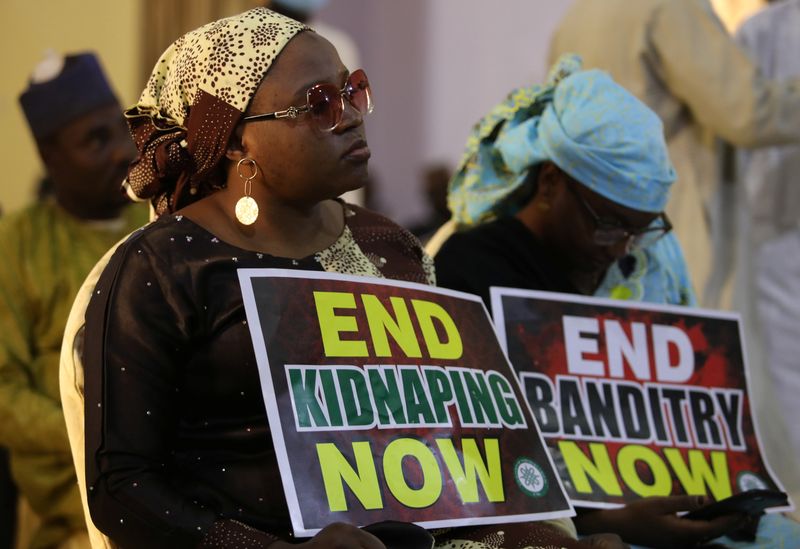
For nearly a decade, the North West geopolitical zone of Nigeria has been suffering from the menace of banditry. The bandits who live in the vast forest spanning several states in the Northwest and North-central zones started as cattle rustlers before metamorphosing into fully pledged armed robbers. They attack communities, schools, travellers, etc. Wherever they go, it is a story of killing, kidnapping, rape, arson and other unprintable atrocities. 

Bandits lack the civility of the erstwhile armed robbers. In those days, armed robbers only sought money and valuables like jewellery. Once they had them, they were satisfied and would leave without dropping blood. That is not the case with bandits. When they visit a community or block travellers on highways, they usually start by killing some before kidnapping others. 

Payment of ransom is not a guarantee of getting the kidnapped victim freed. They may collect ransom from relatives and still kill the victim. There are many examples. 

Bandits’ locations and leaders are well known to the Government and members of the communities in which they operate. Many of them serve as the de facto government in their domain of operation. This is not a story I am telling from one of those video clips circulating on social media. Some of my blood relatives have been going to work on the farm of the bandits’ kingpin, who is in charge of their area. 

To agree to live under the protection of an “officer”, the de facto rural government of Jibia and Batsari, a village has to send its elders with some money to go and beg for him to accept them. You may wish to go back to my writeup on “Submission to bandits authority”.

However, an “officer” is not the only bandit leader known to the government and the people. There are more deadly and more popular “officers”. One of them is Ado Aleru, who killed dozens of villagers in Katsina State and told the BBC Hausa service that he doesn’t kidnap; he only kills. Asked to give the number of people he killed, he said it is too large to remember.

Another officer is Bello Turji, who, among other crimes, once burned a passenger bus with 30 people in it days after opening fire on a village market that claimed 60 lives in Zamfara state. He is popular because he speaks frequently to the public. That, however, doesn’t make him the deadliest.

Dogo Gide is another “officer” who was notorious for, among other things, the abduction of 90 students and teachers of FGC Yauri, 11 of whom he married off in the process. 

Among the many popular “officers” is Dankarami, who publicly confessed to killing many combined troops of Nigeria and Niger Republic in addition to kidnapping and killing many innocent citizens in Katsina and Zamfara state. 

The above crime leaders and several others in their category are still alive and active.

The Buhari administration made the first blunder in dealing with the menace of banditry. The federal government under Buhari asked governors of the affected states to strike a peace deal with the bandits. Peace agreements were sealed between some state governments and bandits in 2016 and 2019; in both cases, the latter reneged. 

Unlike what some of their sympathisers would want us to believe, the bandits are not freedom fighters but pure criminals and stark illiterates. The only thing that would make them drop their weapons is a continuous flow of cash from the Government, the kind of cash they make from their criminality. That is unrealistic for a Government struggling to pay its civil servants a paltry minimum wage. Hence, the peace deals were failed under Buhari.

Bandits’ sympathisers who gave Buhari the wrong advice have found their way into the Tinubu Government. The first indication of that is what a young Islamic scholar revealed early this year. The scholar alleged that, under the financial influence of unnamed federal defence officials, some Islamic scholars are campaigning for not just amnesty for bandits but their appointments into public offices by the government. He alleged that he was among those invited to participate in the campaign but refused.

As far as we know, the federal government did not deny Sheikh Koza’s claims. If he had lied, he would have been arrested and asked to name the defence officials. Neither of those things happened.

Then came the kidnap and murder of the Emir of Gobir. With the public outcry that followed, the Federal Government had to show its will to fight banditry. Thus, the Minister of State of Defence and service chiefs were asked to move to Sokoto and end banditry. However, despite the budget, since the movement of the minister and service chiefs to Sokoto, the only bandit of note who was killed/arrested by the Government is Halilu Sububu. Banditry business has continued as usual, even with the presence of our nation’s security heavyweights.

For example, as reported by national dailies, the Funtua-Gusau highway was blocked by bandits on several occasions during this period with no consequences. For frontline local Governments in Katsina state, the attacks became worse. The only place considered safe in my local Government area was Jibia town, the local government headquarters. However, since the so-called “Operation Fansan Yamma” started, Jibia town has lost its safety as bandits attacked, killed and kidnapped with impunity.

As Nigerians were waiting anxiously for the expected miracle due to the presence of security chiefs, the Lakurawa issue came up. According to sources, Lakurawa is a group with similar ideologies to Boko Haram. They have a total number of just 250 in Nigeria and no cases of frequent attacks on communities. Lakurawa militants are said to have been in Nigeria for some years at the instance of some Kebbi communities who sought their protection against bandits. 

The question here is, why is the issue of Lakurawa now being brought up when we have a more serious problem to solve? Lakurawa are obviously not as dangerous as the bandits, and their presence in Nigeria has been linked to the failure of the government to protect citizens from bandits.

From day one, the approach of this and immediate past governments has made Nigerians believe they are not ready to end banditry. If they are now talking about some Lakurawa instead of our real problem, why should we not think they are using it to divert our attention?

My advice to President Tinubu is to remember that he was elected by Nigerians. Ribadu, Badaru, Matwalle or Christoper Musa did not contest and win an election. The president is responsible for appointing his aides, continuously monitoring them, and ensuring they are doing the right thing.

That the officials mentioned above are Northerners is immaterial.

Professor Abdussamad Umar Jibia wrote via aujibia@gmail.com.

Addressing Nigeria’s insecurity crisis 

By Fatima Dauda Salihu

Nigeria is a beautiful country with diverse cultures and vibrant people. Unfortunately, insecurity has become a significant problem in recent years, causing many to live in fear and struggle to access essential services. 

Despite being culturally rich and endowed with abundant mineral resources, Nigeria struggles with insecurity primarily due to negligence by the government and its citizens. Nigeria faces insecurity challenges across all six geopolitical zones. This insecurity takes various forms, including insurgency, terrorism, communal clashes, banditry, kidnapping, and piracy, and is fuelled by deep-rooted socio-economic, ethnic, and religious tensions.

The consequences of insecurity in Nigeria are dire, leading to displacement of communities, loss of livelihoods, economic stagnation, human rights abuses, and psychological trauma.

Effective governance is critical in addressing insecurity. The government must provide leadership, resources, and policy direction to tackle insecurity. Citizens also have a vital role to play by engaging in community policing, reporting suspicious activities, and promoting tolerance. 

The private sector can also contribute by investing in security initiatives and socio-economic development projects. Civil society organisations can advocate for policy changes and community empowerment. We can restore peace, stability, and prosperity to Nigeria by working together.

Strengthening institutions and promoting good governance, investing in education, enhancing security infrastructure and capacity building, promoting community engagement and conflict resolution, and addressing socio-economic inequalities can help mitigate if not. 

In conclusion, addressing the challenge of insecurity in Nigeria requires a holistic and multifaceted approach that encompasses effective governance, community engagement, strategic coordination among security agencies, and long-term investments in education and socio-economic development.

Ultimately, Nigeria’s future depends on our collective ability to address insecurity and promote peace, stability, and development. We owe it to ourselves, our children, and future generations to take action and create a better Nigeria.

Fatima Dauda Salihu wrote from Bayero University, Kano