News

House of Representatives approves tax reform bills, awaits Senate approval

By Abdullahi Mukhtar Algasgaini

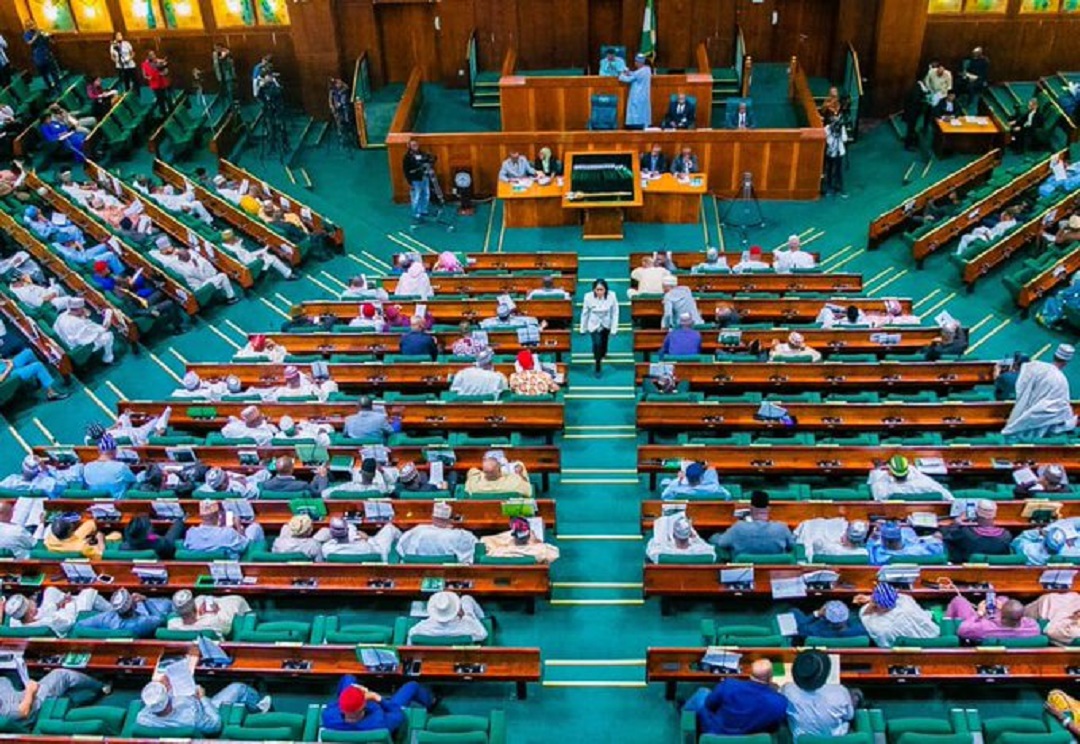
The House of Representatives has approved four crucial tax reform bills during its session on Thursday in Abuja. 

The bills, which are now awaiting Senate concurrence, include the Nigerian Tax Bill, the Tax Administration Bill, the Revenue Tax Board Bill, and the Nigerian Revenue Service Establishment Bill.

James Abiodun Faleke, Chairman of the House Committee on Finance, highlighted the thorough process that led to the bills’ adoption. Over 80 key stakeholders participated in public hearings, and an eight-day retreat was held to debate the clauses. 

Faleke expressed confidence that the tax reforms would result in widely accepted laws and thanked lawmakers and House leadership for their support.

“We cannot continue using outdated tax laws that no longer meet our business, survival, and revenue needs,” Faleke emphasized, referring to the existing tax laws, some of which date back to 1959.

Deputy Committee Chairman Saidu Abdullahi praised Speaker Tajudeen Abbas for fostering consensus among stakeholders and ensuring that input from all geopolitical zones was considered. 

He added that the recommendations reflect the contributions of various groups and that the final version resulted from extensive consultation.

Ikeagwuonu Ugochinyere, an opposition member, also lauded the reform process, highlighting its transparency and the adjustments made to reflect public interests better. He assured the reforms would expand the tax base, enhance revenue collection, and protect small businesses.

Benson Babajimi, a lawmaker from Lagos, noted that all concerns from various stakeholders, including issues like inheritance tax and VAT, were carefully addressed during the legislative process.

With the House’s approval now secured, the tax reform bills await the Senate’s concurrence.

Kano govt settles eight months’ salary arrears for 2,369 street sweepers

By Uzair Adam

The Kano State Government has cleared eight months’ salary arrears for 2,369 street sweepers, reaffirming its commitment to improving workers’ welfare and environmental sanitation.

The official disbursement took place on Wednesday at the Coronation Hall, Government House, where Governor Abba Kabir Yusuf, represented by the Commissioner for Environment and Climate Change, Dr. Dahir M. Hashim, handed out ATM cards loaded with the payments.

Dr. Hashim explained that the government had earlier disbursed one month’s salary to ease the workers’ financial burden while working on a sustainable payment system.

“Today, all outstanding payments have been settled, and moving forward, salaries will be paid promptly every month, In Sha Allah,” he assured.

He urged the sweepers to remain dedicated to their duties and continue supporting the administration’s efforts to maintain a cleaner and healthier Kano.

He also highlighted the crucial role of street sweepers in the government’s urban renewal initiatives.

Dr. Hashim noted that upon assuming office, the administration inherited a backlog of six months’ unpaid salaries for the workers, which later increased to eight months.

He reiterated that the settlement of these arrears aligns with the government’s broader efforts to modernize the city and enhance public infrastructure.

Plans are underway to introduce mechanized street cleaning, with daily road washing expected to commence within the next three to four months.

Additionally, the government has screened the workers and opened bank accounts for them, ensuring future payments are made simultaneously with other government employees.

He further revealed that Governor Yusuf had directed the renewal of uniforms and the provision of protective gear, including face masks and shoes, for the sweepers.

Some beneficiaries expressed gratitude for the payment, with Dayyaba Abubakar from Kumbotso Local Government thanking the governor for his support, while Salisu Sani described the salary settlement as a great relief.

President Tinubu appoints new ambassadors after 18-month diplomatic hiatus

By Hadiza Abdulkadir

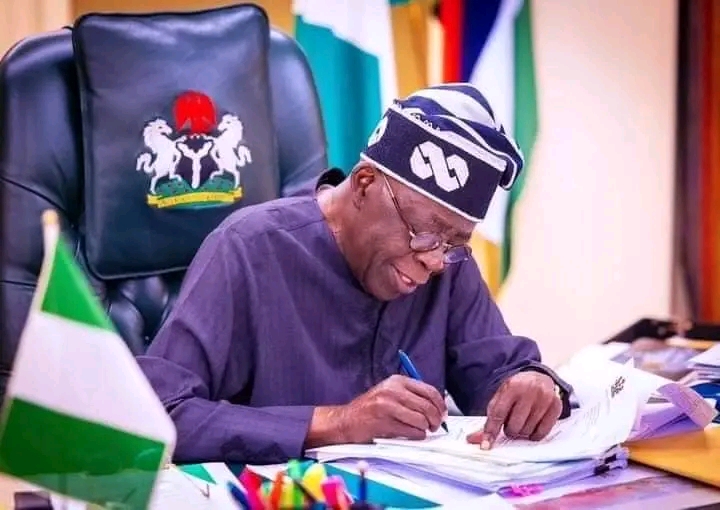
President Bola Ahmed Tinubu has approved the appointment of new ambassadors to represent Nigeria in its foreign missions. This ends an 18-month diplomatic vacuum that began after all ambassadors were recalled in September 2023.

The recall, which impacted both career and non-career ambassadors, was due to funding constraints and a wider restructuring of Nigeria’s diplomatic engagements. However, sources within the presidency confirm that the financial issues have now been resolved, clearing the path for new appointments.

The selection process for the new envoys is already underway, with security agencies conducting background checks on nominees before their formal announcement and confirmation. The move is expected to restore Nigeria’s diplomatic presence globally and strengthen bilateral relations with key partners.

Nigeria currently operates over 100 embassies and high commissions worldwide, and the prolonged absence of ambassadors has raised concerns about the country’s foreign policy direction. Despite these challenges, President Tinubu’s administration has prioritized economic recovery, allocating N302.4 billion ($198.3 million) in the 2025 budget for Nigeria’s foreign missions.

During meetings with foreign leaders, President Tinubu assured that vacancies would be filled soon, recognizing the need for a strong diplomatic corps to advance Nigeria’s global interests. The new appointments are expected to refresh Nigeria’s foreign policy and enhance its influence internationally.

Observers note that the new ambassadors will foster economic partnerships, attract foreign investments, and promoteNigeria’s image abroad. With their deployment approaching, stakeholders are watching how the diplomatic team navigates the global landscape to advance Nigeria’s interests.

Insecurity: Senate summons NSA, security chiefs over insecurity

By Anwar Usman

The Nigerian Senate has again summoned all security chiefs to appear before the house next week over the rising insecurity bedeviling the country.

Those summoned include the National Security Adviser, Nuhu Ribadu; Chief of Defence Staff, General Christopher Musa; Chief of Army Staff, General Olufemi Oluyede; Chief of Naval Staff, Vice Admiral Emmanuel Ogalla; and Chief of Air Staff, Air Marshal Hasan Abubakar.

Other security agencies are the Inspector General of Police, Kayode Egbetokun, Director General of National Intelligence Agency, Mohammed Mohammed, and the Director General of Department of State Services Adeola Ajayi.

The president of the Senate Godswill Akpabio, while speaking during Wednesday’s plenary, said the service chiefs were initially invited but could not attend due to scheduling conflicts.

He stated that the rescheduled meeting next week will centered on deliberating on critical security issues inorder to proffer urgent solutions.

The Senate also raised serious concerns over allegations that certain international agencies may be financing the Boko Haram insurgency.

On February 19, security chiefs were summoned to explain allegations that the United States Agency for International Development was linked to funding Boko Haram and other terrorist groups in Nigeria.

The meeting will look into these claims among others, address Nigeria’s broader security challenges, and shape policy responses.

NAHCON, Flynas sign agreement for 2025 hajj airlift

By Uzair Adam

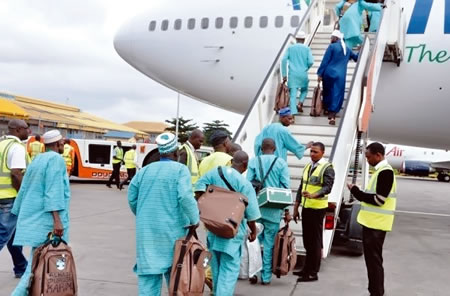
A Saudi-designated Nigerian Hajj air carrier, Flynas, has formalized an agreement with the Nigerian government for the airlift of pilgrims for the 2025 Hajj operations.

The National Hajj Commission of Nigeria (NAHCON) has announced that the transportation of Nigerian pilgrims to Saudi Arabia will commence on May 5, 2025.

The agreement was signed on Monday at NAHCON’s headquarters in Abuja by the Chief Commercial Officer of Flynas, Mr. Khaled Alhejairi, and the commission’s Chairman and CEO, Professor Abdullahi Saleh Usman.

Present at the signing were Flynas’s Director for Business Development, Mr. Yasser Ajlan, Manager of Business Development, Mr. Hani Isma’il, and the Managing Director of First Planet Travels and General Sales Agent (GSA) of Flynas in Nigeria, Alhaji Umar Kaila.

Mr. Alhejairi reaffirmed the airline’s commitment to maintaining high service standards for Nigerian pilgrims, stating that Flynas has consistently fulfilled its obligations since joining the Nigerian Hajj operations in 2014.

“We want to assure NAHCON that Flynas will continue to provide comfortable and seamless travel experiences for our esteemed customers in Nigeria during the Hajj operation,” he said.

In January, NAHCON approved four airlines—Flynas, Air Peace, Max Air, and Umza Aviation Services Limited—for the 2025 Hajj operations. Among them, Flynas, the most experienced, has successfully transported Nigerian pilgrims for the past decade.

For the 2025 Hajj, Nigeria has a projected quota of 71,274 pilgrims, with NAHCON preliminarily allocating 22,894 pilgrims to Flynas, 9,145 to Air Peace, 23,342 to Max Air, and 15,893 to Umza Air.

Flynas, which operates in Nigeria under the Bilateral Air Services Agreement (BASA) between Nigeria and Saudi Arabia, has played a key role in stabilizing airlift operations for Nigerian pilgrims while expanding the capacity of its workforce.

Wike calls for Fubara’s impeachment amid political unrest in Rivers State

By Abdullahi Mukhtar Algasgaini

Nyesom Wike, the Minister of the Federal Capital Territory (FCT), has weighed in on the ongoing political tension in Rivers State, urging that Governor Siminalayi Fubara should be impeached if there is a legitimate reason.

During a live media chat on Wednesday, Wike expressed his frustration with the current state of affairs, emphasizing the importance of adhering to the rule of law and accusing the governor’s close associates of exploiting him and the state.

Wike stressed that lawmakers should not be pressured into a hasty impeachment, adding, “If he has done something to be impeached, let them impeach him. It’s not a criminal offence.”

He also took issue with the idea that a small group of lawmakers could enact laws that could later be challenged in the Supreme Court.

The Minister reflected on his own experience with the political landscape, highlighting a situation where elder statesman Ferdinand Alabararba had strongly supported the rise of an Ijaw governor, only to be later disrespected by the very individual he helped.

Wike expressed disbelief at the political gamesmanship, and criticized the tendency of some to treat elected officials as subordinates.

Wike also criticized the Pan Niger Delta Forum (PANDEF), calling it the “worst organisation” he had encountered, accusing it of attempting to undermine President Bola Tinubu’s mediation efforts.

In a controversial statement, Wike also weighed in on the issue of Ijaw representation in the Niger Delta, declaring that the Ijaw people do not constitute the majority in the region and stating that Ijaw men should only govern in Bayelsa.

MSSN-ABU expresses sorrow over kidnapping of its member, calls for prayers

By Hadiza Abdulkadir

The Muslim Students’ Society of Nigeria (MSSN), Ahmadu Bello University (ABU), Zaria, has expressed deep sorrow over the tragic kidnapping of one of its members, Abdussalam Rabi’u Faskari, a 300-level MBBS student. 

The incident, which also involved two members of his family, occurred as they traveled home from the Government House of Katsina State.

Abdussalam, known for his academic excellence and deep religious commitment, is not just a promising medical student but also an accomplished Islamic scholar. 

He is an Imam at the College of Medical Sciences mosque. He also secured the first position in the 60Hizb category at the last National Musabaqa (Qur’anic competition).

The MSSN community, along with the wider Muslim ummah, is now calling for fervent prayers for his safe return, as well as for other victims of similar tragedies. 

The statement from MSSN urged all students to remain steadfast in their faith, emphasizing that “with hardship comes ease” (Qur’an 94:6).

This unfortunate event is part of the growing security crisis affecting Nigeria, where kidnappings for ransom have become alarmingly frequent. 

Calls for more decisive government intervention and lasting security solutions continue to mount as families and communities grapple with these distressing incidents.

Panel probes alleged corruption among senior correctional officers

By Uzair Adam

The special independent investigative panel set up to examine allegations of corruption and other violations by senior personnel of the Nigerian Correctional Service (NCoS) has commenced its probe.

Dr. Uju Agomoh, the panel’s secretary and chair of the session held on Tuesday in Abuja, stated that several cases under investigation involve high-ranking officers overseeing custodial centers across the country.

These cases reportedly include corrupt practices, abuse of authority, and mistreatment of inmates.

Agomoh explained that the panel has been tasked with conducting a comprehensive inquiry into specific allegations and recommending immediate reforms to prevent future misconduct while improving correctional services in Nigeria.

“Recent reports highlight instances of corruption, torture, cruelty, and degrading treatment within the nation’s correctional facilities,” she said.

“These violations undermine the rights and dignity of individuals in custody.”

The panel is expected to propose short-term, medium-term, and long-term measures to address the concerns raised.

The Daily Reality learned that the Minister of Interior, Dr. Olubunmi Tunji-Ojo, established the investigative panel following widespread controversy surrounding the incarceration of cross-dresser Idris Okunneya, popularly known as Bobrisky.

Additionally, the panel is examining allegations of corruption and extortion against the head of Kuje Custodial Centre, Iloafonsi Ikechukwu, who has been accused of intimidating, threatening, and defrauding an inmate.

Minister opposes closure of schools for Ramadan fasting

By Sabiu Abdullahi

The Minister of State for Education, Suwaiba Ahmad, has called on the governments of Bauchi, Katsina, Kebbi, and Kano states to reconsider their decision to close public schools during Ramadan.

She stated that no Muslim-majority nation follows such a practice.

Speaking on Channels Television’s Political Paradigm, Ahmad emphasized that even in countries where Islam is the dominant religion, schools remain open during the fasting period.

“In each state, the education system is under the state level, and they have the right to make decisions. However, we can only engage them and present our position on the matter,” she said.

She further argued that Islamic teachings do not require schools to be closed for fasting.

“Even in countries recognized as Muslim nations, like Saudi Arabia, schools remain open during Ramadan. There is nowhere it is written that you must shut down schools because of fasting,” she stressed.

To support her argument, she referenced Islamic history.

“The Prophet (S.A.W) even went to war during Ramadan, so it is not something that should hinder education,” she noted.

Ahmad expressed concern over the academic time lost due to the closures.

She also revealed that the Federal Ministry of Education is engaging with the affected states to address the issue.

“What about the period that will be lost? This is something we are looking into as we continue discussions with the state governments,” she said.

The decision to close schools for Ramadan has sparked debates among education stakeholders.

Some argue that it is unnecessary, especially in regions already struggling with high levels of poverty and illiteracy.

The Christian Association of Nigeria (CAN) has criticized the move, describing it as discriminatory and a violation of the rights of non-Muslim students in the affected states.

Similarly, the National Association of Nigerian Students (NANS), through its National Public Relations Officer, Samson Adeyemi, has condemned the decision, calling it an infringement on students’ right to uninterrupted education.

However, the Supreme Council for Shariah in Nigeria (SCSN) has defended the action taken by some northern state governments.

Mass exodus reportedly hits Kaduna APC after El-Rufai’s defection

By Sabiu Abdullahi

A wave of resignations has struck the All Progressives Congress (APC) in Kaduna State following the departure of former governor Nasir El-Rufai from the party.

Multiple resignation letters obtained on Monday indicate that several APC members, particularly those loyal to El-Rufai, have been leaving the ruling party in large numbers.

This development comes just hours after the former governor publicly announced his defection to the Social Democratic Party (SDP).

Similarly, some former commissioners who served under El-Rufai have also withdrawn their membership from the APC.

Among them are Ja’afaru Ibrahim Sani, a former Commissioner for Local Government, and Hajiya Hafsat Mohammed Baba, who previously oversaw Human Services and Social Development.

Both submitted their resignation letters to their respective ward chairmen on Monday.

In his letter, Sani expressed disappointment with the way the party leadership treated its members.

He stated, “With the hatred and disdain shown to us by the leadership of the party we worked hard to nurture, it has become compelling to seek another platform in our desire to bring development and prosperity to our dear people.”

He further explained that after consulting with key stakeholders in Anchau, Kubau Local Government Area, and Kaduna State, he decided to leave the APC immediately.

“As I move on, I remain grateful to you and to all members of the APC, as well as the electorates in the Ward, Kubau Local Government Area, and the State for the support rendered to me as Chairman of the APC Stakeholders, Kubau LGA,” he added.