News

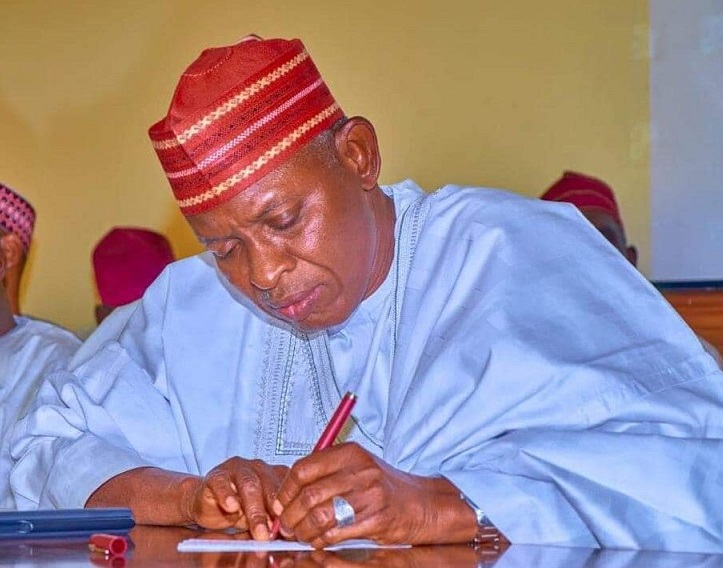
Governor Abba appoints chief press secretary, MD KNUPDA, promotes key officials

By Anas Abbas

Kano State Governor, Alhaji Abba Kabir Yusuf, has announced a series of significant appointments and promotions aimed at bolstering governance and improving service delivery within the state.

The appointments were detailed in a statement released by the governor’s spokesperson, Sunusi Bature Dawakin Tofa, on Wednesday.

Among the notable appointments is Architect Hauwa Hassan Tudun Wada, who has been named the new Managing Director of the Kano Urban Planning and Development Authority (KNUPDA).

A distinguished Fellow of the Nigerian Institute of Architects and Vice Chairperson of Female Architects in Nigeria, Hauwa brings extensive experience from her previous role as a Professional Architect at the Federal Capital Development Authority (FCDA).

She holds degrees in Architecture from Ahmadu Bello University (ABU), Zaria, and is recognized as one of the first female architects to excel in Kano.

In another key appointment, Mustapha Muhammad has been designated as the Chief Press Secretary to the Governor. With over 20 years of experience in journalism, including a prior position as a Senior Broadcaster at the BBC, Mustapha holds both BSc and MSc degrees in Mass Communication and is currently pursuing a PhD in the field.

In addition to these appointments, two senior officials have been promoted. Zulaihat Yusuf Aji has been elevated to Deputy Managing Director of Radio Kano, having previously served as Senior Special Assistant on Broadcast (1) at the Media and Public Relations Directorate.

Engineer Abduljabbar Nanono has also been promoted to Deputy Managing Director of KHEDCO and has served as Senior Special Assistant on Renewable Energy.

Kano State Governor Alhaji Abba Kabir Yusuf’s latest appointments and promotions have taken effect immediately, demonstrating his dedication to building a more efficient, inclusive, and results-driven administration

Kongo: ABU Zaria’s IDP Campus

By Ila Garba

I’ve never seen the inside of an IDP camp—not the ones in Borno, and certainly not those in Ukraine. Nonetheless, I get the feeling that they don’t have running water. If they do, then, at least in this regard, an IDP camp is better than the student halls of Ahmadu Bello University’s Institute of Administration, Kongo.

I joined this institution in 2019 to pursue a law degree. Mournfully, my jubilation at wrapping up my program is cut short by the dawning realization that I may leave Kongo worse than I met it. The standard here is progressively falling and rapidly deteriorating. Kongo is on its knees and needs to be rescued urgently.

The institute houses two faculties (Law and Administration), a clinic, student halls, and other structures. Coupled with the hardships of being an average Nigerian, Kongo hostel occupants often patrol the school as early as midnight—not as members of a security unit but as bucket-carrying students in desperate search of water.

Until recently, occupants relied on the benevolence of the rainy season. During that time, the wells were generous. But everything changed for the worse with the seasonal shift.

Now, students have to cover several “Kongo-meters” before reaching water—if they even do. Life in previous years was intolerable and unbearable, but nothing compares to the last three years. The situation has gotten so dire that students now resemble hungry lions on the hunt—not for buffaloes, but for water to cook or clean.

With the holy month of Ramadan just beginning, occupants are filled with trepidation over a recurring ordeal they find difficult to adapt to. They fear yet another Ramadan spent in smelly bodies, unflushed toilets, unwashed clothes, unclean dishes, and late iftars.

To be fair to the university’s management, they are “trying their best.” Previously, water tankers would bring water routinely as needed. That is now history. Even as the wells have dried up, the water tankers show up only once in a blue moon. For a university that prides itself as the largest in sub-Saharan Africa, this is, to say the least, hapless and piteous. Ironically, I laugh at the realization that a Department of Water Resources Engineering exists in this institution.

The reality is that we may have stable water in the near future—or we may grow old waiting. Only the management can answer that. I sincerely hope the Student Representative Council, with its so-called “visionary leadership,” will step up to ask the right questions.

What’s even more frustrating is that students are still dealing with a 300% increase in both registration and accommodation fees. Given this, any reasonable person would agree that providing sufficient water should no longer be rocket science. However, the university’s management, judging by its attitude, doesn’t seem to consider the lack of sufficient water in Kongo a problem worth solving. I blame the students for expecting better.

To wrap up, my candid advice to occupants is to register their complaints with God. Clearly, getting water here has been reduced to nothing but hope and prayer. Perhaps, a renowned global water project like Water.org or Charity: Water will be sent to our rescue.

Ila Garba writes from Kongo Campus, ABU Zaria.

Kano State Government honors Dr. Magashi with Award of Excellence

By Sabiu Abdullahi

The Kano State government has honored Dr. Aminu Magashi Garba for his exceptional contributions to the state’s development.

Dr. Magashi, who serves as the Technical Adviser to the Ministry of Women Affairs, Children and Disabled, as well as the Ministry of Humanitarian Affairs and Poverty Alleviation, is also the Chair of the AMG Foundation.

His efforts have been instrumental in advancing initiatives that support women and other vulnerable groups.

During the International Women’s Day celebration at the Kano State Government House on Monday, March 17, 2025, the Honourable Commissioner for Women Affairs, Children and Disabled, Hajiya Amina Abdullahi Sani, presented him with an Award of Excellence.

The recognition shows his dedication to improving the well-being of Kano State residents, particularly in the areas of health, humanitarian services, and poverty alleviation.

While presenting the award, Hajiya Amina Abdullahi Sani stated:

“Dr. Magashi has decades-long dedication to public service and commitment to improving the lives of Kano’s underserved communities. He led several reforms in the health sector leading to the establishment of so many agencies, notably PHIMA, KHETFUND KUSH, KNCDC to mention but few.”

She further acknowledged his role in shaping policies, saying:

“His strategic insights and leadership were also vital as Chairman of the health transition committee, where he collaborated closely with His Excellency, the Executive Governor of Kano State, Engr Abba Kabir Yusuf to craft a transformative agenda for Kano State’s healthcare.”

Additionally, she presented his contributions to governance:

“He also led the technical committee which supported H.E. Engr. Abba Kabir Yusuf to develop his campaign blueprint in 2022.”

Dr. Magashi’s recognition underscores his commitment to public service and his lasting impact on health and social welfare initiatives in Kano State.

NERDC boss calls for urgent measures to address deterioration of Council’s library

By Sabiu Abdullahi

The Executive Secretary of the Nigerian Educational Research and Development Council (NERDC), Prof. Salisu Shehu, has raised concerns over the deteriorating state of the Council’s library, describing it as “decaying and shameful.”

Prof. Shehu stated this during the opening ceremony of the Writing Workshop for Research and Development Database (RDD) & Library Management Information System (LMIS) Documentation and User Manual Development.

The event was held at Freshland Hotels, Mararaba, Nasarawa State, from March 17 to 20, 2025.

Voicing his disappointment over the library’s condition, Prof. Shehu questioned why Research Officers, Academic Staff, and Administrative Officers had not prioritized its improvement.

He further urged all employees, regardless of their departments, to take action in addressing the issue.

He described the library as the think tank of Nigerian education but lamented its current state.

According to him, this neglect is a collective failure that requires immediate attention. He stressed that he expected real change after the workshop.

Since assuming office, Prof. Shehu said he had visited the library multiple times and observed minor improvements. However, he maintained that these efforts were not enough.

He called for comprehensive reforms to transform the library into a modern center for knowledge and research.

Speaking on the purpose of the workshop, he explained that its primary aim was to develop system documentation and a user manual for the R&D Database and LMIS.

He noted that once these systems are fully implemented, they will enhance access to educational research by serving as a repository for completed studies, improve library management to ensure efficiency, and facilitate collaboration between the Council’s library and other research institutions.

He added that it’s of utmost importance to have a well-structured Library Management System and a robust Research and Development Database.

He also urged the Library and Informatics Centre and the Book Development Centre to ensure that all assessed books, whether recommended or not, are properly documented and easily accessible.

Earlier, Dr. Mandela Asebiomo, Director of the Library and Informatics Centre, explained that the workshop was to develop a dual-purpose software application for the Research and Development Database and the Library Management Information System.

He stated that digitizing research records and reports would support policy formulation and academic collaboration. He further noted that integrating the library with online access capabilities would enhance research interconnectivity and information sharing.

The workshop brought together experts from NERDC and other key stakeholders to develop practical solutions for modernizing the Council’s library and research database systems.

BREAKING: Israel launches new ground offensive in Gaza

By Hadiza Abdulkadir

Israel has launched a fresh ground offensive in Gaza, targeting key areas amid escalating violence. The Israeli military described the operation as a “limited ground offensive” aimed at securing strategic zones.

The assault follows intense airstrikes that have killed hundreds of Palestinians, including women and children, and damaged civilian infrastructure. The renewed fighting has shattered a fragile ceasefire, with Prime Minister Benjamin Netanyahu vowing to continue until Hamas is dismantled.

International leaders have expressed concern over the growing humanitarian crisis, urging restraint to prevent further civilian casualties and displacement.

Ex-militants warn against marginalization, urge FG to support reintegration efforts

By Abdullahi Mukhtar Algasgaini

In a passionate appeal to President Bola Tinubu and the Federal Government, former militants from the Niger Delta have declared their commitment to a life of repentance and peace, urging authorities not to push them back into conflict.

Speaking through the Ijaw Matters View Point platform, the group emphasized that continued neglect and marginalization could lead to the resurgence of prominent militant leaders like Adak Boro, Tompolo, King Ateke, and Asari Dokubo.

The ex-militants expressed their desire to remain on the path of peace, warning that failure to address their grievances could result in a new wave of unrest in the region.

They stressed that the Niger Delta belongs to its people and called for meaningful engagement and development initiatives to prevent a return to violence.

The group’s message concluded with a stark warning to President Tinubu, stating that the current treatment of the Ijaw people and the Niger Delta region would have lasting consequences.

They urged the government to act swiftly to avoid further instability.

Governor Yusuf calls for preparations for Sallah Durbar celebration in Kano

By Hadiza Abdulkadir

Kano State Governor Alhaji Abba Kabir Yusuf has instructed all four state Emirates to begin preparations for the upcoming Sallah Durbar Celebration. The announcement was made following a Ramadan breakfast meeting with the Emirs at the Government House in Kano.

In a statement from the Governor’s spokesperson, Sanusi Bature Dawakin Tofa, it was highlighted that Governor Yusuf recognizes the community’s enthusiasm for the traditional celebrations, which include wearing new attire, lining the streets to witness the Emirs on horseback, and exchanging greetings.

Emphasizing his commitment to uphold this cherished tradition, the governor assured citizens that all security agencies will be mobilized to ensure their safety during the festivities. Additionally, he revealed plans to inaugurate the Kano State Emirate Council in April, aiming to enhance its functionality.

The relationship among the Emirs has reportedly improved under Governor Yusuf’s administration, with Malam Muhammadu Sanusi II, Chairman of the Kano Emirate Council, noting the friendly ties between the Emirs. He urged the governor to use traditional institutions to effectively communicate policies to the grassroots level.

Emirs from Karaye, Rano, and Gaya expressed their appreciation for recent government initiatives, especially the provision of fertilizer and enhancements in education, health, and infrastructure in their emirates.

NBA condemns ‘unconstitutional’ removal of Rivers State officials under emergency rule

By Abdullahi Mukhtar Algasgaini

The Nigerian Bar Association (NBA) has strongly criticized President Bola Ahmed Tinubu’s declaration of a state of emergency in Rivers State, describing the purported suspension of the state’s democratically elected officials as unconstitutional.

In a press release issued on March 18, 2025, the NBA expressed grave concerns over the President’s decision to suspend Governor Fubara, his deputy, and members of the Rivers State House of Assembly for six months, citing political tensions and pipeline vandalism as reasons for the emergency declaration.

The NBA emphasized that Section 305 of the 1999 Constitution, which governs emergency proclamations, does not grant the President the power to remove elected officials.

According to the association, such actions violate Nigeria’s federal structure and democratic principles.

The Constitution outlines specific conditions for declaring a state of emergency, including war, imminent danger, or a complete breakdown of public order—none of which, the NBA argues, are met by the current political crisis in Rivers State.

The association also noted that a state of emergency requires approval from the National Assembly within two days if in session, or ten days after reconvening, to remain valid.

The NBA called on lawmakers to reject any unconstitutional ratification of the emergency measures and warned that suspending elected officials sets a dangerous precedent for Nigeria’s democracy.

The NBA urged all stakeholders, including the judiciary, civil society, and the international community, to monitor the situation closely and ensure that constitutional norms are upheld.

It reaffirmed its commitment to defending the rule of law and protecting Nigeria’s democracy from executive overreach.

Legal experts condemn Rivers State emergency declaration as unconstitutional

By Hadiza Abdulkadir

The federal government’s declaration of a state of emergency in Rivers State has sparked widespread criticism, with legal experts and political analysts condemning the move as unconstitutional and politically motivated.

Prominent legal practitioner Abba Hikima, Esq. argues that President Bola Tinubu lacks the legal authority to suspend a democratically elected governor, deputy governor, and the members of the State House of Assembly. He insists that both Nigerian law and judicial precedents explicitly prohibit such actions.

“There’s nothing in the law or practice of proclamation of a state of emergency in Nigeria that empowers the president to suspend elected officials. Several judicial precedents outrightly prohibit this, and the president is not unaware,” Hikima said.

He further lamented a growing trend in Nigeria where those in authority deliberately violate the law to weaken their opponents. According to him, victims of such unconstitutional acts are often forced into long and uncertain legal battles, with little hope of enforcing favorable judgments.

State of Emergency Justification Questioned

Hikima also questioned the rationale behind declaring a state of emergency in Rivers, arguing that the conditions required for such a measure have not been met.

“There is no actual breakdown of law and public order in Rivers State that necessitates extraordinary federal intervention. Several states in Northern Nigeria currently face worse security challenges, yet the president has not declared a state of emergency there,” he said.

While clarifying that he is not advocating for emergency rule in any part of the country, Hikima described the Rivers case as unfair, unwarranted, and driven by political motives rather than genuine security concerns.

Violation of Democratic Principles

The lawyer also criticized the appointment of a sole administrator to oversee the state’s affairs, pointing out that the president himself admitted that no government can function without all three arms.

“By appointing a sole administrator who will act as both lawmaker and executor, the president has contradicted his own statement. This move goes against the spirit of Nigeria’s legal and political system,” Hikima added.

Under a state of emergency, the federal government assumes temporary control over certain state functions, which could include deploying security forces, restricting rights such as movement and assembly, imposing curfews, or directing state resources toward security operations. However, Hikima warns that this latest declaration sets a dangerous precedent for Nigeria’s democracy.

National Assembly Urged to Resist Approval

With the National Assembly in session, Hikima has called on lawmakers to reject what he describes as a “brazen constitutional overreach.”

“The National Assembly has the power to prevent this embarrassment. The state of emergency can only come into effect after being approved by both houses with a two-thirds majority. Lawmakers have 48 hours to stand against this unconstitutional action,” he said.

As debate rages over the legality and necessity of the state of emergency in Rivers State, all eyes are now on the National Assembly to determine the next course of action.

Lamine Yamal becomes first Spain player to fast during Ramadan

By Muhammad Sulaiman

Spanish football prodigy Lamine Yamal is set to make history as the first player in the Spain national team to observe fasting during Ramadan while on international duty.

According to reports, the 16-year-old winger has chosen to fast as a mark of respect for his family’s Muslim traditions.

Despite his young age, Yamal has already made headlines as one of the most promising talents in European football, and his commitment to both his faith and his career has drawn admiration from fans.

The Barcelona star’s decision highlights the growing diversity within Spanish football, as well as the increasing visibility of Muslim athletes who balance professional sports with religious observances.

Spain’s coaching staff is expected to accommodate Yamal’s needs during the fasting period, as has been the case with Muslim players in other top European teams.

Ramadan, the holiest month in Islam, involves fasting from dawn to sunset, posing a unique challenge for athletes. However, many Muslim footballers have successfully managed their performance during the holy month.

Yamal’s choice to fast reflects not only his personal devotion but also the broader cultural representation within Spain’s national squad.