Local

NUJ Sokoto State Council plans maiden Shehu Shagari Memorial Lecture, late Usman Faruk to receive posthumous award

By Ukashatu Ibrahim Wakili

In honor of the late President Shehu Usman Aliyu Shagari, GCFR, Turakin Sokoto’s legacy, the Nigerian Council of Journalists, Sokoto State Council, is organizing the maiden edition of the Shehu Shagari Memorial Lecture.

This came to the fore at an Extraordinary Congress of the Council held yesterday at the State Press Center. Speaking, the Chairman of the Union, Comrade Tsalhatu Abdullahi Safiyar Magori, of the NUJ, believed that this event would help preserve the legacy of the late President Shehu Shagari and inspire future generations to learn from his works.

“The Council already started making an effort to involve all relevant stakeholders, including the state government, the Sultanate Council, and some elders with proposals, which they hope will receive a positive response,” he said.

The event was proposed to be held on the 25th of February, which is the birth anniversary of the late Turakin Sokoto.

It will feature fundraising for the promotion of his legacies and ideals, such as education (especially sciences), historical literary works, and political documentation of his works.

Also, the NUJ Sokoto Council moved to confer a posthumous award on the late Usman Faruk, the first military governor of the then North-Western State, who donated his building to the council in 1992. The building is now being used as the NUJ’s state secretariat.

Similarly, various committees have been inaugurated at the congress to assist in achieving the collective goals. The committees include a steering committee, contact committee, finance committee, accommodations and reception committee, lecture committee, and speechwriting committee.

Additionally, the committees were given seven days to submit their reports.

Man, woman arrested for having intercourse in Maiduguri church

 By Sabiu Abdullahi

The Borno State Police apprehended a young man and woman for engaging in an inappropriate act within the premises of the All Saints Protestant Church on Monday, located in the Police College, Maiduguri, Borno State. 

The two defaulters involved have been identified as Kaka Ali Umar, a resident of Damboa Road, and Khadija Adam, who resides in the Ngomari area of Maiduguri.  

Rev. Danjuma Adamu, the pastor of the church, recounted how the couple was discovered engaging in an inappropriate act inside the sacred space.

Rev. Adamu expressed profound disappointment at the desecration of the church premises, describing the incident as deeply regrettable and unacceptable. 

Upon discovery, prompt action was taken, and the police were alerted immediately. They defaulters were subsequently arrested and detained at the Metro Division of the Police.

They did not deny the allegations and admitted to their involvement in the incident. 

The news of the duo’s behaviour has stirred widespread condemnation and disbelief among members of the community, who view such actions as a blatant disregard for the sanctity of the church.

Authorities are expected to conduct a thorough investigation and pursue appropriate legal measures against the individuals involved.

Rebirth of “humble thought” and a peep into Betta Edu gates

By Sani Bello Hamza

The popular Hausa adage “kyaun Ɗa ya gaji ubansa” is what prompt me to start this column. Humble Thought’s Foundation was laid by my father more than two decades ago on the now defunct Pointer Express; a weekly Newspaper wherein he dissect public issues ranging from politics, education, skills/entrepreneurship and other contemporary issues. I decided to pick the baton and continue with the pace to contribute my own quota to the development of our community and country at large. I believe with my consistency spiced up with your unwavering support and prayers, we will have an easy ride and convey my message with ease and touch the lives of many–as he did. You can always reach out to me through my email or phone number set out hereunder. I’m looking forward to hear from you and read your constructive Criticisms. Enjoy and be safe!

CORRUPTION: BETTA EDU AND THE REST OF US

In mid 2019, Boko Haram insurgency, banditry and kidnapping were on the rise. Families were displaced, schools were closed and businesses were shutdown. As a result, President Buhari through an executive order announced the creation of a new ministry and mandated it to develop humanitarian policies and provide effective coordination of national and international humanitarian interventions; ensure strategic disaster mitigation; preparedness and response; and manage the formulation and implementation of fair focused social inclusion and protection programs in Nigeria. The former president appointed Sadiya Umar Farouq as the first minister of the newly born ministry.

The ministry got a warm welcome from Nigerians as they were “assured” by the former president that the ministry will work tirelessly to mitigate disaster and provide succur to Nigerians affected by Natural or man-made disaster. The first minister Sadiya Umar Farouq also swore to discharge her duties in line with the extant rules and provisions of the Constitution–without prejudice.

Few months after the creation of the new ministry COVID-19 Pandemic surge in and became the major problem of Nigeria and the world. Donations began to pour in from governmental and non governmental organizations to aid in mitigating the spread of the virus as well as cater for the affected victims. However, there were series of allegations and mummurring regarding the financial management of the ministry. There were also unrealistic calculations and assertion by for the minister. For example;

The minister said she mandated the disbursement of COVID 19 palliatives across all the states of the federation. Few months later, the palliatives were found stacked in various states warehouses–untouched and undisbursed. This led to a serious chaos; youths all over the country were seen breaking the warehouses to take their shares from the palliative to cater for themselves and their families.

Again, the former minister also claimed to have spent more than 500 million naira to feed the “non-existent children” in their homes in Abuja and Lagos when schools were locked down in 2020.

The NPOWER scheme also loosed its significance under the minister as beneficiaries were owed for several months without payment.

In spite of the above and other allegations, Former president Buhari form a deaf ear and shun all the allegations without launching an investigative panel to look into the matter.

Ironically, Mrs. Farouq spent four years in office and vacated after President Buhari’s tenure, and today, she’s under intense investigation for alleged laundering of more than 37 billion Naira when she was in office. The former minister is under EFCC’s watch and mandated to report daily to the office.

Are we done with the Humanitarian ministry? No!

As expected, President Bola Ahmed Tinubu appointed Mrs. Betta Edu to steer and rescue the already sinking humanitarian ministry. Betta was expected to perform Better than her predecessor and deliver the missions and visions of the Renewed hope agenda. Betta Edu is among the closest allies to the president; a dedicated party member and a hardworking women leader of the party. She supported the president, campaigned for him and mobilised support him. Yet, the president suspended her to give room for investigation and serve as a deterance to other political appointees who think they are immune and untouchable.

President Tinubu’s no-nonsense and zero tolerance approach is where his administration differs from his predecessor–Buhari.

Among the allegations that led to her suspension was a purpoted memo mandating the Accountant general of the federation to transfer 585 million naira to one account Bridget Onyelu.The memo was full of unrealistic calculations including flight tickets to Kogi State–which is not known to have an airport.

Few days to Edu’s suspension, Mrs. Halima Shehu–the DG NSIPA was sacked for alleged transfer 40billion to a personal account. Mrs. Shehu claimed she mistakingly transferred the money to the personal. In another report, she claimed she transferred the money to stop Mrs. Edu from accessing the funds.

The combined efforts of Sadiya, Halima and Betta are really disheartening and disappointing. It is pathetic seeing “women”– who are suppose to be role models and family builders engaging in such disgusting and inhumane acts. I am certain the president will (as he has always ) make sure whoever is found guilty face the wrath of the law.

We can’t continue like this!

Sani Bello Hamza is a Law student at Ahmadu Bello University Zaria, he writes from Zaria and can be reached through his email; sanibellohamza@gmail.com or 09013506168

The Antifragile: Dr Yusuf Kofarmata

By MA Iliasu

Anytime I’m reading Nassim Nicolas Taleb’s book, Antifragile, one of the books in the celebrated Incerto series, nobody comes to mind more than Dr. Yusuf Ƙofar Mata. Maybe there are better descriptions, but the dynamism of Dr. Ƙofar Mata fits the boxes of intelligent antifragility. If you bear with me, I may tell you why.

Taleb was once asked: “Would you rather be an intelligent fragile or a dumb antifragile?”, to which question he answered: “I’d rather be a dumb antifragile”. That encounter was what rattled my interest in the Incerto series. And I figured, why choose between the two when you can do better, by becoming an intelligent antifragile.

An intelligent fragile, according to Taleb, is an individual with all the mental and cognitive sharpness in the world, who sadly gets shaken by the slightest disruption of adversity. For example, a chess champion that church drums could cause to lose his mind, a professor of software engineering whom Twitter trolls can make cry, or an investment guru who gets chased away by the business cycle. An intelligent fragile is a smart who can’t withstand any kind of physical or mental pressure, big or small, who therefore finds it challenging to survive outside of his ideal environment. He gets bullied physically, mentally and emotionally. He’s a prey. During a hunt, he gets hunted. He won’t survive the survival of the fittest. To Taleb, that’s how many talented individuals become underachievers.

A dumb antifragile meanwhile, is a mentally slow individual who doesn’t get moved by adversity. He doesn’t understand puzzles, he can’t solve maths, he can’t make analogies, he can’t put things into context, and a lot of the bare minimum escape his attention; the kind of people that can vote a political party because of its colours or symbols. However, that person is well-drilled in the unfriendliness of human society. He’s physically robust, mentally firm, and emotionally stone-cold. Trolls shy away from him because they can’t affect his condition in any way. If it comes to it, he will bully rather than get bullied, and he’s a predator rather than a prey. During a hunt, he’s the hunter, not the hunted; in the language of Breaking Bad, he’s not in danger, he’s the danger. The floor of such a person in any environment is good for survival. He’ll survive an intelligent setting because he’s strong for labour and ripe for any mechanical task. And he’d excel in non-intelligent settings because he has what most intelligent people lack; thriving in adversity. Taleb believes that’s how a lot of slow individuals come to acquire generational wealth!

Amidst these boring explanations, Dr. Ƙofar Mata falls into the category of Intelligent Fragile. This is a soon-to-be professor of economics who is among the rarest that can humanize economic theory and contextualize it to the level even a street beggar would understand. His mathematical profundity dribbles through models like prime Lionel Messi on a touchline. His statistical acumen collects data with intuition, processes it like a child’s play and interprets it in the same way he eats dinner; with so much ease. I haven’t met five people with a sharper mind. Strategy exists in his random whims. It’s like he was born to solve problems.

The antifragility of Dr. Yusuf Ƙofar Mata is even more amazing. Kano State is tested with the peculiarity of youth who may need more guidance than normal. And so untypical of an active member of the intelligentsia, Dr. Ƙofar Mata was a commander of a local vigilante. Thugs ran away when they saw him because they knew with persuasion or force that day was their last outside the watch of the law. He exudes security, safety and assurance. His aura gives no space for the infiltration of stupidity and idiocy. His charisma is robust. His temperament is firm, just like the tune of his voice and the quality of his oratory. He’s persuasive where it’s due, and blunt if that’s what will solve the problem. No individual with a sound mind or functioning eyes will mess with that!

Those separable combinations of gifts are hardly found together. And in my opinion, that’s what makes Dr. Ƙofar Mata one of the most important people in modern Kano society. He carries effortlessly the wisdom of the past, the energy of the present, and the vision of the future, and deductively or inductively analyses and draws inferences from the same scope and with a single swing of the mind. He’s a politician, a statesman, an administrator, a strategist, a problem solver, a teacher, an economist, a mathematician, a statistician, a comrade and a philosopher. He likes intelligent people like himself, but doers even more. And he tries to push everyone he encounters to become the best version of themselves, and as competent and useful as possible. He despises useless people and cherishes those who are immersed in their pursuit of useful achievements.

During one of our discussions, the work of the ministry he’s presiding over as a commissioner was mentioned. And it reminded me of our earlier discussions before he was appointed when someone wondered which ministry would best fit his abilities. And I said, assign Dr. Ƙofar Mata as a commissioner of common sense and Kano society will never lack critical thinking again. I don’t think there’s any endeavour which Dr. Ƙofar Mata can’t improve, an activity he can’t manage or an individual he can’t interact with. He has a decentralized view of solutions found usually in classical Austrians, with stubbornness of the Germans and the esteem of Victorian Britons.

The peerless achievements of the Kano State Ministry of Higher Education so far are both a reflection of Gov. Abba Kabir Yusuf’s commitment towards higher education and the breathtaking genius of the revolutionary mind he trusted the ministry with. It will go down as one of the best decisions Kano State has made in the 21st century, and I’m not exaggerating. As his student, mentee and keen observer of his philosophy, it’s critical that I let you know. May Allâh guide him. Amin.

M.A Iliasu is a budding writer from Kano, an economist and currently a corp-member serving in Taraba State.

FRSC van collides with car while chasing erring driver

By Uzair Adam Imam

In the Utako District of Abuja, a Federal Road Safety Corps (FRSC) Hilux Van was involved in a collision with a car on Tuesday as officials pursued an erring driver.

The car, driven by Bashir Bashir, was carrying his pregnant wife, Olabisi, to her office at the time of the incident.

Bashir recounted, “We were coming from Lugbe to work when the road safety officials attempted to stop a vehicle ahead of us.

“The driver didn’t comply, prompting the officials to chase after it. Unfortunately, our car was caught in between the FRSC van and the fleeing vehicle, resulting in a collision from behind.

“My pregnant wife, seven months along, was in the car and has been taken to the hospital,” he added.

Man remanded for allegedly raping co-worker to death

By Uzair Adam Imam

A 35-year-old man, James Emmanuel, has been remanded in prison by a magistrates’ court in Akure, Ondo State, for allegedly raping his co-worker, 55-year-old Deborah Abiodun, to death.

The incident took place on a poultry farm in the Oke-Odu area of Akure around 11pm on January, 2024.

According to the prosecutor, Inspector Anwana Josephine, the defendant allegedly raped Ms. Abiodun to death and then struck her with a stone on the forehead before dumping her corpse inside a waste pit.

Magistrate F.A. Aduroja adjourned the case to March 27th after ordering the remand of the accused.

Kano State marriage act of 1988: what went wrong?

By Salihi Adamu Takai

It has been almost a month that – the discussion on the issue of the discovered “existing law”, Marriage Practice Control (CAP 26) in Kano State has become the topic of the discussion on the media. The existing law that regulated the marriage practices among the respective Kano State community on how to get married in harmony, has been discovered by the notorious lawyer in Kano, Barrister Abba Hikima. The existing law, in section 5, has listed some practices that are not allowed in the marriage – and doing so – shall put the offender into a danger of imprisonment – or its likes as it’s mentioned in section 8 of the Act.

Notwithstanding of the fact that, the 1999 Constitution of the Federal Republic of Nigeria, unequivocally, recognises the existing law in section 315, the Marriage Practice Control (CAP 26) 1988 in Kano is not effective. The law is, as it’s recognised by the Constitution, valid – but it seems useless or not in existence. The essence of any law is to control the existence of the people. It gives the right of doing something and at the same time stops people from doing something.

As I heard about “the existing law” in question, I got confused pondering on it that how could this be possible? – it seems like it’s not for Kano – or it’s just in my dreams! The law is in contrary with the people of Kano State.

The 1999 Constitution of the Federal Republic of Nigeria gives room for the State House of Assembly to make law in accordance with the culture and customs of the people living in any state. Therefore, the then government of Kano State, in 1988, made that law (Marriage Practice Control) to control the marriage practices in those days. Unfortunately, the law they made for the marriage practices, is still not in conformity with the people in the State. The people of Kano are very serious about their culture and religion. They don’t leave their culture for anything other than religion. I believe that – the law that can be so effective to them – can be that one in conformity with their cultural norms and values. You can’t control something practicable and recognisable in one’s culture and make it effective to him/her easily.

In conclusion, I am with the opinion that – the issues of marriage practices can only be controlled when they’re not in conformity with the religion, but when they remain discretionary on the people practicing them can still remain classical. Marriage is being practiced in accordance with culture and religion – or culture of the people. This is the reason why the existing law of the Marriage Practice Control (Supra) is not effective. It’s beyond the perspective of the people living in its jurisdiction.

Over 30 people feared dead in Plateau violence 

By Sabiu Abdullahi 

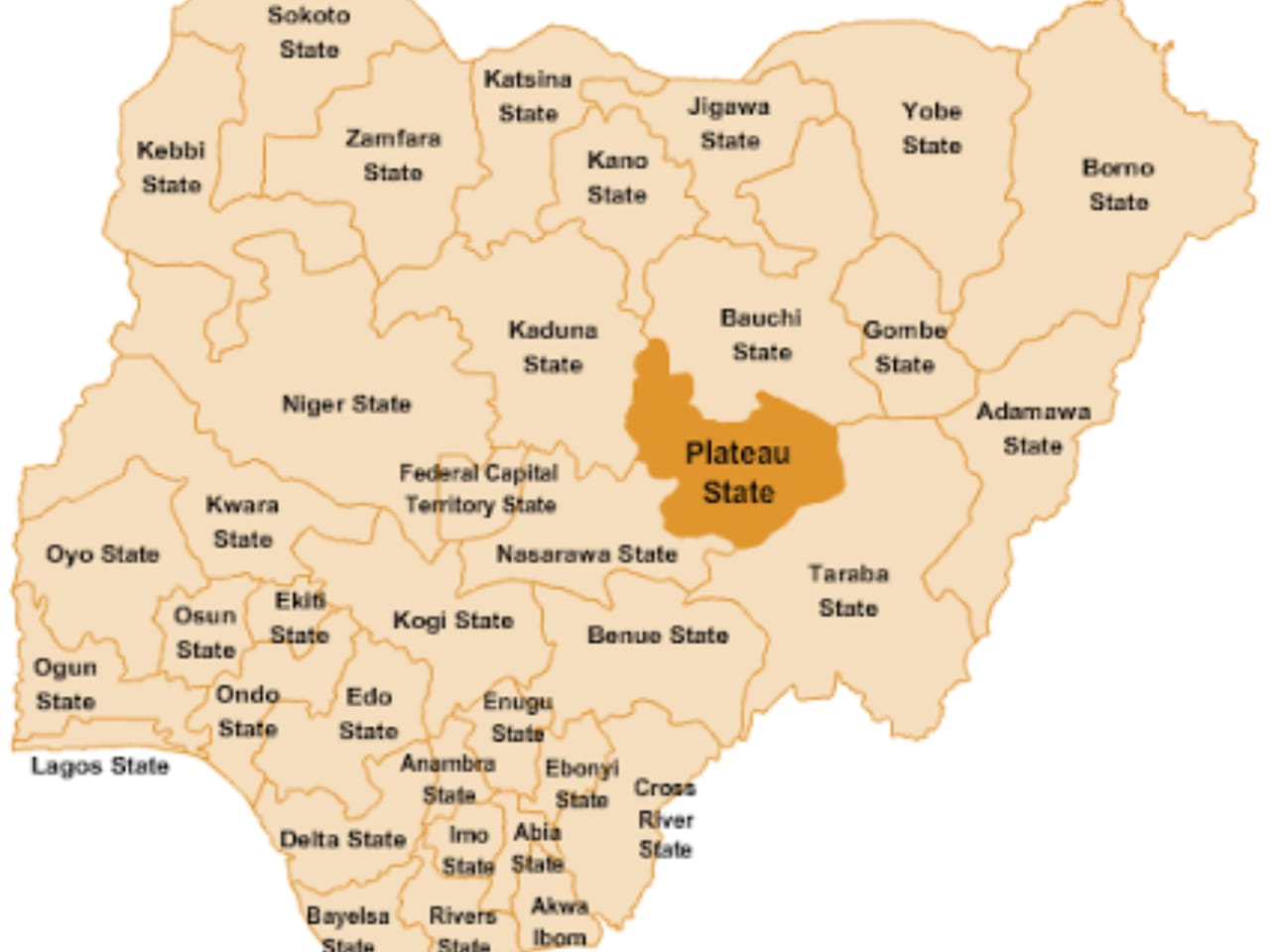
Plateau State witnessed a night of terror as Kwahaslalek village in Mangu Local Government Area fell prey to a savage attack by gunmen in the early hours of Wednesday.

Shockingly, over 30 lives were claimed, with the majority being women and children who had sought refuge in the house of a community leader following earlier unrest. 

Mark Haruna, a local community leader, revealed the details, noting the calculated nature of the assault during a distraction in Mangu town.

He somberly stated, “For the second time, my village Kwahaslalek came under attack… They came at about 12:30 am and killed over 25 people, mostly women and children.” 

Joseph Gwankat, Chairman of the Mwaghavul Development Association, condemned the heartless act, narrating the ordeal of villagers who, in a bid for safety, had gathered in one location only to face brutality.

Gwankat expressed disbelief at the absence of security, saying, “How can people who are in their villages be targets of constant attacks and killings without anything being done to stop the perpetrators?” 

In response to the escalating crisis, Plateau State Governor Caleb Mutfwang imposed a 24-hour curfew on Mangu LGA on Tuesday.

This decision comes in the wake of heightened insecurity, including the Christmas Eve attacks that left over 150 dead in various local government areas. 

The state police command, through spokesman Alabo Alfred, claimed to be unaware of the incident, promising an investigation.

As Plateau State grapples with the aftermath of these brutal attacks, the community remains on edge, haunted by the recurrent violence that continues to plague its villages.

NSCDC arrests traffickers attempting to transport 16 children from Taraba to Edo

By Uzair Adam Imam 

The Nigerian Security and Civil Defence Corps (NSCDC) in Taraba Command apprehended two suspects at the Jalingo Main Motor Park attempting to traffic 16 children to Benin in Edo.  

The suspects, identified as Daniel Madin and Federation Markus, were apprehended on Thursday. 

The children, aged between 10 and 16, included five girls and 11 boys, originating from the Zing and Bali Local Government areas of Taraba. 

Adamu Salihu, the State NSCDC Commandant, disclosed that preliminary investigations unveiled the suspects as part of a larger syndicate specialising in trafficking underage children, promising them a brighter future in Edo. 

However, these children often end up in dehumanizing jobs, and the earnings from such work are seized by their handlers. 

Salihu expressed concern about the alarming rate at which parents relinquish their responsibility for raising their children, handing them over to strangers for a meagre sum. 

He condemned the acts of forcing children into labour, prostitution, baby factories, organ harvesting, and money rituals. 

The commandant stated the urgency of halting this trend and called on relevant stakeholders in the state to take decisive measures against the rising scourge of human trafficking.  

The suspects and the 16 children have been handed over to the National Agency for the Prohibition of Trafficking in Persons for further investigation and prosecution.

In need for collective battle against drug abuse

By Nusaiba Ibrahim Na’abba

We continue to lose a part of us – our brothers, sisters, friends and colleagues – to drug abuse. It keeps getting scarier, forcing all of us to have bleak thoughts about the future. For us to win this war against drug abuse, we need to do the following and, perhaps, more.

Communality: Our common fight against the pervasiveness of these substances was long lost here. Achieving common goals is now a bizarre thing of the past. When problems happen at family or community levels, we begin playing blame games. And to those who think their wards are ‘righteous’, they’ve done an impeccable parenting job. They describe people who are facing the heartbreak of child-related drug abuse as being incapable, too strict or too loving to their kids to let that happen. They then hop on the trend of gentle parenting as the key to having upright children. But reality shows that some parents who battle these problems possess proper parenting skills.

Now, in the case of the neighbourhood or larger community engagements, menial signs of danger are being neglected. Often, these drug dealings and businesses flourish where there is community negligence. The drug lords are purposeful enough to select urban areas where families live low-key lives. There, they conduct their sales without much or any attention from the communities, using selected morning hours for their exchanges. Quickly, a business of millions will happen in front of your house, and you will forever not know.

We must work together to be more vigilant. I am confident that the power of our communal efforts supersedes a few bad eggs that vow to torment the lives of our beloved youths with harmful substances. This battle is beyond a one-man thing. I’m also not generalising the drug dealings to happen in all urban areas in Kano, but there are several allegations about that.

Sustainable Income Options: About four years ago, the BBC Africa Eye gave staggering statistics of codeine consumption in Kano and Jigawa States in their investigative report titled Sweet Sweet Codeine. Well, the situation has only gotten worse with shisha parlours and other unthinkable substances aimed at destroying us in total. The mere imagination of how much is invested in this business is inconceivable. Unlike food, illicit substance addiction does not embrace sorry as an answer. Even in the eyes of the storm, addicts must get their day’s share. And this is why its market keeps expanding and thriving. Before you start arguing, they never fail in their businesses because they always have a market.

Unless a robust, sustainable income generation mechanism is found and proliferated in the minds of young adults into this business, we will continue to lose hope. It is extremely difficult to convince a young adult who has discovered the ropes of this illegal business to start a legal business with a low income. Their state of growth is one, and the reality you cannot overlook is difficult. Adding to the complexity of the already bad situation, you would find it difficult to neglect how politicians spend money lavishly, which is widely spread on social media.

This is one of the most difficult tools that must be deployed in this fight.

Women Groups: I’m 100% supporting creating women groups who can keenly monitor community levels. Women possess an indispensable role in upbringing, and they receive the largest share of agony when they lose their child to drug abuse. When they are part of decision-making, they can contribute immensely to the patterns they notice in their wards, and finally, they own the collective action.

Nonetheless, they must be trained rigorously on the processes they can use to fact-check drug abuse in their kids. It has been an issue that women do not understand the change in eating, sleeping, or engagement habits of their kids, which is drug-related. With the training, the problem can be tackled early before it escalates.

I can vividly recall when a mature lady entered our house some years ago. She came in with deep red eyes, along with a young girl who was 7 to 8 years old. It was in the evening, around 5 p.m., when we were seated in our compound, chatting. The woman, whose age I cannot ascertain, said she needed help with some money to buy foodstuff. By Allah, her appearance and language did not show she needed help. In fact, she appeared to be more of a well-to-do individual. But you could tell she was desperate for something, and the little girl kept giving her looks of disbelief with every sentence she made.

My mother said she had no money to help her. After a moment, she gathered momentum and said goodbye, leaving with the kid. It was only months after the encounter that my mother explained that she was sure that the woman was high on a substance and that she desperately needed money to keep going.

This world is a scary place.

Language and Codes: People who are associated with illicit substance abuse or business create codes for interaction so that they cannot be easily identified. It is usually only the people in their circle who can understand them.

There must be a way of breaking down their language and codes to identify them quickly. It creates a massive gap in understanding the context of discussions; hence, meeting points and business dealings can be set up effortlessly without anybody noticing. In community kiosks where these exchanges happen, they are facilitated by a unique language and code.

We need to break that language barrier to dissect the problem better so we can address it appropriately.

Nusaiba Ibrahim Na’abba wrote from Kano. She can be reached via nusaibaibrahim66@gmail.com.