Local

Court restrains Emir Bayero from renovating Nassarawa mini-palace

By Uzair Adam

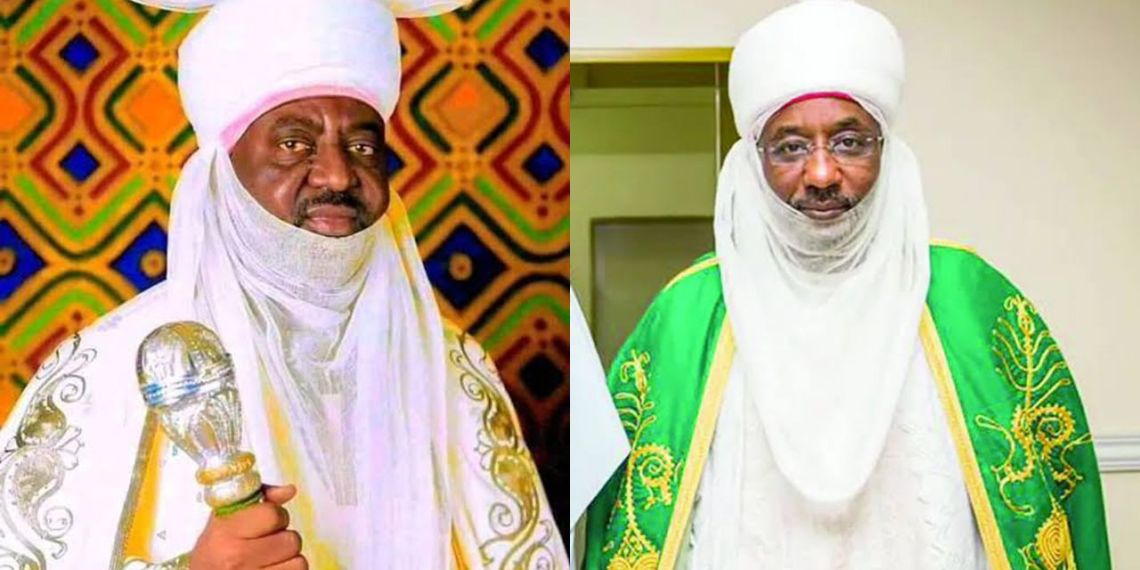
A Kano State High Court has once again issued an order preventing the 15th Emir of Kano, Alhaji Aminu Ado Bayero, from carrying out renovations to the Nassarawa Mini Palace.

The legal action was initiated by the Kano State Government, the Attorney-General of Kano, and the Kano Emirate Council, who filed a motion through their counsel, Rilwanu Umar SAN, on September 12.

They requested the court to stop Ado-Bayero from making any changes to the palace located along State Road in Kano.

In her ruling, Justice Dije Abdu-Aboki, the Chief Judge of Kano State, found the applicants’ request valid, noting that the Emir had neither submitted a counter affidavit nor provided a written defense.

Abdu-Aboki referred the case to High Court 15 for further proceedings.

During the session, counsel for the applicants argued that Bayero had been removed from his position by the Kano State Emirate Council Repeal Law of 2024.

Despite being served on September 14, the respondent had not filed a response or appeared before the court.

The applicants also requested that the court declare the Nassarawa Mini Palace as the property of the Kano State Government and the Kano Emirate Council, not the personal property of Ado-Bayero.

Previously, on September 13, the court issued an Interim Injunction, preventing the Emir and his representatives from demolishing, renovating, or making any alterations to the palace until the case is resolved.

The court ordered that the status quo regarding the palace’s structure and design be maintained during the legal process.

AMG foundation urges Kano Assembly to establish humanitarian affairs committee

By Aisar Fagge

The AMG Foundation has urged the Kano State House of Assembly to establish a legislative committee dedicated to addressing humanitarian issues in the state.

In a letter addressed to the Speaker, Rt. Hon. Jibril Isma’il Falgore, on Friday, 4th October 2024, the foundation’s Chair, Dr. Magashi, emphasized the urgent need for such a committee, citing the increasing challenges faced by the state’s vulnerable population.

This call comes months after the current administration of Governor Abba Kabir Yusuf launched the Ministry of Humanitarian Affairs and Poverty Alleviation in April 2024, aimed at tackling poverty and humanitarian crises.

Dr. Magashi highlighted the pressing issues in Kano, including recurrent flooding, rising youth unrest, climate change impacts, food insecurity, and the alarming number of street children, homeless individuals, and women in distress.

“Kano is the Nigeria’s most populous state and is grappling with numerous humanitarian challenges that require immediate and coordinated legislative action,” Dr. Magashi stated in the letter.

The foundation believes that establishing a dedicated House Committee on the subject matter would enhance the state’s response to these crises and help create sustainable solutions.

Court adjourns ruling on Kano palace renovation dispute

By Uzair Adam 

The Kano State High Court has adjourned a ruling on the ongoing dispute over renovations to the historic Nasarawa mini palace in Kano until October 10, 2024. 

The case, presided over by Chief Judge Justice Dije Aboki, involves an application seeking to halt the 15th Emir of Kano, Aminu Ado Bayero, from proceeding with modernisation plans for the palace.

The plaintiffs, which include the Kano State Government, the Attorney General, and the Kano Emirate Council, are pushing to preserve the palace’s original structure, arguing that renovations would compromise its cultural and historical significance. 

The Daily Reality reports that the Emir is the sole defendant in the case.

During the hearing, the plaintiff’s counsel, Habib Akilu, noted that the defendant’s legal team was absent and moved for an interlocutory injunction to prevent any renovation until the court delivered its final judgment.

The plaintiffs had previously secured an interim injunction on September 13, 2024, following the release of a proposed plan to modernise the palace. 

In support of the motion, a 33-paragraph affidavit deposed by the Matawallen Kano, Ibrahim Ahmed, emphasised the palace’s importance as a symbol of cultural heritage, warning that any changes could erase its architectural and historical integrity.

Justice Aboki has ordered that all relevant court processes be posted publicly to keep all parties informed.

An Open Letter to the Federal Government of Nigeria

“There’s no smoke without fire” . . . A decisive, immediate action must be taken.

Assalamu Alaikum, Peace and Blessings of Allah be unto you.

To President Tinubu, Hon. Minister of Health, Stakeholders and all Health Practitioners of Nigeria.

I am bitterly compelled to write to you today regarding a disturbing incident that transpired at Best Choice Specialist Hospital in Kano city. The Federal Inland Revenue Service (FIRS) actions at this private hospital have demonstrated a blatant disregard for human life.

Patients and parents have reported to Alfijir Newspaper that operatives of FIRS with officials, armed with guns, stormed the hospital, threatening and forcing them to vacate the premises.

The general plebeians already vulnerable due to illness, were left to wander the streets of Kano in search of alternative healthcare, only to find that many medical facilities were unavailable due to an ongoing doctors’ strike.

It is unacceptable that the FIRS dispute with the hospital should infringe upon citizens’ right to healthcare. This conflict affects not only the hospital but the the people who seek medical attention.

Best Choice Specialist Hospital is known for its philanthropic efforts and commitment to providing quality healthcare to the most vulnerable members of our society.

The hospital’s management has consistently demonstrated compassion and empathy, offering free medical services to those who cannot afford them. Their selflessness has saved countless lives and alleviated suffering.

The hospital’s community outreach programs have provided vital healthcare services to rural areas, addressing pressing health concerns such as maternal and child mortality. Their collaboration with local organizations has facilitated health education, disease prevention, and awareness campaigns.

Moreover, Best Choice Specialist Hospital has been at the forefront of disaster response, providing emergency medical care during times of crisis. Their staff’s dedication and expertise have been instrumental in saving lives and mitigating the impact of devastating events.

We urge the leaders of our great nation and the Human Rights Commission to take immediate action against this abuse of power.

Furthermore, we also implore the FIRS to reconsider their approach, recognizing that their rights do not supersede those of others.

“If your own children were in need of medical care, would you not prioritize their well-being above all else?”

Solemnly we request all the stakeholders to intervene to prevent future incidents and ensure the hospital can continue its lifesaving work.

We await your prompt response and resolution on to this critical matter.

Sincerely,
Editor-in-Chief, Alfijir Online Newspaper.

Kano: REMASAB workers lament non-payment of salaries for past 6 months

By Uzair Adam 

“I have not been paid for over six months now. I have two wives and ten children. I had to feed them with sicklepod (Tafasa in Hausa) for breakfast before I left home this morning,” said Malam Muntari Yakub (not his real name), an employee of the Refuse Management and Sanitation Board (REMASAB), in a shaky and traumatised tone.

Malam Yakubu’s experience is similar to that of many REMASAB staff who have not received their salaries for over six months due to outstanding debts owed by the Kano State government. 

The situation has made life even more difficult for them amid the soaring economic crisis in the country.

The workers, whose duties include sweeping streets and evacuating refuse, told our reporter that Governor Abba Kabir Yusuf’s current administration has paid them only four times since he took office more than a year ago.

They lamented that their situation had worsened due to the nine months of unpaid salaries they were still owed from the previous administration of Governor Abdullahi Umar Ganduje, who left office in 2023.

Yakubu recounted his distressing experience amidst the salary stoppage and the threat of hunger, “I am not a rabbit, and none of my family members are, but we eat sicklepod (Tafasa) to stave off hunger and avoid death. I had to gather some this morning for breakfast before leaving home.”

“Our salary is just ten thousand naira. You can imagine what we can buy with this meagre amount, especially with the rising cost of food. Despite struggling with this small amount, the government has left us stranded without pay for over six months,” Malam Yakubu said.

Another worker, who requested anonymity, revealed how his wife left him due to the enormous debt he had accumulated and his inability to provide for his family since his salary was stopped, exacerbated by the current economic situation in the country.

He said, “It is painful to say that my wife left me because of this situation I am in today. No matter how small the salary, it’s better to cover some of your family’s needs than none at all. After she left, the landlord also evicted me because I couldn’t pay the rent.”

The man added that despite the demanding nature of their job, most of them have to walk to their assigned streets to work, and no equipment is provided for them.

Buy your own equipment or quit the job

The workers who spoke to our reporter alleged that, despite several months of unpaid salaries, no equipment is provided for them. When they complained, their supervisors threatened them, saying they should either buy the equipment themselves or quit if they couldn’t afford it.

Another worker, who preferred to remain unnamed, said, “I had to borrow money to buy this broom you see in my hand. When I complained, my supervisor told me to buy it myself or stay home until REMASAB provides one.”

A woman with small children at home under her care said the situation at REMASAB is shocking, especially considering that one has to buy a broom. “This worsens our debt because we have to borrow money to eat and buy brooms,” she added.

Confusion over new workers receiving salaries

However, there is confusion among the workers following reports that new employees hired by Governor Yusuf after he assumed office in 2023 have been receiving their salaries.

The workers complained that despite the outstanding salary debt owed to them by the Kano State government, the new workers are paid every month, making them wonder if they are still considered employees.

“The new workers are also working with us. We call them ‘Askarawan Kwankwasiya,’ and you will see them wearing red caps or hijabs. We were shocked when we learned they are being paid monthly because we thought we might all have been sacked,” they said.

Workers remind Governor Yusuf of his promises

The workers passionately pleaded with Governor Yusuf to come to their aid, as they also had families who depended on them. 

They reminded the governor of his promises: “When he first came into power, there were rumours that we were all sacked. 

But the governor called us to a meeting at the Coronation Hall of the Government House. He told us that he had not sacked us. 

He promised to resolve our issues and said we would soon be paid. He told us that if the accountant had not travelled out of the country, we would have received our salaries that month.

“However, months later, we have yet to receive any payment. We don’t know if the accountant is still out of town. 

“We want to call on the governor to remember his promises, including doubling our salaries, and come to our rescue.”

When contacted about the situation, Ahmadu Haruna Danzago, the Managing Director of REMASAB, declined to comment, stating he was not the appropriate person to address the inquiries. 

“You should contact the Director of Operations, as he is responsible for answering these questions,” Danzago said.

Workers undergoing biometric 

Addressing the questions, Ibrahim Nasir, the Director of Operations at REMASAB, responded to some concerns.

He clarified that the organisation is currently working to resolve issues that have led to delays in worker payments. 

Nasir explained that a new biometric system had been introduced to centralise monthly salaries, but some workers had difficulties completing the biometric process. 

Regarding the alleged outstanding debt of seven months, Nasir disputed this claim, stating, “They owe us only three months, not seven. 

Some workers were previously disengaged but were later reinstated by the Kano State Government.”

Nasir indicated he was unaware of the allegations that workers were compelled to buy their own materials. 

He explained, “We typically purchase materials in bulk, and we have recently exhausted our stock. We are in the process of providing a new supply of materials.”

Kano judiciary suspends two court registrars over alleged land fraud

By Uzair Adam 

Following allegations of fraudulent activities, the Kano State Judicial Service Commission has suspended two Sharia Court registrars, Jamilu Ibrahim and Zubairu Sulaiman.

This was disclosed in a statement released by the Spokesman of the Kano Judiciary, Baba Jibo Ibrahim, on Friday. 

The commission took disciplinary action during its 75th meeting held on September 12, 2024.

According to the statement, the investigation revealed that Jamilu Ibrahim was involved in a fraudulent transaction linked to the illegal sale of two plots of land through a writ of possession. 

The investigative committee recommended his dismissal, but the commission opted for an indefinite suspension without pay, pending the outcome of his trial at a Magistrate Court.

Additionally, the investigation found that Zubairu Sulaiman, Registrar of the Upper Sharia Court, received one million naira into his personal account as a commission from the sale of the land. 

Consequently, the Judicial Service Commission has suspended him for four months without pay.

The statement reiterated the commission’s commitment to enforcing disciplinary measures against staff involved in misconduct, particularly those in judicial roles, to protect the integrity and accountability of the judiciary while maintaining public confidence.

An appeal to Governor Abba Kabir Yusuf

By Bilal Muhammad Bello

Sir, as a concerned indigenous person of the Kumbotso Local Government Area, I am writing this letter to remind you of a project that your administration has abandoned.

Your Excellency, I want to commend you for the unparalleled projects you have bequeathed in Kano State, especially in road construction in urban and rural areas. Not to mention other roads that are still under construction. The public, inhabitants of Kano State and visitors to the state can testify to your good work.

Today, the Kano metropolis has roads built with green verges, pedestrian walkways, drainage systems, street lights, and an underpass, all thanks to the development of your orientation.

Sir, the people of Zawachiki Diga, Yankusa, Rinjin Wanzamai, Gadama, and Kumbotso Township in Kumbotso Local Government Area want to draw your attention to the reconstruction of Kumbotso Road from Zawachiki Diga—Kumbotso Township to Zaria Road.

As we all know, the road network contributes immensely to Kano state taxation because of the Challawa Industrial area and the socio-economic development of the area.

It is also important to draw the governor’s attention to the silent neglect of the construction of Sabuwar Gandu—Danmaliki to Kumbotso Township Road, which has stopped. 

Therefore, I wish to appeal to the governor to do something about these roads so as to bring succour to our people whose economic activities, livelihoods, and related developmental issues have been hampered by their deplorable state.

I respectfully appeal to your administration to revive these projects and alleviate the hardships faced by our people.

Bilal Muhammad Bello (BMB) is a student of Mass Communication department, Bayero University Kano.

Kano ministry partners with AMG foundation to address humanitarian challenges

By Aisar Fagge

The Kano State Ministry of Humanitarian Affairs and Poverty Alleviation is forging a strategic partnership with the AMG Foundation, a move aimed at addressing the rising humanitarian challenges in Kano State.

This collaboration was formalized during a follow-up meeting held in Abuja between the Honourable Commissioner of Humanitarian Affairs, Hajiya Amina Abdullahi Sani, and the senior management team of the AMG Foundation, led by its chairman, Dr. Aminu Garba Magashi.

According to a statement released by the Ministry’s Director of Public Enlightenment, Halima Sani Gadanya, on Tuesday, the AMG Foundation has committed to supporting the Ministry’s early initiatives.

This support includes organizing a one-day stakeholders’ forum on the proposed Kano State Humanitarian Agenda, facilitating a two-day working visit to Abuja to build partnerships with federal agencies and the United Nations, and developing both a 2025 Annual Operational Plan and a Five-Year Strategic Plan for the Ministry.

The Daily Reality learned that one of the most significant outcomes of the meeting is the establishment of the Kano State Humanitarian Investment Trust Fund and the formation of the Kano State Inter-Ministerial Coordination Committee on Humanitarian Response.

These efforts are designed to streamline humanitarian services and enhance the Ministry’s capacity to provide timely assistance to vulnerable populations across the state.

In her remarks, Hajiya Amina Abdullahi Sani expressed her gratitude to AMG Foundation for its unwavering support, stating, “The partnership with AMG Foundation is crucial in addressing the current humanitarian challenges in Nigeria, particularly in Kano State.

“We are committed to providing effective humanitarian services to the most vulnerable populations.”

Dr. Magashi, on his part, stressed the need for inter-ministerial collaboration and the establishment of a Humanitarian Relief Fund to facilitate emergency response efforts.

“Timely interventions can significantly mitigate the effects of disasters and conflicts. We must work together to ensure effective response mechanisms,” he said.

In a related development, Hajiya Amina Abdullahi Sani paid a familiarization visit to Mr. Abel O. Eniten, the Permanent Secretary of the Federal Ministry of Humanitarian Affairs and Poverty Alleviation.

Mr. Eniten commended the Kano State government, led by Governor Abba K Yusuf, for its humanitarian efforts, assuring full support from the Federal Ministry to further strengthen the state’s initiatives.

The Kano State Ministry of Humanitarian Affairs and Poverty Alleviation is set to work closely with the Federal Ministry to enhance its mandate and vision, ensuring effective and sustainable humanitarian interventions for the people of Kano.

Man, 35, allegedly defiles 14-year-old daughter

By Abdullahi Mukhtar Algasgaini

A 35-year-old man from Adamawa State, Muhammad Auwal, has allegedly defiled his biological teenage daughter.

The state command of the Nigeria Police said in a statement obtained by The Daily Reality Thursday morning that it had arrested the man over the offence.

In the statement signed by its Public Relations Officer, Suleiman Nguroje, the command said it made the arrest on Wednesday, September 11.

“The Adamawa State Police Command has on 11/09/2024 arrested 35-year-old Muhammad Auwal for sexually assaulting his 14-year-old biological daughter,” Nguroje stated.

He added, “The suspect has since confessed to committing the crime and will be charged to court.”

What lead did to Zamfara and its people

By Dr. Abdulkadir Lawan

A putatively held belief is that the banditry and crime in the Zamfara region of Nigeria cannot be unconnected to the politics of gold and other natural resources mining. But something deadlier than politics, a stealthy by-product of crude extraction methods at the core of gold mining, might have played a leading role in the increase in crime we are witnessing today in the region. 

In the early 2000s, possibly due to the recent change in rule from a military to a democratic one, a renewed gold interest in Zamfara resulted in a mini gold rush. Women and men in the villages would dig out rock ore and extract the gold through crushing and grinding; the resulting dust was contaminated with lead. Some even brought this newfound work to their homes, contaminating their food, water, clothes, and, most dangerously, children. What followed in child deaths from lead poisoning created an unintended raucous through polio vaccination outreach and ended up inviting several efforts to clean up the areas and treat the surviving children.

It is well known that lead is dangerous, even in small doses. It mimics calcium in the body and can be stored in bones, continuing to poison the body even years after initial exposure. The brain is the most sensitive organ to lead. It basically blocks the release of neurotransmitters, which causes headaches and memory loss, and children are especially susceptible. There is no doubt among scientists that lead exposure can cause permanent learning disorders and behavioural problems.

Studies on baby teeth showed that even lead exposure well below the “safe” level results in delayed learning, decreased IQ and increased behavioural problems. There was a direct correlation between lead in children and the inability to graduate from high school in the US. While the CDC has since lowered the acceptable levels of lead in children’s blood from 60ug/dL to 3.5ug/dL over the years, there is no safe lead level as far as it is known today.

Globally, about 65% of all unexplained intellectual disability are believed to be caused by lead. Many countries have monitored the levels of lead exposure in their children over time. In Nigeria, we have little to no data nationwide. A particular US data, however, shows troubling correlations. 

Violent crimes steadily rose from the 1970s to the 1990s before abruptly declining. The troubling part? A graph of average preschool blood lead levels looked strikingly similar to crime levels roughly twenty years apart. The question was whether kids exposed to higher levels of lead grew up to commit more crimes.

The same pattern appears in Britain, Canada, and Australia. In another study, the lead concentrations in the blood of those arrested for violent and anti-social behaviour could not have been more correlated with their behaviour. This shows that lead is at least very likely responsible for some of the increase in crime. 

Whatever the reason for the resurgence of artisanal gold mining in Zamfara in the early 2000s, children raised in that period were in their early teens and 20s when the country began to witness an upsurge in bandit activities at the start of 2010. Thankfully, considerable clean-up efforts and community sensitisation mean there is an unlikely recurrence of lead poisoning effects on this scale around the region. A decline in violent activities can only then be hoped for. 

Glissading along the same line, the biggest source of lead pollution worldwide was the tetraethyl lead compound that was added to gasoline to make leaded fuel. Nigeria completely phased out leaded gasoline in 2004, as did all other countries between 1986 (Japan) and 2021 (Algeria). Nigeria witnessed a record period of civil violence from the 1970s until about the early 2000s. The current crop of our, in my opinion, clearly cognitive-declined politicians was the most exposed to vehicular lead poisoning in the same generation as the perpetrators of multiple violent religious and ethnic crises.

The dangers of lead had already been known for hundreds of years. In 1786, Benjamin Franklin remarked that lead had been used for far too long considering its known toxicity – “This, my dear friend, is all I can at present recollect on the subject. You will see by it that the opinion of this mischievous effect from lead is at least above sixty years old. And you will observe with concern how long a useful truth may be known and exist before it is generally received and practised on.” 

Scientists decided to add lead to fuel one hundred and fifty years later (i.e., after Benjamin Franklin’s speech). Almost one hundred years after that, the juveniles among our (Nigerian) citizenry were exposed to lead, leaving a nation to wonder why there is so much crime in our time.

Dr. Abdulkadir Lawan wrote via abdullwn@gmail.com.