Lifestyle

You can add some category description here.

Construction of Primary Health Care in Kwajale: What is causing its delays?

By Abdulaziz Isah Bagwai

After the Asr prayer on a rainy Monday, Jummai, who was pregnant, was sweeping her courtyard when her daughter Laure returned from the river, where she went to fetch the water they would use for the chores. “Assalamu alaikum,” Laure greeted as she entered the house and poured the water she fetched in a rubber bucket into a large pot.

Jummai, an all-female mother of five, had prayed endlessly during the day and night for a male child, and since the miracle of this pregnancy, her prayers have doubled. She’d often wake up in the middle of the night to remind God of her prayers and to jokingly remind Him that He’d promised to answer good prayers. Hers was.

One night in September, Jummai began her labour with low and intensifying moans that woke Baban Laure, her husband, whose sleeping groans filled the noiseless room. “What’s happening? Are you well?” He inquired in a low, creaking tune. She couldn’t answer him, but in her moans, he understood she was calling God for aid into her large tummy, and when he grabbed his torchlight, he saw that she was holding the belly tightly.

Baban Laure rushed to his neighbour, Rakiya, a traditional birth attendant. Upon their arrival, Rakiya confirmed that it was labour, but the condition was beyond her basic skills; hence, he should take his wife to the primary health care facility in Bagwai.

Amidst preparation, Jummai continued to bleed, and Baban Laure suggested that “if not for the bleeding, we could manage to wait until the morning when the staff of our health post come.” Baban Laure suggested this to Rakiya, who was engrossed in controlling the seemingly unending bleeding. Baban Laure said they could only travel to Bagwai on bikes that night of misery because the only person who had a car wasn’t in town.

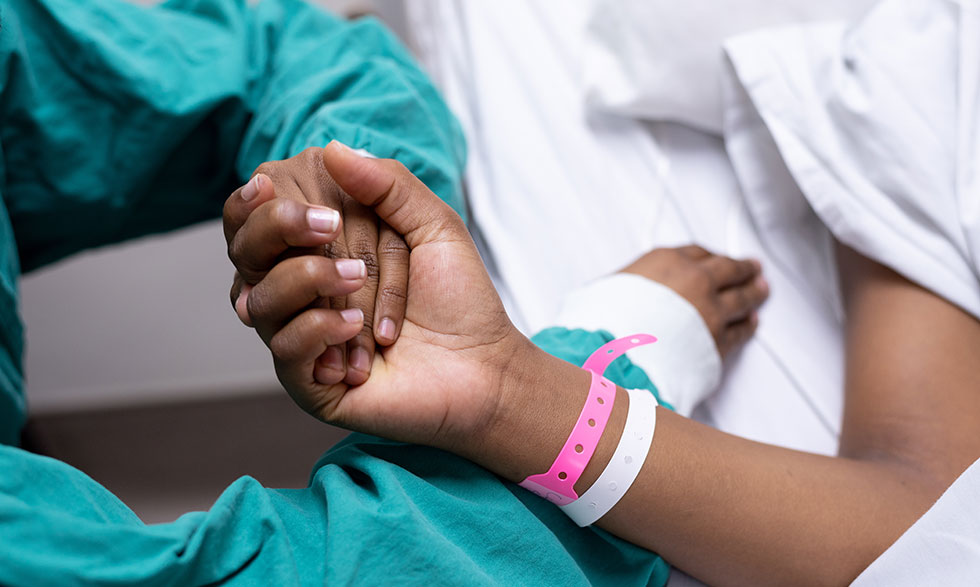
Jummai gave birth to a beautiful baby boy at around 4:00 a.m., whom she was unable to see immediately until the day broke. “Where’s my baby?” She asked. But the strolling tears in Rakiya’s eyes told her everything. The baby is dead, she understood, with a bit of desperation in her face. When the birth attendant was telling Rakiya to report on time in emergency cases like this because the baby died as a result of oxygen starvation, which was, of course, due to the excess blood she had lost, she understood that her baby was a boy. Before Rakiya arrived at her bed to calm the tears that formed rivers in her eyes, she lay there stranded, unconscious, and was admitted for two weeks!

What is behind the pause of Kwajale Comprehensive Health Centers construction project?

Had this project been completed and launched today, there would’ve been a 24-hour medical service in this village, which could’ve saved the life of Jummai’s baby boy that she had wished and prayed for. 

“This project has put light on many faces in Kwajale, for it was initiated when our clinic and the services we rendered were insufficient for the community,” said Saifullahi, a healthcare worker at Kwajale Primary Health Post.

“When the construction started, we were assured that it wouldn’t take long to be completed, and we agreed to their assertion because they worked with an enthusiastic speed,” Saifullahi continued.

Who are the contractors?

It was a federal government project awarded in 2007 by the Association of Local Government of Nigeria (ALGON) to Mathan Nigeria Limited. This indigenous engineering company had quietly touched the lives of Nigerians long before it got caught in the eye of the storm because an April 2nd, 2012, Premium Times report stated that “Abandoned N37 billion health centre projects rot away nationwide.” However, “the contractor Mathan Nigeria Limited is insisting on a variation of the original contract sum.”

However, on October 24th, 2023, Platform Times reported that “After 16 years, ALGON disburses equipment to [an] abandoned hospital in Ogun [State].” Although this report might’ve meant ALGON was on another different project with a different contractor, the report continued to read, “The equipment, which was part of a federal government project awarded in 2007, was delivered to the health centre on Monday by a contractor, Mathan Nigeria Limited.”

Why the failed project in Kwajale is different

“We’re a little bit far from Bagwai [town], and we do not have good roads; referred patients suffer a lot [in the day, not to mention at night, and even in the dry season, speak less of the rainy season] along the way.” Malam Umar, a community member, lamented.

“We’ve been given classes to continue with our activities because the building meant for the primary health post has been under renovation for years now, but no progress has been made yet,” said Malama Aisha, the head of Kwajale Health Post.

“A non-governmental organisation (NGO), the United Nigerian Youth Forum (UNYF), has urged the Department of State Services (DSS), the police, other security agencies, and the Economic and Financial Crimes Commission (EFCC) to probe the contractor handling the construction of health centres across the country. The forum accused the contractor, Mathan Nigeria Limited, of abandoning the N57 billion contract, which the forum said had led to the deaths of many Nigerians.” Leadership news report.

Ali Muhammed, the UNYF’s spokesperson, alleged that the contractor’s negligence had caused the deaths of hundreds of expectant mothers who ought to have safely delivered their babies at the health facilities if the projects had been completed on time.

For 17 years now, the remedy for the continued pain like Jummai’s in Kwajale is still uncalled for; no medical condition is manageable at night in Kwajale, their bad roads are yet the same, and patients still suffer along the bicycle-and-motorcycle-only road.

Windstorm wreaks havoc in Sokoto, 50 households affected

By Uzair Adam Imam

A windstorm in Sokoto State, Nigeria, has displaced at least 50 households in the Shagari and Wamakko local government areas.

The Director of Disaster Management, Umar Isa, confirmed that some victims have lost their homes entirely and are now staying with relatives or in temporary accommodations.

According to Isa, the ministry had contacted the National Emergency Management Agency (NEMA) over the issue.

He also noted that there were no reports of flooding in the state, despite predictions that some areas would experience flooding.

The state government has been conducting awareness campaigns to prevent flooding in prone areas.

The windstorm has caused significant damage, and the affected households are in need of assistance.

GCC, government fight maternal mortality in Borno 

By Lawan Bukar Maigana 

According to a report by the World Health Organization, Nigeria, after India, has the highest number of maternal mortality in the world. The report shows 788 women and children deaths per hundred thousand’ in India, and 540 women and children ‘per thousand’ died in Nigeria.

Other countries with high maternal, neonatal, and stillbirth rates are Pakistan, the Democratic Republic of the Congo, Ethiopia, Bangladesh, China, Indonesia, Afghanistan, and the United Republic of Tanzania.

‘About 57,000 mothers died from pregnancy and complications during childbirth in 2023 alone,’ said Nigeria’s Minister of Health and Social Welfare, Muhammad Pate, at a public health function.

Unfortunately, the frequent loss of lives among pregnant women in Nigeria, particularly Northern Nigeria, remains an issue of concern. This gives Nigeria a poor global ranking.

Pate explained that the Federal Government was committed to drastically reducing maternal mortality through the new Safe Motherhood Strategy. He noted that the central government will take actionable steps and cascade the strategies to state and local governments, targeting at least seven million pregnant women.

“The aim is to ease six million new births by activating the Decentralised Facility Financing package, establishing robust collaboration with health NGOs, community leaders, and media to boost awareness campaigns.” 

Sequel to the Health Minister’s lamentation, the Girl Child Concerns (GCC), in collaboration with the Borno State Government through the Multi-Sectoral Crisis Recovery Project (MCRP), has trained 300 Community Health Extension Workers (CHEWs) on Basic Emergency Obstetric Care and Early Neonatal Care in Borno State.

The Chief Adviser and Coordinator for Sustainable Development, Partnerships, and Humanitarian Support to the Governor of Borno State, Dr. Mairo Mandara, stated that the training aimed to improve maternal and child health services across the state. The training was conducted in three zones of the state. Each zone underwent one week of theoretical training followed by one week of clinical training. 

The training for Borno Central was held on May 27, 2024, for Borno North on June 3rd, and for Borno South on July 1st, with each zone being exposed to theoretical and clinical aspects of the training.

Dr. Mandara emphasized the governor’s commitment to ensuring quality health services for the resilient people of Borno State, especially the locals, given the magnitude of the challenges they face due to the terrorist activities of Boko Haram insurgents in their communities.

Dr. Mina Endeley from the Namu Project in the UK and Oluwaseyi Akinlaja from Princes Alexandra Hospital Trust in the UK have also joined the training, leading a practical session on successful delivery and universal approaches to handling emergency cases.

Endeley at MCH Biu Local Government Area practically taught non-medical attendants the concepts of basic life support, including managing catastrophic bleeding in the community.

The participants practised approaching the scene safely, calling for help, managing catastrophic bleeding, and reviewing the patient’s airway, breathing, and circulation using a mnemonic we created.

Oluwaseyi Akinlaja from Princess Alexandra Hospital Trust, UK, explained the labour mechanism: how a baby is delivered as it passes through the pelvis into the birth canal and is born by expulsion. This was done to enable CHEWs to visualize the birth process so that they could make early referrals when necessary.

She exposed the participants to the seven steps/processes that a baby passes through before delivery, namely engagement, descent, flexion, internal rotation, extension, external rotation, and extension.

On his part, the Emir of Biu, Maidala Mustapha Umar Aliyu II, described the combined efforts of the organization—GCC—and Borno State Government as a “timely homily” and expressed readiness to support the effort in every way possible.

The lead facilitator of the training, Hadiza Yahaya, has expressed satisfaction with the performance of the participants during the training and expressed hope that the CHEWs will help greatly in the fight against maternal mortality. 

The training offered to Community Health Extension Workers (CHEWs) in Borno State is expected to result in each participant putting the knowledge into practice and witnessing a drastic reduction in maternal mortality in the state.

Lawan Bukar Maigana is the Communication Officer for Girl Child Concerns, GCC, and can be reached via email at lawanbukarmaigana@gmail.com.

Prof. Yusuf Bara Jibrin: A medical trailblazer

By Usman Abdullahi Koli, ANIPR

In the words of the great German and one of the most impactful scientists, Albert Einstein, “Intellectuals solve problems, geniuses prevent them.”

In medicine, intellectualism and professionalism are the hallmarks of integrity. Back in Nigeria, like every sector, health faces its challenges. And in the words of the great scientist, dodging problems may not be far from shifting disaster; he believed that as an intellectual, the problem should be solved head-on. Professor Yusuf Bara Jibrin, the Chief Medical Director of Abubakar Tafawa Balewa University Teaching Hospital, Bauchi, epitomises these traits.

As a Professor of Internal Medicine specialising in infectious diseases, Yusuf Bara Jibrin has made significant strides in clinical development, research, training, staff welfare, and community engagements.

Prof. Jibrin is a beacon of intellectual curiosity and an embodiment of generosity in serving humanity. Through groundbreaking research, he has revolutionised our understanding of disease diagnosis and treatment, yielding numerous advancements in the medical field. His pedagogical prowess has inspired generations of medical professionals, nurturing their talents and fostering a passion for healing. Beyond his discipline, his expertise embraces various subjects, with an unending commitment to mentoring and guiding his staff and students.

Under his leadership, ATBUTH Bauchi has emerged as a premier healthcare institution in Bauchi and beyond. The sophisticated new facilities, including the General Outpatient Department (GOPD) complex, ENT department, Infertility Centre, and the upcoming Dental Clinic and Diagnostic Centre, are a testament to his commitment to excellence. His efforts have also led to the establishment of robust community engagement and management development programs, enhancing the hospital’s visibility and operational efficiency.

ATBUTH Bauchi has achieved numerous clinical milestones under this exemplary leadership. The hospital conducted its first endoscopic laser therapy for kidney stones, a significant advancement in minimally invasive surgery. The Pharmacy Department has begun using a drug formulary, aiming for essential service delivery. The successful execution of the first spinal surgery operation and the introduction of laser urethral stone procedures further underscore the hospital’s clinical capabilities.

The NCDC recognises the Molecular Genetics and Infectious Diseases Laboratory at ATBUTH as a national surveillance system, thanks to its advanced sequencing equipment. The Lassa Fever Isolation Centre has recently invested in new dialysis machines, effectively reducing Lassa fever fatalities and positioning the centre as a leader in managing Lassa fever cases in Bauchi. The Pharmaceutical Production Unit has commenced making sanitisers and hydrogen, contributing to the hospital’s competence in pharmaceutical manufacturing.

ATBUTH Bauchi has launched an Emergency Medical Service and Ambulance System equipped with a highly responsive team to provide effective emergency medical assistance. The Geriatric Management Centre is set to commence home services, focusing on the well-being of elderly individuals. The implementation of the Electronic Medical Record System has significantly reduced patient waiting times, improving overall service delivery. The established Oxygen Plant has become an independent supplier, reliably providing oxygen to Bauchi and its neighbouring states.

The management team at ATBUTH, under Prof. Jibrin’s visionary leadership, has transformed the hospital into a beacon of excellence in healthcare delivery, research, and training. Their collective efforts have propelled ATBUTH to new heights, ensuring it remains at the forefront of medical innovation and patient care.

As we acknowledge these achievements, we pray for continued success and growth for ATBUTH Bauchi. May their efforts be rewarded with further advancements and improved healthcare outcomes for the benefit of all.

Usman Abdullahi Koli wrote via mernoukoli@gmail.com.

Secrets to elegance and self-care for women

By Aisha Musa Auyo

Come, let me share some secrets with you, my sis. Sure, many will not accept it as a fact that most men dislike heavy makeup and artificial stuff. Of course, like in every rule, there are exceptions. So, know your man. 

My opinion is based on the fact that you can look very classy, elegant, and feminine without using hard makeup or loud stuff. Yes, in most cases, decent men prefer the natural looks of the opposite gender.

Gurl (this also applies to you, bro.!), neatness is paramount in all cases. Bathe at least twice a day. Take time to wash your underarms, under and between busts, thighs, and navel. Pay attention to your feet, areas around your ears, and between your face and neck, and wash down with warm, clean water.

Brush your teeth at least twice daily, and floss at least once daily. Shave at least once a week. Use deodorant at least once a day. Use alum or lemon on your armpit if deodorant is expensive for you. Once in a week, try to exfoliate your lips. Dry, cracked lips are a turnoff. Mix sugar and olive oil to form a scrub, then rub on your lips for a few minutes. Clean with a wipe. Repeat the process more than once a week if you have dry skin. The result is something I consider a subject for another day. But know for now that moisturized and soft lips are more alluring than lipstick-painted lips.

You see, exfoliation or scrubbing is very essential. Our body releases new cells daily, and the old cells die. Ordinary soaps do not exfoliate. This is where bath salts, bath sugars, scrubs, and exfoliating body washes come in. These products ensure the dead cells leave your skin and let the new cells breathe. This will make your skin look fresher, softer and younger. This will make you neat and glow. Just as it will help eradicate bad smells from your body.

If money is a problem, there are cheaper options. Lemon. Squeeze lemon in your bathing water. It helps to remove dirt and impurities from your skin. It also removes all bad smells and won’t let your sweat smell during the day. It also lightens your complexion and leaves your bathroom smelling fresh. Scrubbing your body with salt once in a while similarly does the trick. Henna (lalle) also helps exfoliate, soften, and remove bad smells from the skin.

On perfume, this is tricky, especially for us Muslims, because our religion frowns at women using it. So, deodorant, cool body spray, and a kullaccam will work when you go out. When you’re home, if you like, bath with perfume. If you’re married, check with your husband what kind of perfume he prefers on you. 

Another very important self-care is manicures and pedicures. You see, the first thing people, both men and women, subconsciously observe in your body is your feet. It’s crucial, therefore, to work on your toes and fingers. Make sure your nails are trimmed. Learn how to cut cuticles and shape your nails. If you can afford it, go to the salon for expert service.

Long nails are a turnoff, please! As a Muslim, please use natural henna—black, red, or maroon- if you must colour your nails. If you’re married, check if your husband likes it before you do. “Kada garin neman gira a rasa ido.’

Let’s talk about the feet. Our feet must be clean, regardless of the weather or your skin type. If you have dry skin and cracked feet, make time every day to exfoliate the dead cells, and apply shear butter after every ablution and bath. That will soften the feet and make it look neat. Also, use socks regularly. If you’re lucky your feet don’t crack, make sure they’re always dirt-free and moisturized. Cracked, dirty, and dry feet are a turnoff. Soft, moisturized, neat feet are a turn-on.

For your palms, always use moisturizers after washing or using water. Because we ladies touch water often, this results in dryer, harder palms. Coconut oil, olive oil, and shea butter help with moisture and softness, but they darken the skin. Let’s look for hand creams made specifically for hands to overcome this. If you can’t afford one, vaseline also works wonderfully well.

Dear lady, the choice of body cream or moisturizer you use significantly affects your life. I’m not exaggerating. Girls who are comfortable with their skin colour, in other words, who do not bleach their skin, clearly exhibit contentment in how our Lord created them. They exude confidence, and they don’t smell like rotten fish when they’re under the sun. These ladies have almost the same skin colour throughout their bodies and do not have to hide their palms and toes. 

Don’t disobey your Lord and harm your body to attract men. Decent men prefer women in their natural colours. Moreover, while your skin colour or body may attract a man, it’s your character that will keep him.

Universally, that’s in time and space. Women have always known that our hair and how we take care of it play a huge role in our looks and attractiveness. 

Wash your hair regularly. Plait your hair, or style it in ways that accentuate your beauty. (Some ladies look better with braids, while others look better without them.) Or, in ways your husband prefers… if you’re married.

Wash your hair with shampoo and conditioner regularly, steam it monthly, and dry it after washing. Find a good-smelling hair moisturizer, or use natural oils that smell nice. You can add a drop of oil perfume to your hair creams or oils. When you’re home, please allow your hair to breathe. 

Earrings are the basic jewellery. If you can, necklaces and waist beads are perfect additions. Some people like anklets, nose piercings, bracelets, wristwatches, rings, etc. Please don’t overdo it—it’s classless! Keep it simple and modest.

When it comes to clothes, decency should never be compromised. But please don’t look like a granny when you’re a teen or even anything less than 60 years old. Even the grannies are now slaying—they don’t care for anybody! 

Tight clothes are bad for you religiously and health-wise. They make you look cheap and classless. Even hygiene-wise, tight clothes are bad. People who wear tight clothes smell! Yes, because the human body needs to breathe, and tight clothes hinder that process. 

Avoid shouty colours or mismatched colours when dressing. Don’t interchange corporate dressing with wedding attire. Dress nicely and appropriately for each occasion, and don’t take any outing for granted. You don’t know who you’ll see or meet. The phrase ‘Dress the way you want to be addressed’ is something you should always hold on to. 

Accessories like shoes and bags are available at different prices. You know better than me what you can afford, but they’re a must-have for ladies. Wear shoes that will not embarrass you, that are comfy, and that will not splash sand on your feet. We are in Nigeria. When they say there are shoes for car owners and trekkers, understand that it’s nothing but the truth. Shoe shining and polishing are not only for men. Please keep your shoes and bags neat.

Let me stop here… I’m tired😒… I’ll conclude with this statement. “No matter how neat and beautiful you are, you sink if your character stinks. In other words, there ain’t no need telling it: with a character that stinks, you’re finished, girl. So work on your personality more than your physicality”.

You are welcome😉.

Aisha Musa Auyo is a Doctorate researcher in Educational Psychology. A wife, a mother, a homemaker, caterer, parenting, and relationship coach. She can be reached via aishamuauyo@live.co.uk.

Your beauty will attract a man, but it’s your character that will keep him

By Aisha M. Auyo

I asked a medical doctor a weird question. It went like this: “Dr, you have been seeing all sorts of women daily—beautiful, voluptuous, and many more. How do you know which one to love or choose as a spouse?”

His reply is the most sensible thing I read today, he said:

“Because we have been seeing a lot of them, we have seen all sorts of them, we have realised that it is not the body or the face that matters… besides, everything is almost the same… It is the brain and the heart that varies. That’s what matters most for decent guys, anyway. ” 

The same applies to university lecturers. They have seen them all, fresh students every year. My Dad once told me that of all the thousand female students he taught at that time, my Mom caught his attention because of her intelligence, manners, and decency. 

So my sisters…..  

Work on your personality more than your physicality. 

Work on your manners. 

Work on your attitude. 

Work on your social skills. 

Work on your emotional intelligence. 

Work on your neatness. 

A great body can be bought; Liposuction is everywhere. 

Kayan ciko’ are everywhere. 

Fair skin can be bought, and bleaching and skin lightening are everywhere. 

Fine faces can be bought; plastic surgery is everywhere. 

But good manners, patience, humility, intelligence, empathy, a clean heart, etc., can never be bought. They’re priceless. 

That’s what will distinguish you from the others. That is what will keep a man glued to you. That’s what will help you stay married.

Jubilation as FG announces duty-free import window for food commodities 

By Sabiu Abdullahi 

In a bid to address rising food inflation and alleviate the economic hardship faced by Nigerians, the Federal Government has announced a 150-day duty-free import window for food commodities. 

The initiative, which is part of the Presidential Accelerated Stabilisation and Advancement Plan, aims to reduce demand for forex by food importers and make food more affordable for Nigerians. 

According to the Minister of Agriculture and Food Security, Abubakar Kyari, the duty-free import window will be valid for commodities such as maize, husked brown rice, wheat, and cowpeas. 

The government will also import 250,000 metric tonnes of wheat and 250,000 metric tonnes of maize, which will be supplied to small-scale processors and millers across the country. 

The minister noted that the government’s decision to allow duty-free imports was necessitated by the high cost of food items in the country, which has made it difficult for many Nigerians to afford basic foodstuffs. 

He attributed the high food prices to various factors, including infrastructural challenges, multiple taxes and levies, and profiteering by marketers and traders. 

The government’s move has been commended by stakeholders in the agricultural sector, who noted that it would help stabilize food prices and provide relief to millions of Nigerians. 

However, some experts have expressed concern that the initiative may undermine domestic agricultural production and turn Nigeria into a dumping ground for imported commodities. 

The government has assured that it will collaborate with state governments to identify irrigable lands and increase land under cultivation, and will also ramp up production for the 2024/2025 farming cycle through sustained support to smallholder farmers. 

Additionally, the government plans to develop a strategic engagement for youth and women in greenhouse cultivation of horticultural crops and fast-track engagements with the Nigerian Military to rapidly cultivate arable lands under the Defence Farms Scheme.

LGBTQ: An open letter to Kano State Governor, Abba Kabir Yusuf

Dear Government of Kano State, the Kano Emirate, Hisbah Board, and the Kano State Council of Ulamas

Peace be upon you,

An effort is being made to spread LGBTQ advocacy in Kano State in the name of human rights, seeking “freedom” and sustainable livelihoods for our daughters and helping orphans, the needy, and those with special needs.

This advocacy is being spread publicly without shame, disregarding your esteemed positions and influence in Kano State— in schools and neighbourhoods. Shockingly, even government officials were cornered in the name of dialogue or capacity building.

The organization behind this heinous act in our state is the Women Initiative for Sustainable Empowerment and Equality. They refer to themselves as “WISE.” From what we have seen on their platforms, they even have an independent office in Yankaba Kawaji, Bompai GRA, Kano.

In a statement we saw on the pages of this organization, we noted that they once organized a workshop for officials from Hisbah, KAROTA, NDLEA, and others!

If this organization has grown strong enough to gather these officials in one place under the guise of a workshop—regardless of the topic—we fear the influence they have already exerted in our state.

To verify all these, please check their Facebook page named “Wise.”

You might recall the recent uproar over the Samoa Agreement signed by the Federal Government, which is alleged to have come with strings attached, one of which is to allow advocates of LGBTQ, like WISE, to pursue their agenda freely.

This has sparked controversy in Nigeria over the past few days. We have seen how the scholars in Kano stood firm on their pulpits, as we expected, to vehemently condemn this attempt, should it prove true.

This controversy has further revealed that there are laws in our country that outright prohibit any attempt to propagate the agenda of LGBTQ. We have also found solace in the unity of Muslims and Christians in rejecting this thing we collectively see as immorality in our culture and religion.

With this, we call upon the Governor of Kano State, Alhaji Abba Kabir Yusuf, the Emir of Kano, Mallam Muhammadu Sanusi II, the Chairman of Hisbah, Mallam Aminu Daurawa, and the leadership of the Kano State Council of Ulamas, to ensure that this organization, WISE, packs up and leaves our dear state and that its activities are banned by any means possible.

The people of Kano State are your trust! And God will question you about this trust on the Day of Judgment!

We’ve done our part by letting you know about this issue. We have informed you if you were unaware of this organization or its activities.

Misbahu Hamza  

July 7, 2024

Diabetes week 2024: Understanding, preventing and managing a global health challenge

By Mujahid Nasir Hussain

Diabetes Week is an annual event dedicated to raising awareness about diabetes and encouraging prevention and management strategies to support those living with the condition globally. As the world comes together for Diabetes Week 2024, observed from June 10th to 16th, communities, healthcare professionals, and organizations united in a series of events and campaigns to foster a deeper awareness and a proactive approach towards combating the condition.

According to the 2024 International Diabetes Federation (IDF) report, diabetes is a significant and growing global health issue affecting diverse regions and populations. Approximately 537 million adults (20-79 years) worldwide are living with diabetes, with this number expected to rise to 643 million by 2030 and 783 million by 2045. One of the major concerns regarding this increase is that Nigeria is among the countries facing such a significant rise, with current estimates showing millions affected and a substantial proportion of cases undiagnosed. Thus, there is a need for improved diabetes education, prevention programs, and accessible treatment options to combat this growing health crisis.

Diabetes is a chronic condition characterized by high blood glucose levels. This occurs when the body either doesn’t produce enough insulin or cannot effectively use the insulin it produces. Persistent high blood glucose can damage various organs and systems, leading to significant health complications. Although there are many forms of diabetes, according to numerous literature reports, there are generally three. Viz: Type 1 diabetes, Type 2 diabetes and Gestational diabetes.

Type 1 Diabetes

Type 1 diabetes is an autoimmune condition where the body’s immune system mistakenly attacks and destroys the insulin-producing beta cells in the pancreas. This destruction leads to little or no insulin production, crucial for regulating blood sugar levels. Individuals with Type 1 diabetes require lifelong insulin therapy, either through injections or an insulin pump, to manage their blood glucose levels. This type of diabetes often manifests in childhood or adolescence but can occur at any age. Symptoms include excessive thirst, frequent urination, unexplained weight loss, extreme fatigue, and blurred vision.

Type 2 Diabetes

Type 2 diabetes is the most common form of diabetes, accounting for about 90-95% of all diabetes cases. It occurs when the body becomes insulin resistant, or the pancreas fails to produce enough insulin. This condition is often associated with lifestyle factors such as obesity, physical inactivity, and poor diet. Risk factors also include age, family history, and certain ethnic backgrounds. Symptoms are similar to Type 1 diabetes but may develop more slowly, making early detection and management crucial. Lifestyle changes, oral medications, and sometimes insulin therapy are used to manage Type 2 diabetes.

Gestational Diabetes

Gestational diabetes occurs during pregnancy when the body cannot produce enough insulin to meet the extra needs of pregnancy. This condition typically resolves after childbirth but increases the mother’s risk of developing Type 2 diabetes later in life. Gestational diabetes can lead to complications such as high birth weight, preterm birth, and increased risk of cesarean delivery. Managing gestational diabetes involves a healthy diet, regular physical activity, and monitoring blood sugar levels. In some cases, insulin therapy may be needed.

Diabetes Complications

Unmanaged diabetes can lead to severe and potentially life-threatening complications, emphasizing the importance of effective management. These complications include:

Cardiovascular Disease: People with diabetes have a higher risk of developing heart disease and stroke due to damaged blood vessels and nerves.

Neuropathy: High blood sugar levels can damage nerves, especially in the legs and feet, leading to pain, tingling, and even loss of sensation. Severe cases can result in foot ulcers and amputations.

Nephropathy: Diabetes is a leading cause of kidney disease, which can progress to kidney failure, requiring dialysis or a kidney transplant.

Retinopathy: High blood sugar can damage the blood vessels in the retina, leading to vision problems and even blindness.

Skin Conditions: Diabetes can make individuals more prone to bacterial and fungal infections and other skin disorders.

Treatment Strategies for Diabetes

Effective diabetes management requires a multi-faceted approach that includes lifestyle changes, medication, regular monitoring, and education & support.

Lifestyle Modifications: Adopting a balanced diet rich in fruits, vegetables, whole grains, and lean proteins while reducing intake of processed foods and sugary beverages. Regular physical activity, such as walking, cycling, or swimming, is essential to help maintain a healthy weight and improve insulin sensitivity.

Medication: Treatment depends on the type of diabetes. For Type 1 diabetes, insulin therapy is essential. For Type 2 diabetes, oral medications like metformin or other hypoglycemics may be prescribed, and in some cases, insulin may be required.

Monitoring: Regular blood glucose monitoring ensures levels remain within the target range. Continuous glucose monitors (CGMs) provide real-time data, allowing for better management and adjustment of treatment plans.

Education and Support: Diabetes education programs help individuals understand their condition, make informed decisions about their care, and provide emotional support. Support groups offer a platform to share experiences and coping strategies.

Mujahid Nasir Hussain is an undergraduate prize awardee for Physiology 2023, Bayero University, Kano, Nigeria. He wrote via mujahidhnasir@gmail.com.

Hormones: The symphony behind complexities in human behaviours, looks, and emotions

By Aisha Musa Auyo

Hormones influence or determine a considerable percentage of our behaviours and physical appearance. If we say our hormones are what makes us, we won’t be exaggerating. Yet, we hardly discuss it. Yet very few know about it; very few believe in its impact. From genetics to behavioural scientists to physiologists and psychologists, these specialists believe in the power of hormones, especially in women. I will try my best to write in the simplest language possible so that I will not suffocate you with medical jargon.

Hormones are chemicals that coordinate different bodily functions by carrying messages through the blood to the various organs, the skin, muscles, and other tissues. Hormones are the signals that tell your body what to do and when to do it. There is no gainsaying, therefore, that hormones are essential for life and health. So far, scientists have identified over 50 hormones in the human body.

 Hormones control many bodily processes, including metabolism, homeostasis (constant internal balance), such as blood pressure and blood sugar regulation, fluid (water) and electrolyte balance, body temperature, growth and development. Hormones also affect sexual function, reproduction, sleep-wake cycle, and mood.

With hormones, a little bit goes a long way. Because of this, minor changes in levels can cause significant changes to your body and lead to certain conditions that require medical attention. The levels and nature of hormones in the body correlate with our moods, sense of smell, body odour, taste buds, thinking faculty, energy, and looks. 

In this week’s outing, I will start with women, as they are the gender whose hormones have a greater influence and impact on their lives. If you have a woman in your life, regardless of your relationship with her, know that hormones are constantly influencing her. 

Growing up and transitioning into a woman is a roller-coaster of emotional and physical changes. There will be noticeable differences in her attitude, looks, behaviour, and even how she smells. There will be irritability, sadness, and heightened or lowered confidence.

Women have heightened hormonal influence during certain periods. When she grows from a girl to an adult, when she’s ovulating, and at different times when she is on her monthly period. There is a hormonal influence in pregnancy when she is breastfeeding and when she is using hormonal contraceptives. There is yet another hormonal issue at menopause, just as it is at adolescence. 

A few days to menstrual onset (ovulation periods), a woman experiences a libido boost, appetite changes, heightened sense of smell and mood changes…usually in a good mood. But, during the onset of their period, a woman will experience cramps, dizziness, bloating, acne breakout, feeling tired, and mood swings…sadness, anger and anxiety. It isjust a roller-coaster of feelings and emotions. 

When pregnant (this should be a topic of its own), a woman is most likely to experience, among other things, morning sickness, dizziness, nausea, and vomiting; strange food cravings; fatigue; heightened sense of smell; forgetfulness; lack of patience; and crying for no explicit reasons. Bro, be patient and empathic; it’s beyond her. 

Then there comes the postpartum and breastfeeding period, which is associated with crying, difficulty in making decisions, lack of sleep or oversleeping, tiredness, mood swings, etc. Not infrequently, a woman may fall into depression at this phase. 

Then, there are issues relating to the use of contraceptives. These range from headache, migraine, acne, weight loss or gain, hair loss, smooth skin, dryness, and mood swings. The signs are numerous, depending on the woman and the type of contraceptives used.

Then, there is the advent of menopause, which comes with palpitations, hot or cold flashes, difficulty sleeping, tiredness and irritability, dryness and a whole lot of other changes.

Have you ever noticed how a woman can be so lovely today and nasty the next day for no reason? Have you ever seen a woman cry just like that? Have you ever seen a woman with clear skin today and skin full of rashes or acne tomorrow? Have you ever noticed that a woman can be thin today and bloated the day after? Know that these amazing, dramatic transformations result from the interplay of hormones. You have to be tolerant, understanding, and kind.

As a husband, father, son, brother, or friend, you need to understand the complexities of hormones in women to a certain level. This will help you make informed decisions about certain behaviours. This might help explain some oddities in women’s behaviour you experience or notice. The knowledge will help you and be the person she needs during those trying periods.

Sometimes, all a woman needs is space, silence, patience, kind words, empathy, massages, or a shoulder to cry on (that is, if she’s your wife, yauwa!). Chocolates, a listening ear, a credit alert (LOL!), hot tea, a pain killer, or taking her on a walk may be the healing or soothing balm.

The above is just a summary of what women go through. I will expound on each stage in subsequent editions, each stage as a topic of itself, and see how we can navigate through each milestone of hormonal symphony and the complexities of women’s health and emotions. Insha Allah.

Dear reader, but do you know that men, too, have hormones and emotional issues which we overlook? From childhood to adolescence and adulthood, men also come under certain societal expectations and pressure to suppress their feelings. I will try to summarise that in my next article.

Aisha Musa Auyo is a Doctorate researcher in Educational Psychology, a wife, a mother of three, a homemaker, a chef, and a parenting/ relationship coach. She can be reached via aishamuauyo@live.co.uk.