International

Still on America’s grievances with Nigeria

By Lawal Dahiru Mamman

History has shown, time and again, that empires rise and fall. The Roman Empire, one of the most powerful the world has ever known, once ran its affairs through the “cursus publicus”, a state-run courier service that carried official messages, documents, and goods across vast territories. At its peak, that system was the lifeblood of Rome’s political and economic power.

It was through the “cursus publicus” that Rome sustained control over trade, tax collection, commercial regulation, and responses to economic challenges. It kept the wheels of commerce turning, ensured that official supplies — from grains and olive oil to textiles and metals — moved swiftly, and maintained the empire’s hold over its provinces.

But as Rome began to lose its grip on that system, communication faltered. Trade weakened. Taxes dwindled. Economic integration collapsed. What followed was a slow, sprawling decline that signalled the empire’s loss of power and the gradual rise of others.

Today, empires no longer look like Rome. They are defined by global influence, control of international systems, and the ability to shape the world order. The West — especially the United States — has long enjoyed that advantage. But emerging power blocs are redrawing the world map, and anyone can see the global balance is shifting.

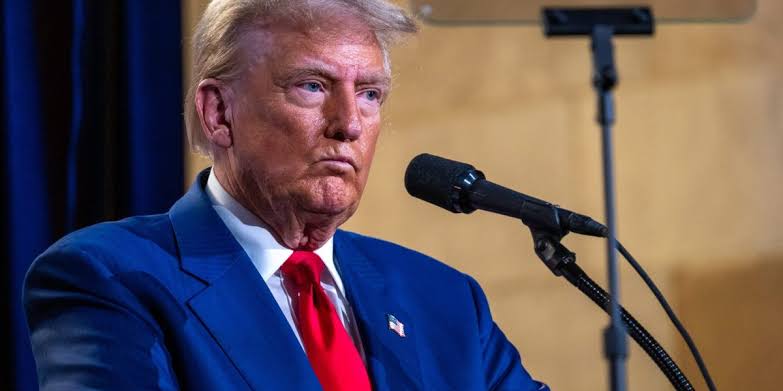
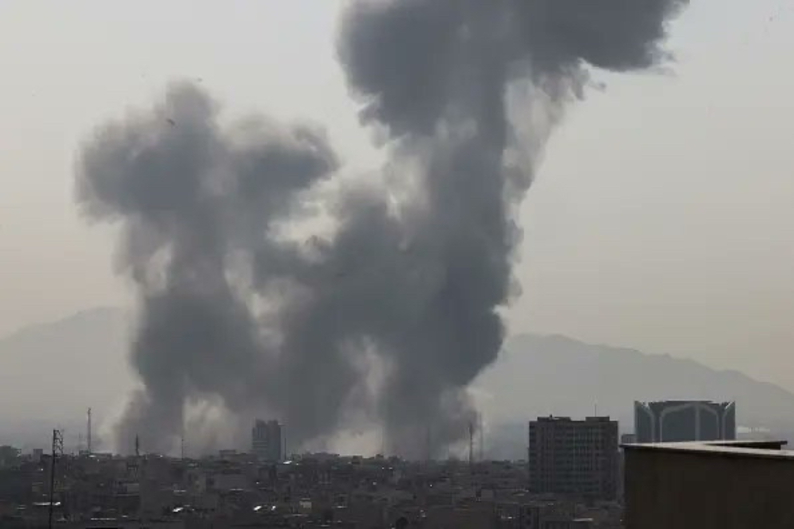
It is against this backdrop that the recent noise around an alleged “Christian Genocide” in Nigeria must be understood. Following that allegation, US President Donald Trump redesignated Nigeria as a Country of Particular Concern (CPC). The designation carries several potential consequences: aid cuts, export license restrictions, asset freezes, limited security cooperation, and even American opposition to international loans and investments.

Not stopping there, Trump went a step further, issuing a dramatic threat of military action that would be “fast, vicious, and sweet” if the Nigerian government failed to protect its citizens. His declaration sparked reactions far beyond Nigeria’s borders, raising an important question: What truly motivates America’s sudden aggression?

To understand this, one must consider the broader geopolitical shifts unfolding beneath the surface. In January 2025, Nigeria joined BRICS — a powerful intercontinental bloc formed by Brazil, Russia, India, and China, with South Africa later joining. The BRICS exists largely to counter the dominance of Western institutions like the IMF and the World Bank and to promote a multipolar global economy in which the US dollar no longer reigns supreme. 

With a combined GDP of roughly $30 trillion, the bloc wields real economic weight. Nigeria’s entry strengthens its ties with major economies such as China and India, promising new investments in energy, agriculture, infrastructure, and industrial development. It also opens the door to greater export opportunities, especially in oil and natural gas. 

For a country long boxed into Western-controlled financial systems, BRICS offers breathing space — and alternatives. There is also the Dangote Refinery, with its single-train capacity of 650,000 barrels per day. For decades, Nigeria relied on imported fuel despite its abundant crude oil. That era is ending. Import figures are falling sharply — 24.15 million litres per day in January 2025, 19.26 million in September, and just 15.11 million in the first ten days of October. 

With Dangote planning to expand to 1.4 million barrels per day, Nigeria is on the path to fuel independence, rivalling India’s Jamnagar Refinery, the world’s largest. This development, naturally, unsettles countries that benefit from Nigeria’s dependence — America included.

Then there is Nigeria’s deepening relationship with China. In the past year alone, Nigeria has signed major deals on industrial parks, rail and port infrastructure, mineral exploration, and energy development. China’s economic footprint in Nigeria is expanding rapidly. Meanwhile, Russia’s growing presence across sub-Saharan Africa and Nigeria’s renewed ties with France add to America’s discomfort.

The mineral dimension is equally sensitive. Beyond oil, Nigeria holds rare minerals — including lithium — that power the world’s battery industry. In a world moving toward electric mobility and renewable energy, lithium is the new oil. And China, not the United States, is securing access.

US Senator Ted Cruz once captured America’s anxiety bluntly during a congressional session when he warned: “China is a global threat that must be confronted territory by territory, nation by nation… China is pouring billions into its Belt and Road Initiative… gaining control over cobalt, lithium and other rare earth minerals… refining more than 70% of the world’s cobalt and controlling vast shares of global supply chains.”

His comments speak volumes when placed beside today’s geopolitical tensions. None of this denies the fact that Nigeria still faces grave security challenges. Our leaders must rise to their responsibilities and make the country safe for all. But it is naïve to imagine that America’s sabre-rattling is purely humanitarian. 

The United States may not be threatening a “sweet” military strike out of concern for Nigerian lives. Rather, like Rome losing its “cursus publicus”, America may be reacting to a shifting world order in which its grip is slipping — and Nigeria now sits at the centre of that shift.

Lawal Dahiru Mamman writes from Abuja. He can be contacted at: dahirulawal90@gmail.com.

Bashir Ahmad confronts US Congressman for ‘twisting facts’ about Kebbi school abductions

By Sabiu Abdullahi

Former presidential aide, Bashir Ahmad, has challenged a statement by a United States congressman who described the Kebbi school attack as an assault on a “Christian enclave.”

Rep. Riley M. Moore had posted on X, calling for prayers for “the 25 girls who have been kidnapped and for the repose of the soul of their vice principal who was killed.”

He also wrote that “the attack occurred in a Christian enclave in Northern Nigeria,” and urged the Nigerian government to do more to curb rising violence.

Ahmad responded directly to the congressman in a post of his own. He expressed appreciation for the concern but stressed that the lawmaker’s account was incorrect.

He wrote: “While appreciating your concern and praying for our sisters, @RepRileyMoore, it is important to correct a crucial detail here, the attack did not occur in a Christian enclave. It happened within a Muslim community and the victims themselves were Muslims.”

Ahmad said the error highlighted a recurring problem. He stated that incidents like this show why Nigerians often complain that outsiders “either do not understand the complexity of Nigeria’s insecurity challenges, or you are deliberately pushing unholy narratives that risk worsening our already fragile unity.”

His reaction has sparked renewed discussion around how international figures describe security incidents in Nigeria and the sensitivity required when addressing religious identity in conflict-affected communities.

The messiah-villain binary: A trap in democracy

By Oladoja M.O

In the grand, often tumultuous, theatre of African politics, a deeply entrenched and insidious narrative persists: the Messiah-Villain Binary. This simplistic, yet devastating, framework casts political leaders not as fallible public servants, but as either divine saviours or malevolent destroyers. It’s a binary that suffocates nuance, stifles accountability, and, in a continent desperate for democratic maturity, acts as a corrosive cancer on the body politic. We must call this what it is: a dangerous delusion that has shackled Africa’s progress for far too long.

This orientation, a relic of post-colonial strongman politics, reduces the complex art of governance to a moral melodrama. Citizens, conditioned to see their leaders as larger-than-life figures, become spectators in a perpetual battle between good and evil. When a new leader emerges, they are instantly elevated to the status of a messiah, the one chosen to slay the dragons of poverty, corruption, and instability. Any opposition is, by default, cast as the villain, a saboteur working against the people’s will. This is not just a rhetorical device; it’s a profound psychological trap that prevents a healthy, critical relationship between the electorate and those they elect.

Look no further than the story of Robert Mugabe in Zimbabwe. In the euphoric dawn of independence in 1980, Mugabe was the indisputable messiah. He had led the liberation struggle, promised the people a new land, and was seen as the architect of a new, prosperous Zimbabwe. But as his rule solidified, dissent grew. His staunchest supporters did not see his brutal suppression of the Gukurahundi massacres and his increasingly authoritarian tendencies as the actions of a flawed leader, but rather as the necessary evils required to defeat the ‘villains’—the opposition, foreign agents, and internal critics. This narrative allowed him to dismantle democratic institutions and cling to power for nearly four decades, all while his country’s economy imploded. The messiah had morphed into a tyrant, but the binary, with its pre-assigned roles, kept many from seeing the reality until it was too late.

A similar pattern can be seen in Rwanda, albeit with a different trajectory. Following the 1994 genocide, Paul Kagame was hailed as the man who pulled his nation from the brink of total annihilation. He is undeniably a messiah figure for many Rwandans, credited with bringing stability, order, and remarkable economic growth. Yet, this messianic status has made it incredibly difficult for a genuine political opposition to emerge. Critics, journalists, and political rivals who question his iron grip on power are often swiftly silenced, accused of undermining national unity or of being sympathisers of the genocidal past. 

The messiah’s narrative, while perhaps initially justified, has become a tool to legitimize the suppression of democratic pluralism. The ‘villain’ is no longer the genocidal regime, but anyone who dares to challenge the man who defeated it. This is a profound danger: when a leader’s infallibility is tied to a nation’s salvation, dissent becomes tantamount to treason.

The messiah-villain binary is a disease that festers in the heart of African electoral politics. It’s visible in the fervent, almost religious, rallies where supporters see their candidate not as a political leader with a manifesto, but as an oracle. The 2017 Kenyan election and the subsequent crisis offered a stark illustration. Both Uhuru Kenyatta and Raila Odinga were cast as messianic figures by their respective supporters. For Odinga’s base, he was the long-awaited liberator, the man who would finally lead them to a promised land of social justice. For Kenyatta’s supporters, he represented stability and continuity, the man protecting the country from the ‘villainous’ forces of instability. This emotional fervour, fueled by tribal and regional loyalties, led to a deeply polarised society where compromise became impossible. The result was not just political gridlock, but a cycle of violence and deep-seated animosity that continues to haunt the nation. The election wasn’t a contest of ideas; it was a crusade.

This issue is not just a problem of the past; it remains alive and well today. In Nigeria, the perennial politics of ‘saviour’ and ‘enemy’ plague the electoral landscape. From the military regimes to the current democratic dispensation, every election is framed as a life-or-death struggle against forces of darkness. A new candidate emerges, promising to sweep away the corruption of the past, and is instantly elevated to a messianic pedestal. Yet, once in power, the same old patterns of patronage and unaccountability emerge. The people, having invested their faith in a person rather than in institutions and processes, are left disillusioned, only to repeat the cycle with the next messiah figure. This prevents the building of strong, independent institutions, a free press, an impartial judiciary, and a non-partisan civil service, because the entire political system revolves around the individual, not the rules.

The messiah-villain binary is a trap, a narrative cul-de-sac from which genuine democratic progress cannot escape. It’s a cancer because it preys on hope, exploiting the legitimate frustrations of the populace for political gain. It turns citizens into blind followers and opponents into sworn enemies. This dangerous orientation must be dismantled. We must stop looking for messiahs. There are no magical saviours.

There are only men and women who are fallible, flawed, and accountable to the people they serve. We must demand a politics of substance, not spectacle. We must judge our leaders not by the promises they make on the campaign trail, but by their respect for democratic institutions, their commitment to the rule of law, and their willingness to be held to account.

The true liberation of Africa as a continent and Nigeria as a nation will not come from a single hero, but from a critical and engaged citizenry that understands that the power to govern belongs to them and that no politician, no matter how charismatic, is a god. It is time to retire the messiah, to dismantle the villain, and to embrace the hard, unglamorous work of building a true and lasting democracy.

Oladoja M.O writes from Abuja and can be reached at: mayokunmark@gmail.com.

Russia convicts deceased LGBTQ travel agent of extremism

By Sabiu Abdullahi

A court in Moscow has delivered a posthumous conviction against an LGBTQ travel agent who died in custody one year ago, intensifying concerns about Russia’s clampdown on people it claims oppose “traditional” values.

The ruling, issued on Friday, declared 48-year-old Andrei Kotov guilty of extremism. His death was reported in November 2024 after he was found lifeless inside his cell at a Moscow pre-trial detention facility.

Kotov, who operated a travel company named Men Travel, had previously told the court that officers assaulted him on the night of his arrest in November 2024, stating: “Fifteen people came to me at night, beat me, were punching me in the face.”

Despite his death, authorities continued prosecuting the case.

Rights groups said this decision was intended to instil fear within the LGBTQ community, which has faced escalating pressure under President Vladimir Putin.

Reports from Mediazona indicated that the Moscow Golovinsky Court found Kotov guilty of engaging in “extremist activity” and of allegedly involving minors in pornography.

His lawyer said in December 2024 that investigators informed her the cause of death was suicide.

Human rights advocates argued that the government used the case to send a message. Russia has intensified legal and social restrictions against LGBTQ individuals, especially since its military campaign in Ukraine, which pushed the country further into strict conservative policies.

Putin has long criticised anything he believes contradicts “traditional family values,” describing such influences as foreign and un-Russian. In 2023, the Supreme Court outlawed what it referred to as the “international social LGBT movement” and labelled it an “extremist organisation.”

Human Rights Watch said that decision “opened the floodgates for arbitrary prosecutions of individuals who are LGBT or perceived to be, along with anyone who defends their rights or expresses solidarity with them.”

Although LGBTQ people have never experienced broad public acceptance in Russia, activists say conditions have worsened sharply in recent years, with increased risk and intensified state hostility.

Doctors in England launch 5-day strike over pay dispute

By Maryam Ahmad

Thousands of doctors across England began a five-day strike on Friday, marking the 13th walkout in three years by resident doctors. The unprecedented action threatens to intensify pressure on the British government as it struggles to reduce long hospital waiting lists.

Resident doctors — qualified medical professionals still in specialist training — are demanding pay restoration, arguing that their earnings have declined by approximately 20% in real terms since 2008. The British Medical Association (BMA), which represents doctors, insists that the strike is necessary to address long-standing pay erosion and poor working conditions.

Health Secretary Wes Streeting condemned the action, accusing the BMA of behaving “like a cartel” and holding the government to ransom. Despite the government’s claims of financial constraints, official figures show that resident doctors’ salaries have increased by 29% over the past three years.

The walkout, which comes just weeks before the busy winter season for the National Health Service (NHS), is expected to cause the cancellation of tens of thousands of appointments and procedures. With patient backlogs already high, public frustration is likely to mount as the dispute drags on.

Mainz lose court appeal over Anwar El Ghazi’s dismissal

By Maryam Ahmad

Bundesliga club Mainz 05 have lost their appeal against the unfair dismissal ruling in favour of Dutch winger Anwar El Ghazi, who has been awarded €1.7 million in compensation.

A German labour court had earlier found that the club acted unlawfully when it terminated El Ghazi’s contract in November 2023 following social-media posts he made during the Gaza–Israel crisis. The arbitration panel upheld that decision, rejecting Mainz’s argument that the posts constituted grounds for immediate dismissal.

In a statement, Mainz said it accepted the ruling but stressed its commitment to maintaining its internal code of conduct. El Ghazi welcomed the outcome, describing it as a vindication of his right to express his views.

German police arrest 16 over ‘Grandchild Scam’

By Maryam Ahmad

German police have arrested 16 people in a major operation against an international network behind a telephone fraud known as the “grandchild scam.”

The Berlin State Criminal Police Office stated that the operation involved officers from all German states, as well as Europol and police forces in Austria, Poland, Switzerland, Slovakia, and the Czech Republic.

Several call centres linked to the scam were shut down, and 44 planned fraud attempts — worth about €2 million (₦3.9 billion) — were prevented.

In the scheme, fraudsters call elderly victims pretending to be relatives in urgent need of money. In some cases, they claim to have caused a fatal road accident and are followed by fake police officers demanding cash to avoid prosecution.

The suspects, aged between 22 and 63, included callers and money collectors. Among them is a 26-year-old Slovakian woman accused of similar crimes in her country.

Police said the coordinated raids took place between mid-September and late October.

Group rejects US threats, urges national unity on security crisis

By Muhammad Sulaiman

A group of prominent Nigerian citizens has condemned recent threats by U.S. President Donald Trump to relist Nigeria as a “Country of Particular Concern (CPC)” and possibly take military action to protect Christians, describing the move as an affront to Nigeria’s sovereignty.

In a statement issued in Kaduna, the group — comprising Dr Bilkisu Oniyangi, Professor Usman Yusuf, Dr Ahmed Shehu, Dr Aliyu Tilde, Dr Hakeem Baba-Ahmed, and Barrister Kalli Ghazali — warned that such rhetoric from Washington could inflame religious tensions and “turn Nigeria into a pawn in global geopolitics.”

The signatories emphasised that while the concerns of friendly nations such as the U.S., China, the U.K., and Russia are welcome, threats and external pressure are counterproductive. “This is our problem as Nigerians, and it will be solved by us,” the statement read.

The group urged President Bola Tinubu to directly address Nigerians, prioritise national security, and suspend foreign travels until the crisis is resolved. They also called on the U.S. to withdraw its threats and instead assist Nigeria through strategic cooperation and capacity building against terrorism and banditry.

They further appealed for unity among Nigerians, noting that “every life taken, every kidnapping or assault anywhere in Nigeria matters equally.”

Reaffirming faith in Nigeria’s resilience, the statement concluded: “Our independence and unity have been tested many times, and this too shall pass — but only if we act together as one people.”

Trump hosts former al-Qaeda commander turned Syrian president in historic White House visit

By Maryam Ahmad

In a development few could have imagined a year ago, Syrian President Ahmed al-Sharaa is set to meet U.S. President Donald Trump at the White House on Monday. The visit marks the first time a Syrian head of state will be officially received in Washington — a remarkable turn for a man who, until recently, was wanted by the United States.

As recently as December, al-Sharaa carried a $10 million American bounty on his head for his alleged role as an al-Qaeda commander. Now, following a stunning political transformation and rise to power in Damascus, he is being welcomed as a foreign leader and potential partner in the Middle East.

In anticipation of the visit, the U.S. Treasury Department has lifted sanctions against al-Sharaa and his intelligence chief, signalling a major policy shift. Meanwhile, Congress is debating the repeal of the Caesar Act, the 2019 legislation that imposed sweeping sanctions on Syria’s construction, energy, and financial sectors. The Senate has already voted to rescind the law, though the House of Representatives has yet to follow suit.

Inside Syria, reactions are mixed. While some citizens express frustration over al-Sharaa’s secretive governance and reliance on a close inner circle, others see his global rehabilitation as a point of national pride.

For many observers, al-Sharaa’s journey embodies one of the most dramatic reversals in modern diplomacy. Once a U.S. prisoner in Iraq, he will now step into the Oval Office — a symbol of how swiftly global politics can change.

Trump accuses South Africa of persecuting white minority, orders US boycott of G20 summit

By Hadiza Abdulkadir

In a dramatic escalation of diplomatic tensions, U.S. President Donald Trump announced on Friday that no American government officials will attend the upcoming Group of Twenty (G20) summit in South Africa, scheduled for November 22–23, 2025.

Trump described South Africa as “a total disgrace,” alleging that the white Afrikaner minority is being “killed and slaughtered” and that their land and farms are being seized illegally. He confirmed that Vice President J.D. Vance, who had been expected to attend, would no longer travel to the summit—effectively leaving the United States unrepresented at the major international gathering.

South African President Cyril Ramaphosa has firmly rejected the allegations, calling them “completely false” and “a gross misrepresentation of the reality in South Africa.” He emphasised that violence in the country affects citizens of all races and that claims of state-sanctioned persecution are unfounded.

Trump also hinted that he would push for South Africa’s suspension from the G20, further straining relations between Washington and Pretoria. Analysts warn that the move could have wide-ranging implications for diplomacy, trade, and global cooperation.