International

Courts rule thousands of times against ICE detentions despite ongoing crackdown

By Sabiu Abdullahi

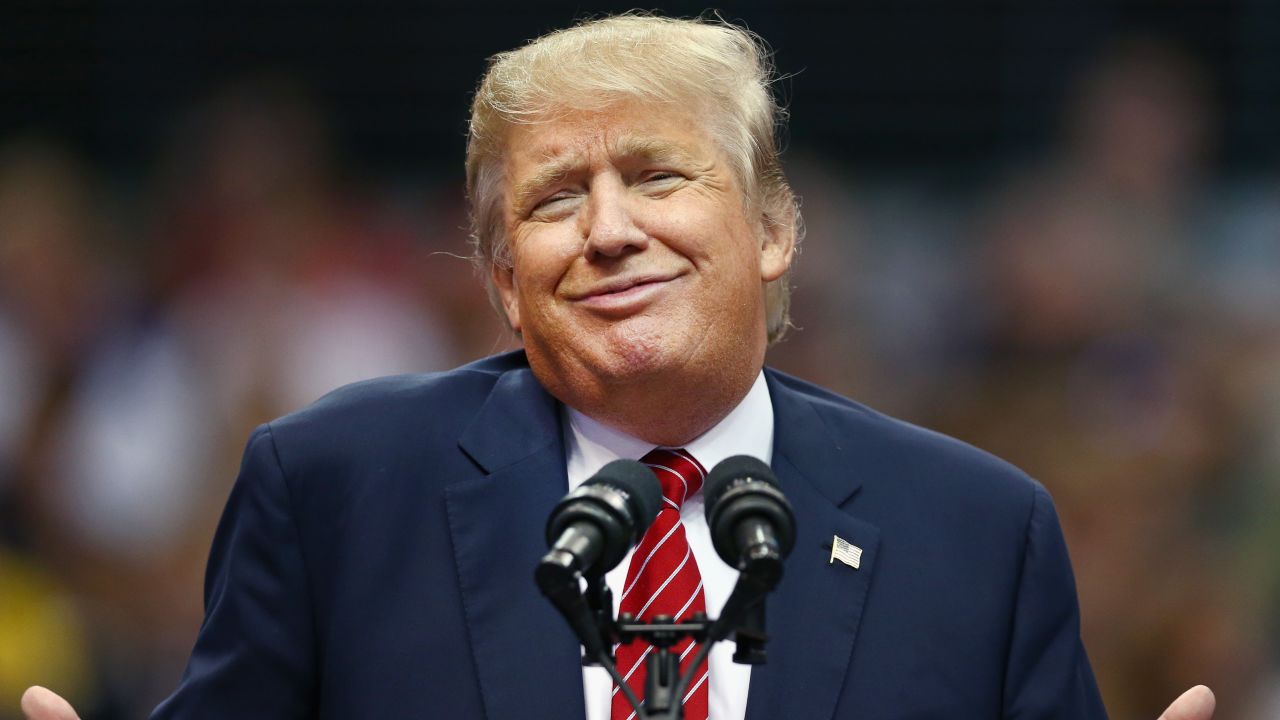
A review of court records has shown that judges across the United States have repeatedly ruled against the detention practices of immigration authorities under President Donald Trump’s administration.

According to Reuters, findings indicate that since October, courts have issued more than 4,400 rulings that deemed the detention of immigrants by U.S. Immigration and Customs Enforcement (ICE) unlawful. The decisions represent a major legal setback for the administration’s aggressive immigration enforcement policy. Despite this, detentions have continued in many instances.

U.S. District Judge Thomas Johnston of West Virginia criticised the government’s position in one of the cases. He wrote, “It is appalling that the Government insists that this Court should redefine or completely disregard the current law as it is clearly written,” while ordering the release of a Venezuelan detainee.

Many of the rulings stem from the administration’s shift away from a long-standing interpretation of federal law. For nearly three decades, immigrants already residing in the United States could seek release on bond while pursuing their cases in immigration courts. The policy change has triggered widespread legal challenges.

In response, White House spokeswoman Abigail Jackson said the administration is “working to lawfully deliver on President Trump’s mandate to enforce federal immigration law.”

Data shows that the number of people held in ICE custody has surged to about 68,000 this month. That figure represents an increase of roughly 75 percent since Trump assumed office last year.

However, the administration recorded a legal victory at an appeals court in New Orleans. U.S. Circuit Judge Edith Jones ruled that earlier administrations’ limited use of detention powers did not eliminate the authority to expand their application. She stated that prior restraint “does not mean they lacked the authority to do more.”

Government officials argue that the spike in lawsuits was expected. Department of Homeland Security spokesperson Tricia McLaughlin said the trend came as “no surprise” and added, “especially after many activist judges have attempted to thwart President Trump from fulfilling the American people’s mandate for mass deportations.”

Court filings show that detained immigrants have submitted more than 20,200 federal lawsuits seeking release since Trump took office. Judges have ruled in at least 4,421 of those cases that ICE held detainees unlawfully.

One example involved Joseph Thomas, an 18-year-old Venezuelan student arrested during a traffic stop in Wisconsin alongside his father. Both men were asylum seekers with legal work authorisation. Their lawyer, Carrie Peltier, argued they were targeted for “driving while brown.” Judges later ordered their release.

Chief U.S. District Judge Patrick Schiltz ruled that Joseph’s detention was illegal. He cited a lack of proof that ICE possessed a warrant at the time of arrest. In a separate decision, U.S. District Judge Eric Tostrud affirmed that the teenager’s father qualified for a bond hearing. He wrote, “This raises an issue of statutory interpretation that courts in this District have repeatedly considered and rejected, and it will be rejected here as well.”

Legal experts say habeas corpus petitions have become the primary legal route for detainees seeking freedom. The constitutional mechanism allows individuals to challenge unlawful detention in court.

The wave of litigation has placed pressure on the justice system. More than 700 Justice Department attorneys are now assigned to immigration detention cases. Some have appeared in over 1,000 lawsuits each.

Judges have also faulted authorities for failing to comply with release orders. In Minnesota, Schiltz said the government violated 96 court orders across 76 cases. A federal prosecutor in the district later described the caseload as an “enormous burden” on government lawyers.

In New York, U.S. District Judge Nusrat Choudhury ruled that ICE violated two “clear and unambiguous orders” after transferring a detainee while misrepresenting his location to the court.

The Justice Department has defended its actions. Spokesperson Natalie Baldassarre said the administration “is complying with court orders and fully enforcing federal immigration law.” She added, “If rogue judges followed the law in adjudicating cases and respected the government’s obligation to properly prepare cases, there wouldn’t be an ‘overwhelming’ habeas caseload or concern over DHS following orders.”

Advocacy groups continue to assist detainees. Lawyers often wait outside immigration courts to file emergency petitions that prevent transfers to distant detention centres.

Still, many immigrants struggle to access legal relief due to cost or lack of awareness. Judy Rall, the U.S. citizen wife of a Venezuelan detainee, said she could not afford the legal fees required to file a habeas petition. Her husband remains in detention despite having no criminal record. Reflecting on their situation, she said, “Our home burnt down, and I had told them I needed him to come help,” adding, “I assume that is the reason.”

The growing number of lawsuits continues to test the capacity of the courts as legal battles over immigration detention intensify nationwide.

Indian teacher wins $1 million Global Teacher Prize for transforming education in slums

By Sabiu Abdullahi

An Indian teacher and activist, Rouble Nagi, has won the $1 million Global Teacher Prize for her groundbreaking work in bringing education to marginalized communities across India. The award was presented on Thursday at the World Governments Summit in Dubai, an event that attracts leaders from around the world.

Nagi, founder of the Rouble Nagi Art Foundation, has established over 800 learning centers in India. These centers provide structured education for children who have never attended school and supplement learning for those already enrolled. She also paints educational murals across slum walls, teaching literacy, science, mathematics, and history.

Accepting the award, Nagi said the recognition was not just for her but for India. She recalled starting 24 years ago with 30 children in a small workshop, and now reaching over a million children.

> “I think every step has just motivated me, inspired me to take every child in India to school,” Nagi said. “You know when I was a child it was my dream to see every child at school and as you grow up fulfilling that for as many as we can reach, I think it’s a very humbling experience.”


Sunny Varkey, founder of the Varkey Foundation, which awards the prize, praised Nagi’s dedication.

> “Rouble Nagi represents the very best of what teaching can be – courage, creativity, compassion, and an unwavering belief in every child’s potential,” Varkey said. “By bringing education to the most marginalized communities, she has not only changed individual lives, but strengthened families and communities.”


Nagi plans to use the $1 million prize to establish an institute that will offer free vocational training. UNESCO Assistant Director-General for Education, Stefania Giannini, added that Nagi’s recognition highlights the crucial role teachers play in shaping lives.

> “Teachers matter,” Giannini said. “We are honoured to join the Global Teacher Prize in celebrating teachers like you, who, through patience, determination, and belief in every learner, help children into school — an act that can change the course of a life.”


Nagi is the tenth recipient of the Global Teacher Prize since it was established in 2015. Past winners include educators from Kenya, Palestine, Canada, and Saudi Arabia, all recognized for their efforts to improve access to education in challenging environments.

Her work continues to inspire and redefine what is possible in education for underserved communities worldwide.

We’ll scrap tariffs for almost all African countries from May, says China’s president Xi Jinping

By Sabiu Abdullahi

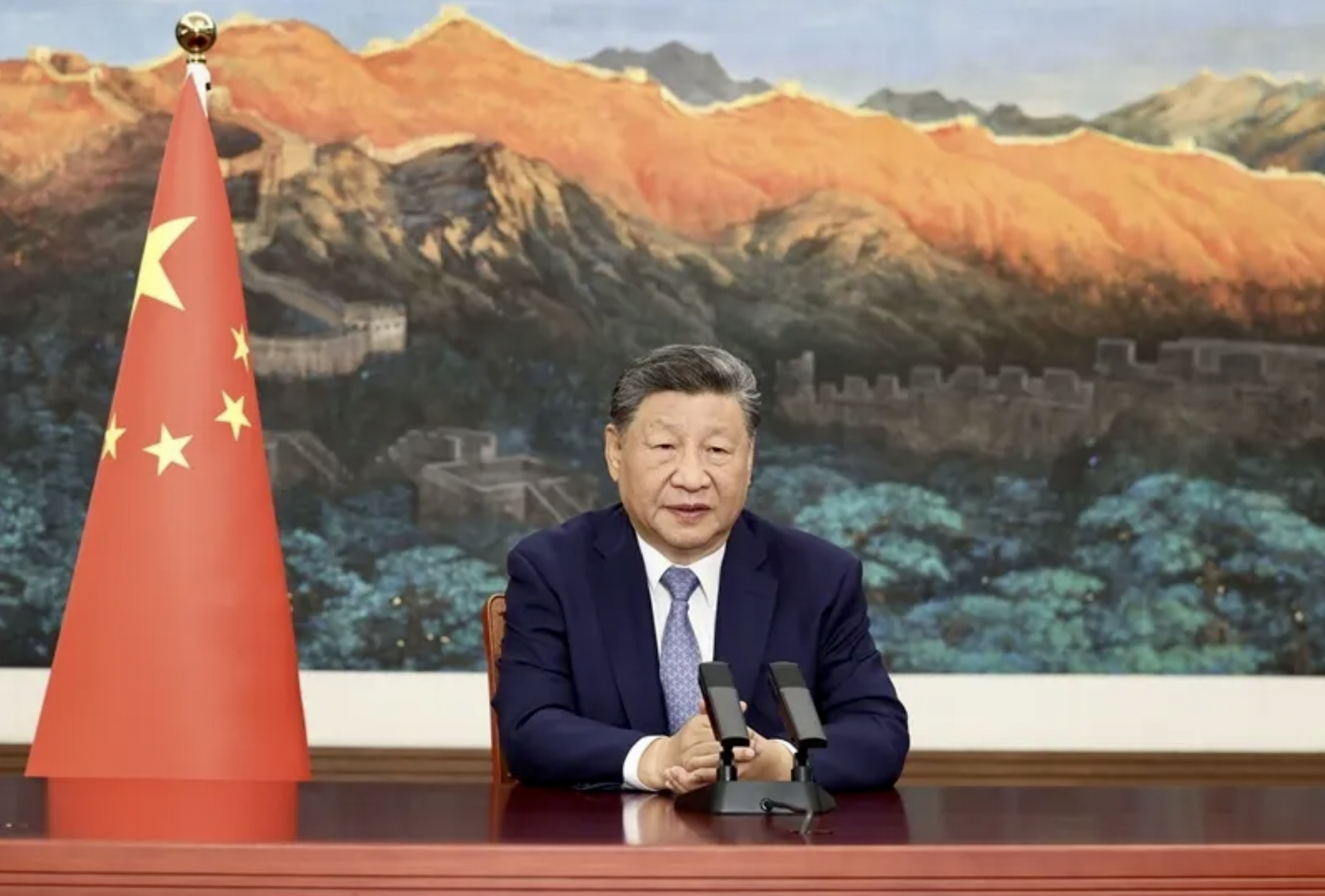
Chinese President Xi Jinping announced on Saturday that Beijing will remove tariffs on imports from nearly all African countries starting May 1, according to state media reports.

Currently, China maintains a zero-tariff policy for imports from 33 African nations. However, last year, the government pledged to extend the policy to all 53 of its diplomatic partners on the continent.

From May, the zero-tariff arrangement will apply to every African country except Eswatini, which continues to maintain diplomatic relations with Taiwan.

Xi highlighted the move during the annual African Union summit in Ethiopia, describing it as a significant boost for development across Africa.

“This will undoubtedly provide new opportunities for African development,” he said, underscoring China’s role as Africa’s largest trading partner.

The country has been a major supporter of infrastructure projects across the continent through its expansive “Belt and Road” initiative.

African nations are increasingly turning to China and other international partners for trade, following the imposition of steep tariffs by US President Donald Trump last year.

The zero-tariff policy is expected to strengthen trade ties between China and Africa, giving African exporters greater access to Chinese markets while encouraging economic growth in the region.

US military strikes Caribbean vessel, kills three amid ongoing operations

By Sabiu Abdullahi

The United States military has conducted another lethal attack on a vessel in the Caribbean Sea, resulting in the deaths of three people. This latest strike adds to a series of operations that have killed at least 133 individuals since September 2025.

US Southern Command (SOUTHCOM), which oversees military operations across Latin America and the Caribbean, confirmed that US forces “conducted a lethal kinetic strike” on Friday, killing three people.

The military repeated its claim that those targeted were suspected drug traffickers, describing the deceased as “narco-terrorists,” though it did not provide independent evidence to substantiate the allegations.

SOUTHCOM released a video showing a missile hitting the vessel, which exploded and was completely destroyed.

International law and human rights experts have frequently criticized such attacks, arguing they amount to extrajudicial executions even if the targets are allegedly involved in drug trafficking.

This attack follows an operation earlier in the week in the eastern Pacific Ocean. SOUTHCOM said it struck a vessel, killing two people while leaving one survivor. Officials notified the US Coast Guard about the survivor but did not provide details on the individual’s condition or likelihood of rescue.

The US first attacked vessels in international waters in September 2025. That initial strike included a follow-up attack that killed survivors clinging to the wreckage. US officials, including Defense Secretary Pete Hegseth and Admiral Frank Bradley, faced scrutiny over the decision to target the shipwrecked survivors.

Legal experts have warned that the US military could be implicated in a crime for killing individuals after a shipwreck.

Monitors and media tallies indicate that US forces have carried out approximately 38 attacks against 40 vessels in the Caribbean and eastern Pacific, resulting in at least 133 deaths, including the two killed earlier this week.

President Donald Trump has described the situation as an “armed conflict” with Latin American cartels, defending the operations as necessary to curb drug trafficking into the US.

Legal observers, however, have argued that the US has no authority to carry out strikes in international waters and that all alleged traffickers have a right to due process.

EXCLUSIVE: Nigerian families counter Russia’s denial of recruiting Nigerians for Ukraine war


By Abdullahi Mukhtar Algasgaini

A report citing the Russian government’s denial of recruiting Nigerians to fight in Ukraine is facing direct challenge from evidence within Nigerian communities.

This follows an article published on 10 February 2026, which relayed the Russian Embassy’s statement refuting any state-sponsored recruitment program.

The rebuttal, provided by a Kaduna state resident, presents a concrete counter-narrative. The individual states that a neighbor, a Nigerian national, voluntarily enlisted in the Russian military, was deployed in connection with the Ukraine conflict, but he doesn’t detail his recruitment process and contract terms to family and community before leaving.

“This direct evidence renders the blanket denial incomplete and misleading,” the source wrote in a communication to the Daily Reality editorial team. The account suggests recruitment is operational through pathways potentially involving private military companies or intermediaries, even if not an official government scheme.

The source argues the situation of the four deceased Nigerians previously reported—Adam Anas, Akinlawon Tunde Quyuum, Abugu Stanley Onyeka, and Balogun Ridwan Adisa—may represent only the most tragic outcomes of a broader phenomenon.

The Russian Ambassador’s offer to investigate “illegal organisations or individuals” if provided details is cited as an implicit acknowledgment that the recruitment of Nigerians is occurring.

The challenge calls for amended reporting that separates diplomatic rhetoric from ground truth, proposing a revised summary.

The core issue, the source contends, is no longer if Nigerians are fighting, but how they are recruited, under whose authority, and with what safeguards. The families of those recruited and the Nigerian public, they state, require answers beyond a simple denial.

EXCLUSIVE: Nigerian families counter Russia’s denial of recruiting Nigerians for Ukraine war


By Abdullahi Mukhtar Algasgaini

A report citing the Russian government’s denial of recruiting Nigerians to fight in Ukraine is facing direct challenge from evidence within Nigerian communities.

This follows an article published on 10 February 2026, which relayed the Russian Embassy’s statement refuting any state-sponsored recruitment program.

The rebuttal, provided by a Kaduna state resident, presents a concrete counter-narrative. The individual states that a neighbor, a Nigerian national, voluntarily enlisted in the Russian military, was deployed in connection with the Ukraine conflict, but he doesn’t detail his recruitment process and contract terms to family and community before leaving.

“This direct evidence renders the blanket denial incomplete and misleading,” the source wrote in a communication to the Daily Reality editorial team. The account suggests recruitment is operational through pathways potentially involving private military companies or intermediaries, even if not an official government scheme.

The source argues the situation of the four deceased Nigerians previously reported—Adam Anas, Akinlawon Tunde Quyuum, Abugu Stanley Onyeka, and Balogun Ridwan Adisa—may represent only the most tragic outcomes of a broader phenomenon.

The Russian Ambassador’s offer to investigate “illegal organisations or individuals” if provided details is cited as an implicit acknowledgment that the recruitment of Nigerians is occurring.

The challenge calls for amended reporting that separates diplomatic rhetoric from ground truth, proposing a revised summary.

The core issue, the source contends, is no longer if Nigerians are fighting, but how they are recruited, under whose authority, and with what safeguards. The families of those recruited and the Nigerian public, they state, require answers beyond a simple denial.

Netanyahu’s aircraft crosses airspace of three ICC member dtates despite arrest warrant

By Sabiu Abdullahi

Flight records have indicated that the aircraft conveying Israeli Prime Minister Benjamin Netanyahu passed through the airspace of three member states of the International Criminal Court (ICC) even though an arrest warrant remains in force against him.

According to TRT World, data obtained from flight-tracking platform FlightRadar showed that the plane flew over Greece, Italy, and France while heading to the United States.

The ICC issued the warrant on November 21, 2024. The court accused Netanyahu of war crimes and crimes against humanity linked to Israel’s military campaign in Gaza, where more than 72,000 Palestinians have been killed since October 2023.

Greece, Italy, and France are all signatories to the Rome Statute, the treaty that established the ICC. Member states are required to cooperate with the court. This obligation includes enforcing arrest warrants issued by the tribunal. Despite this responsibility, none of the three countries shut their airspace to the Israeli leader’s aircraft.

The route taken mirrors a similar journey in late December when Netanyahu also travelled to the United States for talks with President Donald Trump.

On earlier trips, the Israeli prime minister avoided certain national airspaces due to fears of possible arrest. During his visit to New York for the United Nations General Assembly in September last year, his plane crossed Greece and Italy but did not enter French airspace, according to flight data from that period.

Netanyahu departed Ben Gurion Airport near Tel Aviv on Tuesday. He is expected to meet President Trump in Washington for discussions centred on Iran.

The visit followed indirect negotiations between the United States and Iran held in Muscat, the capital of Oman. The talks came amid heightened regional tensions and a growing US military presence in the area.

We’ll do ‘something very tough’ if US demands are mot met, Trump threatens Iran

By Sabiu Abdullahi

Tensions between the United States and Iran have escalated after US President Donald Trump warned that Washington could resort to military action if Tehran fails to comply with its demands on key security issues.

In remarks made to Israeli broadcaster Channel 12 and published on Tuesday, Trump suggested that the United States was prepared to act forcefully if ongoing efforts to reach an agreement with Iran collapse.

“Either we reach a deal, or we’ll have to do something very tough,” Trump told the news outlet.

His warning came at a time when Iran’s security chief, Ali Larijani, held talks with Oman’s Sultan, Haitham bin Tariq Al Said. Their meeting focused on the outcome of recent discussions between American and Iranian officials.

In the past few weeks, Trump has highlighted the expansion of US military deployments around the region. He disclosed that a “massive armada” had been dispatched to nearby waters. The deployment includes the aircraft carrier USS Abraham Lincoln. Reports by Channel 12 and Axios also indicated that Washington is weighing the option of sending a second aircraft carrier to the Middle East.

The growing military presence has raised fears of a possible US strike on Iran. Critics argue that such action could further destabilise an already fragile region. Earlier on Monday, the United States issued fresh guidance to commercial vessels flying its flag. The advisory urged them to remain “as far as possible” from Iranian territorial waters.

‘With Speed And Violence’

Since January, Trump has intensified pressure on Tehran. He warned that the US military is “locked and loaded and ready to go”.

He drew parallels between Iran and Venezuela, where a US military mission on January 3 led to the removal of former President Nicolas Maduro.

“Like with Venezuela, [the US military] is ready, willing, and able to rapidly fulfill its mission, with speed and violence, if necessary. Hopefully Iran will quickly ‘Come to the Table’ and negotiate a fair and equitable deal,” Trump wrote on social media on January 28.

Toward the end of last month, the Trump administration outlined three broad conditions for Iran. These include halting uranium enrichment, cutting ties with regional proxy groups, and restricting its ballistic missile arsenal. Israel has long pushed for such limits.

During his first presidency, Trump withdrew the United States from the 2015 nuclear agreement that imposed strict limits on Iran’s nuclear programme in exchange for sanctions relief.

After returning to office for a second term in January 2025, he reinstated his “maximum pressure” strategy against Tehran. The campaign features sweeping sanctions and demands to dismantle Iran’s nuclear programme, which Iranian authorities insist is strictly for civilian energy use.

Last June, Trump approved military strikes on three Iranian nuclear facilities during a 12-day conflict involving Iran and Israel.

Focus On Anti-Government Protests

Trump’s renewed threats have coincided with a fresh wave of anti-government protests inside Iran.

Authorities in Tehran responded with a violent crackdown that reportedly left thousands dead. The development drew condemnation from international human rights organisations.

Reports indicated that security forces fired live rounds at demonstrators during an internet blackout.

On January 2, one day before the Venezuela operation, Trump threatened to intervene in support of the protesters and “come to their rescue”, though no such action was eventually taken.

Some analysts believe that proposed US strikes on Iran would do little to assist protesters. They argue that military action would instead align with long-standing US and Israeli objectives of weakening Iran’s military strength.

Iranian officials maintain that armed groups infiltrated the protests and attacked security personnel, leading to the deaths of hundreds of officers. Tehran has also accused foreign powers, including the United States and Israel, of backing the unrest.

While many aspects of the protests remain difficult to independently verify, Iranian authorities have acknowledged that thousands were killed during the government response.

Russia denies recruiting Nigerians to fight in war with Ukraine

By Sabiu Abdullahi

The Russian government has dismissed reports that it is hiring Nigerians to participate as soldiers in the ongoing war with Ukraine.

Russia began a full-scale military invasion of Ukraine in February 2022. The offensive led to the occupation of several Ukrainian territories and marked the most significant conflict in Europe since the Second World War.

Recent media reports alleged that four Nigerians — Adam Anas, Akinlawon Tunde Quyuum, Abugu Stanley Onyeka and Balogun Ridwan Adisa — lost their lives while fighting on the frontlines. The report stated that the men were lured with promises of a “security job” but were later drafted into the war after only three weeks of training.

According to the publication, the deaths occurred on different dates between December 2025 and January 2026. It also claimed that news of their deaths first surfaced in a private WhatsApp group reportedly created by African mercenaries.

Further allegations suggested that the Russian Embassy in Abuja issued the recruits single-entry tourist visas without biometric capture or full application procedures. The men were allegedly promised a monthly salary of 200,000 rubles, estimated at about ₦3.6 million, alongside allowances and other benefits.

The report added that upon arrival in Russia, the Nigerians were forced into military service. They were said to have received minimal training before deployment to combat zones. It also alleged that they signed military contracts written in Russian without legal guidance or translation. Some claims indicated that their passports were seized, which made escape difficult.

Russia has rejected these allegations. Authorities insisted there is no state-sponsored programme aimed at recruiting Nigerians or any other foreigners to fight in Ukraine.

The Russian Ambassador to Nigeria, Andrey Podyolyshev, addressed the issue on Tuesday in Abuja. He responded directly to the circulating reports.

“There is no government-supported programme to recruit Nigerians to fight in Ukraine. If there are illegal organisations or individuals trying to recruit Nigerians by unlawful means, this is not connected with the Russian state.”

“If anybody has this information, we are ready to send it to Russian law enforcement authorities so they can investigate those cases,” he said.

The ambassador also reacted to reports from Western media that Nigerians were deceived into joining the war.

“You are receiving information from Western sources. Their main task is to demonise Russia. If you want to know the real situation, you should send journalists to Russia to understand what is really happening,” the Ambassador said.

While he acknowledged that Nigerians may be present within the conflict environment, he maintained that the Russian government has no official recruitment policy targeting them.

“There are such Nigerians, I know, but there is no government-supported programme to recruit them. If there are agencies, including Russian agencies, violating Russian law, we are ready to transmit this information to our law enforcement authorities,” he said.

Podyolyshev also spoke about bilateral relations. He called for stronger economic cooperation between Russia and Nigeria. He noted that the last meeting of the Russia–Nigeria Intergovernmental Commission on Economic Cooperation took place about a decade ago.

He further highlighted Nigeria’s strategic role in Africa. He referenced the country’s peacekeeping missions in Liberia, Sierra Leone and The Gambia.

“Nigeria showed readiness to take responsibility for regional stability. Within ECOWAS, Nigeria is the core of the organisation in terms of population, economy and military potential,” he said.

On energy collaboration, the ambassador disclosed that both nations are discussing long-term partnerships. He said this includes projects in the nuclear energy sector.

New Zealand mosque gunman seeks fresh trial seven years after killing 51 worshippers

By Sabiu Abdullahi

A white supremacist convicted over the killing of 51 Muslim worshippers at two mosques in New Zealand has asked a court to overturn his conviction, claiming he was not mentally stable when he entered his guilty pleas.

Brenton Tarrant, 35, appeared before a court in Wellington through a video link on Monday. He testified in support of his request to withdraw his guilty pleas and face a full trial.

The Australian national carried out the attacks in Christchurch in March 2019 during Friday prayers. The incident remains the deadliest mass shooting in New Zealand’s history. He attacked worshippers at two mosques with military-style semi-automatic rifles and broadcast the assault live on Facebook using a head-mounted camera.

Tarrant had first denied the charges and prepared for trial. He later changed his position and pleaded guilty to 51 counts of murder, 40 counts of attempted murder, and one charge of committing a terrorist act.

He told the court that prison conditions affected his mental state while he awaited trial. He argued that he was not in the right frame of mind to make legal decisions at the time.

“I did not have the mind frame or mental health required to be making informed decisions at that time,” Tarrant said.

“I think the issue is, did I really know what I wanted to do or what would be a good idea? No, I didn’t actually … I was making choices, but they were not choices made voluntarily and they were not choices made rationally due to the (prison) conditions.”

Court records indicate that the Court of Appeal will determine whether he lacked the capacity to make rational decisions when he entered the pleas, allegedly due to imprisonment conditions he described as torturous and inhumane.

Tarrant is currently serving life imprisonment without the possibility of parole. The sentence marked the first time such a punishment was imposed in New Zealand.

The appeal hearing is scheduled to last five days and is expected to conclude on Friday. If the court refuses his application, another hearing later in the year will examine his sentence. If the conviction is overturned, the case will return to the High Court for trial.

Families of some victims attended the Wellington court session and watched proceedings that lasted several hours.

“It’s really annoying because he’s trying to play with all of us and this is, it’s just a waste of our time and waste of taxpayers money and he just wants to play with us,” Rashid Omar, whose son Tariq died in the attack, told state broadcaster TVNZ.

Following the 2019 massacre, New Zealand authorities moved to tighten national gun laws in response to the tragedy.