Entertainment

You can add some category description here.

Super Eagles coach Finidi George resigns over NFF interference 

By Sabiu Abdullahi

Finidi George has stepped down as the head coach of the Nigerian national football team, the Super Eagles, citing interference from the Nigeria Football Federation (NFF). 

George’s resignation comes just two months after his appointment in May, and barely a week after the NFF announced plans to appoint a foreign technical adviser to oversee him. 

The former international winger had expressed frustration over the lack of support from the NFF and questioned the commitment of Nigeria’s top players in the crucial World Cup qualifiers. 

Under George’s leadership, the Super Eagles suffered disappointing losses to South Africa and Benin in the 2026 World Cup qualifiers, leading to his demotion. 

According to sources, George’s one-year contract will be downgraded, and his monthly salary will be reduced from N15 million to N5 million.

His handpicked assistants will also be replaced by the new foreign coach’s staff. 

The NFF’s decision to appoint a foreign technical adviser has been widely criticized by Nigerian football fans and stakeholders, who see it as a lack of confidence in local coaches. 

George’s resignation has added to the uncertainty surrounding the Super Eagles’ preparations for the upcoming World Cup qualifiers. 

The NFF has yet to officially confirm George’s resignation and has not announced a replacement for the former coach.

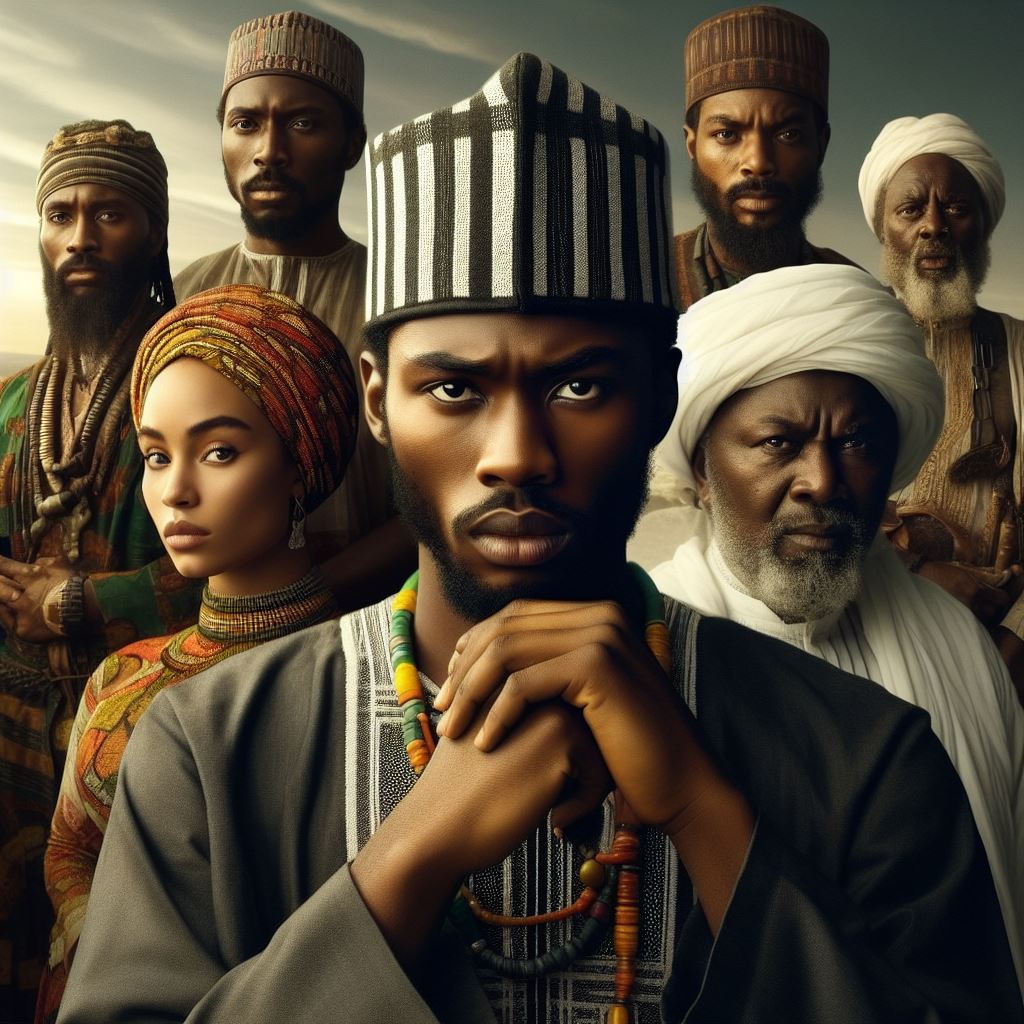
Northern Nollywood, Southern distorted mirrors: Nollywood and the rest of us

By Prof. Abdalla Uba Adamu

Recently, an extremely prestigious academic journal requested that I review a film made by a Nigerian. I was surprised, as that is Muhsin Ibrahim’s forte. Further, I really don’t watch Nigerian films, aka Nollywood, personally preferring African Francophone directors. Nevertheless, I agreed to do the review. 

However, the link they sent for the film was password-protected. I informed them, and they requested the filmmaker to send the password. Being a request from a highly prestigious journal, he sent the code, and I was able to get on the site and watch the film online. I was surprised at what I saw and decided to delve further into these issues. Before doing that, I wrote my review and sent it off. The film, however, set me thinking. 

Like a creeping malaise, Nollywood directors are rearing their cameras into the northern Nigerian cultural spaces. Again. The film I reviewed for the journal was “A Delivery Boy” (dir. Adekunle Adejuyigbe, 2018). It was in the Hausa language. None of the actors, however, was Hausa, although the lead actor seems to be a northerner (at least from his name since an online search failed to reveal any personal details about him). 

Nothing wrong with that. Some of the best films about a particular culture were made by those outside the culture. Being ‘outliers’, it often gave them an opportunity to provide a more or less balanced and objective ‘outsider’s perspective’ of the culture. Alfonso Cuarón, a Mexican, successfully directed “Harry Potter and the Prisoner of Azkaban” (2004), while Taiwanese director Ang Lee did the same with “ Brokeback Mountain” (2005), even earning him an Oscar. 

In 2006 Clint Eastwood, an American, directed “Letters From Iwo Jima.” The cast was almost entirely Japanese, and almost all of the dialogue was in Japanese. It was very well-received in Japan, and in fact, some critics in Japan wondered why a non-Japanese director was able to make one of the best war movies about World War II from the Japanese perspective. Abbas Kiarostami, an Iranian filmmaker, directed his film, “Certified Copy” (2020) in Italy, which contained French, Italian, and English dialogue starring French and British actors. 

British director Richard Attenborough successfully directed Ben Kingsley in the Indian biopic Gandhi (1982). The film was praised for providing a historically accurate portrayal of the life of Gandhi, the Indian independence movement and the deleterious results of British colonization of India. It took away eight Oscars. American director Steven Spielberg’s “Schindler’s List” (1993) on a German, Oskar Schindler, was equally a powerful portrayal of an auteur genius by a “non-native”. The film won seven Oscars. 

In each of these examples, the directors approached their subject matter with a clean, fresh and open mind that acknowledges the cultural sensitivities of the subject matter. My point is that a person, outside of a particular cultural context, can make sensitive films that portray the culture to his own culture as well as other cultures. That is not, however, how Nollywood plays when it focuses its cameras on northern Nigerian social culture. Specifically Muslims. 

I just can’t understand why they are so fixated on Muslims and the North. If the purpose of the ‘crossover’ films (as they are labelled) they make is to create an understanding of the North for their predominantly Southern audiences, they need not bother. Social media alone is awash with all the information one needs about Nigeria—the good, the bad and the ugly. You don’t need a big-budget film for that. Or actors trying and failing to convey ‘Aboki’ accents in stilted dialogues that lack grammatical context. 

Yet, they insist on producing films about Muslim northern Nigeria from a jaundiced, bigoted perspective, often couched with pseudo-intellectual veneer. To sweeten the bad taste of such distasteful films, they pick up one or two northern actors (who genuinely speak the Hausa language, even if not mainstream ethnic Hausa) and add them to the mix, believing that this will buy them salvation. For southern Nigerians, anyone above the River Niger is ‘Hausa’. 

They started in the early 2000s, and people just ignored them. The directors then included Oskar Baker (Ɗan Adamu Butulu, Abdulmalik), Yemi Laniyan (Makiyi, Uwar Gida), Tunji Agesin (Halin Kishiya), Matt Dadzie (Zuwaira), I. Nwankwo (Macijiya) and many others. These came on the heels of the massive success of “Sangaya” (dir. Aminu Muhammad Sabo, 1999) when this particular film opened up the northern Nigerian film market. 

Those Nollywood producers jumped into cash on the popularity of Hausa films and made their own for northern markets. For the most part, these early ‘crossover’ films that I refer to as ‘Northern Nollywood’ were fairly mild and evoked no reaction. They were still rejected, as the Hausa can be the most discriminatory people you can come across. If you are outside their cultural universe, you remain there. Forever. 

The few Kannywood actors eager to be seen on the ‘national stage’ allowed themselves to be used to deconstruct Islam and Muslims on the altar of filmmaking in subsequent Northern Nollywood films. Let’s not even talk about character misrepresentation, which Muhsin Ibrahim has written extensively about. In these scenarios, the usual tropes for northerners in Nollywood films is that of ‘Aboki’ (a term southern Nigerians believe is an insult to northerners, without knowing what it means), ‘maigad’ (security), generally a beggar. If they value an actor, they assign them an instantly forgettable role rather than a lead. Granted, this might be more astute and realistic marketing than ethnicity because it would be risky to give an unknown Hausa actor a significant role in a film aimed at southern Nigerians. 

A few of these types of portrayals in Nollywood included Hausa-speaking actors in films such as The Senator, The Stubborn Grasshopper, The World is Mine, Osama Bin La, Across the Border and The Police Officer. 

When Shari’a was relaunched from 1999 in many northern Nigerian States, it became an instant filmic focus for Nollywood. A film, “Holy Law: Shari’a” (dir. Ejike Asiegbu, 2001) drew such a barrage of criticism among Hausa Muslims due to its portrayal of Shari’a laws then being implemented in northern Nigeria that it caused credibility problems for the few Hausa actors that appeared in it. With neither understanding of Islam nor its context, the director ploughed on in his own distorted interpretation of the Shari’a as only a punitive justice system of chopping hands, floggings, and killings through foul-mouthed dialogue. As Nasiru Wada Khalil noted in his brilliant essay on the film (“Perception and Reaction: The Representation of the Shari’a in Nollywood and Kanywood Films”, SSRN, 2016) “the whole story of Holy Law is in itself flogged, amputated and killed right from the storyline.”

“Osama bin La” (dir. MacCollins Chidebe, 2001) was supposed to be a comedy. No one found it funny in Kano. Despite not featuring any northern actor, it was banned in Kano due to its portrayal of Osama bn Ladan, then considered a folk hero. The film was banned to avoid a reaction against Igbo merchants marketing the film. I was actually present in the congregation at a Friday sermon at Kundila Friday mosque in Kano when a ‘fatwa’ was issued on the film. Even a similar comedy, “Ibro Usama” (dir. Auwalu Dare, 2002), a chamama genre Hausa film, was banned in Kano, showing sensitivity to the subject matter. 

The reactions against crossover films seemed to have discouraged Nollywood producers from forging ahead. They returned in the 2010s. By then, northern Nigeria had entered a new phase of social disruption, and Nollywood took every opportunity to film its understanding of the issues—sometimes couched in simpering distorted narrative masquerading as social commentary—on society and culture it has absolutely no understanding of. 

In “Dry” (dir. Stephanie Linus, 2014), the director developed a sudden concern about ‘child marriage’ and its consequences. Naturally, the culprits of such marriage, as depicted in the film, are sixty-year-old men who marry girls young enough to be their granddaughters. The director’s qualification to talk about the issue (which was already being framed by child marriage controversy in the north) was that she has ‘visited the north’ a couple of times. With the film, if she could get at least “one girl free and open the minds of the people, and also instruct different bodies and individuals to take action, then the movie would have served its purpose.” The ‘north’ was living in darkness, and it required Stephanie Linus to shed light on ‘civilization’. 

 “A Delivery Boy” (dir. Adekunle Adejuyigbe, 2018) that I reviewed was about an ‘almajiri’ in an Islamic school who was kidnapped from the school, to begin with and repeatedly raped by his ‘Alamaramma’ (teacher). The almajiri somehow acquired sticks of dynamite to create a suicide vest and vowed to blow himself up—together with the teacher. The Alaramma in the film lives in an opulent mansion, far away from the ‘almajirai’. In this narrative universe, the ‘almajiri’ do not learn anything and are unwilling rape victims of their teaches who actually kidnapped them and forced them into the schools. 

“The Milkmaid” (dir. Desmond Ovbiagele, 2020) evokes the idealistic picture of a Fulani milkmaid and became a basis for a Nollywood film. Instead of focusing on the political economy of the Fulani milk trade, the film focused on the trope of terrorism. “The Black Book” (dir. Editi Effiong, 2023), touted as ‘Nigeria’s John Wick’ shoots a significant portion in ‘the north’ – with ‘Islamist’ hijab-wearing females touting assault rifles hidden underneath their hijab. “Jalil” (dir. Leslie Dapwatda, 2020) visits the recurrent theme of kidnapping for ransom. In the north, of course. 

Then came the latest, “Almajiri” (dir. Toka McBaror, 2022). Claimed to be a true-life story (although it is not clear whether it happened to specific people or based on what the director believed to be a common event), it featured muscle-bound badass types of thugs with guns and dreadlocks as Almajirai. The film reinforces the southern Nigerian trope of any beggar in the north being an Almajiri. Such ‘almajiris’ are kidnapped and sold into virtual slavery and horribly abused. The idea is to blame the parental irresponsibility of northerners. 

For southern Nigerians, especially the Nollywood crowd, an ‘Almajiri’ is a beggar, a product of a failed education system, a terrorist, a bandit, and an ‘aboki’. They use concocted figures bandied about by alphabet soup agencies to proclaim ‘over 10 million almajiri are out of school’ and, therefore, twigs of the terrorism inferno. How can someone who has been part of a system of education for over half a century be considered out of school? But for Nollywood, if it is not ABCD, then it is not education. 

“Northern Nollywood” films are the precise reasons why there will ALWAYS be different film cultures in Nigeria. Kannywood talks to its publics, happily churning out now TV shows that address issues it deems relevant—in its own way. Both the northern and southern parts of the country (covering the three major languages) were actively engaged. However, they were mutually non-legible to each other. This was essential because they operate on virtually opposing cultural mindsets – making the emergence of a truly “Nigerian cultural film” impossible. 

Quite a few writers seem to suggest that Kannywood is a ‘subset of Nollywood’, and indeed, many would prefer for the term Kannywood (created in 1999 by a Hausa writer) to be dispensed with and replaced with Nollywood (created in 2002 by a Japanese Canadian writer). It is to protect our cultural representation in films that I stand as a lone voice in advocating for a ‘Hausa Cinema’ to reflect the cultural universe of the Hausa.

Professor Abdalla Uba Adamu can be reached via auadamu@yahoo.com.

BREAKING: Finally, Kylian Mbappé joins Real Madrid

 By Sabiu Abdullahi 

Kylian Mbappé has officially signed with Real Madrid, with the club set to announce the French superstar as their new signing next week. 

According to sources, “every document has been signed, sealed, completed,” confirming Mbappé’s decision to join the Spanish giants.

The 24-year-old made his decision in February and has since completed all necessary steps for the transfer. 

“He can be considered a new Real Madrid player,” a source revealed.

Mbappé’s transfer comes on the heels of Real Madrid’s Champions League victory, marking a historic moment for the club. 

The announcement is expected to be made next week, cementing Mbappé’s place in Real Madrid’s history.

Kylian Mbappé may take legal action as PSG refuse to pay him April salary

By Sabiu Abdullahi

According to reports from L’Équipé, Paris Saint-Germain failed to pay Kylian Mbappé’s salary in April and his bonus in February.

This shocking revelation has led to lawyers getting involved to settle the dispute. 

As one of the top players in the world, Mbappé’s contract is reportedly worth millions, and the failure to pay his salary and bonus on time has raised questions about the club’s financial management. 

The situation is still developing, and fans are eagerly waiting to see how it unfolds.

Jude Bellingham crowned La Liga ‘Player of the Season’

 By Sabiu Abdullahi 

In an outstanding debut season with Real Madrid, Jude Bellingham has been officially named the La Liga Player of the Season for 2023/24.

The 19-year-old midfielder has made a phenomenal impact, scoring 19 goals and providing 6 assists in his first year with the Spanish giants. 

His impressive performances have earned him this prestigious award, solidifying his status as a fantastic player and an unbelievable signing for Real Madrid. 

Bellingham’s achievements have been recognized by La Liga officials, who honored him with this award for his exceptional contributions to the team’s success. 

NBSL 2024: We must continue developing the game – Mahmud Hadejia

By By Muhammad Suleiman Yobe

The Coordinator of the Nigeria Beach Soccer League, Mahmud Hadeija, says the body remains committed to providing the necessary enablers for the game to excel in the nation.

Speaking with Sports Writers during the 2024 Nigeria Beach Soccer League, second round at Nnewi High School Beach Soccer Pitch, he said it would not relent in developing the sport through staging competitions.

While describing the game as unique and one of the fastest-growing leagues in Nigeria, he stressed that youngsters could demonstrate their skills and participate actively on a national scale through the game.

Hadeija, who is President of the African Beach Soccer League, emphasised that fostering a robust Beach Soccer League in the nation could enhance the growth of the game and the nation’s global sports presence.

“The good thing now is that we have the league that is ongoing for the fourth year, fourth season consistently and gradually both on the technical aspect, organisational aspect and also the structure of the teams.

He expressed gratitude to the Anambra State Beach Soccer Association for successfully hosting the event and providing the players with support services to pursue success.

Victor Madubuko, Contributing Chairman of Anambra State Beach Soccer Association, said his gift for innovation and passion for doing something new spurred him to contribute to the development of the game.

Madubuko said he was glad that the collaboration with stakeholders and sponsors, including Innoson Vehicle Manufacturing (IVM), was yielding the desired result.

One of the highest goal scorers in the league, Chimobi Ekwo, Anambra State Beach Soccer Team, said the team, which has remained unbeaten so far, would not relent in its determination to excel in the Super Four Competition slated to be held in Kaduna.

Six teams from Kebbi, Kaduna, Jigawa and Anambra States are participating in the League.

Jigawa to start Mini Sports Festival 2024

By Muhammad Suleiman Yobe 

The Chairman of the technical committee on the mini sports festival, Alhaji Musa Muhammad Yaalleman, also the chairman of the Jigawa State Badminton Association, went around to supervise the preparations to kick off the Jigawa State Mini Sports Festival 2024 across the five selected participating associations.

During the supervision, the chairman was accompanied by the senior special assistant on sports and other members of the technical committee. He commended the executive governor of the state, Mallam Umar Namadi, for approving the conduct of the festival for the teeming youths in the state.

He said the state has many potential and talented youths, which, if properly utilised, will make the state more productive in all sporting activities.

He equally appreciates the efforts of the state commissioner of sports, Hon. Sagir Ahmad, for giving all associations the necessary support directly to organise their program and selecting the experienced team to handle the successful conduct of the program.

He said that these initiatives have immensely benefited the association in terms of court repair, sporting equipment purchases, and the rest.

He thanked the governor and Commissioner for sports for fulfilling their promise about the conduct of this festival.

He also appealed to the Commissioner to make this program quarterly, as this would help reduce tension and crime and increase revenue and employment for the state.

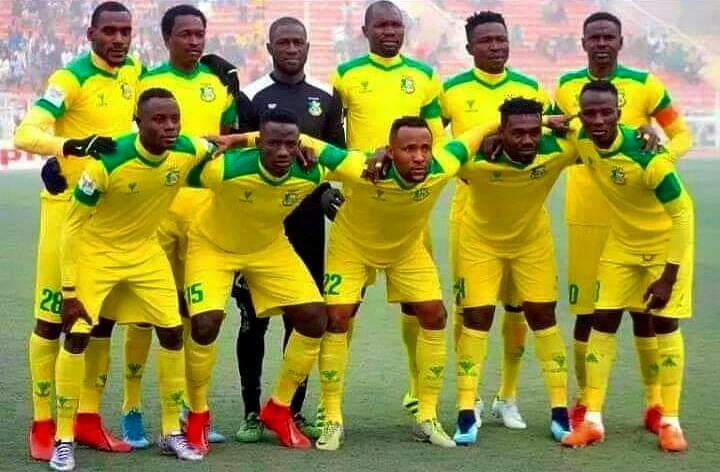
The rise and fall of Kano Pillars

By Muhammad Sodangi

As a prominent professional football club, Kano Pillars rose through the landscape of Nigerian football, showcasing and elegantly displaying a blend of talent, resilience, and passion for the game.

The club’s commitment to excellence and community support have been instrumental in its success. It is also well known for its passionate fan base, iconic blue and white colours, and stylistically competitive performance on the field.

Kano Pillars have won many domestic trophies, multiple NPF titles, and Federal Cup victories. Amazingly, they have represented Nigeria in several continental competitions, such as the CAF Champions League and the CAF Confederation Cup.

With a solid foundation, Kano Pillars Football Club is a shining example of determination, talent, and community spirit in Nigerian football.

Through their remarkable journey, the Kano pillars have solidified their place as a highly revered and respected institution in Nigerian football, leaving behind a lasting imprint on the hearts of fans and the history books of the sport.

However, the recent clash between Enyimba and Kano pillars shook the Nigerian football scene as the former claimed a commanding 5-0 victory over the latter.

The game was a top-notch encounter that magnetised and captivated fans and pundits from all angles. Enyimba, known for their attacking prowess and tactical acumen, played a master class against Pillars, securing an impressive 5-0 victory.

Conversely, Kano pillars faced enormous challenges throughout the match, struggling to contain Enyimba’s attacking onslaught and assert their presence on the field. In fact, the decline of Kano pillars in recent seasons could be attributed to various factors, including the lack of motivation among players, coaching staff, and management, as well as poor government funding.

These bedevilling obstacles created a nasty environment that hindered the players’ ability to perform at their best.

These international challenges could be addressed by prioritising motivation, empowerment, and support for players and staff. Thus, these could pave the way for success, glory and growth within the prestigious Kano pillars.

Sodangi writes from Salaha Africa, a media company based in Kano, Nigeria.

Impending collapse of Nollywood, Kannywood, and music industries due to the AI revolution

By Haruna Chiroma

Before the advent of the internal combustion engine, imaging two horses engaging in a conversation about the era of internal combustion engines. One of the horses envisions a transformative job landscape with new opportunities, while the other horse opposes the idea, seeing it as a potential threat to their relevance in transportation and a possible complete displacement from the realm of transportation. Horses have no position in the post internal combustion engine era. That is my prediction for the future of the movie and music industries in Nigeria.

The Nigerian movie industry is notably divided into two main sectors: Nollywood, primarily representing movies from the southern region and Kannywood, which focuses on movies from the northern region.

In the music industry, songs are typically sung in English, Hausa, Igbo, and Yoruba. Both the movie and music industries are currently confronting the looming threat of collapse due to the disruptive impact of AI innovations, inventions, and discoveries.

The process of writing movie scripts by scriptwriters is time-consuming and varies in duration depending on the complexity and proposed length of the film. It can take anywhere from two weeks to three months to complete the initial draft before further refinement. However, with the advent of AI tools like ChatGPT, scriptwriters can significantly enhance their productivity. By utilizing ChatGPT, writers can expedite the scriptwriting process, potentially reducing the time required from months to just one or two days for complex movie scripts.

The movie industry is on the verge of collapse in the near future with the emergence of generative AI tools capable of generating video from written text. In the near future, traditional methods of movie production may become obsolete. Instead of the laborious process of location shooting, hiring actors, coordinating camera movements, applying makeup, arranging logistics, etc. a movie script written by scriptwriter can simply be fed into a text-to-video tool converter. This innovative technology will then generate a movie video representation of the script, revolutionizing the way movies are created. The tool comes equipped with video editing features, enabling users to fine-tune the video to match their requirements. The process that involves many people with different expertise working from different perspective may likely require between 2 – 3 people instead of the large number of people required in the traditional process of movie production.

Recently, OpenAI unveiled Sora, a text-to-video conversion tool, garnering widespread attention from mainstream media. This development prompted a filmmaker in Hollywood, Tyler Perry to suspend his 4 years $800 million planned movie production studio expansion arguing that Sora will eventually impact every aspect of the movie industry and jobs in the entertainment industry.

In an intriguing development, yet another valuable AI tool for video translation has emerged. This tool enables users to translate their videos into different languages such as Dutch, French, Arabic, Swahili, Chinese, Malay, and more. By doing so, the movie video creators can extend their reach beyond Nigeria and cater to audiences across Africa, Europe, and Asia, thereby expanding their potential viewer base to a larger and more diverse audience.

A deepfake movie can be produced by using the faces of renowned movie stars from both Kannywood and Nollywood, eliminating the need for these actors to physically appear in any physical location. The movie developer only requires the consent of the actors to use their faces in the deepfake video, adhering strictly to ethical guidelines in the creation of deepfake content. With these permissions in place, a movie can be crafted featuring the prominent actor(s) as the central characters, offering new possibilities in cinematic storytelling.

These emerging concepts pose a significant challenge to the movie industry, making it increasingly difficult for the traditional model to sustain itself. This trend mirrors the significant decline or almost collapse witnessed in industries such as landline telephones, photo shops, and magnetic tape, suggesting that the movie industry may face a similar fate of eventual collapse to the changing landscape.

Already the adult content industry is facing tough competition from deepfake adult videos generated by AI tools. Recently, several dedicated platforms have emerged, exacerbating challenges for the traditional adult movie sector. These platforms are attracting millions of visitors, with one particularly renowned platform drawing over 17 million viewers monthly. Typically, the platform features short deepfake adult content videos as teasers, enticing viewers to access the full content elsewhere.

While the short videos span various platforms, the primary one serves primarily for advertising and provides links to other platforms where complete videos are available for purchase.

The proliferation of deepfake adult videos has led to a surprising revelation: these videos are not freely accessible but are instead sold in dollars, accepting payments via credit cards, debit cards, or cryptocurrency. This burgeoning industry has now become a multimillion-dollar enterprise. For anonymity and ethical reasons, I intentionally omitted specific platform names to prevent further traffic influx.

This discourse underscores a poignant observation: the inevitability of the movie industry’s potential decline due to the transformative impacts of AI research. In January of this year, a deepfake pornographic image featuring a celebrity, Taylor Swift surfaced on various social media platforms. The video quickly gained traction on X (formerly Twitter), spreading rapidly like wildfire and amassing over 47 million views in less than 24 hours. Despite ethical considerations, many X users shared the video extensively before it was eventually removed and searching for the image was blocked by X. I foresee the collapse of the adult content industry in the next 3 years with the deepfake videos taking over.

In the music industry, numerous AI tools for music generation are currently in various stages of development, testing, or initial release. For example, MusicLM, an AI tool developed by Google, is designed for composing music and has shown promising capabilities in generating music.

Currently, an advanced version called MusicFx is undergoing testing in Google’s test kitchen before its public release. Users can simply prompt ideas into the music tool, and it will automatically compose the music. This advancement suggests that the future of music composition may require fewer people, as one individual can prompt the tool with ideas to generate music without the need for multiple collaborators.

Another tool is Suno V3, it generates music from text easily. Therefore, the music industry is at the verge of facing stiff competition and eventual collapse of the industry from these revolutions from AI.

Haruna Chiroma, Ph.D. Artificial Intelligence University of Hafr Al Batin, Saudi Arabia, freedonchi@yahoo.com.

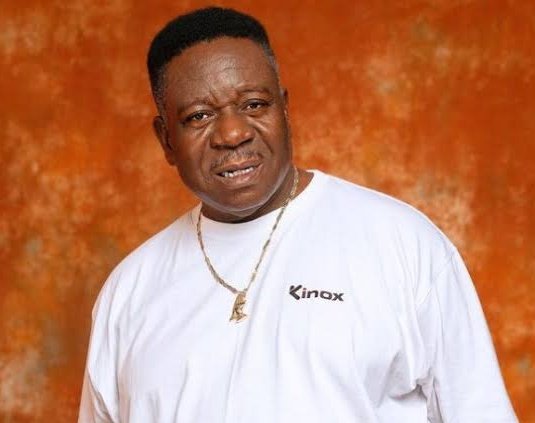
Nollywood veteran, Mr. Ibu, dies at 62

By Abdurrahman Muhammad

Nollywood actor, Mr. Ibu, has passed away at the age of 62. Mr. Ibu, whose real name is John Okafor, was a well-known and respected figure in the Nigerian film industry.

According to multiple reports from sources close to him, the veteran comedian passed away at Evercare Hospital. Many fans have shared condolences on X (formerly Twitter), reminiscing about movies the late actor has featured in.

Confirming his death, the President of the Actors Guild of Nigeria (AGN), Emeka Rollas, posted a message on his Facebook page.

According to Rollas, “Sad day for Actors Guild of Nigeria.

“Kate Henshaw lost her mother earlier today and Mr Ibu suffered cardiac arrest according to his manager for 24 years, Mr Don Single Nwuzor.

“I announce with (a) deep sense of grief that Mr Ibu didn’t make it.”

Details surrounding his death are still forthcoming. Also, Mr. Ibu’s family and representatives have yet to comment publicly.

The actor had been facing health challenges since October 2022 and had undergone several medical procedures, including the amputation of his leg.