Education

JAMB okays 140 cut-off mark for varsity

By Muhammad Sabiu

On Thursday, the Joint Admissions and Matriculation Board approved the cut-off scores for the nation’s universities and polytechnics.

This decision was reached following a contentious meeting that included representatives from the National Universities Commission, the Ministry of Education, the National Board for Technical Education, and others.

The cut-off grade for polytechnics is 120, while universities will require 140.

Recall that, according to prior reports, Professor Ishaq Oloyede, the JAMB registrar, disclosed that just 378,639 of the 1,761,338 candidates who took the 2022 Unified Tertiary Matriculation Examinations got a score of 200 or higher.

Oloyede further stated, “JAMB allowed awaiting results candidates to register and sit for the 2022 UTME. These candidates can’t be considered for admission on awaiting result status. They must present their O’level results on the board’s portal before the commencement of admissions”.

How much is your salary?

By Hamza Sulayman, PhD

One of the most difficult questions to answer among Nigerians is “How much is your salary?”. It does not matter who asked the question; the answer is always tricky. It might be a father asking his son or daughter after spending a fortune paying for their education, or a wife asking her beloved husband. The reason behind this varies from one person to another.

I came across a US-based content creator (IG: americanincome) who moves around the cities of the US asking strangers about their annual salary. To my surprise, they always answer right away and specifically to the last dollar. He asked some follow-up questions, like what did you study? And from which university, how many years of experience do you have? And what advice will you give someone who wants to follow in your footsteps?

To me, that type of content creation is amazing because it provides the young generation with factual data on how they can achieve their goals, which is much better than what the guidance and counselling departments of schools and universities can offer. That is, if the department exists.

My recent interaction with some youth led me to believe that they are after the money or, as they say, “secure the bag”. So, for example, if you are willing to get $150,000 per year, you should work as a Data Analyst, Model, or Software Engineer. If you are humble, you can be a high school teacher and earn about $42,000 a year. If you have a higher taste, you can be a doctor or dentist and rake about $200,000 to $300,000. There are other non-formal sectors with high income, like a professional barber earning $300,000 (I was surprised too) and a sneaker dealer earning $150,000. Top on the list was a luxury watch seller that makes $1,200,000 yearly.

Enough with the numbers, can you answer the question? How much is your salary? Many people cannot answer the question because they don’t even know. After all, what they received is not what is on their offer/pay slip, or the amount is laughable. Some people don’t answer the question because of what people might expect from them. I remember one of my colleagues. He told me that when the salary scale of academic staff was circulating on social media, it became a blessing for him because his family and extended family saw his salary as a Professor and decided to reduce the responsibilities placed on him.

Although in Nigeria, what you study is not entirely relevant to where you work, having a guidance and counselling advisor or a mentor is still advisable. Find someone you want to be like in the future and ask him to mentor you. Learn from their strengths and weaknesses and be a better version of yourself. Lastly, choose a career path that will make you happy, whether it is about the monetary aspect or otherwise.

Hamza Sulayman is a postdoctoral research fellow at Zhejiang University, China. He can be reached via hamza.sulayman@gmail.com.

ASUU’s undying struggle

By Auwal Mustapha Imam, PhD

Nigerian politics should copy ASUU politics. There’s no union, party, association, society or any group in Nigeria that has the structures as firm as that of ASUU. None has united, tolerant and harmonized structures as ASUU. ASUU is mindless of the religion, region, ethnicity or tribe of who becomes its leader, the only thing ASUU members are after is, someone that has the capacity to face and challenge any inappropriation, misconduct, injustice or insincerity from the powers that be.

The leadership has been like that since its inception. No one cares wether or not the leader is a Muslim/Christian or any tribe. If the leader is a Christian from the South, he challenges the powers and addresses the problems of every Muslim lecturer from the North, devoid of consideration of his faith. This goes vice versa.

When my teacher and mentor Dr. Nasir Isa Fagge, a Muslim from Bayero University, Kano was the President of ASUU, he faced and challenged the then President Goodluck Ebele Jonathan, a Christian from the South. None of either ASUU members or Nigerians complained that he was harsh because the President was a Southern Christian. All they were after was the result and the struggle.

Now that President Buhari, a Muslim from the North is the President, the two consecutive ASUU leaders Professor Biodun Ogunyemi (immediate past) and Professor Emmanuel Osodoke (the present) are fiercely challenging the Buhari’s government for the betterment of education in Nigeria, where both Muslims and Christians from all angles of the country can benefit. None of either ASUU members or Nigerians are complaining that the strike lingers because a Northerner is the President. All we are after is the result and the struggle.

Whereas, in Nigerian politics, one’s religion, region and ethnicity are scrutinized and looked at first before even his intellectual capacity. This has thrown us into a deep mess that led us to underdevelopment and public service abuses. Every organization recruits not based on merit, but connection, relationship and nepotism. This can never allow us to establish a structure that will ensure transparency and good governance.

ASUU’s structure, opinions and decisions are both descending and ascending. All deliberations from the local chapters ascend to the zone, then to the national. Likewise, all communications and decisions descend from the national to the zones and to the local chapters. Every member of ASUU is a stakeholder and all opinions are listened to and respected. This is why it is difficult for government to break the structure and penetrate with any inducement to corner the loyalty of some members to the agreement of government’s policies against ASUU.

ASUU’s structure enables unity and enforces loyalty to decisions. If your voice is heard and respected, you have no reason to go against the decision you took part in. This is why every member is loyal.

My master, Professor Mutari Hajara Ali of Physics Department BUK, once told me how he used his Vespa then for commercial “achaba” to survive the harsh policies of the then government of no-work-no-pay against them. I know many lecturers who are currently into commercial transportation services with their vehicles to survive the policy and endure the strike.

To all ASUU members, struggles and sacrifices are part of the job. Hence, nor starvation can force ASUU to retreat, unless its demands are met. Many of us are into hardships, but to us, the struggle needs to reach a logical conclusion rather than back down because of hunger.

Aluta Continua!

ASUU strike: presidency denies giving ultimatum to reach agreement

By Muhammad Aminu

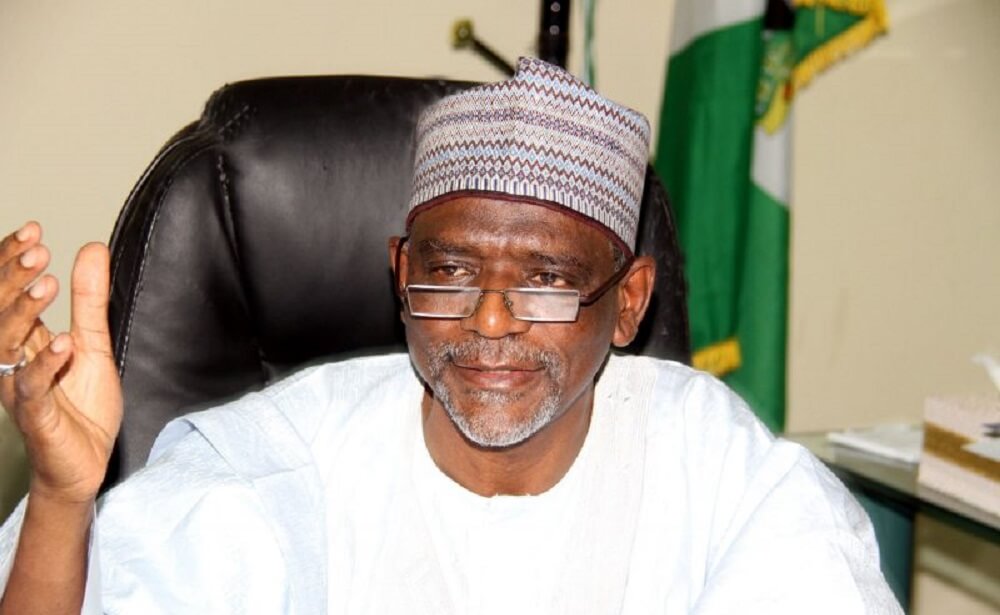
The Federal Government has denied giving any ultimatum to the Minister of Education, Malam Adamu Adamu, to bring an end to the lingering industrial action in public universities.

Senior Special Adviser to President Buhari on Media and Publicity, Malam Garba Shehu, said in a statement on Wednesday that there was no ultimatum given to the education minister to end the strike.

He accused the media of being deceived by their sources by giving definite time, saying the minister only suggested two or three weeks or even less.

The statement noted: “Neither during nor after the meeting was any ultimatum given to the Minister of Education.

“During the meeting, the Minister of Education requested that the Minister of Labour hands off the negotiation to allow him lead and conclude what he had earlier on started with the Academic Staff Union of Universities (ASUU). And he promised that he could get an agreement within the shortest possible time, possibly two to three weeks.”

“It is a pity that almost all media houses allowed themselves to be deceived by interested sources that are not the authorized spokesmen of the government.

According to Shehu, the Minister will carry all the necessary stakeholders who can realistically work to end the strike as the government doors are open.

“In carrying out this assignment, the Minister will carry along all relevant ministries and agencies with statutory functions and duties relating to the issues involved.

“The Presidency is optimistic that agreements can be reached in even a shorter period if all parties/stakeholders are not unrealistically obstinate. We appeal to the parties to work together to end the strikes.

“On the part of the administration, all doors remain open for dialogue and the resolution of the issues.”

The statement called on the media to desist from spreading misinformation on the matter.

“We appeal to the media not try to spread misinformation. The orchestrated media narratives seeking to present an entirely different picture, attributed to sources, in the last 24 hours are not helpful at all.

“The outcome of the meeting held by President Muhammadu Buhari on Tuesday with relevant Ministries, Departments and Agencies (MDAs) to end the agitations by university unions ought to be beyond spin-doctoring and conjectures, it added.

NANS backs NLC protest over ASUU strike

By Muhammad Aminu

The National Association of Nigerian Students (NANS), South-West Zone, has said it would join the Nigeria Labour Congress (NLC) in protest to pressurise the federal government to end the Academic Staff Union of Universities (ASUU) strike.

In a statement issued by NANS Coordinator and Public Relations Officer Adegboye Olatunji and Awoyinfa Opeoluwa, which was made available to newsmen on Tuesday.

The NLC had earlier vowed to embark on a nationwide protest on July 26 and 27 in solidarity with the trade unions in the Nigerian public universities and others.

The NLC President, Ayuba Wabba, who made the disclosure in a circular jointly signed by Mr Emmanuel Ugboaja, General Secretary of the Congress, on Sunday, said the protest was in line with the decisions of the National Executive Council (NEC) meeting of the NLC on June 30.

ASUU and other trade unions in the education sector have been on strike for over five months over the alleged failure of the Federal Government to keep to the agreement entered with the unions.

The demands of the striking workers include issues bordering on funding of universities, salaries, and earned allowances of lecturers.

However, the NANS leadership in the South-West zone called on students across the country to join the NLC in the nationwide protest in solidarity with ASUU.

NANS added that it would “not keep silent and watch our future being ruined by the prolonged ASUU strike.”

It stated: “It is timely and urgent to issue this statement today with a view to putting an end to the lingering strike action by ASUU. We want a total reformation of the educational sector.

“The Leadership of NANS, Zone D, has taken it upon herself to categorically stand against the dilapidated state of the educational sector in Nigeria.

“We are at a time when Nigerian students have lost hope and do not know what’s next on the radar. ASUU strike has been on for over five months without any hope of resumption.

“We have also waited for so long to see if the Federal Government will dance to the music of Nigerian students who have been clamouring for an end to the ASUU strike, but the reverse is the case.

“We’ve had several press conferences, granted several interviews, held several meetings to plead with both ASUU and the Federal Government, and held several peaceful protests across the Federation.

“According to the commandment of solidarity, we’re on the last ‘Cs of Aluta,’ which is confrontation. This is the time to call on all Nigerian students across all zones to join the NLC in solidarity to end the ASUU strike on Tuesday, July 26, 2022, and Wednesday, July 27, 2022. Nigerian students are tired of the long overdue strike action.

“Consequently, all NANS cadres and stakeholders, zonal leadership, Campus Committee Chairmen, Student Union Government presidents, Nigerian students, and the general public are hereby put on high notice to mobilise, organise and get prepared to be part of the movement,” NANS said

ASUU strike: Buhari intervenes, gives minister two weeks ultimatum 

By Ahmad Deedat Zakari

President Muhammadu Buhari has reportedly intervened in the ongoing impasse between the  Academic Staff Union of Universities, ASUU, and the Federal Government. 

Presidential Spokesperson Femi Adesina posted on Facebook on Tuesday, July 19, 2022, that the president was in consultation with ministers and government officials over the lingering ASUU strike.

“President Buhari in consultation with Ministers and other Government Officials over [the] lingering ASUU Strike in [the] State House on 19th July 2022”, Mr Adesina posted. 

In attendance in the meeting with the president were the Minister of Education, Adamu Adamu; the Minister of Finance, Budget and National Planning, Zainab Ahmed; the Minister of Labour and Employment, Chris Ngige, Minister of Communications and Digital Economy, Isa Pantami; the Head of Service of the Federation, Folashade Yemi-Esan; the Chairman of National Salaries Income and Wages Commission, Ekpo Nta, and the Director-General Budget Office, Ben Akabueze.

Sources in the presidency confirmed that the president had directed the Minister of Education to resolve the industrial crisis within two weeks.

It can be recalled that ASUU embarked on strike on February 14, 2022, which has crippled the academic and commercial activities in all the Nigerian universities.

On derogatory comments and memes about ASUU members

By Kasim Isa Muhammad

Someone I will not mention by name forwarded memes written in the Hausa language to my WhatsApp number. The content reads: “Tunda naga level coordinator din mu ya sa Shadda a status, na karaya.” This means “I lost hope upon viewing the brocade on the status of our level coordinator.” At first glance, of course, one would laugh it out. But, on second and more critical thought, the memes are a deliberate attempt to ridicule members of the Academic Staff Union of Universities (ASUU), whose salaries have been stopped for the past four months or so by President Buhari-led government.

That is one of the several unhealthy memes spreading on social media about ASUU members and their predicament due to the strike. Unsurprisingly, the person who intentionally shared this meme and his likes are bent on making caricatures of ASUU members. This explains the level of irresponsibility and how mean people can be.

In the first place, a university lecturer that converted their social media page for the sole purpose of business enterprise signifies that the lecturer in question is responsible and utilizing the strike effectively. When did engaging in business become a subject of ridicule? Or a sheer violation of the code of conduct?

Let me educate the public a little. The job description of all Nigerian academics includes teaching, research, home and community service, or any other duty as assigned by the Head of the Department. The work has been made flexible to enable lecturers interested in other genuine businesses to complement the paltry salary they receive each month.

Notably, lecturers in departments that are practice-based, such as law, medicine, mass communication, theatre, fine arts, and engineering, to mention a few, have the upper hand in multiple sources of income. This is because they engage in private practice outside the university job, which serves as’ Plan B’. 

Sadly, a portion of the blame goes to the government for reducing the profession to ridicule and making it less attractive because of the absence of a decent salary and deliberate stoppage of salaries whenever members embark on strike. Nothing like this can happen in a saner society.

Kasim Isa Muhammad is a student at the Department of Mass Communication, University of Maiduguri.

Proliferation of media houses in Arewa and the dearth of intellectual journalism

By Kabir Musa Ringim

I took my pen to write on this topic with mixed reactions: on the one hand, it is indeed a welcome development to have the number of media houses increasing at a fast rate in Northern Nigeria, but on the other hand, it is worrying to listen to or watch most of the new breed of journalists on several FM radio and TV stations, majority of which are newly established.

I refer to myself as an accidental journalist because I am a Computer Engineer, and I hold MSc in Information Technology and work as a polytechnic lecturer. But all my life, I have been a lover of media. I was an ardent listener of radio since childhood. I can still remember with nostalgia how I used to ask my mother to wake me up when it was time for BBC Hausa’s morning and late evening program at 8.30 pm, followed by VOA Hausa’s 9 pm program. I just couldn’t afford to miss listening to the likes of the late Hindu Rufa’i Waziri and Elhadji Diori Coulibaly.

My love for radio influenced my passion for journalism and the media profession. I started going to media house after I finished my Diploma in Computer Data Processing and IT in 2005. Furthermore, I wrote my project on the impact of radio with a case study of Freedom Radio, Kano. Thereafter, after graduating from BUK in 2011, I joined Freedom Radio Dutse as a voluntary staff working in the newsroom. I later opened my blog (ringimkabir.wordpress.com) in 2015, where I share news articles after translating them from English to Hausa. Now, I’m a freelance editor with Sawaba FM, Hadejia and SkyDaily online newspaper.

I narrated my brief sojourn in the media profession to pave the way for my moral stand and justification in talking about the dearth of intellectual, intelligent and hardworking personalities in the majority of our media houses in Arewa. A vast number of our media personalities are those that find themselves studying mass communications or languages by accident, lazy and unserious individuals with no passion for media, no love for radio but masquerading themselves as journalists to earn a living through meagre salaries or brown envelope journalism that has become the order of the day.

It is really frustrating to listen to most radio stations, especially in big cities where there are many, like Kano and Kaduna. The grammatical blunder, the mispronunciation of names of VIPs, national figures and important towns, and the incorrect voicing of arithmetic figures, dates and even times are unforgivable. The newsroom culture is dead; no intellectual discussions and arguments concerning news reports, and there is little or no investigative journalism being practised. Just copy and paste, edit, translate and cast on air or publish.

Media plays a vital role in educating, entertaining, enlightening and informing the people. It is the voice of the voiceless, a pathway to freedom for the masses and, above all, the fourth estate of the realm. Media houses, most especially radio stations, have been second to none when it comes to news dissemination in Arewa since the pre-independence period. The power of radio in Northern Nigeria is enormous.

In my view, the problem that caused the scarcity of intellectuals in the media profession originated right from universities and other higher institutions. Our institutions have been churning out thousands of half-baked graduates year in, year out. I really wonder how someone can graduate with a bachelor’s degree in Mass Communications but cannot speak or cast news in English. The majority of journalists in newsrooms cannot translate news from English, the language of instructions, to Hausa, the mother tongue.

Finally, despite the sad situation I elaborate on, I still believe we can get it right. The human brain never stops learning, provided deliberate efforts are being made to learn new things. With hard work, courage and determination, we can be like our predecessors in the media profession.

I have no intention of remaining in the media profession for long, but I will forever love radio. As such, I found it an obligation for me to speak up and energize my fellow journalists to stand up to the challenge and make a bold statement about becoming better every day. I still hold the belief that if someone can do something, I can do it too, and you can do it as well.

Kabir Musa is a lecturer at Binyaminu Usman Polytechnic Hadejia and writes from Ringim, Jigawa State.

NYSC refutes rape of female Corps Members in Akwa Ibom attack

The National Youth Service Corps has denied reports that 21 female corps members were raped during a robbery on Wednesday.

The scheme confirmed that, contrary to the reports, no physical harm was inflicted on them, and no corps member was raped.

In a statement obtained by journalists in Abuja on Thursday, Chinyere Ekwe, the Akwa Ibom State Coordinator of NYSC, clarified the matter.

She was quoted as saying, “In the said story making the rounds, it was alleged that gunmen attacked, raped, robbed and dispossessed Corps Members of their valuables at Udo Ekong Ekwere Street, off Information Drive, Uyo, Akwa Ibom State, where they reside.

“To put the unfortunate incident in proper perspective, the State Coordinator, NYSC Akwa Ibom State, Chinyere Ekwe in the company of the State Police Commissioner, Olatoye Durosinmi, visited the Corps Members for an on-the-spot assessment.

“While there, it was confirmed that 21 corps members occupy the said property. The interaction with the corps members further revealed that an attack on them was actually carried out by thieves at about 1 am this morning.

“In the process, the invaders took their valuables including phones, laptops and some cash. They confirmed that no bodily harm was meted on them, and no corps member was raped.”

Violent attacks are not only quotidian in the Northern part of the country; the South also suffer from activities of hoodlums and terrorist organisations like the Indigenous People of Biafra (IPOB) in the Southeast.

FUDMA student wins Sanger Institute Prize

By Muhammad Abdurrahman

Ibrahim Adamu, a Microbiology student from the Federal University Dutsin-Ma, Katsina, Nigeria, has won the 2022 Wellcome Sanger Institute Prize. Ibrahim, who hailed from Ingawa Local Government of Katsina State, became the second person in Nigeria to win the prize.

The Sanger Prize is an outreach competition aimed at undergraduates studying genomics relevant courses who live and study in low or middle-income countries. This year students from 138 countries of different universities and faculties participated in the competition.

As usual, the winner of the Sanger Institute Prize will be offered a three-month internship with a research group at the Wellcome Sanger Institute, Cambridge, United Kingdom. The internship prize will cover all essential expenses, including travel costs, visa costs, training and research costs, accommodation and reasonable food costs during the three-month internship. The winner will also receive support and mentorship from the Institute, the scientific programme they work with and the team that administers the fund.

When contacted by The Daily Reality on how he knew and applied for the competition, Adamu explained that: “A friend shared a link with me in December 2021. I then contacted my academic advisor, and he encouraged me to apply. He connected me with Dr Adesoji Ayodele Timilehin and Dr Aminu Ado. These two wrote reference letters for me.

“I was also supported and mentored by Dr Adesoji throughout the process. I spent many sleepless nights reading research papers, books and reports to prepare for the essay competition. My Mentor rejected my first essay trial. So I wrote another one, and he suggested some edits for me.

“Anybody willing to apply should have a broad understanding of genomics, read a lot, and seek professional mentorship in all the application processes! Mentorship is the key! Without it, I would not have made it even to the first stage! So be focused and PRAY hard”, Adamu said.

Ibrahim concluded, “I will be available to guide any potential applicant in the future.”