Education

Kogi Varsity fines more than 1000 students for unruly behaviour

By Ahmad Deedat Zakari

The management of Federal University Lokoja (FUL), has demanded that more than one thousand students of the institution pay the sum of one thousand naira for their unruly behaviour in the varsity’s campus.

FUL Registrar & Secretary To Council, Dr Rebecca Aimiohu Okojie disclosed this in a memoir she signed and dated Wednesday, December 14, 2022. She noted that the students destroyed a school property and were rude to the members of staff of the university

Consequent of the alleged bad behaviour, the school management requested that the students must do the following:

  1. Payment of one thousand naira ( N1000) at resumption in January 2023.
  2. Evidence of payment to be presented at Student Affairs Division in order to be cleared to write examination
  3. Presentation of Stamped Affidavit of good behaviour from High Court.

The management further condemned the act and urged the students be be of good character.

Part of the memoir reads:

“Management notes with discomfort the unruly and highly condemnable behaviour you displayed during the CBT examination that took place on 6th December, 2022 at the ICT centre Felele Campus. The said unruly behavior behavior led to the damage of university property, in addition to you being rude to Principal Officers at the venue

Federal University Lokoja as an institution of transformative learning, whose certificates and honours must be bagged by students found worthy in both character and learning, has neither place nor tolerance for the kind of reprehensible displayed during the examination under reference.”

However, The Daily Reality gathered that not all the students affected by the general punishment were present on that day for the examination.

An affected student who spoke to the Daily Reality on the ground of anonymity said it was the lack of coordination on the part of the institution that caused the chaos that led to a door being damaged.

“It was lack of coordination that led to chaos and a door being damaged as a result. Many exams were already taken that day and thousands of students couldn’t write the examination. Many suffocated and fainted as a result of their way the school handled the situation.”

JAMB begins automation of admission process in 2023

By Uzair Adam Imam

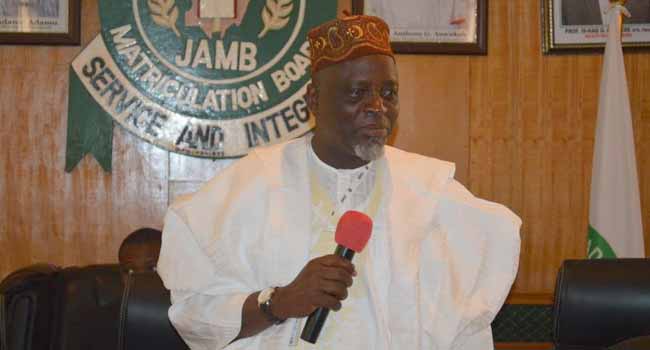
The Registrar of Joint Admissions and Matriculation Board (JAMB), Prof. Is-haq Oloyede, said the body would refrain from receiving physical letter from any institution or agency except through its Interactive e-Brochure and e-Syllabus System (IBASS).

He disclosed this during training on the use of IBASS for vice chancellors, provosts, rectors and other administrative staff of tertiary institutions. The training took place in the six geo-political zones.

Oyelede said with the introduction of IBASS, tertiary institutions no longer have to come to the board for programme accreditation or admission processes.

He said, “Communication between NUC, NBTE, NCCE on one hand and the institution on the other hand and in some cases with JAMB have been very chaotic and unnecessary waste because the institution will have to come all the way from maybe Port Harcourt or Ahmadu Bello University, Zaria to say this programme has been accredited or introduced for us.

“Immediately a programme is amended or approved by NUC, NBTE or NCCE, it is immediately transmitted to the institution and once it is transmitted to that institution, it is only that institution that will see it. And JAMB will immediately see it.

“NBTE will not see the NCCE work nor will NCCE see what is going on in NBTE. It is individualised to the issues of the communicators,” Oloyede said.

Bauchi Gov’t appoints Prof. Fatima Tahir as SAZU VC

By Uzair Adam Imam

The Bauchi State Government appointed Professor Fatima Tahir as the new Vice Chancellor of Sa’adu Zungur University, Gadau.

Professor Fatima is the first female vice chancellor at the university and was appointmented Monday, December 12, 2022.

The immediate-past Commissioner of Education and Higher Education in the State, Dr Aliyu Tilde, disclosed this in a statement.

It was gathered that Prof. Fatima Tahir is the younger sister of the renowned scholar, late Dr. Ibrahim Tahir and has been a lecturer with the university.

Tilde said, “Bauchi State Government has just released the appointment of Professor Fatima Tahir as the new Vice Chancellor of Sa’adu Zungur University, Gadau.”

The statement added that the new VC came first on the list of 12 applicants, who were shortlisted and interviewed for the position a month and a half ago.

Since her appointment by the Bauchi State governor, Bala Mohammed, the newly appointed VC’s relatives have taken to their various social media platforms to jubilate.

Varsities must emulate OAU in dealing with sexually irresponsible lecturers—Buhari

By Muhammadu Sabiu

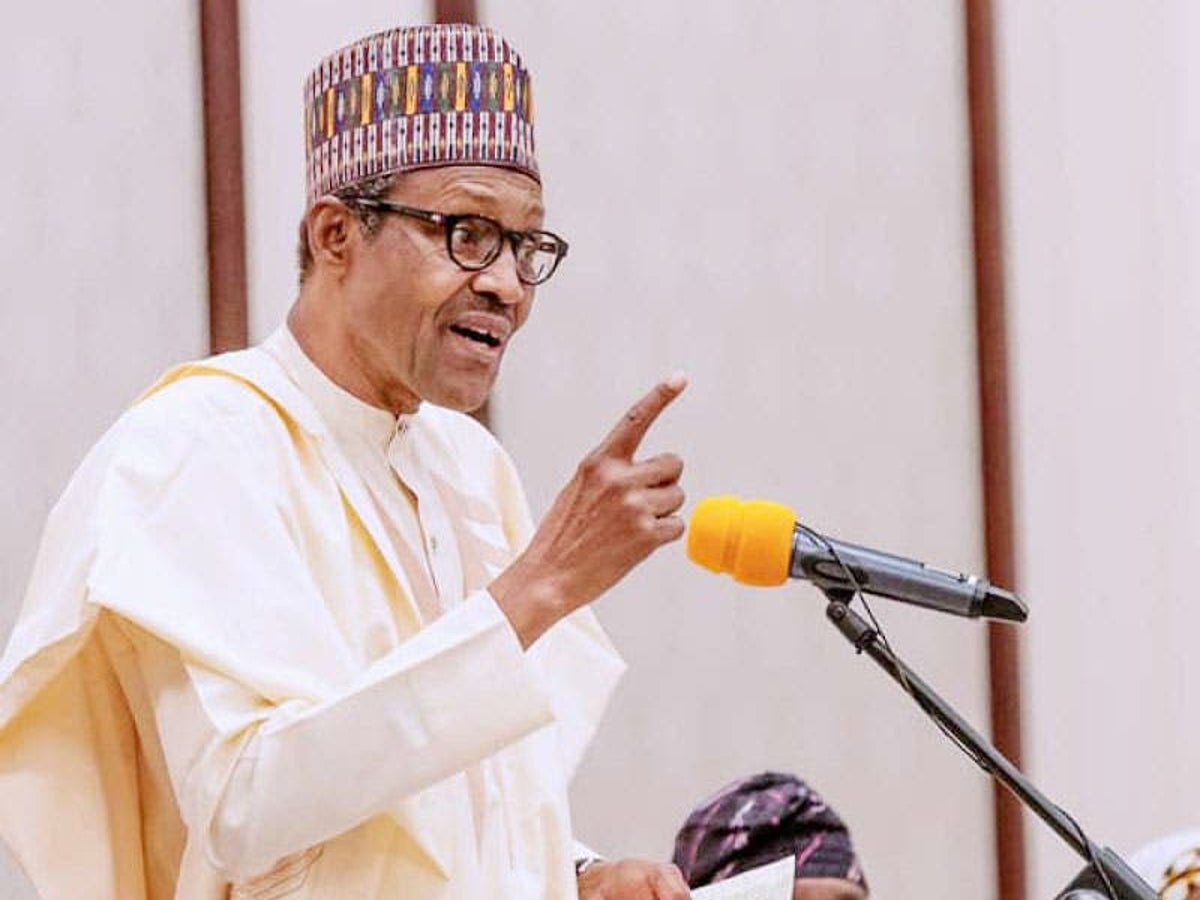
President Muhammadu Buhari has asked other higher educational institutions to emulate the Obafemi Awolowo University, Ile-Ife, in combating the problem of sexual harassment of female students by academics.

At the 46th convocation of the university in Ile-Ife on Saturday, Buhari warned that the future of bright young females in higher education institutions across the nation must not be left in the hands of sexually irresponsible people who were disguising themselves as academics.

He also praised OAU management for its aggressive approach to combating sexual harassment and other forms of harassment without considering the victims.

The president was represented by the Director of Academic Planning, National Universities Commission, Dr Abiodun Saliu.

He was quoted as saying, “I will be failing in my duty as Visitor if I do not commend the Council and Management of this great citadel of learning for dealing, very decisively, with cases of sexual harassment.

“In fact, this university deserves commendation on the way and manner it is tackling sexual and other related harassments headlong without minding whose ox is gored.

“I want other institutions of higher learning to emulate OAU in summarily terminating the appointment or dismissing any lecturer who uses or is using his advantageous position to sexually harass our young, unassuming, innocent and impressionable girls.”

He also warns that the lives of female students must not be entrusted to the so-called lecturers.

“We cannot continue to entrust the lives of our promising young girls into the hands of some sexually reckless individuals who are masquerading as lecturers on our campuses,” he said.

Reading

By Salisu Yusuf

Reading is the interpretation of some signs, symbols and codes into meaning for intellectual consumption. Reading is the third skill in the order of the four language skills behind writing, for one can only write when he knows how to read. The significance of reading can be viewed in the context of the world being a global village; reading has today made our world a unipolar entity where communities understand each other and realise their diversity.

In Islam, reading is the most crucial skill in seeking knowledge and understanding God. The first verse of revelation is “Iqra’a”, or read, for it’s through the pen(writing) that the Lord teaches man some knowledge.

Reading has been the highest source of joy for man. It emancipates and frees man from the shackles of servitude. People have read to escape from the deception of the perverts, the so-called clerics who misinterpret divine injunctions according to their caprices. Reading can wrench you from the grips and chicanery of postmodern politicians. Read and be free from the bog of tradition, the tyranny of the oppressor, the darkness of illiteracy and the glibness of the scammers. 

In fact, reading can make you a gentleman/lady; men/women have become milder, sober and more empathetic through years of excessive reading. When you read, you will understand yourself, your immediate environment, and your world. When you don’t read, you suffer from a lack of effective education. That’s called illiteracy.

 Reading can take you to places you’ve never been. I was once with the notorious Adolf Hitler in a ditch shortly before his infamous suicide. I was once in a Bagdad prison, witnessing the despicable hanging of dictator Saddam Hussein. I have been to Elysse Palace with the powerful Charles de Gaulle during his assassination attempt. Asare Konadu has given me an imaginative ride to cultural Ghana. James Hardly Chase has numerously chauffeured me to an underworld, taught me criminology, spying and espionage. Achebe has taught me some aspects of Igbo culture; in fact, he was the one who told me that “breaking cola” wasn’t only a Hausa culture.

I once read a fable with a combination of animal, bird and spirit characters. I melted into the sky, and became a spirit. I perched on branches of trees as a brood, hatching and nestling. I had become a spirit and mutated into a bird the next moment, flying on a vast, blue and cold sky, feeling acrophobic. I still remember with nostalgia those imaginative, daring escapades. A reader can go directly to a character’s mind and discover his inner thought. He can scale a river and be on war fronts. 

Reading can be your route to escape, add to your knowledge experience, and can polish your language, open you to new vistas and give you aesthetic joy.

 As an advanced reader, you shouldn’t read excessively at night (learn to rest for your mental well-being), or in sunny spots (you should go under a shade). Preferably, don’t read from a white paper; the best paper to read from is either a light yellow or light blue.

 The best thing in your reading is to protect and harness your eyes from being strained. Your eyes aren’t only your sighting treasure. They’re your intellectual and economic assets. By using the best and appropriate paper, you take a long-term measure that’s best for your eyes in later life.

The uncomfortable truth is that, you’ll reach a stage in your life when you lose that flexibility in and around your eyes. So, you must compensate them with reading glasses. But using the right paper will sustain the tempo and rhythm of your sight. You should harness your eyes at this crucial stage of your life. To quote from the famous English poet, Oliver Goldsmith, “husband out life tapers at the close. And keep the flames from wasting by repose.”

At an advanced level of our reading, we read when we’re in the mood, when we’re in the best mental state. This is why it’s crucial to coordinate your eyes and mind together during your reading; otherwise, you’ll only say the alphabet, not the semantic words. There’s a difference between saying and reading. In saying, you don’t understand; in reading, you get the gist.

During our personal/independent reading, we should avoid vocalisation and sub-vocalization because they’re diversionary; we employ the use of silent reading, where the eyes and mind do the bidding. We move the eyes but not the head.

 As an advanced reader, you should devise a contextual reading. A context reading is when a reader utilises all those syntactic, semantic, and discourse markers as well as the surrounding information, use an appropriate analytical approach to the vocabulary, and use the historical and cultural backgrounds in his quest for meaning. 

A reader should digest both the content and form. Reading is twofold; he digests the content for the message and the form or language where he learns some contextual expressions. 

Reading should be a lifetime endeavour. However, reading cannot be an obstacle to my midday siesta, my routine physical exercise, or my light walk. It cannot hinder my other religious obligations.

Reading is my morning tea, my late morning cake and drink, my heavy lunch, my afternoon dessert, and my evening supper. Reading is my light dinner. I will read until I can read no more until I feel numb and dark.

 Salisu Yusuf wrote from Katsina via salisuyusuf111@gmail.com.
The dynamics of prepositions in relation to meaning

By Hamza Wankari

Meaning, which technically translates as semantics, plays a fundamental role in communication between a speaker and a listener. Without meaning, human activities would have been on a great decline, or worst, come to a halt, for at the heart of civilisation lies in language and meaning.

No doubt, some English words have a few prepositions with which they collocate in different contexts to convey different meanings with ease. If this is the case, then there is a need to study all the various prepositions associated with the words in our vocabulary for effective communication.

Prepositions indicate time, location, direction, etc., in relation to words. More precisely, in English language contexts, determine the prepositions to be used alongside words. In default on using apt prepositions, there may be adverse consequences. 

In light of this, this treatise attempts to shed some light on the different meanings as produced by the different prepositions germane to the word “market”.

According to Oxford Advanced Learner’s Dictionary 10th Edition, “market” is an occasion when people buy and sell goods; the open area or building where they meet to do this.

How, then, can the word (market) be deployed with different prepositions to make effective meanings?

IN the market

AT the market

ON the market

Examples

I am in the market. (Non-standard)

I am AT the market. (Standard)

Meaning:

I’m physically present AT the market.

I am IN the market for a new English dictionary. (Standard)

Meaning:

I’m interested in buying a new English dictionary. However, I may not be physically present AT the market.

My phone is IN the market. (Nonstandard)

My phone is ON the market. (Standard)

Meaning: My phone is up for sale to anyone interested.

Summary of the treatise

IN the market (to be interested in buying something).

AT the market  (to be physically present at the market).

ON the market ( to be up for sale).

Hamza Wankari wrote via ibrahimhamzawankari@gmail.com.

Dangers of entrusting religious leaders with sex education responsibility

By Aishat M. Abisola

A few weeks ago, I read that the federal government ordered the Nigerian Education Research and Development Council (NERDC) to remove sex education from the basic school curriculum. This decision was made by the Minister of Education, Mallam Adamu Adamu.

This followed the call by experts that sex education should be placed in the hands of parents and religious institutions so that it would not be taught in schools in ways that would not further “corrupt” young children with phones and access to technology.

Adamu stated that since Nigeria is a religious country, morals and values should be taught in Mosques and Churches, adding that it would bring up children with strong morals and reduce the rate of out-of-school children.

When I read this, I was shocked for many reasons. First of all, the introduction of sex education into the basic education curriculum is still recent, and most schools are not even implementing it.

When I was in secondary school, my classmates and I were mainly taught about the biological and chemical aspects of reproduction, not the elements concerning sex and sexuality.

Secondly, how are they sure that sex education has not benefited the youths who are barely taught about it in schools?

Sex education can be defined as teaching and learning about a myriad of topics related to sex and sexuality. It dives into the values and beliefs regarding these topics. It helps people gain skills they will need to navigate their relationships with themselves, their partners, and their community and helps them manage their sexual health.

Sex education can be taught anywhere, in one’s house, school, community setting with trusted individuals, or online. As I stated earlier, I was not taught much about sex education in secondary school.

Luckily, my parents were there to answer my questions on sexual education and even imparted helpful knowledge that has helped me a lot in many ways.

When I learnt more about sex education and focused on what my parents taught me, I learned more about myself, my body, and how I could improve in terms of mental and physical health.

Despite common misconceptions that sex education corrupts children when taught about it at school, sex education can be more beneficial than you might expect. The full description of what sex education entails is as follows:

Human Development

This involves human anatomy, puberty and how it will affect them both physically and mentally, sexual orientation (the different types of sexual orientations), and gender identity (what it means to be male or female).

Relationships

Relationships consist of Interpersonal relationships such as family, friendships, romantic relationships, and relationships with healthcare practitioners.

Personal Skills

This involves areas surrounding communication, boundaries, negotiations, and decision-making.

Sexual Health

Sexual education covers the areas that deal with sexual health, like sexually transmitted diseases, Birth Control, and pregnancy.

Society and Culture

This involves Media Literacy, Shame, and stigmatisation associated with sex and sexual education, the way that power, identity, and oppression can affect sexual wellness and reproductive freedom.

But besides all this, my main concern is how sex education is so callously put in the hands of religious leaders and institutions.

Most parents can be trusted to impart their knowledge about sex education to their children so they are more aware and careful.

On the other hand, religious leaders and institutions cannot be trusted in the same way.

Historically and in recent times, both religious leaders and religious institutions have been known to use children’s lack of sexual knowledge against them in ways most foul.

Priests, pastors, and Imams have preyed on young children entrusted to them by unsuspecting parents.

The more commonly known religious institution to do so are the Catholics, but other religious institutions and their leaders have done the same.

In some Islamiyah (Islamic religious learning academies), Imams have inappropriately touched young children they were supposed to care for.

Some examples would be a French Catholic church that was reported after discovering that its clergy and lay members had sexually abused at least 330,000 children over the past 70 years.

Another example would be a young girl from Lagos whom a Friar sexually abused at her parish church. In 2020, an Imam had taped himself raping a five-year-old girl, and earlier this year, in July, another Imam was arrested for the sexual abuse of seven children.

In October this year, another Imam was arrested for sexually assaulting an 11-year-old. Men (Women as well) who are placed into positions of power are more often than not predators who seek to prey on those weaker than them.

These days, anyone can become an Imam or a pastor. Because of the relaxed nature in discerning whether someone is an actual man/woman of god or whether they can be trustworthy in a position of power, many people get hurt.

Young children should not be placed in their care, nor should they be allowed to discuss sex education with them.
For all we know, they could teach these young and highly impressionable children wrong things and could hurt them badly in the long run.

Statistics have shown that when children have been sexually abused, there is a high likelihood that they will go on to commit the same injustices that were performed on them.

Ultimately, it will perpetuate a cycle of pain and torment.

Appropriately trained sexual education professionals should be tasked with training children on what they need to know about sex education from a young age. This way, they will learn more about their bodies and the best way to know if what is being done to them is right or wrong.

Along with this, their community should also take care of children.

If more than one eye is trained on a child, then any odd behaviour will be noted and told to their parents so that they can take the proper actions necessary.

With these two in hand, parents won’t need to rely on religious leaders or religious institutions to teach children about sex education when children are more likely to be abused by them.

Perhaps then, the government will have more trust in the education system instead of leaving such a delicate and complicated matter in the hands of people who would instead make matters worse than fix anything.

Children are blank canvasses, and teaching them the right things will make lovely and ethereal colours glow on their canvas, but teaching them in the wrong manner will damage it.

Children are the hopes and future of their parents and forefathers; It is with them that a legacy of peace, faith, and kindness is ensured.

I hope whoever reads this takes my words to heart and acts righteously for these children who might be led astray due to improperly placed trust.

Aishat M. Abisola is a member of the Society for Health Communication, Wuye District, Abuja, via Aishatmohd02@gmail.com.

Prof. MZ Umar appointed new VC, FUBK

By Ibrahim Mukhtar

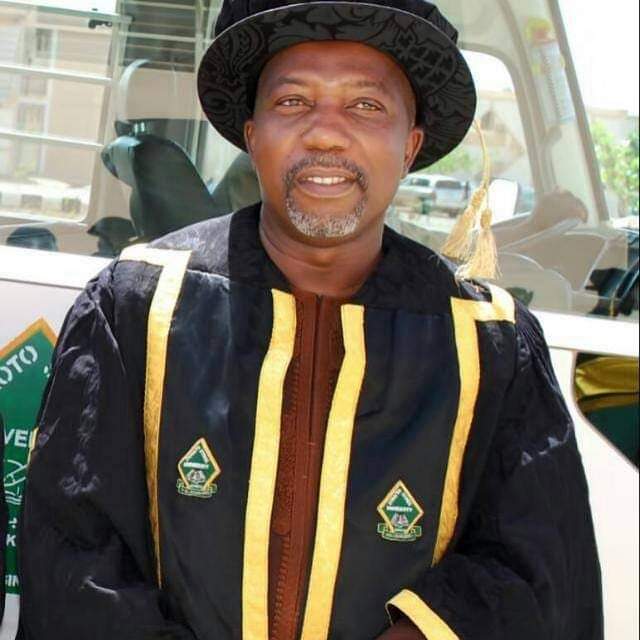
The Governing Council of Federal University, Birnin Kebbi, at its 25th meeting held from Monday, 21st to Thursday, 24th November, 2022, has approved the appointment of Prof. Muhammad Zaiyan Umar as the new Vice Chancellor of the University.

In a press statement sent by Alhaji Jamilu M. Magaji, the
Public Relations Officer,
Federal University Birnin Kebbi, he noted that the Pro-Chancellor and Chairman of Council, Prof. Funmi Togonu-Bickersteth announced the development at a Press Briefing held on Thursday, November 24, 2022 at the Council Chamber, Senate Building, University Main Campus.

The statement received by The Daily Reality states that “the Pro-Chancellor who revealed that the appointment of the new Vice Chancellor was sequel to the advertisement in the Daily Trust and The Punch Newspapers of Saturday, 2nd July, 2022 and subsequent interview by the Governing Council, added that the tenure of the outgoing Vice Chancellor ends on December 3, 2022.

Until his appointment, the new Vice Chancellor was the immediate past Deputy Vice Chancellor, Sokoto State University.

Muhammad Zaiyan Umar, a Professor of Political Science at the Usmanu Danfodiyo University, Sokoto (UDUS), comes with over three (3) decades of professional and administrative experience. He started his professional career at the UDUS as a Graduate Assistant in 1989 and became a Professor in 2009.

The immediate past Deputy Vice Chancellor (Academic), Sokoto State University, Sokoto, Prof. MZ Umar also served as the University’s Ag. Director, TETFund’s Research and Development Centre of Excellence. He is currently the Chairman of the Board of Centre for Open and Distance Education (CODE) at the Usmanu Danfodiyo University, Sokoto. Prof. Umar was, at various times, the Ag. Head of Department of Political Science, Deputy Dean and Dean of the Faculty of Social Sciences, as well as the Dean of Postgraduate School at UDUS.

The new Vice Chancellor served as Resource Person to several organizations including the Institute of Security Studies, Abuja; National Institute for Policy and Strategic Studies (NIPPS), Kuru, Jos; The Electoral Institute of the Independent National Electoral Commission (INEC) and the House Committee on Marine Transport, National Assembly, Abuja.

A Fulbright Fellow, Prof. Umar served at the University of Washington, Seattle, USA between 1988 and 1999. He served as an External Examiner and Assessor for promotion to Reader and Professor for various State and Federal Universities in Nigeria as well as the Council for the Development of Social Science Research in Africa (CODESRIA), in Dakar Senegal. He is a member of the Fulbright Alumni Association of Nigeria, Nigerian Political Science Association (NPSA) and Social Science Academy of Nigeria (SSAN).

Prof. Umar was born on June 12, 1963. He is married with children.”

ABU lecturer wins ASR prize for Best Africa-Based Doctoral Dissertation

By Ahmad Deedat Zakari

A lecturer with Ahmadu Bello University, Zaria, Dr Nadir A. Nasidi, has been declared winner of the African Studies Review prize for ‘Best Africa-Based Dissertation’

The Public Affairs Directorate of the institution announced Dr Nasidi’s success in a statement on Thursday, November 24, 2022.

According to the statement, “Dr Nadir A Nasidi’s dissertation ‘ A Contextual Analysis of Sufi Saint Paintings in Kano Nigeria’ has won the 2022 African Studies Review (ASR) Prize for the ‘Best Africa-Based Doctoral Dissertation”.

The statement said Dr Nasidi will also be given a certificate recognizing the award and a $500 e-certificate from Cambridge University Press.

The Vice-Chancellor of ABU, Prof. Kabiru Bala, has congratulated him saying that the “University always takes pride to see its students and staff excel in a given task.”

Dr Nasidi is a lecturer at the History Department of Ahmadu Bello University, Zaria and had defended the award-winning dissertation in 2021 at the same institution.

Nigerian media industry proposes new regulation to enhance professionalism

By Ahmad Deedat Zakari

The Nigerian media industry has adopted a new mechanism to address ethical and professional problems in the industry.

The decision was an aftermath of a media roundtable organized on Monday, 21st November, 2022.

The amalgam of the Newspapers Proprietors Association of Nigeria (NPAN), Nigerian Guild of Editors (NGE), Nigerian Union of Journalists (NUJ), Broadcasting Association of Nigeria ( BON) and the Guild of Corporate Online Publishers (GOCOP) came together to arrive at the resolution.

Media leaders and operators at the roundtable noted that the success of the co-regulation would be attainable via a workable enforcement mechanism.

According to them, co-regulation is attainable when the Nigeria Press Organization (NPO), comprising NPAN, NGE, NUJ and BON work together to make the co-regulation system effective. This will be done through the establishment of the ombudsman at local and central levels.

This is contained in a communique issued at the end of the media roundtable convened within the context of the imperative of a strategic response to the challenge of institutionalizing self-regulatory mechanisms by the media for the media.

The communique was jointly signed by the president, NPAN/NPO, Mal. Kabiru A. Yusuf, FNGE, president, NGE, Mustapha Isah, president, NUJ, Chief Chris Isiguzo, MFR, president, GOCOP, Maureen Chigbo and the executive secretary, BON, Dr. Yemisi Bamgbose

The communique noted that measures must be put in place to avoid the creation of bureaucratic structures that may have high-cost implications and hinders the efficient operation of the ombudsman.

The communique reads in part:

“That sanctions for the violation of ethical codes and professional standards shall be determined by the Ombudsman, guided by the regulation.

“That media professional bodies and associations shall partner with media organisations to give wide publicity to the decisions of the Ombudsman,” the communique stated.

On the revised Code of Ethics of Journalists in Nigeria, the communique noted that a bill of rights would be incorporated into the revised code to address concerns over some industry practices that tend to undermine the welfare and safety of journalists.

The communique also said: “That the revised code shall protect investigative journalism by making the public interest exception to instances where undercover methods may be used to obtain information.

“That the revised code shall distinguish between paid content and editorial content to preserve editorial integrity; and a new clause would be inserted to obligate journalists to promote the right of the people to know, freedom of the press and responsibility.”