Education

Is STEM-based Nigerian university curriculum obsolete?

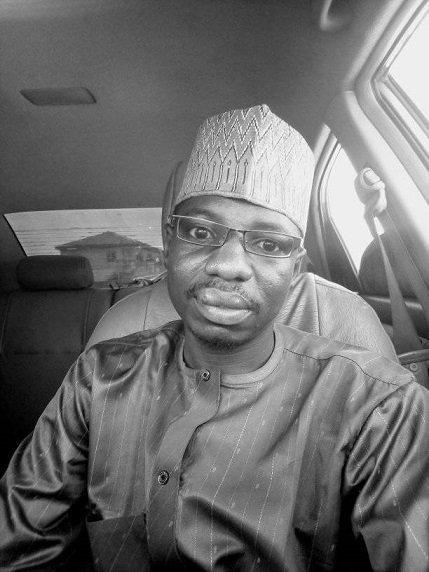
By Dr. Hamisu Adamu Dandajeh

It is not a conundrum that Nigerian STEM-based postgraduate students often perform incredibly well when they find themselves in foreign universities despite going through an “obsolete” curriculum. Nigerians are mostly on top of their classes abroad and compete favourably with other best students from all around the world who were taught with the so-called “up-to-date” curriculum. Some of us are witnesses to this anomaly, and the reason for this is simple! 

The Fundamental Principles of Engineering Science, such as gravity, thermodynamics, and fluid mechanics in most curricula in the world are inherently similar. What is markedly different are not only the methods, areas, and propensities of cutting-edge applications but also the relative mastery, tools, delivery, understanding and environment of the instructor. The key concepts are meant for you to think about. When these concepts are fully truly understood, one can solve any complex problem from one’s domain of expertise, starting from the first principle.

I have worked with the Mechanical Engineering curriculum of University College London (UCL), Massachusetts Institute of Technology (MIT) and some modules at Cambridge University. These are the best universities in the world. I audited and developed curriculums in two MIT courses (2.005 Thermal Fluids Engineering and 2.60 Fundamentals of Advanced Energy Conversions), engaged 2nd and 3rd year UCL undergraduates in thermodynamic laboratories and developed engine laboratories similar to that of Cambridge. My experience is that because all the resources needed were readily available and the pedagogical learning outcomes were clear and student-centred, these fundamental concepts were used to derive and solve unbelievably sophisticated equations whose physical meanings and applications were well intended. I always call these universal, natural, and settled concepts, but their usage and applications depend on the goal they are meant to achieve.

Cambridge University has an integrated “Department” of Engineering, NOT ‘Faculty” for a reason. Undergraduate students are required to study general engineering in their 1st and 2nd years and then specialise in their preferred engineering discipline in their 3rd year. The first two years are expected to groom students with most engineering science principles for interdisciplinary problem-solving capabilities. My MSc project supervisor (Emeritus Prof. Chris Lawn) at Queen Mary University of London was a Cambridge graduate. I marvelled at how he developed, from first principles, thermo-fluid equations representing instantaneous mesoscale combustion processes.

A typical Nigerian Engineering curriculum is diverse, rich, and multi-disciplinary. For example, a graduate of Mechanical Engineering at Ahmadu Bello University is expected to take courses like Communication, History, Development Economics, Law of Contracts, Moral Philosophy, Financial Management, Statistics, Quality Control, Linear, complex, and Applied Mathematics. These are in addition to the core courses of thermodynamics, Control, Strength of Materials, Fluid-Mechanics, Hydrodynamics, Aerodynamics, Machine Design, Heat Transfer etc. The mathematics-heavy curriculum has the necessary analytical rigour to prepare and adapt candidates to any academic climate. This is why a third-class graduate from a Nigerian would successfully graduate with a First Class (Hons) in a TOP-UP degree from a UK University.

The fact that students from these global best institutions excel and are industry-ready, despite the common key fundamental principles with the Nigerian curriculum, is not surprising. These institutions further advance fundamental concepts with contemporary grant-ready research, and they establish a vibrant ecosystem that fosters innovation and growth, hence easily attracting the best minds (students and staff) from all corners of the world. Meritocracy is their criteria for admission and employment of manpower. No wonder Boston, Massachusetts, where MIT is situated, is an attractive centre for start-ups and scale-up Biotech companies. 

Nigerian universities can also translate these fundamental concepts to meaningful research and innovation, and for this to happen, the quadruple helix of Academia-Industry-Government-Society should not continue to stand on only one leg of the theoretical “academia” as the status quo. We should refrain our students from memorising and regurgitation of facts via testing “book knowledge” only; instead, we should produce thinkers and re-skilled graduates who would use these fundamental concepts to solve local and global problems.

My prior idea after my Fellowship at MIT was for the current STEM courses to be decentralised to produce the programs of the future. For example, instead of studying the bulk of “Renewable Energy” as a sub-course of an Engineering program, courses like “Wind Engineering”, “Solar Engineering”, and “Science & Engineering of Climate Change” should be redeveloped as separate programs. 

Computer Science could be split into minor courses such as “Data Science”, “Artificial Intelligence”, “Cybersecurity”, “Computational Linguistics”, and “Drone Technology”. Mechanical, Electrical, Biology and Electronics can produce courses on “Robotics and Biomedical Engineering”. 

Based on our experience with COVID-19, “Epidemiology” can also be developed as an independent program. We must all recognise that however excellent these suggestions may be, their success story would also rely heavily on the understanding and delivery of the fundamental principles of STEM.

Dr. Hamisu Adamu Dandajeh is currently a Senior Lecturer in Energy, Thermo-Fluid and Climate Change at the Ahmadu Bello University Zaria. He can be reached at hadandajeh@gmail.com.

NANSU: Past, present and future

By Salihi Adamu Takai

This will take us on a nostalgic – National Association of Nigerian Students in Uganda – NANSU’s heyday that exited in the time when Nigerian Students studied in Uganda, enjoying the value of the Naira currency from 2013 to present.

National Association of Nigerian Students in Uganda (NANSU) was a strong association that showcased its values, with the Ugandan Shilling being significantly weak compared to Naira currency. This has led to the braggadocio in the association, attracting other nationalities to the financial value of the Naira.

Yesterday, I was listening to a brother, who was a student at IUEA from 2013 to 2015, discussing about how Naira’s value was in those days; “I was recieving 60 thousands Naira monthly from home, and that amount was equivalent to 1.5 Million Shillings”, said by him. He added that “I used to deliberately go to shop, buy foodstuff, and I don’t collect my balance regardless of the amount”.

Some of the Nigerian students don’t sleep at night, frequenting clubs, lavishly flowing money for show-off. They were like British men in Uganda, when going to some places, people used to be around in order to get their shares. Someone was reminiscing about his life then, unveiling how he was attractive to Ugandan ladies; “I used to receive calls of around 20 different ladies in a day”, he said.

He added that also, “I didn’t cook myself. I used to buy from the first class restaurants in Kampala”. They used to withdraw money with their MasterCard from Ugandan Banks, and, they were being paid in official rates. One thousand Naira (₦1000) was equivalent to 15 thousand Ugandan Shillings (15,000).

As time kept going, it reached to a time when the then President, Godluck, was defeated, and Buhari came in, and, upon his swearing in, different policies were made, affecting the value of Naira.

The first policy, was the directive to block the use of MasterCard overseas. This led certain difficulties, which started facing Nigerian Students. In just a year, Naira dipped woefully, and Shillings started bouncing. Towards the end of Buhari’s tenure, the rate was so shocking.

Tinubu was sworn in last year. Upon the swearing in, he made a statement over the fuel supsidy removal, and this was the first recipe for the first hardship in Nigeria. Fuel prices increased by more than 200 percent compared to how it was prior to the statement. Tinubu didn’t stop there, he also directed for the removal of the Dollar subsidy. This was the first time when Dollar lost control in Nigeria, Naira keeps devaluing against Dollar.

International Nigerian students have been stranded, waiting for a time when Naira will bounce back to its value. This has led to the deferral for studies by many Nigerian students studying abroad. They can’t afford it with the current rate. They have been used to it when it was affordable to them, but now, the rate is very bad. Those who can live hand to mouth are very few as hundreds can’t afford simple meal twice in a day while staying overseas.

As few are managing to cope with the situation smoothly despite the skyrocketing of exchange rates, which is, of course, determining the comfortability of the students. Whenever the exchange rate goes down, students afford many things, and if it goes up, it messes up everything. Students are now pessimistic about their studies. Many of them are now admitting that, if things keep going like this, they will definitely lose their ways here.

Unlocking career opportunities with a fisheries degree 

By MD Aminu, PhD 

Yesterday, I met a young lady who graduated with a degree in fisheries from the University of Port Harcourt. She was hesitant to tell me about her field of study because she often encountered scepticism about its prospects. Initially, she had wanted to pursue engineering but was assigned to fisheries. Many of her classmates transferred to other departments after their first year, driven by the belief that fisheries lacked career opportunities. 

The lady shared her concerns that people often looked down on her course of study, assuming it had no potential for a sustainable livelihood or a great career. However, I assured her that a fisheries degree holds significant promise and began to outline various opportunities, although our conversation was cut short. 

If I had pursued a degree in fisheries, here is the approach I would take to maximize its potential. With a good first degree in fisheries, I would utilize my national service year to study diligently for the GRE, preparing for graduate school in the United States or Canada. Prior to graduation, I would research the top researchers in fisheries globally and identify the institutions they belong to. By examining their research trends over the years, particularly focusing on the last five years, I would gain insights into the latest advancements and focal areas in the field. 

I would then reach out to these researchers, discussing my plans for graduate school and exploring potential funding opportunities within their departments. This proactive approach would demonstrate my interest and alignment with their work. 

Additionally, I would investigate the practical applications of these research trends beyond academia, specifically looking at what employers of fisheries graduates, such as FAO, IFAD, and the World Fish Centre, are currently focused on. Understanding that these organizations emphasize sustainability in their programs, I would delve into the major issues concerning sustainable livelihoods and fisheries management. 

As an African, I would pay particular attention to sustainability challenges relevant to African fisheries. This would ensure that my studies and future research remain pertinent and impactful within my regional context. Additionally, I would explore what researchers in sustainable fisheries in the tropics are identifying as future problems, aiming to stay ahead by addressing medium- and long-term challenges. 

Securing admission to a reputable university under leading fisheries researchers would be a significant milestone. My goal would be to produce a doctoral thesis that is futuristic, globally relevant, and applicable to Africa. I would aim to publish at least three research papers in leading fisheries journals, establishing my expertise and credibility in the field. Throughout my graduate studies, attending leading conferences where fisheries experts convene would be essential. Presenting my research at these events would enhance my visibility and allow me to network with professionals from both industry and academia.

 As I near the completion of my research, I will actively seek positions at global organizations like FAO, IFAD, and the World Fish Centre. Additionally, I would monitor the activities of institutions like the African Development Bank and other UN organizations involved in fisheries and food security in Africa, aiming to identify relevant vacancies. 

Securing a position in a global organization would provide not only an exciting career opportunity but also a platform to make a significant impact. My work would contribute to global initiatives in fisheries management and sustainability, and my expertise would be recognized internationally. 

By strategically planning my education and career path, networking with top researchers, understanding industry trends, and focusing on sustainability, I would be able to carve out a successful and impactful career in fisheries. By leveraging available resources, staying informed about industry trends, and aligning my studies with global and regional sustainability challenges, I would ensure that my fisheries degree opens doors to a fulfilling and globally influential profession. 

The young lady I met need not worry about the perceived limitations of her degree. With determination and strategic planning, she can transform her fisheries education into a thriving career with significant impact.

MD Aminu can be reached via mohd.aminu@gmail.com.

JUST IN: ASUU suspends warning strike

By uzair Adam Imam

The Academic Staff Union of Universities (ASUU) at Kano University of Science and Technology (KUST) Wudil has called off its two-week warning strike, which was launched to protest the state government’s handling of several issues.

ASUU had complained about the government’s reluctance to address issues related to university autonomy, staff welfare, and funding, despite efforts by the union and other stakeholders to resolve the matter.

However, following interventions by the Kano State House of Assembly, the House Committee on Higher Education, and the Governor of Kano State, the union has agreed to suspend the strike to allow for further dialogue and implementation of agreed-upon resolutions.

In a statement, ASUU-KUST Chairperson Dr. Aliyu Yusuf Ahmad said they appreciated the prompt intervention by the Kano State Government and relevant stakeholders.

He stated, “We appreciate the prompt intervention of the Governor and other stakeholders, which has created an opportunity for constructive engagement and resolution of the outstanding issues.”

Reorganizing NOUN for excellence under new neadership

By Mukhtar Jarmajo

The recent appointment of Mallam Isa Yuguda as the Chairman of the Governing Council of the National Open University of Nigeria (NOUN) has sparked hope for a new era of growth and excellence at the institution.

As a former minister and governor, Yuguda brings a wealth of experience to the table, which will be crucial in shaping the future of NOUN.

However, the new leadership faces significant challenges. NOUN has struggled with issues of funding, infrastructure and quality of education, which have hindered its ability to reach its full potential.

One of the primary challenges is the need to improve the university’s infrastructure, including its virtual learning platform, to enhance the learning experience for students.

Another challenge is addressing the issue of funding, which has been a perennial problem for NOUN. The new leadership must explore innovative ways to secure sustainable funding to support the university’s programs and initiatives.

The quality of education is also a critical area that requires attention. NOUN must ensure that its programs meet the highest standards of academic excellence, and that its graduates are competitive in the job market.

Despite these challenges, the prospects for NOUN are bright. With the right leadership and support, the university has the potential to become a center of academic excellence, providing access to quality education for millions of Nigerians. The new leadership must also focus on building strategic partnerships with local and international organizations to enhance the university’s research and innovation capabilities.

Furthermore, NOUN must leverage technology to expand its reach and improve its services, including online learning platforms and digital resources. It has the potential to play a critical role in addressing Nigeria’s development challenges, including poverty, inequality, and unemployment. By providing access to quality education, NOUN can help build a more skilled and competitive workforce, which is essential for driving economic growth and development.

The new leadership at NOUN faces significant challenges, but the prospects for growth and excellence are bright. With the right vision, leadership, and support, NOUN can become a beacon of hope for millions of Nigerians, providing access to quality education and driving national development.

Jarmajo wrote from Lobito Crescent, Wuse 2, Abuja.

BREAKING: ASUU embarks on two-week warning strike

By Uzair Adam Imam 

The Academic Staff Union of Universities (ASUU) at Yusuf Maitama Sule University has embarked on a two-week warning strike, citing the Kano State government’s failure to address its longstanding demands.

According to the union, despite numerous engagements and submissions to the state government, there has been no commitment to resolving the issues affecting the university and its members’ welfare, leaving the union with no choice but to declare a warning strike.

This decision was announced in a joint statement by ASUU branch Chairman Dr. Mansur Said and Secretary Dr. Yusuf Ahmed Gwarzo on Wednesday.

The union stated that the strike became necessary after interventions by various stakeholders, including government officials and ASUU’s Kano Zone and National delegation, but it yielded no tangible results.

“The branch resolved to embark on a two-week warning strike, effective immediately, during its congress on May 29, 2024,” the statement read.

The union’s demands include the reinstatement and reconstitution of the University Governing Council, which was dissolved over a year ago, payment of outstanding Earned Academic Allowance totalling ₦178,705,735.91, and payment of salary arrears resulting from the 2019 minimum wage adjustment, among others.

Children’s Day: A call to action for parents to educate children with disabilities

By Ibrahim Tukur

As we celebrate Children’s Day, I want to use this opportunity to remind all parents of the importance of sending their children with disabilities to school.

Education is a powerful tool for transformation. When children with disabilities are educated, they have the opportunity to grow up and become socially and economically valuable members of society. Education empowers them with the knowledge and skills to navigate life’s challenges and contribute meaningfully to their communities.

The consequences of not sending children with disabilities to school can be severe. Without education, these children are at a higher risk of growing up in ignorance, which can lead to a life of dependence, poverty, and unemployment. Many may resort to street begging as a means of survival. This not only affects their quality of life but also perpetuates a cycle of poverty and social exclusion.

Education provides children with disabilities the tools they need to escape the cycle of poverty. It opens doors to better job opportunities and higher incomes, allowing them to become self-sufficient and financially independent. Educated individuals are better equipped to make informed decisions, solve problems, and advocate for themselves, fostering independence crucial for their personal development and dignity. 

Additionally, education helps children with disabilities integrate into society, reducing stigma and discrimination and promoting understanding and acceptance within the community.

By ensuring that children with disabilities attend school, we are investing in a future where everyone has the chance to succeed, regardless of their abilities. Let’s work together to break down barriers and create an inclusive environment where every child can thrive.

On this Children’s Day, let us reaffirm our commitment to educating all children, including those with disabilities. Our collective responsibility is to ensure they receive the education they deserve, paving the way for a brighter and more inclusive future.

Some takeaways from my reading journey

By Abdullahi Khairalla

I am not a huge fan of reviewing books that come my way because of personal reasons, but this time around, I felt compelled to share some major lessons and takeaway from a book I personally found rich in ideas for building and shaping leadership journey of any aspiring leader across different sectors.

“Lead Disruption” is a book written by Dr. Akin Oke with thrust and focus on providing a guide for exceptional leadership performance in this era of turbulence and uncertainty.

To begin with, the author began by establishing the fact that, the world today is faced with all kinds of disruptions, chaos occasioned by the accelerating rate of change and uncertainty in our hyperkinetic environments caused fundamentally by three seismic events:

  • Global Health Pandemic(Covid-19)
    *Global reorganisation of work due to the adoption of new technologies and
  • The ongoing geopolitical transformations across the globe (east/west tension).This according to him, summarises our world into VUCA meaning– Volatile, Uncertain, Complex and Ambiguous.

Additionally, recent predictions about the advance of the fourth industrial revolution indicate that the speed of change, uncertainty and disruption to businesses will continue to increase. The world will have to brace up for potential global economic recession and the effects of climate change due to the continued depletion of ozone layer. This rapid change taking place, will invariably displace the old order and that will require leaders who are well-packed and positioned with requisite skills to transit their businesses and societies into prosperity in line with the new realities.

It is not a matter of conjecture that the Covid-19 has taken the world by surprise and has shifted and dismantled many old conventions, practices and ways of doing things that had previously existed during the pre-Covid era in our business space, industries, government halls and social realm. One thing that stood out is the complete migration of human race into a technological world, work from home, a situation he terms as the “new normal”

To effectively provide effective leadership in light of the current precarious reality of our fast-paced world, the book outlines among other themes and concepts such as self-awareness, resilience, innovation quotient, empathy and effective communication as critical elements for leaders to navigate through the tough and murky waters of the VUCA world.

I will touch briefly on each of the concepts for the sake of time. Self-awareness is the bedrock of effective leadership. This is because effective leadership, begins with good self-leadership. For a leader, knowing yourself and staying true and authentic to oneself is one of the salient assets you need, to be able to lead others in times of uncertainty. Asking yourself how well do you know your personal traits, your strengths, weaknesses, values and preferences? are very critical for a leader that aspires to lead his people even in times of turbulence. Dr. Akin Oke gave an analogy of a dangerous turbulence called “clear-air” by aviators that airplanes face which occurs when the plane has stabilised and in the cruising altitude and is always difficult to predict as radars cannot signal it in advance.

At this point, pilots are not too concerned about it, because the body of the plane itself has the ability to come back to its original planned position based on the inherent strengths of the plane itself. “Aeronautical engineers call this ability positive stability and pilots will tell you that the secret lies within the complex technical configurations at work in-between the wings of the plane and the in the belly of fuselage. This is the same way ‘self-awareness works for a leader. Leaders should have this capacity within them-they must build that resilience within them, that positive stability. And you cannot do that without having a good configuration of yourself (you morality, integrity, honesty, etc)”

Again,self-awareness is very important as there is a strong nexus between private morality and public morality of a leader because his personality is molded by these two realities. Though, this assertion has met stiff criticism by some leaders who try to separate public morality from their private morality. Unfortunately, these two intertwined. While it’s true a leader is human like everyone else and is entitled to private life outside the public role, the reality is that the leader’s private life can have serious consequences on the larger society especially in terms of public perception or behaviour. A bigoted leader, for example, is unfit to lead a company or plural society made up of people of diverse inclinations, backgrounds and idiosyncrasies. This is because his professional sense of judgement will be affected. A bad father , would not be the ideal person to lead or speak to other about fatherhood or parenting,especially if his private life as a failed father is a matter of public knowledge.

Another key element highlighted in the book is of course ‘resilience ‘ which is about the ability of a leader to respond in a positive and constructive way to uncertainty. It is about adapting to a prompt change and capacity to bounce back after a setback. A leader is required to be resilient even in the face of towering threat and dilemma and do everything to emerge out of it. This of course led the author to introduce me to a concept previously unfamiliar to me ‘antifragility’ which is a notch higher than resilience. While resilience rests on the capacity to bounce back after a setback, antifragility has to do with not only bouncing back but how to learn to thrive in the face of adversity and uncertainty. Simply put ‘a resilient leader resists shocks and stays the same, the antifragile leader gets better”.

Equally, the author looks at the central role of innovation in propelling one to be an effective leader in times of disruptions such as the covid era. Innovative leadership lies in the ability of a leader to provide solutions that lead to improvement in the life of an organisation or society, using new ideas. Covid era is a referral case in point, with Zoom coming to the rescue of mankind at its most critical point of need. As a leader, your ability to generate breakthrough ideas that help and transform society at a time of needs and despair, speaks volume of you. Voltaire was right to say “no problem can withstand the assault of sustained thinking”

The last but not the least, among the tips reeled out by the author is “empathy”. This is about a leader putting himself in workers’ or subjects’ shoes to understand their emotions and feelings while ultimately providing solutions to them. He interestingly demonstrated how a leader with no empathy may receive vitriolic backlash by his subjects or workers. The case of Adams Osiomole in 2013 was cited when he was begged by a widow illegally selling wares by the roadside, where he told her to, “Go and die”.

Although Oshiomole’s outburst stemmed from his frustration as a leader trying to enforce street trading laws in a bid to make the city better, his unguarded utterance was met with widespread condemnation. He had to organise a highly publicised reunion with the widow barely a month later to apologise.

The book reached its climax on stressing the invaluable role of ‘communication’ in engendering effective leadership. Effective leadership communication is about transferring message in such a way that it can be understood by all the parties involved. The leader should take into the audience’s level of understanding and ability, especially by enhancing the clarity and unambiguousness of the every message transmitted to them.

Without effective communication, nothing gets done in a society especially in hours of uncertainty. An example of former governor of New Yoke Mr. Andrew Cuomo was drawn especially his daily Covid-19 briefings viewed globally via CNN which were source of information, direction and vision casting without leaving his subjects second-guessing on every next move. It enabled New Yorkers to have clear vision of the impact of the Covid Pandemic on the state of New York and probably America at large.

As far as I am concerned, Borno state governor Prof. Babagana Umara Zulum is also a shining example of effective leader even in moments of fear and despair. This could be seen during his frequent state-wide broadcast during the pandemic in English, Kanuri and Hausa respectively which provided hopes, empathy, details of infection rates, estimated death toll, that way, the people of Borno were able to make informed decisions towards slowing down the spread of the virus by complying the with Covid protocols and appreciate the need to endure tough lockdown restrictions. This is the essence of leadership communication.

Finally, providing tips for building effective communication in leadership by the author is just “an icing on the cake” these are; Affirming words or communication with action(behaviour of the leader), Demonstrate and Provide stories, anecdotes that inspire and motivate action, Communicate relentlessly, Active Listening and encouragement of inputs, Clarity, and simplicity in communication.

Abdullahi Khairalla writes from Maiduguri

Skills or Degrees? You may need both to thrive

By Nusaiba Ibrahim

For over a year, I have been working alongside other creatives in my department after I assumed my role as a content writer and website manager with a higher education institution. The department in which we work is formally referred to as the Media and Communication Department, but somehow, maybe before I joined, it became known as the Creative Department.

Whenever we attend a meeting, we are termed the creatives. Only along my journey did I realise that two or three of the team members had undergone degrees in disciplines that had little or no bearing on the creative industry. The team—a social media manager, a content writer or website manager, a graphic designer, a motion designer, and a creative support staff member—has one thing in common: we possess skill sets that are within the creative industry. Yet, we all have degrees.

During our usual chitchats, I realised that the social media person I had met was a history graduate with a second degree in the same field. He’s doing wonderfully well today in Lagos because of his exquisite skills as a brand marketer and manager. The new staff member who assumed the role is a biology graduate; the motion designer studied industrial design; the graphic designer and I studied mass communication; and the creative support staff studied quantity survey and obtained a postgraduate diploma in the same field.

From the faculty to operational staff to even students, the creative department comprises geniuses skilled in producing exceptional creative pieces that would be admired by the university’s community and beyond. Hence, the department is admired by many. Simple casual discussions with students and staff, whether in or out of the office, never ended without passionate statements like “I will stop by to learn one or two things” or “I’ll come to learn a few things.”

When I was putting this piece together, a faculty member, a friend of the creative department, had come in to drop a request. While going out of our office, he was tempted to read the title of the article. He read it carefully and said, “I think I disagree with you. I am of the opinion that skills are better than degrees.” I turned and tried to explain that the topic didn’t mean degrees were superior to skills or vice versa. They could be used to complement each other when necessary.

This particular faculty member only left me with more thoughts about the debate. He’s a faculty member with a B.Sc. and Master’s degree in International Relations and is very much appreciated by the institution due to his expertise in teaching. He is yearning for a skill set. I understand he must not have realised he could do well as a public speaker, as that is what he’s most notable for. Hence, he didn’t value his proficiency in public speaking, which is now widely applauded. Later that day, he came into our office to further explain his passion for learning graphic design or motion design.

With these current debates, which have awakened people’s desire to invest more in skill sets, I think we are on the path to building the future we’d envisioned to be far. We are getting closer to a better Nigeria. Nonetheless, you might still need a solid foundation from degrees that will familiarise you with values and etiquette that will propel your career.

I’d say this regarding the book title by Prof. Pantami, ‘Skills rather than Just Degrees’, that stirred the Arewa atmosphere a week ago (which I haven’t read). I’m only saying this based on the evident experiences of the revered scholar and the book title. Sheikh Pantami possesses three degrees: a B.Sc., an M.Sc., a Ph.D., and other academic qualifications. He is also a distinguished Islamic scholar who has been lauded adequately due to his skills in teaching Islamic education through his exceptional preaching.

To showcase the relevance of having both, the Sheikh used his wealth of technology experience to serve as a minister and accepted a professorial award (which has generated so much back-and-forth). In the process of serving as one of the ministers under former President Buhari, he definitely acquired more administrative and political skills, making his career stronger.

So you see, the title wouldn’t have become a bone of contention if people had realised the Sheikh was writing to explain the benefits of obtaining both, but just a little bit of emphasising skills. But works of art unleashed on the world are open to criticism. This is something authors and artists cannot control; hence, the Sheikh faced reactions due to his publications.

One of the things I’ve learned amid other creatives is skills and academic upgrades. I tell you, we’ve learned so much from each other. We often see ideas from similar perspectives when it comes to designs, motion graphics or writing. Three out of four yeses is always a pass for any content. We have become part of one another’s journey and a great team. Despite our skill-based engagements, we’d encourage one another to further our degrees.

Whether you have skills or degrees or both, use what you have to get what you want in life. With degrees, you can pursue a particular area of interest and gain something extraordinary. Likewise, with skills, you can also realise your potential. So, the big idea is to use any of the two to gain something beneficial for yourself.

Nusaiba Ibrahim Na’Abba wrote from Kano. She can be contacted via nusaibaibrahim66@gmail.com.

The raise and the rays of Prof Adamu Abubakar Gwarzo

By Murtala Sani

The story of Professor Adamu Abubakar Gwarzo cannot be narrated without weaving greatness with success and mixing niceness with kindness, for he is a character of dignity and simplicity. His life is a hub of imagination and determination, creativity and possibility, humanism and activism because he is a master of generosity and hospitality. Gwarzo’s life style is full of optimism, strength, zeal, courage, tolerance with no iota of hopelessness and laziness as seen in his commitments and achievements.

Adamu Abubakar Gwarzo is an origin of Gwarzo Local Government, Kano State, pursuance of knowledge took him to France where he obtained all his degrees. He held Bachelors degree in French, Masters of Arts in French, PhD in French Linguistics, and then PhD in High Education. This gave him a room to become a Professor of Modern European Languages and also a Professor of Leadership. Obtaining dual Professorship is a feat that only a genius can attain.

Gwarzo became a Professor in his early fourties, coincidentally; he was the President of Protection Rights of Journalists of Africa (PRJA) in his early thirties when he was active in the field of Journalism. At the young age he fought for the rights and freedom of Journalists across Africa.

His passion for business and entrepreneurship opened doors for him to get opportunities in France where he made a huge success. He was the first person that founded bilingual University in Niger Republic, Maryam Abacha American University, Niger (MAAUN) in 2013. Seven years later, Gwarzo founded Maryam Abacha American University, Nigeria, (MAAUN) at Kano in 2021 after two years he founded two more Universities in Nigeria, Franco-British international University, Kaduna and Canadian University of Nigeria, Abuja the former is the first Franco-British University in Nigeria.

Therefore, within ten years, Adamu Gwarzo founded four universities making him the first and youngest man that founded four universities in Africa.

Gwarzo is the pioneer President of the Association of African Private Universities due to his dedication to the development of education in Africa. Considering his outstanding contributions to education sector, International Union of Universities in collaboration with Association of African Private Universities gave him an award which serves as commendation to his tireless effort in uplifting education within the African continent.

Again, noticing Gwarzo’s impact on the education sector, International Academic and Management Association (IAMA) inducted him as the Member of its Advisory Board. For the same reason, World Education and Ed Tech 2 awarded him as Innovative Leader in New Delhi, India. These are few out of the numerous awards and honors Gwarzo received from various governmental and non-governmental organizations, national and international associations institutions, schools, communities and students.

The generosity of Adamu Gwarzo led him to establish a foundation with which he can easily touch the lives of many people that are in need of assistance, therefore, Adamu Abubakar Gwarzo Foundation was initiated. The philanthropic activities of the foundation revolve around education health, entrepreneurship, empowerment and provision of infrastructural facilities to communities.

For instance, the foundation donated 66 seater bus to Aliko Dangote University of Science and Technology, Wudil (ADUSTECH), 60 seater bus to Bayero University Kano (BUK) , 66 seater bus to Al-Istiqama University Sumaila, 60 seater bus to Kaduna State Polytechnic and 60 seater bus to Niger University. The foundation also constructed more than one hundred boreholes in Gwarzo Local Government area and some areas within Kano State that were in dire need of water. Again, the foundation undertakes the tasks of giving skills and capital to orphans and masses in order to make them self – reliable considering the economic hardship and the rate of unemployment within the country.

Adamu Gwarzo is an enigma. If you see him dining with the elites today, you may see him feasting with the masses tomorrow. His down-to-earth joyous interactions with the masses make him the hero of the commoners. His capacity gives him the opportunity in rubbing shoulders and shaking hands with African, Arabian and European Presidents despite his young age. No wonder Chinua Achebe said a boy that washes his hand well dine with the elders.

His fluency in Hausa and Yoruba languages, plus his mastery of French and English languages speaks volumes of his intelligence. He is peaceful and tolerant because he is he is neither a racist, nor a tribalist, nor a religious jingoist. Muslims, Christians and Jews have no problem with him as seen in his constant navigation to almost every continent of the world. In his entourage, there is no separation between Sunni and Shi’ite believers, therefore, Qadiriyya, Tijjaniyya, Shi’ites and Izala followers work closely with him without segregation. He embraces the actors, musicians, footballers and all sorts of celebrities or legends that swarm around him without stigma.

Adamu Gwarzo is heterogeneous, as a Pan- African, he named MAAUN’s Senate Building after Nelson Mandela, the former South African President and activist that fought against the subjugation of the black people under Apartheid system of government. He named MAAUN’s President Building after Thomas Sankara, that revolutionist that served as the President of Burkina Faso. He named MAAUN’s Deanry Block after Kwame Nkrumah, the first President of Ghana and nationalist who fought for the independence of the country. He named MAAUN’s Library after Murtala Ramat Muhammad, the patriotic Nigerian General who was assasinated on power.

Furthermore, as an advocate of girl-child education, he named MAAUN’s Social Centre after Magajiya Danbatta, the legendary female singer who promoted girl-child education in her songs. As a Philanthropist, he named MAAUN’s School of Health Sciences after Aminu Alhassan Dantata, a legendary business man and iconic philanthropist. As a non-partisan, he named MAAUN’s school of Social and Management Science after Atiku Abubakar, the former Vice president of Nigeria and former Nigerian Presidential candidate under PDP. He named the Association of African Private Universities (AAPU) Secretariat Building after Senator Rabiu Musa Kwakwaso, the former Governor of Kano state and former Nigerian presidential candidate under NNPP. He named MAAUN’s School of Law Building after Remi Tinubu, the First lady of the Nigerian President, Bola Tinubu, who became President under Apc. Reciprocally, streets, buildings and schools were named after him by the communities, institutions and schools that benefitted from his philanthropic gestures.

In appreciation of Adamu Gwarzo’s friendly and kinship relationship with people he interacts with, Sarkin Hausawan Turai, a leader of Hausa community living in Europe turbaned him as Wazirin Sarkin Hausawan Turai. A Hausa community living in Agege, Lagos, turbaned him as the Sarkin Zumunchi of Agege. In Niger Republic, African Aminci Cultural Association Niger crowned him as the Sarkin Yaki da Jahilci na Afrika. This is in tune with his ambition where he stated that his ambition is to sponsor the education of one million people.

Currently, Maryam Abacha Amercan University Nigeria (MAAUN) is the 4TH best private University in Nigeria, 17th in Africa and 854 in the world, according to the AD Scientific Regulatory Ranking Body for global Academic Institutions. The ranking is based on capacity in Research Inputs /Outputs, Quality Teaching Aids (Faculties and Facilities), Conductive Atmosphere of Learning, Internalization and Collaborations, Students /Staff (Academic and Non – Academic), Positive Interpersonal Relationships, Community Services and Support, Human and Infrastructural Developments that fit with global standard.

Murtala Sani writes from Gwarzo Local Government of Kano State. He is also an academic staff of Kano State Polytechnic, Department of Basic and Remedial Studies.