Education

Impact of social media on teenagers

By Zainab Haruna Abba

Social media has become an integral part of teenagers’ lives, but its impact on their well-being and mental health is a topic of concern.

Social media allows teenagers to connect with friends and family, share their thoughts and experiences, and access information and resources. It can also provide a platform for self-expression and creativity. Additionally, social media can be a powerful tool for raising awareness about important issues and promoting social change.

The impact of social media on teenagers can be significant. It’s not just a case of losing sleep and getting distracted during the day; social media can have far-reaching adverse effects on a teen’s mental health.

As the adolescent brain is still developing, it’s more vulnerable to time online. And since teens can sometimes struggle to self-regulate their screen time, their exposure and the risk of harm increases. As a result, teens’ social media use often correlates with depression, anxiety, low self-esteem, envy and loneliness.

However, parents can take steps to encourage responsible use of social media and limit its negative effects. Setting reasonable limits on social media use is crucial. Parents should talk to their teens about avoiding interference with important activities such as sleep, meals, or homework. Establishing a bedtime routine that avoids electronic media use and keeping cellphones and tablets out of bedrooms is also essential.

Monitoring teens’ social media accounts regularly is vital. Parents should let their teens know they will check their accounts and follow through. Explaining what’s not okay to share or do online, such as gossiping, spreading rumours, bullying, or damaging someone’s reputation, is also important.

Encouraging face-to-face contact with friends is particularly important for teens who are vulnerable to social anxiety disorder. Parents should talk openly about social media and its potential impact, sharing their experiences and habits and asking teens how they use it and how it makes them feel.

Reminding teens that social media is full of unrealistic images can help mitigate negative effects. Parents can also help protect their teens by setting guidelines and teaching responsible use.

An estimated 4.9 billion people worldwide are expected to use social media in 2023. For teens who grow up with technology, those digital platforms are woven into the fabric of their lives.

“Social media is here to stay,” said Mary Alvord, PhD, a clinical psychologist in Maryland and adjunct professor at George Washington University and a member of the APA panel. That doesn’t mean we have to accept its dangers, however. “Just as we decide when kids are old enough to drive, and we teach them to be good drivers, we can establish guidelines and teach children to use social media safely,” Alvord said.

The truth about job and scholarship opportunities in Europe, by Dr. Muhsin Ibrahim

Coming to Europe—legally or otherwise—is not easy. Countries, including Germany, have tightened their immigration policies and continue to do so.

Of course, several European countries have a shortage of highly skilled workers. However, they follow due, often bureaucratic, processes to hire those workers.

I don’t know how to hire or influence anybody or any institution to hire anyone. If I knew, my immediate family and close friends would be the first I would bring here, not “random” social media contacts.

I appeal to some people who contact me via DM about job and scholarship opportunities in Germany. I share such openings here and, especially, on LinkedIn. Try your luck and pray. Muhsin may not be able to help you in the way you think.

Everything is available on the Internet. Explore sites and YouTube. But don’t fall for scammers. Your employers will not ask you for money; instead, they will pay you. Scholarships are not for sale. Your qualifications and competence will earn you one.

May the Almighty God make it easy for everyone, amin. May you secure your dream job or scholarship sooner than you anticipate, amin.

Dr. Muhsin Ibrahim teaches at the University of Cologne in Germany and he can be reached via muhsin2008@gmail.com.

BUK operations continue smoothly amid non-teaching staff unions’ strike

By Uzair Adam

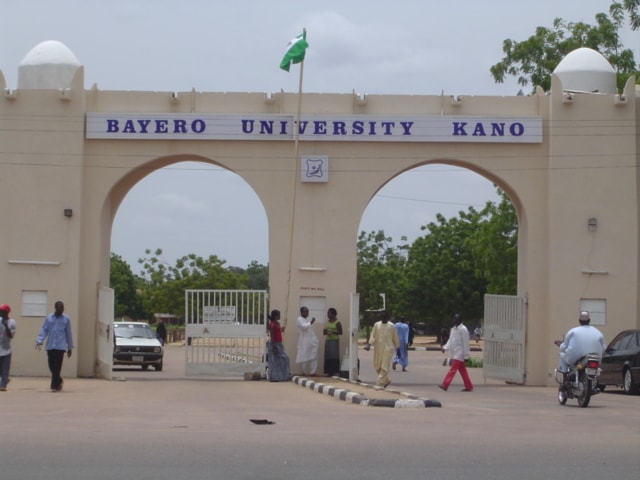
The strike initiated by the Joint Action Committee (JAC) of university non-teaching staff unions has shown little effect on Bayero University, Kano (BUK), where daily activities continue as usual, and essential facilities remain accessible.

The Daily Reality observed that locations expected to be affected by the strike, such as the university’s main library and hospital, were fully operational.

Students were actively studying in the library, while the hospital staff continued to provide medical care.

The university main library with students preparing to get access

University staff activities were also observed at the Student Affairs Office, suggesting minimal disruption from the strike.

The JAC, which includes the Senior Staff Association of Nigerian Universities (SSANU) and the Non-Academic Staff Union of Educational and Associated Institutions (NASU), had issued a circular on Sunday instructing members to begin an indefinite strike.

The circular, signed by NASU’s General Secretary Mr. Peters Adeyemi and SSANU’s President Mr. Muhammad Ibrahim, cited four months of unpaid salaries as the reason for the action.

The announcement raised concerns that the strike could significantly affect university operations, with some anticipating solidarity actions from the Academic Staff Union of Universities (ASUU).

Students at the Attahiru Jega Twin Theatre writing their exams.

However, campus activities continue, and some students have even been able to sit for exams as scheduled.

Malam Nura Garba, SSANU’s Secretary, explained that the strike impacts only NASU and SSANU members, affecting administrative, hospital, and library operations. Nevertheless, these services remain accessible.

NASU Chairman Abdullahi Nasiru clarified that the delay in shutting down facilities stemmed from a late directive issued on Sunday.

“We are holding a meeting today, and the facilities currently open will soon be shut down,” he said.

The University’s Health Service Department

Nasiru emphasized that while the strike is intended to be “total, comprehensive, and indefinite,” the union needed official clearance from the national headquarters before proceeding.

Students who spoke with our reporter confirmed they encountered no issues accessing the hospital and library facilities, despite the ongoing strike.

University unions embark on indefinite strike over withheld salaries

By Uzair Adam

The Joint Action Committee (JAC) representing the Non-Academic Staff Union of Educational and Associated Institutions (NASU) and the Senior Staff Association of Nigerian Universities (SSANU) has directed members to initiate an indefinite strike starting Monday, following the non-payment of four months’ withheld salaries.

The strike, initially scheduled for October 23, was postponed to Sunday night, October 27, 2024, to align with the NASU branches’ Trade Group Council meeting.

A circular signed by NASU General Secretary Prince Peters Adeyemi and SSANU President Comrade Mohammed Ibrahim detailed this timing adjustment for unified coordination among union members.

Despite President Bola Tinubu’s approval of 50% payment for the withheld salaries, JAC expressed frustration with the alleged inaction from the Minister of Finance, questioning the government’s commitment to resolving the issue.

The union stated that multiple requests for resolution have gone unanswered, prompting their decision to proceed with the strike.

JAC reiterated its appreciation for the members’ loyalty and assured them of continued efforts to achieve a satisfactory outcome.

Court stops JAMB from restricting underage students

By Sabiu Abdullahi 

The Delta State High Court in Warri has issued an order restraining the Joint Admission and Matriculation Board (JAMB) from implementing its policy requiring a minimum age of 16 for university admissions. 

Justice Anthony Akpovi granted the relief, pending the hearing and determination of the motion on notice filed against JAMB. 

JAMB’s directive, announced on October 16, stated that only candidates aged 16 by August 2025 would be admitted to tertiary institutions.

However, this policy was challenged by John Aikpokpo-Martins, a former Nigerian Bar Association chairman. 

Aikpokpo-Martins sued JAMB and Edwin Clark University on behalf of candidates born between September 1 and December 31, 2009, who passed the 2024 JAMB exams.

The court granted an interim injunction, preserving the admission rights of these candidates. 

Justice Akpovi ruled, “Reliefs 1 and 2 are hereby granted. The status quo to be maintained is the admission list prior to this circular pending the hearing of the originating motion.” 

This development halts JAMB’s implementation of the minimum age requirement until further court proceedings.

Prodigal Daughter – Now, proudly my Boss: Dr Suwaiba Sa’idu Ahmad, Minister of State, Education

By Prof. Abdalla Uba Adamu

It is not often that one gets the rare opportunity to witness the birth of a star. I count myself to be privileged to have done so. 

In 1980, I started my employment as a Graduate Assistant in the Department of Education at Bayero University, Kano. As was the case at the time, I was allocated a housing apartment on Zoo Road. Two of my neighbors were Isma’ila Abubakar Tsiga and Sa’idu Ahmad Babura. I was a bachelor, and both had families who treated me with the utmost respect despite the age gap. Both were older than me, and both became my lifelong friends. So much so that they opened up the doors of their homes and minds to me and got me deeply involved in literature (they were both in the Department of English BUK). If you are looking for the precise moment the seeds of my literary tree were watered, it was on Zoo Road. 

In 1981, Sa’idu’s wife gave birth to a stunningly beautiful baby girl and was named Suwaiba. I remember holding her in my hands and saying the prayers I could for her long life and prosperity. We later went to the naming ceremony in Baɓura —it was the first time I was in the town, and the serenity of the place struck me.

That child soon bloomed into an undergraduate B.Sc. Ed Chemistry student. Incredibly brilliant and emerging at the top of her class. There were no surprises there – she and her other siblings were simply at the top of their class wherever they found themselves due to the incredibly liberal but supportive family atmosphere that pervades the house. Although there was firmness, for instance, she wanted to study medicine after high school, but her dad insisted on her studying education. She came to me crying to intervene. I tried, but he was adamant it has to be education. After going back and forth, we decided she should obey her father and study education. She agreed but vowed to return to school to study Medicine after she had finished her Education. 

I can easily sympathise in reverse. My father wanted me to study medicine, but I didn’t! So, I ended up in Science Education—just like Suwaiba. Look where she is—following parental counsel, she was blessed to be at the top of the game. Oh, she decided not to come back for Medicine after all—education was just too good. 

Employing her in 2005 after she graduated from the Department of Education under the able leadership of (now) Prof. Abdulrashid Garba, the current Vice-Chancellor of Khalifa Isyaku Rabi’u University (KHAIRUN), was a boon to the Department. She was quickly the hardest-working staff member, always eager to be part of a team and often taking leadership control if the ship seemed rudderless. 

In 2007, the University created the Science and Technical Education Department. I, together with Suwaiba, (now) Prof. Sagir Adamu Abbas (current Vice-Chancellor, Bayero University Kano), and a few others, were deployed to the new Department. She started her Master’s degree under my supervision. I could barely keep up with her ballistic enthusiasm, a trait she inherited from her father, Prof. Sa’id Ahmad Babura. 

As my “daughter” (her reference to me has always been “Baba Abdalla”, endearing me further to the family), she became my protégé. I became her Head of Department from 2010 to 2013, and we got heavily involved in NGO activities in teacher training, for she is highly dedicated to teacher education. She spent 15 years in international NGO activities in improving teacher education programs. 

She finished her Master’s degree in record time and almost immediately rolled over to a PhD, but this time at Ahmadu Bello University Zaria, finishing in 2014. She was the first female from Jigawa State to obtain a PhD in the rare field of Science Education. Her Google Scholar profile profiles her impressive research in Chemistry Education, Science Education, and Gender Studies. Her ResearchGate profile highlights one of the first experimental uses of AI ChatGPT in Organic Chemistry Classrooms, demonstrating her future-oriented focus on embracing AI in high school education. 

In every workshop setting, I would just sit down and watch her proudly as she explained the various teaching techniques to Kano and Jigawa States teachers. She developed a series of teacher training modules for international NGOs used in teacher training refresher programs. When she finished her doctoral studies in 2014, I had already migrated to the Department of Mass Communication in October 2012. She was visibly unhappy about my moving away because we taught a course on the Philosophy of Science together, which she really enjoyed. I assured her I would always be around the corner. 

Administratively, she also earned her laurels. From 2018 to 2020, she became the first female to become the Head of Science Education, then Sub-Dean Academics in the Faculty of Education, and eventually Associate Professor of Chemistry Education. Due to her brilliant performances, she was appointed Director of the Center for Gender Studies from 2020 to 2024, a position she impressively held, forming a womanist rather than feminist focus on gender issues, especially education, in a traditional society. She was mentored by Prof. Ruqayyah Ahmed Rufa’i, the former Honorable Minister of Education (2010-2013), also from Jigawa State. Bayero University remains proud of its women Education Ministers –all from the same State!

From there, she became the Provost of Jigawa State College of Islamic and Legal Studies, Ringim, in March 2024. In October 2024, she was nominated as the Minister of State for Education. 

At 43, she is young. That’s for sure. That is also her biggest advantage. She promises a fresh breath of future learning with her demonstrable competencies in field-tested qualitative research, Artificial Intelligence, and a focus on scientific learning among young people, particularly young girls. 

I am proud of Suwaiba as a daughter. Proud of her as a colleague. Proud of her as a protégé. As the recently appointed Minister of State, Education, I am proud of her as my boss. Allah Ya ƙara basira da albarka, amin.

The dilemma within the College of Health Jega

By Bilyamin Abdulmumin, PhD

Whenever I am in my community, I usually go to Kebbi State College of Health Technology, Jega, for computer business services. But suddenly, this Thursday, I encountered violent rioting students, blocking the road with what usually signals tension: burning tyres. When I noticed the school gate ablaze, I realised the situation was out of hand.

Later in the evening, I learned about even more harrowing stories, as the house and vehicles of the school provost, Haruna Saidu-Sauwa, were destroyed beyond imagination. The provost was barely said to have escaped lynching. This is the part of the country where even a peaceful demonstration is culturally and morally avoided, so bringing such riots of this magnitude called for reckoning.

The students reached the breaking point when they felt utterly swindled by the school management. According to some of them who spoke with correspondent of Radio Nigeria Equity FM Birnin Kebbi, they were admitted to study various newly introduced courses for national diploma, boldly indicated by their admission letters. But, unknowing to them, they would be given certificates because their courses were not accredited. What made the matter bitter was spending two years waiting for a ship that never came and the ultimatum to meet the deadline for registration fees or miss the national exam, so through the sweat of their brows, they cough up the 65k examination fee. One student’s story paints the extent of their predicament. According to this student, his father was due for an eye operation, but because of this dateline, the operation had to be delayed.

Penultimate to the incident, the students have been giving excuses, especially by the person they channel their anger the most: the school provost. When one-on-one with him, having exhausted all possible excuses, he allegedly steered up the honest net: “We have nothing to do for you; you can do your worst if you cannot accept certificates (instead of national diplomas). 

Why the student could not settle for state certificates? According to one graduate of the school, only the national diploma gets recognition countrywide, and the state certificate is the lowest pecking order, which is looked down upon even within Kebbi State. When the first set was introduced for employment this year, they were told such certificates didn’t exist.  Thus, one student bore his frustration about this turn of events: the management just wanted, at all costs, to reduce us to roadside hawkers by giving us state certificates.

This turn of events was not all the reason behind the escalation of the matter, just the straw that broke the camel’s back. The school students’ cries have been echoed offline for a long time, and only a few courageous people have taken their cries to social media. The situation of running the school was dire; the light availability, water supply, and environmental sanitation were all allegedly pathetic—these factors, together with the latest lack of accreditation, combined to culminate into the time bomb.

This matter escalated because loyalty wins over competence. Another allegation was that the current provost of the school was chosen over Sadiq Noma, an upright, principled scholar who upholds due process. He was appointed for several days, and even a Walima (eating party) took place to celebrate his appointment. However, the appointment was suddenly terminated in favour of the current provost.

But reading about the predicament of other schools and colleges of health, especially through Dr Muhsin Ibrahim’s posts and the trove of comments that followed them, I realised that the malaise in health colleges in Nigeria is widespread. The sale of admissions has been normalised; benefits for grades are rampant, and now a new layer of irregularity has been introduced: ghost courses.

Health-related courses have the tradition of graduating self-employed students, so unarguably, the reason behind desperation to get admission in such institutions at all costs. Unfortunately, this is the weakness that the officials exploited across the country. Therefore, it is imperative for his excellency, the Kebbi State governor (and, of course, over Nigerian governors) Dr Nasir Idris, as an educationist, to arrest the situation to avoid losing the benefits that come with health-related schools: providing sought-after health staff in the state as well as serving as a source for self-employment.

Bilyamin Abdulmumin, PhD, wrote via bilal4riid13@gmail.com.

11 Kaduna inmates graduate from NOUN

By Sumayyah Auwal Ishaq

No fewer than 11 inmates at the Medium Security Custodial Centre, Kaduna, Kaduna State, graduated from the National Open University of Nigeria in various disciplines.

The inmates, who received their certificates at the convocation ceremony organized by the institution on October 16, 2024, were pronounced graduates after completing their various programs for the 2022/2023 academic session.

They comprised 11 males who had undertaken courses in the Post Graduate Diploma in Education and undergraduate degrees. The Daily Reality gathered that seven inmates graduated with Second Class Upper Division, while two graduated with Second Class Lower Division, and two inmates completed the Post Graduate Diploma in Education.

Speaking at the ceremony, the Vice Chancellor, who was represented by Dr. Baba, praised the Nigerian Correctional Service (NCoS) and the management of the facility for giving the inmates such an opportunity. He said such feats should be emulated by other inmates who have yet to undertake any program with the institution.

The Controller of Kaduna State Command, Nuru Mohammed Isah, advised other inmates to seize the opportunity and maximize their time by emulating their graduating colleagues.

Mr Isah also emphasized the role of the NCoS in reforming inmates. He implored the newly graduated inmates to continue embodying the good values they learned during their time in the correctional facility.

The officer in charge, DC Abdullahi Dangani, promised to continue giving support to all inmates to achieve their aspirations in life.

Governor Inuwa hails appointment of Prof. Ibrahim Garba as ATBU vice-chancellor

By Abdullahi Mukhtar Algasgaini

Gombe State Governor, Muhammadu Inuwa Yahaya, CON, has congratulated Professor Ibrahim Hassan Garba on his appointment as the new Vice-Chancellor of Abubakar Tafawa Balewa University (ATBU), Bauchi.

Prof. Garba hails from Yamaltu-Deba Local Government Area of Gombe State. His appointment, which takes effect from today, October 10, 2024, was approved by the ATBU Council at its 30th Special Meeting on October 9, 2024.

Reacting to the development, Governor Inuwa Yahaya praised Prof. Garba’s exceptional career and his commitment to academic excellence.

“We are proud of this illustrious son of Gombe whose elevation to this prestigious office brings honour not only to him but to our entire state. His wealth of experience and academic leadership will undoubtedly steer ATBU towards greater achievements, particularly in promoting innovative research, academic excellence, and international collaborations. We are confident that under his stewardship, ATBU will continue to be a citadel of knowledge and innovation in Nigeria and beyond”.

The Governor also assured the new Vice Chancellor of the solidarity and goodwill of the people of Gombe State, expressing confidence that Prof. Garba’s tenure will bring positive changes to the university and strengthen its reputation as a leading institution of learning in Nigeria.

Prof. Garba, a 1992 graduate of the University of Maiduguri and a renowned professor of biochemistry, has held various key positions at ATBU, including serving as the Dean of the Faculty of Science, Deputy Vice-Chancellor (Administration) on two occasions, Chairman of the Academic Staff Union, and most recently as the Center Leader of the ATBU-World Bank collaborative program, SPESSE.

Kano State Government: Please revitalise the abandoned technical schools in 44 LGAs

By Bilal Muhammad Bello (BMB)

It is widely recognised across Kano State that the 44 LGA Day Technical Schools have been abandoned and remain under incomplete construction. These schools were established in 2012 during the second tenure of former Governor Senator Rabi’u Musa Kwankwaso. 

The initial progress on these schools was swift under Kwankwaso’s administration. However, the subsequent government, led by former Governor Dr. Abdullahi Umar Ganduje, halted the continuation of the project.

The abandonment of these schools has not only led to their physical decay but also created opportunities for theft and vandalism, with some individuals stealing materials from the school premises. The neglected sites have also become hubs for illicit activities, posing a threat to the safety and well-being of the surrounding communities.

It is crucial to bring this matter to the attention of His Excellency, Engineer Abba Kabir Yusuf, the current Governor of Kano State. Your commitment to advancing education in both urban and rural areas, particularly through the construction of classroom blocks, the reduction of registration fees for higher education institutions, and the provision of postgraduate scholarships, is commendable and has garnered praise from Kano residents and visitors alike.

During your 2019 and 2023 gubernatorial campaigns, you pledged to resume work on the 44 LGA Day Technical Schools. I respectfully appeal to your administration to take swift action to complete these schools. By doing so, you will transform these temporary sites into permanent institutions, ensuring they fulfil their original purpose and preventing further loss of valuable materials.

Bilal Muhammad Bello (BMB) wrote from Mass Communication, Bayero University Kano.