Education

Remita launches 2025 UTME ePIN sales nationwide

By Maryam Ahmad

Remita has commenced the sale of ePINs for the 2025 Unified Tertiary Matriculation Examination (UTME) and Direct Entry following JAMB’s official announcement.

Sales will run from February 3 to April 7, 2025. Candidates can purchase ePINs via the Remita website, mobile app, and authorised agents nationwide.

Chinedu Alisa, Head of Enterprise Assets at Remita, reaffirmed the company’s commitment to accessible education, ensuring seamless payments for students regardless of location. He warned against unauthorised price hikes, stressing that ePINs must be sold at JAMB’s approved rates.

Remita has also empowered agents and schools to facilitate sales while offering bulk purchase commissions, reinforcing a fair and transparent registration process.

Yobe student awarded full scholarship after scoring 336 in JAMB exam

By Hadiza Abdulkadir

Fatima Alkali Saleh, a bright student from Yobe State, has been awarded a full scholarship by Dr. Sa’id Alkali Kori, Chairman of ThinkLab Group, after scoring an impressive 336 in the 2024 Joint Admissions and Matriculation Board (JAMB) exam.

The scholarship covers her tuition and essential academic tools, including a laptop and technical drawing instruments, supporting her ambition to study architecture.

Dr. Kori praised Fatima’s dedication, stating that her excellence aligns with ThinkLab Group’s vision of empowering future leaders.

Fatima expressed gratitude for the life-changing opportunity, vowing to give back to her community. Her achievement stands as an inspiration for students across Nigeria.

MACOSA-BUK Conference: Expert urges ethical journalism amidst societal polarization

By Anas Abbas

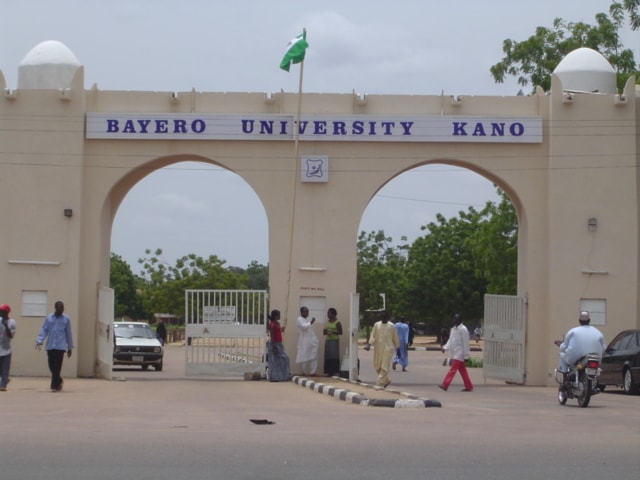
The Mass Communication Students Association (MACOSA) chapter at Bayero University, Kano (BUK), organised a thought-provoking public lecture titled “Ethical Journalism in a Polarized Society: Striking the Balance Between Truth and Responsibility.” 

The event, which took place on Saturday morning in the conference room of the University’s Faculty of Communication, attracted many students and faculty members.

The guest speaker, Mallam Aisar Salihu Musa, illuminated the critical aspects of journalism. He expressed deep concerns about the current state of journalism in Nigeria, stating, “The issue of objectivity in Nigerian journalism is a myth.” 

Malam Aisar highlighted that challenges such as editorial bias, advertorial influences, and media ownership significantly hinder the progress of journalism in the country. 

He further emphasised that journalism in Nigeria often resembles an act rather than a respected profession, especially when compared to fields like law.

Financial instability, he noted, further complicates matters, preventing journalists from adhering to ethical standards. 

To counter these challenges, Aisar urged journalists to prioritise accuracy, responsibility, and balance in their reporting. He specifically advised them to be sensitive when covering conflict and religious issues.

He also encouraged journalists to join professional bodies that offer training opportunities, which can enhance their skills and support ethical reporting in their daily work.

The lecture concluded with a call to action for aspiring journalists to uphold the integrity of their profession amidst the complexities of a polarised society.

Distinctions between mass communication and journalism

By Suleiman Ahmed 

In today’s communication landscape, mass communication and journalism are often used interchangeably, particularly by those with little or no knowledge of both fields. This misconception leads to questions about their definitions, similarities and distinctions. While both are components of the media, they represent distinct concepts. 

Mass communication involves reaching diverse audiences through various media channels, such as radio, television, newspapers, websites, and social media. Journalism is a specific practice within mass communication that focuses on gathering, assessing, creating, and presenting news and information.

According to Little John and Foss, mass communication is a “process whereby media organisations produce and transmit messages to a large public and the process by which those messages are sought, used, understood and influence the audience.”

McQuail states that mass communication is “only one of the processes of communication operating at the society-wide level, readily identified by its institutional characteristics.” It involves creating, transmitting, receiving, and analysing messages through mass media.

Mass communication aims to share information with a broader audience and influence societal norms, behaviour, and attitudes. It has a wider audience and covers various topics like entertainment, education, advertising, public relations, etc. Mass communication content is informative, educative, persuasive, or entertaining. It is mostly designed to capture attention, encourage specific actions, or elicit emotional responses. 

A professional in mass communication can work in various industries, including entertainment, business, politics, health, and agriculture, by creating content that will encourage the audience and serve a specific objective. Mass communication has a broad spectrum of mediums, including television, radio, newspapers, and magazines.

In contrast, journalism is a subset of mass communication. It focuses mainly on gathering and reporting news about events, issues, and topics that are of interest to the public. The United Nations Educational, Scientific and Cultural Organisation (UNESCO) defines journalism as the “work of journalists, media workers, and social media producers who gather, process, and distribute news and related content.” 

Meanwhile, journalist Robert Niles sees journalism as a “form of writing that tells people about things that happened, but that they might not have known about already.” Journalism seeks to report the truth and provide accurate, fair, and thorough information. It includes analysis, uncovered facts, and insights into relevant stories.

Unlike mass communication, journalism encourages critical thinking and discussion among readers, listeners, and viewers. It is guided by strong ethical guidelines to ensure credibility, objectivity, and accountability. Journalism is mostly involved in reporting, editing, and producing news content for media organisations such as radio, television, newspapers, magazines, and other news platforms.

In conclusion, while mass communication and journalism are interconnected, they belong to distinct fields and have different objectives. Mass communication serves a broader purpose by Engaging a heterogeneous audience through various media to convey messages. On the other hand, journalism is a discipline dedicated to accurately reporting facts and information. Journalism plays a crucial role in informing the public and fostering democratic participation.

Suleiman Ahmed wrote from Bayero University, Kano, and can be contacted via suleson94@gmail.com.

Tinubu dismisses Prof Aisha as VC of Uni Abuja, names an interim successor

By Uzair Adam 

President Bola Ahmed Tinubu has removed Aisha Maikudi as Vice Chancellor of the University of Abuja, now renamed Yakubu Gowon University.  

Her dismissal was announced just hours after she presided over the institution’s matriculation ceremony. 

Maikudi’s tenure had been marred by controversy, with some lecturers alleging she held the position illegally.  

In her place, Tinubu appointed Professor Lar Patricia Manko as Acting Vice Chancellor for a six-month term, with a directive that she would not be eligible to apply for the substantive position when it becomes available.  

Details later…

CICID 2025: Moral development better than economic development – Dr Bugaje

By Aisar Fagge

Speaking during the 3rd International Conference organized by the Centre for Islamic Civilisation and Interfaith Dialogue (CICID) with the theme “The Role of Moral Etiquettes of Islamic Civilisation in the Development of Human Communities: Assessment of Past and Present,” Dr Usman Muhammad Bugaje lamented why economic metrics always dominate the discussions on development. He cheerfully also complained, “This conference should have come earlier than now but it is never late.”

As the keynote speaker, Dr Bugaje mentioned three main focal points of the conference:

“First, the theme introduces a missing direction in the contemporary discussion of development. When you listen to the discussion on developments, it is usually the material aspect of development that occupies the space. Even the metrics for measuring development tends to focus on the material. They have not yet measured the Islamic definition of human development. This is the gap conferences like this should help to bridge.

“Secondly, this theme will raise consciousness and provoke a debate on the quality of morality. Everybody talks about morality. But what is the quality of that morality? There are a lot of debates and contentions on these issues.

“Thirdly, this theme underscores the significance of moral standard on human development. I hope the centre and director will try and find research grants locally for the students to study how moral consciousness has affected human development in Nigeria,” the speaker listed.

It is always difficult for Dr Bugaje to talk without critiquing the state of the nation and bad governance. Talking about morality and development in Nigeria, the speaker lamented how immoral politicians ruined Nigeria since 1999.

“What happened in the last 25 years in Nigeria concerning human development is a wreckage. Poverty has tripled, insecurity has escalated, infrastructures have broken down and decay, marriages and social norms have broken down, the fabric of the society is no longer what is used to be.

“Today, in our educational system, the moral consciousness is completely missing or absence. In those days, you got your degree in character and learning, but today, no character no leaning. In governance, this government has gotten more money than any government since the beginning of Nigeria, but what the Sardunas were able to achieve with very little money we now cannot do with 1000 x times the same amount of that money! So what has happened? All these are moral questions that raise consciousness,” he grieved.

The conference that was held at the Centre for Excellence, Bayero University, Kano from 3rd to 5th February, 2025 was honoured by distinguished politicians, esteemed academics, business people and many participants from different academic disciplines.

The Director of the centre, Associate Professor, Taufiq Abubakar Hussaini thanked the sponsors of the event especially Alhaji Aminu Dantata, A.Y Maikifi, Alhaji A.A Rano, Alhaji Hamza Abdullahi Umar Daura, A.Y.M Shafa and others.

CICID 2025: Islam is the mother of all civilizations – Prof. Taufiq

By Aisar Fagge

In its effort to combat moral decadence among youths, the Centre for Islamic Civilisation and Interfaith Dialogue (CICID) organized a 3rd International Conference on the theme “The Role of Moral Etiquettes of Islamic Civilisation in the Development of Human Communities: Assessment of Past and Present,” held at the Centre for Excellence, Bayero University, Kano, from 3rd to 5th February 2025.

During his welcome remark, Associate Professor Taufiq Abubakar Hussaini, the director of the centre, said, “This year’s conference is guided by witnessing moral decadence in all spheres of our lives.”

“We anticipate engaging discussions, insightful presentations and collaborative efforts towards a shared goal of promoting moral etiquettes, good character, peace, understanding and unity. These are the bedrock of Islamic civilization, which has persistently built many nations and civilisations over centuries.

“I encouraged the participants to actively participate, exchange ideas, form connections that will extend beyond the confines of this conference so that our various societal ills will heal from the inevitable doom,” Prof Hussaini remarked.

As the event’s promoter, the head of Markazu Khulafa Al-Rashidin, Sheikh Abdulwahab Abdallah (Imam Ahlissunnah Wal Jama’ah), thanked the management of Bayero University, Kano, for “establishing the centre that focuses on building the morality of the ummah.”

Sheikh Abdulwahab urged the centre to introduce a programme or course that teaches politicians the politics and exemplary leadership style of Prophet Muhammad (S.A.W) so that they can learn how he led the entire Ummah with justice and fairness.

“This North is blessed with great people. The bad ones are few. It is our collective duty to educate and integrate them to have politicians and leaders who are Islamically rooted and God-fearing”, the Sheikh concluded.

The conference witnessed the attendance of prominent people such as Governor of Kano State, Alhaji Abba Kabir Yusuf represented by the Commissioner of Education, Dr Ali Haruna, Barrister Ali Sa’adu Birnin Kudu (former Jigawa State governor), Prof. Muhammad Sani Umar R/Lemo, Prof. Emeritus Muhammad Sani Zaharadden, Sheikh Tijjani Bala Qalarawi, Prof. Ahmad Murtada, Prof Babangida, Prof. Muhammad Muslim Ibrahim and many host of other academic dons, Islamic clerics, security chiefs, wealthy individuals and participants from both local and international educational institutions.

Kano Govt seeks postgraduate partnership with Al-Qalam University

By Muhammad Sulaiman

The Kano State Government has expressed interest in partnering with Al-Qalam University, Katsina, to sponsor students for postgraduate studies at the institution.

A government delegation, led by Professor Auwalu Halliru Arzai, visited the university on Monday, February 3, 2025, where they were received by the Deputy Vice-Chancellor, Dr. Armaya’u Umar Zango.

Speaking during the visit, Prof. Arzai highlighted the state government’s commitment under Governor Engr. Abba Kabir Yusuf to advancing education by providing opportunities for indigenes to pursue higher degrees.

Prof. Arzai noted that Al-Qalam University’s reputation for academic excellence and holistic education made it a suitable choice for the partnership.

Discussions between both parties are ongoing, with plans to formalize the collaboration through a Memorandum of Understanding (MoU).

FUBK honours Dr Ekeh for ₦50m IT infrastructure donation

By Muhammad Sulaiman

The Senate of the Federal University Birnin Kebbi (FUBK) has commended Dr. Leo Stan Ekeh, CEO of Zinox Group and Founder of konga.com, for his generous commitment of fifty million naira to enhance the university’s IT infrastructure. The commendation was issued at the 34th Senate Meeting held on Thursday, 30 January 2025, in the Senate Chambers of the university. 

The Senate acknowledged the tremendous support and commitment of the IT boss and philanthropist, who is passionateabout education and technological development in the institution and the country at large. 

Chairman of the Senate and Vice Chancellor of FUBK, Prof. MZ Umar, informed the Senate that he, along with the Chancellor of the University, HRM Eze (Dr.) Cletus I. Ilumuanya, CON, the Obi of Obinugu, recently visited Dr. Ekeh in Lagos, where he reaffirmed his commitment to providing the university with essential IT resources.

FUBK Bulletin reports that Dr. Ekeh received an honorary Doctorate from the University at the maiden combined Convocation ceremony, held on 12 October 2024.

Meanwhile, the Senate considered the Examination Results for the 2023/2024 Academic Session after Dr. Mohammed Bashar Danlami, the director of examinations and registration, presented them.

ABU awards Honorary Doctorate to Sheikh Sharif Saleh Al-Hussaini, restoring its prestige

By Hamisu Adamu Dandajeh, PhD

Recently, I have not encountered anyone more deserving of an Honorary Doctorate Degree globally than Sheikh Sharif Ibrahim Saleh Al-Hussaini Maiduguri CON. The 87-year-old global scholar and researcher has authored over 400 books and 100 conference papers in Arabic. 

Sheikh is a global mufti who currently heads the Supreme Council for Fatwa and Islamic Affairs in Nigeria (NSCIA). Throughout Nigeria’s history as a nation, no recognised Islamic scholar has made such remarkable contributions to the body of quality knowledge as the Mufti himself.

This renowned Sheikh embodies knowledge and humility and is a product of the Tsangaya System. Sheikh Sharif is, in fact, overly qualified. European universities established an Honorary Doctorate in the 15th Century to recognise exceptional individuals who have made substantial contributions to a particular field, society, and humanity despite lacking traditional academic credentials.

Sheikh Sharif has written extensively on nearly every facet of Islam, encompassing Quranic sciences, Hadith, Islamic law, history, philosophy, Islamic jurisprudence, linguistics, Islamic polity, Tauhid, Fiqh, Tafseer, Sufism, Arabic literature, Islamic law, inheritance, astronomy—indeed, astronomy—and the peaceful coexistence between nations.

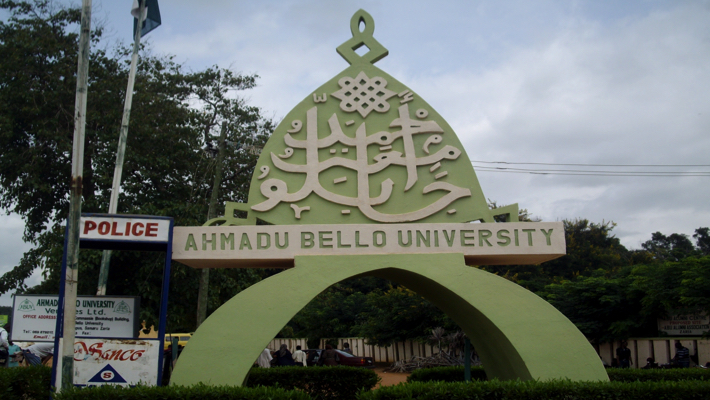
While some universities worldwide have drifted away from the 15th-century original purpose of awarding Honorary Doctorates, instead prioritising celebrity appeal, fundraising, politics, diplomacy, and commercialisation, Ahmadu Bello University in Nigeria remains committed to upholding the original intent, as evident in the recent award to Sheikh Sharif. 

Sheikh Sharif has spent his entire life teaching, learning, researching, and contributing to community development, which aligns with the exact purpose of universities globally. He has exemplified scholarship and knowledge sharing, promoted interfaith dialogue, and fostered a culture of peaceful coexistence. 

Sheikh Sharif has produced many scholars of global repute, including Sheikh Professor Ibrahim Maqari, now the Chief Imam of the Central Mosque in Nigeria. He is building one of the biggest Islamic centres (Markaz) in Abuja to advance international teaching and research.

Sheikh Sharif brings class, integrity, dignity, and prestige to the Honorary Doctorate. We hope that, going forward, the nomination, review, selection, and conferment processes will remain transparent and accountable. 

To know what is next for Nigerian universities after this remarkable award, here is what Abdulbasit Kasim, a friend and a postdoctoral fellow at the African and American Studies at Stanford University, USA, added: “After awarding Shayk an honorary doctorate, Ahmadu Bello University should proceed to the next phase of translating and incorporating his books into the University curriculum. If I can include Shayk’s work on history, politics, philosophy, and economics in my Stanford syllabus, there is no reason why Nigerian students in humanities and social sciences should study Antonio Gramsci and Karl Popper but not Sharif Ibrahim Saleh and Adam Abdallah al-iluri. While this honorary degree has aesthetic value, I hope Ahmadu Bello University will diversify and broaden the curriculum beyond [the] Western canon.

Thank you, Ahmadu Bello University, for honouring an erudite scholar. Congratulations, Sheikh Sharif Ibrahim Saleh Al-Hussaini Maiduguri, on your well-deserved Honorary Doctorate in Law award.

Hamisu Adamu Dandajeh, PhD, is a Senior Lecturer in Sustainable Fuels, Energy and Climate Change at Ahmadu Bello University, Zaria – Nigeria.