Education

AA Rano donates ₦150 million to Bayero University Kano

By Hadiza Abdulkadir

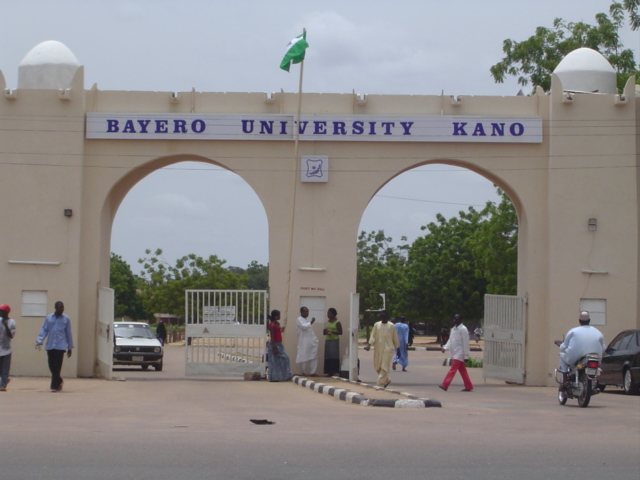
In a generous move to support education, AA Rano, on behalf of himself, his family, and the AA Rano Group of Companies, has announced a donation of ₦150 million to Bayero University Kano (BUK).

“We are confident that the university will utilize these resources to enhance its academic performance,” AA Rano stated.

The donation comes just days after BUK conferred an honorary doctorate on AA Rano in recognition of his philanthropic contributions to the state and the country.

University officials have expressed gratitude for the donation, noting that it will significantly impact academic and infrastructural development at the institution.

ASUU-KASU declares indefinite strike over unpaid salaries, allowances

By Maryam Ahmad

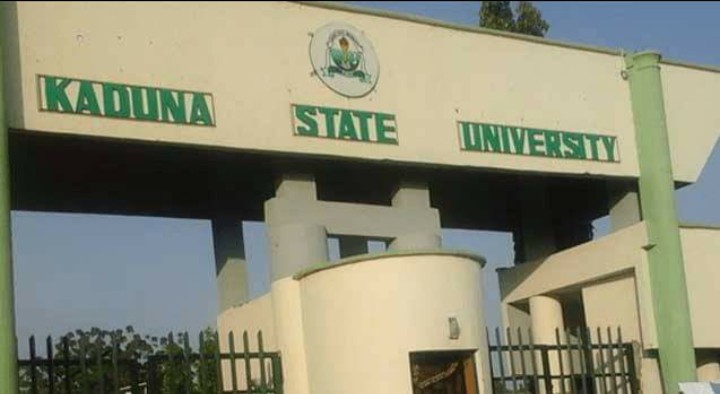
The Kaduna State University (KASU) chapter of the Academic Staff Union of Universities (ASUU) has declared a total, comprehensive, and indefinite strike starting today.

In a statement signed by Dr. Peter Adamu, chairman of ASUU-KASU, and Dr. Peter M. Waziri, secretary, the union announced that the decision was approved by the National Executive Council (NEC) following a resolution by the branch congress.

The strike is in response to several unresolved issues, including the non-payment of withheld salaries from 2017 to 2022, earned academic allowances dating back to 2016, promotion arrears, and supervision allowances for the Student Industrial Work Experience Scheme (SIWES). 

Other grievances include the non-remittance of pension funds from 2009 to 2019, lack of group life assurance for deceased members, and the failure to implement a 25% and 35% wage award.

ASUU-KASU also demands the restoration of university autonomy and has rejected promises from the Kaduna State Government, citing a lack of substance, specific details, and clear timelines for settling outstanding entitlements.

The strike action is expected to disrupt academic activities indefinitely until the demands are met.

From uncertainty to success: The remarkable journey of BUK’s best graduating student

By Fatimat Ibrahim Abedoh 

Students frequently justify their disappointing academic performance by claiming they intended to pursue a different course but ended up in another or that they dislike their current course. Kudirat Oyiza Abdulkareem has disproved this narrative by demonstrating dedication and a strong desire for success.

When Kudirat Oyiza arrived at Bayero University, Kano (BUK), in 2018, she was filled with uncertainty. She had applied for Medicine, but fate had other plans. She was offered Forestry and Wildlife Management, a course she had never even heard of. At that time, the only image that came to her was of lions.

Her mother was the only one who seemed familiar with the course, as her late father had been a forest officer. However, she was too young to remember what he did. Confused and unsure, she considered rewriting JAMB, but her sister advised her to give the course a chance.

Turning Uncertainty into Excellence

The first semester was tough. The weight of studying a course she had not chosen left her unmotivated. Yet, despite her doubts, she ended the semester with the highest GPA in her faculty with 4.72. Instead of celebrating, her sister reminded her that she could do even better. A friend encouraged her to set a higher standard for herself, grading her performance as though she were still in her secondary school, NIOMCO Staff Secondary School, where an “A” started at 80% instead of BUK’s 70%.

With this mindset shift, she achieved a perfect 5.0 GPA in her second semester at the 100 level.

Finding Purpose Beyond Grades

By the 200 level, she had started seeing Forestry and Wildlife Management beyond academics. She became curious about its real-world applications and how to use her knowledge to tackle climate change, food insecurity, and environmental sustainability. This curiosity led her to connect with forestry students worldwide, engage in meaningful discussions, and explore the impact of her field.

Her passion for the environment extended beyond her studies. She traveled across the country, attending various developmental projects and workshops related to her course, visiting six states. She also volunteered with over 10 organisations, mostly remotely, using her skills to address pressing environmental issues.

In addition to her academic work, she co-founded the Forestry and Wildlife Student Association of Nigeria, BUK chapter, where she served as the financial secretary in her final year.

Overcoming Challenges and Staying Resilient

Her journey was not without challenges. Financial struggles loomed over her education, and there were times when different individuals paid her school fees. Even her faculty stepped in to support her. To ease the burden, she applied to teach during school breaks to earn money, an experience she cherished as it aligned with her passion for teaching.

Time Management: A Key to Success

Despite all her engagements and travels, Kudirat Oyiza remained focused on her academics. Her secret? Time management. She was conscious of how she spent her time, balancing her studies, social life, and work commitments.

“I know my brain doesn’t retain half-baked information,” she admits. 

As a slow learner, she needed to review material multiple times to grasp concepts fully. While others might read something once, she would read it three to four times until it stuck. She also knew that her brain wasn’t efficient at night, so she developed a unique scheduled time for mainly reading mornings. 

She always set targets for herself and monitored her time carefully to meet them. During exams, she allocated time based on the number of questions and avoided dwelling on a single one, no matter how confident she was. This strategic approach to time management became her trademark.

A Grand Finale: Graduating at the Top

Fast-forward to 2025, she graduated as the best student in her department, faculty, and the entire university, which speaks volumes about her determination and resilience.

Looking back, she sees her success as a reward for hard work, not just a gift. 

She remains grateful to God, her siblings, friends, mentors, and everyone who supported her through the highs and lows.

But this is just the beginning. She is eager for the next chapter, ready to take on new challenges with the same grit and passion that brought her this far.

She says, “Do the things others aren’t willing to do, and you will get the things others will never have.”

Fatimat Ibrahim Abedoh, a Fellow PRNigeria, writes via abedohzahara@gmail.com.

Nonagenarian registers for UTME to study political science

By Abdullahi Mukhtar Algasgaini

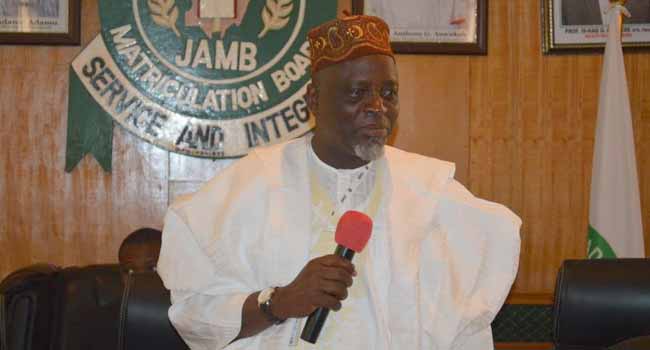
A 94-year-old man, Pa Adedapo Idowu, has officially registered for the 2025 Unified Tertiary Matriculation Examination (UTME), with the aim of fulfilling his long-standing aspiration of studying Political Science at the University of Ibadan.

Idowu, who registered at the JAMB Professional Test Center in Ibadan, Oyo State, expressed his excitement about the smooth registration process.

He shared that his initial fears about pursuing higher education at his age were dispelled after his seamless registration experience.

He commended the Joint Admissions and Matriculation Board (JAMB) for the efficient use of technology, such as integrating his National Identity Number (NIN), which simplified data collection and ensured a user-friendly process.

Idowu also praised the warm reception from JAMB staff, and added that he felt valued despite his age.

The nonagenarian encouraged the Board to maintain this positive trajectory to continue ensuring access to education for all, particularly the elderly, the underprivileged, and those with disabilities.

As the exam approaches, Idowu shared words of wisdom with fellow candidates and urged them to reject malpractice and prioritize professionalism and integrity.

He also reminded Nigerians that age and adversity should never hinder the pursuit of dreams.

BUK awards honorary doctorates to A. A. Rano, Col. Sani Bello

By Hadiza Abdulkadir

Bayero University, Kano (BUK) celebrated a significant milestone on February 15, 2025, by conferring honorary Doctorate Degrees on Colonel Sani Bello, former Military Administrator of Kano State, and Alhaji Auwalu Abdullahi Rano, CEO of A. A. Rano Group of Companies, during its 39th Convocation.

The honorary degrees recognised their exceptional contributions to education and socio-economic development in Kano State and Nigeria. 

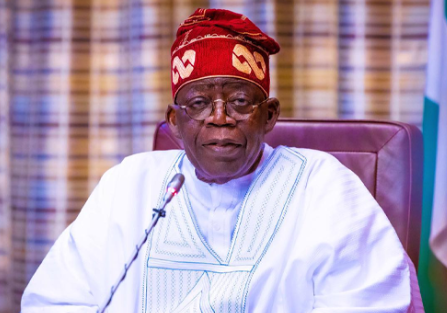
President Bola Ahmed Tinubu, represented by Minister of State for Education, Professor Suwaiba Ahmad Sa’id, praised the honourees and reaffirmed the government’s commitment to human capital development through education.

BUK’s Vice Chancellor, Professor Sagir Adamu Abbas, highlighted the graduation of 3,400 students, including 295 from the Dangote Business School and 275 PhD graduates, with 176 achieving First Class Honours. 

Pro-Chancellor Dr. Nasiru Yusuf Gawuna encouraged graduands to uphold the university’s reputation, noting BUK’s recent ranking of 43rd in Africa by the 2025 Times Higher Education World University Rankings, inspiring them to strive for excellence and service to humanity.

BUK awards Borodo, others with Emeritus Professorships at 39th convocation

By Hadiza Abdulkadir

Bayero University Kano (BUK) celebrated its 39th Convocation by conferring Emeritus Professorships on Professor Garba Dahuwa Azare, Professor Julius Afolabi Falola, and Professor Musa Borodo for their significant contributions to academia.

The ceremony featured President Bola Ahmed Tinubu, who was represented by Minister of State for Education Professor Suwaiba Ahmad Sa’id. Before her appointment, Sa’id was also a member of the Bayero University, Kano, staff.

Tinubu congratulated the honourees and graduates, emphasised the importance of education in fostering national progress, and assured ongoing support for the education sector to boost global competitiveness.

BUK Vice Chancellor, Professor Sagir Adamu Abbas, praised the awardees as influential figures in shaping the nation and celebrated the graduation of 3,400 students, including 176 who achieved First Class Honours.

Pro-Chancellor Dr. Nasiru Yusuf Gawuna encouraged graduates to become ambassadors of the university, noting BUK’s recent ranking of 43rd among African universities. The conferral of Emeritus Professorships reaffirms BUK’s commitment to honouring excellence in education.

Kudirat Oyiza Abdulkarim shines as Bayero University’s overall best-graduating student

By Hadiza Abdulkadir

Bayero University, Kano, celebrated its 39th Convocation Ceremony, during which Kudirat Oyiza Abdulkarim from the Faculty of Agriculture was honoured as the Overall Best Graduating Student. 

With a remarkable Cumulative Grade Point Average (CGPA) of 4.92, Kudirat’s exemplary academic performance has made her a standout figure at the institution.

In her remarks, Kudirat shared insights into her journey, emphasising the dedication that fueled her success. “From my very first year, I was resolute in my goal to graduate with distinction. It was never an easy road, but I remained focused, dedicated, and consistent. Today, my dream has become a reality,” she stated.

Kudirat expressed heartfelt appreciation to Almighty Allah, her lecturers, and her parents, acknowledging their crucial support. “Their encouragement played a vital role in my success,” she added.

Looking ahead, Kudirat aspires to become a researcher, aiming to make significant contributions to agricultural development. She believes that Bayero University has been a life-changing institution for her and vows to represent it proudly.

Kudirat Abdulkarim inspires her peers, proving that excellence is always attainable with determination and hard work. As she embarks on her next chapter, her story serves as a motivational beacon for aspiring students everywhere.

Transforming Kano’s education: Governor Abba Kabir Yusuf’s vision for a brighter future

By Hussaini Ibrahim Sulaiman

Education is the bedrock of any progressive society, and in Kano State, a quiet revolution is unfolding under the leadership of Governor Abba Kabir Yusuf.

 Since assuming office, the governor has taken every step to rejuvenate the state’s education sector. 

His administration’s commitment to education is evident in its words and concrete actions, which continue to change lives. His administration has prioritised key reforms in infrastructure, teacher welfare, school enrollment, and vocational training. 

These initiatives have solidified his reputation as a leader who truly understands that Kano’s future rests on the shoulders of its young population.

Recognising the deep-rooted challenges facing Kano’s education system, Governor Yusuf declared a state of emergency in education. 

His administration swiftly addressed the dilapidated state of public schools, teacher shortages, and declining student enrollment. With a clear vision, the governor initiated reforms that have already begun yielding remarkable results.

Budgetary allocations reflect a leader’s priorities. In the 2024 budget, 29.9% of the total allocation was dedicated to education, far surpassing UNESCO’s recommended benchmark of 26%. 

Further demonstrating his unwavering commitment, the state has allocated 31% of its total 2025 budget to the education sector. 

With this substantial funding, the government has embarked on large-scale school renovations, procured essential learning materials, and paid outstanding teacher salaries. 

These initiatives restore public confidence in the education system and ensure that Kano’s children have the resources they need to succeed.

Public schools in Kano needed rehabilitation. The administration launched a massive school renovation project to upgradethousands of classrooms across the state. 

Over 80,000 three-seater desks have been provided, ensuring that 240,000 students no longer have to sit on bare floors. 

New classrooms have been built to tackle the issue of overcrowding. Schools that once faced challenges with insufficient facilities are now reaping the benefits of modern learning environments, enhancing the accessibility and effectiveness of education.

Kano State has long faced the challenge of out-of-school children. To tackle this, the government is constructing 130 new boys’ and girls’ schools to boost enrollment in the next academic session. 

Governor Yusuf’s administration has also launched an initiative to distribute 789,000 school uniforms to pupils in 7,092 public schools. 

At the flag-off of the distribution of over two million education materials—including textbooks, mats, and uniforms—the governor reiterated his administration’s commitment to ensuring that every child in Kano has access to quality education.

The state government is providing a monthly stipend of N20,000 to 40,000 needy girls to promote school enrolment, retention, and completion. 

This initiative specifically aims to ensure that more girls receive formal education, lower the dropout rate, and promote gender inclusivity in education.

A well-trained and motivated teacher is at the heart of any successful education system. Governor Yusuf has approved the permanent employment of 5,500 volunteer teachers under the Better Education Services Delivery for All (BESDA) initiative. 

He has also approved the promotion of over 20,500 primary and junior secondary school teachers.

This move boosts morale and is a strategic step toward retaining and attracting quality educators. By improving teacher welfare and providing capacity-building opportunities, the governor ensures that Kano’s students receive education from highly skilled and dedicated professionals. 

The administration has also cleared backlogs of unpaid teacher salaries and allowances, significantly boosting teacher motivation and improving classroom engagement and student performance.

To further support education, the government has spent N1.3 billion on paying National Examination Council (NECO) and National Board for Technical Education (NBTE) registration fees for 57,000 indigent students. 

This intervention has lifted a huge financial burden off struggling families and ensured that no student is denied access to secondary and technical education due to economic hardship.

Education extends beyond the classroom. The administration has revived 26 vocational and skills acquisition schools across the state. Institutions such as the Kano School of Informatics, Kano State Driving School, and Aliko Dangote Skills Acquisition Centre have been revamped to equip young people with practical skills.

The government plans to create over 63,000 jobs annually through the garment industry. By reopening garment manufacturing clusters in Kano’s 44 local government areas, thousands of young people will be empowered with tailoring and fashion design skills. This approach will provide an alternative pathway for youths who may not pursue conventional higher education.

Governor Abba Kabir Yusuf’s remarkable efforts in education have not gone unnoticed. During the 2024 World Teachers’ Day celebrations, the Nigeria Union of Teachers honored him with the Golden Award for Outstanding Performance in Education Reform. 

This accolade recognises his dedication to improving Kano’s education sector.

Under his leadership, Kano State is experiencing an educational renaissance. His administration’s policies, strategic investments, and people-centered approach have laid a strong foundation for a brighter future. 

The real impact of his reforms can be seen in the smiles of students who now have desks to sit on, the joy of teachers whose hard work is being rewarded, and the hope of parents who can now dream of a better future for their children.

Aiki Sai Me Shi—only the committed can achieve the task. Governor Abba Kabir Yusuf has not only shown commitment but has also demonstrated visionary leadership, courage, and an unrelenting passion for education. Kano’s education sector is on an unstoppable trajectory of growth, and if the momentum is sustained, the state will soon be a shining example of educational excellence in Nigeria.

My love with policy making

By Saifullahi Attahir

If there was ever anything that gave me goosebumps and immense pleasure, it was being surrounded by intellectuals and mature minds absorbing facts and figures about governance, economics, public health, policymaking, national security, and international relations. In such situations I easily lose myself, forgetting almost all other things.

Even at medical school, my best lectures were those with frequent digressions, whereby the lecturer would discuss the pathogenesis of diseases for 30 minutes and later sidetrack into discussing politics, governance, or other life issues. I always enjoyed classes led by Prof. Sagir Gumel, Dr. Murtala Abubakar, Dr. Rasheed Wemimo, Dr. Aliyu Mai Goro, and co. During such lectures, I often observed some of my colleagues disappointment for such deviation. I rather casually show indifference, for I was eternally grateful for such discussions due to the stimulatory effect they had on my mind.

After such classes, I sometimes followed up with the lecturer, not to ask about a medical concept I did not grasp, but to ask for further explanation on policy making, project execution, budgetary expenditures, why African countries are left behind, and similar pressing issues.

In situations where I can’t catch up with the lecturer, I jotted down the questions for further deliberation.

One of the manifest feature I know about my greediness was at reading books. I can open five different books in a day. I lack such discipline to finish up one before another. I can start reading ‘Mein Kampf’ by Adolf Hitler, and halfway through 300 pages, I would pick up ‘My Life’ by Sir Ahmadu Bello, and would have to concurrently read both until the end.

I often scolded myself for such an attitude, but I can’t help myself. The only way to practice such discipline was to at least read two different books in a day. Such was a triumph in my practice of self-discipline. This was apart from my conventional medical textbooks.

To some of my friends, I was called an accidental medical doctor, but actually it was a perfect fate guided by the merciful Lord that I’m studying medicine. For it was only medicine that makes reading books easier for you. Although time is precious in this profession, but one finds it easier to do anything you are passionate about. The daily interaction we have with people at their most vulnerable state was another psychostimulant. Seeing humans suffering from disease conditions is heartachy. Some of the causes are mere ignorance, poverty, superstitions, and limited resources.

The contribution one can give couldn’t be limited to just prescribing drugs or surgical procedures that end up affecting one person. It’s much better to involve one self in to position that may bring possible change to the whole society even in form of orientation.

What also motivated me more was how I wasn’t the first to traverse this similar path. Bibliophiles were common among medical students and medical professionals.

At international level, the former Prime Minister of Malaysia, Dr. Mahathir Muhammad, was a physician. Most of the current economic development of Malaysia was attributed to him. The South American revolutionary figure Che Guevara was a physician. Atul Gawande was an endocrinologist, health policy analyst, adviser to former President Obama, campaign volunteer to former President Bill Clinton, and adviser to USAID/WHO on health policies.

Frantz Fanon was another physician, psychiatrist, racial discrimination activist, and political writer. Dr. Zakir Naik was a renowned Islamic scholar, comparative religion expert, and physician.

At the national level, Prof. Usman Yusuf is a haematologist, former NHIS DG, and currently a political activist. Dr. Aminu Abdullahi Taura was a psychiatrist and former SSG to the Jigawa state government. Dr. Nuraddeen Muhammad was a psychiatrist and former cabinet minister to President Goodluck Jonathan.

During ward rounds and clinics, my mind often wanders to enquire not just about the diagnosis but the actual cause of the disease condition; why would a 17-year-old multiparous young lady develop peripartum cardiomyopathy (PPCM)? Why would a 5-year-old child develop severe anaemia from a mosquito bite? Why would a 25-year-old friend of mine develop chronic kidney disease, and his family would have to sell all their belongings for his treatment? Why are our Accident and Emergency units filled with road traffic accident cases? Was it bad road conditions or lack of adherence to traffic laws and orders?

Why are African countries still battling with 19th century diseases like Tuberculosis, filariasis, and malarial infections? Why issues of fighting cervical cancer and vaccination campaigns are treated with contempt in our societies? Why access to basic primary healthcare in Nigeria was still a luxury 50 years after Alma Ata declaration? The questions are never-ending.

Answers to these questions could be found not in the conventional medical textbooks like Robbins/Cotrand, Davidson, or Sabiston. Answers to these questions are there on our faces. Answers to these questions are tied to the very fabric of our social life, our public institutions, our culture, and our life perspectives.

In order to make any significant contribution towards the betterment of this kind of society, it would be quite easier as an insider rather than an outsider. You can’t bring any positive outcome by just talking or commenting. It was rightly stated that a cat in gloves catches no mice.

The real players in a game are always better than the spectators. A player deserves accolades despite his shortcomings, frequent falls, and inability to deliver as planned theoretically. For the player has seen it all, because so many things in public life are not as they appear. It’s only when you are there that the reality becomes visible. This is the reason why many leaders who have goodwill and enjoy public support appear to have lost track or contributed insignificantly when elected or appointed into office.

But despite all these challenges, one can’t decline to do something good just because something bad might happen. The risk is worth it.

Saifullahi Attahir wrote from Federal University Dutse. He can be reached via; saifullahiattahir93@gmail.com

Bayero University gets ready for its 39th convocation

By Ibrahim Yunusa

Bayero University, Kano (BUK), holds its 39th convocation ceremony on Wednesday, February 12.

In a press briefing, the university’s Vice-Chancellor, Professor Sagir Abbas, announced that “4,402 graduands of different programs from their respective faculties” will receive their certificates.

He also stated that “another 4,367 graduands from seven faculties in which 176 first degrees, 275 PhDs, 2,590 Master’s Degrees and 535 Postgraduate Diplomas will be graduating.”

The Vice-Chancellor disclosed that Khalil Sulaiman Halilu, the Executive Vice Chairman/CEO of NACENI, will deliver the convocation lecture on Friday, February 14.

The lecture, “Innovation and Entrepreneurship: A Pathway to National Development,” will be chaired by the Honourable Minister of Innovation, Science, and Technology, Chief Uche Jeffrey Nnaji.

On the event’s final day, the university will confer Honorary Degrees on two distinguished Nigerians: Colonel Sani Bello, a former Military Governor of Kano State, and Alhaji Auwalu Abdullahi Rano, popularly known as A.A. Rano.

Explaining the choice of honorees, Professor Abbas stated that “the first nominee is selected due to his vast contribution to education during his administration as Military Governor of Kano State, in which he established the prominent Kano Science Schools and he facilitated the varsity permanent site.”

Regarding Alhaji Rano, the Vice-Chancellor said, “the second nominee is being on the list by sponsoring students from Kibiya, Rano and Bunkure local governments, and he sustains in giving them 60 thousand Naira as upkeep from last session to date and his unwavering contributions to not only underprivileged of his community during Ramadan but to the state at large.”

The 39th convocation will also witness the awarding of Emeritus Professorship titles to three distinguished retired professors, including Professor Garba Dahuwa Azare, Professor Julius Afolabi Falola, and Professor Musa Muhammad Borodo.

Professor Abbas concluded that “the sum of not less than 100 million is budgeted for the whole convocation ceremonies.”