Economy

CIPS approves new membership fee structure for Nigeria, allowing payments in Naira

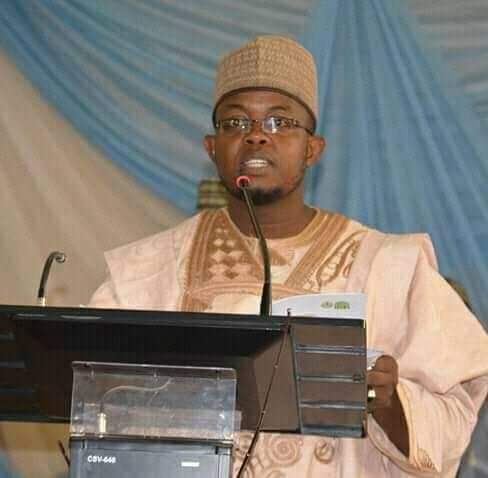
By Dr Salisu Uba FCIPS

The Chartered Institute of Procurement and Supply (CIPS) has approved a new membership fee structure for Nigeria, allowing procurement professionals to pay in Naira from 1 December 2025. The decision includes a reduction in fees, marking a significant shift for one of the largest professional communities within the institute.

The change follows years of rising financial pressure linked to foreign currency payments, which many practitioners said had limited access to professional qualifications and continuous development.

Local Currency Move Seen as Major Relief

Nigerian members have long argued that payment in foreign currency placed an unnecessary strain on practitioners working in an economy affected by inflation and exchange rate volatility. The shift to Naira is expected to broaden access to certification and support career progression for early and mid-level professionals.

The announcement was delivered by the CIPS Nigeria Country Director, Chukwudi Uche, at the institute’s Port Harcourt symposium in late November. The event brought together industry leaders to discuss supply chain collaboration and tax policy.

A Step with Wider Professional Consequences

CIPS, regarded as the global benchmark for procurement standards, plays a central role in shaping skills, ethics, and governance across the profession. Its qualifications are commonly required for senior roles across the public and private sectors, and its code of conduct is widely used to guide responsible practice.

In Nigeria, CIPS has been instrumental in supporting capacity building, improving transparency, and raising the overall standard of procurement governance. The institute has worked with government agencies, private sector organisations, and development partners to improve processes and strengthen accountability.

Industry experts say the latest decision could encourage greater participation in formal training programmes and increase the number of qualified professionals available to organisations that rely on strong procurement governance.

Procurement’s Role in National Development

Procurement plays a direct role in national development by shaping how public funds are spent and how essential goods and services are delivered. Poor procurement decisions can delay infrastructure, inflate project costs, and weaken accountability. Strong procurement systems support industrial growth, improve public services, and help build competitive local supply chains.

A more accessible professional pathway through CIPS is expected to expand the pool of trained experts who can support national development goals. This includes improved contract management, better risk control, and more effective engagement with local suppliers.

Integrity and Expertise Seen as Priorities

With the revised fee structure now in place, I hope to see more organisations and individual practitioners in Nigeria work closely with qualified experts to protect the integrity of procurement systems. Both public and private sector projects rely heavily on competent professionals who understand governance, ethics, and value-for-money. Strengthening professional capability is essential if Nigeria is to reduce waste, improve transparency, and support long-term development.

A Community Achievement

The fee revision is the result of extensive engagement across the Nigerian membership base. The leadership of Ben Farrell and Sam Achampong has been widely acknowledged, along with the contributions of members who have advocated for reform through various channels. The CIPS Nigeria Country Office has also played a central role in pushing for the change.

More information on the revised fees is expected to be released by CIPS in the coming days.

Dr Salisu Uba is a Fellow of the Chartered Institute of Procurement and Supply and the Chief Executive Officer of NatQuest, a leading technology-enabled supply chain company.

Halal economy in Nigeria: Today’s opportunity, tomorrow’s prosperity 

By Abdullahi Abubakar Lamido 

When Nigeria first introduced Islamic banking more than a decade ago, a section of the public, especially some Christian leaders, cried foul. They labelled it an attempt to Islamise the nation. The word Islamic became synonymous with suspicion. Yet, history has since given its verdict. The same Islamic banking and finance that was once denounced as a tool for religious expansion has now become one of the most credible components of Nigeria’s financial system. Today, the government of Nigeria, regardless of faith or political party, routinely issues Sukuk (Islamic bonds) to finance national infrastructure, build roads, and other developmental projects. 

If Islamic banking did not Islamise Nigeria, how on earth will the halal economy, a trade-based development initiative, suddenly do so?

Unfortunately, some commentators continue to see through the fog of prejudice rather than the lens of global economics. The recently developed Nigerian National Halal Economy Strategy is not a religious project. It is an economic vision. It seeks to position Nigeria within a rapidly expanding global market that respects ethics, transparency, environmental responsibility, and product integrity; values shared by all civilisations, not by Muslims alone.

Globally, the halal economy is estimated at USD 2.3 trillion, excluding Islamic finance. It is growing at an annual rate of around 20 per cent, making it one of the fastest-expanding consumer markets in the world, valued at about USD 560 billion each year. The halal industry, initially rooted in food and beverages, has long transcended its traditional boundaries. It now spans pharmaceuticals, cosmetics, health products, toiletries, medical devices, and even service sectors such as logistics, marketing, media, packaging, branding, and finance. With rising affluence and awareness among global consumers, it has further extended to halal tourism, hospitality, fashion, and lifestyle services.

This development is not driven by Muslims alone. Indeed, the modern halal market is non-exclusive. Increasingly, non-Muslim consumers associate halal with ethical consumerism, animal welfare, environmental stewardship, and quality assurance. The label “halal” has evolved into a global mark of trust, symbolising cleanliness, safety, and ethical production.

Countries far removed from Islam, such as the United States, the Netherlands, Russia, China, and South Africa, are already major players in the halal economy. In the United States, the halal market is worth USD 12 billion annually, with halal food sales growing by more than 70 per cent since 1995. Over 90 per cent of U.S. dry dairy ingredient manufacturers now produce halal products, primarily for export.

In the Netherlands, where Muslims are barely a tenth of the population, non-Muslim Dutch consumers spend approximately USD 3 billion annually on halal food. In the United Kingdom, six million people consume halal meat, three times the Muslim population. These figures prove one thing: halal has gone mainstream. Even Russia is experiencing explosive growth in its halal sector, with domestic demand rising by 30-40 per cent annually. The country now produces around 65,000 tonnes of halal meat each year and hosts major expos such as the Moscow Halal Expo and KazanHalal.

China, with its 23 million Muslims, records 10 per cent annual growth in its halal industry, with trade worth USD 2.1 billion and export products valued at USD 10 million annually from the Ningxia region alone.

Africa, too, is awakening to this opportunity. South Africa—with only two per cent of its population being Muslim—is now one of the five largest producers of halal products globally, thanks to a robust certification infrastructure. Kenya, with a fast-growing halal certification regime, already has more than 150 certified companies serving local and regional markets.

Nigeria, with its vast agricultural resources, strategic location, and large Muslim population, stands at the crossroads of opportunity. The halal economy offers three immediate advantages:

1. Export Expansion: By developing credible halal certification and production infrastructure, Nigeria can unlock access to markets worth over USD 2 trillion, exporting beef, poultry, processed foods, cosmetics, pharmaceuticals, and other halal-compliant goods. Nigerian products can enter Middle Eastern and Asian markets that strictly demand halal certification.

2. Job Creation and SME Growth: The halal economy stimulates employment across value chains—from farm to factory, logistics, certification, branding, and export marketing. It empowers micro and small enterprises while ensuring compliance with ethical standards that appeal to both local and international consumers.

3. National Image and Ethical Standards: Halal certification ensures higher hygiene, traceability, and environmental protection. It is compatible with international standards like ISO and HACCP, thereby enhancing Nigeria’s global competitiveness. In essence, promoting halal is promoting quality, sustainability, and integrity—values that no religion should reject.

The critics who fear the halal roadmap as a step toward Islamisation fail to recognise that halal is an economic term before it is a theological one in this context. It stands for what is wholesome, safe, clean, traceable, and socially responsible. These values are not confined to Islam. They are embedded in Christianity, Judaism, and secular ethics alike.

The halal economy represents a fusion of faith and fairness, ethics and enterprise. It provides a model for a more responsible economic system—precisely the kind of moral economy the world craves in the aftermath of global financial and environmental crises.

When the debate over Islamic banking first arose, the same fear-mongering dominated the headlines. Yet, today, Islamic finance has built roads, schools, and hospitals across Nigeria through Sukuk and other Shari’ah-compliant financing. Christian engineers, contractors, and civil servants have benefitted immensely. The country’s Christian-majority states have received as much as the Muslim ones. No mosque was built, no church destroyed, and no constitution rewritten.

If Islamic banking did not Islamise Nigeria, how will halal exports do so? On the contrary, the halal economy promises to diversify Nigeria’s trade, create jobs, enhance foreign exchange earnings, and promote industrial standards that protect all consumers, Muslims and non-Muslims alike.

Nigeria cannot afford to watch from the sidelines while other nations—Christian, secular, and atheist alike—harvest the fruits of the halal economy. The world is shifting toward ethical consumption, sustainability, and traceable production. The halal brand, far from being divisive, is a passport to global markets.

The Nigeria National Halal Economy Strategy is not about religion; it is about relevance. It is about integrating Nigeria into the trillion-dollar value chain that prizes quality, fairness, and responsibility. Those who see crisis where there is opportunity risk being on the wrong side of history, just as those who once opposed Islamic banking and finance, now benefit from Sukuk-financed roads.

The celebration of the halal economy is not the planting of tomorrow’s crisis; it is the harvest of tomorrow’s prosperity for every Nigerian, regardless of faith. It is time we remove the caps of emotion and prejudice and wear the lenses of reason, tolerance, and progress. Nigeria must embrace every opportunity that promises shared prosperity, job creation, and national development. The halal economy is not about division—it is about direction. It is about placing our nation on the map of global relevance, productivity, and ethical growth. So help us God. 

Amir Lamido wrote from Abuja via lamidomabudi@gmail.com.

CBN, diaspora dollars and Nigeria’s economic lifeline

By Abdulrasheed Musa Kofa,

For years, Nigeria has leaned on its diaspora as a hidden anchor of survival. Beyond emotional ties and cultural nostalgia, Nigerians abroad have sent home billions of dollars, cushioning households and helping many weather difficult times. 

Yet the story of remittances has largely been one of consumption, not sustainable growth. Much of the money vanished into daily survival, often through informal routes, while the vast potential of structured diaspora capital for national development remained untapped.

The Central Bank of Nigeria (CBN) now seems determined to rewrite that story. In recent months, it has introduced policies aimed not only at boosting inflows but at transforming remittances into a formal, investment-driven engine of stability. 

With tools such as the Non-Resident Nigerian Ordinary and Investment Accounts (NRNOA/NRNIA), the Non-Resident Bank Verification Number (NRBVN), and tighter International Money Transfer Operator (IMTO) guidelines, the apex bank is signaling a bold shift—from remittances as household lifelines to remittances as capital for growth. 

Its ambition of attracting $1 billion in monthly diaspora remittances is more than a target; it is an audacious declaration that Nigeria seeks to become a global hub for diaspora investment.

At the heart of this strategy are the NRNOA and NRNIA. The former provides a regulated, convenient channel for everyday remittances in naira and foreign currencies, cutting out the costly informal networks that once dominated. 

The latter, the NRNIA, goes even further by creating structured pathways for diaspora investments in mortgages, pensions, insurance, and Nigeria’s financial markets. By guaranteeing full repatriation of proceeds under existing rules, the CBN is deliberately courting trust. 

And in a global financial system where trust is the ultimate currency, such assurances matter greatly. The challenge of access has also been tackled. For years, the requirement of physical presence made securing a BVN impossible for many Nigerians abroad. 

The new digital Non-Resident BVN finally removes that barrier, even though it comes at a cost of about $50. While some may balk at the fee, the opportunity far outweighs the price of exclusion. For a diaspora community long fenced out, this is a long-awaited doorway in.

The IMTO reforms reflect similar pragmatism. By restricting services to inbound transfers and ensuring payouts in naira, the CBN is protecting liquidity while keeping inflows within the formal economy. 

Allowing operators to quote exchange rates on a willing seller–willing buyer basis introduces transparency and competitiveness, drawing more Nigerians away from shadowy parallel markets. The exclusion of fintechs from IMTO licensing has sparked debate, but the regulator may be betting on stability over experimentation in a sector that demands strict oversight.

Early signs suggest the measures are bearing fruit. Official reports showed a $553 million inflow in July 2024—the highest on record—representing a 130 percent year-on-year surge. Confidence is shifting gradually towards formal systems. 

Sustained, such inflows could strengthen Nigeria’s fragile foreign exchange reserves, deepen liquidity in capital markets, and lower the high cost of remittances that continues to exceed the global average. Yet the most profound shift is not numerical but philosophical. 

These reforms are about more than chasing dollars; they are about redefining the relationship between Nigeria and its diaspora. Rather than treating remittances as acts of charity or family duty, the CBN is positioning them as instruments of nation-building. 

Nigerians abroad are being asked to see themselves not merely as senders of money, but as strategic investors in the country’s future. The stakes could not be higher. With more than 15 million citizens abroad, Nigeria sits at the heart of Sub-Saharan Africa’s remittance economy. 

In some years, diaspora inflows have even surpassed oil revenues. If only a fraction of this wealth is converted into productive, long-term capital, Nigeria’s financial landscape could be reshaped. But success will depend on more than policy design. 

It will require political stability, investor protection, and unwavering consistency in government signals. The diaspora will not risk hard-earned savings in a system that shifts with every gust of political wind.

CBN’s reforms are bold and timely. But their success now rests on trust and execution. If they work, the narrative of remittances will shift—from consumption to capital, from emergency relief to structural development. 

The target of $1 billion monthly may well be achieved, but more importantly, it represents a shared vision where remittances become investments in Nigeria’s prosperity. The choice before the diaspora is stark: to keep sending money informally and watch it disappear into short-term survival, or to embrace formal channels and help lay the foundations of a stronger, more resilient Nigeria. 

The government has laid down the rails. It is now for Nigerians abroad to decide whether their remittances will remain fleeting lifelines or become the enduring engine of a nation’s growth.

Abdulrasheed Musa Kofa is a PRNigeria Fellow. He can be reached via: musaabdulrasheed83@gmail.com.

From export hype to empty stomachs: A response to Mr Tanimu Yakubu, the DG of the Nigeria Budget Office

By Nazeer Baba

For context, Mr Tanimu, in defence of the economic freefall under the current administration, claimed that the naira has bounced back to dominance as a result of Nigeria’s non-oil commodity exports. In reality, however, non-oil exports accounted for only about 9% of Nigeria’s total exports between Q1 2024 and Q4 2024, while mineral fuels, mainly crude oil, maintained their traditional dominance with 91% of export volume. In other words, nothing has fundamentally changed in Nigeria’s dependence on a major oil-exporting economy.

Yes, non-oil exports indeed rose from $2.696 billion in H1 2024 to $3.225 billion in H1 2025—a 19.62% growth. Much of this was driven by the naira devaluation, which makes our commodity cheaper in the foreign market at the expense of Nigerians. Another reason is the climate challenges that disrupted cocoa production in major producers like the Ivory Coast and Ghana, temporarily creating space for Nigerian cocoa. But this is both an incidental and a policy blunder.  

The more urgent question is how this growth affects the key aspects of development. Poverty, unemployment, and inequality, especially for the 133 million Nigerians living in multidimensional poverty? As the economist Amartya Sen argued, real development should be gauged by what happens to these three dimensions. Unemployment

The official unemployment rate fell to 4.3% in Q2 2024, down from 5.3% in Q1. But this decline has little to do with any job boom under President Bola Tinubu. Instead, it is the product of a statistical adjustment. In the past, the NBS only counted those aged 15–64 who worked at least 20 hours per week as employed. Under the new guidelines, anyone 15 years or older who worked for pay—even for just a single hour in a week—is now considered employed. At best, this is a manipulation of numbers.

For young people, the reality is harsher. Unemployment among 15–24-year-olds was 6.5% in 2024 under the new formula, but under the previous methodology, it had peaked at 53.4%. The World Bank confirms this paradox: low official unemployment rates coexist with widespread poverty. Millions are “employed” but still trapped in poverty. Job quality, not misleading headline numbers, is what truly matters. Today, most Nigerians endure insecure, informal, and underpaid work.

Poverty

Nigeria has long been an economy under strain, but the shock of 2024–2025 has been unprecedented. Over 54% of Nigerians now live in extreme poverty, surviving on less than $2.15 per day. Rural poverty is staggering at 75.5%, while urban poverty stands at 41.3%. According to Reuters, by August 2025, an estimated 33 million Nigerians are facing acute food insecurity. Inflation, naira devaluation, fuel subsidy removal, recurrent floods, and internal displacement have left two-thirds of households unable to afford food.

Inequality

Nigeria’s inequality gap has never been wider, despite being Africa’s largest economy. With abundant human capital and vast resources, Nigeria has the economic potential to lift millions out of poverty. Yet the wealth distribution remains grotesquely skewed. According to Oxfam, the combined wealth of Nigeria’s five richest men $29.9 billion, could end extreme poverty nationwide. Meanwhile, over 5 million Nigerians are at risk of hunger and starvation. More than 112 million people live in poverty, yet the richest Nigerian man would need to spend \$1 million a day for 42 years to exhaust his wealth. His annual earnings alone could lift 2 million people out of poverty for a year. This is the textbook case of an economy trapped in extreme inequality.

Policy Recommendation

If Nigeria is serious about reversing this deterioration, the government must move beyond statistical gimmicks. A realistic policy response would be to mandate a Commission that directly links export earnings to job creation and poverty reduction. This means:

1-Mandating that a percentage of non-oil export revenues be reinvested into agro-industrial value chains to generate decent jobs.

2-Expanding targeted social protection programs funded from windfall oil revenues to cushion the poorest households against inflation and food insecurity through deliberate and direct cash transfers.

3- Enforcing progressive taxation on extreme wealth to finance healthcare, education, and rural infrastructure. Areas where inequality is most glaring.

Without policies that directly address poverty, unemployment, and inequality, Nigeria’s so-called “export-led rebound” will remain nothing more than a statistical illusion.

Nazeer Baba wrote from Abuja, Nigeria, via Babanazeer29@gmail.com.

Fancy pigeon’s feathers of fortune 

By Fatima Ishaq Muhammad 

Pigeon breeding is one of the oldest forms of aviculture, with records dating back to ancient civilisations in Mesopotamia, Egypt, and Rome. Among the most captivating branches of this practice is the breeding of fancy pigeons—birds selectively bred for their unique colours, feather structures, size, posture, and overall appearance. Today, fancy pigeon breeding has become both a cultural heritage and a thriving hobby, attracting enthusiasts worldwide.

Fancy pigeons are descendants of the rock dove (Columba livia), the common ancestor of all domesticated pigeons. Over centuries, breeders have cultivated distinct breeds by emphasising certain traits. This has resulted in hundreds of recognised fancy pigeon varieties, such as the Jacobin, known for its feathered hood around the neck, the Fantail with its dramatic tail spread, and the Frillback with uniquely curled feathers. Each breed reflects aesthetic beauty and the artistry and dedication of generations of breeders.

As a Kano-based breeder, Sabiu explained in an interview, “In the past, pigeons were just part of household compounds. Now, they are a symbol of prestige and creativity. People take pride in keeping rare and beautiful breeds.”

According to Ibrahim, a breeder, “Breeding fancy/exotic pigeons requires patience, knowledge, and attention to detail. There is a need to carefully pair birds to enhance specific traits, whether it be feathering pattern, body posture, or head structure. Another thing is Proper housing, nutrition, and clean loft management are essential for maintaining the health and vibrancy of the flock.” Breeders also keep detailed records of lineage to avoid genetic weaknesses and to preserve the purity of each breed.

The practice of breeding fancy/exotic animals in Nigeria is not without challenges. Muhammad, a breeder and seller of fancy/exotic pigeons in Sabon Gari market, explained that Issues such as genetic disorders, disease outbreaks, and environmental stress can threaten the pigeon population and quality. He said, “This also affects the pricing. He added that the time and financial commitment required to maintain healthy and well-bred birds can be demanding”. 

However, dedicated breeders often view these challenges as opportunities to deepen their skills and ensure the sustainability of the hobby. The passion continues to thrive. For many breeders, the joy lies not only in competition but in the daily routine of nurturing and admiring their birds.

Fancy/exotic pigeon breeding has become a source of livelihood for many Nigerians. Depending on the breed and quality, a single bird can sell for anywhere between ₦30,000 and over ₦200,000, with pairs fetching even higher prices. Kano-based breeder Suleiman explained, “In the past, pigeons were part of everyday compounds. Today, a single rare pigeon can pay school fees. They are more than pets—they are investments.” Rare, imported varieties or well-bred local stocks are in particularly high demand. Breeders often generate income through:

Sales of pigeons both locally and across state lines, Breeding services like pairing and hatching rare breeds for clients and supplying loft materials and feeds as more people take an interest in pigeon keeping. As a Kaduna breeder shared, “Some people underestimate pigeons, but they can generate a steady income. A well-managed loft can sustain itself and even support a family.”

With more young people entering the hobby and the growing visibility of pigeon markets on social media, the future of fancy pigeon breeding in Nigeria looks promising. Breeders now use platforms like Facebook, Instagram, and WhatsApp to advertise, sell, and network, expanding their customer base beyond their immediate communities. 

For many Nigerians, fancy pigeons are no longer just a hobby—they are an investment and a path to financial stability. The sight of a well-bred Fantail or Jacobin in a loft is not only a mark of beauty but also a reminder that even tradition can evolve into opportunity.

“AI is neither a friend nor an enemy” – Dr. Maida

By Fatima Badawi

Scholars, educators and policymakers converged at Bayero University, Kano this week for the 5th International Conference of the Nigeria Centre for Reading Research and Development (NCRRD). Held under the theme “Reading Research and Practice: The Implication of Artificial Intelligence,” the conference examined how AI-driven technologies are reshaping reading instruction, literacy assessment, publishing and access to texts across Nigeria and the larger Global South.

The opening session featured a keynote address delivered in absentia by Dr. Aminu Maida, who was represented on the platform by Dr. Isma’il Adegbite. Dr. Maida, who currently serves as a leading figure in Nigeria’s technology and telecommunications space, set the tone by urging researchers and practitioners to treat AI as both an opportunity and a responsibility: a tool that can expand access to reading materials and personalized learning, but one that must be governed by inclusive policy and literacy-centred design.

The conference’s intellectual programme was anchored by lead papers from eminent figures in Nigerian education and development. Professor Sadiya Daura, Director General of the National Teachers’ Institute (NTI), presented her lead paper on teacher preparation for AI-enhanced classrooms, arguing that pre-service and in-service teacher education must integrate digital literacies and critical appraisal of algorithmic tools. Professor Mohammed Laminu Mele, the Vice-Chancellor of the University of Maiduguri, addressed infrastructure and equity, highlighting that without targeted investment in connectivity and localized content, AI risks widening existing literacy gaps in underserved communities.

Furthermore, in her remarks, Professor Amina Adamu, Director of the Nigeria Centre for Reading Research and Development, framed the conference’s aims around actionable outcomes: stronger university–school partnerships, pilot programmes that deploy AI tools for mother-tongue reading instruction, and an ethics working group to develop guidelines for the use of automated assessment and adaptive reading platforms. In her remarks Professor Adamu emphasised the Centre’s commitment to research that is directly useful to classrooms and communities in Northern Nigeria. She also commended and thanked all the partners who are always there for the Centre right from its inception to date. Some of the International and Local partners who participate in the conference include; QEDA, Ubongo, NERDC, UBEC, Plain, USAID among many others.

Some of the panel discussions explored concrete applications: on how AI-assisted text-to-speech and speech-to-text for low-resource languages; automated item generation for formative reading assessments; and data-driven reading interventions that preserve local genres and oral traditions rather than replacing them. Most of the papers presented during the event stressed that technology pilots must be accompanied by teacher coaching, community engagement and open-access content.

Participants included university academics, representatives from teacher education institutions, ministry officials, civil society literacy advocates and publishing professionals. The conference closed with a call for a multi-stakeholder roadmap: investment in localized datasets and annotated corpora for Nigerian languages, professional development pathways for teachers, and research ethics protocols to ensure that AI systems amplify, rather than marginalize, local knowledge and reading practices.

Organisers said the 5th NCRRD conference will feed into pilot projects and policy briefs to be shared with educational authorities and development partners. Delegates left with a clear message: AI’s promise for reading and literacy is real, but realising it will require literate design, purposeful investment and a sustained partnership between researchers, teachers and communities.

FG disburses N330bn to 8 million poor Nigerians -Tinubu

By Anwar Usman

The President of Nigeria, Bola Tinubu, on Wednesday stated that his administration has disbursed N330 billion to eight million households under the Federal Government’s social investment programme, designed to support poor families and vulnerable Nigerians.

The president disclosed this in his 65th Independence Day broadcast, noting that the disbursement was part of his administration’s resolve to cushion the impact of economic reforms on the most disadvantaged groups.

He noted that many of the beneficiaries had already received one or two out of the three tranches of N25,000 each.

“Under the social investment programme to support poor households and vulnerable Nigerians, N330 billion has been disbursed to eight million households, many of whom have received either one or two out of the three tranches of the N25,000 each,” Tinubu said.

The President further admitted that Nigeria had for many years failed to make critical investments in infrastructure, power, and public services, leaving a heavy burden on the present generation.

“Fellow Nigerians, we are racing against time. We must build the roads we need, repair the ones that have become decrepit, and construct the schools our children will attend and the hospitals that will care for our people,” he said.

According to him, the neglect of the past has resulted in poor electricity supply, crumbling roads, and a lack of modern facilities that can compete globally.

He further stated, “We have to plan for the generations that will come after us. We do not have enough electricity to power our industries and homes today, or the resources to repair our deteriorating roads, build seaports, railroads, and international airports comparable to the best in the world, because we failed to make the necessary investments decades ago. Our administration is setting things right”.

The President assured Nigerians that his government was already implementing corrective measures to reverse the country’s decline in infrastructure and the economy.

He praised Nigerians for their resilience in enduring tough times, pledging not to betray the trust that had been reposed in him.

FG scraps 5% telecom tax on calls, data

By Muhammad Abubakar

The Federal Government has removed the 5% excise duty on telecommunications services in Nigeria.

The tax, introduced under the administration of former President Muhammadu Buhari, was to be applied on both voice and data services. It drew strong opposition from telecom operators and consumer groups.

Executive Vice Chairman of the Nigerian Communications Commission (NCC), Aminu Maida, said President Bola Ahmed Tinubu ordered its removal during discussions on the recently passed Finance Act.

The decision is expected to provide relief to over 171 million active telecom subscribers, who have also faced a 50 per cent tariff increase earlier this year.

Fuel subsidy gone, but the borrowing floodgates are open

By Nasiru Ibrahim 

Nigeria’s debt situation has become more confusing and concerning in recent years. After removing fuel subsidies, which had always been used to justify heavy borrowing, many expected a change in direction. But surprisingly, debt has continued to rise—and sharply. 

In less than two years, Bola Ahmed Tinubu’s administration has added over ₦62 trillion to our total debt. This comes on top of Muhammadu Buhari’s already heavy debt legacy. Yet if you check the 2025 budget, it still carries a huge deficit. This is despite relatively stable oil prices and a slight improvement in crude oil production. So, something is clearly not adding up.

How can a country that has removed one of its biggest expenditures—fuel subsidies—still be borrowing more than ever? Is it that the revenue reforms aren’t working, or is this a deeper issue with how we manage our economy? These are real questions that need honest answers. The reality is that Nigeria’s current borrowing trend is worrying not just because of the amount, but also because of the manner in which it’s happening and what it reflects.

According to the Debt Management Office, as of March 31, 2025, Nigeria’s public debt stood at ₦149.39 trillion. Tinubu alone has added ₦62.01 trillion to that figure in under two years. Now, let’s compare that with previous administrations: Goodluck Jonathan borrowed ₦5.9 trillion in five years. Buhari borrowed ₦74.78 trillion in eight years—including the controversial “Ways and Means” borrowing from the Central Bank of Nigeria (CBN). That’s how bad things have gotten.

“Ways and Means” are short-term loans from the Central Bank to the Federal Government, intended to cover urgent expenses such as paying salaries or addressing unexpected shortfalls. Think of it like an overdraft facility. But the law is clear—the CBN Act, 2007 (Section 38) states that the Federal Government can only borrow up to 5% of the previous year’s revenue from the CBN, and it must be repaid in the same year. Under Buhari, this law was ignored. His government borrowed ₦22.7 trillion through Ways and Means, without obtaining proper approval from the National Assembly.

This ₦22.7 trillion had not been reflected in official debt figures for a long time. It only became part of Nigeria’s domestic debt record in May 2023, when Buhari’s government securitised it—basically converted it into long-term bonds. That move alone caused the total public debt to jump from ₦44.06 trillion at the end of 2022 to ₦87.38 trillion by June 2023. That’s a massive increase in just six months.

Now, some economists argue that Tinubu’s debt figures appear worse primarily due to the exchange rate. That argument is simple: Nigeria borrows in foreign currencies, such as the dollar, euro, or yuan, but records the debt in naira. So when the naira weakens, the same dollar loan becomes much bigger in naira terms.

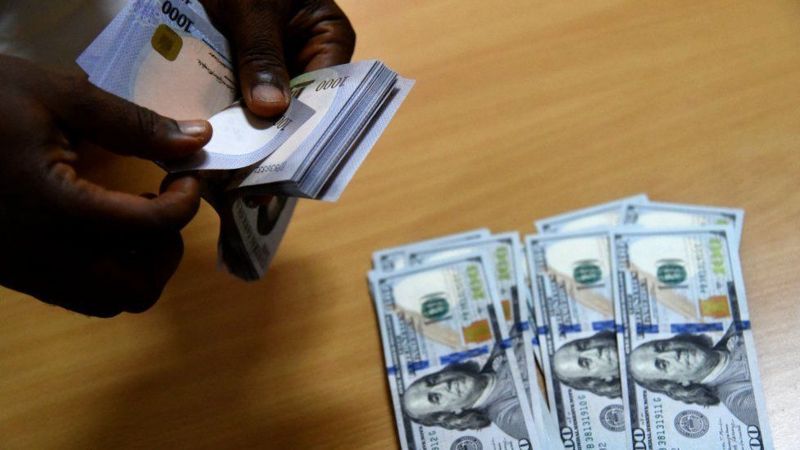
Let’s look at the exchange rate across administrations. Under Jonathan, the exchange rate was around ₦ 157 to $1 in 2015. Under Buhari, the exchange rate was ₦770/$ in 2023. And under Tinubu, the exchange rate is now approximately ₦1536/$ as of 2025. So when you convert the same external loan, the naira value explodes as the currency weakens. Just this exchange rate movement has added ₦29.75 trillion to Tinubu’s external debt and ₦5.9 trillion to Buhari’s.

To properly check if the debt spike is mainly due to FX changes, let’s fix the exchange rate at ₦157/$ for all the administrations and see how much was actually borrowed. The formula is simple:


Old Dollar Debt × New Exchange Rate – Old Dollar Debt × Old Exchange Rate.

Using the DMO’s external debt figure of $38.81 billion in 2023:
$38.81bn × ₦770 = ₦29.85 trillion
$38.81bn × ₦1536 = ₦59.63 trillion
₦59.63 trillion – ₦29.85 trillion = ₦29.78 trillion

So, if the exchange rate had remained at ₦157/$, Nigeria’s external debt of $42.46 billion in 2025 would have been approximately ₦6.6 trillion. Under that fixed exchange rate, Jonathan’s total external borrowing would have been approximately ₦1.07 trillion over five years. Buhari’s about ₦4.48 trillion in eight years.

Tinubu’s about ₦1.12 trillion in under two years. This means if Tinubu continues at this pace, he’ll hit Buhari’s figure—₦4.48 trillion—in about eight years. Yes, the exchange rate plays a significant role. But that’s not the whole story.

Others argue that Tinubu’s debt problem is not just about FX. It’s also about spending discipline. Unlike Buhari, Tinubu removed fuel subsidies and slightly increased oil production (1.5–1.6 million barrels per day, compared to Buhari’s average of 1.2–1.3 million barrels), and customs and tax revenue also improved. Buhari faced more challenging conditions—global oil crashes, two recessions in 2016 and 2020, the COVID-19 pandemic, and high subsidy payments—during his early years. So, Tinubu had more room to save, but instead, borrowing has increased.

The 2025 budget projects a deficit of ₦13.08 trillion. It assumes oil at $77.96 per barrel and production of 2.06 million barrels per day. However, in reality, March production was only 1.65 million barrels per day, including condensates. And as of July 8, Brent crude was $70.20 and WTI was $68.42—both below the assumed price. That means revenue projections may fall short, and the government will likely borrow even more.

Tinubu has already requested $21.6 billion in new loans. In May 2025, Reuters reported that he also asked the National Assembly to approve loans of €2.2 billion, ¥15 billion (approximately $104 million), and an additional $2 billion in domestic loans. That’s not all.

The Federal Government also secured a $747 million syndicated external loan to fund Phase 1, Section 1 of the Lagos-Calabar Coastal Highway—from Victoria Island to Eleko Village. At ₦1536/$, this loan adds ₦1.147 trillion to the debt. The lenders include Deutsche Bank, First Abu Dhabi Bank, Afreximbank, and Zenith Bank, among others. The Islamic Corporation for the Insurance of Investment and Export Credit (ICIEC) is providing insurance. That brings Tinubu’s total borrowing to about ₦63.157 trillion in under two years.

This highway is being built under a Public-Private Partnership using an EPC+F model. The road is over 70% complete and is designed using CRCP technology—concrete with a 50-year lifespan and low maintenance requirements. While the loan adds to debt, it shows some confidence from global investors and introduces a financing model that shares risk between the government and private firms.

Now to the bigger picture. As of 2024, Nigeria’s debt-to-GDP ratio is around 25.1%, based on ₦144.67 trillion in debt and a nominal GDP of about $375 billion. That means debt accounts for about one-quarter of the economy—not yet alarming, but becoming risky if borrowing continues at this rate. What’s more worrying is the cost of servicing debt.

In 2024, debt service took up 4.1% of GDP—up from 3.7% in 2023 (AfDB report). That’s a lot. Imagine 4.1% of the entire economy going towards just paying off debt, instead of building schools, roads, or hospitals. Even worse, the debt service-to-revenue ratio rose from 76.86% in 2023 to 77.4% in 2024 (APA News). This means more than three-quarters of government revenue is now used to repay debt. That leaves very little for anything else. That’s not sustainable.

As Economics graduates, the way forward is clear. First, we need to depoliticise how we manage public finances. Countries like Chile, Sweden, and the UK have independent Fiscal Councils that enforce rules like debt limits and balanced budgets. Nigeria needs something like that to restore discipline and rebuild investor trust.

Second, loans must be tied to development goals—not used for consumption. Borrowing should be used for essential services like roads, electricity, and digital infrastructure, rather than paying salaries or covering bloated administrative costs. Rwanda and Ethiopia have shown how debt used for infrastructure can boost exports and growth. A cost-benefit analysis should accompany every loan.

Third, we must cut waste and off-budget liabilities. That includes fuel subsidies, failing state-owned enterprises, and unauthorised bailouts. Ghana passed a Fiscal Responsibility Act in 2018, capped its deficit at 5% of GDP, and ran audits that exposed massive leakages. Nigeria can cut borrowing by 30–40% just by following that path.

Fourth, improve tax collection—not by harassing small traders, but through fairness and the use of technology. Indonesia raised its tax-to-GDP ratio by digitising filing, automating risk detection, and linking tax IDs with national identity numbers. Nigeria can do the same—target high earners and multinationals instead of informal workers.

Fifth, public-private partnerships and syndicated loans, such as the Lagos-Calabar road, shouldn’t be used to conceal debt. They should help us attract private capital, share risks, and deliver real development. Countries like Morocco and Kenya make their PPP contracts public. Nigeria should also strive for greater transparency.

Finally, if things get out of hand, we can consider debt restructuring—but only as a last resort and if tied to fundamental reforms. Ghana restructured its debt in 2023 by extending maturities and cutting interest under IMF guidance. But what made it work was reform—cutting subsidies and improving tax systems. Without reform, restructuring solves nothing.

This is the time for Nigeria to act. If we continue on this path, we are only postponing a more profound crisis. But with the right decisions, we can still change direction.

Ibrahim is a graduate of Economics from Bayero University, Kano. He can be reached via nasirfirji4@gmail.com.

Let the oil exports breathe

By Hanniel Sebatie Noboh

On the morning of July 30, Vanguard newspaper published an editorial titled “30% Processing of Export Raw Materials”, offering its perspective on the recently passed Senate bill mandating that all raw materials exported from Nigeria must be processed locally by at least 30 per cent. This long-overdue legislation is a welcome development in Nigeria’s quest for economic diversification.

Nigeria remains one of the most naturally endowed nations in the world. With abundant resources such as limestone, gold, natural gas, and the globally coveted crude oil, our country boasts mineral wealth that many developed nations lack. In agriculture too, from rice and groundnuts in the North to cassava and palm oil in the South, Nigeria’s fertile soil continues to bless us with variety and abundance.

Yet, successive governments have, for decades, focused disproportionately on crude oil, neglecting other sectors, such as agriculture and manufacturing. As the Vanguard editorial rightly observed, even during economic downturns—when necessity should inspire reform—there has been little effort to diversify our export base.

This is why the passage of this bill marks a significant shift. By requiring at least 30 per cent local processing of all export-bound raw materials, Nigeria takes a substantial step towards value addition and economic transformation.

The advantages are manifold. First, processed goods typically command higher prices in global markets. Take cocoa, for instance—a ton of raw beans sells for far less than the same quantity processed into cocoa butter. This principle applies to most commodities: the more value added, the greater the earnings.

Second, enforcing the 30 per cent processing threshold will spur the development of local industries. More processing facilities will mean more jobs, improved infrastructure, and Nigeria’s transition from an exporter of raw materials to a player in the global manufacturing and semi-processed goods market. Even for domestic buyers, the availability of semi-processed inputs will reduce dependency on fully imported goods, lowering costs and supporting local production.

Additionally, the bill aligns with President Bola Tinubu’s vision of making agriculture more attractive to Nigerian youth. Many young people may not be drawn to traditional farming, but with the emergence of new processing plants, opportunities will abound in machine operations, logistics, quality control, and related fields.

However, as Vanguard also warned, the real challenge lies in implementation. Nigeria has no shortage of well-intentioned policies, but history shows that many fail at the execution stage. A lack of infrastructure, regulatory oversight, and transparency could undermine the promise of this bill. The risk of corruption—particularly in granting exemptions or failing to enforce compliance—must be proactively addressed.

The responsibility for enforcement rests with the Raw Materials Research and Development Council (RMRDC), which must ensure compliance with the 30 per cent benchmark and uphold quality standards. Any exporter who fails to meet the requirement will face a 15% surcharge on the export value of their raw materials. This is a strong disincentive, but only if enforced fairly and transparently.

In conclusion, while the bill is commendable, its success depends on rigorous implementation, strong political will, and effective institutional accountability. If executed effectively, it could be a game-changer for Nigeria’s economy. Like many Nigerians, I remain hopeful that this won’t become another forgotten policy but the beginning of a new era of industrial growth and self-reliance.

Hanniel Sebatie Noboh is a Mass Communication student at Nile University and an intern at PRNigeria. She can be reached via nobohhanniel@gmail.com.