Economy

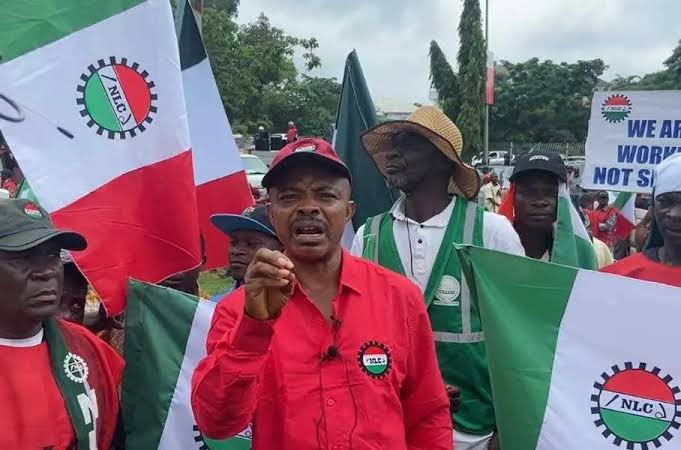
NLC, TUC Issue ultimatum to FG, threaten fresh nationwide strike

By Sabiu Abdullahi 

The Nigeria Labour Congress (NLC) and the Trade Union Congress of Nigeria (TUC) have jointly issued a stern ultimatum to the Federal Government.

The ultimatum comes as a response to the alleged failure of the government to fulfil a 16-point agreement reached with the unions on October 2, 2023. 

Expressing their dismay over the situation, leaders of the NLC and TUC affirmed their concern regarding the government’s apparent disregard for the welfare of citizens and workers.

Despite concerted efforts by organised labour to foster cooperation and address issues in the workplace, the unions claim that the government has remained indifferent to the widespread suffering and hardship experienced by Nigerians. 

In a joint statement, the NLC and TUC lamented the necessity of resorting to drastic measures, stating, “It is regrettable that we are compelled to resort to such measures, but the persistent neglect of the welfare of citizens and Nigerian workers and the massive hardship leave us with no choice.” 

The ultimatum issued by the unions gives the Federal Government a 14-day window, starting on February 9, 2024, to honour its commitments outlined in the agreement.

Failure to do so, as stated by the NLC and TUC, will result in the commencement of a nationwide strike. 

The looming threat of a nationwide strike raises concerns about its potential impact on various sectors of the economy and the well-being of the general populace.

It underscores the urgency for dialogue and resolution between the government and organised labour to avert the disruption and hardships that a strike could entail.

Court orders FG to fix prices of goods, petroleum products

By Sabiu Abdullahi

The Federal High Court, Ikoyi, Lagos, on Wednesday, February 7, mandated the federal government to regulate the prices of essential goods and petroleum products within a span of seven days. 

The presiding judge, Justice Ambose Lewis-Allagoa, issued the directive following an originating motion presented and argued by prominent human rights activist, Femi Falana SAN.

Justice Lewis-Allagoa underscored the significance of the case, highlighting the absence of opposition from the respondents, including the Attorney-General of the Federation and the Price Control Board. 

“I have had the applicant Femi Falana in a suit no San,FHC/L/CS/869/2023 and I have also discovered that despite the service of the Originating motion on the respondents namely Attorney-General of the Federation and the Price Control Board, no opposition to it by way of counter affidavit, which is law that all the facts deposed in the affidavit attached to the originating motion are all deemed admitted,” stated Justice Lewis-Allagoa. 

“Consequently, all prayers that are sought for in the motion papers are hereby granted as prayed.” 

The court’s ruling directs the Nigerian government to set fixed prices for a range of commodities, including milk, flour, salt, sugar, bicycles and spare parts, matches, motorcycles and their spare parts, motor vehicles and their spare parts, as well as petroleum products such as diesel, petrol motor spirit (PMS), and kerosene. 

This landmark decision marks a significant step towards addressing concerns over escalating prices of essential goods and ensuring greater stability in the country’s economy.

It remains to be seen how the government will implement and enforce these mandated price regulations within the stipulated timeframe.

Revitalizing opportunities and promoting employment: A proposal for establishing jobs hub in Kano

By Tahir Mahmood

Kano State, known for its vibrant culture and economic potential, has witnessed an influx of companies and nongovernmental organizations. However, there is a noticeable disparity in the representation of local citizens within these entities.

There is a need to address unemployment challenges and breathe new life into the economy of Kano State by drawing inspiration from the successful Edo Jobs Center model. This initiative comes at a crucial time when the need for job creation and skills development is more pressing than ever. It is suggested that Kano State adopt a framework similar to the Edo Jobs Center, a proven model that has successfully facilitated job placements, nurtured skills development, and fostered economic growth in Edo State. The aim is to tailor this approach to the unique needs and opportunities within Kano.

Acknowledging the existence of the Sani Abacha Youth Center and the challenges it faced, the Jobs Hub may aim to learn from past experiences. It is crucial to analyze the reasons behind the center’s abandonment, incorporating these lessons to develop strategies that ensure the sustained success of the new initiative, particularly in promoting local employment.

It’s important to note the historical context, particularly of the abandoned Sani Abacha Youth Center Kano, which had similar aspirations but fell short of realizing its full potential, serving only as a wedding event center and a popular rawar gala location—a joint for hookups where local ashawos are initiated and recruited, despite the Hisbah’s commitment to curbing those activities in the state. Learning from past experiences, the Jobs Hub may aim to address the shortcomings of previous initiatives and create a sustainable platform for employment and skills development.

The key components of the Jobs Hub may include an online portal connecting job seekers with opportunities, comprehensive skills development programs, and strategic partnerships with local businesses. This holistic approach will seek to bridge the gap between job seekers and employers while equipping the local workforce with the skills needed in today’s dynamic job market.

In light of the challenges faced by the Sani Abacha Youth Center, it is imperative that the new initiative address the reasons behind its abandonment. By incorporating lessons learned from past experiences, the Jobs Hub may aim to not only overcome previous obstacles but also ensure long-term success and sustainability with modern technological advancements.

To achieve the above, collaboration with the government, private sector, and local communities is crucial. This is to encourage the Kano State government to actively engage in supporting and endorsing the establishment of the Jobs Hub, aligning it with existing employment initiatives and leveraging public-private partnerships for enhanced impact.

The success of the Edo Jobs Center model presents a compelling case for the potential for positive outcomes in Kano State. As we endeavor to revitalize opportunities and stimulate economic growth, it is hoped that the government will consider adopting the Edo Jobs strategies, setting in motion a transformative journey towards a more prosperous and vibrant Kano State.

The proposed Jobs Hub integrates various components to create a comprehensive approach to local employment: Online Portal, by establishing a digital platform connecting local job seekers with employment opportunities, making the recruitment process more inclusive and accessible.

Skills Development Programs, through implementing targeted training initiatives tailored to the needs of the local workforce, enhance their competitiveness in the job market. Partnerships with Companies, by fostering collaborations with companies and organizations operating in Kano, and encouraging them to actively participate in the Jobs Hub by recruiting from the local talent pool.

A critical aspect of this is the emphasis on addressing the issue of underrepresentation of Kano citizens in the workforce. The Jobs Hub may work closely with companies to develop strategies for recruiting and retaining local talent, promoting a more inclusive and diverse work environment through government mandates for local recruitment. By recognizing the pivotal role of the government in influencing employment practices, this suggests that Kano State can enforce regulations mandating companies and organizations operating within its borders to prioritize the recruitment of Kano citizens.

This proactive approach aligns with the state’s commitment to promoting local employment and ensuring economic opportunities are accessible to its people. Collaboration and Stakeholder Engagement: Active collaboration with both government bodies and private sector stakeholders is essential for the success of the Jobs Hub. Encouraging dialogue and partnership-building creates a supportive ecosystem for local employment initiatives. The establishment of a Jobs Hub in Kano State not only addresses unemployment challenges but also tackles the issue of workforce disparities.

By promoting local employment, the proposal aims to create a more equitable distribution of economic opportunities. The government’s mandate to enforce local recruitment practices can further solidify the impact of the Jobs Hub, ensuring a brighter and more inclusive economic future for the people of Kano State.

The State holds the promise of revitalizing the local economy and creating a brighter future for the youth. By learning from past experiences and adopting innovative solutions, Kano has the opportunity to pioneer the fostering of employment, skills development, and sustainable economic growth.

Tahir Mahmood Saleh can be reached via tahirmsaleh.seggroup@gmail.com.

Muslim women must acquire digital skills now

By: Ibrahim Suleiman Ibrahim

In today’s consistently evolving digital world, the pursuit of digital/ICT skills has become increasingly important for individuals and communities alike. This is particularly relevant for Muslim women, who often face unique challenges in balancing their religious and family values with their career choices, hence, making them to be left behind in the digital landscape.

In this article, we will explore the importance of creating awareness among Muslim communities about the need for Muslim women, especially the married ones, to pursue digital/ICT skills.

One of the primary concerns of Muslim women is the compatibility of their careers with their religious values and family life. Most jobs in our contemporary secular societies often raise ‘Sharee’ah’ concerns—which mostly revolve around free mixing and intimacy with ‘non-mahrams’, prolonged unavailability in their matrimonial homes that often impede performance of domestic responsibilities, compromising the Islamically mandated mode of dressing for Muslim women, and so on, making it challenging for some educated Muslim women to identify fulfilling careers that align with their religious values and beliefs.

God so kind, the recent advancements in the ICT sector has now alternatively offered a wealth of opportunities for Muslim women to pursue careers that are both fulfilling and compatible with their ‘Deen’ and family life, but unfortunately, most Muslim women lack sufficient awareness of those opportunities.

It is quite essential for Islamic scholars and Muslim elites to be aware of the recent advancements in the ICT sector and to consider enlightening their communities about the potential benefits of digital/ICT skills for Muslim women. By promoting awareness and understanding, these leaders can help Muslim women make informed decisions about their careers and contribute to the overall empowerment of the community, without compromising their religious values and beliefs.

Importantly, pursuing digital/ICT skills can also lead to remote job opportunities that offer flexibility and work-life balance. These jobs allow women to work from their homes, enabling them to demonstrate their supportive roles in their marriages, while still advancing their careers. Some of the skills that can lead to remote job opportunities include web development, copywriting, social media management, digital marketing, graphic designs, virtual administration, data analytics and so on.

Furthermore, encouraging Muslim women to pursue digital/ICT skills can lead to greater empowerment and intellectual development. By acquiring these skills, Muslim women can supportively contribute to their families’ finances and also become more intellectually sound, which is in line with the principles of Islam that promote the pursuit of knowledge.

In conclusion, we are in an interconnected world where digital skills are increasingly relevant across all sectors. Muslim women lawfully deserve to be equiped with these skills so they can also participate more actively in the global economy and contribute to the advancement of their communities, within the limits of Sharee’ah.

There may be misconceptions within Muslim communities about the compatibility of digital/ICT careers with Islamic principles. However, creating awareness can help address these misconceptions and demonstrate how these skills can be utilized in ways that are consistent with religious values.

It’s therefore crucial for community leaders, including Islamic scholars and Muslim elites, to actively promote the value of digital/ICT skills for Muslim women. Their support and endorsement can greatly influence the attitudes and decisions of community members.

Ibrahim Suleiman Ibrahim is a Public Affairs Analyst. He can be reached via: suleimibrahim00@gmail.com

Dollar-Naira exchange rate and the life of Nigerian civil servants 

By Ismail Namadi 

In 2014, $1 was equivalent to ₦200. At that time, one bag of 50kg rice was around ₦8,000 ($40), and the minimum wage was N18,000 ($90). 

Comparably, in January 2024 (10 years apart), $1 is around ₦1,500. The Minimum wage is ₦30,000. A simple calculation is 18000/200 = $90; 30,000/1,500 = $20.

What does this simple calculation mean? In real terms, over the past ten years, despite the increase in the minimum wage from ₦18,000 to ₦30,000 per month, purchasing power has decreased by over 75%.

However, in 2014, the PMS pump price per litre was 87 Naira, while the current price in 2024 is ₦700 per litre. 

The Nigerian budget in 2014 was ₦4.962 trillion, while in 2024, the budget is ₦28.77 trillion. These variables are paramount when considering minimum wage simply because they directly affect the lives of people in the country. 

For example, the federal government removed the subsidy on petroleum products, which led to a skyrocketing price of general goods and services, making the lives of citizens, especially low-income earners, difficult to manage.

In addition, the dollar plays a significant role in our economy because we depend on foreign importation for consumable goods. The dollar is the only legal tender that we use to patronize foreign goods.

My advice to the federal government is that when it decides to review the minimum wage, it should consider the purchasing power of the naira so that the standard of living of Nigerian workers is improved.

Ismail Namadi wrote from Paderborn, Germany, via Ismailnamadi2006@gmail.com. 

Transforming small and medium enterprises (SMEs) with cutting-edge AI tools

By Haruna Chiroma, PhD

Internationally, nations across the globe are actively exploring the potential of artificial intelligence (AI) to address real-world societal challenges spanning diverse sectors of their economies. Nigeria, too, is actively addressing its economic challenges by seeking solutions from various perspectives. In light of the significant role played by Small and Medium Enterprises (SMEs) in propelling the real sector of the economy, a dedicated agency, the SMEs Development Agency of Nigeria (SMEDAN), was established. SMEDAN aims to promote, regulate, and implement measures to sustain and enhance the performance of SMEs. In today’s dynamic business landscape, integrating AI tools has become essential for SMEs looking to achieve sustainable growth and gain a competitive edge.

This article provides a guide exploring how strategically employing AI tools can enhance various aspects of SME operations, considering the specific economic context and challenges SMEs face in Nigeria. The success and growth of SMEs have been demonstrated to hinge significantly on the innovations they introduce to enhance their products, services, or marketing strategies.

Research has consistently revealed that SMEs incorporating new innovations tend to achieve higher success levels than those that do not. SMEs can use cutting-edge AI tools to infuse innovation into their products, services, and marketing approaches. AI is replacing traditional roles and transforming the conventional methods of performing tasks, thereby creating novel opportunities within the economic landscape.

From a marketing perspective, entrepreneurs now have access to AI tools that streamline the process of creating compelling jingles for advertising products or services. This innovative AI tool simplifies the user experience by prompting them to input the text of the advertisement. Once initiated, the tool automatically generates a captivating and engaging video. Users can choose from various ready-made templates, voices, and gestures to customize the video to their preferences.

Additionally, the tool comes equipped with video editing features, enabling users to fine-tune the video to match their requirements precisely. To overcome language barriers and reach a broader audience, another valuable AI tool for video translation is available. This tool allows users to translate their videos into different languages, expanding their reach to a larger and more diverse pool of potential customers. Together, these AI tools empower entrepreneurs in the marketing realm, providing them with efficient solutions for creating and translating engaging promotional content.

Seamless, an AI-powered platform, caters to the sales and marketing needs of both business-to-business and business-to-customer interactions, facilitating a broader reach for businesses. This innovative platform ensures the acquisition of precise customer email addresses, phone numbers, and direct dials, thereby enhancing the promotion of products and services for SMEs. By enabling businesses to connect with a diverse customer base, Seamless contributes to increased sales and fosters collaborations among various entities in the business landscape. 

In product design, AI brings innovation by offering tools that streamline the design process, enhance creativity, and optimize product performance. From the perspective of design, a new design of a product or packaging can be generated using an AI tool. An AI tool for generating design from the textual description is available; a user will write the text description of the design and prompt the AI tool, and a new design based on the description will automatically be generated. On the other hand, an existing design can be uploaded to the AI tool, and then, automatically, it will be redesigned.

Users can generate as many designs as possible for the best-redesigned item or product. Generative design AI aids in product design by generating multiple iterations based on specified parameters. This enables SMEs to explore diverse design possibilities, optimizing for factors such as cost, materials, and performance. A business logo is significant in business as it gives the first impression to the customers when interacting with the products or services of the SMEs. An appealing business logo can be designed with the AI tool for generating design.    

Many excellent products and services offered by SMEs and startups in Nigeria often lack online visibility, relying primarily on WhatsApp status updates to reach their contacts. This limited visibility poses a challenge, with many SMEs hesitating to invest in costly website or e-commerce development because of restricted funds. Fortunately, a solution has emerged for such SME owners in the form of an AI tool that automatically generates e-commerce sites. This tool provides a variety of pre-designed templates for e-commerce sites, simplifying the process for users. By selecting a desired template and filling in essential information such as product details, business location, and payment methods, users can proceed through the steps until the final page.

Upon clicking “generate,” the e-commerce site is automatically created. Following this, users can download and host the site, making it live online. This straightforward process allows SMEs to easily establish an online presence, overcoming the challenges associated with traditional website development costs.

Chatbots like Generative Pre-trained Transformers (GPT) can seamlessly integrate into SMEs’ e-commerce websites or social media platforms specifically designed for business promotion. The incorporation of GPT enhances interaction with potential customers by providing virtual assistance.

SMEs can implement virtual assistants on their websites or social media platforms to actively engage customers, respond to product or service inquiries, guide customers through the sales process, provide support, and ultimately enhance overall customer satisfaction. By embedding chatbots within SMEs’ e-commerce sites, these tools can efficiently process orders and offer real-time assistance. This integration ensures a seamless and responsive e-commerce experience for customers, contributing to the overall effectiveness of SMEs’ online presence.

I trust that this article serves as a source of inspiration for many SMEs and startup owners. I hope that it encourages them to explore these strategies to enhance their business ventures and, in turn, expand their operations. By doing so, these entrepreneurs can create additional employment opportunities, fostering increased business activity within the real sector of Nigeria’s economy.   

Haruna Chiroma is a professor of artificial intelligence at the University of Hafr Al Batin, Saudi Arabia. He can be reached via freedonchi@yahoo.com.

Skills acquisition and the rise of Arewa female entrepreneurs

By Aminu Mohammed

The article was inspired by a video on Nelly Agbogu’s Facebook page, also known as Naijabrandchick. In the video Aisha Falke of Northern Hibiscus created, she urged female vendors in the Northern region to take advantage of the NBC Trade Fair, scheduled to be held in Kano on February 4, to showcase their products to potential buyers.

This caught my attention, and I scrolled through Nelly’s Facebook page to learn more about the programme. I was impressed by the quality of content and creativity displayed by different female vendors from the North. They were soliciting for patronage of their products during the forthcoming trade fair. I was pleased to see that many young female entrepreneurs from the North are now engaged in small businesses and have embraced the spirit of self-reliance.

I also observed the activities of many northern female vendors on Instagram, TikTok, and Facebook, such as Maryam Gatawa and Aisha Abubakar. These vendors sell items ranging from well-packaged local food to products consumed by people every day.

Growth of Female Entrepreneurs

I am impressed by Maryam Gatawa’s sale of many of our local food items, such as beef jerky, powdered garlic and date, garin kunun tsamiya made from powdered millet, and garin dan wake (bean dumplings), all of which are well-packaged. This surge in the number of young women engaged in various businesses gladdens my heart and is an indication that things are changing in the north, unlike before. I am still using the bean dumplings I bought during my visit to Nigeria last year.

Some northern female entrepreneurs, such as Aisha Falke and others, have encouraged Arewa women to start small businesses by organising workshops, seminars, and training in Abuja, Kaduna, and Kano. However, more needs to be done to encourage our women to imbibe the spirit of self-reliance.

I have always encouraged my younger sisters to engage in small businesses. They are all engaged in small businesses and other activities that earn them money. There is nothing like financial independence and the ability to take responsibility for one’s life by involving oneself in a productive venture.

Small-scale and medium businesses are critical for the growth of any economy, as they employ one or more people and create jobs. Encouraging many young people to pursue entrepreneurship for their economic emancipation is vital. Any activity that generates income and enables one to earn a livelihood should not be looked down upon. You cannot escape poverty when you are not willing to do the so-called “dirty jobs”.

Need for Change in Mindset

It is essential to note that the North is currently facing a dire situation due to the mindset of its people. The youth must change their mindset about salaried jobs and embrace entrepreneurship. Over-reliance on government jobs has made things worse for us and led to the region’s retrogression. We cannot move forward as a society when most youths do not want to engage in small businesses or trade to earn a livelihood. Most of our graduates look down upon people doing vocational skills while roaming the streets looking for jobs. They prefer to remain idle rather than engage in a vocational skill.

The progress and development of the North depend on a productive population skilled in various aspects of human endeavour. We cannot make meaningful progress when most youths who graduate from university brandish their certificates without any skills to help them survive. It is vital to acquire both education and skills to survive in the new economy. I have spent money to acquire digital marketing skills despite my academic qualifications.

I still reiterate that the Northern youth should focus on acquiring digital skills, and those not interested should learn vocational skills. Stop dwelling in the past and embrace change. The era of looking for public sector jobs is over. The economic situation in Nigeria, which has been worsened by inflation and stagnant income, warrants the need for young men to engage in small businesses to earn a livelihood.

I have a nephew, Kabiru, who graduated from Bayero University Kano a few years ago. He decided to take the bull by the horns after the service year to learn furniture making rather than roam around looking for a job. Kabiru is now fully engaged in furniture making and has four employees who support him in his shop. I gave him a job to do for me during my visit to Nigeria last year, and he executed it to my satisfaction. Today, Kabiru is doing very well in his vocation, while some of his friends are still searching the streets for jobs.

Of course, not everyone can be an entrepreneur or run a small business, but we cannot continue to cling to the past and expect any progress in our region. Our young men should stop wasting time chasing certificates without commensurate skill. They should stop waiting for their relatives to help them secure government jobs as they are no longer tenable.

Necessity of Skill Development 

There are several free resources available on platforms such as YouTube, Google, Coursera, Udemy, Simplilearn and others, which can be used to learn a variety of skills like digital marketing, data science, web development and more. Those not interested in acquiring such skills must focus on vocational skills like fashion designing, furniture making, baking, plumbing, etc. Those who have the financial resources can also consider small-scale businesses or farming.

We must encourage our women to engage in entrepreneurship and strive to acquire education and critical skills that can help them manage their businesses better. We cannot afford to have many ignorant and unproductive people in our society. It is important to promote girl-child education and discourage the Almajiri system. We cannot have millions of children roaming the streets without proper education that will enable them to live a productive life.

As January 2024 draws close, our youth should wake up and become more productive. Instead of wasting their time sitting under trees with friends in their neighbourhood during productive hours, they should go and learn a skill or trade that can enable them to contribute to the economy of their community. I wish you the best of luck as you strive to improve your life.

Aminu Mohammed wrote this article from Ingolstadt-Bayern, Germany. He can be reached at gravity23n@gmail.com.

Nigeria Customs Service strengthens ties with NPA to boost port efficiency, trade facilitation

By Sabiu Abdullahi

The Comptroller General of the Nigeria Customs Service (NCS), Bashir Adewale Adeniyi MFR, in an effort to enhance port efficiency and facilitate seamless trade, deepened collaboration with the Nigerian Ports Authority (NPA) during a visit to NPA Managing Director, Mohammed Bello-Koko, on Thursday, January 25, 2024. 

This is contained in a statement made available to journalists by the spokesperson of the Nigeria Customs Service, Abdullahi Aliyu Maiwadah, on Friday. 

According to Maiwadah, the CGC said the ongoing efforts between NCS and NPA shared the goal of achieving port efficiency. 

He was quoted as saying, ”NPA desires to achieve port efficiency, and we believe that in customs, Ports efficiency will help to facilitate trade.” 

Acknowledging the need for increased competitiveness in Nigerian ports, CGC Adeniyi stated, “We want to make our Ports more efficient. When our Ports are more efficient, it will translate into better efforts in revenue generation.” 

Addressing cargo clearance processes, the CGC affirmed the importance of technology in streamlining operations.

“If we deploy a scanner to examine goods, rather than subject them to a hundred percent examination, that’s one way to make them faster and more efficient,” he explained.

He further revealed plans for risk management expansion and the introduction of Authorized Economic Operator (AEO) in the first quarter of the year. 

The MD of NPA, Mohammed Bello-Koko, commended the CGC for his responsive approach to trade facilitation issues.

He highlighted the successful partnership in the functioning of the export desk, resulting in a significant increase in cargo exports. 

Discussing the critical need for efficient cargo clearance, MD Bello-Koko stressed the necessity of a 24-hour port operation.

“We need to be able to clear cargo as quickly as possible,” he noted.

“For them to do that, it means you need the shipping lines, terminal operators, security, and everybody to be on their toes and work 24 hours.”

How investing in shares, mutual funds can help you become financially independent

By Aminu Mohammed

The inspiration for this article came from a short Facebook post by Bashir Abubakar Gazaki, who advised young people to invest their money in shares of good companies to attain financial independence. His followers’ lack of financial awareness caught my attention, as evidenced by the comments below the post, where many people asked him to explain the stock market. 

It is not surprising that personal finance is not taught in universities. I learned about stock investments through books such as “The Richest Man in Babylon” by George Samuel Clason, “Rich Dad Poor Dad” by Robert Kiyosaki, and “Rich Dad’s Guide to Investing: What the Rich Invest In That the Poor and Middle Class Do Not.” I read these books shortly after graduating from Ahmadu Bello University, Zaria. 

The books gave me insight into why some people, despite working for many years, still struggle in life. The inspiration from these books led me to purchase my first share during my service year in Adamawa state. Similarly, a fellow corps member from the southwest who knew the stock market advised me to invest in good companies.

Invest money in assets Instead of liabilities 

Investing your time actively and your money passively is an excellent way to secure your financial future. Passive income refers to the money you earn from your assets, such as property, shares, mutual funds, Treasury bills, etc., while you sleep. Unlike your job, assets generate income for you, whether you work or not. So, it’s crucial to avoid wasting your money on liabilities and start investing in assets.


If you earn a salary or own a business, it is best to save at least 10 per cent of your income and invest it wisely. Investing in shares doesn’t require a large sum of money. Suppose you know about stock trading. In that case, you can invest in the United States stocks or the Nigerian stock market, even if you start small with a low amount.


However, it is understandable that many individuals are scared of investing their money in the stock exchange, given the capital market crisis in 2008, where several people lost a significant portion of their funds. I have experienced losses in the stock market myself, particularly with the shares I bought in the defunct Oceanic Bank and Bank PHB. But I have also gained from stocks like Dangote Sugar, GTBank, and Zenith Bank. Life is all about risk; sometimes, we win, while other times, we lose due to unforeseen circumstances. But that shouldn’t stop us from exploring new investment opportunities, no matter how little.

Investigate companies before Investing

Investing in the stock market is a business that requires a long-term strategy and patience rather than a quick way to get rich. Having a good understanding of the companies you invest in is crucial. According to Warren Buffet, the Chairman of Berkshire Hathaway, one of the most successful investors in the world, the best way to achieve greater rewards is to think long-term. Buffet recommends holding stocks for at least five to 10 years to accumulate wealth. However, some traders still profit by trying to beat the market daily.


If you are hesitant about investing directly in stocks, you can consider mutual funds, designed for people who want to minimise risk but have lower returns. You can contact your local banks, such as First Bank, GTBank, UBA, Stanbic IBTC, and others that offer asset management services. These companies manage various types of mutual funds under the guidance of experts.


As a salaried worker, unforeseen circumstances such as job loss or a downturn in business can be devastating. Therefore, it is important to have a safety net in the form of investments to help you recover in case of any unforeseen circumstances.

Consult a stock broker before buying any Shares

It is important to conduct thorough research and seek expert advice before investing in shares. Look for stocks with strong fundamentals and invest in them wisely. Diversifying your investment across different sectors and companies is recommended to maximise your returns.

It is crucial to emphasise that individuals with little knowledge about the stock market should educate themselves on basic financial concepts before investing in shares. The companies mentioned in this article are for illustration purposes only and to encourage young people to take control of their financial future through smart investments. Investing in shares is not a quick way to get rich, and seeking professional advice before investing is highly recommended.

I wish you the best as you strive towards financial independence and personal growth.

Aminu Mohammed wrote this article from Ingolstadt, Germany. He can be reached at gravity23n@gmail.com.

The Federal Republic of Lagosia

By Muhammad Sulaiman Abdullahi

The Bola Ahmed Tinubu-led government’s effort to forcibly uplift and upgrade Lagos State shouldn’t surprise anyone who knew or read about Nigeria’s history. The military initiated the idea of the creation of Abuja as the Federal Capital Territory of Nigeria in the late 20th century, precisely in the late 70th. The idea was well thought out, well planned and well executed in good faith by successive military governments. 

The actualisation of Abuja as the capital city of the federation was one of the few tasks inherited and continued by more than one regime of governance. A Wikipedia article says that; “it is a planned city built mainly in the 1980s based on a master plan by International Planning Associates (IPA), a consortium of three American planning and architecture firms made up of Wallace, Roberts, McHarg & Todd (WRMT – a group of architects) as the lead, Archi systems International (a subsidiary of the Howard Hughes Corporation), and Planning Research Corporation. The Central Business District of Abuja was designed by Japanese architect Kenzo Tange. It replaced Lagos, the country’s most populous city, as the capital on 12 December 1991.”

It is one of the fastest-growing cities in the whole world, not only in Nigeria or in Africa. “According to the United Nations, Abuja grew by 139.7% between 2000 and 2010, making it the fastest-growing city in the world. As of 2015, the city is experiencing an annual growth of at least 35%, retaining its position as the fastest-growing city on the African continent and one of the fastest-growing in the world.” This is Abuja for you. 

Everything about Abuja was well-planned by intellectuals of repute in the world. Its strategic location, terrain, weather and, above all, compatibility to all, comfort and suitability as the capital city of this complex combination. There are so many planned cities in the world, and they are done for a purpose. Right from the beginning of the amalgamation, those who perpetrated it had known that it would be so complex to manage. They, therefore, according to their expectation, helped in realising where the leadership would be easier for all. Thus, the idea behind the planned city of Abuja. And this shows how disciplined and committed the military were to the general development and progress of the country. If it were these set of politicians of today, such a momentous task would never be accomplished.

History recorded that the Yorubas vehemently rejected the idea of Abuja’s formation. The “biggest” opposition to the formation of Abuja was the then Yoruba chieftain and presidential candidate, Chief Obafemi Awolowo. Awo pledged and promised to his people that if elected, he would hire the American Walf Disney Corporation – an American multinational mass media and entertainment conglomerate, to convert the current site of Abuja into an amusement park. Perhaps Chief Awo’s dream is quickly becoming a reality under Tinubu’s administration.

Awo lost the election, and it was reported that one of the first works of Alhaji Shehu Shagari, when he assumed power, was to accelerate and lay the foundation of Abuja and push for its early completion. Successive governments took over from him, and the trend continues until these days when we see the reversal in quick gears.

I contested the supremacy of Lagos over Kano a long time ago, but later, when I visited the state in 2013, I concurred and agreed that Lagos state is so blessed and looks like other well-developed foreign cities, if not because of the roughness and ruggedness of some its people. The state is both naturally and artificially endowed. Its intellectuals also support it at the expense of all others. They are the kind of people who love themselves more than anyone else. We started seeing the manifestation of this love so early in this Tinubu-led government.

It is undoubtedly clear to anyone who pokes his nose into Nigeria’s issues that Lagos is by far more prosperous than all the 36 federation states combined. You may not be wrong if you call Lagos a country of its own. That’s why I find it weird when public structures are shamelessly moved to Lagos in the name of convenience, proximity and all other silly excuses. These flimsy excuses can look strong from the surface, but some hidden weaknesses may be uncovered after a deep X-ray.

I once asked a knowledgeable friend about the issue of population between Kano and Lagos. Those who promote Lagos promote it even where others are better. Almost all the time, I see conflicting and contradictory reports on the issue of population. He explained to me in layman’s language that Kano is the most populous city in Nigeria, and there is no doubt about this. But Kano’s population is a dispersed population while that of Lagos is the most densely populated city in Nigeria. 

Then, in the actual number of people living in the two states combined together, Kano is the most populous state in Nigeria. Even this, many people do not care to know. Back to the Federal Republic of Lagosia! The state has been leading in terms of infrastructural development, IGR, investment, inventions, entrepreneurship, companies and all that the world counts as the indices of development. This, no one can deny. Maybe Kano can only be ahead of Lagos in terms of decorum, legitimate earnings and legal dealings. But Kano, being the Centre of commerce, has for long been hijacked by many powers beyond an ordinary imagination to comprehend.

Recently, the Central Bank of Nigeria (CBN) has been reported to have moved some of its key departments to Lagos. Why? It was said that close to 60 per cent of Nigeria’s wealth revolves around Lagos state only. Then, why should CBN sit far away from the Center of money? In this respect, one should salute the courage and foresight of CBN to relocate. Those of you shouting, what do you bring to the CBN’s table to make the CBN move the headquarters to your state? 

FAAN also moved its key offices and officers and even issued a statement that they have done so for the good of the country. It was said that the former aviation minister, Hadi Sirika, was the one who forced them to be in Abuja. 

In the statement issued by FAAN, its PRO Obiageli, it is said that they don’t have enough space/offices to accommodate their personnel in Abuja. Whether this is true or false should not matter, as truth is so expensive in Nigeria, and lies are so cheap. Whatever may happen, they moved out, pending when there would be enough space for them. They would form a committee to start looking for whether they could move back to Abuja. But one important thing that Obiageli mentioned was the issue of 60% of Nigeria’s flights hovering around Lagos. This singular statement is heavier than all the other flimsy and silly excuses given. This holds water!

Abuja was not ordinarily built without any thinking. It was strategically chosen, located and designed. Abuja was one of the purposely well-planned cities in Africa, as explained. It was designed to be in the centre to ease everything for everyone. When it was established, as is the norm, many companies, government agencies, embassies, foreign establishments and above all, the seat of the government were all transferred to the location. This is how Abuja was made.

Today, under the Asiwaju’s government, silly excuses are forwarded, and some government agencies headed by Yorubas are taken back to Abuja without even consulting the two houses of assemblies. I thought such a decision must be backed by law. They should first take the issue to the National Assembly for consent. But even the movement is systematic. They started by saying we are moving “some offices”, maybe to outsmart Nigerians. Many other movements might have been shrouded in secrecy.

The preferential treatment given to Lagos state sends terrible signals to the remaining states. Yes, Lagos generates revenue, but don’t forget that many of Nigeria’s population resides in the North. Lagos is made to be a necessary location for all Northerners or their goods to pass through. To compound issues and systematically actualise this, the Northern land borders are shut. Therefore, everyone is systematically forced to carry his fate, money and energy to Lagos. The import and export solely rely on Lagos. Why all this centralisation? Something is fishy here. Are Yoruba’s up to something? Only time will tell.

Lagos state is rich enough to have its own Central Bank. It shouldn’t take everything away from the rest of Nigerians with the support of the president. Already through the shrewdness of its technocrats, more than half of what is supposed to be shared by all Nigerians is given to her alone, in the name of its ports and other cover-ups. If we go by the statement of proximity and suitability as issued by FAAN and CBN, then the Ministry of Defense should be relocated to Zamfara or Borno, NNPC to Rivers or Bayelsa, Mining and Solid Minerals to Zamfara, Borno or Yobe, among many others. 

Let Abuja be either disbanded for all Nigerians to take their share or be retained as it is. Developmental projects should be distributed evenly throughout the country. You have already forced so much of Lagos on all at the expense of all. Lagos has snatched away the lion’s share of the country’s earnings, and no one says anything. It is another country in Nigeria, so everything about her is different. The train, the power, the companies, and now Nigeria’s CBN, FAAN, among many others. Haba! Why all these? A stitch in time…