Business

You can add some category description here.

Dangote Group awarded for creating investment opportunities in Africa

By Aisar Fagge

The Dangote Group Tuesday has bagged the First Runner-Up award at the just concluded 44th Kaduna International Trade Fair in Kaduna State.

The group was awarded for its enormous contribution in buoying investment opportunities across Africa through numerous businesses and philanthropic forays.

The Dangote Group made the disclosure in a news release issued to journalists on Monday.

The statement disclosed that Professor Umar Dantsoho, an economist, while speaking to journalists on the event, said the Dangote Industries Limited has been creating investment and job opportunities for Africans through its cement establishments in Nigeria and in Africa.

He said the key to developing the African economy is through the growth of the manufacturing sector, which is a major preoccupation of the company.

The statement added that, “Only recently, Dangote Industries Limited sealed a fresh deal of six million tons per annum with China Sinoma International Engineering which will strengthen local and African production to 57.6 million tons per annum.

“Aside government, Dangote Group is adjudged the biggest employer of labor in Nigeria.

“Speaking also Second Vice President of the Kaduna Chamber of Commerce Industry Mines and Agriculture (KADCCIMA). Alhaji Faruk Suleiman, commended the company for creating opportunities across Africa, adding that the upcoming Dangote petrochemical refinery will change the face of the African economy.

“General Manager, Sales, Dangote Sugar Refinery (DSR) North-West, Alhaji Abdulsalam Waya said the conglomerate would continue to provide opportunities for all willing Nigeria to invest as distributors or as investors in the stock market.

“He added that the theme for this year’s Trade Fare: Value Addition for Sustainable Growth and Development is apt, as Dangote Cement exports its product to several African countries, thereby creating jobs and opportunities across the value chain.

“The company is the major sponsor of the 44th annual event.

“Speaking, President of KADCCIMA Alhaji Suleiman Aliyu described the partnership with Dangote as very important for deepening commercial activities in the country.

“He said the support of the Dangote Group towards the success of the Fair cannot be quantified.

“Speaking to newsmen, the Director General of the Chamber Mr. Usman Saulawa said the Dangote Group is a major sponsor of this year’s Trade Fair and has been sponsoring the annual event.

“He said Dangote Group has been playing the role of supporter and partner for many years. It participation has been adding value to the Chamber.”

“The DG described this year’s fair as unique as there would be a Business Roundtable session that will further help deepens business opportunities for participants.

“The companies that participated under Dangote Industries Limited are Dangote Cement, Dangote Sugar, NASCON, Dangote Fertiliser, and Dangote Sinotruk West Africa Limited.

“A statement from the Corporate Communication Department of the Dangote Group said participants who seek to do business with any of the company’s subsidiaries can avail themselves of such opportunity through a special help desk at the pavilion.

“It described Kaduna State as one of the biggest markets in the country, given its historical position as the political capital of Northern Nigeria,” the statement added.

President Buhari dedicates 2023 trade fair to Dangote Group

By Aisar Fagge

The International Trade Fair of the year 2023 has been dedicated to the Dangote Group by President Muhammadu Buhari.

The Kaduna State Chamber of Commerce organised the trade fair in collaboration with the Industry to Pan-African Conglomerate.

This was disclosed in a statement signed and issued by the Corporate Communication Unit of Dangote Group.

The statement said that President Buhari, who was represented by the Minister of Agriculture and Rural Development, Dr Muhammad Mahmud Abubakar, made the dedication while declaring the Trade Fair open over the weekend.

The statement read in part, “As part of strategies to expand market share and reach more customers, the management of the Pan-African conglomerate, Dangote Group, has announced its partnership with Ogun and Kaduna states Chamber of Commerce and Industry to stage this year’s International Trade fair with a promise to invest more in Nigeria’s economy.

“To this end, the Group Chief, Branding and Communication, Dangote Industries Limited, Mr Anthony Chiejina, said subsidiaries under the Group are featuring prominently at the two fairs, which kicked off at the weekend in Kaduna and Abeokuta, Ogun states, respectively.

“While the Trade fair organised by the OGUNCCIMA will be formally declared open today (Monday) by the Ogun State Governor, Chief Dapo Abiodun,” the statement added.

The president also commended the Dangote Group for its contributions to national development.

President Buhari further urged the general public and businesses to use the opportunities offered at the fair.

How Naira redesign, cashless policy, affect prices of farm produce in Katsina

By Aliyu Ya’u Baraje

I have consistently written against the greediness of Nigerian agricultural produce suppliers since the implementation of the cashless policy. I am now fully convinced that a typical Nigerian is potentially greedy and corrupt, especially when presented with the opportunity.

There is no doubt about the scarcity of Naira, which economics has taught is a characteristic of money. This scarcity has created hardships for Nigerians, particularly for rural dwellers whose voices are hardly heard. This is partly due to a lack of modern education, IT literacy, and little or complete absence of media coverage. When visited, rural areas now seem like mourning grounds, faces barely smile, just silence, and black faces.

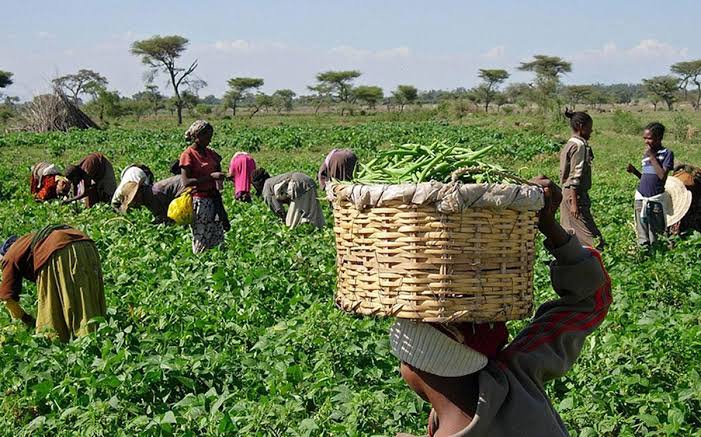
As a farmer and rural dweller, I feel it’s my duty to bring to light the ongoing exploitation of local farmers by produce suppliers. These suppliers are taking advantage of the cashless policy to profit at the expense of farmers whose main source of income is selling produce or livestock.

The prices of produce and livestock have plummeted dramatically. For example, the price of maize per 100kg has fallen from 22,000 to 13,000, rice from 26,000 to 15,000, beans from 42,000 to 25,000, and soybeans from 32,000 to 18,000. This trend is also seen in other produce such as millet, groundnuts, sesame, sugarcane, yams and cassava.

Farmers are offered two prices, one for a cash-and-carry deal and another for bank transfers. Those who need cash are given the lowest price, while those who require a transfer receive an increase of about 3,000 to 4,000.

This exploitation is unacceptable, especially since prices of other commodities have skyrocketed. I stand against this mistreatment of farmers and the erosion of their livelihoods.

I am from the southern part of Katsina State, which includes the local government areas of Sabuwa, Dandume, Funtua, Faskari, Danja, Qafur, and Malumfashi. This region is renowned as an agricultural hub not only in Katsina State but throughout northern Nigeria. This is due to the fertile land and extensive use of industrial

fertilizers and manure. The local government areas are rivaled only by the Saminaka, and neighboring local government areas.

Those who are familiar with this region will attest to the fact that its inhabitants are engaged in farming activities, not just subsistence farming but also what could be described as mechanized farming. In this region, farmers producing hundreds of tons or thousands of bags of the listed produce can easily be found. If one is a resident of this region, he is either a farmer or from a farming family. Even those who have switched to other businesses or occupations, most of their extended families are still farmers.

Given this, it should not be surprising that the exploitation of farmers by suppliers is a source of concern for those in the region.

2) In today’s Nigeria, the prices of processed and refined commodities have risen dramatically, with some even doubling, tripling, or quadrupling. The price increase for some commodities is so significant that it’s difficult to describe. So, why are farmers the only target for this exploitation?

3) In southern Katsina State, farming is done on a large scale, making it more of a business. This leads to the excessive use of agricultural chemicals, the prices of which have skyrocketed multiple times. For example, NPK fertilizer is sold for 32,000 Naira, Urea is sold for 22,000 to 23,000 Naira, Moroccan OCP (mixed fertilizer) is sold for 15,000 to 17,000 Naira, and the locally made Dan-Buhari fertilizer made from Kankara Local Government is sold for 10,000 to 15,000 Naira. Given these high prices, it’s understandable why a farmer would not be happy with selling their produce for less than 15,000 Naira.

Moreover, the use of tractors and other heavy engines for farming activities such as harrowing, tilling, harvesting, and transportation requires diesel, which now costs over 900 Naira per liter. The use of small equipment for dry-season farming, mobilization, pesticides, and herbicide spraying also requires petroleum, which now costs between 350 and 400 Naira. The prices of other chemicals such as pesticides, herbicides, and preservatives have not only doubled but have tripled or even worse.

This means that when a farmer who needs cash takes their produce or livestock to local markets, they feel like they are being shortchanged or receiving only a fraction of what they spent months or years nurturing. As a result, many farmers go home feeling like they have been robbed and have nowhere to turn for help

4) I seek to draw public attention to the exploitation of farmers in Southern Katsina state. The rise in prices of agricultural chemicals and equipment, along with the exploitation of farmers by produce suppliers, have led to a situation where farmers are not able to make a fair profit from their hard work. I categorizes those who are happy with the situation into two groups: those who are exploiting the farmers for their own gain (like suppliers) and those who are not involved in farming and only care about purchasing cheaper produce for domestic consumption (the consumers).

5) It is unfortunate that the farmers who work hard to produce the commodities are being exploited by the suppliers, hoarders, and processing industries. The lack of government price control mechanisms, excessive taxes and restrictions on foreign goods, and competitors. The selling of finished products at high prices, even higher than those imported from other countries has shown that farmers are intentionally targeted. This creates a situation where the farmers receive low prices for their produce while the final products are sold at high prices, leaving the farmers with little profit and often feeling exploited. It is important to address this issue and find ways to support and protect the livelihoods of local farmers

6) The exploitation of farmers in Nigeria has become a major concern as they are being targeted by suppliers, hoarders, and companies. The prices of agricultural chemicals and equipment used in farming have skyrocketed, making it difficult for farmers to make a profit from their produce. The lack of government price control and foreign competition, as well as excessive tax charges, have added to the farmers’ burden. Despite the high prices of commodities, the owners of processing, refining and packaging factories have not reduced their prices (per kg from suppliers), and instead sell the finished products at exorbitant prices. This has made life in rural areas even tougher, as the local farmers are unable to compete with foreign imports and are being forced to sell their produce at low prices. The suppliers have also adopted a cashless policy, which has made it difficult for farmers in rural areas to receive payment for their produce. The lack of recognition of wired transfers and poor network and electricity coverage in rural areas has further complicated the situation.

It’s important for the government to consider all factors and individuals, including rural settlers, when making decisions on the cashless policy. The government should strive to ensure that all citizens have equal access to financial services, regardless of their location.

Aliyu Yau Baraje, Dandume Local government area Katsina. He can be reached via: aliyuyau900@gmail.com fb: Aliyu Baraje

Why men flirt with waitresses in hotels?

By Hamid Al-hassan Hamid

I read a post this morning by one of our sisters, where she was asking if it is a “written rule” that men would flirt with waitresses at hotels and restaurants.

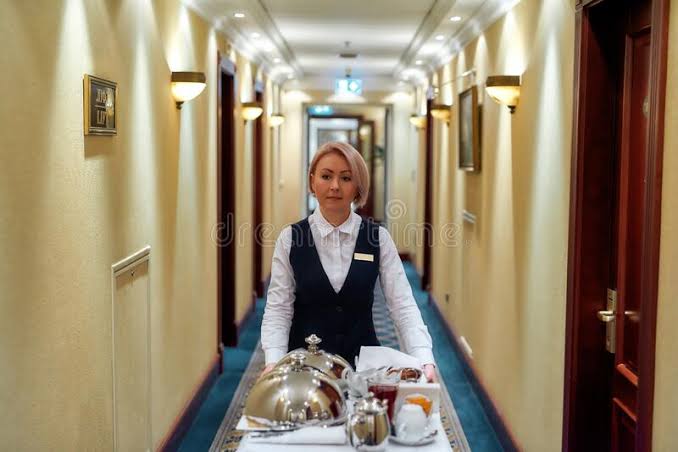
Well… the main reason why hotels and restaurants employ females as waitresses is for the undeniable fact that we all know, which is to attract and hook men’s attention. PERIOD!!!

And if you are a woman, with such kind of job, put it at the back of your mind that your qualification is likely the last thing that was considered. Your ability to attract men to the business and enchant them to spend more money is top on the list. The only exception where your qualification will be put into consideration is in the educational and health sector. Other than that, almost all banks, hotels, restaurants, law firms, offices, and businesses employ women to attract men.

It is a wise business strategy too, because men are the top earners in societies, and women hate women. Only men love women. This is one of the reasons why female patients prefer male gynaecologists to female gynaecologists. The female patients in various literatures made it clear that female gynaecologists are usually rude and roughly handle their boxes during examinations, unlike the men who are more caring. And why wouldn’t a man be so, there!

I always tell women to never get comfortable with any man, including myself. I had to protect myself, I do not even chat with women unless it is totally necessary because if I chat with you for at least two days in a row, I am going to start preaching the gospel before I even know it and speaking in tongues. This is what we are built for and why we exist.

I also don’t attend functions, or even so-called tech and business meetups, I do not show up in public unless it is totally necessary. Ask anyone in Sudan if they know my girlfriend. Even the Nigerian community in Sudan have approached and begged me to at least date one girl.

Anyways, at functions, or so-called tech meetups, even when I attend, I try to mind my business, ignore women and just do my things. But the thing is that ignoring women attracts women. Yes. I have had women in Niqaab approaching me and asking why I am not talking and moving around like the rest of the people around me. Let alone women wearing jeans and skirts, those ones will straight up come over, close my laptop and ask why I am being too serious.

Women are very funny. Stay at home, they will not stay at home, they go out and they complain that men are looking at them. Before nko, who or wetin you wan make dem look?

Lowering your gaze will only work for a few seconds in public, especially if you meetup frequently, she will eventually approach you and ask if you have a pencil that needs sharpening.

Some of us go to school, but we find it difficult to research basic human behaviour. I mention research at least to those of us stupid to not understand reality but would at least respect scientific research.

StarLink and Nigeria’s telcos competition

By Ibrahym El-Caleel

StarLink is a distant competitor to our telcos. The product price edges it out of immediate competition with MTN, Airtel and co. However, it is good that it is already here. In fact it will definitely gain a fair share from some businesses who have been looking for an alternative to the existing telcos.

Setting up StarLink costs more than N400,000. Personally I think it will be a better buy for businesses who spend about 60-75% of this amount for internet access. They will be bidding farewell to the periodic disappointments we experience from the contemporary telcos.

Market is dynamic. As StarLink takes some time in Nigeria, it will be ambitious about increasing its market share. It will be innovative about coming up with something that will be relatively affordable for the teeming internet subscribers. This is when the true competition will begin. For now, the penetration will be low because at the moment a lot of Nigerians are quite very rich. The consumer conversion will be minimal.

MTN began in Nigeria with N1,500 airtime card only. And it expires in 7 days. If you don’t use the airtime after 7 days, you have to buy another one. This was the case c.2001. Fast forward to 2021, you can have a N100 airtime and keep it for one year if you so wish. StarLink might have to develop something cheaper to get more subscribers onboard. If your things are expensive, you can sell it and make money in Nigeria. If they are affordable to many, you make quicker turnover, bigger sales, (arguably) more profit. This is Nigerian market.

Naira Scarcity: Sterling Bank lifts charges on fund transfers

By Muhammadu Sabiu 

A commercial bank in Nigeria, Sterling Bank, has announced that all bank fund transfer services will be offered for free for seventeen days.

This is coming amidst the tough time customers are passing through when withdrawing and depositing money, using online banking, and other financial activities due to the CBN’s new naira note policy that placed many restrictions.

In an email Sterling Bank sent to its customers, it says, “We at Sterling understand the difficult times many of our customers are facing. In light of this, all our fund transfer services will be offered Free of Charge to all personal account customers from February 6, 2023, till February 18, 2023.

“Additionally, we are also pleased to announce that we will be issuing free Debit Cards to all interested customers. This will provide you with a convenient and secure way to make purchases and carry out transactions. You can order your cards directly on OneBank (Download the latest version on your phone’s App Store or simply go to sterling/OneBank)”.

Former CBN Director lambasts Emefele’s policies, asks him to resign

By Uzair Adam Imam

A former Secretary to the Lagos State Government in the Second Republic, Chief Olorunfumi Bashorun, said the Central Bank of Nigeria’s (CBN) cash policy is making a dangerous and destructive history for Nigeria.

He stated that since CBN was established in 1959, and I was a foundation staff, no governor has taken Nigeria for a ride as Emefiele.

Bashorun, who disclosed this in a statement he personally signed on Thursday, asked the CBN governor, Godwin Emefiele, to resign immediately.

He said in the statement, “I have just read online a directive from the CBN governor that banks should pay a maximum of N20,000 out to customers on presentation of the teller.

“It is now clear that the CBN governor, Godwin Emefiele, is making a dangerous and destructive history for Nigeria. Since CBN was established in 1959 (and I was a foundation staff), no governor has taken Nigeria for a ride as Emefiele.

“The multiplier effect of his rather evil directive is to close down all businesses in Nigeria, and further add to the hardship Nigerians are experiencing in recent times.

“I make bold to state that unless this oppressive directive is withdrawn within the next 48 hours, Nigerian masses will have no choice than to rise and compel the government to take positive action to reverse it,” he stated.

Dangote Group, China company sign to build cement plant in Ogun

By Aisar Fagge

The Dangote Industries Limited (DIL) alongside China Sinoma International Engineering (CSIE) have signed an agreement to build a six million tons per annum cement plant in Itori of Ogun state.

Alh. Aliko Dangote, the Chairman of Dangote Cement Plc, made this disclosure during the signing ceremony.

Dangote stated that he signed the agreement alongside the Group Executive Director, Strategy, Capital Projects & Portfolio Development, DIL, Devakumar Edwin.

While China Sinoma Engineering, on the other hand, was represented by its Group President, Yin Zhisong, and the company’s chairman, Liu Renyue.

Dangote said that the new integrated cement plant at completion would strengthen the local production capacity of Dangote Cement and bring its local capacity to 41.25 million tons per annum and total African capacity to 57.6 million tons per annum.

He further stated that the Nigeria’s capacity to export cement would also be increased, the development that would enable more diversification and foreign exchange inflows for the economy.

He also noted that the project would further develop the domestic economy through creation of thousands of indirect and direct jobs and drive economic development in the Itori axis.

Pay customers over-the-counter, CBN directs banks 

By Sumayyah Auwal Ishaq

The Central Bank of Nigeria (CBN) has directed commercial banks across the country to start paying the new naira notes to customers over-the-counter to ease the plight of Nigerians. 

In a statement on Thursday signed by the bank’s Director of Corporate Communications, Osita Nwanisobi, CBN stated that “We have equally noticed the queues at Automated Teller Machines across the country and an upward trend in the cases of people stocking and aggregating the newly introduced banknotes they serially obtain from ATMs for reasons best known to them”. 

“Also worrisome are the reported cases of unregistered persons and non-bank officials swapping banknotes for members of the public, purportedly on behalf of the CBN”. 

The apex bank has assured Nigerians that the queues at ATMs will end soon. However, Nigerians have continued to express their dismay over the scarcity of the new naira notes.

Unilever Global appoints new Chief

By Ibrahiym A. El-Caleel

Consumer goods giant, Unilever has today announced the appointment of Hein Schumacher as the new Chief Executive Officer of the British multinational company. In its press release, the company said Schumacher emerged as the CEO following “an extensive, global search process”.

He will begin as CEO of Unilever on 1st July, 2023, succeeding Alan Jope who in September 2022 announced his intention to retire from Unilever after serving as CEO for about four years.

Hein Schumacher is currently the CEO of Dutch multinational dairy company, Royal FrieslandCampina. He is “a business leader with an excellent track record across multiple leading companies in the consumer goods industry”, the company said in the press release.

“As CEO of Royal FrieslandCampina, an €11bn turnover business operating in over 40 countries, he has delivered significant portfolio and organisation change as part of transforming it into a more focused, growth-driven and sustainable business”, it continued.

As Unilever CEO, Hein Schumacher will receive annual fixed pay of €1.85m, be eligible to receive annual bonus and Performance Share Plan awards, and relocation support, all in line with Unilever’s existing remuneration policy.

While welcoming Hein onboard, Unilever’s Chairman, Nils Andersen said: “We are delighted to welcome Hein as our new Chief Executive, after an extensive, global search process. Hein is a dynamic, values-driven business leader who has a diverse background of experiences and an excellent track record of delivery in the global consumer goods industry”.

Hein holds a Masters degree in Political Science and International Relations from University of Amsterdam. Unilever is one of the leading suppliers of food, home, Beauty and Wellbeing and Personal Care products in Nigeria.

They manufacture household brands like Close-Up toothpaste, Royco and Knorr Seasoning powders, Omo and Sunlight detergents and Pears baby oil.