Admin

Army rescues kidnapped mother, child, tea seller in Kwara operations

By Abdullahi Mukhtar Algasgaini

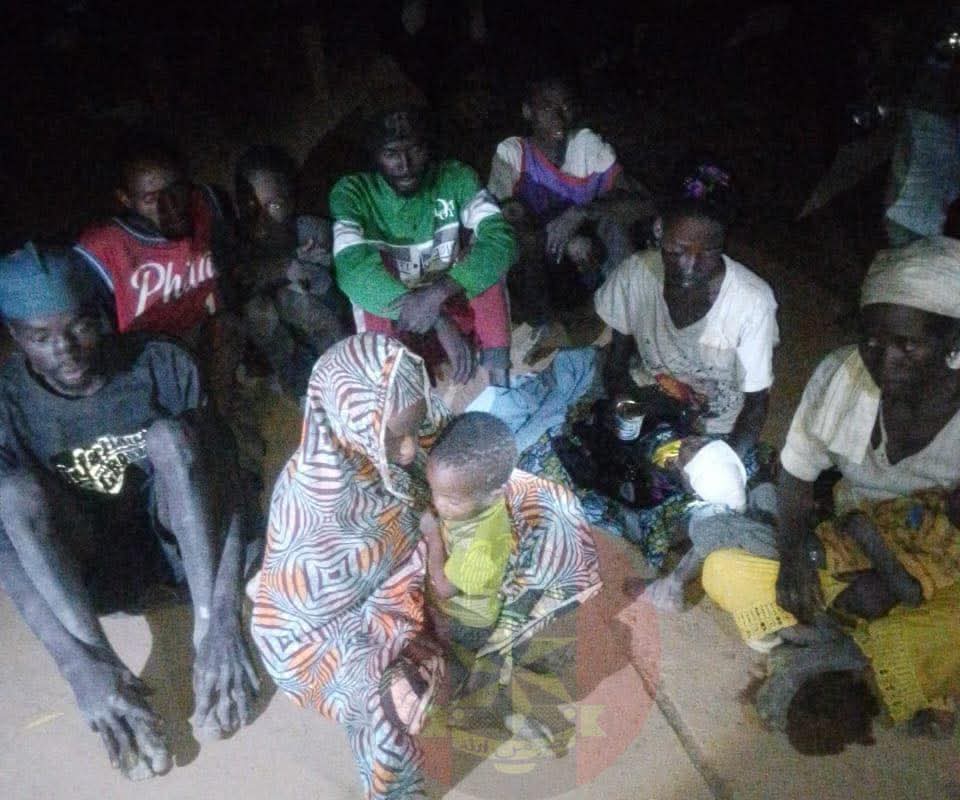
In a significant blow to criminal elements, Nigerian Army troops have rescued three kidnapped victims, including a young mother and her toddler, during aggressive clearance operations in Kwara State.

The operations, conducted on Saturday, October 11, 2025, by troops of 2 Division/Sector 3 under Operation FANSAN YAMMA, targeted bandit hideouts and routes within the Babanla Forest.

According to an army statement, acting on credible intelligence, soldiers deployed at the Patrol Base Babanla stormed a suspected bandit camp.

There, they successfully rescued 25-year-old Mrs. Oluwabusayo Taiwo and her three-year-old son, Taiwo Irayomide.

The duo was among those abducted from the Oke-Ode community on September 28, 2025.

In a separate incident on the same day, troops on a routine patrol along a suspected bandit escape route encountered kidnappers with another victim.

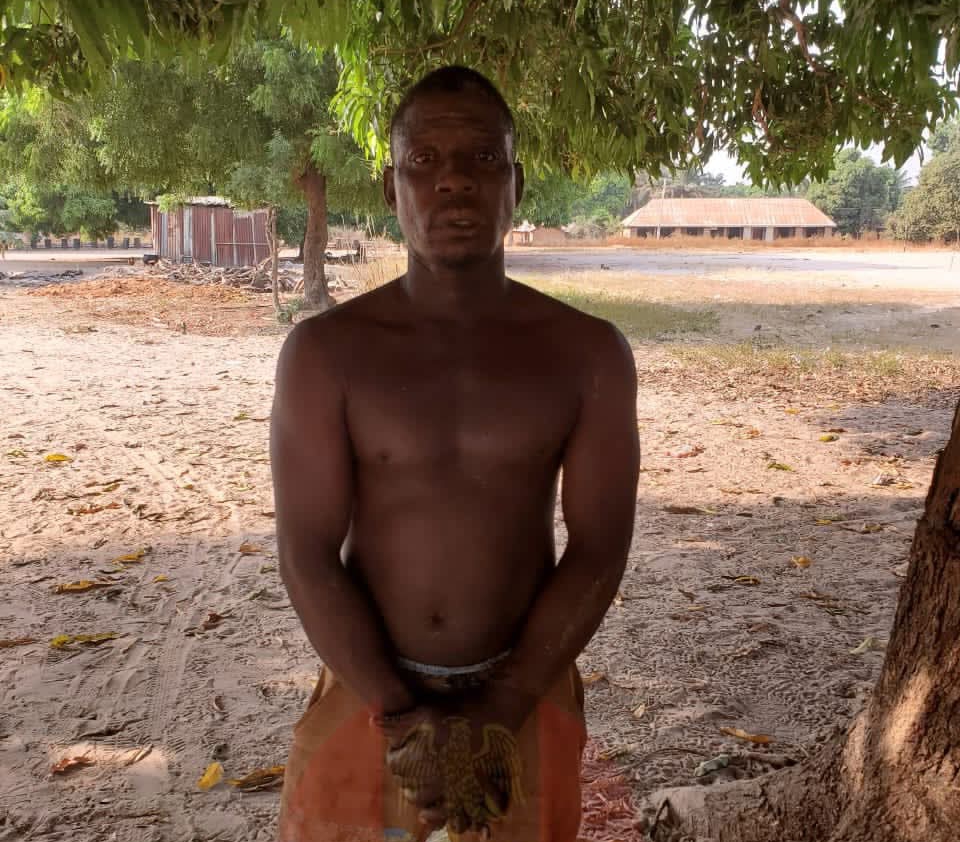
The bandits fled upon sighting the military patrol, abandoning 40-year-old Mohammadu Sani, a local tea seller popularly known as Mai Shayi from Garkarima.

The troops found Mr. Sani in a pool of blood. They recovered one dane gun and a cutlass left behind by the fleeing assailants.

All three rescued victims are currently receiving medical attention at the Patrol Base sick bay and are reported to be in stable condition.

The army stated they will be reunited with their families in due course.

The Commander of the 22 Armoured Brigade, Brigadier General Ezra Barkins, commended the troops for their “swift response and professionalism.”

He reaffirmed the Nigerian Army’s commitment to ensuring the safety of citizens and intensifying operations to restore peace and stability across Kwara State.

NCS denies viral social media list on 2025 recruitment shortlist

By Muhammad Sulaiman

The Nigeria Customs Service (NCS) has dismissed as false a viral social media post claiming to reveal the number of shortlisted candidates per state for the final stage of its 2025 recruitment exercise.

In a public disclaimer, the Service clarified that the publication did not originate from any of its official communication channels and urged the public, especially applicants, to disregard the information entirely.

According to the NCS, the ongoing recruitment process began with an official advertisement on December 27, 2024, attracting a total of 573,523 applications across the Superintendent, Inspectorate, and Customs Assistant cadres. After an initial documentary screening, 286,697 candidates were shortlisted for the first phase of the Computer-Based Test (CBT).

The Service further explained that while all cadres took part in the CBT, only successful applicants under the Superintendent Cadre were invited for the second phase, which will be conducted across the six geopolitical zones in line with candidates’ states of origin.

The NCS reaffirmed its commitment to a transparent, fair, and merit-driven recruitment process, in accordance with the Federal Character principle. It also advised applicants to rely solely on official updates via the NCS Recruitment Update Portal at https://updates.customs.gov.ng for verified information.

Police officer shot dead in Bauchi as soldiers, police clash

By Uzair Adam

A violent confrontation between personnel of the Nigerian Army and the Nigeria Police Force in Bauchi State has resulted in the death of a police officer, Constable Ukasha Muhammed.

The Bauchi State Police Command confirmed the incident in a statement issued on Saturday by its spokesperson, SP Ahmed Wakil, who said the clash occurred on October 10, 2025, in the Bayan Gari area of Bauchi metropolis.

According to Wakil, the command received a distress call reporting a serious altercation involving a police patrol team led by Inspector Hussaini Samaila during a routine operation.

“The patrol team encountered an assault on one of its members, Constable Ukasha Muhammed (F/No 533164), by two individuals in front of Padimo Hotel.

“The remaining members of the team responded swiftly, resulting in the arrest of one suspect while the other escaped,” the statement read.

The arrested suspect was later identified as Private Usman Mubarak (23NA/84/5346), a soldier attached to the Joint Task Force, Operation Safe Haven, in Jos, Plateau State.

Wakil added that the situation escalated when two other soldiers — Private Yakubu Yahuza (23NA/85/10185) and Private Godspower Gabriel (23NA/84/5654) — arrived at the scene armed and partially dressed in military uniform.

“They approached the team and fatally shot Constable Ukasha Muhammed in the left chest before fleeing the scene,” he stated.

The injured officer was rushed to the Abubakar Tafawa Balewa University Teaching Hospital, where he was confirmed dead by medical personnel.

His remains have been deposited in the hospital mortuary.

The police spokesperson said the command has taken the detained soldiers into custody and launched a full-scale homicide investigation.

“The Commissioner of Police, CP Sani-Omolori Aliyu, has constituted a team of seasoned homicide detectives to conduct a professional, diligent, and timely investigation to ensure justice is served,” Wakil noted.

He appealed for calm among officers and men of the command and urged them to exercise restraint pending the conclusion of the investigation.

The Commissioner of Police also extended condolences to the family of the deceased officer, praying for the repose of his soul.

“May his soul rest in peace, and may Aljannatul Firdausi be his final abode. May Almighty Allah grant his family the strength to bear this irreparable loss,” the statement concluded.

Sambo turbaned as Sardaunan Zazzau

By Abdullahi Mukhtar Algasgaini

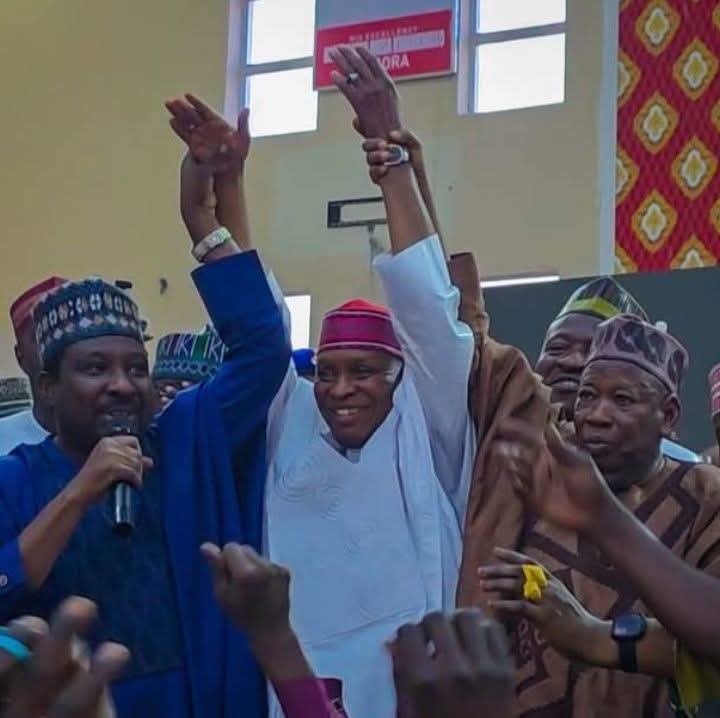
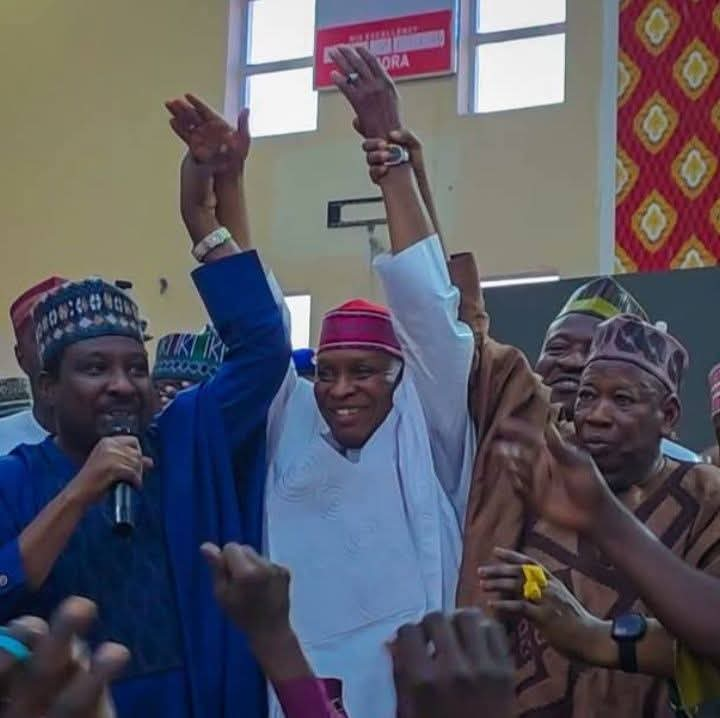
Arc. Mohammed Namadi Sambo, former Vice President of Nigeria, was on Saturday turbaned as the Sardaunan Zazzau.

The historic ceremony was performed by the Emir of Zazzau, His Highness, Amb. Ahmed Nuhu Bamalli, at his palace in Zaria.

Kaduna State Governor, Senator Uba Sani, presided over the event as the Special Guest of Honour and Chief Host, underscoring the significance of the chieftaincy title.

The event attracted a gathering of the nation’s political elite. Former President Goodluck Jonathan was in attendance, alongside the Speaker of the House of Representatives, Rt. Hon. Tajudeen Abbas.

The ceremony also drew the presence of the Deputy Governor of Zamfara State, as well as former Governors from Kaduna, Kano, Sokoto, and Jigawa states.

They joined a host of other dignitaries, traditional rulers, and well-wishers to honour the former Vice President.

The title of Sardaunan Zazzau is a prestigious traditional title within the Zazzau Emirate, and its conferment on Arc. Sambo marks a significant milestone in his post-vice presidency life.

Tinubu grants presidential pardon to Maryam Sanda, other inmates

By Hadiza Abdulkadir

President Bola Ahmed Tinubu has granted a presidential pardon to several inmates across the country, including Maryam Sanda, who was sentenced to death in 2020 for killing her husband, Bilyamin Bello, in 2017. Sanda, aged 37, had spent six years and eight months at the Suleja Medium Security Custodial Centre before her release.

Her family had earlier appealed for clemency, citing her exemplary conduct in prison, genuine remorse, and commitment to a reformed lifestyle. They also argued that her release would serve the best interests of her two young children.

The presidential pardon, announced by the Ministry of Interior, also included other notable inmates such as former lawmaker Farouk Lawan and businessman Herbert Merculay, among others.

Officials stated that the decision was part of President Tinubu’s broader initiative to decongest correctional facilities and promote restorative justice, focusing on rehabilitation and reintegration of reformed inmates into society.

Soldiers neutralise 9 terrorists, rescue 2 people in Borno

By Anwar Usman

Troops of Operation Hadin Kai have killed nine terrorists and rescued two people carrying ransoms to the insurgents in Gagiram and Magumeri areas of Borno state.

In a statement issued on Saturday by the spokesperson of Operation Hadin Kai, Lt Col Uba Sani, said the terrorists were neutralised in separate operations.

Sani noted that aside from the recovery of weapons, many of the insurgents also suffered significant injuries, dispersing in disarray.

The statement in part reads “In continuation of ongoing counter-terrorism operations in the North East, troops of Operation HADIN KAI (OPHK) conducted a successful fighting patrol in response to credible intelligence on the movement of Boko Haram terrorists around Goni Dunari in Magumeri LGA of Borno State on October 10, 2025.”

“The terrorists, reportedly moving on two vehicles and 24-foot fighters, were observed setting houses ablaze and terrorising locals. Acting swiftly, our troops launched an aggressive fighting patrol to intercept the threat.”

He said as the troops advanced towards the objective, the terrorists attempted to flee towards Damjiyakiri village.

The statement further revealed that “a frontal attack was immediately launched, and troops engaged the terrorists with a heavy barrage of fire, resulting in the neutralisation of five terrorists, while the remaining 19 dispersed in disarray.

“Some were wounded as blood trails were observed at the contact scene,” he said.

He listed the recovered items to include 1 x AK-47 rifle (Reg. No. 06798), 5 x Magazines (3 empty, 2 loaded), 31 x 7.62mm rounds, 1 x Itel mobile phone, 1 x dagger.

The spokesperson also stated that, in separate operations, troops mounted on motorcycles engaged Boko Haram fighters along the Gajiram–Bolori–Mile 40–Gajiganna axis near Zundur village of the state.

He said during the firefight, four terrorists were neutralised, while others dispersed into the surrounding bush.

“Troops also successfully rescued Mr Modu Kinnami (55 years old) and Mr Bukar (57 years old), both from Guzamala, along with a sack containing Seven Hundred and Fifty Thousand Naira (N750,000),” he noted.

On Friday, four soldiers were killed and five others injured when Boko Haram fighters attacked a military stand in Ngamdu, along the Damaturu–Maiduguri Road in Kaga Local Government Area of Borno State.

He noted that, operations are ongoing on all fronts to maintain pressure on the terrorists and deny them freedom of movement.

Explosion at Tennessee ammunition plant leaves 19 missing

By Maryam Ahmad

An explosion at an ammunition plant in Tennessee has left at least 19 people unaccounted for, authorities said on Friday. The blast occurred at Accurate Energetic Systems, a company that manufactures test explosives, and completely levelled the facility.

Police confirmed that the death toll remains unclear, but early reports indicate that several employees were killed in the explosion. Emergency crews and investigators have been working at the site since the blast, searching for survivors and assessing the damage.

Officials said the cause of the explosion has not yet been determined. The investigation is ongoing.

Tinubu hails Sambo’s new title as Sardaunan Zazzau

By Abdullahi Mukhtar Algasgaini

President Bola Tinubu has congratulated former Vice President Namadi Sambo on his turbaning as the Sardaunan Zazzau.

The ceremony will be performed by the Emir of Zazzau, Alhaji Ahmed Nuhu Bamalli, on Saturday, October 11.In a press release, President Tinubu described the title as one of “great cultural and historical significance in Northern Nigeria.”

He stated that the honour reflects the Zazzau Emirate’s confidence in Sambo’s “wisdom, integrity, and commitment to society’s progress.”

The President praised the former Vice President’s exemplary leadership, humility, and dedication to national development.

He also commended the Emir for upholding the tradition of honouring individuals whose character embodies the Emirate’s values of unity and service.

President Tinubu wished Sambo success in his new role and urged him to continue guiding the younger generation and working with community leaders to advance peace and development in the country.

On the use of the words “mutuwa”, “rasuwa”, or “wafati” for the Prophet of Mercy

By Ibraheem A. Waziri

In the Hausa Islamic civilisation, or what one might call the moral order and cultural refinement that grew from Islam’s deep roots in Hausaland, the word mutuwa (death) is a curious thing. It is harmless, ordinary, and adaptable. One can say mutum ya mutu – “the man has died” – regardless of who the man is. The same word can apply to an animal, a tree, or even an inanimate thing whose usefulness has come to an end. It can carry tones of mockery, pity, or finality. We say ya mutu mushe when some living thing has worthlessly ended, ya mutu murus when silence or defeat takes over.

Yet, our language is not without tenderness. When someone beloved passes away, whether out of affection or courtesy, we soften the word. We say ya rasu. Rasuwa is a form of loss tinged with grief and respect. It refuses the bluntness of mutuwa. It gives the heart its due.

When it comes to the Prophet Muhammad (SAW), the most noble of all creation whose departure shook the heavens and all generations after, our forebears chose words such as wafati (a peaceful return to Allah), fakuwa (withdrawal or disappearance), and rasuwa (loss imbued with yearning). These were not accidental choices; they were marks of reverence. The Prophet’s message, after all, did not die with him. His presence lingers, like fragrance after rain. Thus, Hausa Muslims avoided the word mutuwa not because it was wrong, but because it was too plain for such a sacred absence. Language itself became a form of prayer and praise, salati towards the Prophet of Islam, as the Qur’an commands the faithful to always offer.

This sensibility reflects a civilisation shaped by Islam yet polished by Hausa thought. It has endured for over a millennium, blending revelation and reason, piety and poetry, into a coherent moral fabric. Scholars such as Professor Mahdi Adamu have rightly argued that Islam is now part of the defining essence of being Hausa. Indeed, no serious student of culture can separate the two.

When Professor Samuel Huntington, in his 1993 popular thesis The Clash of Civilisations, classified the great Islamic civilisations as Arab, Turkic, and Malay, I once protested, mildly but firmly, in my column of 22 July 2013 in LEADERSHIP Newspaper, “Egypt: Western World, Egypt, Political Islam and Lessons.” For he omitted the fourth: the African, which includes the Hausa Muslim civilisation. Perhaps he did so because we in West Africa have not been diligent in documenting our own intellectual heritage. Our scholars mostly built souls rather than libraries. Their wisdom lived largely in hearts, not in manuscripts. Yet civilisation is not measured by ink alone.

By the eleventh century, Islam had already entered Hausaland through kings, scholars, and merchants. It mingled with the social elite, who naturally became custodians of what was right and proper. Over centuries, Islamic principles and Hausa customs intermarried. Law, governance, poetry, and etiquette became fused with faith. The result was not confusion but coherence. Nothing central to Hausa civilisation contradicted Islam at its core, unless one judged too quickly or too superficially.

That is why scholars such as Murray Last, in his work The Book in the Sokoto Caliphate, observed that even the nineteenth-century jihad led by Shehu Usman Ɗanfodio did not reinvent Hausa Islamic learning; it merely revived and restructured it. The civilisation was already mature, only in need of renewal and discipline.

After colonial rule and the birth of Nigeria, this historical balance was tested. Contact with global Islamic thought from Egypt, Saudi Arabia, Iran, and beyond brought new currents of theology and reform. Many who studied abroad returned believing they had discovered a purer Islam, one untainted by “local innovation.” Movements such as Jama’atu Izalatul Bid’ah Wa Iqamatissunnah (founded in 1978) sought to purify faith and democratise knowledge. Their zeal achieved much good, spreading Islamic learning to wider circles.

The unintended cost, however, was subtle: a growing suspicion towards the inherited Hausa sense of decorum, the gentle courtesies and expressions through which Islam had long been lived here. Many young preachers, both from Izala and other traditions, began to attack words, proverbs, and customs without studying their origins or meanings. They mistook refinement for deviation. They forgot that ladabi—good manners—is itself part of faith.

In the curricula of the Arab world, where some of them studied, there was no course on “Islam and Hausa civilisation.” Thus, they returned unaware that many Hausa forms of reverence, formal linguistic expressions, and proverbs had already been filtered through the sieve of Islamic thought over centuries. They saw impurity where there was actually depth. And when a people are cut off from the noble patterns that dignify their past, they begin to doubt themselves. This self-doubt, or inferiority complex, becomes more dangerous than ignorance itself.

Still, there is light in the dusk. From the 1990s onwards, a new generation of researchers began delving into precolonial manuscripts and oral traditions, recovering the intellectual dignity of old Hausaland. They showed how Islamic education, Sufi scholarship, and Hausa ethical thought intertwined long before the arrival of Europeans or the rise of the Sokoto Caliphate. Yet this work has mostly been carried out by Western-trained scholars, the so-called yan boko. Our purely religious scholars have been slower to engage, preferring imported frameworks to indigenous memory.

The road ahead, however, must bring both together. The Hausa Muslim future—steady, confident, and intelligent—will depend on producing scholars grounded in both the Islamic sciences and the lived wisdom of Hausa culture. Not a nostalgic culture, but one aware of its thousand-year conversation with faith.

If the Turks, Arabs, and Malays take pride in their civilisational imprint upon Islam, why should the Hausa not do the same? Our civilisation too has carried the Prophet’s light for centuries, shaping it into our language, our etiquette, and even our choice of words.

So, when we say Rasuwar Manzon Tsira or Wafatin Manzon Tsira, it is not mere politeness. It is theology—lived, spoken, and refined in our own tongue. To call it otherwise is to forget who we are.

Ibraheem A. Waziri wrote from Zaria, Kaduna State, Nigeria.

Presidency dismisses World Bank poverty report, describes it ‘unrealistic’

By Abdullahi Mukhtar Algasgaini

The Presidency has dismissed the latest World Bank report estimating that 139 million Nigerians are living in poverty, describing the figure as “unrealistic” and disconnected from the nation’s true economic situation.

President Bola Tinubu’s Special Adviser on Media and Public Communication, Sunday Dare, stated in a post on his official X handle on Thursday that the World Bank’s statistics must be “properly contextualised” within the framework of global poverty measurement models.

“While Nigeria values its partnership with the World Bank and appreciates its contributions to policy analysis, the figure quoted must be properly contextualised. It is unrealistic,” Dare said.

According to the Presidency, the figure of 139 million Nigerians was derived from the global poverty line of $2.15 per person per day, set in 2017 using Purchasing Power Parity (PPP).

It stressed that the benchmark should not be taken as a direct count of citizens living in poverty.

The statement explained that when converted to local currency, the $2.15 daily poverty threshold amounts to about ₦100,000 per month—significantly higher than Nigeria’s new minimum wage of ₦70,000.

“There must be caution against interpreting the World Bank’s numbers as a literal, real-time headcount,” it added.

“The measure is an analytical construct, not a direct reflection of local income realities.”

The Presidency also noted that poverty assessments using the PPP methodology rely on outdated consumption data—Nigeria’s last major survey being in 2018/2019—and often fail to capture the informal and subsistence economies that support millions of Nigerians.

It emphasised that the World Bank’s estimate should be viewed as a modelled global projection rather than an empirical representation of present-day conditions.

“What truly matters is the trajectory,” the statement concluded, “and Nigeria’s is now one of recovery and inclusive reform.”