Admin

Kano partners HarvestPlus, Propcom+ for nutritious food fair

By Uzair Adam

The Kano State Government has announced plans to host the 11th edition of the Nutritious Food Fair (NFF), tagged “Kano 2025,” on Thursday, October 16, 2025, at the Meena Event Center, Nasarawa GRA, Kano.

The state Commissioner for Budget and Planning, Hon. Musa Suleman Shanono, disclosed this during a media briefing on Monday in Kano.

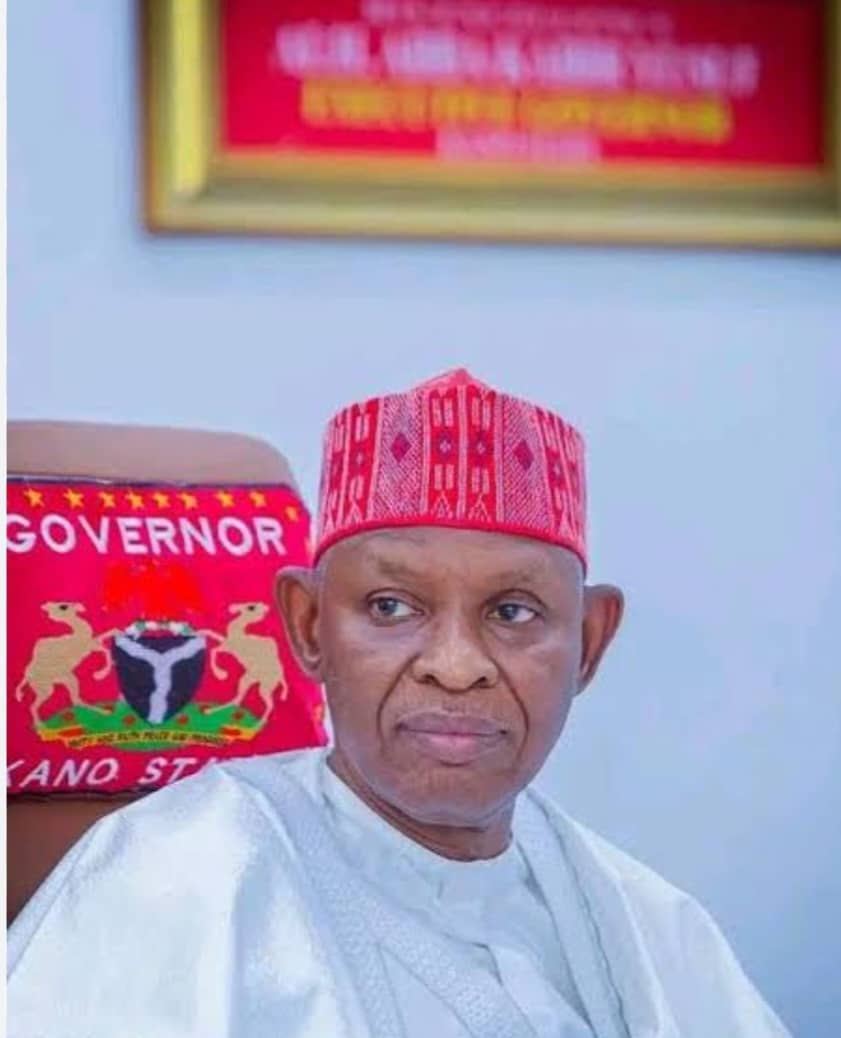
He said the event, themed “Our Food, Our Heritage,” aligns with the agricultural transformation agenda of Governor Abba Kabir Yusuf’s administration and aims to promote nutritious and locally produced foods.

Hon. Shanono explained that the fair is being organized by HarvestPlus, in collaboration with its global office in Washington, the Federal Ministries of Agriculture and Health, the Kano State Government, and the UK Government-funded Propcom+ Programme.

According to him, the fair will bring together policymakers, researchers, farmers, and food processors to showcase innovations, share knowledge, and discuss issues in the nutritious food sector.

He added that over 100 commercial exhibitors and more than 2,000 participants are expected at the event, which will feature exhibitions, sales of nutritious food products, panel discussions, business deal rooms, quiz and cooking competitions, as well as capacity-building sessions.

A key highlight of the fair, according to the Commissioner, will be the decoration of the Kano State First Lady as the Smart Mother of the State, who will champion nutrition awareness and education among women across Kano.

Shanono further noted that the fair will create employment opportunities for youths and strengthen business linkages in the nutritious food sector.

He reaffirmed the government’s commitment to working with partners like Propcom+ and HarvestPlus to ensure that people across Kano State continue to have access to nutritious food.

CITAD launches digital tech forum to shape Nigeria’s AI future

By Uzair Adam

The Centre for Information Technology and Development (CITAD) has launched the maiden edition of its Digital Tech Policy Forum to deliberate on the urgent need for a national Artificial Intelligence (AI) policy framework in Nigeria.

Held in Kano under the theme “Towards a National AI Policy,” the event gathered academics, policymakers, and technology experts to examine the ethical, governance, and infrastructural issues shaping Nigeria’s digital landscape.

In his opening remarks, CITAD’s Executive Director, Malam Yunusa Zakari Ya’u, said the forum aims to foster continuous dialogue between policymakers, academia, and civil society on emerging digital challenges.

He stated, “Our goal is to ensure that technology policy in Nigeria is not reactive but proactive. This forum will serve as a bridge between research and policy, ensuring that innovations like AI are guided by ethics, inclusivity, and human-centered values.”

He added that the forum would convene monthly to discuss critical digital policy matters, stressing that a robust and inclusive national AI policy is vital to building public trust in technology-driven governance.

Participants identified several challenges hindering Nigeria’s AI readiness, including the absence of a national AI policy, infrastructural deficits, ethical concerns in academia and media, and growing fears over data privacy and algorithmic bias.

Head of the Department of Computer Science at Bayero University, Kano, Dr. Hadiza Umar, emphasized that the rapid expansion of AI technologies in Nigeria calls for immediate policy intervention.

“AI is transforming every sector—from education to health and agriculture—but without regulation, it can also deepen inequality. We need a roadmap that balances innovation with accountability,” she warned.

Similarly, Engr. Rabi’u Haruna, former Chairman of the Kano Chapter of the Association of Professional Bodies of Nigeria (APBN), highlighted the importance of collaboration among government, academia, and industry stakeholders.

“Policy without professional input will not work. The government must listen to experts and practitioners if we truly want an AI ecosystem that serves Nigerians rather than exploits them,” he said.

Also speaking, Malam Aisar Salihu Musa, a lecturer at the Department of Mass Communication, Kano State Polytechnic, expressed dissatisfaction with the ongoing trend of unprofessional usage of AI on social media and in academia.

Musa stated that the menace has contributed to the growing concern over the spread of fake news on social media, citing an incident where the picture of Engineer Rabi’u Musa Kwankwaso, the former Kano State governor, was altered by AI to change his red cap, causing confusion about which image was authentic.

He further called on the government to be among the first adopters of policymaking on AI usage.Dr. Sanah Abdullahi Mu’az of Bayero University’s Software Engineering Department cautioned against the misuse of AI in education.

She stated that, “We are already seeing AI-enabled plagiarism among students. Universities must adopt clear AI-use policies to protect the integrity of academic work while promoting responsible innovation.”

Adding a policy perspective, Kano State Commissioner for Information, Science, Technology and Innovation, Dr. Yusuf Ibrahim Kofar Mata, revealed that the state government has begun developing a Hausa-language AI chatbot.

He explained that, “This initiative is about taking AI to our grassroots. We are building a tool that farmers, students, and traders can use in their own language to access vital information on health, education, and commerce.”

He pledged that the ministry would assign a permanent representative to the forum and establish a committee to align AI policy deliberations with state planning efforts.

At the close of the meeting, participants agreed that Nigeria must move from being a passive consumer of foreign AI technologies to an active innovator and regulator within the global AI ecosystem.

“The future of AI in Nigeria,” Ya’u concluded, “depends on our ability to build policies that are not just about technology—but about people, trust, and shared prosperity.”

FRSC returns ₦6.2 million recovered from crash scene to victim’s family

By Abdullahi Mukhtar Algasgaini

In an act of integrity, the Federal Road Safety Corps (FRSC) in Katsina State has handed over ₦6.2 million in cash and personal effects recovered from a fatal accident to the family of the deceased victim.

The incident occurred on Sunday, October 12, 2025, at Dikke along the Funtua-Sokoto road. A white Toyota Hiace bus with registration number SRZ 112 LG was involved in a crash after a tyre burst, exacerbated by excessive speed.

Preliminary reports indicate that of the 18 passengers on board, one adult male died, while 17 others sustained injuries and were rushed to the General Hospital in Funtua for treatment.

Following the crash, FRSC operatives recovered a bag containing ₦6,200,000 and other personal belongings valued at over ₦100,000 from the scene.

The Funtua Unit Commander later presented the items to the victim’s next of kin.The Corps Marshal, Shehu Mohammed, expressed his condolences to the bereaved family and reiterated the FRSC’s commitment to accountability and compassion.

He used the opportunity to advise motorists to prioritize vehicle maintenance, especially tyre checks, and to avoid speeding to prevent similar avoidable tragedies.

Nigeria at 65, and the paradox

By Bilyamin Abdulmumin, PhD

One of my grandfather’s wives, Hajiya Ba’u, survived to live with us till last year, when she passed away. She was fond of sharing history, and in me she found a devoted student. One particular period stuck with her was the early years of her marriage, which was a few years before Nigerian Independence. She once narrated to me how oranges and bananas were considered costly gifts at the time. They only got to see such fruits when my grandfather travelled to Ibadan; these fruits were shared meticulously, as they were seen once in a blue moon.

These fruits, which were once rare luxuries, have now become common in every household, regardless of the season. One can wake up at any odd hour, walk to the main street, and easily find them. Both oranges and bananas are now available in many varieties. The sweetest orange is Dan Boko, named after its place of origin, while the sweetest banana is the variety known as Senior; it has a taste beyond ordinary bananas. Beyond oranges and bananas, fruits like apples, pineapples, and coconuts have also become ubiquitous, and the richness of fruits reaches its peak in the form of fruit salad. People of the 1960s could only dream of fruit salad in Heaven.

Hajiya Ba’u also mentioned that soap was a rare luxury in those days, and they would only use it once in a while. The equivalent of soap, if I didn’t forget, is Bagaruwa (Gum Arabic tree); the pods and bark of this tree contains substance called saponins, like in the case of sodium salts of fatty acids of modern soap, the hydrophobic part of the saponins binds to oils on skin, clothes, or utensils while hydrophilic part binds to water, this creates micelles, which trap dirt and wash them away. Some rural areas still use Bagaruwa as a means of cleaning. In other words, these rural areas are just as advanced as my community of the 1960s. This is why going to rural areas is reminiscent of time-travelling.

Today, whether it’s table soap or liquid soap, it comes in various types, sizes, colours, and fragrances. My memory was reset in 2019 when I lodged at Hotel 17 in Kaduna. There, I saw just how far the customisation of everyday items had gone: single-use soaps, single-use rubbing Vaseline, single-use sugar, single-use perfume, milk, and more. People of the 1960s would think such convenience could only be found in Heaven.

My grandma was also nostalgic about the advancement of packaging. Polyethene (black nylon, etc) was non-existent in those days, so instead they used Tumfafiya—a broad leaf large enough to serve as a wrapper. In fact, I myself bought zogale da kuli (Moringa oleifera and groundnut cake) wrapped in Tumfafiya. In a chemical process called polymerisation, thousands of two-carbon alcohols (ethylene) are woven together to form polyethene. That is more or less like laying thousands of bricks together to make a block. Thanks to the Polyethene revolution, it has now taken over, from shopping bags to “leda” bags, “Santana” bags, water sachets, milk sachets, and stretch wraps in different sizes, brands, and designs. Our packaging revolution extends to cardboard boxes, aluminium foils, plastic containers, and resealable pouches. Those living in the 1960s could only have been left speechless.

Far back in the 1960s, donkeys and camels were the standard vehicles. So, when my Fiqh Sheikh travelled to Zamfara in the 2000s, we only closed for one day. He reminded us that in earlier times, such a journey would have required at least two weeks. Similarly, cellular communication, once a dream of the 1960s, now happens in a split second. One day in the lab, a colleague, who was fond of observing social change, sent a message to England using his mobile phone. Our conversation would revolve around the miracle: the efficiency of sending the message at a negligible cost of only about ten naira.

The paradox is this: even as social change is undeniable in contemporary Nigeria, the strength of our institutions has nosedived and been reversed. A small clinic in a district in the 1960s would treat patients better than what is obtainable in our modern general hospitals. Teachers, even at the primary school level, were treated like kings. We are still in touch with the rural communities my father taught in the seventies and eighties. In one viral clip, late former President Buhari recalled how immediately after secondary school graduation, he was offered a managerial job, a new motorbike, and a competitive salary. 

Late Chief Audu Ogbe, in a Daily Trust reminiscence, noted that in the 1960s, the Central Government even borrowed from the Native Authorities, which now became local government authorities. A former permanent secretary from Kebbi State once told me how, during his days at ABU in the 1980s, students had meal tickets and even their clothes washed. All these examples point to one fact: institutions were working then.

With remarkable social change beyond recognition and technological advancement beyond imagination, if our institutional trajectory is redirected, Nigeria could go to the moon.

Happy Independence Day.

ANA commends President Tinubu for pardoning late poet-soldier Mamman Vatsa

By Muhammad Sulaiman

The Association of Nigerian Authors (ANA) has lauded President Bola Ahmed Tinubu for granting a posthumous pardon to the late Major-General Mamman Jiya Vatsa, a former Nigerian Army officer and acclaimed poet.

In a statement signed by ANA President, Dr Usman Oladipo Akanbi, and General Secretary, Dame Joan Oji, PhD, the Association described the gesture as a “commendable act of national healing” and a recognition of Vatsa’s enduring contributions to Nigerian arts and literature.

General Vatsa, who was executed in 1986 over alleged involvement in a coup plot, was one of ANA’s early leaders and a strong patron of the literary community. He was instrumental in securing the land for the Mamman Vatsa Writers’ Village in Abuja, a landmark project of the Association.

While expressing appreciation for the pardon, ANA maintained that Vatsa was wrongfully convicted, noting that his trial and execution were the result of “deliberate malice orchestrated by a perceived close associate.” The Association said the presidential pardon serves as a vindication of Vatsa’s innocence.

ANA further appealed to President Tinubu to direct that all the rights, privileges, and entitlements due to the late General be paid to his family as a gesture of justice, closure, and recognition of his service to the nation.

The Association concluded by thanking the President “for finally wiping the tears of the Mamman Vatsa family,” adding that the act will forever immortalise the legacy of the distinguished poet-soldier and patron of Nigerian literature.

Strike: FG to implement no-work-no-pay, as ASUU begins two-week warning strike

By Anwar Usman

The Federal Government on Sunday night threatened to implement the no-work-no-pay policy on the Academic Staff Union of Universities due to its failure to comply ongoing negotiations.

In a statement issued by the spokesperson of the Federal Ministry of Education Folasade Boriowo, says the ministry accused ASUU of not being cooperative despite efforts by the government to avert the strike that was declared by the union.

“The Ministers further stressed that the government has continued to prioritise the welfare of university staff and the stability of the academic calendar under the Renewed Hope Agenda of President Bola Ahmed Tinubu, GCFR.

“According to them, dialogue remains the most effective and sustainable path to resolving disagreements, and government remains open to engagement at any level to prevent unnecessary disruption in the education sector.

They, however, emphasised that the “no work, no pay” policy remains an extant labour law of the Federal Republic of Nigeria, and the government will be guided by this law should academic activities be disrupted in the nation’s universities.

While the government continues to demonstrate goodwill and flexibility, it will not abdicate its responsibility to uphold fairness and accountability in the use of public resources.

The statement also reassured Nigerian students, parents, and the general public that the Federal Government is firmly committed to maintaining industrial harmony in the tertiary education system.

The statement further revealed that, “Ministers appealed to all academic unions to embrace partnership and dialogue rather than confrontation, in the collective interest of the nation’s higher education system.”

On Sunday, the university lecturers declared a total and comprehensive two-week warning strike starting from Monday, October 13.

ASUU is currently demanding the conclusion of the renegotiated 2009 FGN-ASUU agreement including the release of the withheld three and a half months’ salaries, sustainable funding of public universities, revitalisation of public universities, and cessation of the victimisation of lecturers in LASU, Prince Abubakar Audu University, and FUTO.

Others factors include the payment of outstanding 25-35% salary arrears, payment of promotion arrears for over four years and release of withheld third-party deductions (cooperative contributions, union check-off dues)

BREAKING: ASUU declares two-week warning strike

By Anwar Usman

The Academic Staff Union of Universities on Sunday declared a two-week comprehensive warning strike across all public universities in Nigeria.

This was disclosed by the National President of the Union, Prof. Chris Piwuna, at an ongoing press briefing in Abuja on Sunday at the University of Abuja.

“Compatriots of the press, it goes without saying that there is nothing sufficient on ground to stop the implementation of the ASUU-NEC’s resolution to embark on a two-week warning strike at the expiry of the 14-day notice given on the 28th September 2025.

“Consequently, all branches of ASUU are hereby directed to withdraw their services with effect from midnight on Monday, the 13th October, 2025.

“The warning strike shall be total and comprehensive as agreed at the last NEC meeting” the president said.

The controversy between the university lecturers and the Federal Government comes despite ongoing negotiations aimed at thwarting another round of industrial action in the nation’s tertiary institutions.

On Wednesday, the Minister of Education, Dr Tunji Alausa, disclosed in Abuja that the government had entered the final phase of talks with ASUU and other unions to resolve lingering disputes over welfare, funding, and the implementation of the 2009 ASUU-FGN Agreement.

The minister noted that, the Tinubu administration had already made significant progress with the release of N50bn for the payment of Earned Academic Allowances, while another N150bn had been captured in the 2025 budget for needs assessment, to be disbursed in three tranches.

Isa Mukhtar’s An Introductory Hausa Linguistics: A Tentative Review

By Bashir Uba Ibrahim, PhD.

Book Title: An Introductory Hausa Linguistics

Author: Isa Mukhtar

Pages: 167

Publishers: Bayero University Press

Year: 2024

Two weeks ago, I visited Prof. Isa Mukhtar after we concluded one of the parallel sessions organised for a national conference on the works of Aliyu Kamal, in which I served as a rapporteur. The event was held at the Department of Linguistics and Foreign Languages, which was renamed the Department of Linguistics and Translation following the unbundling and upgrade of the former Faculty of Arts and Islamic Studies to the College of Arts and Islamic Studies.

Prof. Isa Mukhtar is one of the most academically generous teachers I know. After exchanging greetings, he gifted me his newly published book titled An Introductory Hausa Linguistics, which I intend to review here briefly. Unlike previous books on Hausa grammar and linguistics, Mukhtar, in this thirteen-chapter book, attempts to simplify the branches of linguistics by extensively drawing on examples from the Hausa language and redefining some linguistic terms. This review is by no means exhaustive or comprehensive, as it would be difficult to do full justice to the book in this limited space.

Chapter one, which is entitled ‘Views on the Origin of Language’ (Ra’ayoyi a kan Asalin Harshe), dissects some of the speculations regarding the origin of language. He addresses the speculations regarding the origin of language by citing Zarruk’s views on the phenomenon, including divine creation, man’s discovery, man’s invention, and man’s evolution from a human perspective. He thus attempts a glottochronological examination of Hausa and Amharic, the language of Ethiopia, and Hausa and Coptic, the language of Egypt, in his effort to relate the origin of Hausa with its cognate languages in Africa.

Chapter two, titled ‘Introduction to Language’ (Gabatarwa a kan Harshe), discusses various functions of language. Citing relevant examples from doyen linguists like Fowler (1974) and Leech (1974), he nominally examines the general functions of language, buttressing the thesis with examples from Hausa. The chapter also briefly explains numerous linguistic forms (nau’oi a cikin harshe) in which he shows arbitrary and non-arbitrary forms of language.

The third chapter is titled ‘Historical Linguistics and Stylistics’ (Tarihin Nazarin Harshe da Ilimin Salo)Here, the author provides a historical analysis of the origin and development of linguistics as a field of study from antiquity to the present day. Various schools and movements that shaped major linguistics trends and ideas, such as structuralism (bi-tsari) and its subsidiaries like the Copenhagen school (makarantar Copenhagen), American structural linguistics (Bi-tsari a marajtar harshe ta America), French structuralism (Bi-tsarin Faransa), Prague school (makaranyar Prague), rationalism (na tunani), and empiricism (gogayya). The chapter also attempts to link structuralism with stylistics by discussing some of the stylistics scholars influenced by structuralism, such as Charles Bally, Roman Jakobson, and Michael Riffaterre. These scholars developed their theory on the style of communication and contributed to generative stylistics.

Chapter four, ‘Functional Linguistics and Stylistics’ (Harshen Aiwatarwa da Ilimin Salo), builds on the previous chapter by examining stylistics (ilimin salo) from a systemic functional linguistics perspective. In this chapter, the writer attempts to appropriate Halliday’s theory of stylistics and apply it to Hausa data by extensively drawing examples from it. Thus, Halliday’s main conception of the stylistics function of language into ideational, interpersonal and textual was heavily domesticated and linked with Hausa.

The fifth chapter titled ‘Classification of African Languages’ (Rarrabewa Tsakanin Harsunan Afirka). In this chapter, the author bases his classification of African languages on Greenberg (1966), in which he classified African languages into four phyla, namely, Afro-Asiatic, Khoisan, Niger-Congo and Nilo-Saharan. He attempts to trace the Hausa language to the West-Chadic branch of the Afro-Asiatic language family. He establishes its relationship with cognate languages in Nigeria, such as Bole, Kare-Kare, Warji, Ron, and Bade.

Chapter six, which is entitled ‘Syntax and Grammar’ (Ginin Jumla da Nahawu), makes a historical examination of grammar from a Greek grammarian, Dionysius Thrax, traditional grammar (Nahawun gargajiya), structural grammar (nahawun bi-tsari), finite state grammar (nahawun kwakkwafi), phrase structure grammar (tsarin nahawun yankin jumla), generative grammar (nahawun tsirau), transformational grammar (nahawun rikida/taciya), transformational generative grammar (nahawun taciya mai tsira), etc.

The seventh chapter, ‘Advanced Syntax’ (Babban Nazarin Ilimin Harshe) served as a build on its preceding chapter. The chapter makes a deeper examination of the extended standard theory by Chomsky, looking at Government and Binding Theory of Syntax and its application in the Hausa language. While chapter eight, which is titled ‘Issues in Hausa Syntax’ (Muhimman al’amura a tsarin jumla), builds on the previous one by examining extended standard theory and its syntactic operators and how they can be applied in Hausa.

Chapter nine, which is entitled ‘Phonetics and Phonology’ (furuci da sauti), makes an extensive examination into Hausa phonetics and phonology. It looks at articulatory, acoustic, and auditory phonetics, drawing heavily from Sani (2010). It also discusses Hausa phonological inventories and processes as the backbone of generative phonology, such as assimilation, dissimilation, palatalisation, labialisation, nasalisation, metathesis, polarisation, etc. Meanwhile, chapter ten titled ‘Morphology’ (Ilimin Tasarifi) discusses Hausa morphological structure, morphemes, types of morphemes, criteria for identification of morphemes, morphological processes and word formation processes by citing Abubakar (2001) to exemplify his discussion.

 Chapter eleven, ‘Dialectology’ (Ilimin Karin Harshe), explores the relationship between language and society by examining major sociolinguistic aspects and relating them to Hausa languages, including argot, slang, jargon, sociolects, Hausa dialect variety, and language and culture. Chapter twelve, which is entitled ‘Semantics’ (Ilimin Ma’ana), makes a historical examination of the term ‘semantics’ and shows how it is problematic in relation to linguistic analysis. The chapter also examines the relationship between semantics and linguistics, as well as Hausa semantic change, collocations, componential analysis, speech-act, descriptive semantics, theoretical semantics, and general semantic theories. The chapter also delves into the relationship between semantics and other branches of linguistics, such as morphology, phonology, and syntax, in what can be called a ‘linguistic interface’. 

Meanwhile, the thirteenth chapter, which is the final chapter, is titled ‘Sociolinguistics’. It examines the issue of multilingualism in Nigeria, with Hausa as one of the major languages. It examines how sociolects served as social varieties of language that are determined by social factors rather than geography, citing examples with Hausar masu kudi, Hausar sarakai, Hausar malamai, Hausar ‘yan daba, Hausar likitoci, etc.

Overall, this book, intended as an introductory text, aims to acquaint readers with foundational topics in Hausa linguistics. Its straightforward presentation and accessible language make it especially useful for beginners. However, the author’s effort to simplify the content may have been overextended, leading to notable gaps. Crucially, important subfields such as psycholinguistics, neurolinguistics, applied linguistics, forensic linguistics, and computational linguistics are not mentioned at all.

Another significant omission is the absence of Ferguson (1970), particularly given the discussion on dialectology—a field in which Ferguson was a major contributor—as well as the exclusion of key works on Hausa dialectology such as Musa (1992). Similarly, in Chapter Twelve, the focus is limited to structural semantics, with no mention of Hausa cognitive semantics or relevant contributions like Bature (1991) and Almajir (2014).

The book appears to lean heavily towards stylistics and syntax, dedicating two chapters to the former and three to the latter, specifically Chapters Six through Eight. While these topics are undoubtedly important, the focus becomes somewhat disproportionate. For instance, in the discussion of Government and Binding Theory and complementation, the author omits important works such as Yalwa (1994), Issues in Hausa Complementation and Mukhtar (1991), Aspects of Morphosyntax of Hausa Functional Categories, both of which could have enriched the analysis from a Hausa linguistic perspective.

In conclusion, as Ibrahim (2008: 260) aptly states, “There is no perfect text. But as human life itself, the various imperfections of our life provide a constant challenge to us as scholars embroiled in the learning process.” Despite the criticisms above, Mukhtar’s ability to present complex topics clearly and subtly remains commendable. This book stands out as one of the more accessible introductory texts on Hausa linguistics, suitable for both students and newcomers to the field.

1,000 lawyers move to block Senate confirmation of INEC chairman nominee

By Abdullahi Mukhtar Algasgaini

A coalition of over 1,000 lawyers has raised objections to President Bola Tinubu’s nomination of Professor Joash Amupitan as the new Chairman of the Independent National Electoral Commission (INEC).

According to Vanguard newspaper, the lawyers conveyed their position in a letter dated October 10, 2025, addressed to the Chairman of the Senate Committee on Electoral Matters, Senator Simon Lalong.

The letter was signed by the group’s secretary, Jesse Williams Amuga.

The lawyers argued that Professor Amupitan is unfit for the position, alleging that he previously served as legal counsel to the All Progressives Congress (APC) during the 2023 presidential election petition at the Supreme Court.

They contended that such political involvement disqualifies him from heading an institution expected to remain neutral and independent.

“The Senate must not confirm Professor Amupitan. Instead, it should inform the President that his nominee fails to meet the constitutional requirements for impartiality,” the letter stated.

Citing a precedent, the group reminded the Senate of its 2021 decision to reject the nomination of Lauretta Onochie for the same position due to her ties with the APC.

“The Amupitan case mirrors that of Onochie,” Amuga emphasized.

Amuga, who represents the Association of Legal Defenders for Rule and Accountability in Politics (ALDRAP), noted that Nigeria has over 200,000 lawyers—more than half of whom have no political affiliations—arguing that the President could have selected any of them to avoid controversy.

The group also warned that it would challenge the nomination in court if the Senate proceeds with confirmation.

“If the Senate confirms Professor Joash Amupitan, our organization will take legal action to enforce the constitutional principle of non-partisanship in the appointment of the INEC Chairman,” Amuga declared.

However, further findings have shown that Professor Amupitan is not affiliated with the APC and was not among the lawyers who represented President Tinubu in the 2023 election case.

Army rescues kidnapped mother, child, tea seller in Kwara operations

By Abdullahi Mukhtar Algasgaini

In a significant blow to criminal elements, Nigerian Army troops have rescued three kidnapped victims, including a young mother and her toddler, during aggressive clearance operations in Kwara State.

The operations, conducted on Saturday, October 11, 2025, by troops of 2 Division/Sector 3 under Operation FANSAN YAMMA, targeted bandit hideouts and routes within the Babanla Forest.

According to an army statement, acting on credible intelligence, soldiers deployed at the Patrol Base Babanla stormed a suspected bandit camp.

There, they successfully rescued 25-year-old Mrs. Oluwabusayo Taiwo and her three-year-old son, Taiwo Irayomide.

The duo was among those abducted from the Oke-Ode community on September 28, 2025.

In a separate incident on the same day, troops on a routine patrol along a suspected bandit escape route encountered kidnappers with another victim.

The bandits fled upon sighting the military patrol, abandoning 40-year-old Mohammadu Sani, a local tea seller popularly known as Mai Shayi from Garkarima.

The troops found Mr. Sani in a pool of blood. They recovered one dane gun and a cutlass left behind by the fleeing assailants.

All three rescued victims are currently receiving medical attention at the Patrol Base sick bay and are reported to be in stable condition.

The army stated they will be reunited with their families in due course.

The Commander of the 22 Armoured Brigade, Brigadier General Ezra Barkins, commended the troops for their “swift response and professionalism.”

He reaffirmed the Nigerian Army’s commitment to ensuring the safety of citizens and intensifying operations to restore peace and stability across Kwara State.