Admin

Masussuka and the illusion of a faithful society!, by Abdulrahman Abdulhameed

By Abdulrahman Abdulhameed

With the few years I have spent living in Lagos, a city with a visibly strong Muslim community, I have come to understand that Islam here requires continuous teaching and reawakening, especially among the youth. The struggle to uphold Islamic values in Lagos is not just about faith; it is about identity, discipline, and conviction in a society constantly influenced by competing social norms and religious diversity. Many young Muslims, unfortunately, have become lax in their practice due to peer pressure, exposure to alternative lifestyles, and the limited presence of scholars and institutions dedicated to nurturing sound Islamic knowledge.

Despite these challenges, one thing I used to console myself with was the thought that Muslims in Northern Nigeria, my home region, were doing much better in terms of religious consciousness and adherence to Islamic principles. I often believed that while Muslims in the South might be struggling to preserve their Islamic identity amidst pluralism, those in the North had a stronger foundation, firmer faith, and a more disciplined approach to Islamic life.

However, recent developments have shattered that assumption and left me deeply unsettled.

The emergence of one Masussuka on social media, a man preaching the dangerous ideology of the Qur’aniyun (those who reject the Hadith and rely solely on the Qur’an), has opened my eyes to an uncomfortable reality. His teachings, reminiscent of the destructive ideology of Maitatsine, blatantly deny the authority of the Hadith and the traditions of the Prophet (SAW). According to him and his followers, the sayings of the Prophet are fabricated, unnecessary, and irrelevant to the practice of Islam. For them, the Qur’an alone is sufficient, a claim that defies fourteen centuries of Islamic scholarship, understanding, and consensus.

What shocked me even more than his heretical claims is the growing number of Northern Muslims who not only listen to him but also defend and promote him as a reformer and a revolutionary voice of truth. The very society I had thought was deeply rooted in authentic Islamic knowledge is now producing followers who cannot discern truth from falsehood. How can a people so privileged with access to Islamic institutions, scholars, and history fall for such shallow and misguided teachings?

This is not merely a question of ignorance; it is a mirror reflecting a deeper decay, the decay of critical Islamic education, sincerity, and spiritual depth among many northern Muslims. For years, people have mistaken proximity to mosques, Arabic inscriptions, and outward religiosity as evidence of true faith. But now, the rise of Masussuka and the applause he receives expose the emptiness that has long existed beneath that illusion of piety.

Ironically, in the South, where Muslims are fewer and face constant societal pressures from adherents of other faiths, many have developed stronger conviction, deeper understanding, and firmer identity in Islam. Because they have to strive to remain Muslims, they often take the faith more seriously. While they may lack the resources and numbers that the North boasts of, their sincerity and eagerness to learn often surpass those who were born into environments steeped in Islamic culture.

It is a painful paradox: the North, blessed with scholars, Islamic heritage, and institutions, is now breeding confusion and gullibility. The South, struggling against odds, is producing Muslims who, when exposed to sound Islamic knowledge, may practice the faith more sincerely than many of their northern counterparts.

Masussuka’s ideology is therefore not just a threat from an individual but a symptom of a larger sickness, a failure of our educational systems, religious institutions, and community leadership to nurture Muslims who understand why they believe, not just what they believe. The north is becoming the example of what happens when faith becomes culture instead of conviction, when religion becomes identity instead of practice, when people stop questioning falsehood in the name of belonging to the majority.

As painful as it is, perhaps this is a wake-up call. It is time to go back to the basics, to teach Islam as it was revealed and practiced, to remind ourselves that being born into a Muslim family or a Muslim-majority region does not guarantee understanding or faith. The danger Masussuka represents is not just in his words but in the fact that he has found an audience among those who should know better.

And that, truly, is the greatest tragedy.

18th October, 2025.

Troops neutralise 17 terrorists, arrest 85 suspects, rescue 10 victims in 48 hours

By Anas Abbas

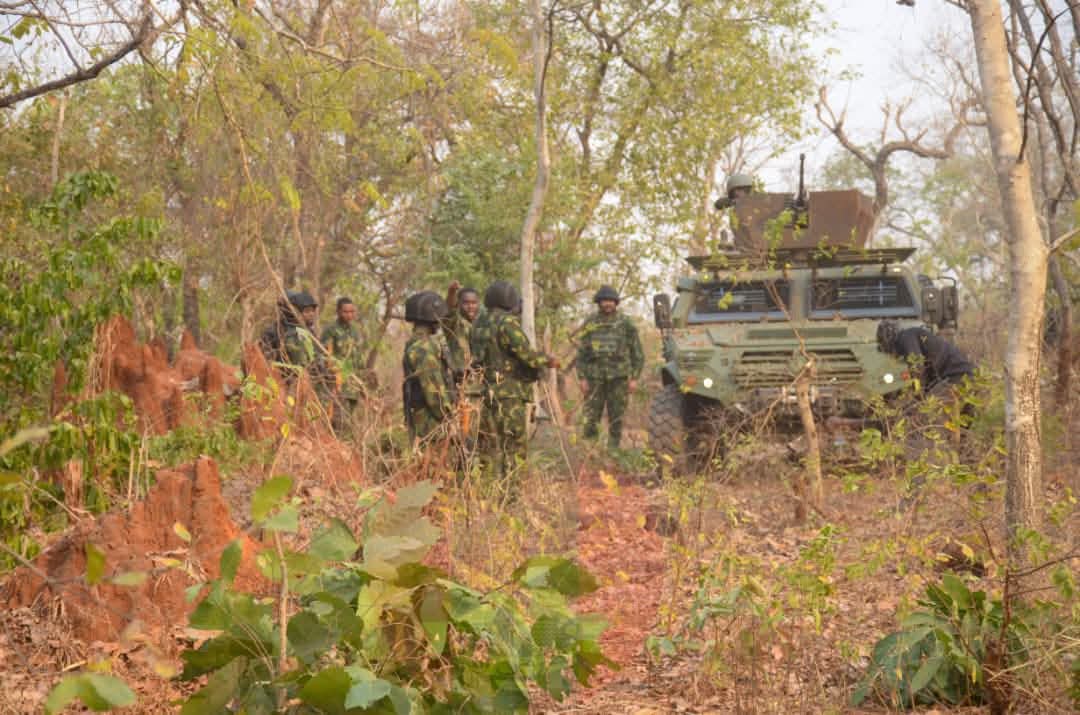
Troops of the Nigerian Army have neutralised 17 terrorists, arrested 85 criminal suspects, and rescued 10 kidnapped victims in a series of coordinated operations across the country within the past 48 hours.

A top military source at the Army Headquarters told the News Agency of Nigeria (NAN) that the operations were carried out across various theatres, yielding significant breakthroughs in the fight against terrorism, kidnapping, and other criminal activities.

According to the source, those arrested include Boko Haram informants, logistics suppliers, terrorist collaborators, drug traffickers, and kidnappers.

The rescued victims have been evacuated and are currently undergoing medical checks and profiling.

In the North-East, troops under Operation “Hadin Kai” sustained offensive operations under Desert Sanity IV and Diligent Search, engaging Boko Haram and ISWAP fighters in multiple encounters across Borno and Adamawa States.

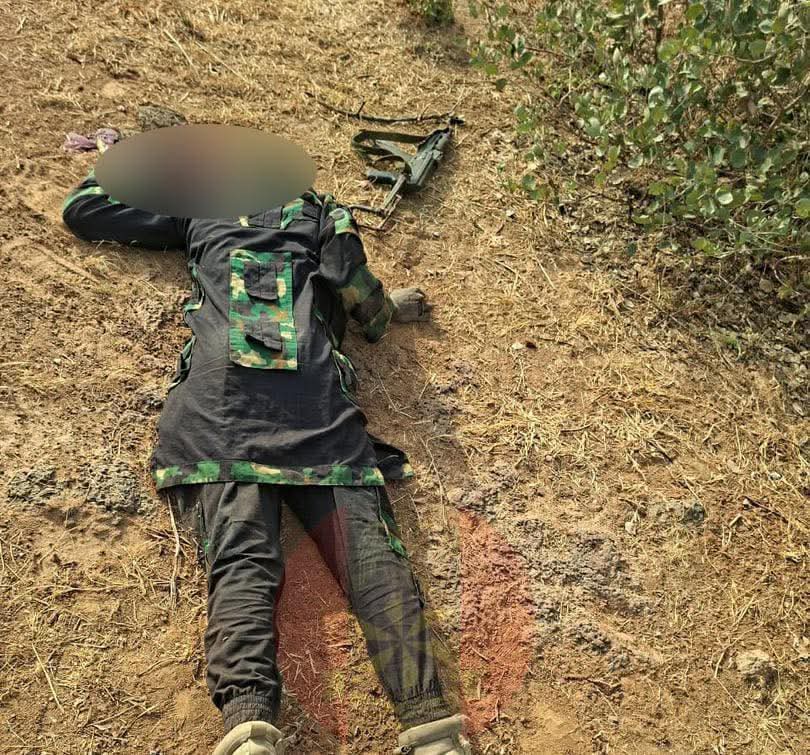
The source said troops of the 202 and 222 Battalions successfully repelled an ambush around Goni Kurmi and Kashomri villages in Konduga Local Government Area of Borno State, killing several insurgents.

Similarly, operatives of the 195 Battalion, in collaboration with the Department of State Services (DSS), apprehended a notorious Boko Haram informant and ransom collector at the Customs IDP Camp in Jere.

The suspect was tracked through monitored calls and bank transactions.Troops also recovered an AK-47 rifle stolen by terrorists, rescued two kidnapped escapees, and intercepted three logistics suppliers conveying food items to ISWAP cells in Alagarno.

In Adamawa, troops of 144 Battalion seized seven vehicles and nine motorcycles transporting 368 bags of cement suspected to be heading for terrorist enclaves in Madagali.

Elsewhere, troops recovered N4.77 million, six mobile phones, and two bicycles abandoned by fleeing insurgents along the Maiduguri–Damboa Road.

In the North-West, under Operation Fansan Yamma, troops conducted clearance operations in Sokoto and Zamfara States, arresting 69 suspected drug dealers and five terrorist collaborators.

One civilian injured during a terrorist attack along the Faru–Bagabbuzi Road in Zamfara was also rescued.

In the North-Central region, troops of Operation Enduring Peace rescued a kidnapped victim in Barkin Ladi, Plateau State, and recovered several weapons, including two AK-47 rifles, a G3 rifle, a revolver pistol, and over 1,200 rounds of ammunition.

Similarly, Operation Whirl Stroke operatives apprehended two suspected kidnappers in Doma Local Government Area of Nasarawa State and destroyed a terrorist camp in Benue.In the South-South, troops of Operation Delta Safe intensified efforts against oil theft.

A patrol team intercepted a wooden boat loaded with 840 litres of illegally refined kerosene in Rivers State and arrested one suspect. Another patrol in Delta State seized a vehicle transporting 2,500 litres of illegal condensate.

Across all operational theatres, troops recovered at least 15 assorted weapons, 21 magazines, and large quantities of ammunition, cash, and logistics materials.

The source reaffirmed the Army’s commitment to sustaining the momentum against terrorists and criminal elements nationwide, adding that troops remain motivated and professional in their conduct.

Security operatives disperse Sowore-led #FreeNnamdiKanuNow protest in Abuja

By Anas Abbas

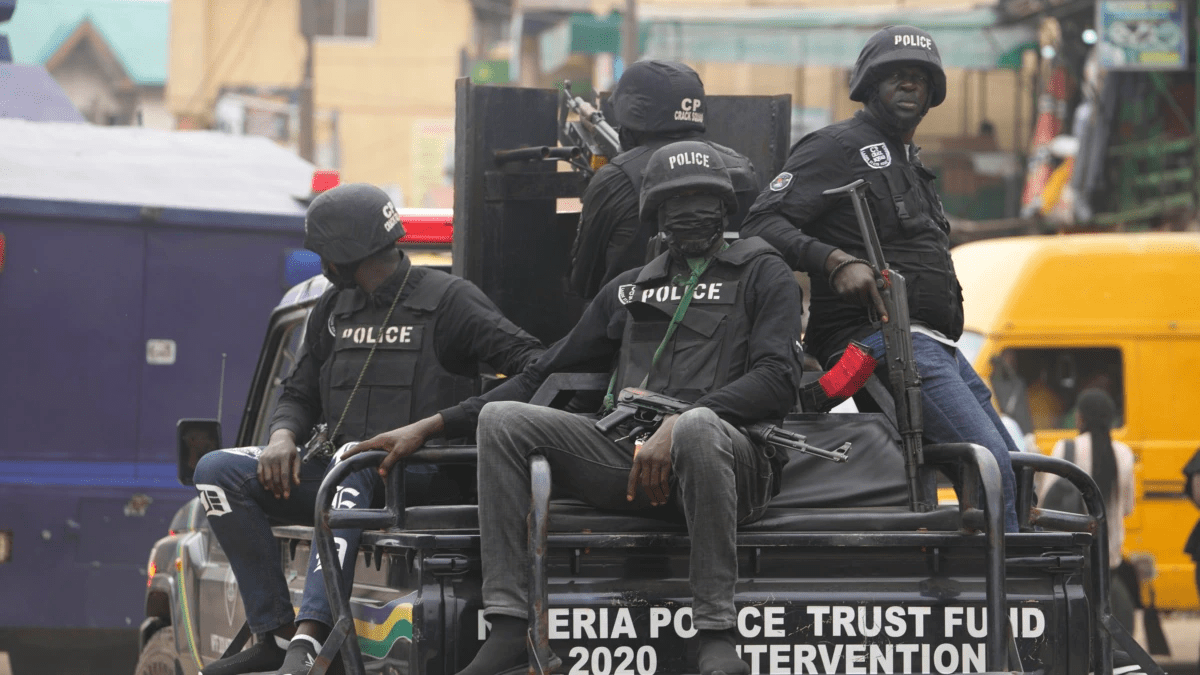
A joint team of security operatives on Monday dispersed protesters participating in the Omoyele Sowore-led #FreeNnamdiKanuNow demonstration in the Maitama area of Abuja.

The protesters, including human rights activist Omoyele Sowore and Nnamdi Kanu’s lead counsel, Barrister Aloy Ejimakor, had gathered near the headquarters of the Nigerian Communications Commission (NCC), chanting “Free Nnamdi Kanu Now.”

Eyewitnesses said the demonstrators were warning police officers against the use of tear gas when gunshots were suddenly fired, forcing the crowd to flee for safety.

The protest, which called for the release of the detained leader of the Indigenous People of Biafra (IPOB), came despite a court order restricting demonstrations around sensitive government areas in the Federal Capital Territory.

Details later

I do not support Biafra separatist agenda—Soludo

By Sabiu Abdulahi

Governor of Anambra State, Professor Charles Soludo, has restated that he does not believe in the separatist agitation for Biafra, stressing that the Igbo people and Nigeria are interdependent.

Speaking during an interview with Channels Television on Sunday, Soludo made it clear that while he is proud of his Igbo identity, he does not support the idea of dividing the country.

“For me, I believe very strongly that, of course, the agitation and separatist view in Igboland – for me, as a full-blooded Igbo man, I don’t believe that. But I want us to have a discussion. I am of the view that the Igbo man needs Nigeria; Nigeria needs the Igbo man,” he said.

The governor, who is seeking reelection in the forthcoming Anambra governorship election, said he plans to meet with the detained leader of the Indigenous People of Biafra (IPOB), Nnamdi Kanu, to discuss a new direction for the South-East after his release.

“When Nnamdi Kanu comes out, we are all going to sit down at a round table and interrogate our alternative vision for Igbo land,” Soludo stated.

He also refrained from condemning the nationwide protest scheduled for October 20, 2025, which is aimed at demanding Kanu’s freedom.

Meanwhile, activist and former presidential candidate Omoyele Sowore has continued to lead the protests across several states, insisting on the immediate release of the IPOB leader.

Nnamdi Kanu was rearrested in Kenya and has remained in the custody of the Department of State Services (DSS) since his return to Nigeria.

Soludo’s latest comments come amid growing political discussions and demonstrations calling for Kanu’s release and a reevaluation of the federal government’s handling of separatist-related issues in the South-East.

From Dubai dreams to banditry nightmares: The tragedy of APC governance in Katsina 

By Muhammad Isyaku Malumfashi

What is happening in Katsina under the present APC administration is a shameful outcome from a government that once boasted of being widely read, widely travelled, and experienced. In fact, from the campaign period to its first year in office, the government bragged that it had all it took to make Katsina a “new Dubai.” That was why a high educational background was used as a symbol of the administration. Even in appointments, only so-called “learned” people were considered, irrespective of whether they were truly experienced or trustworthy.

The most pressing challenge of this government is denial. This denial is even more dangerous than the insecurity bedevilling the state. When you acknowledge the existence of a problem, you will be open to every advice on how to tackle it. But if you keep denying or boasting that you have eliminated it. At the same time, the menace still exists—and perhaps in a more deadly form than during the previous administration—then no matter the energy you invest, you will not succeed. The government and its loyalists continue to deny the bold existence of Fulani terror groups in the state.

Before the recent banditry attack on Muslim worshippers during dawn prayers at Mantau town in Karfi Ward, Malumfashi Local Government—which drew attention from outsiders to what we have long been saying about the APC government’s ill-conceived security surveillance approach—there had already been several incidents of bloodshed, property destruction, and abductions across about nine local governments daily. In places like Malumfashi, where I come from, the banditry menace has worsened since Governor  Dikko Radda assumed office.

The government’s approaches to fighting terror are either ill-planned or manipulated by vested interests, gambling with people’s lives and properties. If we are to judge by the capacity and fanfare displayed by the governor in the past two years—boasting about his readiness and zeal to wipe out criminals from their hideouts—then this government has no excuse for failing. By now, Dr Dikko Umaru Radda himself must have realised that governance, especially in a state with millions of residents, is hectic and demanding. It is unlike how he portrayed it during his campaign. Thus, Katsina is bigger than Charanchi, and the State Government House Office is not an ordinary SMEDAN office.

Notwithstanding, I read with dismay some comments by APC loyalists denying the existence of rampant banditry. According to them, the present government has curbed it. But I was gladdened by how people tackled them in the comment sections, pointing to multiple banditry incidents under this government—incidents worse than anything seen before.

Meanwhile, I do not waste my energy trying to rebut these “data boys” because I know they are either sponsored to promote the government and whitewash its failures, or they do it voluntarily to secure appointments. That is why I stopped engaging in the comment section of my friend Hamis Nababa whenever he appears on air defending the government, because I know he has a personal target. Let alone the unfortunate lawmakers or appointees like Surajo Abdu Kwaskwaro, representing Kaita, who went on air denying the recurrence of bandit attacks in Katsina.

When people are desperate for food, not everyone can remain true to their conscience. Hunger is a terrible thing; it pushes some people to compromise their integrity. But one should not put one’s reputation at stake simply for survival. This is where business security matters—because if those “data boys” were truly independent or well-established in their own ventures, they would not be engaging in such disgraceful acts of defending a failed government whose shortcomings are already too glaring.

One doesn’t even need to doubt whether Governor Dikko is a Grade II certificate holder or truly a PhD holder. Just look at how his government executes projects and the questionable funds allegedly spent on them. Even when figures appear clear on paper, the blunders make them impossible to explain convincingly. At the end of the day, there is nothing tangible to show.

As many have opined, the only candidate that will be extremely difficult to sell in 2027 is that of the APC. If you doubt this, let us wait for time to tell. Those bragging that APC will still win should remember: unless the ruling party uses force, manipulative tactics, vote-buying, intimidation, or pre-stuffed ballot papers, it will be unseated before noon on Election Day if the election is free and fair. Mark my words—because no sane person can campaign for APC in its present state without appearing utterly ridiculous.

Muhammad Isyaku Malumfashi wrote via muhammadisyakumalumfashi@gmail.com.

Miss Nafisah, the English champion and her N200,000 home gift

By Usman Abdullahi Koli

Miss Nafisah Abdullahi is only 17 years old, yet she has already taken Nigeria to places many nations only dream of reaching. From Yobe, a state too often mentioned only in the language of poverty and conflict, she stood before more than 25,000 contestants from 69 countries in the TeenEagle Global Final Competition and emerged as the champion. She carried Nigeria’s name to the intellectual stage and defeated children from nations where English is not just learned in classrooms but lived in homes. That was her priceless gift to Nigeria. And what did Nigeria offer her in return? A handshake, a press release, and two hundred thousand naira that cannot even pay for a single semester in a good university. A priceless victory reduced to pocket change.

Nafisah’s story is about values. It is about what we choose to honour as a people. In this country, when footballers return with medals, they are welcomed with parades and rewards. When entertainers make noise abroad, we turn them into national idols. But when a young girl conquers the world with her mind, we greet her with silence. That silence is not empty; it is a lesson. It tells millions of children that brilliance does not count here. It tells them that books are useless, that the talent of the mind will never be celebrated in their own land.

Think of where she comes from. Yobe is not a place filled with world-class schools or endless opportunities. It is a place battered by poverty, scarred by insecurity, and haunted by the highest figures of out-of-school children in the country. It is a place where girls are too often married off young, their dreams cut short before they can even begin. Nafisah could easily have been one of those forgotten numbers. Instead, she fought through the darkness, studied where others gave up, and rose to defeat students from the United States, the United Kingdom, and Canada in their own language. That is not only radiant. That is defiance. That is resilience. That is Nigeria at its best.

Other nations know how to treat their treasures. Pakistan stood by Malala Yousafzai until she became a Nobel Prize winner and a global voice for education. India lifted Gitanjali Rao, a teenager named TIME Kid of the Year, and gave her platforms to inspire millions. Kenya celebrates its brightest minds with scholarships and presidential recognition.

In the United States and the United Kingdom, children who win with their minds are given opportunities that change their lives forever. These countries understand that the true strength of a nation lies not only in athletes or entertainers but in the prowess of its children.

Nafisah’s victory should not be another forgotten headline. It should be the spark of a national movement. She deserves a scholarship that secures her future. She deserves to be made an ambassador for girl-child education, carrying her story into classrooms and villages where girls are still told their only destiny is marriage. The First Lady should stand with her. The Yobe State Government should lift her up publicly so her story becomes a source of pride and hope. Philanthropists, NGOs, and corporate leaders should support her not as charity but as an investment in the future of Nigeria.

And if tomorrow Nafisah leaves Nigeria for a country that values her, who will we blame? If she becomes a professor abroad, a world-class innovator, or even a global leader, will we cry about brain drain? What moral right do we have to lament when we refused to keep her light burning here?

Nigeria must stop dimming the dreams of its brightest children. We cannot keep clapping for dancers and athletes while ignoring the Nafisahs who show us that talent can rise from the roughest soil. If we want respect in the world, we must first respect knowledge at home.

History will not remember the leaders who ignored genius. It will remember those who lifted it. Let it not be written that Nigeria built stadiums for athletes, celebrated singers with riches, and abandoned a 17-year-old girl from Yobe who conquered the world with English. Her triumph is Nigeria’s triumph. Our silence, however, is Nigeria’s shame.

Usman Abdullahi Koli wrote via mernoukoli@gmail.com.

FG reaffirms faith in military as coup rumour triggers political reactions

By Sabiu Abdullahi

The Federal Government has expressed confidence in the Nigerian military amid reports of an alleged failed coup against President Bola Ahmed Tinubu’s administration.

Minister of Information and National Orientation, Mohammed Idris, made the government’s position known in an interview with newsmen on Sunday. He stated that the administration had “no reason to doubt the military” following the Defence Headquarters’ denial of the alleged coup report.

On Saturday, the Director of Defence Information, Brigadier General Tukur Gusau, had dismissed a report by Sahara Reporters that linked the detention of 16 military officers to a failed coup.Gusau, in his statement, described the publication as “intended to cause unnecessary tension and distrust among the populace.”

He explained that the cancellation of the 65th Independence Day celebration was “purely administrative,” allowing the president to attend a bilateral engagement abroad while troops continued operations against insecurity.

He added, “The ongoing investigation involving the 16 officers is a routine internal process aimed at ensuring discipline and professionalism is maintained within the ranks. An investigative panel has been duly constituted, and its findings would be made public.”

Reaffirming the government’s trust in the military, Idris said, “The Federal Government has no reason to doubt the military on what it has said. The Federal Government believes that the Armed Forces of Nigeria is committed to ensuring the territorial integrity of the country and also strengthening its fight against insecurity. The Federal Government commends the military, and it will continue to support them in their task of ensuring the security of Nigeria.”

Opposition Calls For Transparency

Opposition parties, however, have urged the Federal Government and the military to ensure transparency regarding the matter.The National Publicity Secretary of the New Nigeria People’s Party, Ladipo Johnson, said Nigerians deserved to know the truth about the alleged plot.

“They should let us know what actually happened. We have to know the charges and whether they are facing court-martial or not,” he stated.

Similarly, the Labour Party’s Interim National Publicity Secretary, Tony Akeni, expressed concern that the military appeared to be “speaking with two mouths.”

He said, “They said those in detention are there because of some disciplinary measures. Yet, we have sources within the rank and file saying there indeed was an issue of that nature.”

Akeni appealed to the military to “be courageous, according to the oath of their service, to bring the actual facts to the public so that innocent lives do not suffer.”

The National Coordinator of the Obidient Movement Worldwide, Dr Yunusa Tanko, also cautioned against drawing hasty conclusions.

“First of all, you need to establish the truth of the matter before you can suggest punitive measures,” he said.

He added that public frustration over the government’s performance might have contributed to the rumour, saying, “People are hungry and tired of being manipulated. So, we are not surprised the anger has gone to that particular level even in the military.”

Afenifere Warns Against Military TakeoverMeanwhile, the pan-Yoruba socio-political organisation, Afenifere, has cautioned against any attempt to disrupt Nigeria’s democracy, warning that a coup would have disastrous consequences.

Afenifere’s National Publicity Secretary, Jare Ajayi, said in Ibadan that such an act “would set the country back by decades.”

He noted, “The constitution clearly stated that government cannot be changed except through constitutional means.”

The Google gauntlet and the grandfather’s trust: An African lesson in peace

By Hauwa Mohammed Sani, PhD

I thought I was making a simple, kind gesture—choosing an older gentleman’s cab late one night after a long flight. I figured it would be an easy ride. What unfolded next wasn’t just a navigation problem; it was a bizarre, real-time collision between the old way of the world and the new, AI-driven one. This true story of a taxi ride truly happened to me last week.

​It was late, the kind of late where the airport lights look sickly and the air is thick with fatigue. I needed a ride. Looking over the line of sleek, modern taxis, my eye landed on one driven by an old man—a true gentleman of the road, old enough to be my own grandfather. A small surge of pity, mixed with a desire to give him the fare, made me choose him. Little did I know, I wasn’t just hopping into a cab; I was walking into a generational drama.

​The man knew the general area of my destination, but finding the exact estate became an odyssey. We drove, we turned, we asked passersby—a frantic, real-world search in a fog of darkness and street names. Frustrated, I reviewed the apartment information on my phone and saw a contact number within the address details. I called it.

​The voice on the other end was bright and American. “Oh, that’s my apartment, but I live in the U.S.,” she cheerfully informed me. “I’ll have someone call you.”

​True to her word, a local contact called back. “I’ve sent you the location,” she said. “Just Google it.”

​And there was the rub. My driver—a man whose mind held a living map of the city’s every alley and backstreet—and I, a modern traveller, stared at each other. Neither of us was familiar with using Google Maps.

​The poor old man was desperate. “What are the landmarks? Describe the building!” he pleaded into the night air. The girl on the phone, however, was stubbornly one-dimensional: “Just follow the GPS. Google the location.”

​That’s when it hit us both. In that moment, the taxi cab became a time capsule. Here were two people operating on landmarks, intuition, and human description, battling against an AI generation that has completely outsourced its sense of direction. Simple communication—a left at the bakery, a right past the big tree—was utterly lost.

​The driver was absolutely fuming. He kept grumbling, “Where is our sense of reasoning? They’re being machine is programming them!” To him, this reliance on tech wasn’t progress; it was the crippling of a fundamental human skill. He saw creativity and simple reason dying, replaced by a glowing screen that gives an answer but can’t hold a conversation.

​We eventually found the place, not by Google, but by a final, desperate, human description from a local. But the lesson lingered: Technology is fantastic, but sometimes, when it replaces basic common sense, it really can feel useless. We need to remember how to read the world, not just the map.

The Climax: The Race for the Flight

The next day, it was time for my return. The old man—who I now affectionately called Papa—had promised to pick me up. He came, but he was late. I kept calling, reminding him of my flight and the town’s busy roads. He assured me we would take an “outskirt” route with no traffic.

We found otherwise.

The clock was racing, and the roads were choked. In his confusion, the poor man even pulled into a station to buy fuel, a detour that felt catastrophic. But the beautiful part? He kept accepting his mistakes. He was frantic, not defensive. We kept running against the clock, fueled by mutual anxiety.

By the time we reached the terminal, the counter was closed.

“Hajiya,” he said, using the Hausa honorific reserved for me, the Yoruba man’s passenger. “Don’t worry about the fare. Just run. Run and make your flight first.”

I rushed in and had to beg the counter staff to issue my ticket. I became the last passenger on the flight, all thanks to a desperate sprint.

The Unbreakable Trust

A display of profound, inter-tribal trust eclipsed that moment of panic. Here was Papa, a Yoruba man, sending off Hajiya, a Hausa woman, without a dime for his service, instructing me not to worry about payment until I was safely at my destination.

He kept calling me after I took off, checking on my travel and praying I made my connection. Not once did he mention money.

It wasn’t until I reached out and said, “Papa, please send me your account details,” that the drama of the day resumed (as expected, getting that detail was another adventure!). But in the long run, I paid Baba a generous amount—one he met with a flood of heartfelt prayers for my future.

This journey, from a confusing GPS battle to a race against the clock, taught me the most significant lesson: amidst all the conflict and generational friction, there is still peace and trust in connection. 

As I work on our research for the University of Essex London on conflict resolution and prepare for my ‘Build Peace’ conference in Barcelona, I realise that sometimes the greatest examples of peace aren’t in treaties, but in a simple promise between a Yoruba taxi driver and his Hausa passenger.

Hauwa Mohammed Sani, PhD, teaches at the Department of English and Literary Studies, Ahmadu Bello University, Zaria.

Defence Headquarters dismisses coup report as “false and malicious”

By Abdullahi Mukhtar Algasgaini

The Defence Headquarters (DHQ) has strongly denied an online report linking the cancellation of Nigeria’s 65th Independence Anniversary parade to an alleged coup attempt.

In a press release signed by Brigadier General Tukur Gusau, the DHQ described the publication as “false, malicious, and intended to cause unnecessary tension.” 

The military high command stated that the parade was cancelled to allow President Bola Ahmed Tinubu to attend a strategic bilateral meeting abroad and to enable the Armed Forces to sustain their operations against terrorism, insurgency, and banditry.

The statement also addressed the recent arrest of sixteen officers, clarifying that they are part of a routine investigation for professional misconduct. The DHQ assured that an investigative panel has been constituted and its findings will be made public.

Reaffirming its loyalty, the Armed Forces declared its unwavering commitment to the Constitution and the Federal Government, urging the public to disregard the falsehood being circulated by “purveyors of misinformation and enemies of our nation.” 

The statement concluded with the firm declaration, “Democracy is forever.”

FEATURE: When harvest no longer brings joy — The dying spirit of “Kaka” in Northern Nigeria

By Anas Abbas

In the traditional rhythm of life across Kano, Jigawa Katsina and much of Northern Nigeria, the end of the rainy season has always been a time of relief, celebration, and abundance.

It is the period locals fondly call “Kaka” (harvest season) when the farmlands give back to the people, when barns are full, and when hunger gives way to laughter.

Grains, groundnuts, millet, maize, and beans flood the local markets. Prices fall. The air is scented with roasted corn, fresh harvest, and hope.But this year, something has changed.

The joy that once marked Kaka now feels faint and replaced by silence, worry, and a strange kind of poverty in the midst of plenty.

The Daily reality has reported that, in Kano’s bustling Dawanau Market, traders sit beside overflowing bags of produce, but the energy that once filled the air has faded.

“People come, they look, they ask, but they don’t buy,” said Malam Kabiru, a grain merchant of 20 years, wiping sweat off his brow. “Before, this time of year, I would not even have time to rest. But now, we are counting hours, not money.”

Traditionally, harvest season (kaka) is the season when life becomes easy. Farmers sell their crops, traders make profits, and households breathe again after months of lean times.

“Money used to flow like the rain that just passed,” said Hajiya Zainab, a mother and resident at Yankaba in Kano. “But this year, things are upside down. Food is cheap, but we don’t have money to buy. Even if you want to cook “tuwo with bean soup”, you will think twice before buying groundnut oil.” Zainab said.

The paradox is everywhere: prices of some staples have dropped slightly due to harvest supply, yet the economy has tightened its grip on ordinary Nigerians. The value of the naira continues to wobble, and salaries for those who are even lucky to have them barely survive a week.

A Season that feels different

In villages around Katsina, Jigawa, and Sokoto, The Daily reality gathered that farmers recount the same story. Fertilizer prices went up, transport costs doubled, and insecurity chased many from their farmlands. Those who managed to plant and harvest now face a market that no longer rewards their sweat.

“Last year, we prayed for rain. This year, we got it. But now we are praying for buyers,” said Alhaji Isa, a millet farmer from Bichi. His barns are full, yet his pocket is empty.

For decades, Kaka was more than a season it was a social equalizer. Families cleared debts, marriages were planned, and children returned to school with new uniforms bought from market profits. Today, that cycle of joy has broken.

The harvest still comes, but the happiness doesn’t. I recently harvested my onions and took them to the market, said Alhaji Musa Dan’Isa, an onion farmer from Badume in Kano State, his voice heavy with disappointment. “We sold a sack for between N10,000 and N11,000. After all the expenses fertilizer, labour, and transport.There’s almost nothing left for us. I can’t even recover what I spent.”

“To be honest, I’m beginning to lose interest in farming. If things continue like this, I don’t see any reason to invest again next year.”

Economy of Survival

Experts say the situation reflects the larger economic strain facing the country. Inflation has eaten deep into every pocket, and the spending power of ordinary Nigerians has collapsed.

Even when goods are available, the money to circulate them is not.In the past, money used to move like water in a stream from farmers to traders, from traders to transporters, and then back to the villages.

Now, the stream has dried up. Money no longer circulates; it only passes through a few hands and disappears before it reaches the people who truly keep the economy alive.

Economist Dr. Ibrahim Umar explains to The Daily reality: “What we are seeing is a liquidity drought people simply don’t have cash flow. Harvest season should naturally boost local economies, but insecurity, subsidy removal, and currency devaluation have created a heavy burden. So even in abundance, there is scarcity.”

A Cultural Loss

Beyond the numbers, something deeper is being lost the cultural spirit that defined Kaka. The community celebrations, the songs of the farmers, the laughter of women sorting grains in woven baskets all seem quieter now.“Our parents used to say that Kaka is God’s mercy after hard labour,” said Aisha Abdullahi, a teacher in Hadejia.

“Now it feels like we are working for survival, not for joy. The harvest doesn’t bring the same peace anymore.”

A Call for Reflection

The fading joy of Kaka tells a larger story one of resilience, struggle, and a people trying to hold on to dignity amid hardship. It reminds us that the economy is not just about figures and policies, but about lives, emotions, and traditions deeply woven into the seasons.

Northern Nigeria still celebrates the rains, the soil, and the spirit of farming. But until the people can once again taste the sweetness of their own labour, Kaka will remain a season of memory rather than a moment of joy.

The changing face of Kaka is more than an economic issue; it is a mirror of how hardship has reshaped everyday life in the North. A season that once united communities in gratitude is now marked by quiet markets and worried faces.

From Kano to Katsina, Sokoto to Bauchi, people are beginning to wonder if the old Kaka will ever return when the harvest truly brought relief, not reminders of survival.