Admin

Nigerian troops repel major terrorist onslaught, kill over 50

By Abdullahi Mukhtar Algasgaini

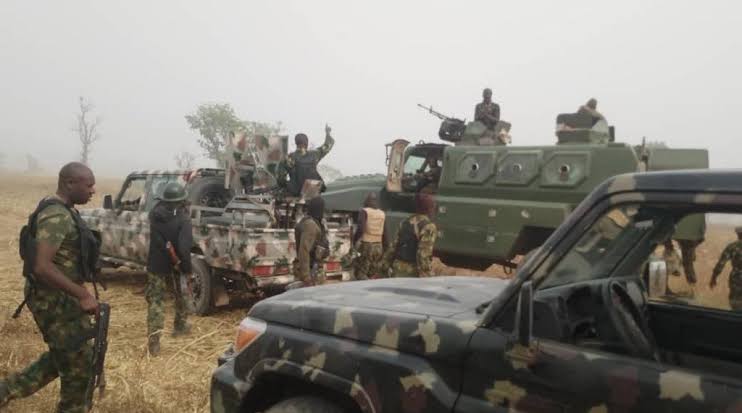
Nigerian forces operating under Operation HADIN KAI (OPHK) have thwarted a series of coordinated terrorist attacks across Borno and Yobe states, neutralizing over 50 fighters in fierce overnight battles.

According to a press release from the military, the assaults occurred between midnight and 4:00 a.m. on Thursday, targeting troops’ positions in Dikwa, Mafa, Gajibo, and Katarko.

The military stated that its troops “stood firm, fought gallantly, and professionally repelled the attacks, dealing the terrorists a heavy decisive and bloody blow.”

The defence was bolstered by air support from the Air Component, which provided precision strikes. Enhanced intelligence and reconnaissance assets also gave ground forces a critical advantage, enabling a lethal response.

The combined ground and air efforts led to the recovery of a significant cache of weapons, including 38 AK-47 rifles, 7 machine guns, 5 RPG tubes, and thousands of rounds of ammunition.

Intelligence reports suggest the terrorists who attacked Dikwa and Gajibo came from neighbouring Cameroon, while those in Katarko emerged from the notorious Timbuktu Triangle enclave.

While the military scored a major victory, it acknowledged some costs. Several soldiers were wounded but are reported to be in stable condition.

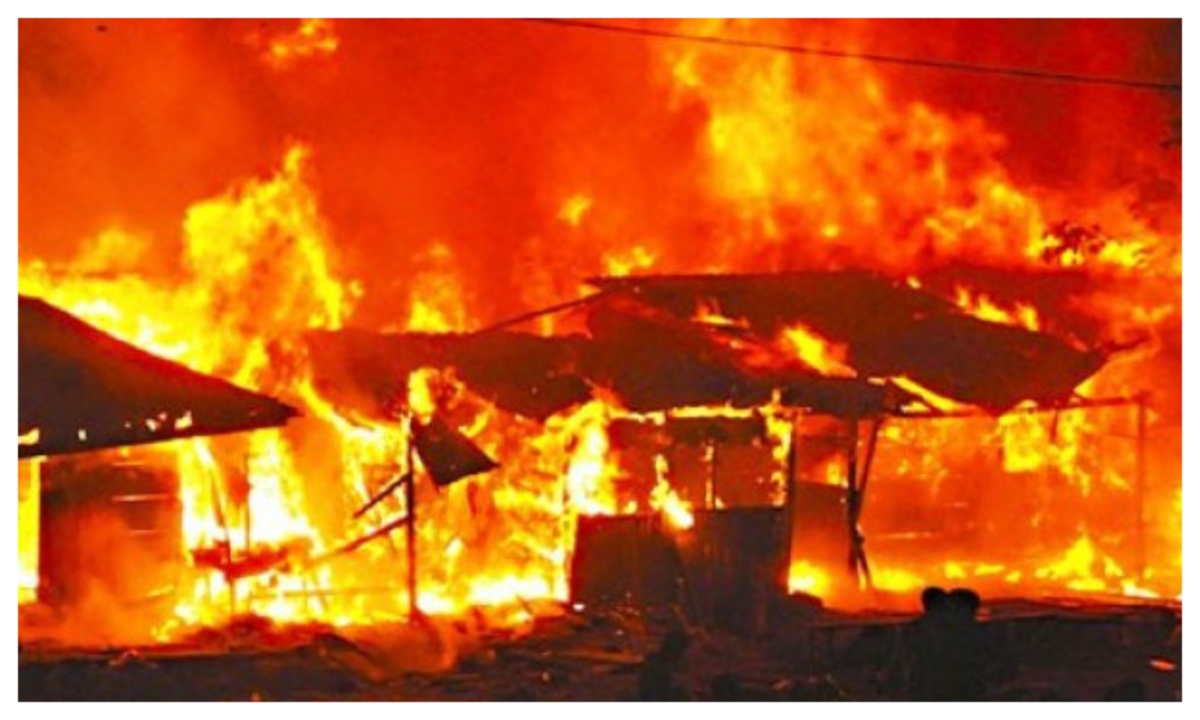
Additionally, terrorist attacks involving armed drones and RPGs set vehicles and buildings on fire, with defences in Mafa and Dikwa being “momentarily breached.”

The Military High Command has commended the troops for their gallantry and doggedness, stating that their performance reaffirms the military’s unwavering resolve to defend the nation’s territorial integrity.

Police arrest Sowore after court appearance for Nnamdi Kanu

By Uzair Adam

Former presidential candidate and activist, Omoyele Sowore, was on Thursday taken into custody by armed police officers shortly after attending a court session for the detained leader of the Indigenous People of Biafra (IPOB), Nnamdi Kanu, at the Federal High Court in Abuja.

Sowore, a prominent campaigner for Kanu’s release, was reportedly accosted by the officers who insisted that he accompany them to the Federal Capital Territory (FCT) Police Command.

When he asked for the reason behind his arrest, one of the officers replied that they were acting on the instruction of the Commissioner of Police.

“The commissioner of police said we should bring you to the office,” the officer stated.

Despite questioning the lack of a formal invitation and insisting that his lawyer must be present, Sowore was eventually driven away in a police van.

It would be recalled that the Sahara Reporters publisher played a major role in organising the recent #FreeNnamdiKanu protest that took place in Abuja and other cities on Monday.

During the protest, police arrested 12 participants, including Kanu’s younger brother, Emmanuel, and one of his lawyers, Aloy Ejimakor. The detainees were later remanded at Kuje Prison.

According to the First Information Report (FIR) filed before a Chief Magistrate Court in Kuje, the police accused the protesters of criminal conspiracy, inciting disturbance, and public disorder.

The report alleged that the protest, which violated a subsisting court order, obstructed traffic and posed a threat to public peace.

The court is expected to take the plea of the 12 defendants on Friday.

However, it remains unclear whether Sowore will be added to the charge sheet.

From export hype to empty stomachs: A response to Mr Tanimu Yakubu, the DG of the Nigeria Budget Office

By Nazeer Baba

For context, Mr Tanimu, in defence of the economic freefall under the current administration, claimed that the naira has bounced back to dominance as a result of Nigeria’s non-oil commodity exports. In reality, however, non-oil exports accounted for only about 9% of Nigeria’s total exports between Q1 2024 and Q4 2024, while mineral fuels, mainly crude oil, maintained their traditional dominance with 91% of export volume. In other words, nothing has fundamentally changed in Nigeria’s dependence on a major oil-exporting economy.

Yes, non-oil exports indeed rose from $2.696 billion in H1 2024 to $3.225 billion in H1 2025—a 19.62% growth. Much of this was driven by the naira devaluation, which makes our commodity cheaper in the foreign market at the expense of Nigerians. Another reason is the climate challenges that disrupted cocoa production in major producers like the Ivory Coast and Ghana, temporarily creating space for Nigerian cocoa. But this is both an incidental and a policy blunder.  

The more urgent question is how this growth affects the key aspects of development. Poverty, unemployment, and inequality, especially for the 133 million Nigerians living in multidimensional poverty? As the economist Amartya Sen argued, real development should be gauged by what happens to these three dimensions. Unemployment

The official unemployment rate fell to 4.3% in Q2 2024, down from 5.3% in Q1. But this decline has little to do with any job boom under President Bola Tinubu. Instead, it is the product of a statistical adjustment. In the past, the NBS only counted those aged 15–64 who worked at least 20 hours per week as employed. Under the new guidelines, anyone 15 years or older who worked for pay—even for just a single hour in a week—is now considered employed. At best, this is a manipulation of numbers.

For young people, the reality is harsher. Unemployment among 15–24-year-olds was 6.5% in 2024 under the new formula, but under the previous methodology, it had peaked at 53.4%. The World Bank confirms this paradox: low official unemployment rates coexist with widespread poverty. Millions are “employed” but still trapped in poverty. Job quality, not misleading headline numbers, is what truly matters. Today, most Nigerians endure insecure, informal, and underpaid work.

Poverty

Nigeria has long been an economy under strain, but the shock of 2024–2025 has been unprecedented. Over 54% of Nigerians now live in extreme poverty, surviving on less than $2.15 per day. Rural poverty is staggering at 75.5%, while urban poverty stands at 41.3%. According to Reuters, by August 2025, an estimated 33 million Nigerians are facing acute food insecurity. Inflation, naira devaluation, fuel subsidy removal, recurrent floods, and internal displacement have left two-thirds of households unable to afford food.

Inequality

Nigeria’s inequality gap has never been wider, despite being Africa’s largest economy. With abundant human capital and vast resources, Nigeria has the economic potential to lift millions out of poverty. Yet the wealth distribution remains grotesquely skewed. According to Oxfam, the combined wealth of Nigeria’s five richest men $29.9 billion, could end extreme poverty nationwide. Meanwhile, over 5 million Nigerians are at risk of hunger and starvation. More than 112 million people live in poverty, yet the richest Nigerian man would need to spend \$1 million a day for 42 years to exhaust his wealth. His annual earnings alone could lift 2 million people out of poverty for a year. This is the textbook case of an economy trapped in extreme inequality.

Policy Recommendation

If Nigeria is serious about reversing this deterioration, the government must move beyond statistical gimmicks. A realistic policy response would be to mandate a Commission that directly links export earnings to job creation and poverty reduction. This means:

1-Mandating that a percentage of non-oil export revenues be reinvested into agro-industrial value chains to generate decent jobs.

2-Expanding targeted social protection programs funded from windfall oil revenues to cushion the poorest households against inflation and food insecurity through deliberate and direct cash transfers.

3- Enforcing progressive taxation on extreme wealth to finance healthcare, education, and rural infrastructure. Areas where inequality is most glaring.

Without policies that directly address poverty, unemployment, and inequality, Nigeria’s so-called “export-led rebound” will remain nothing more than a statistical illusion.

Nazeer Baba wrote from Abuja, Nigeria, via Babanazeer29@gmail.com.

Insecurity, abandonment cripple Zangon Gabas Primary School

Muhammad Isah Zng

Special Primary School in Zangon Gabas, Ungogo Local Government Area of Kano State, is struggling with insecurity and abandoned, burnt classrooms, leaving pupils and teachers in a difficult learning environment.

A resident and Islamic teacher, Abdullahi Ahmed, voiced concern that the school has been neglected by the government, leaving it vulnerable to vandalism and deterioration. He stated that youths often break onto the premises after lessons to play football, which frequently results in damage to school property and theft of valuable items.

“The major problem is insecurity. Youths come into the premises, deface classrooms, and steal items. If nothing is done, this school may one day become history,” Ahmed said.

Besides security breaches, classrooms that were burned several years ago remain unrepaired and unused, further reducing available learning space. Ahmed, who also uses the classrooms for Islamic lessons, disclosed that the headmaster had hired a security guard and was paying him from personal funds to protect the remaining facilities.

Community members are urging the Kano State Government to urgently repair the classrooms that were burned and to ensure security to protect the school. Education stakeholders warn that if no action is taken, the worsening conditions could jeopardise the future of pupils in Zangon Gabas. 

Comptroller Gambo strengthens ties with British American Tobacco Nigeria

By Sabiu Abdulahi

The Customs Area Controller of the Oyo/Osun Area Command, Comptroller Gambo Aliyu, has praised British American Tobacco Nigeria (BATN) for its long-standing collaboration with the Nigeria Customs Service (NCS) and its consistent adherence to trade regulations.

A statement released by the Command’s Public Relations Officer, Assistant Superintendent of Customs I, Abdulmalik Akintola, said Comptroller Aliyu gave the commendation during a familiarisation visit to BATN’s facility on Wednesday, October 15, 2025.

He was warmly received by the company’s Director of Operations, Mr. Hasnain Ishtiaq.During the visit, the Customs chief lauded BATN’s operational excellence and its vital role in Nigeria’s tobacco manufacturing industry.

He acknowledged the company’s positive impact on the economy, stressing that its contributions extend to revenue generation, employment creation, and industrial growth.

“The company’s industrial activities have continued to promote economic growth and enhance industrial development within Oyo State and across the nation,” Aliyu stated.

He further called for continuous collaboration between the Nigeria Customs Service and BATN to sustain their shared objectives in promoting legitimate trade and industrial advancement.In his remarks, Mr. Hasnain Ishtiaq, Director of Operations at BATN, thanked Comptroller Aliyu and his team for the visit.

He applauded the Nigeria Customs Service for its dedication to supporting lawful trade and fostering a business-friendly environment.

Mr. Ishtiaq assured that BATN would maintain its commitment to regulatory compliance and strengthen its partnership with the Customs Service.

Gov Yusuf reaffirms loyalty to Kwankwaso, dismisses rift rumours

By Uzair Adam

Kano State Governor, Abba Kabir Yusuf, has dismissed claims suggesting a rift between him and his political mentor, Senator Rabiu Musa Kwankwaso, emphasizing that no one can succeed in creating division between them.

The governor made the clarification on Tuesday in Madobi during a ceremony marking Kwankwaso’s 69th birthday.

He reiterated his unwavering loyalty to the former governor and vowed to continue upholding the ideals and vision of the Kwankwasiyya movement.

“Those within and outside trying to create a quarrel between me and our leader, Engineer Rabiu Musa Kwankwaso, will not succeed,” Yusuf stated.

He described Kwankwaso as a divinely inspired leader whose principles have guided the political direction of Kano State, adding that he would remain committed to sustaining his legacy.

Governor Yusuf also prayed for long life and good health for the NNPP national leader, describing him as a visionary whose leadership continues to inspire progress across the state.

Speculations about tension between the duo had surfaced in recent months following the emergence of a movement called “Abba Tsaya da Kafarka” (Abba Stand on Your Feet), allegedly led by former Secretary to the State Government, Dr. Baffa Bichi, and ex-Commissioner for Transport, Alhaji Salisu Digol.

The movement was said to be pushing for greater administrative independence for Yusuf’s government, a development that fueled rumours of a possible power struggle within the Kwankwasiyya political family.

BREAKING: ASUU suspends two-week warning strike

By Anwar Usman

The Academic Staff Union of Universities has announced the suspension of its ongoing two-week warning strike which started Monday, October 13th.

This was revealed by the National President of ASUU, Prof. Chris Piwuna, in an ongoing press briefing in Abuja on Wednesday.

According to the president, the decision stemmed from the meeting of the National Executive Council meeting which was held overnight and ended by 4:00 am on Wednesday.

Piwuna noted that the union decided to embark on the strike due to the failure of the government to meet its demands on time.

“We’ve had useful engagements with representatives of the government to consider the response to the draft renegotiation of the 2009 agreements. However, we are definitely not where we were prior to the commencement of the strike.

“The union acknowledged that the government returned to the negotiation table. While noting that a lot more work is still required, NEC came to the conclusion that the ongoing strike should be reviewed. The decision to review the strike action was a result of efforts by our students, parents, and the Nigeria Labour Congress.

“Consequently, NEC resolved to suspend the warning strike to reciprocate the efforts of well-meaning Nigerians.”

Recall that, the major demands by ASUU includes the conclusion of the renegotiated 2009 FGN-ASUU agreement, the release of the withheld three and a half months’ salaries, sustainable funding of public universities, revitalisation of public universities, and cessation of the victimisation of lecturers in LASU, Prince Abubakar Audu University, and FUTO.

Others are payment of outstanding 25-35% salary arrears, payment of promotion arrears for over four years and release of withheld third-party deductions (cooperative contributions, union check-off dues).

Sultan declares thursday as start of Jumada al-Ula 1447

By Abdullahi Mukhtar Algasgaini

The Sultan of Sokoto, Alhaji Muhammad Sa’ad Abubakar, has officially declared Thursday, October 23, 2025, as the first day of the new Islamic month of Jumadal Ula, 1447 After Hijrah.

The announcement was made in a press release on Tuesday following the failure to sight the new crescent moon.

The Sultanate Council’s Advisory Committee on Religious Affairs and the National Moonsighting Committee stated that no verified reports of the moon’s sighting were received from across Nigeria on Tuesday, October 21st, which corresponded to the 29th of Rabi’ul Assani.

Consequently, Wednesday, October 22nd, will complete the outgoing month as the 30th day of Rabi’ul Assani.

As the President-General of the Nigerian Supreme Council for Islamic Affairs (NSCIA), Sultan Abubakar accepted the committee’s report and made the declaration, marking the beginning of the new lunar month for the Muslim community in Nigeria.

The statement was signed by Prof. Sambe Wali Junaidu, the Waziri of Sokoto and Chairman of the Advisory Committee on Religious Affairs.

Armed gang seizes medical staff, 5 patients, in Kaduna raid

By Abdullahi Mukhtar Algasgaini

A large group of armed bandits attacked a private hospital in Kujama, Kaduna State, abducting a medical doctor, five patients, and a security guard.

The assailants targeted the Nasara Nursing and Maternity Home in the early hours of Tuesday. According to local sources, the attackers also raided houses in the vicinity during the operation.

One security guard was shot multiple times after attempting to resist the invaders.

He was later transported to a different medical facility for emergency care.

This incident is the latest in a series of violent attacks in the region, coming just days after bandits killed two police officers during an assault on a police headquarters in Zangon Kataf Local Government Area.

Converting ATBU to a conventional university: A backward step in a forward world

By Aminu Babayo Shehu

The recent move by Senator Shehu Buba Umar, representing Bauchi South, to convert Abubakar Tafawa Balewa University (ATBU), Bauchi, from a University of Technology to a conventional university has stirred deep concern among stakeholders, alumni, and advocates of science and technology education. The bill, which has already passed second reading in the Senate, risks undoing decades of progress that ATBU has made in advancing technology-driven learning and innovation in Nigeria.

In an era when nations are competing through science, technology, and innovation, Nigeria cannot afford to take a step backwards. Around the world, technology is driving development, job creation, and national competitiveness. From Artificial Intelligence to Robotics, Biotechnology, and Cybersecurity, the future of work and industry is being reshaped by technology. It is therefore troubling that, instead of strengthening one of Nigeria’s most respected technology-based universities, the discussion is now about diluting its identity.

ATBU has earned its reputation as one of the country’s leading technological institutions. For decades, it has produced graduates who are not only competent but highly sought after in both the public and private sectors. Alumni of the university are excelling in software engineering, telecommunications, construction, fintech, and data science. Many are leading teams, building products, and contributing to the growth of major organisations across Nigeria and abroad.

In recent years, the university has made even more progressive strides. The Faculty of Computing, for instance, has expanded its curriculum beyond traditional Computer Science to include new, globally relevant courses such as Artificial Intelligence, Data Science, Software Engineering, and Cyber Security. These additions are clear evidence that ATBU is aligning itself with international trends and preparing students for the realities of the modern digital economy.

Instead of seeking to convert ATBU into a conventional university, the Federal Government and relevant stakeholders should focus on strengthening its technological capacity and research base. There are better, more visionary ways to make the institution self-sustaining and impactful. Establishing Artificial Intelligence research laboratories, cybersecurity and digital forensics hubs, robotics and automation labs, and technology incubation centres would attract both local and international partnerships. Such facilities could become national assets for innovation, startups, and industrial research.

Globally, top universities have achieved great success by maintaining and deepening their technological focus. The Massachusetts Institute of Technology (MIT) in the United States, Tsinghua University in China, and the Korea Advanced Institute of Science and Technology (KAIST) are shining examples of institutions that have transformed their nations through technology-driven education and research. Nigeria should be learning from these models, not abandoning its own.

Turning ATBU into a conventional university would water down its focus and weaken the very foundation on which it was established. What Nigeria needs today are more institutions that specialise in applied sciences, engineering, and emerging technologies; not fewer.

This proposal, though perhaps well-intentioned, is ill-timed and misdirected. The challenges of the 21st century demand more innovation, not less. The future will belong to nations that invest in science, technology, and knowledge creation.

ATBU should remain what it was meant to be: a University of Technology dedicated to building Nigeria’s next generation of innovators, engineers, and researchers. To do otherwise would not just be a loss for Bauchi or Northern Nigeria, but for the entire country.

Aminu Babayo Shehu is a Software Engineer and alumnus of Abubakar Tafawa Balewa University, Bauchi. He writes from Kano via absheikhone@gmail.com.