Admin

The quiet decline of memory and the increasing challenge of brain diseases in Nigeria

By Mujahid Nasir Hussain

Every human brain tells a story: of love, memory, and motion. Yet, for many Nigerians, these stories are being erased silently by diseases that steal what it means to be human. Alzheimer’s disease, Amyotrophic lateral sclerosis (ALS), Parkinson’s disease, and other neurodegenerative disorders are creeping into our society, affecting not only the elderly but, increasingly, middle-aged adults as well. Their signs often begin subtly: a forgotten name, a misplaced key, and a trembling hand, until the symptoms grow into something that shatters families and identities alike.

I am writing this piece after World Mental Health Day (October 10) to raise awareness about these devastating but often misunderstood brain disorders, and to emphasise why Nigeria must invest in research that explores the molecular roots of neurodegeneration. Behind every fading memory is a biological story waiting to be told; one that may hold the key to prevention, treatment, and hope.

Globally, neurodegenerative diseases are among the fastest-growing causes of disability and death. According to the World Health Organisation, over 55 million people currently live with dementia, and nearly 10 million new cases are recorded each year. Alzheimer’s disease accounts for about 60–70% of these cases. The burden is not only medical but also social and economic, as families face the heartache of caring for loved ones who may no longer recognise them.

In Africa, the crisis is quietly intensifying. A report by Alzheimer’s disease International estimates that by 2050, over 12 million Africans could be living with dementia, a staggering increase that health systems are unprepared for. In Nigeria, accurate statistics are scarce, but hospital reports and community surveys show a growing number of undiagnosed neurodegenerative cases among the elderly. Unfortunately, in many communities, symptoms of neurodegeneration are still seen through the lens of superstition. Some families attribute forgetfulness to witchcraft or punishment from the gods. As a result, patients are hidden away, untreated, and stigmatised, even when medical help could improve their quality of life.

But beyond the surface symptoms lies a world of molecular complexity. In every neuron, RNA and proteins work together in precise harmony, regulating gene expression and cell responses to stress. These molecules form small, dynamic structures known as RNA–protein assemblies that constantly change shape and function in response to the brain’s needs. When this spatio-temporal regulation is disrupted, the way these structures behave across time and space is disrupted, it can cause proteins to misfold and clump together. These toxic clumps interfere with brain cell function, triggering the gradual degeneration that characterises diseases like Alzheimer’s and Parkinson’s. Think of it like a city whose garbage collectors suddenly go on strike. Waste piles up, streets become impassable, and normal life grinds to a halt. That’s what happens inside the brain when these molecular systems fail. The result is memory loss, confusion, speech problems, tremors, and ultimately, the loss of independence.

Sadly, this understanding of disease mechanisms has not yet translated into practical awareness or local solutions in Nigeria. Our health sector remains focused on infectious diseases like malaria, tuberculosis, and HIV, which are undeniably urgent but overshadow chronic illnesses that also deserve attention. Neurodegenerative conditions receive very little research funding, and only a handful of Nigerian universities have well-equipped neuroscience or molecular biology laboratories. This lack of infrastructure makes it difficult for scientists to explore how environmental, nutritional, and genetic factors specific to African populations contribute to neurodegeneration.

We cannot afford to ignore this any longer. With Nigeria’s population ageing rapidly, the number of people at risk of dementia will rise sharply in the next decade. Families and caregivers already face immense emotional and financial strain. A 2023 study published in Frontiers in Public Health noted that dementia caregiving in Africa often leads to burnout, poverty, and social isolation, especially among women who bear most of the burden. This is more than a medical issue; it is a public health and human rights concern.

Raising awareness is the first step. Nigerians need to understand that persistent memory loss, tremors, or difficulty performing everyday tasks are not normal parts of ageing. They may signal conditions that require medical attention. Community health workers should be trained to identify these early signs, and hospitals should include basic neurological screening as part of routine check-ups for older adults.

The second step is research. As a physiologist, I believe that Nigeria’s greatest untapped potential lies in our young scientists and natural resources. There is growing evidence that certain plant-derived compounds, including those found in Habbatus Sauda (black seed) and other indigenous herbs, have neuroprotective properties. Exploring how these natural products influence RNA–protein interactions could open pathways to affordable treatments tailored to our local context. If supported, Nigerian research could not only advance understanding but also drive innovation in neurodegenerative disease therapy.

Finally, there is the matter of policy. The Nigerian government and health agencies must recognise brain health as a national priority. We need a National Brain Health Initiative, one that funds research, trains neurologists, supports caregivers, and integrates neuroscience into medical education. Just as we have campaigns for malaria and maternal health, we should have campaign awareness for dementia, Parkinson’s, and other neurodegenerative diseases. Without deliberate action, the human and economic costs will be overwhelming in the coming decades.

Our brains define who we are. To lose them is to lose ourselves, and yet millions are slipping away unnoticed. This World Mental Health Day, let us broaden the conversation beyond depression and anxiety to include the silent epidemic of neurodegenerative diseases. Let us replace stigma with understanding, neglect with action, and fear with hope. Nigeria must awaken to this reality — that the future of our nation depends not only on the health of our hearts and bodies but also on the preservation of our minds.

Mujahid Nasir Hussain is a physiologist and an explorative researcher in biomedical sciences with a particular focus on Molecular mechanisms underlying neurodegenerative disorders.

ICAN: Beyond achieving professional qualification

By Sunusi Abubakar

The primary aim of the Institute of Chartered Accountants of Nigeria (ICAN) is not just about producing accountants; it is about shaping the accounting profession through certified professionals who are fair, accountable, and upright. The profession itself is ultimately built on integrity, honesty, and confidentiality.

To many, passing rigorous ICAN examinations is final, but in reality, it is just a mark of resilience, dedication, and discipline. The true essence of becoming a chartered accountant lies in what one can do after achieving the qualification.

Until I became a chartered accountant, I realised that ICAN was never just about exams: it was about preparing me for continuous learning, growth, and responsibility.

According to Merriam-Webster, a professional is defined as “someone who has specialised training, practices in a recognised occupation, and upholds the standards and ethics of that field.” Going by this definition, one can see that professional life doesn’t require only certification but also continuing professional development to meet the demands of the profession.

Becoming a chartered accountant is a way forward to lifelong learning. One has to continue reading from basic accounting knowledge to Artificial Intelligence, Data Analytics, and Sustainability Reporting. One has to attend ICAN’s Mandatory Continuing Professional Development (MCPD) and enrol in short courses or seminars on tax reforms, IFRS updates, and auditing standards. A professional needs to specialise in key accounting areas such as forensic accounting, risk management, or corporate finance, and earn global certifications such as ACCA, CFA, CPA, CIMA, or CIPFA.

As AI becomes a necessity for accountants, professionals need to leverage it by developing both digital and technical skills. Learning data analytics tools like Power BI and Tableau is essential. Professionalism is not just about a certificate but about the value a professional adds in reality. A professional is expected to know everything within the scope of his profession. Leadership, skills, and global exposure are what make one a true professional.

ICAN is just a foundation, but continuous learning makes an accountant truly relevant and competitive.

Sunusi Abubakar, ACA, wrote from Gangare Quarters, Birnin Kudu, Jigawa State.

BELIEF AND DOUBT: Insightful paper sparks discussion at IIIT Kano seminar

By Muhammad Abubakar

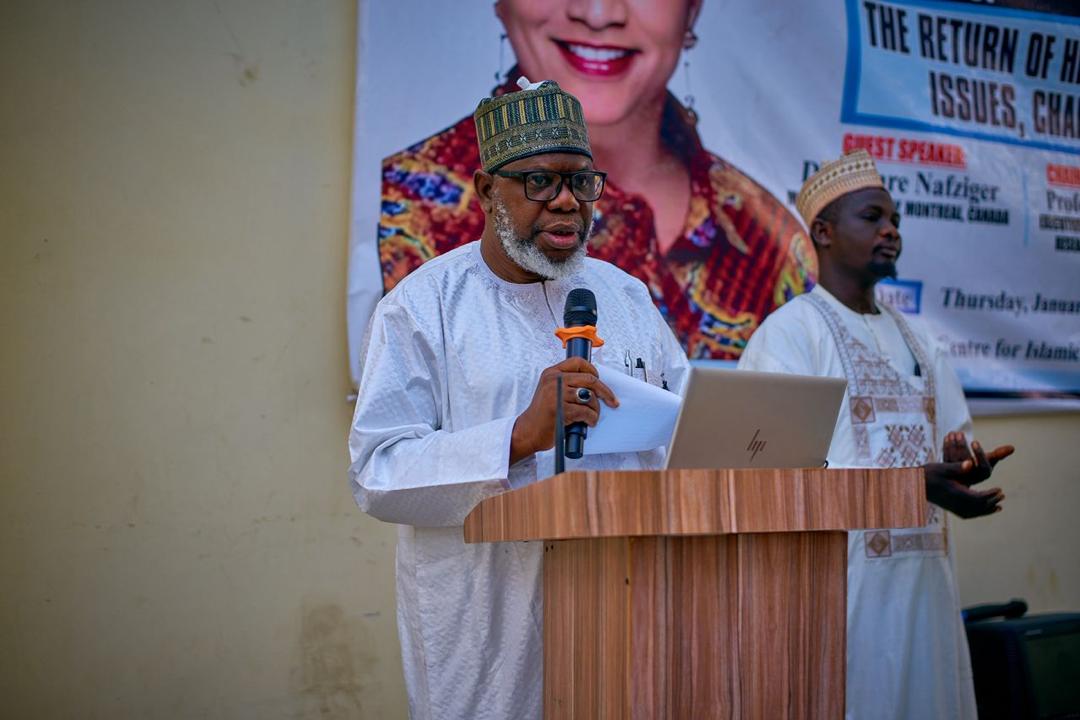
The 207th monthly seminar of the International Institute of Islamic Thought (IIIT), Nigeria Office, Kano, was held on Sunday, October 26, 2025, featuring a thought-provoking paper titled “Belief and Doubt: Understanding the Rise of Atheism among Muslim Youth in Northern Nigeria.” The paper was presented by Dr Aliyu Alhaji Rabiu of Gombe State University.

Although attendance at the seminar was modest, the session drew keen interest from both onsite participants and others who joined virtually via Zoom. 

The presentation examined the growing trend of atheism among Muslim youth in Northern Nigeria, exploring its historical roots, contemporary drivers, and the challenges it poses to Islamic identity.

The paper generated lively engagement during the question-and-answer session, where participants raised critical theological and social questions. The session chairman, Dr Ibrahim Ilyasu Adam, and other discussants commended the presenter for addressing a sensitive yet timely subject with intellectual depth and clarity.

The IIIT monthly seminar series continues to provide an important forum for reflective discussion and scholarly exchange on issues shaping Muslim thought and society.

Peter Obi says ‘Yahoo Boys’ are geniuses who need redirection

By Sabiu Abdulahi

Former Labour Party presidential candidate, Peter Obi, has said that many young Nigerians involved in internet fraud, commonly called Yahoo boys, are actually intelligent individuals who require proper guidance instead of outright condemnation.

Obi, who spoke in Onitsha, Anambra State on Saturday, explained that those engaged in such activities possess creative minds but have been misled due to lack of direction.

He noted that if their energy and innovation were properly channeled, they could contribute positively to the nation’s progress.

According to him, while the pursuit of money is common, real wealth should be measured by integrity, purpose, and character.

He stressed that true prosperity should empower people and uplift communities.

“Some of our so-called Yahoo boys are geniuses who need redirection, not condemnation,” Obi stated.

He added that their resourcefulness could be used to promote national development if given the right mentorship and support.

“Their creativity and courage, if properly guided, can drive innovation and national development. Real wealth uplifts both the individual and society, promotes education, reduces poverty, and creates opportunities for others to live dignified lives,” he said.

Obi maintained that redirecting the talents of such youths toward productive ventures would not only benefit the country’s economy but also help reduce crime and unemployment.

Nigerian Film Corporation, Plateau Gov’t to deepen partnership in film development

By Hadiza Abdulkadir

The Managing Director of the Nigerian Film Corporation (NFC), Ali Nuhu, has met with the Executive Governor of Plateau State, His Excellency Caleb Manasseh Mutfwang, to discuss strengthening collaboration between the Corporation and the state government.

During the meeting in Jos, the Plateau State capital where the NFC is headquartered, both parties explored ways to expand their long-standing partnership in promoting film production, nurturing local talents, and positioning Plateau as a central hub for Nigerian and African cinema.

Ali Nuhu noted that the discussion centered on the shared belief in the power of storytelling to shape perception, promote unity, and drive development. He emphasized that Plateau State, with its stunning landscapes and rich cultural heritage, has long been a home for some of Nigeria’s most compelling stories.

“Our goal,” he said, “is to ensure that those stories are not only told but also seen, heard, and celebrated across the world.”

Hisbah nabs 25 for alleged same-sex marriage in Kano

By Uzair Adam 

The Kano State Hisbah Board has apprehended at least 25 persons for allegedly organising a same-sex marriage in the Hotoro area of Kano metropolis.

Deputy Commander of the Board, Dr Mujahedeen Aminudeen, confirmed the arrest in a statement made available to The Daily Reality on Sunday.

He said the suspects—18 males and seven females—were arrested at the Fatima Event Centre along Hotoro Bypass on Saturday.

“Today, Saturday, 25th October 2025, we received a report that some individuals were allegedly organising a same-sex marriage. 

“Our personnel immediately stormed the Fatima Event Centre, the venue of the illegal gathering, and successfully arrested 25 persons,” Aminudeen stated.

He added that the suspects, including the alleged groom, were from different parts of the state, such as Sheka, Yar Gaya, and Kofar Nassarawa.

Aminudeen cautioned that the Board would not tolerate any act capable of undermining the moral values of Kano State.

“We are calling on members of the public to support the Hisbah Board by reporting immoral activities across the state. 

“The Board will continue to clamp down on such gatherings that promote immorality,” he said.

OPINION: Critical thinking or charlatanism?: Exposing the demonisers of the Salafi-Izala

By Shamsuddeen bn Abd al-Hamid al-Kanawy

(i)Background

Alhamdu Lil Lah, was Salatu was Salamu alaa Rasulil Lah, wa ala Alihi wa Sahbihi wa man Walah.In the recent years, the radical ‘Qala-Kato’ trends of rejecting the canonization of Sunnah (the Prophetic traditions), as the second primary source of Islamic Shariah (al-Baihaqi 73-77, Ibn Hazm 96-104, Ibn Qutlubugha 38-39, al-Shanghiti 86), which Northern Nigeria had for decades been largely forced underground – thanks to their Maitashine progenitor’s blood-soaked rebellion against the authorities in the region’s several urban centers (Gari 21-24), have managed to spring back to life, although, chiefly clothed in a desperately selective anti-Salafi rhetoric, or more precisely, paired with an agitation to -at least, keep the Salafis at bay.

It is no surprise that, the reawakened ‘Qala-Kato’ storm in North Nigeria takes aim at the Salafis. For one reason, the Salafis, otherwise known as the ‘Ahl al-Hadith wa as-Sunnah’ (the Adherents of the Hadith and Sunnah), are relentless and vigilant defenders of the realm of the Islamic scriptures, whereby vehemently protesting all sort of attempts to distort, twist or manipulate their codes, in addition to their absolute commitment to the pristine methodology of the Salaf (Righteous Predecessors) (Hussein 31, Thurston 5, Gari 14), for another, almost all advocates of disguised and undisguised anti-Islamic and anti-Muslim sentiments, regardless of their agnostic, atheist, polytheist, Judeo-Christian, liberal, secular, modernist, nationalistic, racial or ethnicist backgrounds, as well as the al-Batiniyyah (esoteric cults) and zanadiqah (the plural of the Arabic zindiq: any individual clandestinely committed to extreme infidelity to Islam), heretic Muslim sects and affiliations who grossly deviate from the teachings of the Quran and Sunnah, not only loathe the Salafis, but also consider them a genuine threat to their respective missions, quests and convictions. In the Nigerian North and elsewhere, the Salafi scholars and students of knowledge, could be distinguished from the rest of the Muslim clerical elites, by their staunch dedication to resisting intellectual war against Islam and its original sources.

As expected, a confederation of presumed critical thinkers of the North and their allies has thrown its weight behind the ‘Qala-Kato’ controversialists. However, the pro-Qala-Kato arguments and assessments of the supposed thinkers, are neither aligned to academic and intellectual basis of any sort, nor do they appear to reflect the reality about the ‘Qala-Kato’ contentions and the scholarly responses to them, the theologies/thoughts, history and sociology of the Islamic affiliations and modes of practice in Northern Nigeria. Hence, their glorification, or rather idolization of the ‘Qala-Kato’ are obviously not warranted by intellectual competence or critical thinking, but -perhaps, dictated by their desperation to bend the truth, twist the reality, mislead, brainwash and rewrite history.

I fear that, the purported Luminants of the North and their allies, might have considered it their professional -and perhaps, moral obligation, as the chosen ones -privileged for their competence in Western sciences and European languages, as well as their familiarity –with particularly, the Anglo-American norms and thoughts, to lead discussions on Islam and its theology, whereby, validating, invalidating constructing, deconstructing and reconstructing the Muslim discourses at will, in a demonstration of utter disregard for academic basis and intellectuality.

Interestingly, none of their Western and West-centric inspirers; the Orientalists, their heirs and puppets within the Islamic world -who had to sacrifice everything for their embattled cause, did a good job of redefining Islam, just as Edward Said testifies that “One ought never to assume that the structure of Orientalism is nothing more than the structure of lies or of myths which, were the truth about them to be told, will simply blow away” and ultimately rules that ‘’I myself believe that Orientalism is more particularly valuable as a sign of European Atlantic power over the Orient, than it is a veridic discourse about the Orient.(which is what, in its academic or scholarly form it claims to be)” (Said 6).

Given the above, this essay intends to explore, assess and deal with misconceptions, fallacies and misinformation about the Salafi-Izala mode of Islamic da’wah and practice in Northern Nigeria that are championed by the West-centric detractors of the as-Salaffiyah, and whose censure and condemnation of it ripens into misrepresentation and distortion of its doctrine and methodology, mischaracterization and dehumanization of the key figures within its intellectual and da’wah constituencies, fabrication and/or promotion of false or erroneous facts about it and its adherents, as well as glorification of the flawed discourses and arguments of its opponents.

Thematically, this essay will focus on issues closely associated with the concept, doctrine, methodology and identity of as-Salafiyyah, its advent in Northern Nigeria, the making of the Izala society; Northern Nigeria’s largest and most well-organized Salafi da.wah platform, the nexus between the Izala and sister local and international Salafi affiliations and platforms, the interrelations between the Sufi Brotherhoods, and between them and the Salafis in the 20th and 21st centuries C.E, the Salafi stands and attitudes towards non-Salafi Muslim individuals, affiliations and sects, allegations of literalism, inconformity, intolerance, conservatism, extremism, and terrorism against the as-Salafiyyah and its prominent figures, international inspirers and benefactors. The Salafi attitudes towards temporal disciplines (Western education) modernity, political and civil participation and -of course, analysis and assessment of their responses to the current Qala-Kato and esoteric Faira Sufi controversies.

The essay will engage the gross anti-Salafi sentiments associated with the following West-centric submissions:

Usman Isyaku’s Oct 18, 2005 Facebook piece on North’s religious landscape, Abdulrazak’s “Masussuka and the Mirror of the Changing North’’ (and through him the analyses of Ibrahim Musa, Ahmad Sadiq and Dr. Musa, among others), sampled contents of Nuru Khalid (the digital Imam’s) moments of anti-Salafi agitation and rhetoric, including his weirdest claim that Wahhabism (as-Salafiyyah) is a British creation, Shehu Sani’s “Political Assassination in Nigeria”; and the last but not the least, Sunusi Lamido Sunusi’s “Identity Politics, Ethnics and Parochialism: My Engagement with Ja’far Adam”, his “In Defense of Reverend Father Kukah” and “If Poverty Continues in the North, Islam Will Disappear”.

It is worth noting that, in the course of its treatment of the issues highlighted above, the essay will – in sha Allah, engage as many profiles within the orbit of the sampled intellectuals as possible.

To be continued…

Shamsuddeen bn Abd al-Hamid al-Kanawy

shamsuddeenabounafeesa@gmail.comJalingo, Taraba State, Nigeria.

Nigeria’s health sector and the need to review

By Abdullahi Adamu

Poor health facilities in Nigeria stem from severe underfunding, causing inadequate infrastructure, outdated equipment, drug shortages, and breakdowns in essential services like electricity and clean water. This affects rural and primary healthcare centres most, where facilities are dilapidated and staff insufficient. A shortage of medical professionals and brain drain overloads the system, leading to increased medical tourism and poor outcomes. Healthcare access is severely limited due to various systemic factors. 

Misconceptions about primary health care and poor leadership have hindered the health system, which hasn’t aligned its structures to achieve universal health access. Improving financial access alone won’t suffice without comprehensive primary health care reform to fix system flaws, deliver quality, efficient, acceptable care, and ensure sustainability and growth for the health system and country. A primary health care movement of government health professionals, the diaspora, and stakeholders is needed to drive this change and overcome political inertia.

In 2014, the National Health Act established the Basic Health Care Provision Fund (BHCPF) to address funding gaps hampering effective primary healthcare delivery across the country. The BHCPF comprises 1% of the federal government Consolidated Revenue Fund (CRF) and additional contributions from other funding sources. It is designed to support the effective delivery of Primary Healthcare services, provision of a Basic Minimum Package of Health Services (BMPHS), and Emergency Medical Treatment (EMT) to all Nigerians.

Despite the provisions of the BHCPF, the report’s findings expose the precarious state of healthcare in Nigeria, where access to and utilisation of health services remain marred by systemic challenges across states.

Public health facilities in all 36 states and the FCT are deficient, and the experiences of community members seeking care at these facilities are consistently awful.

Primary Health Care (PHC) is the foundation of the healthcare system in Nigeria and serves as the level at which non-emergency, preventive health issues are addressed. But sadly, many PHC centres in the FCT are poorly equipped and lack well-trained personnel.

 Kulo PHC was built with solid infrastructure and equipped with solar panels as part of a 2019 federal initiative aimed at strengthening primary care in hard-to-reach areas. Today, that promise lies in ruins. The solar panels are now dysfunctional—some stolen, others damaged by harsh weather and lack of maintenance. At night, the clinic plunges into darkness, leaving staff to work by torchlight or with dying cell phone batteries.

Three patients on life support at Aminu Kano Teaching Hospital were reported dead following an interruption to the hospital’s electricity supply by Kano Electricity Distribution Company.

The basic causes of Nigeria’s deteriorating health care system are the country’s weak governance structures and operational inefficiencies.

In 2014, the National Health Act established the Basic Health Care Provision Fund (BHCPF) to address funding gaps hampering effective primary healthcare delivery across the country. The BHCPF comprises 1% of the federal government Consolidated Revenue Fund (CRF) and additional contributions from other funding sources. It is designed to support the effective delivery of Primary Healthcare services, provision of a Basic Minimum Package of Health Services (BMPHS), and Emergency Medical Treatment (EMT) to all Nigerians.

Despite the provisions of the BHCPF, the report’s findings expose the precarious state of healthcare in Nigeria, where access to and utilisation of health services remain marred by systemic challenges across states.

Public health facilities in all 36 states and the FCT are deficient, and the experiences of community members seeking care at these facilities are consistently awful.

The Basic Health Care Provision Fund (BHCPF) was poorly implemented in 13 states.

The basic causes of Nigeria’s deteriorating health care system are the country’s weak governance structures and operational inefficiencies

Abdullahi Adamu wrote via nasabooyoyo@gmail.com. 

Dikko Radda reshuffles cabinet, appoints new heads of key agencies

By Anas Abbas

Governor Dikko Umaru Radda of Katsina State has approved a major cabinet reshuffle and announced new appointments across key government agencies to enhance efficiency and service delivery.

The development, which takes immediate effect, was contained in statements issued on Thursday by the Chief Press Secretary to the Governor, Ibrahim Kaula Mohammed.

The move involves redeployment of some commissioners and the appointment of two new special advisers.Under the reshuffle, Hon. Adnan Nahabu becomes Commissioner for Higher, Vocational and Technical Education, while Prof. Ahmad Muhammad Bakori, who previously led Agriculture and Livestock Development, now heads the newly created Ministry of Livestock Development.

Additionally, Hon. Aliyu Lawal Zakari moves from Youth and Sports to Agriculture, and Hajiya Zainab Musa Musawa shifts from Basic and Secondary Education to Special Duties.

Also, Hon. Yusuf Suleiman Jibia now oversees the Ministry of Basic and Secondary Education, while Engr. Surajo Yazid Abukur takes charge of Youth and Sports Development. Hajiya Aisha Aminu, former Director-General of the Katsina State Enterprise Development Agency, becomes Commissioner for Women Affairs.

Governor Radda further appointed Hajiya Hadiza Abubakar Yar’adua as Special Adviser on Nutrition and Welfare Services, and Isa Muhammad Musa as Special Adviser on Cultural Orientation.

He urged all appointees to align with his administration’s Building Your Future agenda focused on accountability, innovation, and improved governance.

However, the governor appointed Engr. Abba Junaidu, MNSE, as Chairman of the Katsina State Road Maintenance Agency (KASROMA).

He also appointed Dr. Babangida Ruma as Director-General of the Katsina State Enterprise Development Agency (KASEDA), describing him as a technologist and youth advocate previously recognised by UNESCO as the “Father of Technology and Innovation.”

Former Head of Service, Idris Usman Tune, was appointed Chairman of the Katsina State Civil Service Commission.

The Katsina State Pension Bureau was reconstituted with Ibrahim Boyi Dutsinma as Part-Time Chairman, Musa Rabiu Mahuta as Executive Director of Finance and Administration, Abbati Ibrahim Masanawa as Executive Director of Operations, and Usman Shehu as Executive Director of ICT and Database Management. Dr. Faruk Aminu will serve as Independent Observer.

Similarly, for the Katsina State and Local Government Pension Transition Board, Hon. Muntari Dan Ammani was appointed Executive Secretary, while Garba Sanda Mani, MNI, will serve as Part-Time Chairman.

Governor Radda expressed optimism that the changes will strengthen coordination and improve policy execution across ministries and agencies, reaffirming his administration’s commitment to transparency, accountability, and people-centered governance.

Ghana adopts local languages as medium of instruction in schools

By Muhammad Sulaiman

The Government of Ghana has introduced a new education policy mandating the use of local languages as the primary medium of instruction in all schools across the country.

Announcing the policy, Minister of Education, Haruna Iddrisu, said the decision marks a major step toward resetting Ghana’s education system to better reflect the nation’s linguistic and cultural realities. He emphasised that children learn best in their mother tongue, which enhances understanding and cognitive development.

“The use of our local languages in classrooms will not only improve learning outcomes but also help preserve Ghana’s rich linguistic heritage,” Iddrisu stated.

The Ghana Education Service (GES) has been directed to oversee the nationwide implementation of the policy. The move is expected to significantly reduce the dominance of English in the country’s early education system and promote inclusivity through indigenous languages.