Admin

Obi says Kanu’s conviction could deepen unrest, calls for political solution

By Hadiza Abdulkadir

Former Labour Party presidential candidate Peter Obi has warned that the conviction of IPOB leader Mazi Nnamdi Kanu could worsen insecurity in the country. Obi issued the warning in a statement posted on his social media accounts, saying the development comes at a time when Nigerians are already struggling with economic hardship and widespread violence.

Obi said Kanu’s arrest, detention, and now conviction represent “a failure of leadership,” arguing that the concerns raised by the IPOB leader could have been addressed through dialogue and inclusive governance rather than coercion.

He cautioned that the government’s approach risks aggravating tensions in the South-East and further stretching security agencies already battling multiple crises nationwide.

According to him, nations facing similar internal tensions often adopt political solutions and negotiated settlements when legal processes alone cannot guarantee stability.

Obi urged the Presidency, the Council of State, and respected national figures to intervene and pursue reconciliation, warning that only justice, fairness, and meaningful engagement can prevent the situation from escalating into a deeper security challenge.

Bashir Ahmad faults The Herd for “dangerous” stereotyping of Fulani herders

By Muhammad Abubakar

Former presidential aide Bashir Ahmad has criticised the newly released Netflix film The Herd, arguing that it reinforces harmful stereotypes about Fulani herders and the wider Arewa region. In a post shared on social media, Ahmad said the problem is not the film’s focus on banditry, which he acknowledged is a tragic reality, but its “dangerously inaccurate” portrayal of an entire ethnic group.

Ahmad pointed to a scene in the movie’s teaser in which herders suddenly pull out guns and abduct travellers, describing it as a misleading depiction that paints all Fulani herders as violent criminals. He stressed that while some bandits are indeed Fulani, the vast majority are innocent and among the worst affected by insecurity, having lost their cattle, livelihoods and loved ones.

He warned that such portrayals in international films risk shaping global perceptions in damaging ways, fuelling suspicion and discrimination against innocent people. “That is how stigma is created,” he said, noting that millions of viewers may come to believe that every Fulani herder is a terrorist.

Ahmad faulted the filmmakers for failing to conduct adequate research or engage stakeholders, security experts, victims and pastoralist groups before tackling such a sensitive national issue. He also suggested that the Nigerian Film Corporation, led by Ali Nuhu, should have provided better guidance to avoid what he described as “damaging portrayals.”

He concluded by calling for responsible storytelling that condemns criminals without casting “a shadow of suspicion over millions of innocent herders,” warning that Nigeria’s fragile security situation should not be worsened by divisive media content.

Still on America’s grievances with Nigeria

By Lawal Dahiru Mamman

History has shown, time and again, that empires rise and fall. The Roman Empire, one of the most powerful the world has ever known, once ran its affairs through the “cursus publicus”, a state-run courier service that carried official messages, documents, and goods across vast territories. At its peak, that system was the lifeblood of Rome’s political and economic power.

It was through the “cursus publicus” that Rome sustained control over trade, tax collection, commercial regulation, and responses to economic challenges. It kept the wheels of commerce turning, ensured that official supplies — from grains and olive oil to textiles and metals — moved swiftly, and maintained the empire’s hold over its provinces.

But as Rome began to lose its grip on that system, communication faltered. Trade weakened. Taxes dwindled. Economic integration collapsed. What followed was a slow, sprawling decline that signalled the empire’s loss of power and the gradual rise of others.

Today, empires no longer look like Rome. They are defined by global influence, control of international systems, and the ability to shape the world order. The West — especially the United States — has long enjoyed that advantage. But emerging power blocs are redrawing the world map, and anyone can see the global balance is shifting.

It is against this backdrop that the recent noise around an alleged “Christian Genocide” in Nigeria must be understood. Following that allegation, US President Donald Trump redesignated Nigeria as a Country of Particular Concern (CPC). The designation carries several potential consequences: aid cuts, export license restrictions, asset freezes, limited security cooperation, and even American opposition to international loans and investments.

Not stopping there, Trump went a step further, issuing a dramatic threat of military action that would be “fast, vicious, and sweet” if the Nigerian government failed to protect its citizens. His declaration sparked reactions far beyond Nigeria’s borders, raising an important question: What truly motivates America’s sudden aggression?

To understand this, one must consider the broader geopolitical shifts unfolding beneath the surface. In January 2025, Nigeria joined BRICS — a powerful intercontinental bloc formed by Brazil, Russia, India, and China, with South Africa later joining. The BRICS exists largely to counter the dominance of Western institutions like the IMF and the World Bank and to promote a multipolar global economy in which the US dollar no longer reigns supreme. 

With a combined GDP of roughly $30 trillion, the bloc wields real economic weight. Nigeria’s entry strengthens its ties with major economies such as China and India, promising new investments in energy, agriculture, infrastructure, and industrial development. It also opens the door to greater export opportunities, especially in oil and natural gas. 

For a country long boxed into Western-controlled financial systems, BRICS offers breathing space — and alternatives. There is also the Dangote Refinery, with its single-train capacity of 650,000 barrels per day. For decades, Nigeria relied on imported fuel despite its abundant crude oil. That era is ending. Import figures are falling sharply — 24.15 million litres per day in January 2025, 19.26 million in September, and just 15.11 million in the first ten days of October. 

With Dangote planning to expand to 1.4 million barrels per day, Nigeria is on the path to fuel independence, rivalling India’s Jamnagar Refinery, the world’s largest. This development, naturally, unsettles countries that benefit from Nigeria’s dependence — America included.

Then there is Nigeria’s deepening relationship with China. In the past year alone, Nigeria has signed major deals on industrial parks, rail and port infrastructure, mineral exploration, and energy development. China’s economic footprint in Nigeria is expanding rapidly. Meanwhile, Russia’s growing presence across sub-Saharan Africa and Nigeria’s renewed ties with France add to America’s discomfort.

The mineral dimension is equally sensitive. Beyond oil, Nigeria holds rare minerals — including lithium — that power the world’s battery industry. In a world moving toward electric mobility and renewable energy, lithium is the new oil. And China, not the United States, is securing access.

US Senator Ted Cruz once captured America’s anxiety bluntly during a congressional session when he warned: “China is a global threat that must be confronted territory by territory, nation by nation… China is pouring billions into its Belt and Road Initiative… gaining control over cobalt, lithium and other rare earth minerals… refining more than 70% of the world’s cobalt and controlling vast shares of global supply chains.”

His comments speak volumes when placed beside today’s geopolitical tensions. None of this denies the fact that Nigeria still faces grave security challenges. Our leaders must rise to their responsibilities and make the country safe for all. But it is naïve to imagine that America’s sabre-rattling is purely humanitarian. 

The United States may not be threatening a “sweet” military strike out of concern for Nigerian lives. Rather, like Rome losing its “cursus publicus”, America may be reacting to a shifting world order in which its grip is slipping — and Nigeria now sits at the centre of that shift.

Lawal Dahiru Mamman writes from Abuja. He can be contacted at: dahirulawal90@gmail.com.

Army nabs suspected arms dealer, rescues kidnapped victim as troops hit terror networks

By Uzair Adam 

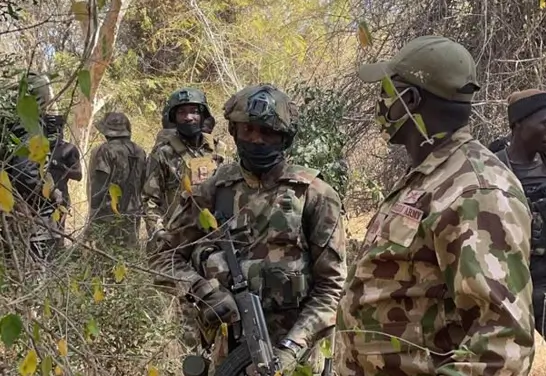
The Nigerian Army has apprehended a suspected arms dealer, rescued a kidnapped victim, and disrupted terrorist logistics networks within the last 24 hours.

A credible source at the Army Headquarters reportedly disclosed that the troops of Operation FANSAN YAMMA, on Thursday, apprehended a suspected terrorist informant during an ambush at Ungwan Gombawa in Kontagora Local Government Area (LGA) of Niger State.

The source said troops of 1 Brigade also arrested an alleged major terrorist logistics supplier and arms dealer at Danjigba in Bukkuyum LGA.

According to him, preliminary investigations reportedly linked the suspect to two coordinators in Anka LGA, believed to be responsible for storing weapons sourced from the Niger Republic.

He said the troops recovered military uniforms, a helmet, boots, financial receipts amounting to about N4 million, and audio evidence linked to arms transactions.

The source added that troops responding to intelligence on the recent abduction of students of GGSS Maga in Kebbi State stormed a terrorist camp in the Gando–Sunke Forest, which belongs to a kingpin known as Bello Kaura.

He said the attackers fled the location, allowing troops to destroy the camp and its support facilities.

The source explained that another suspected informant travelling from Sokoto was arrested at Augie, where troops recovered five ATM cards, clothing, and N78,900.

In another development, he said troops survived an ambush along the Kaiga–Mara road in Katsina State, forcing the attackers to flee.

He added that an operation carried out in Shinkafi and Zurmi LGAs also resulted in a firefight during which troops captured two AK-47 rifles, ammunition and two motorcycles.

Under Operation Enduring Peace in Plateau State, troops foiled a kidnap attempt in Jos South, rescuing a victim who sustained gunshot wounds.

The source also confirmed that eight suspected criminal herders were arrested in a separate raid in the same LGA.

Similarly, troops of Operation Whirl Stroke responded to a road incident in Nasarawa State, where three passengers were reportedly kidnapped and a driver was injured. Efforts to rescue the victims are ongoing.

He added that troops arrested two herders accused of destroying crops in Guma LGA of Benue State.

According to him, the Chief of Army Staff, Lt.-Gen. Waidi Shaibu recently undertook operational visits to Borno, Kaduna, and Zamfara, during which he assessed ongoing operations and urged troops to remain disciplined, alert, and committed to the fight against terrorism.

NYSC redeploys Corps member who threatened to sleep with students, deepens investigation

By Ishaka Mohammed

The National Youth Service Corps (NYSC) has withdrawn Oyaje Daniel from his Place of Primary Assignment (PPA) in Igabi Local Government Area of Kaduna State and redeployed him to the NYSC state headquarters for closer monitoring. This came after his threat on social media to sleep with his female secondary school students.

As part of the sanctions, Daniel has been denied access to the free accommodation at the headquarters despite being required to report there daily for the remainder of his service year.

The Daily Reality earlier reported that the affected Corps member serving at Judeen International School in Kaduna had threatened to sleep with his female secondary school students, whom he considered more voluptuous than undergraduates. 

According to John Adesogan, who appears to have been Daniel’s schoolmate, the Corps member was summoned by the NYSC Disciplinary Committee at the state headquarters after his comment attracted public outcry.

John Adesogan said, “The Alumni President of our college, Comr. Philip Ayuba Bobai and I went with Daniel to the NYSC Headquarters to further engage with the officials handling the matter.” 

He further revealed that the NYSC had constituted an investigation team to visit Daniel’s former PPA to determine whether any other form of misconduct had occurred. This is in addition to NYSC’s efforts to track other Corps members who made comments similar to Daniel’s on the same post.

Daniel has taken to social media to express remorse. Reacting to a comment from one Sabastine Ezekiel, who urged him to “be strong”, Daniel wrote, “Thank you, my leader. I’m sorry for disappointing your expectations. I was careless with my comment, thinking I was catching ‘cruise’. But I have learned my lesson. All I want is another chance to live up to my name and trust.”

Adesogan urged fellow Nigerians to use social media responsibly, maintain discipline, and create a safer, more decent online environment.

Plateau state shuts all primary, junior secondary schools over security concerns

By Abdullahi Mukhtar Algasgaini

The Plateau State Government has ordered the immediate closure of all primary and junior secondary schools across the state as a precautionary security measure.

The directive was issued on Friday by the State Universal Basic Education Board (SUBEB). In a statement released in Jos, the Board’s Public Relations Officer, Mr. Richard Jonah, confirmed the directive.

Jonah addressed parents and guardians, assuring them that the shutdown is a temporary step.

He emphasized that the decision was imperative to avert potential security threats to students and school infrastructure.

While the statement did not specify the nature of the security threats or a potential reopening date, the move underscores the government’s priority to ensure the safety of schoolchildren amid ongoing security challenges in the region.

Tinubu cancels attending G20 Summit, assigns Shettima

By Ibrahim Yunusa

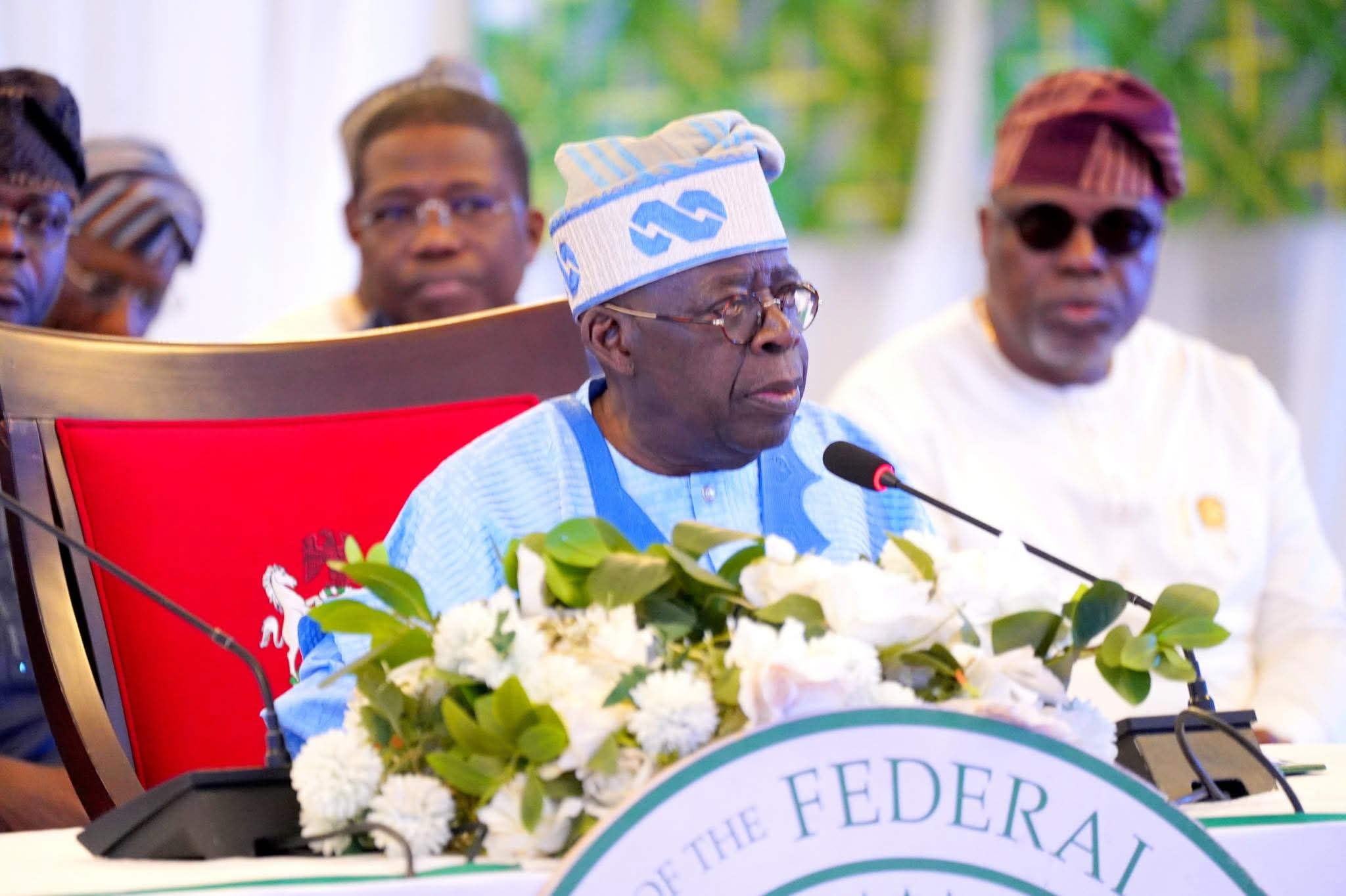
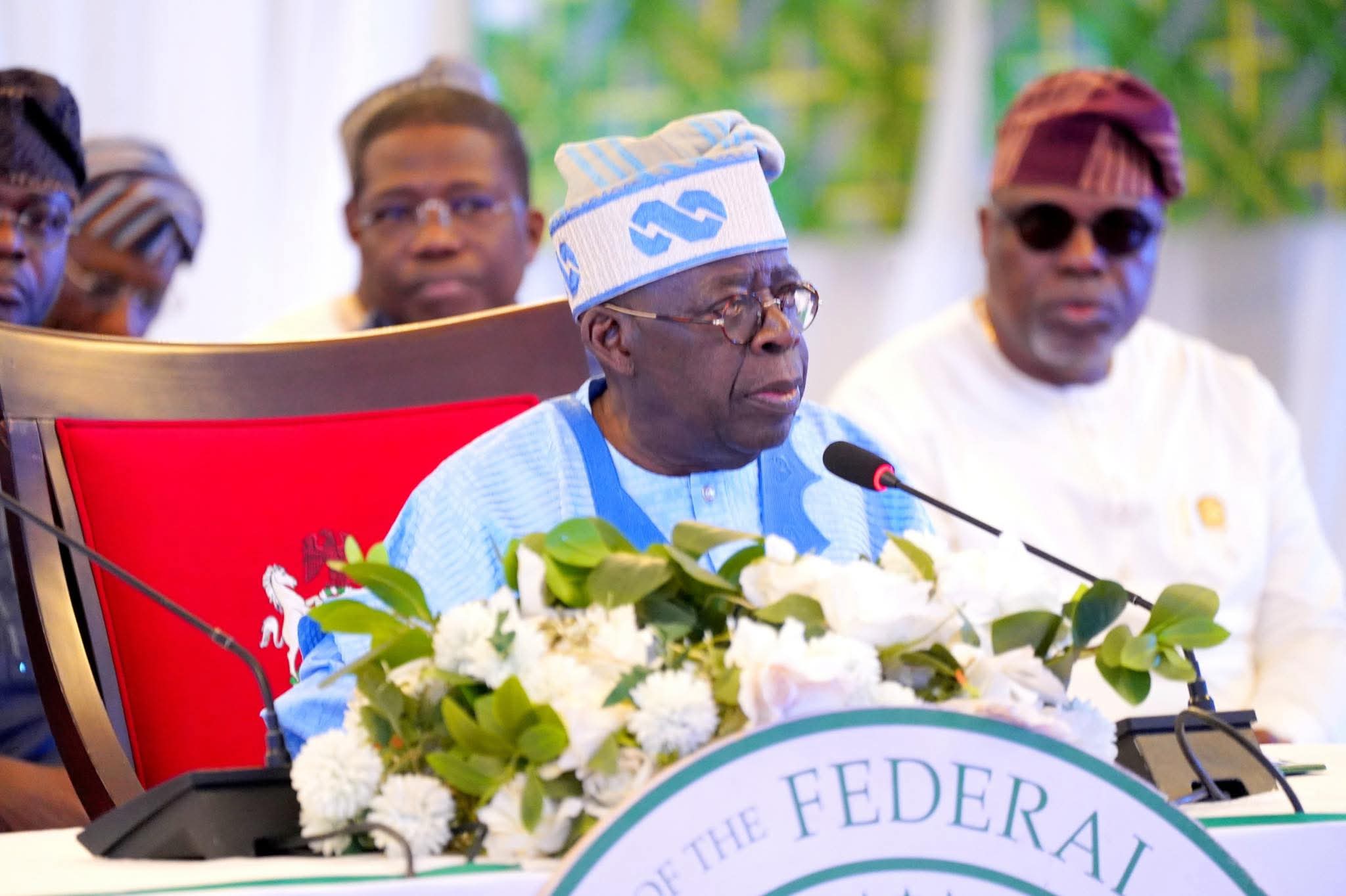
Amidst the heightened security tension, President Bola Ahmad cancels his planned trip to G20 Leader’s Summit in Johannesburg, South Africa and delegated Vice president, Kashim Shettima to represent him in the meeting.

Disclosed by Stanley Nkwocha, the Senior Special Assistant to the President on Media and Communications, Office of The Vice President, Shettima has departed Abuja for the G20 Leader’s Summit.

President Tinubu has cancelled the trip to South Africa awaiting the security briefings on the current escalated terrorists operations in Kebbi and Niger state.

The Presidential statement said, President Cyril Ramaphosa, the South African leader who also serves as the current President of the G20 group had invited his Nigerian counterpart to participate in this year’s edition.

The Summit, scheduled to take place from Saturday, November 22nd, to Sunday, November 23rd, at the Johannesburg Expo Centre, will bring together leaders from the world’s top 20 economies, including the European Union, the African Union, financial institutions, among others.

Four days to face Barcelona, Cole Palmer fractures his toe

By Ibrahim Yunusa

Chelsea attacking midfielder, Cole Palmer, suffers home injury and fractures his toe four days to meet Barcelona in Champions League.

Palmer who is almost back from a long groin injury has this small issue while his club, Chelsea, is counting on him in their Champions League clash with Spanish club, Barcelona.

With Barca, 11th and Chelsea, 12th in the Champions League table with difference of two goals to Chelsea with the same point, seven, their Tuesday’s clash will determined who will be on the top of the other in being in the top eight of the table.

Pupils’ abduction: Niger State Gov’t blames St. Mary’s School

By Ibrahim Yunusa

An unidentified number of pupils and staff of St. Mary’s School in Papiri community of Agwara Local Government of Niger State were abducted by terrorists in the early hours of today, Friday.

The terrorists raided the school between 2:00 am to 3:00 am and kidnapped a number of pupils that yet to be identified by authorities.

While condemning the attack, the Niger State Government blames the school of not complying with the directives of closure of boarding schools issued by the state government.

Statement issued by the Office of the Secretary of the State Government, Alhaji Abubakar Usman, disclosed that prior intelligence report received by the government alarming an increased threat level in parts of Niger North Senatorial District, the state government in response to the credible security alerts issued a clear directive suspending all construction activities and also ordering the temporary closure of all boarding schools within the affected areas as a precautionary measure.

“Regrettably, St. Mary’s School proceeded to reopen and resume academic activities without notifying or seeking clearance from the State Government, thereby exposing pupils and the staff to avoidable risk.” the statement added.

This incident comes days after 25 students were kidnapped in Maga of Kebbi state resulting a height tension and deteriorating of security of educational institutions across the region.

Genocide nomenclature in Nigeria, by Dr. Aliyu U. Tilde

By Aliyu U. Tilde

International perception of religious conflicts in Nigeria is influenced by a propaganda that is overwhelmingly based on biased naming of their victims and perpetrators. When you search the Internet for the killing of Muslims in Nigeria by Christians, the best result you can get would be very scanty. But when you ask about Christian genocide, killings, etc., the result would be very lengthy. Something is amiss.

It is not that Muslims are not being killed by Christians or fellow Muslims. For twenty years, before Boko Haram and bandits started killing mostly Muslims, wholesale massacres of Muslims have been taking place in Northcentral Nigeria especially. And the mass killings have continued even after 2009 when Boko Haram appeared. However, the Internet turns blind when you search for them. Therefore, international observers hardly remember them and researchers hardly notice them. The reason is in the name.

Same Crime, Different Names

When the victim is a Christian, media reporters, who are predominantly Christians in the country, call them Christians, even in a conflict that may have nothing to do with religion. The headlines will quickly read: Fulani kill Christians, Christian communities attacked, genocide of Christians, etc. The Internet sees only what is posted.

On the flip side, when the victims are Muslim, they are given neutral names: villagers, worshippers, civilians, locals, people, Nigerians, etc. The 25 abducted Kebbi school girls are called “school children”, not “Muslim school children”. Their religious identity is cancelled, deleted or hidden deliberately. So when any scholar or reader searches the Internet on Muslim killings or genocide, he hardly gets much.

Again, if the attackers are Muslim, they are eagerly reported as Islamists, jihadists, Fulani (Muslim) militants, terrorists, etc. The Internet easily apprehends them and hands them over to the researcher who receives them with delight and uses them as the statistics of his own narrative, thus multiplying the spread of the bias.

However, if the perpetrators are Christian-affiliated, they are reported as youths, tribal militias, unknown gunmen, attackers, mob, etc. The Christian identity is deleted, hidden and allowed to escape the policing of the Internet.

Thus, the Internet-dependent world of today, as was the mainstream Christian southern press, is afflicted with the illusion that Christians are always the target, and Muslims always the perpetrators, which is false by history, statistics and morality.

Forgotten Massacres of Muslims

The Internet hardly reflects the following carefully planned and executed war crimes against Muslims by their Christian neighbours:

— Kasuwan Magani (1981) – The first major religious crisis began with the nocturnal attack of innocent Muslims by Christians.

— Kafanchan crises (1987, 1999) – Multiple waves of massacres of Muslims.

— Zangon Kataf (1992) – So horrendous that Christian leaders were convicted and a retired General was sentenced to death.

— Tafawa Balewa recurring pogroms (1991, 1995, 2000, 2001) – Ending in the cleansing of the town of its Muslim founders and majority.

— Plateau crises (2001, 2004, 2008, 2010, 2012) – More than 40 Muslim settlements were wiped out.

— Yelwa massacre (May 2004) – Exceptionally barbaric; the Christian President suspended the Governor and declared a state of emergency.

— Southern Kaduna (2011) – In Matsirga, Zonkwa, Kachia, and many other southern Kaduna towns where over 1,200 Muslims were killed by Christian militias.

— Wukari crises (2013–2014) – Jukun Christian militias carried out mass slaughter of Muslims.

— Taraba/Jalingo/Ardo Kola (2012–2017) – Entire Muslim communities wiped out.

— Mambilla Plateau massacre (June 2017) – 727 Muslim Fulani herders massacred under the supervision and protection of Christian officials of Sardauna LGA and Taraba State Government.

— Numan massacre (November 2017) – Hundreds of Fulani Muslims killed by Bachama Christian militias.

All of the above gruesome Christian-on-Muslim killings are called ethnic clashes, reprisals, intercommunal violence, farmer-herder conflict, youth violence or mob attack. When Muslims attack Christians, often in defence or reprisal, it is called Islamic violence, jihad, Christian genocide or religious persecution. The asymmetry is astonishing and it is not without its reasons and motives.

Reasons

The naming bias exists because Western institutions are Christian, culturally, and so is the Nigerian media predominantly. This tilts their sympathies, metaphors and moral instincts toward Christian victims. A Muslim killed in Kuru is a Nigerian villager; a Christian killed in Jos is a Christian.

The evangelical world and funding structure of NGOs also share a quota of the biased narrative. Organizations like CSW, Genocide Watch, Open Doors, WWW, ICC Evangelicals, name them, are Christian and their reports are the fodder of CNN, US Congress, BBC, and form the basis of Western narrative. Muslims are not blessed with such infrastructure of global lying and propaganda.

Then Christian traders of conflict especially from the Northcentral, IPOB secessionist, and evangelical entrepreneurs feed this inverted narrative for the purpose of gaining NGO sympathy, Western evangelical funding, UN, US and UK political pressure, diplomatic leverage as well as weapons and security alliances. Moreover, foreign governments are easily animated by the mention of religious persecution rather than ethnic conflict.

There is also this strange desperation to prove Christian persecution in Nigeria which, for lack of sufficient data, is compelling many Christian clerics and politicians to claim Muslim victims as Christians. A picture of a Muslim burial is tagged “Muslim murder 25 Christians in latest violence across Nigeria—Pastor killed, churches torched.” In the instance of the kidnapping of 25 girls from a secondary school in Kebbi, even American officials and former Rep. Riley Moore are insinuating that they are Christians. Fortunately, to forestall any false claim, the school has just released the names of the victims: 100% Muslim.

The same thing with the killings in Bama, abductions in Katsina, and so on. We hope they will not claim that General Alkali and Brig. M. Uba are Christians too. Some people sabi lie. A reverend just told the Internet world that he carried out 70 mass burials, some up to 500 people in mass graves—he alone, he claimed. Where are the graves? No answer. Chineke! IPOB have also jumped into the fray. I watched a video showing cattle grazing while a group of masked men, speaking Hausa with a heavy Igbo accent, claimed to be Fulani terrorists ready to kill Christian Igbo.

Finally, let us also not forget the frequency of complaint and the readiness to exaggerate. Muslims hardly complain over and over when they are killed. They shout once, mourn for three days and carry on, “leaving everything to God.” Christians, on the other hand, as a Christian TikTok girl said, see it as an opportunity to complain, at home and abroad, for the reasons I just mentioned. The Internet algorithms will then definitely be in favour of the Christian narrative.

In the end, a false portrait is painted—that Christians are being wiped out everywhere; Muslims are never victims; Christians never kill; and Muslims kill for religion but Christians for “land” and “in clashes.”

Conclusion

A balance even in vocabulary is always important for proper understanding of any situation. Muslims in Nigeria are learning so since President Trump assigned himself the role of Peter the Hermit. They must learn the art of nagging and complain endlessly as their Christian counterparts do. Finally, they must adopt the Nigerian vocabulary of conflict reporting, naming the religious identity of their attackers and victims, whether Christians or Muslims. Only this would open the eyes of the Internet to their suffering, bring their victims to the notice of researchers and catch the attention of the West and global institutions.

With this egalitarian balance of nomenclature, the world would see a better picture of conflicts in Nigeria and assist the country in overcoming its problems. Without it, the narrative will remain one-sided and the Muslims in Nigeria will always be blamed—and punished—for crimes over which they do not have monopoly.

Dr. Aliyu U. Tilde is a political analyst based in Bauchi State Nigeria.