Admin

Trump’s threat and the wave of abductions in Nigeria

By Zayyad I. Muhammad

On Saturday, November 1, 2025, U.S. President Donald J. Trump made his famous “guns-a-blazing” remark and described Nigeria as “the now disgraced country.”

On Sunday, November 2, he repeated that the United States could deploy troops to Nigeria or launch airstrikes to stop alleged killings.

In what appears to be a reaction to Trump’s comments, terrorists and bandits in Nigeria have intensified attacks, especially the mass abduction of pupils, students, and worshippers.

On November 17, bandits abducted 25 female students from Government Girls’ Comprehensive Secondary School, Maga, Kebbi State.

On November 18, daredevil gunmen attacked Christ Apostolic Church, Oke-Isegba, Eruku, kidnapping 38 worshippers during an evening service.

On Friday, November 21, gunmen raided St. Mary’s School in the Papiri community of Niger State’s Agwara District, abducting 215 pupils and 12 teachers.

That same day, after Trump appeared on Fox News and declared, “I think Nigeria is a disgrace,” reports emerged that ISWAP fighters had abducted 13 teenage girls working on farmlands in Askira-Uba, Borno State.

Armed groups across Nigeria have long understood the symbolic power of their targets. But the timing and composition of these attacks suggest deeper motives:

Three separate days. Four mass kidnappings. Hundreds of victims. Mostly female victims. This is not a coincidence. This is a strategy.

Observers cite four major reasons:

1.  To escalate the situation and attract international attention. Nothing provokes global outrage like the mass abduction of schoolgirls or worshippers. Terrorists crave visibility, especially when a powerful international figure has threatened intervention.

2.  To instil fear and embarrass the government , psychological warfare, so to speak. Targeting female students and worshippers strikes directly at the heart of communities. Schools and places of worship are supposed to be sanctuaries; when they are violated, society trembles.

3.  To use abducted victims, especially girls, as human shields. If the U.S. were ever to conduct air strikes, the bandits and terrorists understand the protective value of having dozens of young female hostages in their custody.

4.  Ransom opportunities: To exploit heightened international interest as leverage for ransom or negotiation. Heightened American interest increases the “value” of hostages. Criminal groups see an opportunity to negotiate for large payouts.

President Trump’s threats have become a local weapon for the terrorists. To be fair to President Trump, he may not intend it, but his sensational remarks have become ammunition in the arsenal of Nigeria’s armed groups. They interpret his words as an opportunity or a provocation and recalibrate their tactics accordingly.

Also, to be fair to President Asiwaju Bola Ahmed Tinubu, he or his government cannot control the statements made by foreign leaders. Still, they can control how prepared the country is for the consequences. This moment demands urgency. The Nigerian delegation to the US, led by Mallam Nuhu Ribadu, is engaged in sterling diplomatic work. Thus, apart from local efforts, this visit indicates to the Nigerian leadership that a well-planned diplomatic strategy can prevent reckless foreign commentary from escalating domestic crises.

Local and international efforts must work together!

Zayyad I. Muhammad writes from Abuja via zaymohd@yahoo.com.

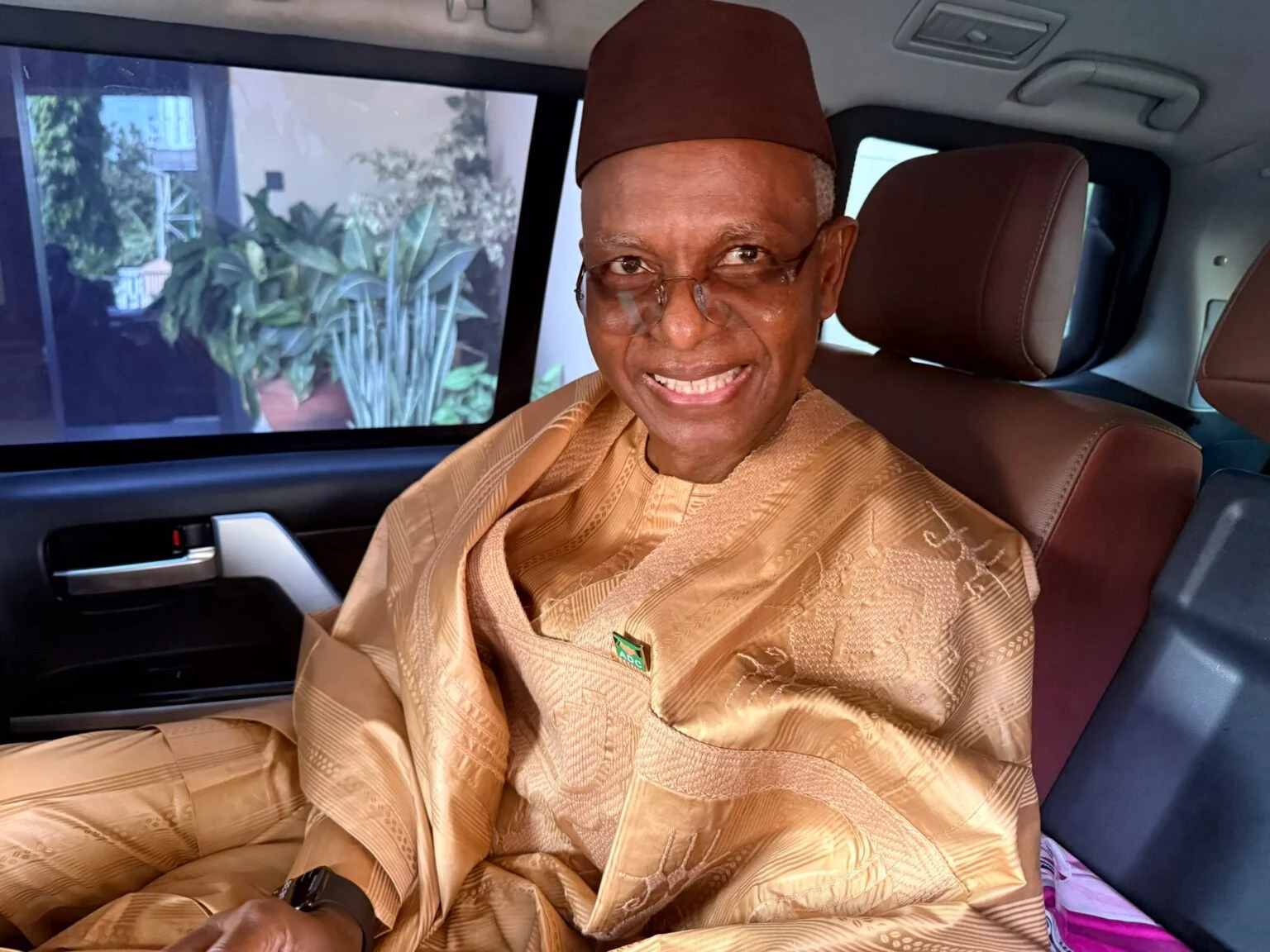
Kaduna govt gives El-Rufa’i one-week deadline to justify alleged N1bn bandit payment claim

By Uzair Adam

The Kaduna State Government has dismissed as false and politically driven the allegation that the current administration paid N1bn to bandits, describing the claim as unfounded and damaging.

In a statement issued on Sunday, the government gave the former governor a one-week ultimatum to present verifiable evidence or publicly withdraw the allegation, insisting that failure to comply would result in legal action.

The former governor had, during a recent appearance on Channels Television, alleged that the state paid bandits as part of its security engagements.

Responding to the claim, the Commissioner for Internal Security and Home Affairs described the allegation as reckless, baseless and deliberately misleading.

The statement criticised the former governor for weaponising a sensitive security matter for political purposes, adding that such action falls below the standard expected of someone who previously held the highest office in the state.

The government demanded that the allegation be retracted and an unreserved apology issued within one week, warning that the state would initiate legal proceedings to protect public order and institutional integrity should the ultimatum be ignored.

It stressed that the governor has never authorised, negotiated or paid any amount to criminal groups, a position repeatedly made clear in interviews, press briefings and engagements with stakeholders.

The statement also recalled that the Office of the National Security Adviser had earlier dismissed similar claims as unfounded and inconsistent with Nigeria’s security practices, reaffirming that neither the Federal Government nor state governments pay ransom to criminal elements.

Highlighting its security approach, the Kaduna State Government stated that it has adopted a community-focused strategy anchored on stronger military operations, deeper engagement with legitimate community leaders and improved access to education, healthcare and economic opportunities.

It emphasised that the state engages with communities—not bandits.Grassroots groups, including those from areas most affected by insecurity during the former governor’s tenure, have also rejected the allegation, describing it as misleading and untrue.

The statement further referenced past accusations made by senior officials of the former administration, suggesting that public funds were used to appease certain groups, making the current allegation particularly paradoxical.

Since taking office, the governor has prioritised stabilising vulnerable communities, reopening schools, markets and farmlands and rebuilding trust among previously divided groups.

The government urged former officials to exercise restraint and support ongoing efforts to sustain peace.

Challenging the former governor to present credible evidence—such as bank records, internal correspondence or security documents—the government noted that similar claims made in September 2025 were never backed with proof.

Reaffirming its commitment to transparency and responsible security management, the Kaduna State Government said it would not be distracted by bitterness, fear-mongering or deliberate misinformation.

Tinubu orders immediate withdrawal of police officers from VIP security duties

By Abdullahi Mukhtar Algasgaini

President Bola Ahmed Tinubu has issued an immediate order for the withdrawal of all police officers assigned as personal security guards to Very Important Persons (VIPs) across the country.

The directive, announced on Sunday, aims to redeploy these officers to their core duties of frontline policing and public security.

The order was issued following a security meeting in Abuja, which was attended by the heads of the nation’s security agencies, including the Army, Air Force, the Department of State Services (DSS), and the Inspector-General of Police.

According to the new directive, any VIP requiring personal protection must now seek such services from the Nigeria Security and Civil Defence Corps (NSCDC), which will be responsible for providing armed guards.

This move comes as many regions of the country, particularly rural and remote areas, suffer from a severe shortage of police personnel.

This deficit has hampered the force’s ability to effectively protect lives and property.

President Tinubu stated his administration’s commitment to increasing police presence nationwide to tackle the security challenges plaguing the nation.

This initiative aligns with the federal government’s earlier approval to recruit 30,000 new police officers, alongside a partnership with state governments to enhance police training facilities across Nigeria.

Bauchi govt shuts all schools over security concerns

By Sabiu Abdullahi

The Bauchi State Government has ordered the immediate closure of all schools across the state due to rising security challenges.

The directive affects primary, secondary and tertiary institutions. It also covers Federal Government-owned schools and private schools operating within the state.

In a public announcement signed by the Information and Public Relations Officer of the Ministry of Education, Jalaludeen Usman, the government said: “The Bauchi State Government wishes to notify the general public that all primary, secondary, and tertiary institutions—including Federal Government-owned schools and private schools—are hereby closed with immediate effect.”

The statement explained that the decision was not taken lightly. It said:“This decision, though difficult, was taken by the Government of Bauchi State after extensive consultations and in response to overwhelming security concerns affecting the safety of students, teachers, and school communities across the state.”

He acknowledged the disruption the closure may cause. It added:“The government is fully aware of the inconvenience this may cause. However, the protection of our children remains our highest moral responsibility. Every student in Bauchi State deserves to learn in an environment that is safe, stable, and free of fear.”

Parents, guardians, school owners and other stakeholders were urged not to panic. The statement said:“We therefore call on parents, guardians, school proprietors, and all concerned stakeholders not to panic, but to remain calm and cooperative. The government is working closely with security agencies to address the concerns swiftly and comprehensively, ensuring that normal academic activities resume as soon as it is safe to do so.”

The government also appealed to residents to stay alert and support security efforts. It stated:“If you see something, say something. Timely information from the public is crucial in safeguarding our communities.”

It assured the public that updates will be provided as the situation develops.

Wife allegedly kills husband 3 days after wedding in Katsina

By Anas Abbas

A newly married woman, Zainab Muhammad, has allegedly killed her husband, Abubakar Abdurrahman, barely 3 days after their wedding in Jibia, Katsina State.

The couple reportedly tied the knot on Thursday afternoon in the Jibia area of Katsina state.

However, according to a neighbor, the tragic incident occurred yesterday afternoon when Zainab allegedly slaughtered her groom.

The neighbor who spoke to The Daily Reality said the shocking incident happened inside the couple’s residence, throwing the community into confusion.

Speaking on the cause, the ward head told our reporter that the suspect had been battling what he described as “jinn/[demons]-related problems,” which he believes may have influenced her actions.

He noted that community members were aware of her condition prior to the incident.

Abubakar’s remains were buried yesterday at about 5 p.m. according to Islamic rites.

Police authorities have taken the suspect into custody for further investigation into the circumstances surrounding the killing.

Bandits murder Islamic preacher, abduct wife, daughter in Bauchi

By Sabiu Abdullahi

Suspected bandits attacked Zalau, a village in Toro Local Government Area of Bauchi State, late on Saturday, November 22, 2025. In the raid, they killed Alh. Muhammad Bakoshi, an Islamic cleric.

The attackers, whose numbers could not be confirmed, targeted the home of the late cleric, who served as the Discipline Officer of the Jama’atu Izalatil Bid’ah Wa Iqamatus Sunnah (JIBWIS) in Zalau.

According to reports, the cleric was killed, while his wife—who gave birth just two weeks ago—and their five-year-old daughter were abducted and taken to an unknown location.

A resident said the attackers arrived between 11 p.m. and midnight, firing shots into the air before heading straight to Bakoshi’s house.

He added that the incident has left the community gripped by fear and sorrow, as residents feel increasingly vulnerable to repeated bandit attacks.

The resident also expressed the community’s hopes, stating, “Bandits and kidnappers in Nigeria do not target only Christians. These criminals go after anyone they see as vulnerable, regardless of religion. Let’s focus on safety and unity, not divide ourselves by faith.”

Local residents are praying for the safe return of the victims and for strength for the bereaved family during this difficult time.

As of the filing of this report, the Bauchi State Police Command had not issued any official statement.

50 abducted Niger pupils escape as 253 pupils, 12 staff still in captivity

By Sabiu Abdullahi

Fifty pupils abducted from St. Mary’s Private Catholic Primary and Secondary Schools, Papiri, Niger State, have escaped from their captors and reunited with their families. School authorities confirmed the development on Sunday.

The escape happened days after gunmen attacked the school and abducted 303 pupils and students.

The pupils fled between Friday and Saturday but were unable to return to the school. The administration later confirmed their safety after contacting and visiting their parents.

The proprietor of the school and Chairman of the Christian Association of Nigeria (CAN) in Niger State, Most Rev. Bulus Dauwa Yohanna, described the development as a sign of hope but urged that efforts must continue for the rest of the victims.

He said: “As much as we receive the return of these 50 children that escaped with some sigh of relief, I urge you all to continue in your prayers for the rescue and safe return of the remaining victims.”

The update came in a statement signed electronically by his media aide, Daniel Atori. The statement also clarified the situation of those still in captivity.

It read:“For the records, we now have 251 primary pupils, 14 secondary students and 12 teachers still with their abductors.”The cleric further explained the composition of the school population.

He said:“In the primary section, out of the total number of 430 pupils we have in the school, 377 of them are boarders and the remaining 53 others are non-boarders.”

Giving a breakdown of those affected, he added:“Currently, aside the 50 pupils that escaped and have returned home, we have 141 pupils who were not carried away. As it stands now, we have 236 pupils, another 3 children who belong to our staff, 14 secondary students making a total 253 children including 12 members of staff with the abductors.”

Rev. Yohanna appealed to the public to remain calm and prayerful. He said the school and church authorities are working with security agencies, community leaders and government officials to secure the release of the remaining captives.

He said:“As much as we receive the return of these 50 children that escaped with some sigh of relief, I urge you all to continue in your prayers for the rescue and safe return of the remaining victims.”

He also added:“I want to call on everyone to remain calm and prayerful as we will continue to actively collaborate with security operatives, community leaders, government and relevant authorities for the safe and quick return of all abductees.”

He ended with a prayer:“May the Lord grant quick release to those abducted and continue to protect his people from all dangers.”

Security agencies have not yet released an official statement on their operations or progress made so far in tracking down the abductors.

Distinguished Professor Umar Sani Fagge: An upright scholar and Islamic jurist, shaping knowledge and society

By Habu Abdu Aminu

Professor Umar Sani Fagge is widely recognised as a leading figure in Islamic scholarship and Arabic studies in Nigeria. His name commands respect not only in academic circles but also among millions of Muslims who follow his lectures, sermons, and community teachings. His life’s journey from the traditional Qur’anic school in the Fagge community to the rank of Professor at Bayero University Kano (BUK) represents an inspiring narrative of humility, perseverance, and the pursuit of divine and worldly knowledge.

Born into a devout, intellectually rich family in the Fagge area of Kano State, Professor Fagge’s educational journey began under his mother’s loving care. Coming from a lineage of knowledgeable parents and grandparents, he was nurtured in an environment where Islamic learning, moral discipline, and respect for knowledge were fundamental values.

His earliest education took place in the Makarantar Allo (traditional Qur’anic school), where he learned to recite the Qur’an. He later advanced to an Islamiyyah school, which broadened his understanding of Arabic grammar, hadith (Prophetic traditions), and fiqh (Islamic jurisprudence). These formative experiences instilled in him a passion for knowledge and an unshakable spiritual foundation.

Subsequently, he transitioned into the modern educational system, completing his primary and secondary education in Kano State. Motivated by a desire to deepen his understanding of Islamic and Arabic studies, he proceeded to Bayero University, Kano, where he obtained a Diploma, a Bachelor of Arts (B.A.), a Master of Arts (M.A.), and ultimately a Doctor of Philosophy (PhD) in Arabic. This remarkable academic progression not only reflects his intellectual capacity but also his lifelong dedication to scholarship.

Professor Fagge’s professional career began at the Kano State Ministry of Education, where he served as a classroom teacher. His outstanding teaching skills and commitment to educational excellence soon drew attention from the academic community. In 1991, he joined Bayero University Kano as a Graduate Assistant in the Department of Arabic, marking the start of an illustrious academic journey.

Over the following three decades, Professor Fagge steadily rose through the ranks, from Assistant Lecturer, Lecturer II, Lecturer I, Senior Lecturer, and Associate Professor, culminating in his promotion to full Professor in 2023. His promotion was celebrated across the academic and religious landscape as recognition of his scholarly distinction, exemplary service, and mentorship of younger scholars.

Throughout his tenure at BUK, he has taught a wide range of undergraduate and postgraduate courses in Arabic language, literature, and Islamic jurisprudence. He has supervised numerous research projects and postgraduate theses, shaping a generation of students and educators who continue to uphold his academic legacy.

Professor Umar Sani Fagge’s influence extends far beyond the university walls. As an Islamic jurist (faqih) and public preacher (da’i), he has become a household name in Northern Nigeria and beyond. He actively participates in Makarantar Soro, Islamiyyah schools, and community-based Qur’anic centers, where he teaches and delivers sermons to diverse audiences.

His da’wah activities reflect a holistic understanding of Islam, addressing both ‘ibadat (acts of worship) and mu’amalat (social and economic interactions). Through his public lectures, radio and television programs, and digital platforms, he promotes moral reform, justice, and socio-economic development in line with Islamic principles. Thousands of people attend his lectures, and his teachings are widely shared on media outlets, where he reaches audiences across Nigeria, Niger, and other parts of West Africa.

Among Professor Fagge’s many contributions to Islamic thought, his interpretation of Zakat al-fitr stands out as a practical and socio-economically relevant concept. In his lectures, he emphasises that Zakat al-fitr, a mandatory form of almsgiving at the end of Ramadan, is a crucial instrument of infaq (voluntary or obligatory charity) that directly addresses food insecurity in Muslim societies.

According to him, Zakat al-fitr is not a mere ritual; it is a divinely ordained social safety net aimed at eradicating hunger among the poor during festive periods. When administered correctly, it ensures that every Muslim, regardless of social or economic status, partakes in the joy and blessings of Eid. He argues that if properly institutionalised, Zakat al-fitr can enhance the living standards of the poor and promote socio-economic balance within the ummah.

Professor Fagge further observes that the real purpose of its implementation goes beyond the spiritual cleansing of the fasting individual. It also reflects the economic justice promoted by Islam, where wealth flows and benefits all parts of society. In his opinion, the proper management of Zakat al-fitr by reputable charitable organisations could significantly reduce hunger, poverty, and inequality within Muslim communities.

Moreover, Professor Fagge’s intellectual reach is amplified through his numerous public lectures, Qur’anic tafsir sessions, and radio commentaries. He is known for simplifying complex religious concepts and applying them to contemporary social issues such as governance, family relations, business ethics, and community welfare. His style is calm, evidence-based, and deeply rooted in classical sources, making his teachings both authentic and accessible.

He has also published academic papers and presented at conferences on Arabic linguistics, Islamic jurisprudence, and ethics. His insights continue to influence scholars, students, and policymakers who seek to align Islamic principles with modern governance and development strategies.

Over the decades, Professor Umar Sani Fagge has mentored countless students, many of whom have become lecturers, jurists, judges, lawyers, politicians, administrators, businessmen, and community leaders. His balanced approach to Islamic jurisprudence, combining intellectual rigour with moral empathy, has earned him a reputation as a reformer who promotes unity, moderation, and social responsibility.

His enduring legacy lies not only in the degrees he earned and the lectures he delivered, but also in the transformative impact he has had on his community. Through his tireless service, he embodies the Qur’anic principle that “those who are given knowledge and act upon it are truly among the most honoured of people.”

Professor Umar Sani Fagge’s journey from the traditional Qur’anic school of Fagge to the professorial chair at Bayero University Kano is a story of resilience, dedication, and divine blessing. His life underscores the timeless value of education as both a spiritual and social enterprise. Through his scholarship and da’wah, he has contributed immensely to moral reform, academic growth, and socio-economic enlightenment in Nigeria.

In an age where many scholars are confined to either the mosque or the classroom, Professor Fagge stands as a rare bridge between both worlds. His teachings on zakat al-fitr and food security reaffirm Islam’s commitment to justice, compassion, and collective welfare. Indeed, his legacy will continue to inspire generations to come—an enduring reminder that knowledge, when guided by faith, is the greatest form of service to humanity.

Habu Abdu is a researcher and social analyst from the Department of Banking and Finance at Kano State Polytechnic, Nigeria. He can be contacted at +2348086252563.

Pope Leo XIV calls for immediate release of abducted Niger students, staff

By Sabiu Abdullahi

Pope Leo XIV has appealed for the prompt release of 315 students, teachers and other members of St. Mary’s Catholic Primary and Secondary Schools in Papiri, Agwarra Local Government Area of Niger State, who were recently abducted by armed men.

The Pontiff spoke on Sunday. He expressed deep concern over the incident, which involved students, teachers, priests and other members of the Catholic community.

In his words: “I received with profound sorrow the news of the abduction of priests, faithful, and schoolchildren. I make a heartfelt plea for the swift and unconditional release of all those being held.”

The attack reportedly took place in the early hours of Friday. Armed men invaded the private Catholic school during the operation.

Local sources said the attackers arrived in large numbers. They were said to be on more than 60 motorcycles and had a van with them. They forced their way into the school premises before carrying out the abduction.

During the assault, the school gatekeeper was shot. He was left in critical condition.A resident of Agwarra confirmed that the incident happened between 3 a.m. and 4 a.m.

He added that the exact number of abducted students had not yet been fully verified.

As he put it: “It happened between 3 a.m. and 4 a.m.. The number of students taken is still unclear.”

Another community source said several teachers were also taken during the raid. He said this has increased fears over the scale of the attack and the safety of those abducted.

NCS concludes maiden C-PACT Summit in Abuja

By Sabiu Abdullahi

The Nigeria Customs Service has wrapped up its first Customs Partnership for African Cooperation in Trade (C-PACT) Summit after a three-day program in Abuja.

The event ended on 19 November 2025. It drew Customs heads, policy specialists and private sector stakeholders from across Africa. Discussions focused on deepening the implementation of the African Continental Free Trade Area (AfCFTA).

The closing ceremony took place at the Congress Hall of the Transcorp Hilton. The Comptroller-General of Customs, Adewale Adeniyi, hosted the final session. He also oversaw key deliberations during the summit.

Addressing participants, Adeniyi said the gathering had given Africa “a credible platform to move from fragmented efforts to collective solutions.” He added that the resolutions would guide Customs administrations as they strengthen border procedures, improve compliance systems and reduce non-tariff barriers that slow cross-border trade.

He further explained that the C-PACT initiative, which Nigeria proposed and promoted, would now serve as “a working mechanism for African Customs administrations to engage regularly, share operational experiences and harmonise processes in support of AfCFTA.”

Earlier, Vice President Kashim Shettima, who represented President Bola Tinubu, had called on African nations to remove structural trade barriers. He urged leaders to embrace a continent-wide framework that promotes competitiveness, industrial expansion and stable cross-border commerce.

In the same vein, the Secretary-General of the World Customs Organisation, Ian Saunders, reminded participants that Customs agencies remain key to the success of AfCFTA because they “connect borders, enforce standards and determine the practical realities of trade.”

At the opening of the summit, Afreximbank’s Executive Vice President, Kanayo Awani, warned that without modern and interoperable Customs systems, Africa would struggle to unlock the full economic benefits of AfCFTA.

During the final session, delegations expressed satisfaction with the level of engagement recorded. They highlighted progress made on issues such as rules of origin, transit systems, risk management, digital documentation, gender inclusion and coordinated border operations.

Participants also resolved that the C-PACT platform should continue as a technical body. It would track progress and help align national Customs systems with evolving continental standards.

Private-sector representatives, including freight operators, manufacturers, logistics companies, port authorities and exporters, also made presentations. They drew attention to persistent delays, uneven procedures and documentation challenges that discourage intra-African trade.

In his remarks, the National President of the Association of Licensed Customs Agents, Emenike Kingsley, noted that the summit offered a rare opportunity for Customs administrators and economic operators to jointly assess operational constraints.