Admin

NPFL threatens Kano Pillars with stadium ban over non-functional flood lighting

By Sabiu Abdullahi

The Nigeria Premier Football League (NPFL) has issued a stern warning to Kano Pillars, threatening to revoke their provisional approval to host matches at the Sani Abacha Stadium in Kano if the stadium’s floodlights are not operational by their next home game on Matchday 22.

The league body reminded the club of their commitment to fix the floodlights, a promise made when they were granted approval to return to the stadium last November.

In a statement, the NPFL stated, “Should the flood lighting not be functional for the team’s next home fixture on Matchday 22, Kano Pillars would play home games at any approved venue.”

Earlier in the season, the four-time league champions were forced to play their home matches at the Muhammadu Dikko Stadium in Katsina.

The ‘Sai Masu Gida’ are scheduled to host El-Kanemi Warriors this Sunday.

The Daily Reality understands that failure to comply with the directive may see Kano Pillars exiled from their home ground once again.

Hamas to release 4 Israeli hostages in truce swap agreement

By Sabiu Abdullahi

Hamas is set to release four Israeli women soldiers who have been held hostage since the October 7, 2023 attack, under a truce deal aimed at easing tensions in the Gaza conflict.

The exchange is part of an agreement expected to see a second group of Palestinian prisoners freed as well.

Israel confirmed on Friday that it had received the names of the hostages due to return, but neither side has specified how many Palestinians will be released in exchange.

The four Israeli soldiers who will be freed are Karina Ariev, Daniella Gilboa, Naama Levy, and Liri Albag.

Albag, who turned 19 while in captivity, and the other women, now 20 years old, were captured during the deadly Hamas assault on Israel in October 2023.

As part of the ongoing ceasefire agreement, Hamas spokesperson Abu Obeida stated on Telegram that “as part of the prisoners’ exchange deal, the Qassam brigades decided to release tomorrow four women soldiers.”

Israeli Prime Minister Benjamin Netanyahu’s office confirmed the list of names had been received through mediators.

Palestinian sources indicated that the releases could begin by noon, though no specific timing has been confirmed by either Hamas or Israel.

This release is part of a fragile ceasefire deal brokered by Qatar and the United States, which began on January 19, 2025.

The agreement is meant to pave the way for a permanent resolution to the conflict.

The deal’s first phase, which commenced last Sunday, includes the return of 33 hostages in exchange for approximately 1,900 Palestinian prisoners.

Thus far, Israel has seen the return of three hostages—Emily Damari, Romi Gonen, and Doron Steinbrecher—in exchange for the release of 90 Palestinians, predominantly women and minors.

The upcoming phases of the agreement are expected to focus on negotiations for a lasting end to the war and the reconstruction of Gaza, while also facilitating the return of the bodies of deceased hostages.

“Avoid congested places”: Kano police alert residents of possible terrorist attacks

By Anwar Usman

The Kano State Police Command has alerted members of the public on suspected terrorists planning to launch attacks on public gatherings in strategic locations within the state.

This is contained in a statement issued by the command’s Public Relations Officer, SP Abdullahi Haruna Kiyawa, on Friday.

“The Kano State Police Command, in liaison with other security agencies, has received intelligence reports of suspected terrorists planning to launch attacks on public gatherings in strategic locations within Kano State.

“In response, we hereby urge residents to exercise caution and avoid crowded places and environments until further notice as a preventive measure to enable security operatives to identify and dislodge possible attackers”.

He further stated that, as part of an effort to ensure a peaceful Kano State, necessary security arrangements have been put in place.

“A team of experts from the command’s Explosive Ordinance Disposal, Chemical, Biological, Radiological and Nuclear units have been deployed to strategic locations and are on high alert.

“The unit can be reached through: 08169884988 or 07067157218 for report of suspicious persons or item(s),” Kiyawa said.

He called on members of the public to report any suspicious activity to the nearest police station or contact the state command through the designated mobile phone numbers.

He said the command remains committed to safeguarding lives and properties as well as maintaining law and order in Kano State.

“We appreciate the support and cooperation of the good people of Kano State and urge everyone to remain vigilant. Your vigilance and cooperation are crucial in ensuring public safety,” the statement revealed.

Tinubu approves Ganduje, Gawuna, 43 others for federal board positions

By Uzair Adam

President Bola Tinubu has appointed new board Chairpersons and Chief Executive Officers for 42 federal organizations, alongside a secretary for the Civil Defence, Immigration, and Prisons Services Board.

The announcement was made on Thursday through a statement released by the president’s Special Adviser on Information and Strategy, Bayo Onanuga, confirming that the appointments take immediate effect.

According to the statement, Tinubu also named a new Managing Director for the Nigerian Railway Corporation and a Director-General for the National Board for Technology Incubation.

He directed all appointed board chairpersons to refrain from interfering with management operations, emphasizing that their roles are non-executive.

Below is the full list of the appointees and their respective organizations:

  1. National Youth Service Corps, Ministry of Youth Development
    Hillard Eta, Chairman (Cross River State)
  2. Nigerian Institute of International Affairs
    Prof. Bolaji Akinyemi, Chairman (Lagos State)
  3. Federal Airport Authority of Nigeria, Ministry of Aviation
    Abdullahi Ganduje, Chairman (Kano State)
  4. National Sugar Development Council
    Surajudeen Ajibola, Chairman (Osun State)
  5. Nigeria Bulk Electricity Trading Company
    Sulaiman Argungu, Chairman (Kebbi State)
  6. National Agency for Great Green Wall
    Senator Magnus Abe, Chairman (Rivers State)
  7. National Teachers Institute
    Festus Fuanter, Chairman (Plateau State)
  8. National Board for Technology Incubation (NBTI)
    Raji Kolawole, Director-General (Oyo State)
  9. Nigerian Institute of Educational Planning and Administration
    Victor Giadom, Chairman (Rivers State)
  10. Teachers Registration Council of Nigeria
    Mustapha Salihu, Chairman (Adamawa State)
  11. Industrial Training Fund
    Hamma Kumo, Chairman (Gombe State)
  12. Nigerian Institute of Science Laboratory Technology
    Donatus Nwankpa, Chairman (Abia State)
  13. Sheda Science and Technology Complex
    Senator Abubakar Maikafi, Chairman (Bauchi State)
  14. Federal Mortgage Bank of Nigeria
    Nasiru Gawuna, Chairman (Kano State)
  15. National Office for Technology Acquisition and Promotion
    Senator Tokunbo Afikuyomi, Chairman (Lagos)
  16. Nigerian Postal Service
    D.J. Kekemeke, Chairman (Ondo)
  17. National Inland Waterways Authority
    Musa Adar, Chairman (Sokoto)
  18. National Steel Council
    Prof. Abdulkarim Abubakar, Chairman (Nasarawa)
  19. National Environmental Standards and Regulations Enforcement Agency
    Garba Muhammad, Chairman (Kaduna)
  20. National Bio-Safety Management Agency
    Mu’azu Rijau, Chairman (Niger)
  21. Nigerian Building and Road Research Institute
    Durosimi Meseko, Chairman (Kogi)
  22. Federal Teaching Hospital, Gombe
    Zainab Ibrahim, Chairman (Taraba)
  23. Nigerian Railway Corporation
    Dr. Kayode Opeifa, Managing Director (Lagos)
  24. Federal Teaching Hospital, Ido-Ekiti
    Durotolu Bankole, Chairman (Ogun)
  25. Federal Medical Centre, Abeokuta
    Mr. Dayo Israel, Chairman (Lagos)
  26. Federal Medical Centre, Asaba
    Mary Alile Idele, Chairman (Edo)
  27. Federal Medical Centre, Lokoja
    Chidi Duru, Chairman (Anambra)
  28. Federal Medical Centre, Owerri
    Emma Eneukwu, Chairman (Enugu)
  29. Civil Defence, Immigration and Prisons Services Board
    Maj-Gen. Jubril Abdulmalik (retd.), Secretary (Kano)
  30. Federal Medical Centre, Umuahia
    Mr. Uguru Ofoke, Chairman (Ebonyi)
  31. Federal Medical Centre, Yenagoa
    Felix Morka, Chairman (Delta)
  32. Federal Medical Centre, Yola
    Bashir Gumel, Chairman (Jigawa)
  33. David Umahi Federal University Teaching Hospital, Ubuhu, Ebonyi State
    Dr. Ijeoma Arodiogbu, Chairman (Imo)
  34. National Oil Spill Detection and Response Agency
    Edward Omo-Erewa, Chairman (Edo)
  35. Nigerian Maritime Administration and Safety Agency (NIMASA)
    Yusuf Abubakar, Chairman (Kaduna)
  36. Nnamdi Azikiwe University Teaching Hospital, Nnewi, Anambra State
    Ali Dalori, Chairman (Borno)
  37. Ahmadu Bello University Teaching Hospital, Shika, Zaria, Kaduna State
    Lawal Liman, Chairman
  38. Federal Medical Centre Katsina
    Dr. Abubakar Maiha, Chairman
  39. Raw Materials Research and Development Council (RMRDC)
    Isa Achida, Chairman (Sokoto)
  40. Federal Medical Centre Birnin Kudu
    Dr. Mohammed Hassan, Chairman (Zamfara)
  41. National Building and Road Research Institute
    Yahuza Inuwa, Chairman (Nasarawa)
  42. Sokoto-Rima River Basin Development Authority
    Abubakar Wurno, Chairman (Sokoto)
  43. Aminu Kano Teaching Hospital
    Augustine Umahi, Chairman (Ebonyi)
  44. Federal Scholarship Board
    Babatunde Fakoyede, Chairman (Ekiti)
  45. Nigerian Social Insurance Trust Fund
    Shola Olofin, Chairman (Ekiti)

Suspended Adamawa REC Hudu Ari seeks indefinite adjournment in court

By Uzair Adam

The suspended Resident Electoral Commissioner (REC) of the Independent National Electoral Commission (INEC) in Adamawa State, Barrister Hudu Yunusa Ari, has appealed to the Adamawa State High Court to adjourn the case against him indefinitely.

During a hearing on Thursday, Ari, through his counsel, M. Tijanni, submitted an application requesting the court to stay proceedings in the case pending a decision on his appeal filed at the Court of Appeal, Yola Division.

The Daily Reality gathered that the application, dated January 21, 2025, urged the court to put the trial on hold.

However, the state’s counsel, Chief L. D. Nzadon, strongly opposed the plea, describing it as a challenge to the rule of law and the administration of criminal justice.

He argued that the law does not permit such applications in criminal matters and called on the court to dismiss Ari’s request.

Following arguments from both parties, Justice Benjamin Manji Lawan adjourned the case to January 30, 2025, for a ruling on the application.

Ari’s legal troubles stem from his controversial actions during the 2023 governorship election in Adamawa State. While serving as INEC REC, he declared a winner before the collation process was concluded, bypassing the Returning Officer’s authority.

The incident sparked widespread criticism and led to his suspension by the Federal Government under former President Muhammadu Buhari.

He now faces charges for the alleged electoral offence.

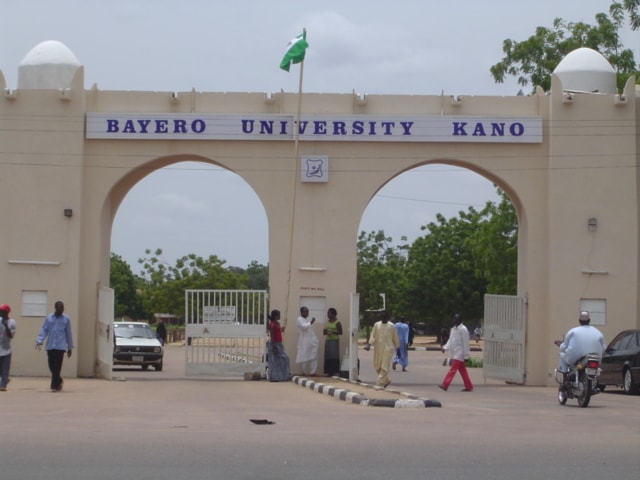
Corruption Allegation: An open letter to BUK VC

Dear Prof. Sagir Adamu Abbas, 

Although I doubt you could access this letter, I consider it necessary after two failed attempts to obtain relevant information from the office of the registrar of Bayero University, Kano (BUK).

After following this issue for over six months, expecting the school to do the needful, I am disappointed that this great institution continues to give the public room to question its integrity, especially when such involves deceiving a newly established institution by inflating figures and withholding surplus money belonging to students.

It has been alleged that the management of BUK inflated the figures of students’ school fees in the data shared with the National Education Loan Fund (NELFund). As a result, students applying for loans to pay their registration fees met higher amounts already pre-entered on their dashboards and submitted their applications since there was no option of altering the figures. Consequently, NELFund sent the pre-entered amounts to BUK to cover the students’ registration fees and expects each applicant to repay the same after graduation.

I know a student who needed N95,500 to pay his registration fees, but when he wanted to borrow from NELFund, he met N110,000 on his application dashboard. He submitted it like that, and his application was approved in June 2024. However, owing to pressure from BUK, he sought money and paid his registration fees, believing in the school to do the needful once it received money from NELFund.

Fast-forward to January 2025. The school refunded him N95,500 (the exact amount he paid as registration fees) without explaining the N14,500 surplus it received from NELFund. 

Another student who needed N101,500 was forced to borrow N105,000 from NELFund, with BUK keeping the extra N3,500. 

In addition to contacting these two students, I have read dozens of posts and comments by BUK students on social media (concerning this issue) between August 2024 and now, with no single student mentioning having information about their missing money. However, some students are afraid of victimisation, hence warning their mates to be careful with their expressions regarding the issue.

Sir, each of these poor students is expected to repay the exact amount BUK received on their behalf. As a consequence, it is absolutely wrong for the school management to keep the money.

I must mention that the BUK’s singular act of providing wrong data to NELFund could jeopardise the chances of a lot of other potential beneficiaries because the Fund could distrust other institutions henceforth.

I considered this letter necessary after taking some steps, notable of which are as follows:

On June 30, 2024, NELFund responded to my questions via X (formerly Twitter) as follows:

“All institutional fees on the portal were provided by the institution who (sic) themselves are autonomous under the law and not by NELFUND. Should you have any questions regarding your institution fees, kindly contact the competent authorities of your institution.

“According to the Establishment Act, NELFUND reserves the right to determine the interest payable on every loan. In this case, NELFUND have (sic) determined that the interest rate is zero.”

Also, on January 16, 2025, I emailed the registrar of BUK to seek clarification regarding the missing funds belonging to students. Fortunately, I received the following response about an hour later.

“Good morning Ishaka, 

Thank you for your email. I will review the issue you’ve raised and respond accordingly. 

Kind regards

Haruna Aliyu 

Registrar”

Nonetheless, after waiting for six days without receiving any feedback, I sent a reminder. However, at the time of writing this letter, I have still not received any relevant information.

An institution like BUK is supposed to be the epitome of accountability and transparency, so I humbly request that you consider doing the following as soon as possible.

Consider sending the surplus money to the rightful owners—the affected students. 

After that, explain the reasons for the wrong figures and the delay in disbursing the surplus to them.

Lastly, explain to NELFund why the school sent the wrong figures to represent the value of students’ school fees.

It is worth stressing that all of the above actions are necessary damage control strategies, so each should be carried out and openly communicated. In addition to helping BUK improve its public image, these strategies could help the authorities of the institution to avoid probable consequences of their unethical and illegal actions.

Yours sincerely,

Ishaka Mohammed

Student leaders reject Tinubu’s rice palliatives, demand focus on educational reform

By Abdullahi Mukhtar Algasgaini

Student union leaders from Obafemi Awolowo University (OAU) in Ile-Ife and Ahmadu Bello University (ABU) in Zaria strongly disapprove of President Bola Tinubu’s distribution of rice palliatives to student leaders across Nigerian tertiary institutions. They call for more substantive reforms in the education sector.

In separate statements, the Student Union Government (SUG) Presidents of both universities criticised the gesture, highlighting that the rice distribution fails to address the deeper challenges Nigerian students face, particularly tuition costs and poor university infrastructure.

Damilola Isaac, the SUG President at OAU, emphasised that he had not received any rice palliatives and made it clear that he would not accept them, even if offered. Isaac stressed that his administration focuses on advocating for systemic change in the education sector rather than accepting temporary handouts that do not address the root causes of student hardship. He called on the government to prioritise measures that would reduce tuition burdens, improve university infrastructure, and generally enhance the quality of education across the country.

“While the government may have good intentions, it is crucial that efforts are directed toward addressing the real issues in education,” Isaac said. “We are committed to fighting for the interests of students and ensuring accountability in the education sector.”

Similarly, Ibrahim Nazeer, the President of the Students’ Representative Council at ABU, voiced his rejection of the rice palliatives. Nazeer, through his media advisor Abdulrazak Shuaibu, said he would not accept the rice unless it were ensured that all students at ABU received their fair share. He urged the government to focus on creating an environment where students can afford necessities like food without relying on sporadic palliative distributions.

Instead of periodic rice handouts, Nazeer suggested that the government focus on long-term solutions that ensure students have access to basic necessities year-round.

While some student leaders, including Fahad Abdullahi, the SUG President of Abubakar Tafawa Balewa University (ATBU), confirmed receiving the palliatives, several other institutions, including Usmanu Danfodiyo University, Sokoto (UDUS), and Moshood Abiola Polytechnic (MAPOLY), reported being unaware of the distribution.

The rice palliative, which allocated two 25kg bags of rice to each SUG President, has been criticized for being limited to student leaders rather than the entire student body. Many students expressed concerns over the perceived unfairness of the selective distribution, noting that all students, not just those in leadership positions, are affected by the country’s economic challenges.

Anas Abdulrahman, a student from UDUS, questioned why only student leaders received the palliative. He stressed that all students should benefit from government initiatives, as they are all citizens of Nigeria. “We all voted for this government, and we should all be considered for such palliatives,” he remarked.

The rice distribution is part of the government’s repeated efforts to alleviate the economic hardship exacerbated by the removal of the petrol subsidy and the floating of the naira, leading to high inflation and food price increases. Despite these measures, inflation has reached 34.8%, with food inflation soaring to 38.94%, according to the National Bureau of Statistics (NBS).

Many students and citizens are questioning the effectiveness of distributing rice as a response to the economic crisis, with some suggesting that more meaningful policy changes are needed to address the underlying economic issues facing Nigerians.

As Nigeria grapples with economic instability, student leaders are calling for a shift in focus toward lasting educational reforms, improved infrastructure, and sustainable solutions to the challenges faced by students.

Truecaller launches real-time caller ID for iPhone users

By Sabiu Abdullahi

Truecaller, the caller identification and spam-blocking application, has unveiled a new real-time caller ID feature specifically for iPhone users.

In a statement released on Wednesday, the company explained that this feature leverages Apple’s ‘Live Caller ID Lookup’ framework, which was introduced with iOS 18, to securely deliver real-time caller identification services.

The update, according to Truecaller, is a response to persistent user demands for the iOS version of the app to match the functionality of its Android counterpart, while maintaining a strong commitment to user privacy.

Rishit Jhunjhunwala, the CEO of Truecaller, emphasized the significance of the update, stating, “We are excited to bring the full power of Truecaller to iPhone. We see tremendous potential and growth in our iPhone user base, and parity with Truecaller’s Android experience has been top of their wishlist. This update does that and more while preserving privacy for all calling activity.”

Apple also highlighted the innovation in its release notes, stating, “New APIs allow developers like Truecaller to fetch information from their servers and provide live caller ID for incoming calls, in a privacy-preserving way.”

The feature, which became available on January 22, is currently exclusive to premium subscribers. Users can activate it by navigating to settings, selecting the phone option, and enabling call blocking and identification.

Free users, however, can still access specific features such as ad-supported number searches and verified business caller IDs.Truecaller added that the update includes a redesigned interface, with caller names prominently displayed above phone numbers.

The company also disclosed plans to incorporate caller images in future updates to further enhance user experience.

This development marks Truecaller’s first major release since its co-founders, Alan Mamedi and Nami Zarringhalam, stepped down from daily operations in November 2024.

3 suspected Lassa fever deaths reported in Benue State

By Sabiu Abdullahi

The Benue State Government has disclosed that three individuals have died in the past week due to suspected cases of Lassa fever, with 12 suspected cases currently under investigation.

Dr. Yanmar Ortese, the state’s Commissioner for Health and Human Services, made this known on Wednesday.

According to Dr. Ortese, all the incidents were recorded in Okpokwu Local Government Area within a one-week period.

He stated, “No confirmed cases yet,” explaining that 12 samples had been collected from individuals who had close contact with the deceased.

He further added that the results of the tests would determine the nature of the cases.

The Commissioner assured the public that the ministry’s emergency operations unit promptly took action by isolating those affected as a precautionary measure.

The situation remains under close monitoring while awaiting test results to confirm whether the deaths and suspected cases are indeed due to Lassa fever.

The politics of Qur’anic Festival and the predicament of almajirai

By Ibrahim Ado Kurawa

Nigeria is consistently one of the most successful countries in the annual international Qur’anic recitation competitions. It is blessed with many learned Ulama and pious populace but unfortunately it is also notorious for neglecting Almajirai (Qur’anic school pupils). Therefore the prestige of the Glorious Qur’an is relegated to optics not inculcating the true teachings of Islam of honoring its pupils and their teachers.

Recently, the Ulama closely associated with the president Ahmad Bola Tinubu propagandists and cronies have come under scathing criticisms because of their planned “Qur’anic Festival”. Dan Bello, the popular social media influencer, was the first to bring public attention to the project [contract] though negatively depicted. He exploited the prevalent anti-Tinubu sentiments. This is because, Tinubu is widely perceived as having betrayed the Ulama who supported the Muslim-Muslim ticket.

Shaykh Abdullah Bala Lau, the leader and National Chairman of Jama’atu Izalatul Bidi’ah wa Ikamatus Sunnah is the promoter or convener of the Festival. The Shaykh made a video clip that has become viral in support of the initiative. His most important reason for initiating the Festival is to promote the unity of the Ummah, which is laudable. He has been engaged in such efforts of bringing together leaders of various sects and factions in the past especially during national crises.For example, his most recent effort was in public diplomacy and it culminated in his leading the Ulama mediation team that visited Niger Republic to meet its military president on the tension between Niger and Nigeria over ECOWAS feud. That has immensely enhanced his image. In addition, he is widely respected within the Salafi circle as a man of compassion and friendliness. He has also been able to win some Sufi leaders who are also battling with their factional crises just like him. This is a major political asset, which could translate to votes hence politicians always visualize and exploit it.

Unfortunately, the Shaykh and many other Ulama and activists are not treated fairly by the politicians who are only concerned with exploiting the social capital of the Ulama. This is because, there are states where president Tinubu lost the election, but their politicians are now the major beneficiaries of his government more than the promoters of the Muslim-Muslim ticket – the most important strategy that brought him to power.

Tinubu’s handlers are only interested in using the Ulama for political gains. Hence Dan Bello’s insinuations always resonate with the poor masses no matter how hard the Ulama try to distance themselves from the ineptitude of the Tinubu’s administration.

The big questions people are now asking is, is the Qur’anic Festival going to be financed by Tinubu, his propagandists or cronies? Is the Qur’anic Festival for the benefit of the Muslim Ummah and at what cost? Shaykh Bala Lau must be careful in his dealings with politicians. Because he didn’t clarify the sponsors of the Qur’an Festival.

Though, in a widely circulated video clip, one of the Shaykh’s lieutenants alluded that the Shaykh and a senior official of the government initiated the idea. So, who’ll bankroll the exercise?

The Ulama must resist temptation of taking money from government officials past or present, without knowing the source of the money, otherwise, they will suffer the same fate of loss of integrity as clerics of other faiths. Although, the Shaykh’s followers never doubt his integrity, however, dining with politicians is a dangerous gamble.

Most politicians pretend to work for national interest but in reality it is subordinated to their interests. When did our politicians ever consult any religious leader before implementing unpopular policies? They only do so when things get bad and are in desperate need of public support. This is not acceptable more especially because Muslim organizations made responses to the Presidential Advisory Committee (PAC) Policy Document with diligence and expertise probably more than any other politicians who are now the darlings of Tinubu’s administration.

Moreover, the Tinubu team never respected and honoured the contributions of the Ulama and Muslim intellectuals to the policy proposals of the PAC. Therefore, Shaykh Bala Lau has no reason to use the Qur’anic Festival for the benefit of Tinubu administration unless it changes its course because they will use and dump him.

Presently, there are video clips of some Salafiyya clerics drawing the attention of Shaykh Bala Lau that he’s now compromising his doctrinal position by “inventing” a new “bidi’ah” which his organisation claims to be eradicating. Of course, the unity of the Ummah is sacrosanct and yes, the Qur’an unites the Ummah. But focusing our attention and finding solutions to the issues of almajirai who are neglected by the society are more important than a convention or festival.

According to the Shaykh, 30,000 Qur’anic reciters from across the country will assemble at Moshood Abiola Stadium to promote Qur’anic recitation. How much is the cost? Conservatively it could reach N3 billion at N100,000:00 per head. There is no need for this, because every year there is a National Qur’anic Recitation Competition or Musabaqa with representatives from all over the country. So why spending billions on a similar competition?

Finally, Shaykh Bala Lau and supporters of this Festival should use their influence to mobilize resources for the Almajirai through the National Commission for Almajiri and Out of School Children which has not received up to N3 billion from the Government since its inception. And if the Shaykh and his team do not support the Commission, they should channel their resources and energy to confronting the challenges of the Almajirai through whatever means they believe in, rather than festivities or jamboree. No strategy has so far succeeded in alleviating the predicament of the Almajirai since 1960 when Sir Ahmadu Bello (Premier of Northern Region) initiated the process with the Committee of 100 Mallams. Is this not a shame for Muslims of Nigeria?

Ibrahim Ado-Kurawa is a renowned historian who lives and writes from Kano. He’s the editor of Nigeria Year Book and Who is Who. He can be reached via ibrahimado@yahoo.com