Admin

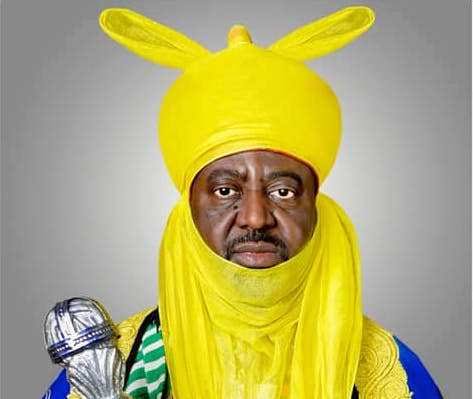
ABU awards Honorary Doctorate to Sheikh Sharif Saleh Al-Hussaini, restoring its prestige

By Hamisu Adamu Dandajeh, PhD

Recently, I have not encountered anyone more deserving of an Honorary Doctorate Degree globally than Sheikh Sharif Ibrahim Saleh Al-Hussaini Maiduguri CON. The 87-year-old global scholar and researcher has authored over 400 books and 100 conference papers in Arabic. 

Sheikh is a global mufti who currently heads the Supreme Council for Fatwa and Islamic Affairs in Nigeria (NSCIA). Throughout Nigeria’s history as a nation, no recognised Islamic scholar has made such remarkable contributions to the body of quality knowledge as the Mufti himself.

This renowned Sheikh embodies knowledge and humility and is a product of the Tsangaya System. Sheikh Sharif is, in fact, overly qualified. European universities established an Honorary Doctorate in the 15th Century to recognise exceptional individuals who have made substantial contributions to a particular field, society, and humanity despite lacking traditional academic credentials.

Sheikh Sharif has written extensively on nearly every facet of Islam, encompassing Quranic sciences, Hadith, Islamic law, history, philosophy, Islamic jurisprudence, linguistics, Islamic polity, Tauhid, Fiqh, Tafseer, Sufism, Arabic literature, Islamic law, inheritance, astronomy—indeed, astronomy—and the peaceful coexistence between nations.

While some universities worldwide have drifted away from the 15th-century original purpose of awarding Honorary Doctorates, instead prioritising celebrity appeal, fundraising, politics, diplomacy, and commercialisation, Ahmadu Bello University in Nigeria remains committed to upholding the original intent, as evident in the recent award to Sheikh Sharif. 

Sheikh Sharif has spent his entire life teaching, learning, researching, and contributing to community development, which aligns with the exact purpose of universities globally. He has exemplified scholarship and knowledge sharing, promoted interfaith dialogue, and fostered a culture of peaceful coexistence. 

Sheikh Sharif has produced many scholars of global repute, including Sheikh Professor Ibrahim Maqari, now the Chief Imam of the Central Mosque in Nigeria. He is building one of the biggest Islamic centres (Markaz) in Abuja to advance international teaching and research.

Sheikh Sharif brings class, integrity, dignity, and prestige to the Honorary Doctorate. We hope that, going forward, the nomination, review, selection, and conferment processes will remain transparent and accountable. 

To know what is next for Nigerian universities after this remarkable award, here is what Abdulbasit Kasim, a friend and a postdoctoral fellow at the African and American Studies at Stanford University, USA, added: “After awarding Shayk an honorary doctorate, Ahmadu Bello University should proceed to the next phase of translating and incorporating his books into the University curriculum. If I can include Shayk’s work on history, politics, philosophy, and economics in my Stanford syllabus, there is no reason why Nigerian students in humanities and social sciences should study Antonio Gramsci and Karl Popper but not Sharif Ibrahim Saleh and Adam Abdallah al-iluri. While this honorary degree has aesthetic value, I hope Ahmadu Bello University will diversify and broaden the curriculum beyond [the] Western canon.

Thank you, Ahmadu Bello University, for honouring an erudite scholar. Congratulations, Sheikh Sharif Ibrahim Saleh Al-Hussaini Maiduguri, on your well-deserved Honorary Doctorate in Law award.

Hamisu Adamu Dandajeh, PhD, is a Senior Lecturer in Sustainable Fuels, Energy and Climate Change at Ahmadu Bello University, Zaria – Nigeria.

Ganduje’s seized property: We only invited Muhuyi Magaji—Police

By Abdullahi Mukhtar Algasgaini

The Nigeria Police Force (NPF) has addressed recent rumors claiming the arrest of Mr. Muhuyi Magaji Rimin Gado, the Executive Chairman of the Public Complaints Commission (PCC) and the Anti-Corruption Commission.

The police clarified that no such arrest has occurred.

The police confirmed that Mr. Magaji was only invited to cooperate in an ongoing investigation related to a complaint filed against him.

On Friday, January 17, 2025, the Special Investigation Unit of the Inspector General of Police (IGP) received a formal complaint involving Mr. Magaji.

As part of the standard investigative process, he was invited to meet with police officers and assist in the inquiry.

The police emphasized that, as a respected government official, it was expected that Mr. Magaji would cooperate fully with the investigation, ensuring the matter is handled appropriately without drawing unnecessary media attention.

The police strongly rejected claims that Mr. Magaji had been arrested, labeling the reports as false and misleading.

They called on the media and the public to refrain from spreading unverified information that could cause confusion or unnecessary alarm.

The NPF reiterated its commitment to upholding the rule of law and conducting thorough investigations in accordance with legal procedures.

Germany: Duisburg offers free beer to boost voter turnout

By Maryam Ahmad

According to Bild, the German city of Duisburg is taking an innovative approach to encourage voter participation in the upcoming federal elections by offering free beer to those who cast their votes.

Mayor Sören Link explained the initiative, saying, “We want to do something about the low voter turnout and strengthen democracy.”

In the 2021 federal elections, Duisburg recorded a voter turnout of 68.1%, significantly below the national average of 76.6%. The city hopes the promise of a cold drink will motivate more residents to vote.

Non-alcoholic beer and other beverages will also be available for those who don’t drink alcohol.

Society of Nigerian Broadcasters collaborates with Faculty of Communication on investigative journalism

By Anas Abbas

Faculty of Communication of Bayero University, Kano and the Society of Nigerian Broadcasters organized a two-day round table meeting on investigative and data-driven journalism challenges.

The roundtable, held on Monday, focused on challenges of investigative and data-driven journalism and was themed ” Round table meeting on issues and challenges of investigative and data-driven journalism in the broadcast sector in North West Nigeria.”

The event, organized in collaboration with the Society of Nigerian Broadcasting, took place at the CBN Centre of Excellence at Bayero University, Kano.

Professor Umaru Pate, a communications expert and seasoned scholar, presented a paper titled “The Imperative of Investigative and Data-Driven Journalism in North West Nigeria.” 

As the keynote speaker, Pate thoroughly explained that “investigative journalism contributes to freedom of information.” 

Pate noted that some companies might pull their advertisements if the media content conflicts with their interests. 

He highlighted the pressing issue of inadequate funding for research within media organisations.

Pate noted that many outlets often overlook the necessity of investing in thorough research, emphasizing that producing quality news requires financial commitment. “To deliver high-quality journalism, organizations must be willing to allocate resources toward research,” he stated.

He addressed another significant challenge faced by investigative journalism, which is “the threats to journalists’ safety,” which underscores the need for greater support and protection for those committed to uncovering important stories.

Maulud: Kwankwaso rebukes Kano police over ‘false’ alert

By Uzair Adam 

Former Governor of Kano State, Senator Rabiu Musa Kwankwaso, has urged the Nigeria Police Force to maintain professionalism and avoid political bias, particularly in its operations within the state.  

This follows the controversy surrounding a terror alert issued by the Kano State Police Command on the eve of the annual Maulud celebration organised by the Tijjaniyya Sufi Order at the Sani Abacha Stadium, Kano.  

In a statement on his X handle, Kwankwaso commended the Tijjaniyya Sufi Order for successfully hosting the significant event. 

He also congratulated Khalifa Muhammad Sanusi II, the Emir of Kano, and Governor Abba Kabir Yusuf for their contributions to the event’s success.  

However, he expressed disappointment over the police alert, which he claimed caused unnecessary panic among Kano residents and attendees from across Nigeria and beyond.  

“The conduct of the police, which appears to align with the Federal Government’s habitual interference in Kano’s affairs, further erodes their credibility,” Kwankwaso stated.  

He warned that issuing unverified threat alerts could lead to public complacency during genuine security threats.  

“Issuing a false threat alert of this magnitude sets a dangerous precedent. It risks making people dismissive of genuine threats in the future,” he noted.  

Kwankwaso also criticised the global impression created by the police’s actions, given the international participation in the event. 

He called on the Kano State Police Command to prioritise professionalism and avoid partisanship, emphasising the need for the Federal Government to steer clear of interfering in Kano’s governance.  

“The Federal Government must resist involving itself in matters that complicate governance in Kano State,” he added.  

The Tijjaniyya Maulud celebration remains a prominent annual event for the Sufi order, attracting participants from across the globe.

Kunchi to Gari: Reflections on the history and semantics of the name changes

By Bashir Uba Ibrahim, Ph.D. 

Onomastics is the study of names and the naming of objects, places, and things. Its two main branches are anthroponymy and toponymy. While the former is concerned with individual proper names, family names, or surnames, the latter is interested in studying the motivations behind the proper names of places. This article is interested in toponymy—changing the names of places. Thus, it aims to synthesise the nexus between onomastics and history in naming places and how some circumstances trigger their penultimate changes. 

One of the impetuses behind this article is a Facebook post by Dr. Abdullahi Dahiru, a physician and public commentator, regarding the renaming of “Kunchi” Local Government to “Ghari.” In his post, he attributes this change to a distortion of history, citing Prof. Tijjani Naniya’s views on the etymology of “Kunchi” as historically linked to the bravery of its people. 

As a fortress town established to shield Kano from the external aggression of Damagaram, which sporadically attacked Kano in ancient times, the people of Kunchi successfully obliterated and defeated Damagaram infinitum. Thus, they were tagged by the Kano people as “Kun ci”, meaning “you have won”. As time passed, the phrase blended and metamorphosed to “Kunchi”. Henceforth, the town is called “Kunchi”, according to Prof. Naniya, cited by Dr. Abdullahi Dahiru. Therefore, the semantic change of the word was purely motivated by an extralinguistic factor, as the hardship and backwardness faced by the people of Kunchi were onomastically attributed to the pejorative nomenclature of the word in Hausa.

This scenario is called semantic and morphological change through blending in linguistics, a situation whereby the structure and meaning of the word change over time. Many types of semantic changes exist, including Broadening, Amelioration, Semantic Reclamation, and Pejoration.

The fourth one, “pejoration”, is where a semantic change of the word “kun ci” to “kunchi” falls. According to John (2000: 55), “pejoration is when the word’s meaning changes from positive to negative”. It usually occurs due to the extralinguistic factor or associating it with the taboo, as the name “kunchi” in Hausa is pejoratively associated with the taboo or something negative. 

Meanwhile, the stigma that the name “kunchi” pejoratively carries in Hausa and the negative stereotype it connotes make the people of the area opt to change the name of their local government. This will be a significant setback to the town’s history because, as time goes on, the upcoming generation from there will not know the history of their forefathers and their bravery in warfare.

On the other hand, semantic anomalies—those who believe there is no relationship between a word and what it stands for—triumph over analogists, who argue that word meaning represents what it stands for. Thus, the historical and semantic imports of the word “kun ci,” which was subsequently transformed to “Kunchi,” were not only changed but also its whole structure and form were replaced, displaced, and dislocated.

Finally, this is not the first time a place or city name has changed. Historically, we have seen how some places or cities’ names change due to varied circumstances. For instance, Mumbai, the capital of India, was formerly known as Bombay. But when the nationalist party Shiv Sena rose to power in 1995, it changed Bombay’s name to Mumbai, citing that the former name carries relics of British colonial legacy. 

Similarly, Istanbul, the capital of Turkey, was formerly known as Constantinople for hundreds of years. It was renamed Istanbul in 1930 after the Republic of Turkey was created. Therefore, changing place names is normal, depending on the circumstances and historical events that motivated them.

NB:

Dr. Raji Bello draws my attention that the case of the historical change of the name of “Kunchi” to “Gari” is similar to Lynchburg, Virginia, Black American people whose nomenclature of their city etymologically derived from the historical event of their racial subjugation and maltreatment and want the name of their town change.

Dr. Bashir Uba Ibrahim wrote from the Department of English and Literary Studies, Sule Lamido University Kafin Hausa, Jigawa State.

Tinubu directs FRSC to curb recurring petrol tanker explosions

By Sabiu Abdullahi

President Bola Tinubu has instructed the Federal Road Safety Corps (FRSC) and other traffic enforcement agencies to implement measures aimed at preventing the frequent petrol tanker explosions occurring across Nigeria.

This directive, delivered in a statement on Sunday by his spokesperson, Bayo Onanuga, comes amidst a worrying rise in such incidents, which have led to significant loss of life and property.

“The president calls for caution and adherence to safety measures among road users, particularly fuel tanker operators,” the statement reads.

“Furthermore, he directs agencies in charge of enforcing traffic rules to implement measures to prevent recurring petrol tanker explosions nationwide,” it added.

The president expressed condolences to the families of victims and prayed for the souls of the deceased, while also wishing a speedy recovery to those injured in the explosions.

Recent incidents underscore the urgency of the president’s directive.

On Saturday, a tanker explosion at the Ugwu Onyeama section of the Enugu-Onitsha Expressway claimed 18 lives, according to FRSC reports.

Just a week prior, another explosion in Niger State’s Gurara Local Government Area resulted in over 70 fatalities.

Examination malpractice violates students’ ethics

By Hamza Almustapha Paki

Examination malpractice is regarded as any deliberate act of wrongdoing that violates examination rules intended to provide a candidate with an unfair advantage. Examination malpractice, also referred to as the unlawful actions students undertake during their exams to achieve good grades by taking shortcuts.

Exam malpractices, such as cheating, impersonation, and leakage of examination questions, have become a persistent and widespread problem among students in Nigeria. These malpractices threaten the education system and the country’s future. 

The phenomenon has infiltrated the education system, compromising the integrity and fairness of assessments, undermining efforts to foster a skilled workforce, and eroding public trust in the system. Examination malpractice, alongwith its disadvantages, has negatively impacted all facets of society.

The examination law and ethics state that the sanctions or penalties for candidates involved in examination malpractice in Nigerian tertiary institutions range from a warning letter to not allowing the candidates to sit the examination, suspension for two semesters, expulsion, and dismissal from the institution, depending on the degree of misconduct. 

According to the National Examination Council (NECO), it is estimated that the total number of students involved in various forms of examination malpractices was about 20,000 as of 2021.

On the other hand, 178 cases of malpractice were detected in the Unified Tertiary Matriculation Examination in the 2022 and 2023 batches.

The Joint Admissions and Matriculation Board (JAMB) identified the malpractices as including “multiple registrations, manipulation of biometrics, collusion of some private CBT centres with parents, impersonation, deliberate disruption of the examination process, and syndicate of adjacent centres in examination.

It is depressing, regrettable, and shameful to engage in examination malpractices after all the energy expended by our respected lecturers or teachers.

In conclusion, examination malpractice could lead to a loss of confidence, self-esteem, determination, and indolence. 

It also acts as a source of future persistent sadness, which could cause psychological, emotional, and physical disorders in the victim. Therefore, it should be seen as the enemy of society and jettisoned.

‘Let’s enhance our cooperation to combat smuggling’

By Sabiu Abdullahi

The Comptroller-General of the Nigeria Customs Service (NCS), Adewale Adeniyi, has emphasized the need for stronger collaboration among security agencies to address smuggling and its negative impact on Nigeria’s economy effectively.

Speaking on Thursday, January 23, 2025, at the National Defence College (NDC) in Abuja, Adeniyi delivered a lecture to participants of Course 33, advocating for mutual understanding and partnership among security bodies to combat illegal trade and safeguard economic stability.

“No single agency can effectively combat the complexities of smuggling without the support and cooperation of others,” he stated.

“Collaborating with other security agencies is essential for effective anti-smuggling operations. It is only through synergy that we can reduce these illegal activities to the barest minimum and foster economic growth in Nigeria.”

The lecture, held at the NDC Auditorium, served as a platform for the Customs chief to outline strategies for tackling smuggling and its economic consequences.

The National Defence College, recognized as Nigeria’s top institution for military and strategic studies, hosts participants from diverse sectors, including the armed forces, paramilitary organizations, and the civil service.

Adeniyi’s presentation portrayed the benefits of a unified approach to protecting the nation’s economic interests and reiterated inter-agency cooperation as a critical factor in addressing Nigeria’s security issues.

Attendees, comprising senior officers, faculty members, and participants from across the country, described the lecture as a valuable insight into the interplay of security and economic protection.

Gunmen invade Kano community, abduct young lady despite receiving N8 million

By Uzair Adam

Gunmen suspected to be kidnappers invaded Garo town in Kabo Local Government Area of Kano State in the early hours of Sunday, abducting a young lady after collecting N8 million from her family.

A source who spoke to journalists in the state disclosed that the attackers, numbering 10, stormed the residence of a prominent businessman, Alhaji Auwal, at Garo Sabuwar Unguwa around 1:20 a.m.

Three of them were said to be armed with guns, while the others carried different weapons. The source narrated how the assailants forced their way into the house by breaking a small door, gathering the entire family in one place and instilling fear and panic.

“The head of the family begged for the safety of his loved ones and offered to meet their demands. The gunmen were handed N8 million,” the source explained.

Despite receiving the ransom, the attackers abducted the eldest daughter of the family, a secondary school graduate, and fled the scene.

The family has not received any communication from the kidnappers regarding her whereabouts, leaving the community in a state of fear and uncertainty.

Residents are appealing to authorities to address the worsening insecurity in the area.

When contacted, Kano Police Command spokesman SP Abdullahi Haruna Kiyawa confirmed the incident and said an investigation is underway to apprehend the culprits.