Admin

FG pushes mandatory drug tests for public officers

By Sabiu Abdullahi

The Federal Government has renewed its campaign against illicit drug use with a directive that makes drug testing compulsory for individuals seeking employment in public service, describing the move as a key response to Nigeria’s growing drug abuse challenge.

The policy, announced in December, instructed all Ministries, Departments and Agencies to include drug screening as a core requirement for recruitment. Authorities said the step supports the present administration’s commitment to confront substance abuse and protect the integrity of the national workforce.

Findings from a 2019 survey by the United Nations Office on Drugs and Crime showed that 10.6 million Nigerians abuse marijuana, while local cultivation rivals Afghanistan, which is regarded as the world’s second-largest exporter of marijuana resin.

The survey also highlighted the consumption of cocaine, heroin, methamphetamine and locally brewed substances among Nigerian youths.

Although the pre-employment testing policy has been widely welcomed, stakeholders insist that restricting the programme to new entrants will not deliver the desired impact.

They argue that drug screening should extend to serving public officials, elected office holders, security agencies, traditional institutions, tertiary institutions and students. They add that random and routine testing would help safeguard public resources and strengthen national security.

Supporters of the initiative said its effectiveness rests on random mandatory testing, which could encourage discipline and discourage drug use across all sectors.

They also called for consistent political support to sustain the programme.Concerns over substance abuse within security agencies have also been raised.

In 2019, Premium Times reported that a police officer killed a truck driver for refusing to pay a N50 bribe at a checkpoint on the Owo-Akure Expressway.

Arewa: Why do some women murder their husbands?

By Usman Usman Garba

Incidents of women killing their husbands in Northern Nigeria have become a disturbing phenomenon which puts some kind of anxiety in the hearts of youth and unmarried men. What was once rare is now appearing more frequently in headlines, police reports and public conversations. 

Everyone knows that Northern Nigeria is a region known for strong family values, deep respect for marriage, and a social structure built on religious and cultural norms. Yet, the recent rise in cases where wives take the lives of their husbands has forced many to question what is happening behind the façade of stability.

There are a lot of views and perceptions concerning why women kill their husbands in Northern Nigeria. Many are of the belief that forced marriage is one of the reasons such an inhumane act happens. Thus, others are married willingly without the intervention of anyone in a forced marriage, but still kill their spouses.

In my opinion, other factors should be taken into consideration, contrary to what many regard as the main cause of this dastardly act.

Mental health remains one of the least understood issues in Northern Nigeria. Depression, trauma from abusive relationships, postpartum challenges, and emotional exhaustion can push individuals to extremes. Unfortunately, many women have no access to counselling, families discourage speaking out; society expects women to “endure”; emotional crises are dismissed as weakness or spiritual problems, and this lack of support creates dangerous psychological pressure.

Similarly, domestic violence is one of the dangerous circles that causes women to kill their husbands. Many of the reported cases involve homes where domestic violence had been ongoing. Women in such situations sometimes endure physical and emotional abuse for years. With limited support systems, some feel trapped with no escape route.

This does not justify murder, but it highlights the reality. For instance, some wives act out of fear; some out of desperation; some out of retaliation; while others act because they believe no one will protect them.

Hence, the role of social media and exposure to new narratives has also contributed immensely to this inhumane act in Northern Nigeria.

Cases of women killing their husbands, though still few, spread quickly on social media, and sometimes, this creates copycat behaviour, unrealistic ideas about marriage, normalisation of revenge narratives and fake empowerment messages telling women to “fight back” violently.

Social media has become an amplifier, sometimes distorting reality and increasing tension in fragile homes

Nonetheless, a justice system that often fails women worsens the system. Many women who are abused find no one to intervene. At the station, police dismiss domestic complaints; families send them back home; religious or traditional leaders advise “patience”, and society blames women for failed marriages. Thus, when conflict turns deadly, the same system responds swiftly, after lives have already been destroyed. This is why prevention, not punishment, should be our priority.

The rising cases of wives killing their husbands are not simply crime stories; they are warning signs of deeper fractures inside marriages, families and social systems.

Northern Nigeria must confront these issues honestly and urgently. The goal is not to assign blame but to prevent homes from becoming battlegrounds. When families break down, society breaks down: when violence enters the home, it enters the community; and when silence becomes the norm, tragedy becomes inevitable.

The solution lies in awareness, support, justice and compassion, before the next headline appears. To stop this dangerous pattern in our communities, we must confront the root causes. The society must strengthen domestic violence reporting channels, improve community mediation and counselling structures, promote healthy marital communication, address economic pressures, educate people on mental health and teach conflict management to young couples.

Usman Garba writes from Kano via usmangarba100@gmail.com

ABU law students confer teaching excellence award on Professor Kabir Danladi

By Anas Abbas

Students of the Faculty of Law, Ahmadu Bello University (ABU), Zaria, U18/19 LLB set, have presented a letter of appreciation and an Award of Excellence to Professor Kabir Muhammad Danladi in recognition of his exceptional commitment to teaching, mentorship, and student development.

In a heartfelt gesture captured on video, the students described Professor Danladi as the first lecturer who formally introduced them to core legal courses, praising his ability to simplify complex legal concepts through the use of current affairs and trending issues.

According to the students, this approach not only deepened their understanding of the law but also made classroom engagement practical and relatable.

The letter further commended the professor for his dedication to inclusive teaching, noting that he consistently went the extra mile to ensure that no student was left behind.

The set of students highlighted his strict adherence to the course outline, effective time management that ensured full coverage of the syllabus within the semester, and his openness to questions during lectures.

Uniquely, the students also acknowledged Professor Danladi’s use of a portable voice amplifier in class,an uncommon practice among lecturers which they said enhanced audibility and learning for all students.

To them, this commitment symbolized “justice in teaching,” a principle they believe reflects the true spirit of legal education.

Beyond academics, Professor Danladi was praised for offering guidance on life after university, mentorship the students described as invaluable to their personal and professional growth.

As a mark of respect, love, and gratitude, the U18/19 LLB students presented the professor with a token Award of Excellence and gifts, reaffirming their appreciation for what they termed a rare blend of knowledge, compassion, and professionalism.

When power meets purpose: Why Abba Kabir Yusuf’s APC move is Kano’s necessary turn

By Abdulkadir Ahmed Ibrahim (Kwakwatawa), FNGE

In politics, moments arise when loyalty to a platform must give way to loyalty to the people. There are seasons when courage is not found in standing still, but in moving forward with clarity of purpose. Kano State stands at such a moment. The planned defection of Governor Abba Kabir Yusuf to the ruling All Progressives Congress is not an act of betrayal. It is a call to responsibility, a deliberate choice shaped by necessity, foresight, and the overriding interest of Kano and its people.

Perhaps power, when isolated, grows weak. Governance, when detached from the centre, struggles to deliver. Since the emergence of Abba Kabir Yusuf as governor, Kano has found itself standing alone in the national space. Federal presence is thin, strategic attention limited. The state that once sat confidently at the table of national influence now watches key decisions pass by without its voice fully heard. This isolation is not a reflection of the governor’s intent or capacity; it is the reality of operating outside the ruling structure in a political environment where access often determines outcomes.

It is common knowledge that governors do not govern in a vacuum. Roads, security, education, health, and economic revival depend on cooperation between state and federal authorities. When that bridge is weak, the people bear the cost. Kano today needs bridges, not walls. It needs inclusion, not distance. It needs a seat where decisions are shaped, not a gallery where outcomes are merely observed.

The internal tension surrounding the emirate question has further deepened uncertainty. While history and tradition demand respect, governance demands stability. Prolonged disputes distract leadership, unsettle investors, and weigh heavily on public confidence. At such a time, a governor requires strong institutional backing and political leverage to navigate sensitive reforms with balance and authority. Standing alone makes that task far more difficult than it ought to be.More troubling is the visible absence of federal projects and partnerships. In a country where development is often driven by political proximity, Kano cannot afford to remain on the margins. A state of its stature, population, and historical relevance deserves more than sympathetic silence. It deserves action, presence, and partnership.

It is within this context that Abba Kabir Yusuf’s movement toward the APC must be understood. Not as personal ambition, but as strategic realism. Not as political convenience, but as a pathway to unlock opportunities long denied by distance from power.

By extension, Senator Rabi’u Musa Kwankwaso stands at a defining crossroads. History has placed him in a rare position. He is respected across party lines, commands a loyal following, and remains one of the most influential political figures in Northern Nigeria. Above all, President Bola Ahmed Tinubu holds him in high regard. They share a common political generation, having both served as governors in 1999, shaped by the same democratic rebirth and seasoned by time and experience.

In addition, one can recall that both Rabi’u Kwankwaso and Bola Tinubu were at the National Assembly under the platform of the now defunct Social Democratic Party, SDP, during the short-lived 3rd Republic. The former was the Deputy Speaker at the House of Representatives while the latter was a Senator together with Late Senator Engineer Magaji Abdullahi who was also elected under the same SDP ticket.

Late Engineer Magaji Abdullahi a former Deputy Governor of Kano State (2003 to 2007) and also a former Chief Executive of the State owned Water Resources and Engineering Construction Agency, WRECA, in the 1980s was a benefactor of Engineers Rabi’u Kwankwaso and Abba Kabir Yusuf were they first met as members of staff.

The late successful Kano technocrat, accomplished engineer, career civil servant charismatic and vibrant national politician was a close ally and associate of Asiwaju Bola Ahmed Tinubu starting from the SDP days and the duo was some of the foundation members of the APC.

The President’s repeated extension of an olive branch to Kwankwaso is therefore not accidental. These gestures are acknowledgements of value, respect, and shared history. They signal recognition of Kwankwaso’s political weight and his capacity to contribute meaningfully at the national level. When such calls come consistently, wisdom suggests they should not be ignored. Kwankwaso should heed the call by moving along with the political direction of Kano State.

The truth is unavoidable. The political home Kwankwaso once built no longer offers the shelter it promised. The NNPP is enmeshed in internal crises that threaten its very identity. Court cases over party ownership and recognition pose serious risks. With the Independent National Electoral Commission recognising one faction amid raging disputes, the platform has become unstable ground for any serious electoral ambition. Under these circumstances, entering the 2027 race either with Abba Kabir Yusuf seeking re election on the NNPP platform or Kwankwaso pursuing a presidential ambition would amount to gambling against history and reason.

The alternatives are no better. The Peoples Democratic Party is fractured, weakened by internal contradictions and persistent leadership disputes. Its once formidable structure now struggles to inspire confidence. The African Democratic Congress, on the other hand, is ideologically and historically uncomfortable for Kwankwaso. Many of its leading figures were once his fiercest rivals. They resisted him in the PDP and are unlikely to allow him meaningful influence now. Political memory is long, and grudges rarely dissolve.

Beyond current realities lies a deeper lesson from history. Regional parties, no matter how passionate or popular within their strongholds, have rarely succeeded on the national stage. From the First Republic to the Fourth, the pattern remains consistent. Nigeria rewards broad coalitions, not narrow bases. Power flows where diversity converges.

The APC today represents that convergence. It is not perfect, but it is expansive. It is national in outlook, broad in structure, and firmly in control of the federal machinery. For Kano, aligning with the APC is not surrender. It is strategy. It is an investment in relevance, access, and development.

For Abba Kabir Yusuf, the move is about delivering tangible dividends of democracy. For Kwankwaso, it is about securing a future that reflects his stature and experience. Loyalty, in its truest sense, is not blind attachment to a platform. It is fidelity to the welfare of followers, to the aspirations of a people, and to the demands of the moment.

Politics is not static. It is a living conversation between ideals and realities. When realities change, wisdom adapts. Kano’s future demands bold choices, not sentimental delays. The music is louder now. The moment is clearer. The door is open.

History favours those who recognise when to move. For Abba Kabir Yusuf and Senator Rabi’u Musa Kwankwaso, the path toward the APC is not a retreat from principle. It is a step toward purpose. They should go back to where they rightly belong. And for Kano, it may well be the bridge back to the centre, where its voice belongs and its destiny can be fully pursued.

Abdulkadir, a Fellow of Nigerian Guild of Editors, former National Vice President of the NUJ, Veteran Journalist, was the Press Secretary of the former Deputy Governor Late Engineer Magaji Abdullahi.

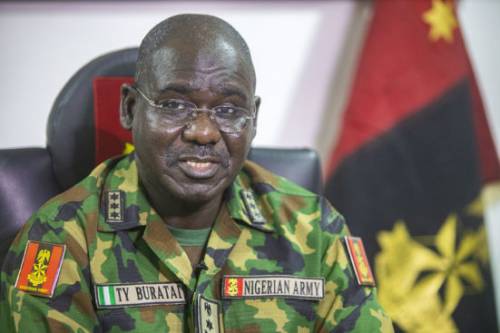
Buratai drags Ali-Keffi to court, seeks N1bn over alleged terrorism defamation

By Uzair Adam

Former Chief of Army Staff, Lt. Gen. Tukur Yusufu Buratai (retd.), has instituted a N1 billion defamation suit against a fellow retired senior military officer, Maj. Gen. Danjuma Hamisu Ali-Keffi (retd.), at the Kaduna State High Court.

The suit, filed on January 8, 2026, before the Kaduna Judicial Division of the court, arises from alleged statements by Ali-Keffi linking Buratai to terrorism financing, Boko Haram suspects and the purported illegal release and concealment of terror suspects.

In the writ of summons and statement of claim filed by Buratai’s lawyers, A.I. Aliyu and A.M. Hassan of Law Plus Consult, the former army chief is asking the court to declare that the statements attributed to the defendant and circulated on various online platforms, including Sahara Reporters and other news and social media outlets, are false, malicious and libellous.

Buratai alleged that Ali-Keffi granted interviews in 2025 in which he insinuated that the former Chief of Army Staff had connections with terror suspects and financiers, and was involved in conspiracies to cover up terrorism-related activities during his tenure.

According to the court documents, the plaintiff said the publications were widely circulated on Facebook, X (formerly Twitter), WhatsApp, Instagram and other platforms, giving the allegations both national and international reach.

He maintained that the claims are entirely false, stressing that he has never been investigated, indicted or convicted for terrorism, terrorism financing or any related offence.

Buratai further argued that the publications portrayed him as corrupt, unpatriotic and complicit in acts inimical to Nigeria’s national security, thereby causing serious damage to his reputation, honour and standing within and outside the country.

He also accused Ali-Keffi of acting recklessly and maliciously, noting that the defendant allegedly admitted in the same publications that no investigation had established Buratai’s involvement in terrorism financing.

The former army chief is therefore asking the court to order an immediate retraction of the alleged defamatory statements and the publication of an unreserved public apology with equal prominence on Sahara Reporters, at least two national newspapers and all social media platforms where the statements were circulated.

In addition, Buratai is seeking N1 billion in general damages for libel, citing the gravity of the terrorism-related allegations, their wide dissemination and the status of the defendant as a retired senior military officer.

He is also asking for a perpetual injunction restraining Ali-Keffi from further publishing or repeating the alleged defamatory statements, as well as the full cost of the suit, including solicitor’s fees.

The writ of summons directs the defendant to enter an appearance within 21 days of service, failing which the court may proceed with the matter in his absence. As of the time of filing, no date had been fixed for hearing and the defendant had yet to respond to the suit.

WAEC CBT Exams: A laudable initiative, but wait…

By Lawal Dahiru Mamman,

While the nation, parents, and income earners are still debating the legitimacy of the Tax Laws rolled out by the Federal Government due to “alterations” in some sections and their broader implications, final-year senior secondary school students have other things to worry about. A case of different strokes for different folks.

A student called and, after exchanging pleasantries, he said, “Is it true we’re going to write WAEC exams with computers? We have a computer lab at our school, but it can accommodate only about 30 students at a time, and not everyone offers computer studies. Some people I know don’t even have any in their schools.” He is familiar with how computers work, but was looking out for others, and his concerns are legitimate.

The Senior Secondary School Certificate exam, conducted by the West African Examinations Council (WAEC), is held in Ghana, Sierra Leone, Liberia, The Gambia, and Nigeria. WAEC announced plans to shift from traditional paper-and-pencil tests to Computer-Based Testing (CBT) for Nigeria’s 2026 West African Senior School Certificate Examination (WASSCE), affecting about 2 million students across 23,554 schools.

The rollout begins with this year’s edition, tentatively scheduled from 24 April to 20 June 2026, with the aim of improving integrity, reducing malpractice and ensuring results are released 45 days after the exam, with digital certificates available within 90 days. 

WAEC’s Head in Nigeria, Amos Dangut, revealed that 1,973,253 students (979,228 males and 994,025 females) will participate, covering 74 subjects and 196 papers. According to him, the digital exams will feature unique question papers for each of the 1,973,253 students as part of efforts to uphold academic integrity.

To support students, the examination body says it has introduced digital learning tools, such as the WAEC E-Study Portal, the E-Learning Portal, and WAEC Konnect. These platforms offer past questions, marking schemes, and performance analysis. 

Despite these promising statements, the young student’s apprehension is not an isolated case. It is the silent and loud cry of thousands of students across Nigeria. While the shift toward digitalisation is a progressive move intended to curb examination malpractice and speed up the release of results, the infrastructure on the ground tells a different story. 

In many suburban and rural schools, the “digital revolution” feels like an ancient myth. It was only last year that Nigeria crossed the 50% broadband penetration mark, according to data from the Nigerian Communications Commission (NCC) under the National Broadband Plan (NBP) 2020–2025.

We can also recall that, in May 2025, some students in Asaba, Delta State, took some of their exams using torchlights. The Minister of Education promised to “investigate” the situation, and Nigerians are still waiting for the outcome. But the substance of the matter is, can schools that lack the ability to purchase electric bulbs to light classrooms build rooms and stock them with computers before this year’s test commences?

Students in urban centres may not be affected; both at home and in school, they’re exposed to computers and the Internet. But introducing a computer-based exam to a student who has never used a mouse or sat in front of a steady power source creates an unfair playing field.

The House of Representatives learned of this development in early November and asked WAEC to halt it, citing concerns that it could lead to widespread failure and disadvantage students in rural areas with limited access to computers and the internet. Lawmakers suggest deferring it for at least three years to allow sufficient time for proper infrastructure and capacity building.

Interestingly, WAEC, through the Nigeria National Office Head, confirmed in the last week of the same month that “its plan to introduce a fully Computer-Based Test (CBT) system for the 2026 WASSCE for school candidates is firmly on track”, assuring the public that a key concern regarding travel has been addressed: “No candidate will have to travel more than 2km from their location to take the exam. This assurance is based on a new school mapping strategy.”

The transition to digital examinations cannot succeed through pronouncements alone. If the examination body insists, there must be clear communication to students through their schools and other stakeholders on a step-by-step strategy for this rollout, because students have registered and the examinations are underway.

Issues such as the delivery model must be addressed. Will the exam be fully digital across all subjects, or will it follow a hybrid model, with practical and essay-based subjects remaining on paper for now? Is it going to be JAMB-style? If essays are not retained, this well-intentioned effort could end up being a disaster for all parties involved.

What is the plan to equip public schools at 2km intervals with functional computer laboratories and consistent power solutions, such as solar energy? This must be considered carefully, as our reality shows that students across Nigeria study on bare floors and in other dilapidated conditions.

There must be a nationwide programme for “Mock CBT” exams to familiarise students in underserved areas with the software interface before the actual harvest of grades begins. In this case, even teachers in such areas must be trained to ensure adequate supervision.

In today’s world of artificial intelligence, big data, and other emerging technologies, digitalisation is inevitable, but it must be inclusive. If the goal is to improve the integrity of education, no student should be penalised for their geographical location or economic status.

Without adequate information, one may not be able to speak for The Gambia, Liberia, Sierra Leone, and Ghana, but here in Nigeria, WAEC and the Federal Government must speak clearly on how they want this to happen, because if the questions raised above cannot be answered with clarity, we should as well heed the advice of the lawmakers in the green chamber.

Lawal Dahiru Mamman writes from Abuja and can be reached at dahirulawal90@gmail.com.

Venezuela confirms at least 100 killed in U.S. raid that toppled Maduro

By Sabiu Abdullahi

Venezuelan authorities have announced that no fewer than 100 people lost their lives during a United States military operation that led to the removal of President Nicolás Maduro from office.

The country’s interior minister, Diosdado Cabello, disclosed the figure late on Wednesday. This marked the first official confirmation of the death toll since the operation took place on Saturday.

According to Cabello, “100 people died in the U.S. attack which removed President Nicolas Maduro from power on Saturday.” Officials had previously refrained from releasing a comprehensive casualty count.

Earlier, the Venezuelan military had released the names of 23 personnel who were confirmed dead. Government officials later stated that a significant portion of Maduro’s security detail was killed “in cold blood.”

Cuba also announced that some of its military and intelligence officers deployed in Venezuela died during the operation.Cabello further revealed that injuries occurred during the raid. He said that Maduro’s wife, Cilia Flores, who was detained alongside him, sustained a head injury. He also stated that Maduro suffered an injury to his leg.

The operation followed prolonged diplomatic and political tensions between Washington and Caracas. Over the years, the two countries have exchanged accusations over governance, security concerns, sanctions and diplomatic pressure. United States officials have repeatedly accused Maduro’s administration of failures in leadership and public security, claims that Venezuelan authorities have consistently rejected.

On Saturday, U.S. forces carried out a controversial mission in Venezuela that resulted in the arrest of President Maduro and his wife. American authorities later justified the action by linking Maduro to allegations of drug trafficking and narco-terrorism.

Federal indictments alleged that his administration aided the shipment of large quantities of cocaine into the United States. These allegations were presented as the legal grounds for his arrest.

After the operation, President Donald Trump publicly stated that the United States intended to assert control over Venezuela’s oil sector. He argued that the industry was built with American investment and accused Maduro’s government of taking over U.S. energy assets. In a post on social media, Trump said the United States would “run Venezuela and take over its oil” after Maduro’s arrest.

In his first public remarks following his transfer to the United States, Maduro described himself as “kidnapped” and maintained his innocence.

During a weekly broadcast on state television, Cabello announced that Venezuelan authorities had declared a week of mourning for members of the armed forces who were killed in the operation. He referred to the fallen personnel as “courageous.”

Gaza infants battle harsh cold as Israel continues to restrict aid flow

By Sabiu Abdullahi

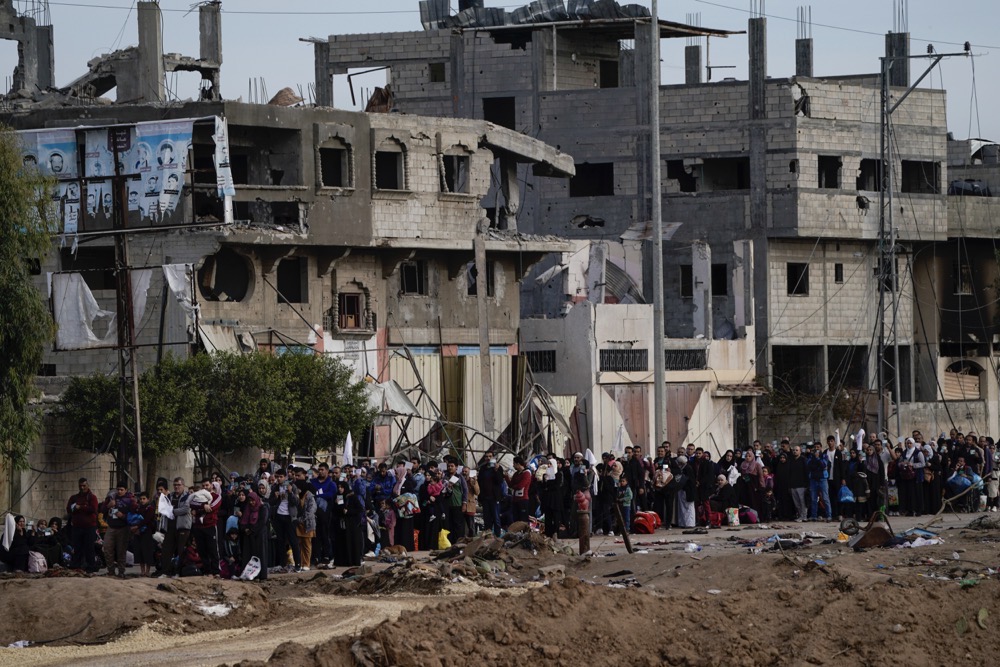
Humanitarian workers have raised fresh concerns over the deteriorating living conditions in the Gaza Strip, warning that freezing temperatures are worsening the health situation of displaced families as Israel maintains tight restrictions on relief supplies.

Doctors Without Borders, also known as MSF, disclosed on Wednesday that infants across Gaza are “suffering from severe cold” while thousands of families remain in fragile, makeshift shelters following months of destruction.

The organisation reported a surge in respiratory infections, skin ailments and other cold-related illnesses, which have spread rapidly among vulnerable groups living in overcrowded and poorly protected encampments.

In a message shared on social media, the group stated: “People are facing torrential rain and heavy winds while living in makeshift shelters,” and added, “All the while Israel continues to block or delay the entry of vital supplies like tents, tarpaulins, and temporary housing.”

Large parts of Gaza’s population have been displaced since the outbreak of the war, forcing hundreds of thousands of families to seek refuge in tent settlements and damaged structures that offer little protection against the harsh winter weather.

Humanitarian observers note that the continued blockade of essential materials has contributed to widespread hunger and worsening health conditions. Legal analysts have also pointed out that the restrictions breach Israel’s obligations as an occupying power to ensure the welfare of civilians in territories under its control.

The limits on aid deliveries also contradict a ceasefire arrangement brokered by the United States in October, which required Israel to permit the daily entry of 600 humanitarian trucks into Gaza. Despite repeated appeals from the United Nations and other international bodies, the restrictions have remained in place.

Israel has further tightened its stance by cancelling the operating permits of 37 aid organisations, among them MSF and the Norwegian Refugee Council. The new regulations demand extensive disclosure of staff details, funding sources and operational activities.

Responding to the development, MSF said the decision “is a cynical attempt to prevent organisations from providing services in Palestine and is in breach of Israel’s obligations under international humanitarian law”.

Meanwhile, Gaza continues to endure strong winds, heavy rainfall and sub-zero temperatures, which have intensified the suffering of displaced families sheltering in inadequate living conditions.

The ceasefire has not halted violence completely. According to figures released by the Palestinian Health Ministry, at least 424 Palestinians have lost their lives since October 11, while another 1,199 people have sustained injuries in continued Israeli attacks.

As winter deepens, humanitarian agencies warn that without the urgent delivery of shelter materials and relief items, the health crisis in Gaza could worsen further in the coming weeks.

‘Norway foolishly denied me Nobel Peace Prize despite ending 8 wars,’ cries Trump

US President Donald J. Trump has renewed his long-standing claim that he deserved the Nobel Peace Prize, arguing that his actions strengthened NATO and prevented wider war in Europe.

In a social media post, Trump said Norway—a NATO member and host country of the Nobel Peace Prize committee—“foolishly” failed to award him the prize, despite what he described as ending multiple wars and forcing NATO allies to increase defence spending. He claimed his leadership deterred Russia and elevated U.S. global standing.

Trump concluded by asserting that NATO depends primarily on American military strength, crediting his presidency for rebuilding U.S. power and saving millions of lives.

AFCON 2025: Super Eagles decline Marrakech trip over unpaid bonuses

By Sabiu Abdullahi

Members of the Super Eagles, alongside their technical crew, have declined to proceed to Marrakech following unresolved issues concerning unpaid bonuses.

The development was disclosed by BBC Africa journalist, Oluwashina Okeleji, who is currently in Morocco.Nigeria are scheduled to face Algeria in the quarter-final fixture of the 2025 Africa Cup of Nations on Saturday evening.

However, reliable information indicates that the team is yet to receive their entitlements for the four matches they have contested so far in the competition.

The Super Eagles secured victories over Tanzania, Tunisia and Uganda during the group stage. The team also recorded a 4–0 win against Mozambique in the Round of 16.

Following the situation, the players and their coaches have resolved to suspend all travel and training activities until the matter of the unpaid bonuses is addressed.

The decision has now cast uncertainty over Nigeria’s preparations ahead of the crucial encounter against Algeria.