Admin

FUDMA shut down as students protest killing of mate

By Abdullahi Mukhtar Algasgaini

The Federal University Dutsinma (FUDMA) in Katsina State has been closed following violent protests by students over the alleged killing of one of their colleagues.

Reports indicate that two students were shot by members of the Civilian Joint Task Force (CJTF) operating in the area.

It was claimed that the CJTF members mistakenly shot the students, believing they were bandits’ informants.

One student died on the spot, while the other was injured and has since received medical attention.

In response to the incident, students took to the streets of Dutsinma, protesting violently. They blocked roads, set tyres on fire, and vandalized property.

The protests escalated, reaching the Dutsin-Ma–Katsina highway, where the students clashed with security forces.

Military and police personnel arrived to restore order, using a diplomatic approach to calm the situation without resorting to force.

The university’s Senate announced the closure of the institution, with students directed to go on a one-week mid-semester break starting from Monday, February 24, 2025.

The Vice-Chancellor, Prof. Armaya’u Hamisu Bichi, urged students to vacate the campus by 6:00 p.m. the same day.

The Katsina State Police Public Relations Officer, DSP Abubakar Sadiq, confirmed the incident, stating that an official statement would be issued soon.

1,500 APC members defect to NNPP in Kano State

By Abdullahi Mukhtar Algasgaini

Over 1,500 members of the All Progressives Congress (APC) have officially defected to the ruling New Nigeria Peoples Party (NNPP) in Kano State.

The defectors, who hail from various wards in the Gwarzo Local Government Area, were warmly received by Kano’s Deputy Governor, Aminu Abdulsalam, at his office.

During the reception, the Deputy Governor praised the defectors’ decision, calling it a courageous move to support the administration of Governor Abba Kabir Yusuf.

He stated that the party’s vision for good governance and development in Kano is resonating with the people, and assured the new members of equal opportunities and full integration into the NNPP’s structure.

The leaders of the defecting group, Malam Abdullahi Tiga and Aliyu Sulaiman, explained their decision, citing the APC’s failure to meet the people’s aspirations.

They expressed confidence in the NNPP leadership and pledged to support the party in its future endeavors.

In a show of solidarity, the Chairman of Gwarzo Local Government, Dr. Mani Tsoho, assured the defectors of fair treatment and equal opportunities within the local government.

Party officials and supporters also committed to strengthening the NNPP as the state prepares for future political contests, encouraging more citizens to join the growing party.

This move marks a major shift in the political landscape of Kano State, as the NNPP gains momentum with the increasing support of former APC members.

I want to be Kano governor, not APC chairman—Abdullahi Abbas responds to Ata

By Uzair Adam

Kano State APC Chairman, Abdullahi Abbas, has stated that his political ambition is to become the governor of Kano, not to remain the party’s chairman.

He made the remark in an interview with the BBC while reacting to recent comments by Nigeria’s Minister of State for Housing and Urban Development, Yusuf Abdullahi Ata, who had threatened to leave the party.

Ata had warned that he would quit the APC if Abdullahi Abbas was re-elected as the party’s chairman for a fourth term.

The Daily Reality reports that the minister’s strong remarks, captured in a viral video circulating on social media, have further heightened political tension in Kano.

However, Abbas dismissed Ata’s stance, stating that the minister was never a party member.

“For us in the party, he was never a member. In the whole of Kano, in his local government, we came third,” he said.

“We didn’t even know when he was appointed as a minister. We even told the president that he is not our party member, that he engaged in anti-party activities.”

Abbas expressed surprise over Ata’s ministerial appointment, adding, “We are really surprised at how this happened, honestly. He is just a politician at the local government level.”

FUDMA student shot dead by civilian JTF member in Katsina

By Abdullahi Mukhtar Algasgaini

A 400-level student of the Federal University Dutsin-Ma (FUDMA), Saidu Abdulkadir, 25, was fatally shot by a member of the Civilian Joint Task Force (CJTF) in Dutsin-Ma, Katsina State.

The incident occurred around 11:06 a.m. when Abdulkadir, a Department of Agricultural Extension student, and motorcycle rider Abubakar Yusuf, 40, were stopped by CJTF personnel.

After allegedly failing to comply, one operative opened fire, injuring both.

Abdulkadir later died at Orthopedic Hospital, Katsina, while Yusuf is receiving treatment.

The Katsina State Police Command has launched an investigation and reinforced security in the area.

65-year-old woman abducted from hospital in Kano

By Uzair Adam

A 65-year-old woman, Talatu Ali, has been abducted from the Neuro-Psychiatric Hospital Dawanau in Dawakin Tofa Local Government Area of Kano State.

The Daily Reality gathered that the incident happened while she was waiting for a medical consultation at the facility.

Talatu was brought to the hospital on February 19, 2025, by her son, Nasiru Aliyu, and her cousin, Aliyu Garba.

However, while on the queue for consultation, they suddenly realized she was no longer there.

Efforts to locate her within the hospital premises were unsuccessful, leading the family to report the matter at the Dawanau Divisional Police Headquarters.

Two days later, on February 21, at around 7:00 a.m., Aliyu received a phone call from an unknown number informing him that the woman was in their custody.

The Kano State Police Command has confirmed the incident.

Although Kano has remained relatively peaceful compared to other states in the North West, cases of abductions continue to be recorded in various parts of the country despite ongoing efforts to curb the menace.

The metaphor of self in Ibrahim Babangida’s A Journey of Service: An Autobiography

By Bashir Uba Ibrahim, PhD

Etymologically, the terms “autos”, “bios”, and “graphein” are Greek forms. While the former stands for “self”, the “bio” represents “life”, and the “graphein” which diachronically and morphologically changes over time to “graphy,” means “to write”. Thus, autobiography is a self-written narration of one’s own life. 

According to Celluni, “All men, whatever be their condition, who have done anything of merit, if so, be they men of truth and good repute, should write the tale of their life with their own hand”. Thus, the recent 420-page memoir launched by the former military Head of State, Ibrahim Badamasi Babangida, on Thursday, 20th February 2025, is a typical instance of a self-written account of one’s own life experiences.

Babangida’s A Journey of Service: An Autobiography is highly anticipated due to the author’s role as one of Nigeria’s most controversial, if not enigmatic, military leaders. His perceptive ingenuity and cunning leadership style earned him the nickname “Maradona” or “evil genius.” Thus, his reign was marked by numerous seemingly unforgettable controversies and troubles, ranging from the mysterious death of journalist Dele Giwa, the failed coup of Mamman Vatsa and his subsequent execution, Gideon Okar’s bloody failed coup, the Structural Adjustment Programme (SAP), the OIC palaver, and above all, the 1993 June 12 saga. 

As noted by Lejunre (1975), the supreme value of autobiography lies in its nature as a product of the writer’s self, the private realm of his reflective self that informs the bios and graphein, with which they interact to form a text as a discourse about his existence, particularly emphasising the development of his own life and personality. Therefore, as an autobiographical text, A Journey in Service represents a personal account of its author.

In addition, Babangida, in this book, makes a striking revelation, submissions and confessions that left some of its readers in a deep shudder and bewilderment. For instance, about the June 12 saga, an election that was annulled in broad daylight by him, he writes that on June 23rd, 1993, he left Abuja for Katsina to commiserate with the Yar’adua family over the death of their patriarch, Musa Yar’adua, the father of Major General Shehu Yar’adua and the late Nigerian president Umar Musa Yar’adua when “a report filtered to me that the June 12 elections had been annulled” (pp-275). He thus shifts blame to former Head of State General Sani Abacha, who was then his Chief of Defence Staff, the accusation which some people view as not only baseless but rather a joke and a scapegoat as succinctly captured in the book “But annulment was only a component of series of other options. But to suddenly have an announcement made without my authority was, to put it mildly, alarming. I remember saying: ‘These nefarious inside’ forces opposed to the elections have outflanked me! I would later find out that the forces led by General Sani Abacha annulled the election. There and then, I knew I was caught between a devil and deep blue sea” (pp-275).  

Therefore, Abacha served as a whipping boy or a fall guy, thus taking the blame. This is where the need for thanatography- a death writing comes up. Had Abacha been alive, the people would like to hear his side of the story on this saga, or had it been possible to write from the grave, thanatographically, his submission will help in striking a balance. Therefore, it is probable to say that Babangida’s autobiography, A Journey of Service, is just a metaphor of self that conceptually and schematically treatises his life journey from his early years, school years in Wushishi and Bida, early military career as a young officer to Nigerian civil war and NDA teaching years, mounting the saddle of leadership as the military head of state and the challenges that follow. 

In short, this autobiography is timely as it emerges in an era where one of MKO Abiola’s disciples, who fought for the cause of June 12, which led to his exile, is ruling the country. Meanwhile, the public’s eagerness to hear Babangida’s perspective after 32 years since the incident, along with numerous intricate mysteries, controversies, and decisions that characterised his regime, makes the book’s readership thought-provoking. 

However, my prediction is that the book will be subjected to various interpretations, re-readings, and misinterpretations depending on the perspective of its readers. Therefore, critics of this autobiography or memoir may approach it with the intention of deconstructing it, as the autobiographical activity (by Babangida) is also a form of deconstruction, evident through the narrative account and the self-writing upon the subject self.         

Dr Bashir Uba Ibrahim writes from the Department of English and Literary Studies, Sule Lamido University, Kafin Hausa. He can be reached via bashirubaibrahim@gmail.com.

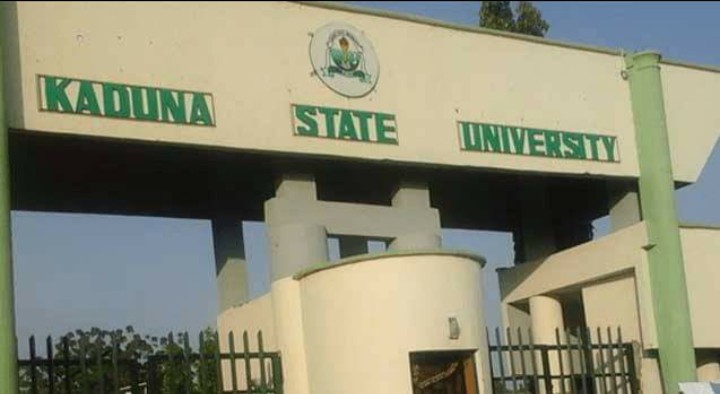
ASUU: KASU lecturers suspend strike, hail Kaduna government

By Ishaka Mohammed

The Academic Staff Union of Universities (ASUU), Kaduna State University (KASU) chapter, has suspended its indefinite strike action following an agreement with the state government.

The decision followed the congress meeting held on February 22, 2025 and the approval of the union’s National Executive Council (NEC). 

In a statement released on Sunday, the branch leadership headed by Dr Peter Adamu appreciated the Kaduna State government for demonstrating goodwill towards resolving the issues that prompted the strike. 

According to the statement, the government is releasing funds immediately to pay the 60% withheld September 2017 salaries and the Student Industrial Work Experience Scheme (SIWES) supervision allowances for five sessions. It has also set a timeline for the payment of five months’ withheld salaries (May – September 2022), promotion arrears, Earned Academic Allowance (EAA), pension remittances from 2009 to 2019, as well as death benefits and Group Life Assurance.

The statement also featured the government’s commitment to implementing a wage award and granting full autonomy to KASU.

The Daily Reality last week reported the above issues as the causes of the strike.

The KASU chapter of ASUU praised Governor Uba Sani for deviating “from the dark days of the past where members [of ASUU] were victimized for participating in lawful strike actions”.

Barau distributes 61 cars, 1,137 motorcycles to Kano APC leaders, promises more support 

By Uzair Adam  

On Sunday, the Deputy President of the Senate, Senator Barau I. Jibrin, distributed 61 cars and 1,137 motorcycles to leaders of the All Progressives Congress (APC) in Kano State.  

The distribution, held at Meena Event Centre on Lugard Road near the Kano State Government House, was attended by key party stakeholders, including the APC National Chairman, Dr Abdullahi Umar Ganduje.  

The vehicles and motorcycles were allocated to party chairmen in the 44 local government areas and 484 wards of the state as part of efforts to strengthen the APC’s grassroots structure.  

Speaking at the event, the Kano State APC Chairman, Abdullahi Abbas, lauded Barau for consistently supporting the party since the New Nigeria People’s Party (NNPP) took over the state in 2023. 

He emphasized that ahead of the 2027 elections, aspirants would be assessed based on their contributions to the party’s development.  

Similarly, the Chairman of the House of Representatives Committee on Petroleum Resources (Upstream), Rep. Alhassan Ado Doguwa, expressed confidence in the APC’s resurgence, predicting that the NNPP would be defeated before 1 p.m. on election day in 2027.  

In his remarks, APC National Chairman Dr Ganduje commended Barau for the initiative, describing it as a step towards consolidating the party and improving the livelihoods of its members. 

He also highlighted the increasing defections from the NNPP to the APC, suggesting that the opposition party’s influence in Kano was waning.  

Senator Barau, while addressing the gathering, described the empowerment initiative as just the beginning of a broader program targeting various sectors, including youths, students, farmers, women, traders, and clerics. 

He reaffirmed his commitment to expanding the initiative and urged continued support for President Bola Ahmed Tinubu’s administration.  

He noted that Tinubu’s policies were beginning to yield positive results, citing the gradual reduction in fuel prices, stabilization of the Naira, and improvements in food prices.  

“This is just the tip of the iceberg. We will empower all spheres of society. Let’s continue to support Mr. President for the success of his programs,” Barau said.

SERAP sues CBN over increased ATM transaction fees

By Uzair Adam

The Socio-Economic Rights and Accountability Project (SERAP) has taken legal action against the Central Bank of Nigeria (CBN) over its recent decision to increase Automated Teller Machine (ATM) transaction fees, calling it “unlawful, unfair, unreasonable, and unjust.”

The CBN recently introduced a new charge of N100 per N20,000 withdrawal from an ATM not located within a bank’s branch premises.

Additionally, withdrawals at shopping centers, airports, and standalone cash points will attract a N100 fee along with a surcharge of up to N500 per N20,000 withdrawal.

In a lawsuit filed at the Federal High Court in Lagos, SERAP is seeking a judicial review of the CBN’s decision, arguing that the policy contradicts the Federal Competition and Consumer Protection Act of 2018.

The organization wants the court to declare the fee hike illegal and issue an injunction preventing its enforcement.

According to SERAP, the increase disproportionately affects low-income Nigerians, creating financial barriers for those who rely on ATMs for daily transactions.

The group further claims that the move violates constitutional provisions, consumer protection laws, and international human rights obligations.

SERAP’s legal team, led by Kolawole Oluwadare and Andrew Nwankwo, asserts that the new charges should be borne by banks and their shareholders rather than being passed onto consumers.

They argue that the CBN is acting in a manner that prioritizes banks’ profits over the welfare of Nigerians, with many banks declaring substantial annual profits.

The lawsuit also challenges the CBN’s authority to unilaterally impose such fees without the consent of the Federal Competition and Consumer Protection Commission (FCCPC). SERAP is urging the court to nullify the CBN’s circular on the fee hike and restrain banks and financial institutions from implementing the charges.

A date for the hearing of the case has not yet been set.

Four died, ten injured in Jigawa bus fire accident

By Abdullahi Mukhtar Algasgaini

Four people, including three children, were burnt to death, while 10 others sustained injuries when a commercial Hummer bus caught fire in Gwaram, Jigawa State, on February 22, 2025. The incident occurred around 4:00 p.m., near the Government Girls Unity Secondary School.

The bus, a white Hummer with registration number ZAK 382 XA, was driven by 40-year-old Dalha Saleh from Saldigal Village, Bauchi State. The vehicle was carrying 44 passengers—25 adults and 19 children—from Zaki LGA in Bauchi State to Rabadi Village when the fire broke out.

Sources indicate that the fire originated from the bus’s exhaust system after a mattress tied to the back of the vehicle caught fire due to sparks from the exhaust.

The victims, all from Saldigal Village, Bauchi State, have been identified as Ziwaira Hassan, Fatima Hassan, Iyatale Hassan, and Halima Muhammad (10 years old). Ten other passengers were rushed to Gwaram Cottage Hospital with varying degrees of burns. The remaining passengers escaped unharmed.

The charred remains of the victims will be released to their families for burial after medical examination.

In related news, the issue of reckless overloading of commercial vehicles continues to be a serious safety concern in the region. Buses and vans meant for passengers are often stuffed with goods meant for trailers, creating dangerous hazards on the roads. Despite numerous security and road safety checkpoints, many of these vehicles pass unchecked due to bribery, exacerbating the risks of road accidents.

The Federal Road Safety Corps (FRSC), police, and other security agencies have been criticized for their failure to effectively enforce regulations. The lack of proper oversight contributes to the deterioration of road infrastructure and increases the likelihood of deadly accidents. It also opens the door for criminal activities, such as terrorists smuggling weapons and fuel under the guise of commercial transport.

There is an urgent need for stronger enforcement of vehicle safety regulations, weight limits, and more thorough inspections at checkpoints to prevent further tragedies. The government must take decisive action to ensure that safety standards are upheld and that security personnel are empowered to carry out their duties without compromise.