Admin

Tinubu’s youth conference and the echoes of the past

By Lawal Dahiru Mamman

For 13 years, the Zambian national side had acted as a formidable barrier between Nigeria and footballing success, much like an inspirational goalkeeper. But on a fateful day, approximately 80,000 Nigerian supporters made the pilgrimage to the National Stadium, Surulere, in Lagos, to witness a potentially historic occasion.

That day provided the ultimate platform for the challenge, where Nigeria successfully broke the Zambian jinx for over a decade. This is a summary of a piece titled “The Match that Broke the Myth,” written by Uzor Maxim Uzoatu in the 1980s.

Nigeria has participated in international conferences and organized similar events at national and subnational levels. Specifically, national conferences often provide comprehensive reports for implementation after extensive deliberations from stakeholders nationwide.

But much like the imaginary soccer team above, which endured losses for 13 years, outputs from our symposia appear to be hexed. Reports are submitted, but implementation remains shelved due to forces akin to the Zambian inspirational goalkeeper.

For enlightenment, two precedents come to mind. Since 1999, President Muhammadu Buhari is notably the only president who has not convened a national conference. The late President Umaru Musa Yar’Adua is an exception, owing to his brief tenure and subsequent nine-month battle with ill health, which ultimately led to his passing.

In February 2005, President Olusegun Obasanjo convened the “National Political Reform Conference.” The gathering was an avenue to reassess, refocus, redefine, and redesign Nigeria’s political landscape to strengthen the bonds of unity.

Accordingly, it sought to enhance democratic consolidation processes, strengthen structures to solidify values that promote democracy and good governance, and open boundless opportunities for all Nigerians to be and feel part of the evolving political process and socio-economic development.

The committee was encouraged to conduct comparative studies, considering Nigeria’s unique realities, specificities, and historical context, to ensure a comprehensive understanding of the issues at hand during that era.

Four hundred and two delegates attended the conference, held between February and July 2005. Copies of the report from that conference were submitted, but nothing substantial happened afterward.

President Goodluck Jonathan convened another conference in 2014. The panel, chaired by retired Chief Justice Idris Kutigi, was assigned to advise the government on the framework for a national dialogue. To accomplish this, they consulted widely with Nigerians, ensuring that diverse perspectives were represented.

The conference, attended by approximately 500 delegates from across Nigeria, proposed substantial reforms. These included scrapping the current system of 774 local authorities to reduce corruption and save costs, creating 18 new states, revising revenue allocation, decreasing the federal government’s share of national income while increasing those of the states, and modifying the presidential system to include parliamentary elements.

Other key recommendations included power sharing and rotation, specifically advocating for the rotation of the presidency and the circulation of governorship among three senatorial districts in each state. These proposals aimed to promote greater representation, equity, and national unity. However, after passing over 600 resolutions and producing a 10,335-page report submitted to the presidency, the recommendations were never implemented.

On October 1, 2024, President Bola Tinubu, adhering to the tradition of past leaders, addressed the nation. At the time of his national broadcast, the country was uncertain whether the sequel to August’s #EndBadGovernance protest, Fearless in October, would take place.

Among numerous announcements, the president declared a National Youth Conference to assemble youths from across Nigeria for meaningful conversations that drive nation-building. Whether this particular aspect of his speech helped shelve the proposed protest remains uncertain.

What is the model for selecting delegates? What topics will be discussed during the proposed 30-day conference? While every youth awaits a response, it is important to note that numerous issues impact the youth, who constitute over 60% of the federation’s population.

In economic terms, recent statistics indicate that over 40% of Nigerian youths are unemployed, leaving millions of young people feeling disillusioned and despondent. This figure may actually be higher, given the ongoing challenges the nation faces in data collection and storage. Will this pressing issue be addressed at the conference?

According to the National Bureau of Statistics (NBS), an astounding 63% of the population—approximately 133 million individuals, nearly six out of ten Nigerians—live in multidimensional poverty, with the majority being youths. Will poverty be included on the conference’s agenda?

Limited access to quality education, caused by inadequate infrastructure, scarce resources, and a lack of strong support systems, leaves the dreams of many unfulfilled. According to the United Nations Educational, Scientific and Cultural Organization (UNESCO), the student loan scheme through the Nigerian Education Loan Fund (NELFUND) does not assist the 20.2 million uneducated young Nigerians. Will this become a subject of debate?

The National Drug Law Enforcement Agency (NDLEA) reported in 2023 that approximately 14.3 million Nigerians are involved in drug abuse, with young people predominantly affected. Regrettably, one in four women also participates in this harmful practice. Given its consequences, including widespread unproductivity and elevated crime rates, this critical issue merits discussion at the conference.

Despite youth affirmative action policies aimed at ensuring 30% representation in the public sector—including federal and state executive councils, boards of parastatals and agencies, and local government councils—and 35% representation in political party leadership positions, electoral bodies, and legislative assemblies for individuals between 18 and 35 years, there remains a significant issue of gross misrepresentation and inadequate youth participation in governance and decision-making.

Numerous other issues also impact Nigerian youth, such as migration for better opportunities, cultural constraints, child marriage and early pregnancy, cybercrime, youth radicalization, the role of young Nigerians in science, technology, engineering, and mathematics (STEM), and the erosion of cultural identity and values. These topics deserve thoughtful discussion.

As of the time the president promised to work toward modalities for this conference and the selection of delegates in “close consultation with our young people through their representatives,” skepticism looms large.

At the State House in Abuja earlier this month, the president inaugurated the planning committee of the National Youth Conference, tasking the youths—whom he described as the “heartbeat of the nation”—to seize the opportunity to redefine their future. Nigerians keenly await the modalities that the committee will set.

Our hopes lie in the words of Eric Teniola, a seasoned columnist, who said after the 2014 National Conference: “A conference will not solve all our problems, but it will give us a platform to exchange ideas and maybe iron out our differences. A conference may halt our present drift to anarchy.”

Therefore, we hope that this National Youth Conference, proposed by the president and his team, will be ‘The Conference that Breaks the Myth’ of unyielding conferences in Nigeria.

Lawal Dahiru Mamman writes from Abuja and can be contacted at dahirulawal90@gmail.com.
Emir Bayero cancels durbar celebration, cites security concerns

By Uzair Adam

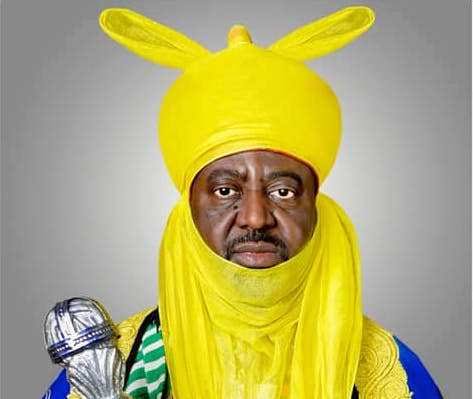
The 15th Emir of Kano, Alhaji Aminu Ado Bayero, has announced the cancellation of all arrangements for the annual durbar celebration during the Eid-el-Fitr festival, citing security concerns.

In a short video released late Wednesday night, Bayero stated that the decision was made after consultations with respected Islamic clerics, elders, and his councilors, who advised him to prioritize peace in the state.

Earlier, The Daily Reality reported that Emir Bayero had informed security agencies about his intention to hold the durbar.

However, Governor Abba Kabir Yusuf had directed the 16th Emir of Kano, Alhaji Muhammadu Sanusi II, along with other emirs, to proceed with preparations for the event.

The situation heightened tensions in Kano, prompting security assurances from the police to protect lives and property during the Sallah celebrations.

“We had to call off the arrangement to conduct the durbar after respected Islamic clerics and elders prevailed on us and after consultation with my councilors,” Emir Bayero said.

“Durbar celebration is not a do-or-die affair for us. The peaceful coexistence of our people is far more important.”

He urged residents to use the festive period to visit family and friends while praying for continued peace in Kano and across Nigeria.

FG declares public holidays for Eid-el-Fitr

By Uzair Adam

The Federal Government has declared Monday, March 31, and Tuesday, April 1, as public holidays to celebrate Eid-el-Fitr.

The Minister of Interior, Olubunmi Tunji-Ojo, announced this in a statement on Wednesday through the ministry’s Permanent Secretary, Magdalene Ajani.

He congratulated Muslims across the country on the successful completion of Ramadan and urged them to uphold the values of self-discipline, compassion, generosity, and peace.

He emphasized the importance of love, forgiveness, and solidarity in fostering a harmonious society.

Tunji-Ojo also called on Nigerians to use the occasion to pray for peace, stability, and national prosperity.

He expressed hope that the Eid celebration would strengthen unity and cooperation across religious and ethnic divides.

The minister further encouraged citizens to celebrate responsibly and extend kindness to the less privileged, reflecting the true essence of Ramadan and Eid.

“On behalf of the Federal Government, he extended heartfelt Eid Mubarak wishes to all Muslim faithful and prayed that the blessings of the season bring happiness, success, and fulfillment to everyone,” the statement read.

Kaduna revenue agency refutes El-Rufai’s claim, reports growth in IGR under Uba Sani

By Abdullahi Mukhtar Algasgaini

The Kaduna State Internal Revenue Service (KADIRS) has dismissed claims by former Governor Nasir El-Rufai that the state’s monthly internally generated revenue (IGR) has declined, while also refuting allegations of an illegal N100 million diversion from state funds.  

Speaking at a press conference, KADIRS Executive Chairman Jerry Adams stated that under the current administration of Governor Uba Sani, the state has recorded significant revenue growth, surpassing figures achieved during El-Rufai’s tenure.  

“It is necessary to clarify certain statements made by former Governor Nasir El-Rufai. Whether due to incomplete information or a deliberate attempt to mislead, it is important to set the record straight,” Adams said.  

El-Rufai had claimed that Kaduna’s monthly revenue dropped from N7 billion to N2 billion under Governor Uba Sani. However, Adams refuted this, stating that the highest annual IGR recorded under El-Rufai was N59 billion in 2022, translating to a monthly average of N4.9 billion.  

He further explained that a significant portion of the revenue between 2019 and 2022 came from one-off sources, including debt recoveries and government asset sales, which amounted to N45 billion.  

“If these irregular revenues are excluded, the actual monthly IGR at that time was far lower than what is being claimed,” Adams noted.  

Regarding the alleged illegal transfer of N100 million, Adams dismissed it as “completely false,” explaining that Kaduna’s revenue collection system operates entirely through PAYKADUNA, with all payments going directly into the state’s Treasury Single Account (TSA).  

He emphasized that under Governor Uba Sani, Kaduna’s IGR has seen consistent improvement.  

“In 2023 alone, Kaduna State generated N62.48 billion in IGR, which increased to N71 billion in 2024—averaging N5.2 billion and N6 billion monthly, respectively.”  

“In just January and February 2025, the state has already collected N7.46 billion and N6.68 billion, totaling N14.16 billion in two months—without any debt recoveries or one-off revenues.”  

“This demonstrates the commitment and diligence of this administration in driving economic growth and ensuring sustainable development,” Adams stated.

Abdullahi Tanka Galadanci, SSA on Radio to Gov. Yusuf, passes away

By Hadiza Abdulkadir

Abdullahi Tanka Galadanci, a prominent politician and Senior Special Assistant on Radio to the Governor of Kano State, Alhaji Abba Kabir Yusuf, passed away.

Galadanci died on March 26, 2025, after a brief illness at the Aminu Kano Teaching Hospital.

Governor Yusuf expressed deep sorrow over the loss, highlighting Mr. Galadanci’s dedication and significant contributions to the state’s media landscape. 

“Our heartfelt condolences go to his family, friends, and colleagues during this difficult time,” the Governor stated. He further requested Allah’s mercy on Galadanci.

Burial rites took place today at 5:30 PM at Filin Galadanchi Mosque, near Galadiman Kano’s residence.

Customs makes largest PMS seizure in Kebbi, vows to intensify anti-smuggling efforts

By Sabiu Abdullahi

The Nigeria Customs Service (NCS) has recorded its largest seizure of smuggled Premium Motor Spirit (PMS) in Kebbi State since the launch of Operation Whirlwind.

Speaking at a press briefing in Kebbi on Tuesday, the Assistant Comptroller General (ACG) of Financial Administration and Special Duty, as well as the National Coordinator of Operation Whirlwind, Hussein Ejibunu, made this known on behalf of the Comptroller General of Customs, Bashir Adewale Adeniyi.

Ejibunu noted the dangers posed by fuel smuggling, stating that it results in revenue losses, trade distortions, artificial scarcity, and national security threats.

He stressed that the operation reflects the NCS’s strong commitment to tackling illegal fuel diversion.

“This seizure marks a significant milestone in our efforts to protect Nigeria’s critical resources. The Nigeria Customs Service remains resolute in tackling smuggling activities that undermine government policies and economic stability,” he stated.

According to him, the interception was carried out in the Tsamiya area of Kebbi State based on intelligence gathered after days of surveillance.

He disclosed that among the seized items was a truck with Nigerian plate number DC 7184 RB, which contained 766 jerrycans of 25 litres each and 18 drums of 200 litres each of PMS.

Another truck, with Republic of Benin plate number AT 2457 RUP, was found carrying 1,454 jerrycans of 25 litres each and 18 drums of 200 litres each of PMS. Similarly, a truck with Republic of Benin plate number BV C240 Arubi was intercepted with 1,350 jerrycans of 25 litres each and 18 drums of 200 litres each of PMS.

In addition, 805 jerrycans of 25 litres each were confiscated at various locations, including Dole Kaina, Zaria Kalakala, Tunga Waterside, Lolo, and Tsamiya.

Ejibunu reaffirmed the NCS’s determination to sustain efforts against fuel smuggling and strengthen collaboration with other agencies to secure Nigeria’s borders.

He also disclosed that the seized PMS was sold at a controlled price of ₦10,000 per 25-litre jerrycan to benefit citizens rather than smugglers.Speaking at the event, the Customs Area Controller of Kebbi Command, Comptroller Chidi Nwakureke, assured that his team remains committed to eliminating smuggling activities in the state.

He stated that the agency would continue to facilitate trade and ensure a smooth business environment for legitimate traders while intensifying operations to curb smuggling.

Nwakureke praised the efforts of Customs officers involved in the operation and acknowledged the support of other security agencies in the ongoing anti-smuggling drive.

NCS implements executive order to uplift local healthcare manufacturing

By Sabiu Abdullahi

The Nigeria Customs Service (NCS) has announced the implementation of a Presidential Executive Order aimed at strengthening local production of healthcare products, which will reduce the cost of medical equipment and consumables.

According to the NCS, President Bola Ahmed Tinubu approved the guidelines for this initiative through the Honourable Minister of Finance and Coordinating Minister of the Economy, Olawale Edun.As part of the directive, the government has granted a two-year exemption from import duty and Value Added Tax (VAT) on essential raw materials used in pharmaceutical production.

These include Active Pharmaceutical Ingredients (APIs), excipients, and other key materials required for manufacturing essential medicines, Long-Lasting Insecticidal Nets (LLINs), Rapid Diagnostic Kits, reagents, and packaging materials.

To ensure that only qualified manufacturers benefit from these incentives, eligibility is restricted to pharmaceutical producers recognised by the Federal Ministry of Health and Social Welfare.

Additionally, such manufacturers must possess a valid Tax Identification Number (TIN).In a move to enhance transparency and accountability, the NCS will generate quarterly reports detailing all importations under the policy.

These reports will include information on importers, quantities, and the value of imported items to ensure proper oversight.Reaffirming its commitment to supporting government policies, the NCS emphasised its role in trade facilitation, border security, and national development.

It also called on all stakeholders, including importers, manufacturers, and relevant government agencies, to collaborate in ensuring the success of this initiative.

“The successful implementation of this policy requires collaboration from all stakeholders, including importers, manufacturers, and relevant government agencies. Through our collective efforts, we can achieve the shared goal of a robust healthcare sector that meets the needs of all Nigerians,” the statement read.

Veteran Kannywood actor Baba Karkuzu passes away  

By Habibu Maaruf Abdu!

The Kannywood film industry has lost one of its most beloved pioneers. Veteran actor Abdullahi Shuaibu, widely known as ‘Baba Karkuzu,’ breathed his last on Tuesday, March 25, 2025, the 25th of Ramadan 1446.

He reportedly died at the University of Jos Teaching Hospital after a prolonged battle with illness. 

His demise comes nearly a year after the passing of the celebrated Kannywood actress Saratu Daso, who died on the 30th of Ramadan, 1445. 

A respected figure in the Hausa entertainment industry, Baba Karkuzu made his debut in the 1980s with his iconic drama ‘Karkuzu na Bodara,’ which earned him the stage name by which he became widely known. His unique acting style and contributions to the industry played a crucial role in shaping the early days of Kannywood.

However, Karkuzu had struggled with health complications for several years, which led to blindness before his death. Reports indicate that he had been facing significant hardship since 2018, prompting renowned Nigerian footballer Ahmed Musa to extend a helping hand by donating ₦5 million and gifting him a house.  

His funeral took place according to Islamic rites today, Wednesday, March 26, 2025, at his residence on Haruna Hadeija Street in Jos, Plateau State.

Karkuzu’s death signifies the end of an era in Kannywood, leaving a legacy that future generations will remember.

A call for peace, security, and community action in Hadejia

By Garba Sidi 

Hadejia, one of the 27 local government areas in Jigawa State, Nigeria, is renowned for its vibrant population and bustling business activities. With an estimated population of over 200,000 people, Hadejia stands as the largest local government in the state in terms of both population and economic activity.

However, recent events have cast a dark shadow over this once-thriving community. Between March 8 and March 13, 2025, five lives were tragically lost in a series of violent incidents, including the death of a newlywed bride. These incidents have raised serious concerns about the safety and security of the people of Hadejia.

Peace, safety, and security are fundamental pillars of any thriving society. Without these elements, communities cannot prosper, and individuals cannot lead fulfilling lives. The recent surge in violent crime in Hadejia, fueled by the availability of drugs, toxic chemicals, and the proliferation of weapons among youths, threatens the very fabric of this community. It is imperative to urgently address these issues to restore peace and ensure the safety of all residents.

The incidents that occurred between March 8 and March 13, 2025, illustrate a grim picture of the current state of affairs in Hadejia. On March 8, a political argument between two young men escalated into a physical altercation. One individual used a pair of scissors to stab his opponent in the stomach, resulting in his death. This tragic event highlights the dangerous consequences of unchecked aggression and how easily conflicts can turn fatal.

On March 9th, two youths engaged in a playful yet dangerous game involving sticks. What started as a harmless activity quickly escalated when one of the youths was struck in the head, resulting in his death. This incident highlights the need for greater supervision and guidance for young people, who may not fully comprehend the potential consequences of their actions.

On March 10th, another fight broke out between two friends in a different neighborhood. The altercation ended with one friend killing the other, further emphasizing the volatile nature of interpersonal relationships in the community. The following day, on March 11th, a mechanic was brutally attacked in his home in the NTA quarters. The assailant used a large knife to fatally wound the mechanic, leaving the community in shock.

The most heart-wrenching incident occurred on March 13th, when a newly married woman, barely five months into her marriage, was found dead in her home with her throat slit. This heinous act has left the community in mourning and raised questions about the safety of women and the prevalence of domestic violence.

The rising rate of violent crime in Hadejia can be attributed to several factors. One of the primary issues is the lack of economic opportunities and the inability of many families to provide for their children. In a community where large families are common, parents often struggle to meet their children’s basic needs. This lack of resources can lead to frustration and desperation among young people, who may resort to crime as a means of survival.

Another significant factor is the widespread availability of drugs, marijuana, and other harmful chemicals. These substances are easily accessible to teenagers and young adults, who often use them as an escape from their harsh realities. However, using these substances can lead to impaired judgment, increased aggression, and a greater propensity for violence. The combination of drugs and readily available weapons, like knives and scissors, results in a dangerous environment where conflicts can quickly escalate into deadly confrontations.

To address the rising tide of violence in Hadejia, it is essential to implement a multi-faceted approach that tackles the root causes of the problem. One potential solution is for the government to create additional administrative divisions within the town. By decentralizing governance and bringing it closer to the people, the government can improve the delivery of essential services, enhance security, and foster a stronger sense of community responsibility.

Furthermore, parents and community leaders must adopt a more active role in overseeing their children’s activities. This involves closely monitoring their associations, ensuring they are not engaging in criminal activities, and providing the guidance and support necessary for making positive life choices. Family planning is equally important; parents should be encouraged to have only as many children as they can adequately support, both financially and emotionally.

Finally, the recent surge of violent crimes in Hadejia serves as a stark reminder of the significance of peace, safety, and security in any society. Without these fundamental elements, communities cannot flourish, and individuals cannot lead fulfilling lives. 

It is the responsibility of the government, community leaders, and parents to collaborate in addressing the root causes of violence and fostering a safer, more prosperous future for the people of Hadejia. By implementing proactive measures, such as establishing additional administrative divisions, encouraging family planning, and cracking down on the availability of drugs and weapons, we can begin to restore peace and security to this once-thriving community.

I have not decided on 2027 presidency—Atiku

By Uzair Adam

Former Vice President Atiku Abubakar has said he is yet to decide whether he will run for president in 2027, emphasizing that a strong and viable platform is crucial before making any commitment.

In an exclusive interview with Daily Trust ahead of the airing of Untold Stories, a television program hosted by Adesuwa Giwa-Osagie, Atiku addressed speculations about his political future but remained noncommittal.

“I don’t know because there has to be, first of all, a viable platform, more than any other time in the political history of this country, particularly since the return of democracy,” he said.

Atiku, who has contested the presidency six times, recently announced a coalition of opposition leaders aiming to challenge President Bola Ahmed Tinubu in 2027.

However, questions remain about who will lead the alliance, with Peter Obi, former Labour Party presidential candidate, and Nasir El-Rufai, former Kaduna State governor, among those being considered.

Despite his uncertainty, Atiku stressed that Nigeria is in urgent need of experienced and credible leadership.

“I have not seen Nigeria in such a dire need of strong leadership as we are today,” he said.

Atiku also addressed the controversy surrounding his decision not to select Nyesom Wike, now Minister of the Federal Capital Territory, as his running mate in the 2023 election.

He explained that unlike in 2019, when he picked Peter Obi without broad consultations and faced backlash, he allowed the party to recommend three candidates in 2023, ultimately choosing Ifeanyi Okowa, who was ranked first, over Wike, who was second on the list.

“No, not at all,” Atiku said when asked if he regretted not picking Wike.

Reflecting on the 1993 presidential election, Atiku recounted how his political mentor, the late Shehu Yar’adua, asked him to step down for Chief Moshood Abiola.

He said an initial agreement was for Abiola to select him as his running mate, but governors within the Social Democratic Party (SDP) pressured Abiola into choosing Babagana Kingibe instead.

“They threatened him and said, ‘Look, if you don’t take Kingibe, we are not going to support you.’ Abiola felt it was a risk worth taking,” Atiku said.

While Atiku remains undecided about his 2027 ambition, his recent political moves suggest he continues to play a significant role in Nigeria’s opposition politics.