Admin

Police warn against planned protest on national police day

By Uzair Adam

The Nigeria Police Force (NPF) has issued a warning against planned protests scheduled for Monday, April 7, 2025, by the group known as the ‘Take It Back Movement,’ and urged the organisers to reconsider the timing of their demonstration, particularly in the Federal Capital Territory (FCT) and other parts of the country.

According to the Police, April 7 is set aside by the Federal Government as National Police Day to honour the dedication and sacrifices of officers across the nation.

They described the planned protest on the same date as suspicious and potentially harmful to the image of the police and the country.

In a statement released on Sunday by the Force Public Relations Officer, ACP Olumuyiwa Adejobi, the Police reiterated their respect for citizens’ constitutional rights to peaceful assembly.

However, they expressed concern over the motive behind staging a protest on a day dedicated to celebrating the nation’s security personnel.

The statement noted that the National Police Day would attract dignitaries from within and outside Nigeria, including foreign Inspectors-General of Police and diplomats.

It said holding a protest on the same day could disrupt the celebration and cast a negative light on the country’s law enforcement image.

“The rationale behind staging a nationwide protest on the same day is questionable and perceived to be a deliberate attempt and unpatriotic act that is capable of rubbishing and maligning the image of the Nigeria Police and the nation as a whole,” the statement read.

The NPF, therefore, urged the organisers to shelve the planned protest, describing it as ill-timed and mischievous.

It advised those with grievances to explore dialogue and engage with appropriate government institutions to address their concerns.

It was reported that the ‘Take It Back Movement’ is an organisation founded by politician and activist, Omoyele Sowore.

Arewa, lamentations and 2027

By Kabiru Danladi Lawanti, PhD 

There is something about us, Arewa people. Whenever power shifts to the South, we start lamentations, accusing the leader, who is from the South, of nepotism or initiating policies that are deliberately aimed at destroying our region. 

We embrace this idea and write about it repeatedly. From 1999 to 2007, from 2010 to 2015, and now from 2023 to the present, we consistently reference our voting power in our writings. 

Recently, I read an article comparing our voting power and support for President Bola Ahmed Tinubu with other regions of the country. How long can we continue these lamentations? When will we stop lamenting and start acting?

We need to shift the conversation from an overemphasis on population-driven electoral power to a more strategic focus on economic productivity and revenue generation. The viability and strength of Arewa are not solely determined by the sheer size of our population, but by how effectively that population is harnessed for economic growth, innovation, and wealth creation.

Arewa’s fixation on securing political dominance through demographic advantage has frequently overshadowed the more critical question we need to be asking ourselves. 

How do we convert our vast human and natural resources into sustainable development outcomes?

While concerns about the inequities of political appointments and perceived nepotism under the current Tinubu administration are valid, ongoing lamentation over political spoils can be counterproductive if not paired with proactive strategies for economic transformation.

What has happened to Arewa after all these years of political power? What becomes of the “K” states after each election season? What has happened to Jigawa or Bauchi? Is it enough to have just a Badaru or Tuggar as compensation for the over 5 million we gave the President?

What is required is a change in strategy: a deliberate and coordinated effort to leverage our expansive landmass and youthful population to drive industrialization, technological innovation, and inclusive economic growth. Our governors need to be wiser. Have you ever checked the total amount of FAAC allocations coming to our states and local governments? What are we doing with this money?

In this regard, lessons abound from the developmental trajectories of nations such as China and India, both of which have shown how demographic advantages can be transformed into competitive edges through disciplined policies, strategic investments in education and infrastructure, and a clear vision for economic self-reliance.

The path to power lies not just in numbers – voting power – but in what those numbers yield after elections.

I have learnt my lessons. What we need is not political power at the centre but what we do with that power and what our Governors are doing with the huge resources coming to them from Abuja. 

The agitation for removing Tinubu in 2027 can be compared to the agitations of removing the military in 1999 or Jonathan in 2015. They are driven by elite interests, not necessarily by situations we find ourselves in, Arewa.

From Baba “Go Slow” to Baba “Going Very Fast” 

By Bilyamin Abdulmumin, PhD

Buhari was largely viewed as reluctant, whereas Tinubu engaged in tit-for-tat responses. Tinubu has demonstrated decisiveness on many occasions. For instance, when there was a public outcry over his Kano ministerial nominee, Maryam Shettima, he swiftly replaced her with Dr. Mariya Mahmoud, who enjoyed greater public approval. Buhari likely would have retained Shettima.

A few months after the ministers assumed office, the Minister of Humanitarian Affairs, a ministry infamous for waywardness—was caught in multiple scandals. In a swift response to public outrage, Tinubu suspended Betta Edu, and from all likelihood, she has gone for good.

No situation highlights the difference between Tinubu and Buhari more than the ongoing political crisis in Rivers State involving Governor Fubara and his former benefactor, Nyesom Wike. While Buhari would have turned a deaf ear to the situation, Tinubu reacted decisively. Those who once criticised Buhari for his passive leadership should now give a standing ovation to Tinubu’s stern control and decisiveness.

Nevertheless, Tinubu’s speech during the emergency declaration was notably one-sided. He sided with his FCT Minister, Nyesom Wike, heaping blame on Fubara for demolishing national assembly structures and failing to address pipeline bombings—while completely ignoring Wike’s role in the crisis. These reinforced accusations of federal government highhandedness in Nigeria’s most populous states.

Some argue that the federal government is involved in the debacles affecting Rivers, Lagos, and Kano due to its fear of losing these key states to the opposition. However, as the APC states, the allegations of internal conflicts in the Lagos government do not hold up. Since the state is governed by the ruling party, it seems to be just another political facade from the federal government.

A major issue for Tinubu’s camp is their position on Fubara and Uba Sani. If they oppose Fubara, they should also oppose Uba Sani. You cannot support Wike in Rivers while opposing El-Rufai in Kaduna. The two scenarios bear a striking resemblance.

Reflecting on how Nigerians criticized Buhari for lacking swiftness and displaying full control as the Commander-in-Chief of the Armed Forces of Nigeria, it is fair to say that Tinubu has now met that expectation.

Bilyamin Abdulmumin, PhD wrote via bilal4riid13@gmail.com.

Governor Bala mourns late Sheikh Idris, pledges to restore Eid prayer ground

By Abdullahi Mukhtar Algasgaini

Bauchi State Governor, Senator Bala Mohammed, has condoled with the family of the late Islamic scholar, Sheikh Dr. Idris Abdulaziz Dutsen Tanshi, describing his death as a great loss to the state.

During a visit to the bereaved family, Governor Mohammed praised the late cleric as a courageous preacher dedicated to Islamic teachings, justice, and the rule of law.

He prayed for Allah’s mercy on the deceased and strength for the family.

In a goodwill gesture, the governor promised to restore the Games Village Eid Prayer Ground, a request long made by the late Sheikh.

He also expressed forgiveness for past disagreements.

Family representatives, Malam Yau and Alhaji Shehu Barau Ningi, thanked the governor for his visit and support, stressing the significance of the Eid ground to the Muslim community.

Rivers State: The dangers of political betrayal and unconstitutional interventions

By Zayyad I. Muhammad

I strongly disapprove of Governor Siminalayi Fubara’s betrayal of his political godfather. Fubara entered the political arena without established structures, financial resources, or widespread recognition; he was relatively unknown. 

Former Governor Nyesom Wike provided him with the platform, support, and influence that ultimately led to his rise as governor. Yet, despite this, Fubara has turned against the very person who paved the way for his political ascent. 

Both sides should share the blame for not shifting grounds. The declaration of a state of emergency in Rivers State came at a critical time to address rising insecurity and unrest that threatened to spiral out of control. Left unchecked, the situation could have led to a resurgence of militancy and severely disrupted oil exploration activities, which are vital to both the state and national economy. 

Beyond the economic implications, the deteriorating security situation also risks derailing governance and has somehow ‘assisted’ Governor Fubara in escaping impeachment. President Tinubu may justify his decision—he has access to security intelligence and reports that the general public does not.

However, although addressing security concerns is essential, suspending an elected governor and members of the state assembly is not only unconstitutional but also sets a dangerous precedent for Nigeria’s democracy. This issue goes beyond the 2027 elections; it strikes at the heart of democratic governance and the principle of electoral legitimacy. 

Our democracy has matured to a point where a sitting governor can be removed only through due process, as outlined in Section 188 of the 1999 Constitution of the Federal Republic of Nigeria (as amended). If we are not careful, one day—God forbid—a president or his allies could create chaos in a state simply to justify declaring a state of emergency and unseating an elected governor for political gain. Such actions would undermine democracy and erode public trust in the electoral process. They pose a danger to our future. 

The Rivers state or any political conflicts should be resolved within the framework of the law, not through forceful interventions that threaten democratic stability.

The key actors in Rivers State must set aside their personal and political grievances to prioritize reconciliation. Prolonged instability is unacceptable, as it harms the people, governance, and economic progress. A peaceful resolution is the only path forward.

An elected Governor’s mandate is sacrosanct and must be respected. He is the top citizen in the subnational.

 Zayyad I. Muhammad writes from Abuja via zaymohd@yahoo.com.

Police to question Emir Sanusi over ‘durbar incident’ 

By Uzair Adam 

The Nigeria Police Force has invited the 16th Emir of Kano, Muhammadu Sanusi II, for an investigative meeting regarding a Sallah Day incident linked to a traditional procession.

The Daily Reality reports that on Sunday, March 30, 2025, the Kano State Police Command arrested 20-year-old Usman Sagiru of Sharifai Quarters in connection with the alleged attack and killing of vigilante members during the Emir’s entourage after Eid prayers.

Following the development, the police also invited Shamakin Kano, Alhaji Wada Isyaku, for questioning as part of an ongoing investigation.

A letter dated April 4, 2025, and signed by the Commissioner of Police (Operations), CP Olajide Rufus Ibitoye, indicated that the invitation was issued on the directive of the Inspector General of Police. 

The Emir is expected to appear at the Force Intelligence Department headquarters in Abuja on Tuesday, April 8, 2025, by 10:00 a.m.

Prior to the Sallah festivities, security agencies had imposed a restriction on durbar activities, citing security concerns. 

However, Emir Sanusi reportedly proceeded with the traditional processions, including the Hawan Nasarawa and a visit to the Government House, drawing large crowds and widespread media attention.

Education minister proposes two-year NYSC scheme to boost job creation

By Abdullahi Mukhtar Algasgaini

The Minister of Education, Dr. Maruf Olatunji Alausa, has called for the extension of the National Youth Service Corps (NYSC) program from one year to two years.

The proposal aims to expand the Skill Acquisition and Entrepreneurship Development (SAED) training to better equip corps members for self-employment.

Dr. Alausa made the suggestion on Friday during a courtesy visit by the newly appointed NYSC Director-General, Brigadier General Olakunle Nafiu, in Abuja.

He commended the NYSC for its digital reforms, which have helped reduce certificate fraud among foreign-trained graduates, particularly from West Africa.

The minister also addressed concerns over OND part-time graduates with full-time HND degrees who were previously exempted from national service, urging a review of the policy.

In response, the NYSC DG praised Dr. Alausa’s leadership in the education sector and proposed the creation of a database for Nigerian students pursuing degrees abroad to enhance monitoring and policy planning.

The call for an extended service period aligns with the government’s push to tackle unemployment by fostering entrepreneurship among Nigerian youths.

Atiku slams Tinubu over rising insecurity, calls for security overhaul

By Abdullahi Mukhtar Algasgaini

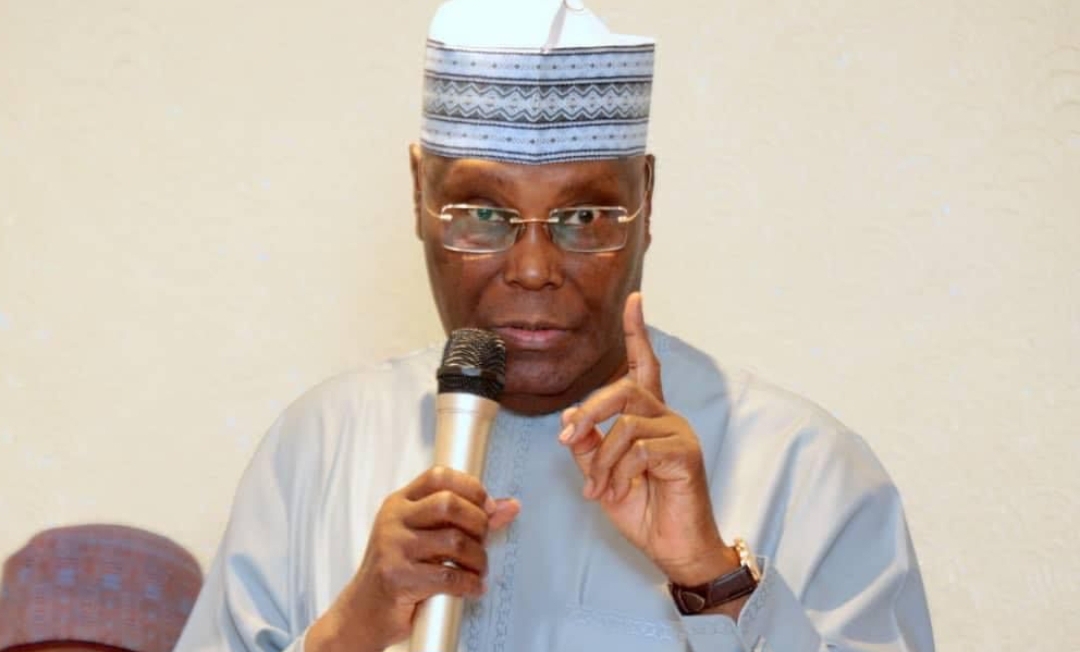
Former Vice President Atiku Abubakar has condemned President Bola Tinubu’s security strategy, labeling it a failure as violent killings continue unchecked across Nigeria.

In a statement on Friday, Atiku expressed dismay over the frequent attacks, including the latest killings in Plateau State, which he said have become so common they no longer dominate headlines.

“The failure of Tinubu’s security architecture has turned into a nationwide crisis, with repeated massacres going unnoticed,” he said.

Atiku urged the president to urgently restructure the country’s security framework to better protect citizens, warning that Nigerians are becoming numb to the bloodshed.

“My condolences to the victims in Bokkos, Plateau State. The government must act now,” he added.

Ex-police special constabulary member arrested for inciting comment on social media

By Abdullahi Mukhtar Algasgaini

The Kaduna State Police Command has clarified a social media post that has stirred controversy, which was allegedly made by one Hadaina Hussaini (Dan-taki).

The post, which has circulated widely on Facebook, carried the alarming message: “Kaduna Police Officer Threatens Retaliation Against Southerners in Uromi Killings.”

In response to the post, the police have stated that Hussaini is neither an active member of the Nigeria Police Force nor a current staff of the Kaduna State Police Command.

They further clarified that the individual in question was previously part of the Police Special Constabulary (PSC), a voluntary policing unit, but was dismissed two years ago due to concerns regarding his character.

The police noted that the uniform depicted in the images circulating on social media, which showed Hussaini in police attire, is a Police Special Constabulary uniform, as indicated by the “PSC/KD” label on the identity card.

These photos were taken prior to his dismissal.

Hussaini has been arrested, and investigations are underway.

Upon completion of preliminary investigations, he will face charges in court for his actions. The police stressed that the Nigeria Police Force is committed to maintaining law and order and will not tolerate any form of incitement or hate speech.

The Commissioner of Police, CP Rabi’u Muhammad, has called on the public to remain calm and to report any similar incidents to the authorities.

Podcasting Northern Nigeria’s weaknesses for social media “likes”

By Sa’id Sa’ad

“Silence is really golden. For many years, I have respected you as a great actress, but after listening to you speak for once, I lost all respect for you. Silence is, indeed, golden.” 

These were the exact words shared by a fan after watching one of the popular Kannywood actresses’ podcasts.

Recently, a podcast went viral in which four Kannywood actresses sat, warming their chairs, sharing opinions about relationships. While many criticise the podcast, I find myself wondering just how ‘golden silence really is.’

From Talk with Feezy by northern Nigerian artist Feezy to the highly criticised The Social Spotlight by Kannywood actress Nafisa Abdullahi, podcasts are slowly becoming the North’s new thing. Famous faces with thousands of followers are tapping into this audio-visual world and, irrespective of the content, are reaching a wide audience thanks to their massive followings.

Podcasting is the new cool in the North. Content creators, entertainers, film producers, actors, actresses and wannabe influencers are all jumping on this new wave. Everyone’s got something to say. But the unifying factor is they are all saying it in Hausa. This not only makes it content by creators from northern Nigeria but also for northern Nigeria and the broader Hausa-speaking population.

Now, let’s not be mistaken. Podcasting isn’t exactly new. Like most things, it just arrived in the North late. Young audiences are now tuning in, eager to consume original opinions from faces they admire beneath the thousands of Instagram followers. 

But here comes the twist. While popular faces trend with podcasts that often miss the mark, there’s a whole storm of lesser-known creators. Just as hungry. Just as passionate. Diving into podcasting, hoping to go viral. Few get it right. Many get it wrong, and most are just aiming to create controversy. 

It’s great that young creators are speaking up. It’s refreshing to see new northern voices adding their two cents to conversations about relationships, religion, family, entertainment, and society. But even at that, when done poorly, this new podcast culture is more dangerous than beneficial. 

I’m an avid fan of vodcasts, particularly those produced by Nigerians. I also strongly support consuming content from Northern Nigeria. However, just because it’s from the North doesn’t mean our standards should be low. We owe it to ourselves to demand quality.

Upon close observation, it’s clear that many of these podcasts bring ‘more face’ and ‘less value.’ In the first few minutes of an episode, you can already tell the host isn’t fully prepared. They ramble. They say empty phrases. And you’re left wondering: What am I supposed to take away from this? These podcasts often fail to provide value, and let me remind you, that’s the very foundation of podcasting: Value.

It’s a strange thing. Really. The lights are bright, the makeup is on point, and the guests are ready. The studio setup is perfect. Yet, after all that effort, the conversation feels empty. It leaves you craving more, but in a bad way.

This reflects the current trend in both public and private Hausa-speaking media, where a designated show for Kannywood stars is often featured. These shows rarely extend beyond inviting the stars for views and likes, failing to address the critical questions of why these shows exist in the first place.

But this isn’t just happening among famous creators. A new wave of young creators has emerged; unfortunately, many of them, without doing their homework, are merely copying the same format used by the stars, eager to replicate the same model: 

Create podcast → Talk carelessly → Create controversy → Get views and likes.

While this model keeps some people in the limelight, it doesn’t do the North any favours. It’s as if we’re holding a mirror to the region’s weaknesses and saying, ‘Here, look at us, this is what we’ve got.’ It’s reinforcing the negative stereotype that we can’t produce quality. 

Whether we like it or not, the digital presence of these creators who act as our representatives shapes how the world perceives us.

But let’s not ignore the few non-popular creators producing quality content in Hausa for the region. Many of these are tech-driven podcasts that, although still growing, offer substantial value. Unfortunately, these high-quality contributions are often overshadowed by the more glamorous but shallow content produced by popular stars or emergent ones desperate to trend. 

The question we must ask ourselves is: Which popular Hausa-speaking podcast from northern Nigeria truly offers real value to its audience? How much of the value is visible? Is the content truly for the audience or just for the producers? What narratives are being sold, and can we, in terms of quality, truly compete with podcasts from other regions in the country?

Until we get it right and have the right people behind the mics, with the right knowledge and intentions, these creators will continue to podcast about northern Nigeria’s weaknesses for likes. The unfortunate truth is that this will only serve to bury our efforts to challenge negative stereotypes six feet under. 

Ultimately, every creator has the right to produce what they want. In this case, the power is in the hands of the audience. 

You and I decide what should be popular.

Sa’id Sa’ad is a Nigerian writer and journalist currently residing in Germany. He is the author of the podcast-play “Gangare”. He won the Peace Panel Short Story Prize in 2018 and the NFC Essay Prize that same year. He presently works with the German broadcaster Deutsche Welle.