Admin

Emir of Fufore to lead Adamawa’s 2025 hajj delegation

By Abdullahi Mukhtar Algasgaini

Adamawa State Governor, Rt. Hon. Ahmadu Umaru Fintiri, has named the Emir of Fufore, Alhaji Muhammadu Sani Ribadu, as the Amirul-Hajj and leader of the state’s delegation for the 2025 pilgrimage to Saudi Arabia.

The appointment, announced on Tuesday, recognizes Ribadu’s dedication, experience, and contributions to religious affairs in the state.

The delegation includes:

1. Alhaji Muhammad Buba Jidjiwa

2. Barr. A.T. Shehu

3. Alhaji Ibrahim Abba

4. Alhaji Abubakar Murtala

5. Alhaji Mohammed Dabo (Secretary)

Governor Fintiri urged the team to work diligently with relevant agencies to ensure a smooth and successful Hajj operation.

He also reiterated the need for proper coordination to guarantee a seamless pilgrimage for Adamawa’s intending pilgrims.

Police arrest protest leaders in Yobe over anti-government demonstration

By Abdullahi Mukhtar Algasgaini

Police have arrested the leader of a protest movement in Yobe State and several others who were demonstrating against the government’s proposed law to monitor social media platforms.

The protest was led by Abubakar Jawa, who was apprehended along with four other individuals that include Mohammed Kayeri Adam, Suleiman A. Gambo, Maimuna Abba, and Abubakar Jawa.

Dungus Abdulkarim, the state police spokesperson, denied that the arrests were related to the protest itself.

He clarified that the police were merely detaining the protesters for their protection.

Economic hardship: Police disperse Abuja protesters with tear gas

By Uzair Adam

Security operatives on Monday fired tear gas at peaceful demonstrators in the Maitama area of Abuja as citizens took to the streets demanding urgent government intervention on rising economic hardship.

The protest, organised by the Take-It-Back Movement alongside several civil society groups, coincided with the National Police Day celebrations at Eagle Square.

Authorities had cordoned off parts of the Three Arms Zone where high-ranking police officers gathered for the official event.

Participants, including human rights advocate and former presidential candidate Omoyele Sowore, carried placards reading “Stop the Repression” and “Let Us Breathe,” in protest of what they described as growing authoritarianism in the country.

Juwon Sanyaolu, National Coordinator of the Take-It-Back Movement, highlighted worsening inflation, insecurity, and a “state of emergency” in Rivers State as key motivations for the protest.

Though the march started peacefully, tensions escalated after police operatives deployed tear gas to disperse the crowd, prompting protesters to flee in different directions.

As of the time of filing this report, there were no confirmed casualties or arrests.

Meanwhile, the National Assembly complex, one of the protest’s intended destinations, remained largely empty due to the ongoing legislative recess.

Lawmakers are expected to resume on April 29.

Despite the disruption, organisers maintained that the protest was both lawful and timely, reiterating their call for immediate government action to address the nation’s deepening economic and security crises.

Screen time in bed linked to worse sleep, study finds

By Muhammad Sulaiman

A recent study conducted by the University of Otago has found that using electronic devices in bed, such as smartphones, tablets, and laptops, is linked to poorer sleep quality. The research indicates that individuals who engage in screen time while in bed experience delayed sleep onset and reduced overall sleep duration.

Dr. Bradley Brosnan, the lead author of the study, emphasized that while screen time before bed had little impact on sleep, usage once in bed significantly impaired sleep quality. The study observed that 99% of participants used screens in the two hours before bed, with more than half continuing this usage once in bed, leading to an average delay of 30 minutes in falling asleep.

Health experts warn that poor sleep can have serious long-term effects on mental and physical well-being, including increased risks of anxiety, depression, obesity, and heart disease.

Dr. Amina Bello, a sleep researcher at the National Institute of Sleep Research, who was not involved in the study, commented on the findings: “This research reinforces the importance of creating a tech-free bedtime routine. Even just 30 minutes without screens before bed can make a significant difference.”

The study recommends setting screen curfews, charging devices outside the bedroom, and engaging in relaxing activities like reading or meditation before bed to promote healthier sleep habits.

FG screens ex-govs, politicians for ambassadorial roles

By Abdullahi Mukhtar Algasgaini

The Federal Government has begun screening nominees for ambassadorial appointments to fill vacancies across Nigeria’s 76 embassies and 22 high commissions.

Former Southeast governors Ifeanyi Ugwuanyi (Enugu) and Okezie Ikpeazu (Abia), as well as ex-lawmaker Shehu Sani and former presidential aide Reno Omokri, are among those screened, according to sources.

Others include former Lagos Deputy Governor Femi Pedro and ex-Aviation Minister Femi Fani-Kayode, who have reportedly been cleared.

Nominees were directed to undergo security checks by the DSS and submit personal records.

The appointments come nearly two years after President Bola Tinubu recalled all ambassadors in 2023.

Foreign Affairs Minister Yusuf Tuggar had earlier cited funding delays, but with screenings ongoing, an official list of diplomats is expected soon.

IGP withdraws police invitation to Emir Sanusi following Sallah Day incident in Kano

By Hadiza Abdulkadir

The Nigeria Police Force has retracted its invitation to Alhaji Sanusi regarding the recent unrest during the Sallah celebration in Kano State on March 30, 2025. The invitation was initially extended to gather Alhaji Sanusi’s account of the events that led to the disruption of peace during the festivities.

Following consultations with key stakeholders, Inspector-General of Police, IGP Kayode Adeolu Egbetokun, emphasized the importance of keeping policing actions free from political bias and misinterpretation. Instead of requiring Alhaji Sanusi’s attendance at the police station, the IGP has directed the operatives of the Force Intelligence Department (FID) to go to Kano and obtain his statement directly.

Prior to the Sallah celebrations, police received credible intelligence suggesting that two rival emirs, Alh Ado Bayero and Alh Lamido Sanusi, intended to hold separate Durbar Festivals, a tradition that involves emirs parading on horseback. To prevent potential violence, IGP Egbetokun deployed Deputy Inspector-General of Police, DIG Abubakar Sadiq, to negotiate with both parties and the Kano State Government, resulting in an agreement to cancel the festivities.

Despite this understanding, Alhaji Sanusi proceeded to ride a horse in a procession post-Eid prayers, which led to escalating tensions with local youths and ultimately resulted in the death of one Usman Sagiru, along with several injuries.

The Nigeria Police Force has assured the public of its commitment to professionalism in investigating the incident, stating that those responsible will face justice. The police further clarified that their actions are driven by principles of neutrality and professionalism.

ACP Olumuyiwa Adejobi, the Force Public Relations Officer, reiterated the police’s dedication to conducting thorough investigations into the matter.

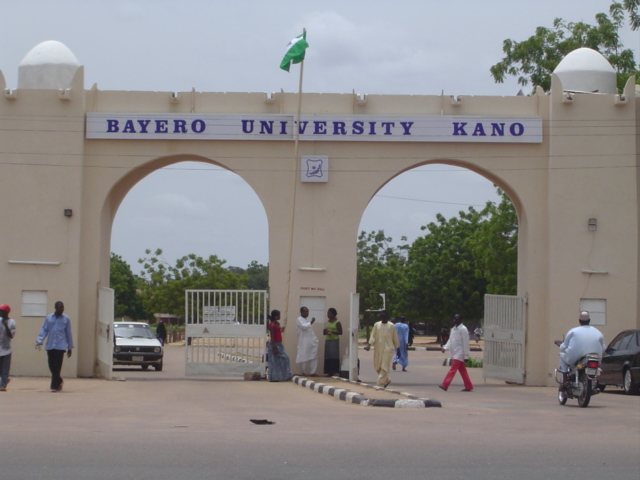
BUK dismisses admission scandal reports, reaffirms commitment to integrity

By Uzair Adam 

Bayero University, Kano (BUK), has refuted reports on some online platforms alleging irregularities in its admission process, describing them as false and misleading.

The clarification was made in a statement issued on Sunday by the Deputy Registrar and Head of Public Affairs Directorate, Lamara Garba, who said the allegations relate to the 2021/2022 Direct Entry admissions conducted over two years ago.

According to the statement, BUK’s thorough screening process at the time uncovered several applications backed by fake results. 

The university stressed that it rejected all such applications in line with its zero-tolerance policy on academic fraud.

“This was not a scandal but rather a testament to our due diligence, which earned us commendation from the Joint Admissions and Matriculation Board (JAMB),” the statement read.

It added that in 2023, BUK was honoured with an Award of Excellence and Due Diligence by JAMB, becoming the first university in Nigeria to receive such a distinction.

BUK therefore urged the public to disregard the circulating misinformation, affirming its continued commitment to fairness, transparency, and high standards in its academic processes.

Police warn against planned protest on national police day

By Uzair Adam

The Nigeria Police Force (NPF) has issued a warning against planned protests scheduled for Monday, April 7, 2025, by the group known as the ‘Take It Back Movement,’ and urged the organisers to reconsider the timing of their demonstration, particularly in the Federal Capital Territory (FCT) and other parts of the country.

According to the Police, April 7 is set aside by the Federal Government as National Police Day to honour the dedication and sacrifices of officers across the nation.

They described the planned protest on the same date as suspicious and potentially harmful to the image of the police and the country.

In a statement released on Sunday by the Force Public Relations Officer, ACP Olumuyiwa Adejobi, the Police reiterated their respect for citizens’ constitutional rights to peaceful assembly.

However, they expressed concern over the motive behind staging a protest on a day dedicated to celebrating the nation’s security personnel.

The statement noted that the National Police Day would attract dignitaries from within and outside Nigeria, including foreign Inspectors-General of Police and diplomats.

It said holding a protest on the same day could disrupt the celebration and cast a negative light on the country’s law enforcement image.

“The rationale behind staging a nationwide protest on the same day is questionable and perceived to be a deliberate attempt and unpatriotic act that is capable of rubbishing and maligning the image of the Nigeria Police and the nation as a whole,” the statement read.

The NPF, therefore, urged the organisers to shelve the planned protest, describing it as ill-timed and mischievous.

It advised those with grievances to explore dialogue and engage with appropriate government institutions to address their concerns.

It was reported that the ‘Take It Back Movement’ is an organisation founded by politician and activist, Omoyele Sowore.

Arewa, lamentations and 2027

By Kabiru Danladi Lawanti, PhD 

There is something about us, Arewa people. Whenever power shifts to the South, we start lamentations, accusing the leader, who is from the South, of nepotism or initiating policies that are deliberately aimed at destroying our region. 

We embrace this idea and write about it repeatedly. From 1999 to 2007, from 2010 to 2015, and now from 2023 to the present, we consistently reference our voting power in our writings. 

Recently, I read an article comparing our voting power and support for President Bola Ahmed Tinubu with other regions of the country. How long can we continue these lamentations? When will we stop lamenting and start acting?

We need to shift the conversation from an overemphasis on population-driven electoral power to a more strategic focus on economic productivity and revenue generation. The viability and strength of Arewa are not solely determined by the sheer size of our population, but by how effectively that population is harnessed for economic growth, innovation, and wealth creation.

Arewa’s fixation on securing political dominance through demographic advantage has frequently overshadowed the more critical question we need to be asking ourselves. 

How do we convert our vast human and natural resources into sustainable development outcomes?

While concerns about the inequities of political appointments and perceived nepotism under the current Tinubu administration are valid, ongoing lamentation over political spoils can be counterproductive if not paired with proactive strategies for economic transformation.

What has happened to Arewa after all these years of political power? What becomes of the “K” states after each election season? What has happened to Jigawa or Bauchi? Is it enough to have just a Badaru or Tuggar as compensation for the over 5 million we gave the President?

What is required is a change in strategy: a deliberate and coordinated effort to leverage our expansive landmass and youthful population to drive industrialization, technological innovation, and inclusive economic growth. Our governors need to be wiser. Have you ever checked the total amount of FAAC allocations coming to our states and local governments? What are we doing with this money?

In this regard, lessons abound from the developmental trajectories of nations such as China and India, both of which have shown how demographic advantages can be transformed into competitive edges through disciplined policies, strategic investments in education and infrastructure, and a clear vision for economic self-reliance.

The path to power lies not just in numbers – voting power – but in what those numbers yield after elections.

I have learnt my lessons. What we need is not political power at the centre but what we do with that power and what our Governors are doing with the huge resources coming to them from Abuja. 

The agitation for removing Tinubu in 2027 can be compared to the agitations of removing the military in 1999 or Jonathan in 2015. They are driven by elite interests, not necessarily by situations we find ourselves in, Arewa.

From Baba “Go Slow” to Baba “Going Very Fast” 

By Bilyamin Abdulmumin, PhD

Buhari was largely viewed as reluctant, whereas Tinubu engaged in tit-for-tat responses. Tinubu has demonstrated decisiveness on many occasions. For instance, when there was a public outcry over his Kano ministerial nominee, Maryam Shettima, he swiftly replaced her with Dr. Mariya Mahmoud, who enjoyed greater public approval. Buhari likely would have retained Shettima.

A few months after the ministers assumed office, the Minister of Humanitarian Affairs, a ministry infamous for waywardness—was caught in multiple scandals. In a swift response to public outrage, Tinubu suspended Betta Edu, and from all likelihood, she has gone for good.

No situation highlights the difference between Tinubu and Buhari more than the ongoing political crisis in Rivers State involving Governor Fubara and his former benefactor, Nyesom Wike. While Buhari would have turned a deaf ear to the situation, Tinubu reacted decisively. Those who once criticised Buhari for his passive leadership should now give a standing ovation to Tinubu’s stern control and decisiveness.

Nevertheless, Tinubu’s speech during the emergency declaration was notably one-sided. He sided with his FCT Minister, Nyesom Wike, heaping blame on Fubara for demolishing national assembly structures and failing to address pipeline bombings—while completely ignoring Wike’s role in the crisis. These reinforced accusations of federal government highhandedness in Nigeria’s most populous states.

Some argue that the federal government is involved in the debacles affecting Rivers, Lagos, and Kano due to its fear of losing these key states to the opposition. However, as the APC states, the allegations of internal conflicts in the Lagos government do not hold up. Since the state is governed by the ruling party, it seems to be just another political facade from the federal government.

A major issue for Tinubu’s camp is their position on Fubara and Uba Sani. If they oppose Fubara, they should also oppose Uba Sani. You cannot support Wike in Rivers while opposing El-Rufai in Kaduna. The two scenarios bear a striking resemblance.

Reflecting on how Nigerians criticized Buhari for lacking swiftness and displaying full control as the Commander-in-Chief of the Armed Forces of Nigeria, it is fair to say that Tinubu has now met that expectation.

Bilyamin Abdulmumin, PhD wrote via bilal4riid13@gmail.com.