Admin

77K NYSC allowance and the future of youth in Nigeria

By Usman Mujtaba

When Brigadier General O.O. Nafiu, the Director-General of the National Youth Service Corps (NYSC), announced that corps members would receive their monthly allowance of ₦77,000 starting from March 2025, they thought it was business as usual. This is because they had been receiving similar announcements since last year. 

Moreover, the minister also gave multiple assurances recently when he was interviewed on Arise Television, Channels, and even on the MicOn Podcast hosted by Seun Okinbaloye, a host of Channels Television’s program Politics Tonight.Perhaps corps members are tired of the DG’s words; they only want action. As one Hausa adage goes, “An gaji da sa ba’a ga kaho ba.”

Unknown to them, this time is different, whether because it comes from the new DG or that the bureaucratic procedure was ripe, I couldn’t tell. But on Wednesday, March 26, 2025, corps members were thrilled to start receiving the ₦77,000 as their allowance, which they call “Allawee.” The jubilation was palpable across all regions of the country. Social media was full of jokes about the development, with one post reading, “NYSC DG for President 2027.” See how the allawee makes people go crazy

After the alert, what’s next? Minimum wage increment and inflation are familiar bedfellows; in fact, many economic pundits are against it, arguing that it won’t increase the value of products sold or services rendered. I was shocked when one of my friends told me that a corps member is tasked with responsibilities at home when they start serving. After a fixed amount, they will send monthly, so many requests will follow from such a home, probably from siblings.

The corps member who serves and the ghost corps member (who does the thumbprint) when the month ends are Tweedledee and Tweedledum in terms of expenses. Here’s why: while the serving corps member will have to budget for foodstuffs and transport, the ghost corps member plans for transport mainly from their hometown in a different state and the amount they’ll probably give to the PPA and/or the secretariat, given the agency’s corruption, nepotism, and favoritism. As such, the expenses become balanced. It’s better for a corps member to calmly settle at their place of primary assignment (PPA) and serve their fatherland.

Is it decisive to reform NYSC at this juncture? As the saying goes, “Eat when the food is ready. Speak when the time is right”? I recently came across an article, “Time to Reform NYSC,” in Daily Trust on April 23, 2025, in which Babakura Aninigi suggests some ways forward for the initiative. Though holistic, his take is realistic. 

Aningi wrote, and I quote, “The federal government should consider restructuring the scheme… to reflect current realities.” This is apt because many believe that all is well with the adoption of a minimum wage. It’s not. Corps members will undoubtedly adjust, but only in the short term because inflation and additional expectations are inevitable. The call for reform of policy and strategy is the appeal for the long term.

The bustle and energy of graduates are palpable in towns whenever the NYSC opens its portal for registration. The energy will be doubled now that every graduate moves with additional zeal to enjoy the new approved allowance.

I discussed with one of my friends the possible addition of allowance from his PPA (a private school in Kano). I told him that it would be easier for a camel to pass through the eye of a needle than for him to get that addition with his ₦77,000.

He informed me they originally gave ₦5,000. Imagine! It’s indeed another challenge many corps members will face. Some will even withdraw what they usually give. As one of my friends jokingly observed, a corps member’s allowance is more than the salary of some private school headmaster.

₦77,000 is a commendable development, but it shouldn’t douse the energy and kill the idea of reforming the NYSC scheme.

Usman Mujtaba wrote via usmanmujtabashehu@gmail.com.

Emir of Zazzau praises EFCC’s anti-corruption efforts

By Abdullahi Mukhtar Algasgaini

The Emir of Zazzau, His Highness Mallam Nuhu Bamali, has lauded the Economic and Financial Crimes Commission (EFCC) for its unwavering commitment to fighting corruption in Nigeria.

The monarch gave the commendation when the Acting Director of the EFCC’s Kaduna Zonal Directorate, ACE I Bawa Usman Kaltungo, led a delegation on a familiarisation visit to the Zazzau Emirate.

The Emir praised the EFCC for its consistent collaboration with the emirate, stating, “The EFCC has always carried the Zazzau Emirate Council along in its activities, and we are grateful. I urge my subjects to live law-abiding lives, as no one will be shielded if found guilty of wrongdoing.”

He also expressed confidence in the professionalism of the Commission.

In response, Kaltungo thanked the emirate for its longstanding support and appealed for continued cooperation to enhance the EFCC’s operations in the region.

The visit reinforced the existing partnership between the EFCC and traditional institutions in the fight against financial crimes.

Nigeria unveils agribusiness strategy to combat food insecurity

By Abdullahi Mukhtar Algasgaini

The Presidential Food Systems Coordination Unit (PFSCU) has launched a new National Agribusiness Policy Mechanism (NAPM) to address food insecurity and strengthen Nigeria’s agricultural sector.

The initiative, announced after the 5th Steering Committee meeting in Abuja, aims to improve coordination and investment across federal, state, and local levels using data and digital tools.

As part of its outreach, the PFSCU introduced the “Harvesting Hope Caravan,” a nationwide tour to engage communities through town halls and demonstrations.

Meanwhile, rising challenges in wheat and rice production prompted the creation of an emergency task force to assess and mitigate risks.

To enhance food security monitoring, the PFSCU is collaborating with the National Security Adviser and the FAO to develop an AI-powered early warning system.

Additionally, the $1.1 billion ‘Green Imperative Project’ is advancing, with 774 farms onboarded and six equipment hubs established to support farmers.

With regional offices set up for data-driven policymaking, the PFSCU reaffirmed its commitment to stabilizing Nigeria’s food systems through innovation and partnerships.

The move comes as food security grows increasingly tied to national stability.

The silent conspiracy: How Nigerian telecom giants exploit people 

By Abdullahi Adamu

Whenever the Nigerian Electricity Regulatory Commission (NERC) announces an electricity tariff increase, Nigerians brace for even worse power supply. Due to incessant national grid collapses and inadequate transmission by the Transmission Company of Nigeria (TCN), poor generation continues to plague the sector, yet tariffs keep rising.

Now, the Nigerian Communications Commission (NCC) is following the same path, approving telecom companies’ hikes in call and data service prices. Meanwhile, Nigerians suffer from poor network quality and unreliable internet services.

It seems these regulatory agencies have forgotten that their primary mandate is to protect consumers and ensure efficient service delivery, not just to rubber-stamp tariff increases for the companies they regulate. When will they start holding these service providers accountable instead of burdening citizens with higher costs for declining service quality?

The recent price hike by telecom companies in Nigeria has affected subscribers’ wallets and seems to have impacted the quality of network services.

It’s frustrating when you pay more for a service, but the quality doesn’t meet expectations. Poor network provision and services can affect productivity, communication, and daily life.

Despite the widespread complaints from Nigerians, it’s disappointing that the services provided by telecom companies have not significantly improved.

The regulators’ lack of response, such as the Nigerian Communications Commission (NCC), is also concerning. It’s their responsibility to ensure that telecom companies provide quality services and protect consumers’ interests.

It’s time for Nigerians to continue to speak out and demand better services. 

Remember, collective action can lead to positive change.

Abdullahi Adamu wrote via nasabooyoyo@gmail.com.

Coalition, 2027 power play and the need for unity 

By Isyaka Laminu Badamasi

In the move to ouster Bola Ahmed Tinubu’s administration and the All Progressive Congress (APC) from the mantle of leadership in 2027, the need for unity among our political leaders can not be overemphasised.

The recent visit by Atiku Abubakar and other top politicians to former president Muhammadu Buhari for the post-Sallah, cast serious doubts in the minds of Nigerians who are yet to recover from the shocks of the former president’s betrayal of 2015 – 2023. The Wazirin Adamawa clearly stated that the visit has nothing to do with the proposed merger.

Be that as it may, Atiku as the prominent opposition leader should also be very careful with the crop of politicians is aligning with to achieve this objective, as some of those seen in his entourage during the visit are people with questionable backgrounds, whose their reigns in power left an indelible mark of anger and uncertainty in the minds of their people, they are heartless with no sense of sympathy to the people, they are not different with Tinubu.

As the Hausa saying goes, one need not select water in an attempt to squelch a fire, but in some situations, there is a need for that, as some waters may be more harmful than the fire. The selection of who to join hands with towards emancipating this country from the hands of incessant geezers is of the utmost importance. Sending President Tinubu out of the villa in 2027 is non-negotiable and shouldn’t be handled with kid gloves.

As it stands today, Nigerians yearn for someone who is ready to implement policies and programs that will make their lives very easy and promising, someone who will bring an end to the wanton killings all over the country caused by one insecurity or another, someone who is ready to ensure that Nigeria remains one and united. 

For this, the need for the political leaders to unite and make necessary adjustments to face the heartless APC administration head om is very paramount,  any move that can not guarantee the aspirations of common man in the streets can not move to an inch, and, it will be for the advantage of Bola Tinubu and his APC to remain in power beyond 2027.

To those power drunk, who are making a mockery of the movement, should be reminded that the pre-2015 merger that brought APC to power is still workable. APC and Tinubu should get prepared.

Isyaka Laminu Badamasi,  a public affairs commentator and advocate for sustainable development,  writes from Bauchi. 

Northern elders condemn Tinubu’s lopsided appointments

By Abdullahi Mukhtar Algasgaini

The Northern Elders Forum (NEF) has accused President Bola Ahmed Tinubu of favouring the South-West region in federal appointments and warned that the trend undermines national unity and violates constitutional provisions.

In a statement by its spokesperson, Professor Abubakar Jika Jiddere, NEF cited Section 14(3) of the 1999 Constitution, which mandates equitable representation in government appointments.

The group condemned the recent composition of the National Census Committee as disproportionately skewed toward the South-West, calling it exclusionary and undemocratic.

NEF demanded an immediate review of the committee and a redistribution of appointments across all six geopolitical zones to ensure fairness.

It warned that continued marginalisation could deepen divisions and threaten national stability.

“Nigeria’s unity depends on leadership that upholds justice, inclusivity, and the rule of law,” the statement read.

The birth of performance-based politics in Jega  

By Bilyamin Abdulmumin, PhD

There is much to learn from the politics currently unfolding between the Jega community, their constituency representative, and the Kebbi State government. 

It all began with rising criticism directed at the state government over the glaring lack of infrastructure development in the community. What made the criticism particularly serious was the surprise and visible projects by Hon. Mansur Musa Jega, the National Assembly member representing Jega, Gwandu, and Aliero. Unarguably, since the return of democracy, this constituency has never witnessed such a scale of project delivery. So, unsurprisingly, prayers and praise were poured in from all quarters.

With Senator Muhammad Adamu Aliero of Kebbi Central also delivering notable developments, public frustration quickly turned toward the state government—the governor, the state assembly member, and the local government chairman. During the latest Eid prayer, one fierce Imam echoed the sentiment in his sermon before thousands of faithful. 

In a bold rhetorical salvo, the Imam asked: “Where are the capital projects from the state governor? Or from the local government chairman? Has governance been reduced to merely paying salaries?” 

On the other hand, the Imam turns to the constituency member to invoke Allah’s blessings on him for conspicuous township developments. These prayers were the straw that broke the camel’s back. The video went viral, sending shockwaves through the state government and its supporters.

But then, almost immediately, something interesting happened. Based on the advice, the government mobilised contractors to immediately mark for dualisation one of the busiest roads (leading to the house of the town chief). Behold, performance-based politics (which should have been the case) has given birth. 

One interesting lesson from this development is that a politician’s performance speaks louder and travels faster than any political campaign: A politician’s performance becomes an automatic means of political campaigning. Imagine an Imam on Eid grounds before thousands campaigning for one candidate. That’s the power of visible performance.

Another interesting piece revealed by the saga was the political influence of the population. Jega is among the few local governments in Kebbi State with the highest population, hence one of the most influential politically. The old town forms what would be called a swing state in America for its political dynamism or K states in Nigeria for its sheer number of electorates, so winning it is a sign of success in Kebbi State. A reason why the state governor didn’t joke with the Imam and the electorate’s outcry. This shows that a large population, when strategically mobilised, can become a political asset.

 While delivering constituency projects also depends on what committees a representative belongs to, Mansur still deserves credit because there are allegations of constructors conniving with constituency members to divert billions of naira from constituency projects. 

We criticise politicians when they fail; we should also encourage them when they try.

Before your next Umrah…build a Waqf

By Abdullahi Abubakar Lamido

The dusty path to Al-Ma’arif Islamiyyah School was unusually quiet that Wednesday afternoon, except for the gentle crunch of sandals on gravel and the animated voices of two young girls wrapped in flowing white hijabs.

Unknown to many passersby, the conversation between these two girls wasn’t just about school or homework. It was about something deeper—something that could transform communities: the power of Waqf. As they walked, they debated a topic that many adults still struggle with: Should we prioritise spending on annual Umrah trips or invest in sustainable Waqf projects that empower girls through education and skill-building?

“Ameena, wait for me!” called out Hafsah, adjusting the corner of her veil.

Ameena slowed down and turned with a grin. “Wallahi, you’re always dragging your legs like an old lady.”

They both laughed.

But as they turned the bend, Hafsah lowered her voice and leaned in. “By the way, my aunt and her entire family are travelling for Umrah again this Ramadan. That’s like the fifth time in a row! Imagine the reward, subhanallah!”

Ameena nodded with a smile, but her eyes said more. “Masha Allah. No doubt, Umrah is virtuous. The Prophet SAW said in Sahih al-Bukhari, ‘Umrah to Umrah is expiation for the sins committed between them.’ And in another Hadith, ‘The performance of Hajj and Umrah removes poverty and sins just as a furnace removes the impurities from iron.’ So yes, it is beautiful.”

Hafsah beamed. “Exactly! That’s why they go every year. My aunt says you can never get enough of Makkah. The barakah there is like no other.”

Ameena stopped, picked a tiny stone, and tossed it thoughtfully. “I agree. But I can’t help thinking… what if, just what if, they did something different this year? Take the entire amount they usually spend—tickets, hotel, feeding, shopping—and invest it in a Waqf. A sustainable, income-generating waqf specifically for girls’ education and skills development.”

Hafsah blinked. “A waqf? Instead of Umrah?”

“Not instead of,” Ameena corrected gently, “but perhaps before another one. Let’s say they make a solid waqf just once. From then on, the proceeds can fund multiple Umrahs and sponsor tens—maybe hundreds—of girls like us. Wouldn’t that multiply the rewards?”

Hafsah frowned slightly. “Hmm. But that’s not the same spiritual feeling as being in Makkah.”

“True. But listen to this Hadith,” Ameena said, eyes lighting up. “The Prophet SAW said: ‘Whoever goes out to seek knowledge is in the path of Allah until he returns.’ That’s in Sunan al-Tirmidhi. And in Sahih Muslim, the Prophet said that feeding the hungry, helping the poor, or removing a harm from the road are all Sadaqah. These actions have also been likened in reward to Umrah.”

She continued, “In fact, Imam Ibn Rajab said some charitable actions—because of their benefit to society—can surpass voluntary Hajj and Umrah in reward!”

Hafsah looked unconvinced. “But those are small things. Can they compare to walking between Safa and Marwa?”

Ameena smiled knowingly. “Let me share a story about our Islamic heritage, as reported by Ibn Kathir—one of the great scholars and righteous predecessors, Abdullah ibn al-Mubarak, once set out for Hajj. Along the way, he passed through a town where a young girl was seen taking a dead bird from a garbage heap. 

Curious, he followed her and learned that she and her brother had nothing to eat, surviving off scraps and carrion due to poverty and oppression. Ibn al-Mubarak was so moved that he cancelled his pilgrimage, gave her all the money he had set aside for Hajj—except a small portion for their return—and said: ‘This is better than our Hajj this year!’

Can you imagine? A scholar of his stature suspended the journey of a lifetime because he saw a greater reward in feeding the poor.”

Hafsah bit her lip, thoughtful.

“And what of the Hadith in Sahih al-Bukhari,” Ameena continued, “where the Prophet SAW said: ‘He is not a believer whose stomach is filled while his neighbour goes hungry.’ Don’t you think our people—who travel yearly for Umrah with their entire household—should ask themselves if their neighbors are fed, educated, and safe first?”

There was silence for a while. Then Hafsah asked, “But maybe they feel their own worship is more important.”

Ameena didn’t flinch. “Worship is important. But Islam is both ‘ibadah and mu’amalat—personal devotion and social responsibility. A society where girls are unskilled, uneducated, and poor is a society in crisis. Allah says in Surah Al-Balad, ‘But he has not attempted the Ascent. And what will make you know what the Ascent is? It is freeing a slave. Or feeding on a day of severe hunger, an orphan of near relationship, or a needy person in misery.’ That’s the real struggle.”

She paused, then added, “And here’s a shocking stat: According to UNICEF, more than 50% of girls in Northern Nigeria are out of school. Many of them end up as child housemaids or hawkers. Imagine if we had waqfs in every state—centres for literacy, vocational skills, business mentorship. Wouldn’t that be more pleasing to Allah than redundant luxuries?”

Hafsah exhaled slowly. “You’re making too much sense. But some people say they don’t have the time or knowledge to create a waqf.”

“They can partner with existing foundations,” said Ameena. “Or even just dedicate a part of their wealth to it. Start with a shop, a farm, or a borehole project. Let it generate income. Let it teach a girl to write, to code, to recite Qur’an beautifully, to become a teacher, to stand tall.”

By now, they were at the gate of the Islamiyyah school.

Hafsah turned and looked at her friend. “You know, Ameena, if your words were a waqf, they’d be multiplying rewards already.”

Ameena chuckled. “Then let’s start the first one—with our pens, our voices, and our footsteps.”

They both stepped in, side by side, into a class that taught not just religion, but purpose.

Inside the classroom, the discussion continued to swirl in Hafsah’s mind. That evening, as they sat under the neem tree during Qur’an revision, she whispered to Ameena, “You know what? I’m going to talk to my parents tonight. I’ll share everything you said—every Hadith, every idea. Maybe they can be the first to try this new way: build a waqf before the next Umrah.”

Ameena smiled, eyes glowing. “And I’ll talk to mine too. If they see how serious we are, and how much it could benefit the Ummah, I believe they’ll listen.”

The next day, during break time, the girls called a mini gathering under the school’s mango tree. A handful of curious classmates sat cross-legged in the dust, munching on groundnuts and zobo. Hafsah stood up and declared, “We want to tell you about something that can reward you even after you die. Something more powerful than a yearly trip to Makkah…”

She spoke. Ameena backed her up. Together, they planted a seed.

Later that afternoon, they approached their teacher, Ustaz Sani, known for his stern look but soft heart. A little nervously, they explained their idea.

To their surprise, Ustaz Sani leaned back, eyes shining. “Ameen! This is the spirit of Islam! The Prophet SAW once said, ‘The most beloved of deeds to Allah are the most consistent, even if they are small.’ 

But let me add more,” he said, reaching for a worn book on his desk. “Imam Al-Ghazali wrote that a waqf is a shield for society, a way to preserve faith, knowledge, and dignity. Some waqfs in history lasted over 700 years, sponsoring scholars, doctors, and imams! Even the famous Al-Azhar University in Egypt started as a waqf.”

The girls’ faces lit up.

“Keep spreading the message,” he urged. “You are not too young. Let your classmates know. Let your family hear. Let the whole Ummah remember:

Before your next Umrah… build a Waqf.”

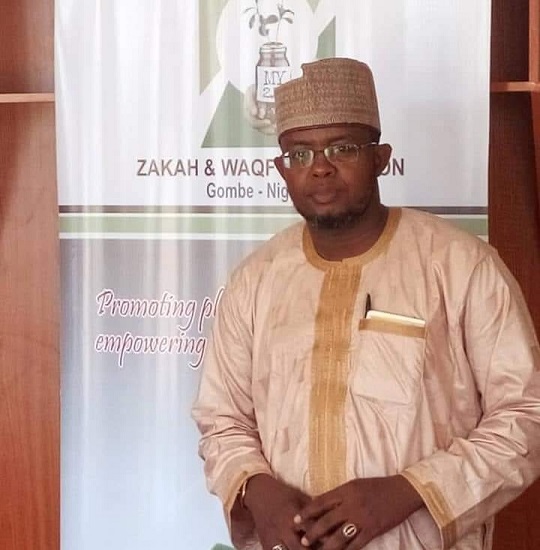
Amir Lamido wrote from Gombe and can be contacted via lamidomabudi@gmail.com.

Police say Jigawa man who fatally attacked brother’s wife may be mentally unstable

The Jigawa State Police Command has confirmed the arrest of a 25-year-old man, Buhari Sule, who allegedly killed his younger brother’s wife, Ummi Saleh, with a pestle and injured another young woman during the same incident.

The police adde that the suspected might be mentally unstable when he carried out the act.

The suspect was apprehended after the violent attack that occurred in Gunka village, Jahun Local Government Area.

This was made known on Thursday by the spokesperson of the state police command, SP Shi’isu Adam.

The police stated that while attacking his brother’s wife, Sule also hit a neighbour’s daughter, Hauwa Alkassim, causing her serious injuries.

According to SP Adam, “Upon arrival, the victims were rushed to General Hospital, Jahun, for medical attention. Unfortunately, Ummi Saleh died while receiving treatment, while Hauwa Alkassim is still undergoing treatment.”

The police noted that the tragic incident took place on April 23 around 5:30 pm. Officers from the Jahun Division responded promptly after receiving the distress report.

Following medical efforts, the body of Ummi Saleh was released to her family for burial after the police concluded necessary procedures.

The statement added that initial information gathered points to possible mental health concerns.

“Preliminary findings indicate that the suspect may be experiencing mental health issues,” SP Adam said.

He also disclosed plans for a detailed medical assessment.

“A thorough medical evaluation will be performed to determine the suspect’s mental state. This evaluation will help the police understand the extent of the suspect’s mental health issues and how it may have contributed to the incident.”

He further called for cooperation from the public, stressing that investigations remain active.

“The police investigation is ongoing, and the public is urged to cooperate with the police and provide any relevant information that may aid the investigation,” he stated.

The suspect remains in custody as authorities continue their inquiry.

Is the PDP dead?

By Kabiru Danladi Lawanti, PhD

By every objective measure, the People’s Democratic Party (PDP) has ceased functioning as a viable political entity in Nigeria. Its carcass continues to move but without pulse, purpose, or coherence. As a ruling party, the PDP had its moments, but its legacy is weighed down by monumental abuses of power, systemic electoral malpractice, and industrial-scale corruption. 

From the open manipulation of election results mid-process to the weaponisation of state institutions for partisan gain, the party leadership helped normalise impunity at the highest level. Two decades on, many of these cases—alleging theft of billions—are still unresolved.

But the party’s death didn’t happen overnight. It began in 2007, when President Olusegun Obasanjo imposed a sick candidate on Nigerians, followed by Goodluck Jonathan’s directionless presidency. In 2014, a mass defection gutted its internal cohesion, when five of its governors established the new PDP to challenge what they called a lack of internal democracy within the party. 

Losing power in 2015 should have been a moment for self-correction. Instead, the PDP lost its ideological compass. It abandoned the one role opposition parties must play in democracies: the duty to provide clarity, contrast, and credible alternatives. 

Even as the All Progressives Congress (APC) drifted into policy incoherence from 2017 onward and the confusion that followed – petroleum prices increase, ASUU and other university union strikes, economic recession, open stealing never seen before in the nation’s history, fuel subsidy removal, minimum wage controversy, etc.- the PDP remained inert—leaderless, rudderless, and largely invisible.

Today, what remains of the PDP is a loosely held patchwork of political actors in retreat. Governors are defecting. Its 2023 vice-presidential candidate has walked away. State-level structures are hollowed out. Internal leadership is fractured, and there is no unifying idea or strategic doctrine to rally around. What does this tell us? The PDP is not in decline. It is defunct.

Nigeria is experiencing a vacuum of governance across federal, state, and local levels. What is needed is a credible alternative with intellectual spine, strategic clarity, and moral authority. The PDP has forfeited that opportunity. Nigerians are now confronted with two bleak options: to stick with a failing ruling party or scavenge among opportunistic startups branded with catchy acronyms and no ideological soul.

The PDP’s collapse is more than a party’s fall—it is a signal of deeper systemic decay in Nigeria’s political architecture. But in every collapse lies an opening: for principled political entrepreneurship, grounded in values, competence, and execution. Who will offer that? The people that landed us in this mess in the first place or new faces? 

We need new faces in the political arena. These people parading themselves as opposition are no different from the PDP or APC; they are the same. Our youth need to return to their senses, and most people we see in leadership positions started showing their ability to lead in their early 20s. We must step forward if we want to see a Nigeria of our dreams. The time for lamentations is over.

The future belongs to those who can build systems, not just win elections.