Admin

ICPC uncovers N71.2bn fraud in student loan disbursement

By Abdullahi Mukhtar Algasgaini

The Independent Corrupt Practices and Other Related Offences Commission (ICPC) has revealed that only N28.8 billion out of the N100 billion released for the student loan scheme was disbursed to beneficiaries, with N71.2 billion allegedly diverted by university managements.

ICPC spokesman Demola Bakare disclosed this on Thursday, stating that preliminary investigations showed significant discrepancies in the fund’s distribution.

Key officials, including the Director-General of the Budget Office, the Accountant-General of the Federation, and executives of the Nigeria Education Loan Fund (NELFUND), have been summoned for questioning.

The probe followed allegations by the National Orientation Agency (NOA) that 51 institutions made illegal deductions from students’ loan funds.

ICPC confirmed that while N44.2 billion was disbursed to 299 institutions, benefiting 293,178 students, a large portion remains unaccounted for.

The commission vowed to extend investigations to beneficiary schools and students, promising further updates as the case pprogresse.

Workers’ Day Without Workers’ Wages!

By Dr. Muhammad Sulaiman Abdullahi

There are some few, effortless and simple things, which I have already assured myself that, if they are not confronted and solved squarely and completely in Nigeria, we should all continue to consider Nigeria as a joke. In other words, if the Nigerian rulers and the ruled are unable to solve these simple managerial crises, we should all forget about anything development and continue to wallow in our self deception mode. On these issues, I have assurance but I remain to be corrected. They are only four (4) simple things, among others;

1) Fixed date for the payment of salary: this doesn’t mean that, salaries should be paid on 24th, 25th… it should be paid on whichever day chose!n by the government. However, one thing must be considered, that’s FIXING a specific date for that purpose. Salary is something that must be paid, then, why this deceptive and unorganized approach? Right now that I am talking to you, many workers haven’t received their pay for April, and May is already on.

For Nigeria to even start thinking of development, workers must be truly and carefully considered. Their rights must be paid on time, because, as they say, it is not a privilege. If the government likes, let it pay it on 30th of each month, or even make every month to contain 31 days and pay it on the 31st. Let’s have a fixed date please. If not, let’s take the police for instance. A police may not know when to get his salary for risking his entire life to protect people; however, he is sure, he can be bribed by the poor through corrupt ways. How can you deny him something that he is certain about with an uncertain? This penetrates deeper into every sector.

2) Respecting time: one of the cantankerous evil that people abuse all the time. It comes to the extent that responsible people would call for a meeting and say 4pm, but deep down in their mind they know the meeting would start by 5pm. If you ask them why, they would say people would not come on time. I use to be confused on this. So in Nigeria we respect late comers more than how we respect punctual people! We give them extra time and we don’t mind those who come on time. They, their punctuality and the respect they give to time should all go to hell. Unless we change this attitude, we will never do it right.

If you want to fight with (responsible) Nigerians insist on punctuality. Many of us, including leaders fail in this respect.

When we are in Nigeria, we hardly do official things on their respective timing. But when we go elsewhere we keep to time. Therefore, it is obvious that the problem is from us and we can easily adjust if we know there is repercussions.

3) Scheduling the epileptic power supply: distribution must be scheduled and properly planned. We are not even talking about standard supply, we are talking standardizing the supply of the short one we get. The little we have must not be given at random. People are entitled to know when they should expect the little light. Let it be 10:20am-11:20am on Wednesdays? Saturdays and Sundays nights? Two hours every day? When? All these must be planned and relayed to the payers if we are not jokers! This electric power people switch on and off at their will and we pay for the rubbish.

4) The National Carrier: this is bigger than us due to corruption. We should have a National career at least for our internal development. There are so many countries around the world especially in Africa which Nigeria and Nigerians underrate and undervalue, however, they have their Sudan, Ethiopian, Mali, Malawi, airlines, but the so-called giant of looting rely on ants for its air transport survival. This is a mischief of the highest order.

5) The over dependence and over reliance on dollar. Mark what I say, overdependence! Nigeria can use dollar. This is one of the obvious weaknesses which many people have agreed to live with, especially the Nigerians. However, the overdependence is alarming! Almost every individual in Nigeria, big or small, knows about dollar. Nigeria should learn to uplift its currency and leave dollar alone. Even ordinary people now know how to hoard dollar at the expense of the economic development of the nation. The bigger you are the more detached you are from using Nigerian currency. Kobo, 1 Naira coin have all gone into extinction physically but they are still there in our calculations. Now Tinubu’s government has made 5, 10 and 20 naira notes valueless and meaningless. They look so ugly to be touched by a clean hand.

There are so many other simple things which you can help to count. In other countries they are not even remembered because they are subconsciously arranged for over hundred years. But in Nigeria, we are still battling with something which can be corrected in two months. In Nigeria we face price hikes, lack of infrastructures, no medicines, no qualitative education, no good roads and no nothing….. You can continue counting our lacks, they are so many. However, the above mentioned five things are very simple, they can be corrected with a simple verbal order, without putting much money and effort. May Nigeria be great soon!

Muhammad Kano
May day 2017

NB: This was written in 2017, with little correction now but nothing much has changed.

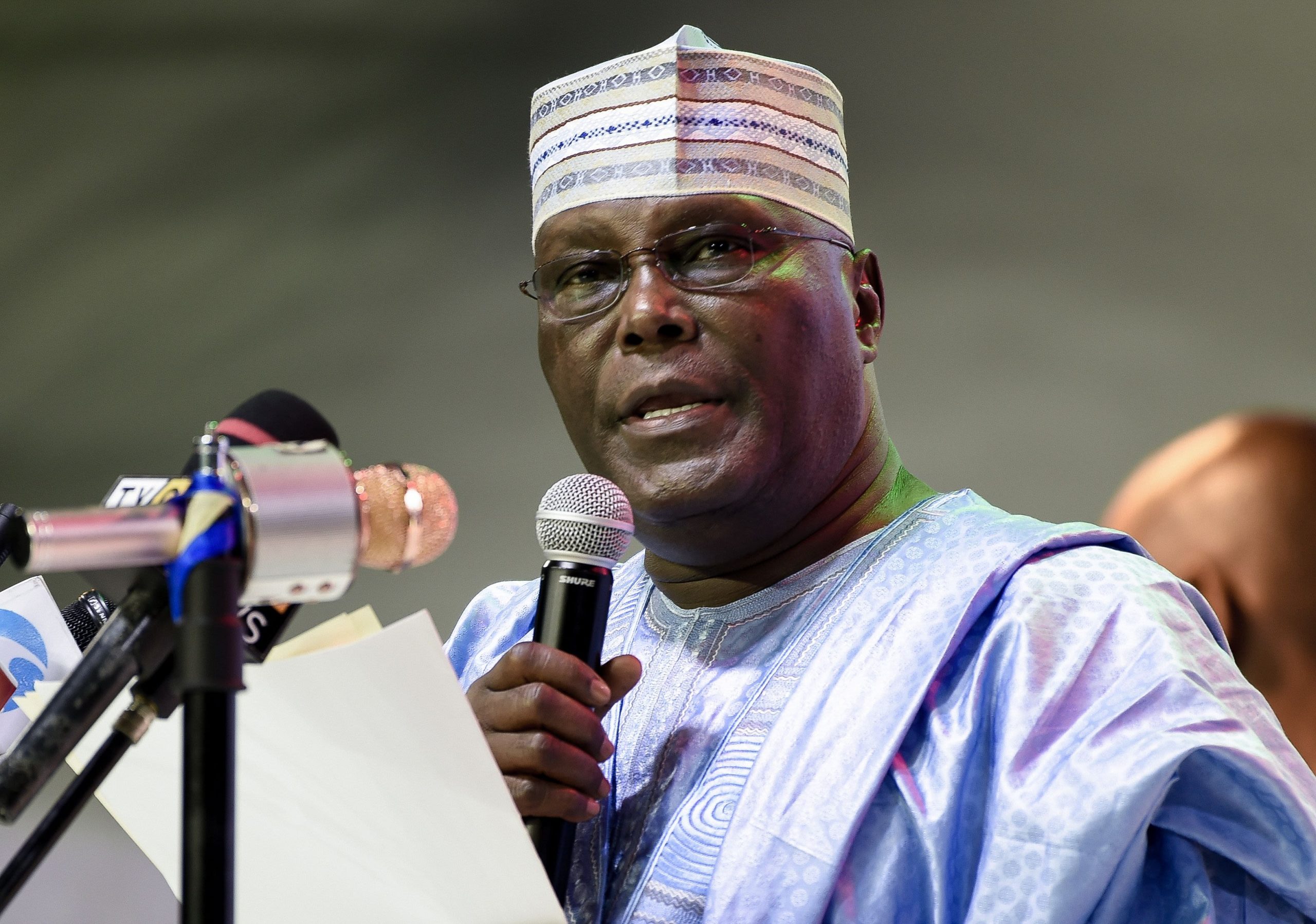
Workers are the nation’s driving force, not tools, Atiku tells FG

By Anwar Usman

Former Vice President Atiku Abubakar has said that workers play a crucial role in helping the country to grow and achieve its aims.

This was contained in a statement to commemorate the 2025 Workers’ Day on Thursday, he called on the Federal Government to see workers not just as tools for economic growth but as important partners in building a great nation.

The vice president said “The Nigerian worker remains the indomitable engine driving our nation towards the long-anticipated promise of prosperity.

“In the face of persistent hardship and inadequate remuneration, Nigerian workers have continued to shoulder the burdens of our economic ambitions with quiet heroism.

“It is deeply disheartening that those entrusted with the responsibilities of governance and policymaking have failed to respond to this unwavering dedication with tangible support and justice,” the statement added.

Workers demand action on killings, wages at May Day rally

By Uzair Adam 

At this year’s Workers’ Day celebration in Abuja, organised labour unions issued a strong 20-point demand to the Federal Government, calling for urgent measures to address Nigeria’s deepening socio-economic crisis, including rising insecurity and wage stagnation.

In a joint address, leaders of the Nigeria Labour Congress (NLC) and the Trade Union Congress (TUC) urged the government to end the widespread killings across the country and implement economic reforms that prioritise the well-being of citizens. 

They also advocated for justice, respect for democratic principles, and transparency in governance.

Themed “Reclaiming the Civic Space in the Midst of Economic Hardship,” the event saw the labour centres decry what they described as unconstitutional actions, particularly the suspension of the elected government of Rivers State through a declaration of emergency, which they argued lacked a legal basis.

Other demands included an immediate salary review aligned with the economic situation, clarity on the Pay-As-You-Earn (PAYE) taxation system, and the withdrawal of controversial tax bills before the National Assembly. 

Labour also called for more inclusive policymaking, emphasising that workers must have a seat at the table when critical decisions affecting their welfare are being made.

Details to follow…

Satirical Apology: A closer look at Senator Natasha’s letter

As I scrolled through the timeline of Senator Natasha H. Akpoti, her most recent post, titled “Satirical Apology Letter,” sparked confusion and elicited public reactions from her followers and various opinion leaders across Nigeria. Many are left questioning whether it constitutes a genuine apology or if it is merely another provocation in the ongoing feud between her and the President of the Nigerian Senate, Godswill Akpabio.

The senator representing Kogi Central wrote the letter in a manner that satirically questioned her adversary’s integrity and condemned the corrupt aspects of the Nigerian political system, describing it as a matter of mere compliance rather than merit.

Previously, if you can recall, the unrest between the two began in February this year, due to a minor disagreement over a change of seat, which was rejected by the female senator. This disagreement later escalated into allegations of sexual harassment against the Senate President, which Senator Akpabio and his family denied. The discord ultimately resulted in her suspension from the Senate for six months.

As I continued reading the letter, it felt like waking up from a brief slumber regarding the case. While the public believed it was over, Natasha returned with determination and strongly re-emphasized her stance on the issue. She not only criticized her suspension by the Senate under leadership of Akpabio but also offered a sarcastic condemnation of the current system that led to her situation.

Senator Natasha’s Apology Letter rebukes to the status quo. The second paragraph critiques the current happenings in the Senate chamber. Although the sentences are framed as an apology, they are laced with biting sarcasm. Some individuals perceive the letter as an attempt to remain relevant, as she was nearly forgotten after the case was silenced. This sentiment was expressed by several citizens in the comments on her Facebook post.

In my opinion, the letter exemplifies passive-aggressive diplomacy. Senator Akpoti Uduaghan claims to apologize for her “failure to recognize that legislative success… is apparently not earned through merit, but through the ancient art of compliance.” The implication is clear: the political arena, particularly in Nigeria, is not a space where competence and the will of the people necessarily dictate success. Instead, it is a realm governed by deference to the powerful and the perpetuation of unwritten rules that demand personal loyalty over professional integrity.

Some people believe that the female senator wants to settle the case, but she is concerned about how the public will react. A direct apology could raise questions from the public, especially from those who have supported her from the beginning. They may ask whether she was sincere in her allegations or if she intended to tarnish Akpabio’s reputation. Nevertheless, what is truly remarkable about this piece is how it is presented as a ‘satirical apology letter.’ Instead of directly admitting fault, it takes a different approach.

The senator ridicules the notion that her refusal to engage in patronage or political favoritism warrants an apology. She frames her decision to decline the “requests” of influential figures in the Senate not as a betrayal, but as a badge of honor—a testament to her commitment to her mandate and her constituents, rather than a subservient compliance with behind-the-scenes negotiations.

The letter’s central message is encapsulated in its bitter, mocking phrase: “Please find it in your magnanimous heart… to forgive this stubborn woman who mistakenly believed that her seat in the Senate was earned through elections, not erections.” The wordplay here is both clever and sarcastic, implying that political power in Nigeria is often not merely a matter of democratic legitimacy, but rather the outcome of personal ambition, ego, and, at times, quite literally, the ability to manipulate others through unseen means.

As stated in the letter, the bold assertion regarding the nature of power and politics is undeniably risky. However, it is this very willingness to challenge complacent norms that renders Senator Akpoti Uduaghan’s letter so impactful. In a world where political leaders often issue insincere apologies when faced with allegations of corruption or incompetence, her letter serves as a powerful reminder of the fierce independence and self-respect that are frequently compromised in the quest for political survival.

Moreover, the satire is not directed at a single individual; rather, it serves as a broader condemnation of the system that perpetuates this toxic political culture. Akpoti Uduaghan critiques not only Akpabio’s conduct but also the institutional framework that enables the manipulation of power, allowing it to be transferred based on personal alliances rather than merit. The reference to “quid pro quo” arrangements and the necessity for private, off-the-record negotiations highlights a system in which transparency and accountability are frequently overshadowed by more secretive and, at times, questionable practices.

The final line, “Unafraid, Unbought, and Unbroken,” serves as both a declaration of defiance and a reminder that some individuals in the political arena remain unyielding against the forces that seek to undermine genuine progress. It is a call for a return to integrity and for leaders who are willing to challenge the status quo, regardless of the cost.

I believe that Senator Natasha should not surrender; however, considering how the system operates in Nigeria, it is crucial to find ways to ensure that the conflict does not negatively impact her constituents. Given that she and Senator Godswill Akpabio were good friends in the past, it would be beneficial to seek reconciliation, even though the damage has already been inflicted on Akpabio’s part.

Naziru Muhammad writes from the Department of Mass Communication at Abubakar Tatari Ali Polytechnic in Bauchi.
ajiyanwaka@gmail.com

Borno: Heatwave triggers explosion at Giwa Barracks ammunition depot

By Abdullahi Mukhtar Algasgaini

An explosion, caused by extreme heat, has rocked the Giwa Barracks ammunition storage facility yesterday, the Headquarters Joint Task Force North East Operation HADIN KAI has confirmed.

Authorities attributed the blast to soaring temperatures in Maiduguri, which ignited some munitions.

Emergency responders, including the Borno State Fire Service and security agencies, swiftly contained the situation.

Troops have been deployed to maintain security and prevent any potential unrest.

The military urged the public to disregard rumors of an attack and assured residents that the incident posed no further threat.

No casualties were reported, but investigations are ongoing to assess the full extent of the damage.

North sets conditions for 2027 election support—ACF

By Abdullahi Mukhtar AlgasgainiThe Arewa Consultative Forum (ACF) has stated that Northern Nigeria will only back presidential candidates in the 2027 elections who prioritize the region’s interests.

ACF Board of Trustees Chairman Alhaji Bashir Dalhatu made the declaration on Wednesday during a meeting in Kaduna, attended by prominent Northern leaders, including former governors, ministers, and top political figures.

Dalhatu, a former Minister of Power and Steel, stressed that the North’s support will go to leaders committed to advancing its development, not to any specific party or politician.

“The North has the numbers, land, and political strength to shape Nigeria’s future, but we must stay united,” he said.

The region holds 19 states, the majority in the National Assembly, and about 60% of Nigeria’s population.

The ACF urged Northern stakeholders to work together, warning that division would weaken the region’s influence.

Lights, camera… stagnation? The untold battle of Nigeria’s entertainment industry

By Haroon Aremu

Like a sly jester winking at the moon, I was scrolling through social media when I encountered celebrity interviews recounting how they rake in millions within months. This spectacle ignited a contagious fervour among the youth, convincing them that the entertainment industry is the sole avenue to instant riches. 

No one talks about the failures, the countless auditions, or the silent struggles behind the scenes; they only talk about the glamour, the wealth, and the “soft life.”  

Bollywood thrives on strategic government investment, making it a global economic force that boosts employment, tourism, and digital expansion. Unlike Nigeria’s self-funded entertainment sector, India injects billions into its film industry, ensuring sustained growth and international reach.  

Beyond captivating audiences, it turns filming locations into major tourist attractions, employs millions across various roles, and operates as a well-structured economic engine that drives cultural and financial influence.

Bollywood wields significant soft power, shaping international perceptions, fostering trade partnerships, and influencing policy discussions on a global scale. Now, the burning question is If India has done it, why can’t Nigeria?

President Bola Ahmed Tinubu and the Nigerian leadership stand on a promising foundation. Nollywood is already the second-largest film industry globally, built almost entirely on private effort. With champions like Kunle Afolayan, Femi Adebayo, Funke Akindele, Toyin Abraham and others reshaping narratives and cashing in on global platforms like Netflix, Prime Video and Box Office. 

It is clear that Nollywood is not just an entertainment industry—it is an untapped goldmine. The cinematic feats of Kemi Adetiba, Mo Abudu, Bolanle Austen-Peters, etc., prove that, with proper government investment, Nollywood could evolve from a privately managed giant into a fully empowered national asset.  

According to research, Nollywood generates over $590 million annually and produces around 2,500 films a year. It has managed to thrive despite a lack of properly structured federal support. 

Imagine if this industry received the same kind of backing Bollywood enjoys. Free from corruption, federal investment could elevate production quality, generate millions of jobs, and turn Nollywood into Nigeria’s foremost non-oil revenue, especially when youth yearn for employment due to unemployment being generic.

Content creation, beyond Nollywood, has emerged as a formidable economic engine in Nigeria, proving that digital storytelling is not just a fleeting trend but a viable sector capable of generating wealth, employment, and global recognition. 

The success of creators like Mr. Macaroni, Taooma, Kiekie, Sabinus, Lasisi Elenu, Cute Abiola, etc., illustrates how social media has democratised entertainment, allowing individuals to carve niches without relying on traditional gatekeepers like film studios or record labels. 

Through comedy skits, social commentary, and brand endorsements, these creators have transformed their craft into multi-million naira enterprises, employing scriptwriters, videographers, editors, and marketers while driving traffic to brands and tourism sites. 

Their work showcases Nigeria’s culture and humour on the global stage, attracting foreign partnerships and sponsorships that would have otherwise been reserved for mainstream Nollywood productions. 

When properly harnessed, digital content creation can become a major economic driver, like Bollywood’s integration of influencers and digital expansion into film, tourism, and commerce. With the right policies—such as tax breaks, structured funding, and intellectual property protection—Nigeria’s content industry could grow into a leading non-oil revenue stream, competing with global giants like India and the United States. 

Despite its promise, the content creation industry in Nigeria still grapples with fundamental challenges that could hinder its full potential. Unlike Bollywood, which benefits from government-backed investment and structured growth strategies, Nigerian content creators operate in a largely informal economy, where access to funding, infrastructure, and legal protections remains inadequate.

Some creators lack financial literacy, face inconsistent brand deals, and operate without a regulatory framework that protects their intellectual property. 

Additionally, the absence of dedicated digital innovation hubs limits their ability to scale, collaborate, or transition from short-form content to full-length productions capable of breaking into mainstream cinema as some have done. 

While some content creators have managed to bridge the gap between skit-making and brand influence, an untapped market for leveraging content creation into mainstream entertainment and tourism remains. 

The government and private investors need to recognise digital storytelling as more than just “youthful amusement” but as a serious industry that, when properly structured, could create thousands of jobs, foster digital entrepreneurship, and export Nigerian creativity worldwide. 

Suppose Nigeria is to harness the creative economy truly. In that case, it must institutionalise financial incentives, support digital film villages, and encourage content creators to transition into high-value productions that can contribute to global streaming platforms, film festivals, and international collaborations.

Only then can the country move beyond isolated success stories to a full-fledged, structured entertainment ecosystem that mirrors Bollywood’s impact on India’s economy.

States like Lagos, Kwara and others have already positioned themselves as film hubs, investing in production studios, enabling policies, and film villages to attract investors. If these state-led initiatives can yield results, what would happen if Nigeria had a full-scale federal-backed Nollywood revolution? 

With well-structured grants, tax breaks, and infrastructure development, Nollywood could rival Hollywood and Bollywood, expanding tech-based employment and transforming Nigeria into Africa’s entertainment capital.  

Yet, a crucial caution must be heeded. Nollywood, like every thriving industry, has its fair share of pitfalls. The rise of viral sensations over genuine talent, the exploitation of controversies for social media relevance, and the blurred line between creativity and chaos all pose risks to the industry’s long-term sustainability. 

Nigeria must ensure that Nollywood does not fall victim to the same cycle of corruption that crippled agriculture and the oil sector.  

The truth remains: talent differs from cruise, and entertainment is bigger than scandal-driven fame. Nollywood has the potential to be a global force, a national pride, and an economic goldmine. 

The question is: Will Nigeria seize this opportunity or let Negligence and corruption again destroy another billion-dollar industry?

Haroon Aremu Abiodun, an author and PRNigeria fellow, wrote via exponentumera@gmail.com.

Bashir Aliyu Umar assumes presidency of Shari’ah council

By Anas Abbas

The Supreme Council for Shariah in Nigeria (SCSN) has appointed Sheikh Dr. Bashir Aliyu Umar as its new president following the passing of its former leader, Sheikh Abdul Rasheed Hadiyatullah, on Monday.

In an official statement issued by Malam Nafiu Baba Ahmed, the Secretary General of SCSN, the council expressed deep sorrow over the loss of Sheikh Hadiyatullah, emphasizing that his death is a significant loss not only to the council but also to the broader Muslim community in Nigeria and beyond.

The statement included prayers for Allah (SWT) to forgive Sheikh Hadiyatullah’s shortcomings and grant him a place in Jannatul Firdaus.

The announcement confirmed that Dr. Bashir’s appointment was made in accordance with the council’s constitution and established protocols.

“Sheikh Dr. Bashir Aliyu Umar OON has been unanimously endorsed as the new President of the Supreme Council for Shari’ah in Nigeria,” the statement read.

The council expressed full confidence in Dr. Bashir’s leadership abilities, scholarly expertise, and steadfast dedication to the principles of Shari’ah and justice.

Dr. Bashir is a distinguished scholar in Islamic studies and finance, holding a Ph.D. in Hadith and Islamic Studies from the Islamic University of Madinah.

He has been actively involved in various committees concerning Shari’ah and Islamic banking both nationally and internationally, including serving on the Shari’ah Advisory Committee of Stanbic IBTC Bank and the Council of Experts on Islamic Banking at the Central Bank of Nigeria (CBN).

Husband laments negligence in death of wife at Minna hospital

By Hadiza Abdulkadir

A grieving husband has alleged gross negligence and unprofessional conduct at Jummai Babangida Aliyu Maternal and Neonatal Hospital, Minna, following the death of his wife, Ramatu, after a surgical procedure on April 24, 2025.

UB Shehu, who shared a detailed account of the events leading up to his wife’s death, claimed that his wife was the last of nine patients to undergo surgery that day. During the procedure, an unstable power supply reportedly forced staff to switch from the main source to a smaller backup generator, which Shehu emphasized was not a diesel-powered unit but a basic household generator.

According to Shehu, Ramatu showed signs of critical distress immediately after surgery. While other patients were reportedly stable, his wife began bleeding excessively due to a drainage bag not being properly attached — a task he claimed the attending nurse was unqualified to perform.

“She told me she didn’t know how to plug the bag,” Shehu stated, expressing frustration that a doctor did not attend to the situation until five hours later. Even then, she only gave brief instructions without examining the patient.

Shehu described a harrowing night in which his wife’s condition worsened, alleging that she was repeatedly denied water and food and that his pleas for medical assistance were ignored or delayed. As her condition deteriorated, he said senior nurses refused to help, citing departmental responsibilities.

By 7:04 a.m., his wife began gasping for air. Despite his cries for help, Shehu said the ward lacked oxygen, prompting a rushed transfer to the ICU, where attempts to administer oxygen reportedly failed due to ill-fitting equipment. Ramatu was pronounced dead at 7:24 a.m.

The hospital has yet to respond to the allegations. The account has sparked conversations online about healthcare standards and the need for reform in patient care practices across public hospitals in Nigeria.