Admin

FG warns against deepfake videos, images targeting president

By Abdullahi Mukhtar Algasgaini

The Nigerian Federal Government has expressed concern over the creation and circulation of deepfake videos depicting the President in a negative light, aimed at tarnishing his reputation.

Mohammed Idris, Nigeria’s Minister of Information, cautioned citizens against using artificial intelligence to manipulate images and videos of the country’s leaders for malicious purposes.

In a report by The Nation, an independent newspaper, the minister stated, “We have observed the use of AI-generated content in both appropriate and inappropriate ways. Imagine sitting somewhere, and someone takes your image, edits it onto another body, and spreads it to damage your reputation.”

He further noted the trend of distorting statements made by the President or other officials, saying, “We’ve seen situations where the President’s words are twisted to mean something entirely different, or where a minister’s statement is misrepresented.”

The minister assured that the government is closely monitoring the situation, emphasizing, “We are exploring ways to sanitize social media platforms without infringing on freedom of speech.”

The warning comes amid growing global concerns over the misuse of AI to spread disinformation and manipulate public perception.

2027 elections or surviving in 2025?

By Abdulhakeem Yetu Zakari

Across Nigeria today, the earth is wet with the blood of innocents. Villages are raided without warning, highways have become death traps and communities live in a cloud of constant fear.

Yet, even as the nation bleeds, much of the political class appears more fixated on the 2027 elections than on saving lives in 2025.
Insecurity has become a cruel backdrop to political ambition—a painful reminder that, for many leaders, the pursuit of power still matters more than the safety and survival of the people.

The current administration, led by President Bola Ahmed Tinubu, was elected on a promise to restore security and revive the nation’s economy. But less than two years into his tenure, insurgency, banditry, and economic instability have remained stubbornly persistent.

What was supposed to be an era of renewed hope has turned into a daily struggle for survival for millions of Nigerians. Despite interventions by security agencies, no significant improvement has been recorded.

Families are displaced from their homes. Schools are shut down. Markets are abandoned. Mass graves are dug with horrifying regularity.
States such as Zamfara, Benue, Plateau, and Borno have become synonymous with unending violence.

Our beloved Nigeria—once full of hope and promise—is fast becoming a theatre of tragedy. Critics argue that government efforts have been largely reactive instead of proactive. Intelligence failures are frequent.

Security operations often come late. Many see a dangerous lack of political will to tackle the root causes of insecurity: endemic poverty, chronic youth unemployment, and deep ethnic divisions.
Without addressing these underlying issues, peace will remain a distant dream.

Yet, even as insecurity deepens, political calculations for 2027 are already underway. Massive defections are occurring across political parties as politicians jostle for advantage and consolidation of power.

Instead of emergency summits on security, we see strategic meetings on how to win elections.
The people, who ought to be the priority, are pushed to the margins of political discourse. Their cries are drowned by the noisy drumbeats of political ambition.

Nigerians deserve better. They deserve leaders who value their lives more than the pursuit of office. They deserve leaders who recognize that every life lost is a national tragedy, not just a statistic.

If current trends continue unchecked, by the time the 2027 elections arrive, Nigeria may have paid a price in blood too heavy to bear—and whatever victory is achieved will be a hollow, shameful one.

Nigeria stands today at a crossroads. The choices made in security, governance, and leadership over the next year will determine whether the country finds its way back to the path of stability and progress—or slips even deeper into violence and despair.

As the blood of innocent Nigerians continues to soak the ground, one question cries out louder than any campaign slogan: Who will listen? Who will act? And when?

The time to choose between survival and ambition is now. Nigeria cannot afford to wait until 2027 to find out what path we chose.

ISWAP attacks Gajibo military base in Borno, kills 6 CJTF members

By Abdullahi Mukhtar Algasgaini

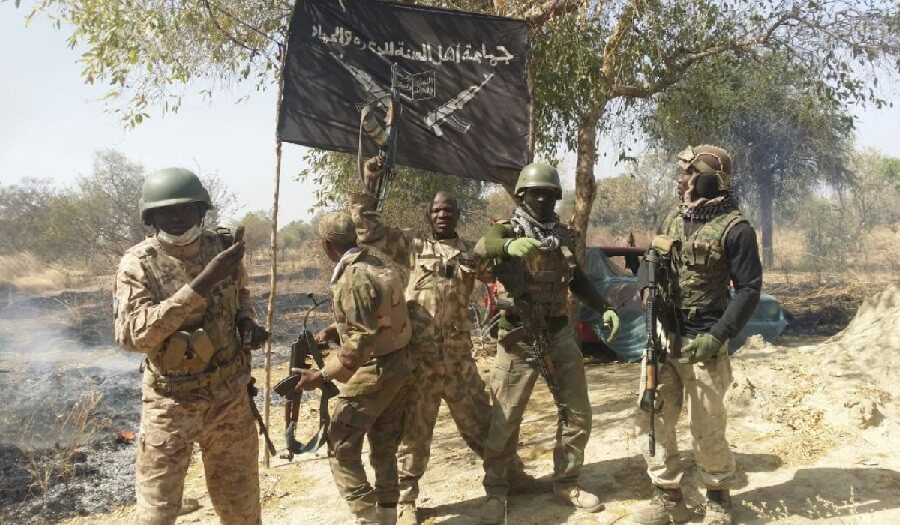
The Islamic State West Africa Province (ISWAP) has released a chilling video confirming its deadly attack on a military base in Gajibo, Borno State, on Thursday.

The footage, published by the Islamic State’s Amaq News Agency, shows two military vehicles engulfed in flames and six motorcycles seized by the terrorists.

Local sources report that six members of the Civilian Joint Task Force (CJTF) were killed in the assault.

The attack appears to be part of a coordinated operation, as another ISWAP unit was simultaneously headed toward Damboa.

Security experts warn that ISWAP is growing increasingly bold, capitalizing on security vulnerabilities in northeastern Nigeria.

The latest assault highlights the persistent threat posed by the terrorist group in the region.

Authorities have yet to issue an official statement on the incident as tensions remain high in the area.

Governor Yusuf orders automatic employment for 84 foreign-trained graduates

By Muhammad Abubakar

Governor Abba Kabir Yusuf has directed the automatic employment of 84 foreign-trained graduates into the Kano State Civil Service, following his administration’s full settlement of their outstanding fees at Near East University, Northern Cyprus.

The graduates, who had been abandoned mid-study after the previous government withdrew scholarship funding, were recently issued their certificates after the state paid N2.24 billion in arrears to the university.

Addressing the students at the certificate presentation ceremony in Kano, Governor Yusuf said the graduates would be immediately absorbed into public service. “These students have suffered enough. Now, they will be given the opportunity to contribute to the growth of our state,” he said.

Among the beneficiaries are medical doctors, nurses, dentists, pharmacists, computer scientists, and biomedical experts — all of whom earned degrees under immense hardship.

The governor’s action is seen as both a humanitarian and developmental gesture, aimed at harnessing the skills of foreign-trained professionals while restoring faith in government-backed education programs.

Education experts have praised the move, describing it as a practical step toward addressing youth unemployment and reversing the brain drain trend.

Tinubu’s economic reforms drive customs revenue to ₦1.3 trillion in first quarter of 2025 — CG Adeniyi

By Sabiu Abdullahi

The Nigeria Customs Service (NCS) has announced that it generated a record-breaking ₦1.3 trillion in revenue during the first quarter of 2025.

This figure marks more than double the ₦600 billion collected within the same period in 2023.

Comptroller-General of Customs, Bashir Adewale Adeniyi, attributed the significant increase to a range of reforms introduced under President Bola Tinubu’s Renewed Hope Agenda.

These comments were disclosed in a soon-to-be-released State House documentary commemorating the President’s second year in office.

According to Adeniyi, the improved revenue performance stemmed from the application of advanced technology, more efficient port operations, tighter control of revenue losses, and an increased emphasis on accountability within Customs operations.

“We collected ₦1.3 trillion in Q1 2025 alone. This is not due to higher import volumes. Imports have dropped due to foreign exchange constraints. What has changed is efficiency, transparency, and enforcement,” Adeniyi said.

He revealed that the Service is nearing the launch of the E-Customs Modernisation Project.

Valued at $3.2 billion, this initiative aims to fully digitise Nigeria’s cargo processing, monitoring, and payment systems across ports and border points.

“We’re laying the foundation to move from a manual, paper-based system to a fully digital service. The E-Customs Project is central to our future. Once fully deployed, we project it will add $250 billion in cumulative revenue over 20 years,” he explained.

The Comptroller-General also spoke about the recent introduction of the Authorised Economic Operator (AEO) Programme, which allows verified importers to enjoy expedited clearance and reduced congestion at ports.

“It’s about trust and efficiency. If you’re compliant, you get green-lane treatment. This is how modern customs systems work globally,” he stated.

In addressing smuggling and loss of revenue, Adeniyi confirmed that the Service had intensified enforcement and recovered over ₦64 billion from previously undervalued or wrongly assessed imports in the past nine months.

He added that major smuggling networks operating through Seme, Idiroko, Katsina, and Sokoto borders have been dismantled.

He noted the effectiveness of joint patrol operations conducted with the Nigerian Army, Department of State Services (DSS), and the Police.

“We’re no longer just chasing smugglers in the bush. We’re using data, surveillance drones, and port intelligence to act in real-time. Once systemic leakages are now being plugged,” Adeniyi said.

To improve trade facilitation and reduce logistics costs, the NCS is accelerating the implementation of the National Single Window — a unified digital platform that will enable importers and exporters to complete transactions with all government agencies from one portal.

“Right now, you deal with up to 15 agencies manually. With the Single Window, you’ll do it all online, in one place. This will slash clearance time and costs,” the Customs chief explained.

He noted that for compliant importers, clearance durations at Apapa and Tin Can Ports have already dropped from 21 days to between 7 and 10 days.

He added that the Service has introduced fast-track procedures for agricultural exports and is partnering with the Nigerian Export Promotion Council (NEPC) to streamline export processes in line with the government’s non-oil export strategy.

Governor Yusuf settles N2.24bn debt, rescues 84 stranded students in Cyprus

By Muhammad Abubakar

Governor Abba Kabir Yusuf of Kano State has brought relief to 84 students abandoned in Northern Cyprus after settling a massive N2.24 billion debt owed to Near East University, paving the way for the release of their academic certificates.

The students were part of a foreign scholarship scheme initiated by former Governor Rabiu Musa Kwankwaso but were left in limbo when the succeeding administration halted funding. The withdrawal left them unable to pay tuition and accommodation fees, effectively trapping them in a foreign country without support.

Governor Yusuf, during a ceremony in Kano, described the situation as a national embarrassment and expressed satisfaction at resolving the crisis. “This marks the end of years of hardship, uncertainty, and humiliation for our children abroad,” he said.

The affected students, including 28 medical graduates and others in health and engineering disciplines, faced legal threats, eviction, and exclusion from classes during the years of neglect. Their ordeal sparked widespread concern both locally and internationally.

Stakeholders have commended the governor for the intervention, calling it a timely and compassionate move to restore dignity and hope to the affected families.

20 arrested for hacking JAMB results

By Hadiza Abdulkadir

The Department of State Services (DSS) and the Nigerian Police have arrested 20 suspects in Abuja for allegedly hacking into the servers of the Joint Admissions and Matriculation Board (JAMB) and the National Examination Council (NECO) to manipulate UTME scores.

The suspects, part of a larger syndicate of over 100 members, reportedly charged candidates between ₦700,000 and ₦2 million to obtain inflated results. Many are said to operate private schools and special centres used for the fraud.

Sources indicate that the group aimed to discredit JAMB’s Computer-Based Testing (CBT) system and discourage its future use by other examination bodies, such as WAEC and NECO.

The arrests follow JAMB’s release of the 2025 UTME results, in which over 78% of candidates scored below 200 out of 400. 

Registrar Ishaq Oloyede earlier cited server faults affecting nearly 380,000 candidates, prompting a resit exam from May 16.

The misdiagnosis of a nation

By Oladoja M.O

 There is a sickness far graver than malaria, deeper than cancer, and deadlier than an undiagnosed pandemic: it is the sickness of perception. A tragic, self-inflicted malaise where men and women, intoxicated by their bitterness, misread the vital signs of a nation and call it death. 

Nigeria, that African giant, that phoenix that has refused to be buried by dust or drowned by storms, stands misdiagnosed not by its enemies, but by its sons and daughters. They call for good governance, a sacred right, yet in the same breath, they auction the dignity of their fatherland for applause from foreign balconies. Climbing the stages of international conferences not as ambassadors of hope, but as broadcasters of decay, believing that to light their ambitions, the whole house must first be burned.

Yes, there are wounds, visible scars of leadership missteps and bureaucratic fatigue. Yes, the body occasionally limps, gasping for cleaner governance, for a fresher breath of accountability. But to declare her terminally ill? To parade her on global platforms like a festering corpse before she has even sneezed her last? This is malpractice of the highest order.

And yet, even as they wail, Nigeria births victories so luminous they should blind the eyes of every doubter.

In 2024, while cynics sharpened their tongues, Nigeria quietly pulled off the Dangote Refinery miracle. The largest single-train refinery in human history roared into operation. Built on African soil, by African hands, it shattered the historic curse of crude export dependency. Now, Nigeria refines for itself, and soon, for much of Africa. That is not a dying breath. That is the heartbeat of an empire in rebirth.

Even as global markets shook and economies shrank, Nigeria executed one of the most daring economic surgeries in modern African history: unifying its foreign exchange market in 2023, consolidating multiple exchange rates into a single one. The International Monetary Fund, the World Bank, and even the Wall Street Journal stood still in reluctant applause. The Nigerian naira, which was once battered by artificial valuations, finally had its freedom to fight fair. It stumbled at first, as all warriors do. However, today, stabilisation is becoming a new reality, not a distant hope.

In health, the same nation that armchair critics mock has scored historic breakthroughs. Under the leadership of Professor Muhammad Ali Pate, Nigeria has launched one of the world’s first national rollouts of the Oxford R21 malaria vaccine, a game-changing move in a country that accounts for the highest malaria deaths globally. 

Again, Nigeria has turned pain into policy. The federal government, under this administration, declared a Health Sector Renewal Compact in late 2023 (PVAC), marshalling partnerships with global giants like the World Bank and Bill and Melinda Gates Foundation, channelling billions into revamping healthcare delivery, local vaccine production, and training health workers at an unprecedented scale. No more is health an afterthought; it is now a frontline battle Nigeria is visibly winning. While others talk, Nigeria saves lives. While others point fingers, Nigeria vaccinates its future. 

Infrastructure? While “first-world” cities debate electric railways, Nigeria’s megacity, Lagos, launched its Blue Line Rail in late 2023, the country’s first electric-powered intra-city rail system. A steel artery now pulsing through a once-choked metropolis, easing congestion, breathing new possibilities. In Kano, Rivers, Abuja, and Ebonyi States, massive roads, bridges, airports, and industrial parks rose from the dust — monuments to silent nation-building.

Policy? Courageous policies thundered through governance corridors: the subsidy removal in 2023, ending decades-old economic black hole that bled over $10 billion annually. In its place: strategic investments in health insurance for the vulnerable, transport subsidies for the poorest, and agricultural revolution initiatives. The world’s harshest critics acknowledged it, but the nation’s sons spat on it, too drunk on their self-righteous venom.

In education? Nigeria has ripped the old rulebook. In 2023, the Student Loan Act was signed into law—an audacious leap toward democratising education. For the first time, children of farmers, traders, and artisans now have a gateway into universities, polytechnics, and colleges of education without fear of crushing tuition fees. 

As of 2024, the first batch of beneficiaries has received their loans under the Nigerian Education Loan Fund (NELFUND), breathing hope into homes where education once felt like a broken dream. Now, a total of 525,936 students have registered on the loan platform, with 445,015 applicants successfully applying for financial assistance, representing an 84% success rate for student loan applications under the scheme.

Meanwhile, the accreditation of degrees has also been digitised, with Nigeria becoming the first in Africa to automate this critical gatekeeping process fully. New private universities have sprouted like fresh shoots, expanding access and excellence, whilst Nigerian universities are climbing global ranks. 

They call for “change” yet campaign on the ruins of hope itself. They drape themselves in victimhood, seeking pity instead of respect. The so-called “obedient” torch-bearers, the tribe of Peter Obi, shout of patriotism while waltzing through global forums, slandering their homeland, reducing Nigeria, a giant stirring from slumber to the caricature of a failed state, just to score a few cheap political points.

Calling out leadership is democracy; Denigrating your nation is betrayal.

One builds; the other burns.

Nigeria does not need saviours who love her only when she shines. She needs sons and daughters who hold the line when the storms rage, who sing her greatness even when she falters, who plant seeds of hope, not thorns of despair, into her soil.

To those who mistake criticism for patriotism, remember:

The world does not respect nations that cannot respect themselves.

Call out your leaders.

Demand reform.

March for justice.

But never sell your mother for the price of your pride.

Because when the dust of time settles, and history opens her immortal ledger, it will not be your complaints she remembers, it will be your loyalty.

Oladoja M.O writes from Abuja and can be reached via mayokunmark@gmail.com.

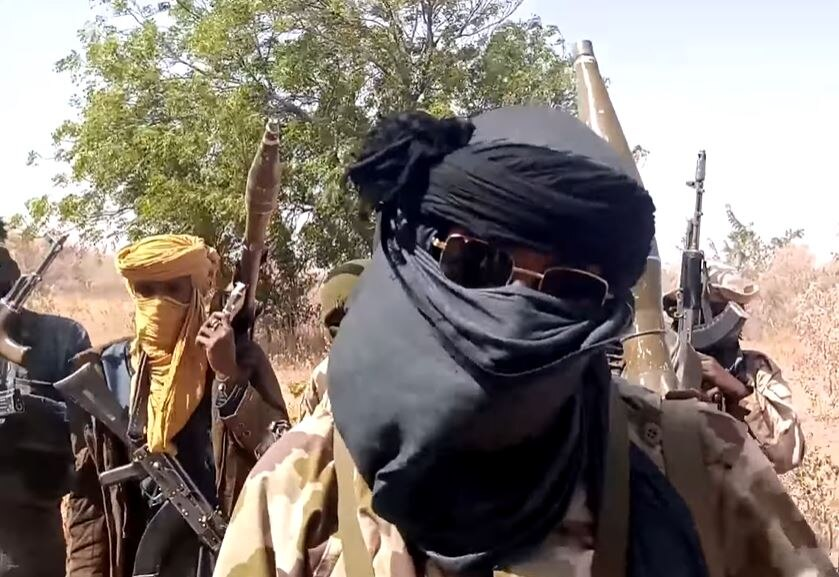
How I shook hands with a bandit leader and lived to spill the tea

By Abdulrahman Sani  

It started like any other routine assignment. A simple task in a place that, on paper, seemed no different from the others. I was sent to a remote village in the heart of the North West, tasked with completing an enumeration in a region that was increasingly known for its volatile security situation. But what I didn’t realise then was that this seemingly innocuous assignment would lead me straight into the heart of danger.

The village, Rugar Yashi, sat on the fringes of the wilderness, far from the usual path of most travellers. The journey had been long, but I arrived early enough to begin work without delay. The protocol for entering any enumeration area was clear. 

Before stepping foot into the village, I was to call my security contact to get a briefing, obtain clearance, and receive a pass that would ensure my safety. I dialled his number repeatedly, but there was no answer. I tried once more, but the line remained dead. Frustration rose within me, but it was quickly overshadowed by the realisation that I had no choice but to proceed.

I wasn’t new to the idea of security checks. Over time, I had come to view the process as a mere formality, a minor inconvenience in the grand scheme of things. Security clearance was just another uncomfortable routine, a small hurdle before getting to the heart of the work. The reality of how precarious the situation honestly was hadn’t fully sunk in. In my mind, it was just another remote village, no different from the countless others I had visited. Little did I know, I was about to step into the lion’s den.

The Village on the Edge of a Whisper

Rugar Yashi wasn’t on any tourist map. You wouldn’t stumble upon it unless you were sent there or running from something.

The place looked serene, almost cinematic. It was tucked neatly between rustling trees and the distant hum of wilderness. I walked in alone, unseen by the world, accompanied only by a curious blend of optimism and unawareness.

I didn’t meet him in the village.

I met him at a farm by accident.

He was tending to something near a stand of goruba trees. I greeted him and mentioned I needed a cutlass to slice through one of the fruits. Without hesitation, he handed me his.

It was only after I introduced myself, explaining why I had come and what I was doing, that he nodded and said simply,

“I’ll guide you.”

That was it.

No suspicion. No resistance. Just a quiet offer that, in hindsight, held far more weight than I realised.

And so we began.

He led. I followed.

At first, he was nothing more than a helpful local. His voice was calm, measured. He spoke sparingly, and when he did, it was often with a faint, unreadable smile. The villagers treated him with a mixture of casual reverence and respect. Nothing overt. Just the kind of nods, glances, and silences that said more than words ever could.

Of Questions and Rifles

As we walked through Rugar Yashi, I quickly noticed something odd. The men around us were armed. Their rifles glinted in the sun as they moved with deliberate ease. Their eyes darted around, scanning the horizon as if waiting for something—anything—out of the ordinary. Some of them offered brief nods of acknowledgement to my guide, a quiet understanding passing between them that I couldn’t quite place.

At first, I dismissed it. I assumed they were simply vigilantes, locals tasked with protecting their community. The village seemed peaceful. The people were humble. And my task was simple. What could go wrong?

We continued through the village, and I conducted my enumeration with the usual questions—family members, occupations, and living conditions. He knew exactly where to take me. At one point, I inquired about his family, which was part of the enumeration form. He smiled and said that his brother, Aliyu, was studying at ABU Zaria. I nodded and moved on.

It sounded plausible enough.

After the work was done, he walked me to the edge of the village where a group of armed men stood, exchanging hushed words and scanning the trees. As we passed, they gave us more than a passing glance. He shook my hand, gave me his contact information, and said casually,

“Call me next time before you come. It’s safer that way.”

I smiled, nodded, and walked away. The road back to the main track was quiet. Just a few goats, wind in the trees, and my own footsteps.

The Call

Then my phone rang.

It was the security contact I had been trying to reach all morning. His voice came through tense and unfiltered.

“Where are you?”

“Done. Just leaving Rugar Yashi.”

There was a pause, and then his voice dropped.

“Who did you work with?”

I gave a brief description. His voice turned sharp.

“That man you were with, Labbo Jauro? He’s one of the most notorious bandit leaders in the region. His brother isn’t at Zaria. He was killed months ago. Deep in the forests of Niger.”

Silence.

The kind that makes your spine go cold.

I had shared a blade with him and walked through the village under his protection. Sat beside him in quiet moments. All while unknowingly under the watchful eyes of armed men who could have changed the course of my story in an instant.

The glances. The nods. The stillness in the air. It all made sense now.

But at the time, I thought I was just doing my job.

Reflection on the Edge

Looking back, I wonder whether he knew what I didn’t. Whether he had already decided for me before I’d even finished cutting that goruba fruit. Or whether, by some strange twist of fate, I had walked straight into danger and was spared not by wisdom or caution, but by simple, Divine grace.

That day in Rugar, Yashi changed how I saw the work. It blurred the line between routine and risk. It reminded me that, sometimes, the man offering help in the fields may be more than just a friendly farmer.

Sometimes, he’s the one everyone else fears.

And sometimes, he’s the reason you make it back home alive.

Postscript: This story is based on a true account. The subject’s name has been omitted, and the narrative is told in the first person by the author. Specific details have been altered or excluded to protect privacy and ensure safety.

Abdulrahman Sani can be contacted via Twitter @philosopeace.

Kano judicial commission demotes registrar, penalizes others over misconduct

By Anwar Usman

The Kano State Judicial Service Commission has taken disciplinary action against a court registrar and two other staff over misconduct.

This is contained in a statement issued by Mr Baba Jibo-Ibrahim, the spokesperson of the Kano State Judiciary.

He said the decision was among the resolutions reached at the JSC’s 82nd meeting on Wednesday.

He said the commission, under its mandate to ensure discipline and integrity, adopted the recommendations of the investigation panel established by the Judiciary Public Complaints Committee.

The commission resolved to apply a series of disciplinary measures and administrative decisions.

The statement in part reads “Court Registrar Salisu Sule was demoted by one grade level after the JPCC found overwhelming evidence of misconduct in four separate complaints bordering on insults, intimidation, and abuse of office.

“The two reinstated magistrates are Chief Magistrate Mustapha Sa’ad-Datti and Chief Magistrate Rabi Abdulkadir,” Baba jibo further stated that, investigation shows that Sule consistently used the name of the judiciary to harass and intimidate the public while discharging his duties.

“The JSC had issued a warning letter to him dated Dec.19, 2024, and has now resolved to impose this stiffer sanction, demoting him by one grade level with immediate effect,” he said.

The statement added that after careful review, the Commission resolved that Mustapha Sa’ad-Datti and Rabi Abdulkadir should resume sitting and continue with their judicial duties.

“They are, however, admonished to uphold the highest standards of integrity, diligence, and professionalism in the discharge of their judicial functions,” the statement said.

Jibo-Ibrahim said Ahmad Aliyu Danmaraya, a Principal Registrar attached to the High Court Headquarters in Kano, was directed to proceed on compulsory retirement with immediate effect for acts of gross misconduct.

“The JPCC found Danmaraya guilty of forging an affidavit, affixing the High Court stamp and seal, and inscribing a fake receipt number, knowing fully well that he is not a commissioner for oaths,” he said.