Admin

FEATURE: How small businesses in Northern Nigeria struggle amid economic pressures, seasonal shifts

By Sabiu Abdullahi, Uzair Adam, Anwar Usman, Anas Abbas, Abdullahi Algasgaini, and Ibrahim Yunusa

As the summer season deepens across northern Nigeria, small business owners in various communities—from Kano to Kaduna, Jigawa to Bauchi—are raising the alarm over dwindling customer patronage.

The Daily Reality reports that the convergence of economic hardship, seasonal farming priorities, and insecurity is squeezing their operations, with many struggling to stay afloat.

Traditionally, the onset of summer in the Northern Hemisphere, beginning in May, signals a shift in consumer behavior.

For many local residents, it marks a transition from marketplace spending to full-scale agricultural engagement.

As people move into planting and harvesting, businesses dependent on daily and seasonal purchases are increasingly left behind. This year, that impact appears to be more pronounced than usual.

Hussain Ibrahim, a businessman at Kano’s Kofar Ruwa market, told The Daily Reality that while there is interest from customers, purchasing power has significantly weakened due to inflation and soaring prices.

He stated, “Although people want to patronize us, goods have become too expensive. The money you’d use to buy a ton of rod two years ago has doubled. Most people can’t keep up with the situation.”

He also attributed the crisis to the federal government’s removal of the fuel subsidy, which has drastically increased transportation costs.

Ibrahim added that, “Before, transporting goods from Lagos to Kano used to cost N800,000. Now, it’s N1.7 million. That alone inflates prices, and customers suffer for it.”

In Jigawa State, Umar Muhammad, a foodstuff dealer in Limawa, Dutse, highlighted another unique challenge: the irregularity of local civil servant salaries.

Muhammad said, “Our peak sales occur in the first and second weeks of the month when civil servants receive their pay. By the middle of the month, we might drop from N1 million in sales to just N200,000,” he revealed.

This pattern underscores how fragile small businesses are, relying heavily on public sector salary cycles for survival.

In Kaduna’s Zaria town, fertilizer dealer Yakubu Hussaini painted a bleak picture. According to him, the price hikes from suppliers—triggered by high import costs of raw materials—have slowed down the market significantly.

“The government’s decision to import maize, wheat, and rice discouraged many farmers. Coupled with the insecurity in rural areas, farmers are abandoning their lands. All of this has crushed demand for fertilizer,” he said.

As the rainy season approaches, and started in some areas, farming activities become top priority for most residents, further reducing commercial traffic in markets. This has hit businesses that depend on footfall the hardest.

Isah Mucika, a butcher at the Kwanar Ungogo abattoir in Kano, observed, “People are more focused on clearing their farms. I had to sell my motorcycle to invest in my farmland.”

He added that goods are seen as increasingly unaffordable, leading many to limit spending to farming essentials.

The story is the same in Bauchi, where a cosmetics seller said her weekly sales have been reduced to what she used to make in just two days.

“Now, people mostly buy only what they eat. Luxuries like cosmetics are no longer a priority,” she lamented.

A mobile phone dealer echoed her frustration. “Even fairly used phones are hard to sell. People come, ask for the price, and walk away. They’d rather fix their old phones than buy new ones.”

As small businesses continue to suffer under the weight of these intersecting challenges, local chambers of commerce and community leaders are calling for increased support for local enterprises.

There is a growing campaign urging residents to buy local, highlighting the social and economic ripple effects of every purchase.

“Supporting local businesses now is more important than ever. There is a strong connection between low patronage and the coming rainy season—but our collective choices can help cushion the impact.”

According to economic expert Abdulmalik Ibrahim, the low purchasing power of residents in northern Nigeria is a major factor behind the struggles faced by small businesses during this period.

Ibrahim pointed to a range of factors fueling the situation: high inflation, devaluation of the naira, and ongoing economic challenges that have shrunk household incomes.

He noted that Nigeria’s inflation rate reached 33.20% in March 2024, making it increasingly difficult for people to afford even basic necessities.

“The devaluation of the naira has pushed up the cost of imported goods, while economic instability and high unemployment have further reduced disposable incomes,” he explained.

Ibrahim added that rising prices for essentials like food, transport, and utilities have hit low-income households the hardest, reducing their spending power and affecting small businesses.

“Insecurity in farming communities and disruptions to supply chains have also driven up food prices, making the situation even worse,” he said.

He stressed that government borrowing from the Central Bank of Nigeria has contributed to inflation, further straining people’s ability to purchase goods and services.

“The combined impact of these factors is creating a harsh environment for small businesses across the region,” Ibrahim concluded.

Kano govt declares Monday as public holiday to mourn deceased athletes

By Abdullahi Mukhtar Algasgaini

Governor Abba Kabir Yusuf has declared Monday a public holiday to sympathise with the families of the 22 Kano athletes who died in a tragic accident while on their way from Ogun State.

The governor gave the directive while still away on a pilgrimage for the 2025 Hajj.

“He directed that Monday, 2nd June 2025, be declared as a public holiday for the good people of Kano to pray and sympathise with the families of the victims.”

In a late-night statement issued by the Governor’s Spokesperson, Sanusi Bature Dawakin Tofa, the governor expressed his profound sadness over the loss and assured that all necessary support would be provided to the grieving families.

“It is with a deeply saddened heart that I received the tragic news of the unfortunate incident which claimed the lives of 22 innocent citizens and left several others injured,” the Governor was quoted as saying.

“On behalf of the government and the good people of Kano State, I extend our heartfelt condolences to the families of the deceased. We mourn with you and share in your grief,” he added

The state also called on Imams and all Muslims within and outside Kano to pray for the departed souls and for their respective families to bear the loss.

Renewed hope in motion: Tracking the NHF impact

By Oladoja M.O

In a country where bold promises often fade into political noise, something refreshingly different is happening. A movement that started quietly, with little fanfare, is now humming with purpose, momentum, and an energy that cannot be ignored. The 774 National Health Fellows programme (NHF) initiative, launched a few months ago by President Bola Ahmed Tinubu, is not just another government announcement lost in the pages of bureaucracy but a living force, a symbol of action, and a spark rapidly becoming a flame.

At its core, the programme is a strategic investment in youth leadership for health, designed to place one young, vibrant fellow in every local government area across the federation. But what sounded like a brilliant idea on paper has quickly become bigger, bolder, and beautifully human. Under the coordination of the Sector-Wide Approach Secretariat, the NHF initiative is reshaping what grassroots health intervention looks like. 

The young professionals are not just observing the system but are being immersed in it and studying the core concepts of public health, data analytics, and leadership. As of April 30th, it was made public that they had already completed over 73 per cent of their assigned learning modules. That is such a fantastic feat, Signalling that these young Nigerians are hungry to learn, ready to lead, and prepared to deliver.

Beyond the e-learning, every fellow has been paired with an experienced health sector mentor, creating powerful bridges between knowledge and action. Available information showed that over 2,100 structured mentorship engagements have taken place, alongside more than 6,000 follow-up calls to troubleshoot, guide, and refine their experience in real time. This showcases what mentorship with muscle and real grooming looks like.

Moving forward, another exciting phase is here. The Capstone projects. Showing that these fellows are not just learning and listening. They are launching. They are mapping the real health challenges in their communities and crafting innovative, locally tailored solutions. This is outlined as far from the usual cut-and-paste interventions. Indeed, these are not just symbolic gestures. Rather, seeds of lasting change. A blueprint for the kind of youth engagement that works, and not just a flash in the pan.

Much credit must go to the Honourable Minister of Health, Professor Muhammad Ali Pate, who has done more than supervise. He has inspired. With every update, he speaks with authority and visible passion for the possibilities this programme unlocks. His hands-on leadership reminds us that good governance is not about policies alone, but people. Not about titles, but tangible results. The collaboration with local government leaders, traditional rulers, and State Commissioners for Health has ensured the programme’s success. Together, they have ensured that the fellows are not strangers in their host communities. They have been welcomed, embraced, and empowered to act. Their presence has been described as transformative, and rightly so.

As we hail progress so far, a big focus on sustainability must be the centre of thought. The NHF programme must not end as a one-time experiment. It must become institutionalised. The structure is already in place. The model is working. The results are rolling in. The political and budgetary will to scale this from pilot to permanent remains. The impact of new cohorts of fellows being trained yearly would be tremendous. The ripple effect of turning these 774 fellows into thousands over the next decade will be epic. Nigeria would not just be training health professionals. It would generate problem solvers, data warriors, and service-driven leaders. 

More importantly, the data collected by these fellows across LGAs must be treated as a goldmine. All the information must be analysed, shared, and applied to shape more innovative and targeted policies, responsive budgeting, and real-time decision-making. As time goes on and more capstone projects unfold, we will witness a subtle but decisive shift in our health governance story. 

When young people are not just beneficiaries of change, but creators of it, the shift cannot be undervalued. When they are not just consulted, but trusted. When they are not just inspired, but given the steering wheel.

Even though Nigeria’s health system still has other challenges, even though the journey is long, this initiative is proof that with the right strategy and the right people, progress will not just be a possibility in the abstract. It will become a happening event—something visible, something contagious.

Renewed Hope in Motion is not just a slogan but a movement. A youth-led revolution quietly takes shape in every LGA, one fellow at a time. It is the sound of a country remembering how to believe again. 

And best of all, it is only just getting started.

Oladoja M.O writes from Abuja and can be reached at: mayokunmark@gmail.com

We’re all hungry — Amaechi hints at Tinubu’s removal

By Abdullahi Mukhtar Algasgaini

In a bold and unflinching statement, former Minister of Transportation, Rotimi Amaechi, has voiced the frustrations of many Nigerians amid the worsening economic crisis.

“We are all hungry. If you’re not feeling the hunger, I certainly am… If you want us to get rid of the man in charge, we can certainly do that,” Amaechi declared during a public event.

His remarks have sparked intense debate, with some viewing them as a direct challenge to President Bola Tinubu’s administration, which has faced mounting criticism over inflation, insecurity, and economic hardship.

A former APC presidential aspirant and ex-Rivers State governor, Amaechi’s comments suggest growing discontent within the ruling party.

Gateway Games: 20 Kano athletes die in road crash

By Anwar Usman

At least 20 athletes from Kano were reportedly dead following a ghastly car accident at Dakatsalle Bridge in the Kura Local Government area of Kano State.

The athletes were said to be returning from from the just concluded National Sports Festival held in Abeokuta, Ogun State.

The Chairman of the Kano State Sports Commission, Umar Fagge, who confirmed the incident, said many other athletes sustained various injuries following the fatal accident on Saturday.

He stated that the bus carrying 30 athletes fell from the bridge, leading to the death of the 20 athletes.

He further stated that “As I am talking to you now, we have counted 19 dead bodies”.

Similarly, Ado Salisu, a former Vice President of SWAN, said victims were still being taken to Kura General Hospital.

Abdullahi Labaran, the Public Relations Officer of the Federal Road Safety Corps, Kano Sector Command, also confirmed the accident.

He however said that he could not confirm the number of deaths and injured persons.

“We just received the report of the accident, so, I cannot confirm the exact number of casualties at the moment,” he added.

How I lost 17 members of my household — Niger flood victim

By Uzair Adam

Seventeen members of a household were swept away by the devastating flood that engulfed the Kpege area of Mokwa in Niger State on Wednesday night, pushing the death toll to 115.

One of the victims, Anas Usman, recounted the tragic events: “I lost 17 members of my household in the flood disaster that occurred on Thursday morning after a heavy downpour on Wednesday night.

“We were preparing to go to the farm in the morning when our house was suddenly submerged by the flood. We didn’t even know where it came from.

“The flood caused our house to collapse, taking with it children, women, and men from our family,” he added.

Meanwhile, the Deputy Governor of Niger State, Mr. Yakubu Garba, visited the affected community to assess the situation.

Acting on the directive of Governor Umaru Bago, Garba confirmed that more than 115 bodies had been recovered, with search and rescue efforts still underway.

“I have been briefed by officials from NEMA and NSEMA, who have been on the ground since the incident began, conducting search and rescue operations.

“I was told that over 100 people lost their lives, and some have yet to be buried as efforts continue,” he said.

Addressing victims at the Internally Displaced Persons (IDP) camp, Garba urged patience and assured them that the state government is working to provide relief materials.

He added that the government had already received relief supplies from NEMA and handed them over to the council chairman for distribution to the victims.

Mrs. Zubaida Umar, Director-General of NEMA, said the agency had provided essential supplies—including rice, blankets, and mats—which have been handed over to the state government through the deputy governor.

She also noted that NEMA was coordinating with the Red Cross and the Niger State Emergency Management Agency (NSEMA) to support the affected community.

In a statement issued yesterday, Umar confirmed that “based on an on-site assessment conducted Friday, 30th May 2025, no fewer than 115 bodies have so far been recovered as search and rescue operations continue.

Injured persons evacuated to various health centres in Mokwa have been treated and discharged, while some received immediate first aid at the scene.”

The epicentres of the disaster were identified as the Unguwan Hausawa and Tiffin Maza neighbourhoods within Mokwa township.

The Federal Government has expressed condolences to the families of the victims.

Minister of Information and National Orientation, Alhaji Mohammed Idris, said in a statement issued yesterday in Abuja: “Our thoughts and prayers are with the bereaved families and all those affected by this tragic event. President Bola Tinubu has been fully briefed on the situation and has directed all relevant emergency and security agencies to intensify the search and rescue operations. The immediate priority of the Federal Government is to save lives and provide urgent relief to survivors.”

He commended the courage and dedication of first responders and volunteers, who risked their lives in the ongoing rescue efforts.

Idris also urged residents in the affected areas to cooperate fully with emergency officials and adhere to all evacuation directives issued.

“The Federal Government extends its heartfelt condolences to the families of the victims. In this moment of grief, the nation stands united with them in solidarity,” he said.

Dear wife, be classy with a touch of sophistication 

By Aisha Musa Auyo

Let me start with this adage: being predictable is boring. The only way to keep attracting your man is by constantly exciting him.

A woman’s unpredictability and mystery can add excitement and intrigue to a relationship, keeping things fresh and engaging. This sense of mystery fosters curiosity and a desire to continually learn more about her, which can help prevent complacency. By maintaining an air of unpredictability, a woman can inspire her partner to stay attentive and actively invested, enhancing emotional and romantic connections.

A classy woman in a relationship exudes respect, grace, and self-confidence. She values herself and her partner, communicates maturely, and maintains her dignity even in challenging situations. Her elegance comes through her kindness, understanding, and ability to express love while setting healthy boundaries. This balance makes her an inspiring and cherished partner.

There are many ways to display charm and sophistication in everyday life.

When it comes to names, choosing affectionate ones for your spouse can depend on the mood, occasion, and shared history. Some days, you can be casual and warm, like “My love,” “Sweetheart,” or “Habibi.” At other times, use respectful titles like “Sir,” “Ranka ya dade,” “Alangubro,” or “Yallabai.”

Use playful nicknames on fun and flirty days (I won’t drop examples here, yauwa). During special moments, use affirming and supportive names like “My Hero” or “My Rock.”

In terms of dressing, if you’re always wearing native wear, surprise him with bum shorts and a spaghetti top. Or try a clingy evening gown or a see-through nightie. Let him know you possess what those Ashawos flaunt, except yours is reserved for his eyes alone.

When styling clothes, try different outfits that give you a new look and poise. We love comfort, but we can still make comfort look sexy and appealing.

Before experimenting with style, know your body type. Know what flatters your figure and what doesn’t. You can’t wear a fitted gown with a big tummy or bum shorts with bow legs. If you’re Qashi da Rai, avoid bubu—it may make you look like Muciya da Zani at home. Yauwa! This isn’t body shaming—it’s being real.

On perfume: know that perfume is the silent language of emotions. A single scent can lift a mood, stir memories, and instantly transform feelings. Use perfume to your advantage at home. It’s a soft weapon of attraction.

Learn to use scents to evoke peace, desire, and comfort. Use different perfumes for the day, night, special occasions, or even just to create a relaxing atmosphere. If you stick to one scent, he might get used to it, and it may lose its effect. Find out which scents he likes and rotate them. Explore English and Arab perfumes, humra, oils, kulaccam, incense, body mist, body milk, body sprays, bath mists—you name it. And remember: your house should smell pleasant too. Don’t smell like a flower while the house smells like Daddawa! Set the tone with your space, then yourself.

Nana Aisha (RA) said:

“I used to perfume the Prophet (peace be upon him) with the best perfume I could find until I saw the shine of the perfume on his head and beard.” (Sahih al-Bukhari, Hadith 5923)

When it comes to homemaking, we must constantly evolve. If you can’t change furniture often, update your space with small touches: new decor, decluttering, rearranging, or freshening up your environment. Minimal furnishing in small spaces often gives the cleanest look. Keep the house neat and germ-free. Fumigate regularly, burn incense, and use home mists, fresheners, and mopping sprays.

On behaviour—this is tricky, because we can’t be who we are not, but we can improve. If you’re naturally moody, try being more cheerful around your man. A cheerful wife is a huge turn-on. Be the woman he rushes home to. This way, he’ll notice quickly when something is off.

Avoid nagging. Often, a gentle reminder or silence works better than complaints. Be calm when he expects arguments, and then ‘show him shege’ when he least expects it—that’s the art of being unpredictable with a touch of sophistication. But this only works if your man is mature and understanding.

If you have the freedom and mutual understanding in your relationship, playfully surprise him by pretending to be away—perhaps plan a two-day trip, but return after just one. Welcome him with a good meal, a new nightie, and a memorable evening. Or, if he’s open to it, surprise him at work or send a special lunch to brighten his day.

If you always cook continental dishes, try traditional meals sometimes. If you usually serve food plainly, try plating and garnishing. Serve kunun tsamiya instead of a smoothie, or fresh juice instead of fruit salad. Don’t be the woman who only cooks shinkafa da miya and tuwo. Learn, upgrade, and initiate.

For hairstyles, try different braids or updos—ponytails, doughnuts, Kitson GABA, all-back, Calabar styles, etc.- but choose based on your hair type. Don’t insist on a style that doesn’t suit your hair. Most importantly, keep your hair clean and fragrant.

In Oza’s other room, learn to initiate intimacy. Don’t be the boring wife who waits for her husband to make the first move. A wife initiating intimacy strengthens emotional and physical bonds, makes her husband feel desired and valued, and breaks the assumption that one partner must always lead intimacy. It deepens connection, enhances communication, and fosters a more fulfilling relationship.

Also, explore different styles to keep things exciting and mutually satisfying.

If you’re used to black henna, try red or maroon. If you always wear ‘daurin ture ka ga tsiya, switch to turbans or different gele styles.

Sometimes, soften your voice—lower your tone and speak gently when needed. I heard there’s a tone called bedroom voice, right?

If you’re usually strong and independent, try being soft and playful sometimes.

If you’re always asking for money, ease up on small requests, especially when he’s managing big expenses. Surprise him instead with a perfume, shoes, a book, attire, pyjamas, a watch, or a ring. You shouldn’t always be the one expecting gifts. That’s why we say ‘ki nemi kudi, Lantana’.

And to you, Dan Lami or Man Sagir, know that all this charm, sophistication, versatility, and surprise can’t happen if you are too strict, stingy, or overbearing. You must be friendly and generous with your words, smiles, time, emotions, and yes, your wallet. Yauwa.

Lemme stop here….

Aisha Musa Auyo is a doctoral researcher in Educational Psychology. A wife, a mother, a homemaker, caterer, parenting, and relationship coach. She can be reached via aishamuauyo@live.co.uk.

Nigerians abroad to pay $50 for remote BVN registration

By Abdullahi Mukhtar Algasgaini

The Central Bank of Nigeria (CBN) has introduced a remote Bank Verification Number (BVN) registration for Nigerians living abroad, but at a cost of $50 (N80,000).

The new Non-Resident BVN (NRBVN) platform, launched in partnership with the Nigeria Inter-Bank Settlement System (NIBSS), allows diaspora Nigerians to register without visiting Nigeria.

While BVN registration is free for Nigerians at home, those abroad must pay the fee to access the service.

Applicants must provide documents such as a Nigerian passport, proof of foreign residency, and a utility bill. The process includes identity verification and a liveness test.

The move aims to boost financial inclusion and remittances, with the CBN targeting $1 billion in monthly diaspora inflows.

However, reactions are mixed—some see the fee as reasonable compared to travel costs, while others call it an unfair revenue tactic.

The NRBVN platform also offers access to investment accounts and financial services, with repatriation options for diaspora investors.investor.

Nigerian special forces kill notorious BH leader Abu Fatima in Borno operation

By Abdullahi Mukhtar Algasgaini

In a decisive blow against terrorism, Nigerian Special Forces under Operation HADIN KAI have eliminated a high-profile Boko Haram/ISWAP commander, Amir Abu Fatima, along with several of his lieutenants in Kukawa, Northern Borno State.

The successful operation, carried out on May 30, 2025, followed credible intelligence reports on the terrorists’ hideout.

Abu Fatima, who had a ₦100 million bounty on his head, was fatally wounded in a fierce gun battle with troops. His deputy, explosives experts, and multiple fighters were also neutralized in the encounter.

Military sources confirmed the recovery of AK-47 rifles, ammunition, explosives, and IED-making materials from the scene.

No casualties were recorded among Nigerian forces.

This strike marks a major setback for terrorist operations in the region and underscores the Armed Forces’ ongoing efforts to restore stability in the Northeast.

From us, by us, for us: How homegrown Waqf initiatives can shift our gaze from international donors

By Abdullahi Abubakar Lamido, PhD

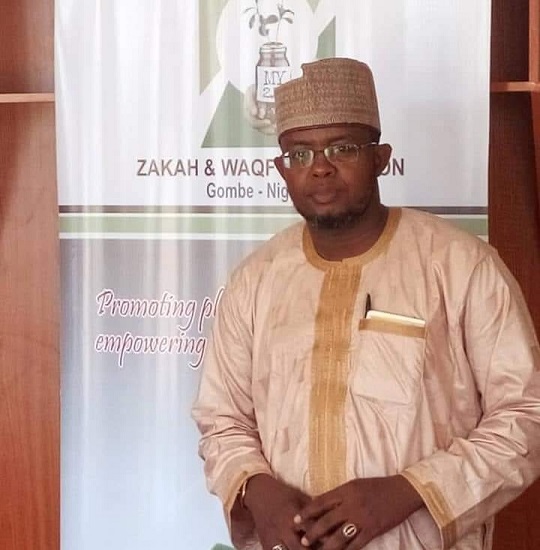
It was a warm afternoon in my office at the Zakah and Waqf Foundation in Gombe, and I had cleared my schedule for what was described as a “very important meeting.” A group of nine young professionals—doctors, nurses, and medical administrators—filed in with purposeful expressions. These were respected Muslim health workers in our community, competent and resourceful in their own rights, leading their Muslim body. 

They sat down, exchanged pleasantries, and after a few minutes, one of them cleared his throat and spoke. “We were hoping you could help us reach Qatar Charity. We want to build a mosque in our hospital.”

I paused. My mind raced not with criticism but with confusion. These were not poor villagers. These were professionals, all salaried, some likely earning above average. I asked gently, “How much will the mosque cost?”

“About ten million naira.”

“And how many Muslim staff do you have?”

“Roughly 500,” they responded.

I picked up a pen and scribbled something. “That’s twenty thousand naira each,” I said. “Divided over four months, that’s 5,000 naira per month.”

There was a short silence. “You don’t need Qatar Charity,” I told them. “You need yourselves; you need Gombe Charity.”

From my limited understanding, I explained that most international charities, like Qatar Charity, raise funds from within their own people first. They identify a problem in a country, develop a proposal, return to their citizens and say: “Donate to build a mosque in Nigeria.” If they can do that for us, why can’t we do it for ourselves? I then told them to put my name as the first donor of the twenty thousand naira to kickstart the project. 

That brief meeting offered a glimpse into a deeper issue—our chronic psychological dependence on external aid, even when we can act. The problem isn’t always material poverty; often, it’s a lack of belief in our collective strength—a poverty of the mind and will.

The Turkey Phenomenon: A Lesson Misunderstood

Take, for example, the popular trend in some Northern Nigerian states where applications pour into Turkish and other organisations for Qurbani (Udhiya) distributions. Turkish charities, may Allah reward them, buy cows and distribute meat during Eid.

But here’s a crucial question: Is this a model to emulate or one to reconsider? If every year, our people look outward to receive—and never inward to learn how to organise, fund, and distribute—we risk cultivating a culture of constant reception without reciprocity.

Islam is not a religion of passivity. It teaches us to act before asking, to solve before seeking, and to build with what is already in our hands. Prophet Muhammad (peace be upon him) taught us that the upper hand is better than the lower one—the hand that gives is superior to the hand that receives.

The Al-Basar Example: From Vision to Visionary Impact

Now, let’s discuss a model worth following—Al-Basar International Foundation.

Al Basar International Foundation is a non-profit international NGO. Founded in 1989 by a group of concerned professionals. Al-Basar is a shining example of what happens when people come together to solve a problem themselves. Their focus? Combating preventable blindness across the Muslim world. No dependency. No grand donor campaigns. Just strategic self-mobilisation as well as waqf and collaborative mindset. 

It works in Yemen, Bangladesh, Sudan, Nigeria, Pakistan, etc. In Nigeria, for instance, a 2019 campaign funded by King Salman Humanitarian Aid and Relief Centre in collaboration with Al Basar International Foundation saw medical volunteers from Saudi Arabia meet 8,000 eye patients and perform 800 eye surgeries to remove cataract and glaucoma in Ibadan, Nigeria, as well as in Lafia in Nasarawa State. 

The foundation manages the Makkah Eye Specialist Hospital in Kano state, Nigeria, where 4,000 free eye surgeries were carried out in 2021. The hospital treats eye conditions, including diabetic retinopathy. In 2022, Al Basar International Foundation, in collaboration with the King Salman Relief Center, sponsored 400 free cataract surgeries for residents of Kano, which took place at Makkah Eye Specialist Hospital. 

Over the years, Al Basar has conducted over 2,000 outreach programs worldwide, performed over 700,000 cataract surgeries, and dispensed nearly 2 million glasses. With 28 hospitals across six countries, the foundation has recorded 26 million outpatient visits. It also invests in education by establishing colleges to train eye care professionals, impacting Africa and Asia. Their school screening program has reached over 1 million children, providing immediate interventions and ensuring a comprehensive approach to their eye health.

Now ask yourself: is Al-Basar a government-funded operation? No. Did it start with foreign aid? No. It was “from them, by them, for them.” And now it is for us, too—because they nurtured it to the point where it could grow beyond them.

We should not only admire such models. We should replicate them.

Historical Echoes: Islamic Proofs of Self-Driven Solutions

Uthman ibn Affan (RA) and the Well of Rumah

When water scarcity plagued Medina, and a private owner monopolised a well, the Prophet (SAW) called for someone to purchase it for the Muslims. Uthman (RA) stepped up, bought the well, and made it a public waqf. He didn’t write to Yemen. He didn’t petition the Romans. He simply used what Allah had given him to solve a problem for Allah’s sake.

So, What Can We Do? A Homegrown Waqf Blueprint

If we genuinely want to stop relying on donors and start building resilient communities, here are practical steps:

Think Within, Act Within: Begin every solution by asking what the community already has—not what it lacks. Do you have professionals? Land? Skills? Social networks? Then, start from there.

Group Economic Self-Waqfing: Encourage professional groups (doctors, teachers, engineers, traders, lawyers) to dedicate a portion of monthly income to a fund. Even a modest 5,000 naira monthly from 100 people can generate sustainable capital. At Zakah and Waqf Foundation, we enjoy that from some professionals, and it works. 

Community Challenge Waqf: Identify a local challenge—maternal health, education for orphans, access to clean water—and collectively endow a waqf around it. Let the yield solve that problem perpetually.

Transparent Management Structures: Set up trustworthy waqf boards to manage resources. Trust fuels contribution. Accountability sustains it.

Celebrate Independence: Create cultural pride around self-funded projects. Showcase schools, hospitals, orphanages, and mosques built without a single foreign dime.

It is Time to Change the Script

Imagine if each LGA in Nigeria had one waqf-funded primary health centre, one vocational training centre, and one scholarship fund—all funded by local contributions from professionals, retirees, and small traders.

We would not be beggars. We would be builders.

It’s time to write a new story. One not of helplessness and application letters to foreign NGOs but of resolve, unity, and strategic giving. One of From Us, By Us, For Us—in the truest, most impactful sense.

When that story is told to future generations, they will say: There was a people who stopped waiting and started building.

Amir Lamido wrote from Gombe via lamidomabudi@gmail.com.