Admin

Drones, AI will be deployed to combat oil bunkering, maritime crimes — Naval Chief

By Anwar Usman

The chief of naval staff, Idi Abbas, has said that the Nigerian Navy will adopt advanced technology, including drones and artificial intelligence, to modernise its operations and tackle maritime crime across the country’s waterways.

Speaking during his screening by the senate on Wednesday, Abbas said the navy would prioritise technological innovation over traditional fuel-heavy patrols for smarter, faster, and more cost-efficient approach to maritime security.

He stated that, “We will incorporate more technology, including the use of drones, to tackle maritime crime.” “A lot of resources are currently wasted fuelling boats to reach remote areas. Technology will help us respond faster and more effectively.”

He further stated that, the navy was fully committed to improving operational efficiency and reducing costs through innovation, adding that surveillance tools would be central to preventing oil theft and illegal bunkering.

“We already have structures in place to curb maritime crimes, but I intend to incorporate more technology, especially drones,” he said.

Abbas, while responding to a question from Olamilekan Solomon, senator representing Ogun west and senate committee chair on appropriation, said oil theft persists mainly in hard-to-reach creeks and coastal areas.

He also revealed that “the theft may appear minimal individually, but when accumulated, it becomes substantial. We’re exploring drone technology to monitor and control these leakages.”

Abbas reaffirmed the navy’s commitment to its total spectrum maritime strategy, which, he said, addresses major security challenges such as piracy, oil theft, kidnapping, and banditry.

Recall that, Tinubu nominated Abbas as chief of naval staff; Olufemi Oluyede as chief of defence staff; Wahidi Shaibu as chief of army staff; Kennedy Aneke as chief of air staff; while Emmanuel Undiendeye was retained as chief of defence intelligence.

Tinubu withdraws clemency for Maryam Sanda, others convicted of serious crimes

By Muhammad Abubakar

President Bola Ahmed Tinubu has withdrawn clemency earlier granted to Maryam Sanda and other convicts of serious offences following a review of the federal pardon list.

Sanda, sentenced to death in 2020 for killing her husband, was among those removed from the list after consultations with the Council of State and public feedback.

Presidential spokesman Bayo Onanuga said the review was guided by the gravity of certain crimes, public sensitivity, and the need to uphold justice for victims and society.

Offenders convicted of kidnapping, drug trafficking, human trafficking, fraud, and unlawful possession of firearms were also excluded from the clemency list.

President Tinubu further ordered the relocation of the Secretariat of the Presidential Advisory Committee on Prerogative of Mercy to the Federal Ministry of Justice and directed the Attorney-General to issue new guidelines for future exercises.

The President reaffirmed his administration’s commitment to judicial reforms and maintaining public confidence in Nigeria’s justice system.

Nigerian police to mark 70 years of women’s service in policing

By Sabiu Abdullahi

The Nigeria Police Force has unveiled plans to commemorate the 70th anniversary of women’s participation in policing, celebrating seven decades of bravery, resilience, and commitment since the first female officers were recruited in 1955.

In a statement released on Wednesday, the Force Public Relations Officer, CSP Benjamin Hundeyin, announced that the two-day event will take place from December 3 to 4, 2025.

The celebration will feature serving and retired female officers, alongside the Inspector-General of Police, Kayode Egbetokun.

According to the statement, the anniversary “underscores the vital role of women in strengthening law enforcement and fostering community trust across the nation.”

It also quoted the Inspector-General as commending the immense impact of women in the Force, noting that their “dedication and compassion have continued to be integral to the foundation of policing in Nigeria.”

Reflecting on their contributions, the Force stated: “Over the past seven decades, women of the Nigeria Police Force have distinguished themselves in administration, investigations, tactical operations, and command leadership. They have embodied integrity, empathy, and excellence in service to the nation and have redefined policing with compassion and purpose.”

The programme will include a national lecture, a historical exhibition, panel discussions, and a community outreach initiative.

The statement further noted that the event reflects the IGP’s commitment to advancing inclusivity, professionalism, and ongoing capacity development for women officers.

“The Nigeria Police Force extends heartfelt appreciation to all female officers, past and present, whose courage and professionalism remain a source of pride and inspiration to the institution and the nation,” it added.

Over 100 killed in Israeli strikes on Gaza amid ceasefire dispute

By Maryam Ahmad

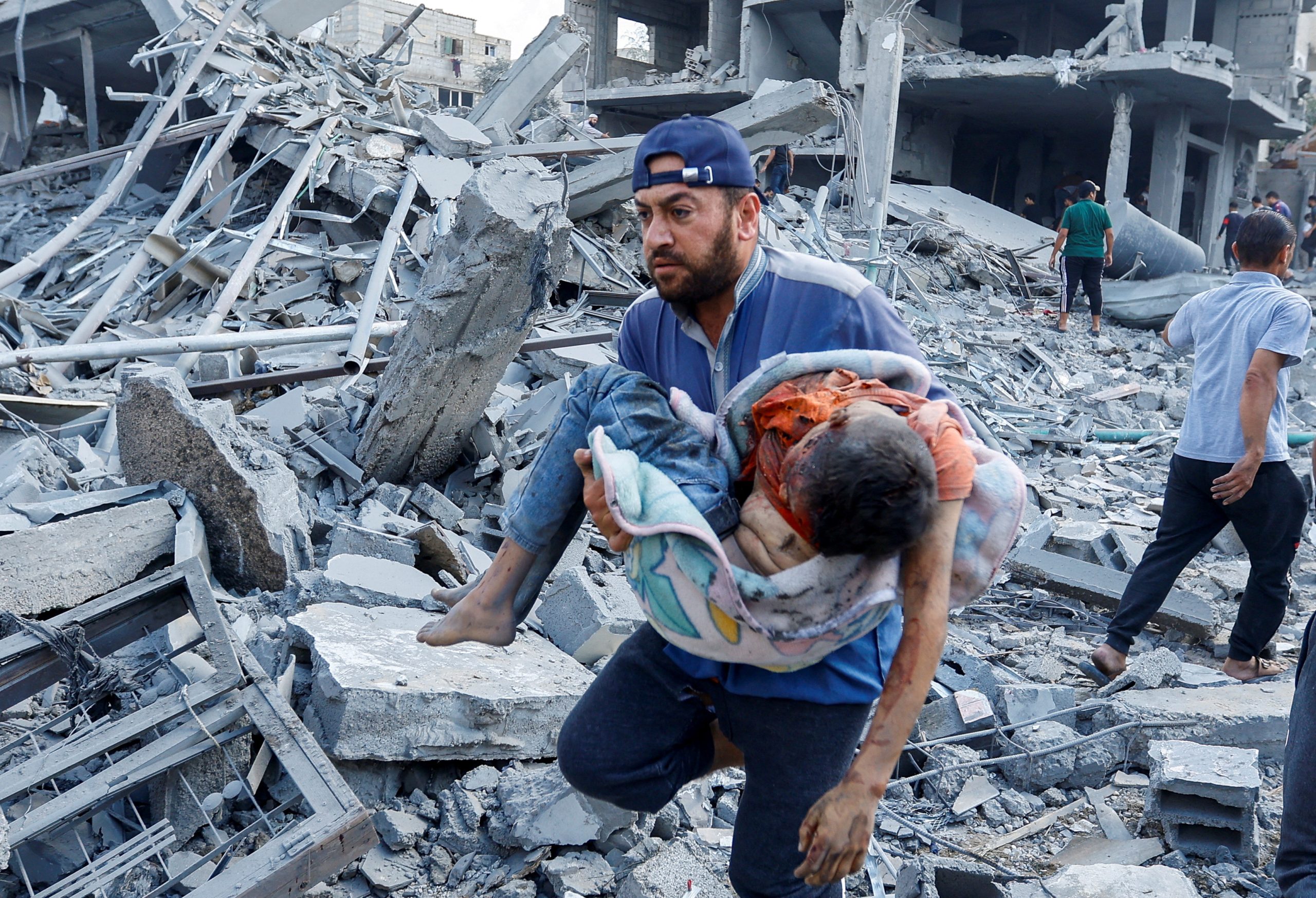
More than 100 people were killed in a series of Israeli airstrikes across Gaza on Tuesday, according to health officials in the enclave. The strikes came shortly after Israel accused Hamas of violating a fragile ceasefire agreement — an allegation Hamas has denied.

Palestinian health authorities said the attacks targeted several densely populated areas, leaving scores of civilians among the dead and many others injured. Rescue teams continued to search through the rubble for survivors late into the night.

In a statement, Hamas rejected Israel’s claims of ceasefire breaches and accused Israel of deliberately escalating the conflict. The group also said Israeli authorities had prevented the return of the bodies of Israeli hostages who were killed during earlier clashes.

The renewed violence has raised fears of a broader breakdown in the ceasefire, which had offered a brief respite after months of devastating fighting. International calls for restraint have grown as humanitarian conditions in Gaza continue to worsen.

Against the Hadith Problem

By Ibraheem A. Waziri

My essay, Against Shaykh Masussuka: A Qur’anic Case for the Reliability of Hadith, stirred more interest than I anticipated. While many readers agreed with my central thesis, a number of them raised a pointed concern: why did I not address what is often called the “Hadith problem”? By this, they meant those reports that, at first glance, appear to contradict the Qur’an, or else propose rulings not congruent with Islam’s basic principles. Some go further, suggesting that certain hadiths diminish the Prophet’s sanctity or undermine the very values the Qur’an upholds. Others, from the opposite direction, are said to elevate hadith to a position of near-supremacy over the Qur’an itself, much as common law sometimes treats judicial interpretation as weightier than the statute it interprets.

To my mind, the reason I did not write directly about this so-called “Hadith problem”, but instead focused on why we must agree primarily on the existence of hadith as a legitimate vehicle for obtaining the correct principles of the deen, is simple: the problem is not new. No community, secular or religious, has documented and curated its tradition more carefully, rationally, and continuously than Muslims have with hadith. As such, Muslim scholarship has wrestled with these questions beautifully and intellectually more than a millennium ago. Much of what trends today on social media is only an echo of debates settled centuries earlier. My earlier essay, The Eternal Quartet: Understanding the Hadith Debate in Northern Nigeria, already sketched how the primary Sunni schools, both juridical and theological, addressed questions of hadith authenticity and authority. The framework they produced is so robust that it continues to guide our practice today.

The Method, Not the Myth

When a hadith seems to contradict the Qur’an, the real issue is not substance but method. Classical scholars approached every report through layers of scrutiny. First came the isnād: if a report’s chain of transmission was weak or fabricated, the discussion ended there. Second was Qur’anic alignment: no solitary report could overturn what the Qur’an had decisively established. Third was the Prophet’s sanctity: any report that appeared to impugn his character was re-read against the sīrah and the Qur’an’s testimony to his moral standing. Fourth came the tools of uṣūl al-fiqh: harmonising general and particular, weighing abrogation only with proof, and applying great maxims such as no harm and no reciprocating harm. Finally, scholars asked about context: to whom did the Prophet speak, in what situation, with what effective cause?

Regarding the sanctity of the Prophet of Islam, a deeper interpretation even suggests that each authentic hadith that seems to cross the Prophet’s moral standing should be understood as teaching something different, excluding the Prophet himself, even if he appears as the reference point. For example, the authentic hadith that says the Prophet’s parents are in Hell should not be read as condemning them personally, but as teaching that whoever dies in disbelief faces that fate. Likewise, the hadith of Umm Haram is not to be taken as evidence of inappropriate closeness but as a lesson on boundaries with one’s mahrams.

This is why many supposed contradictions dissolve under discipline. A hadith regulating a temporary abuse does not become a timeless principle. A narration that seems to permit harm is reined in by the Prophet’s own maxim forbidding it. The method resolves what appears chaotic.

Qur’an First, Sunnah Beside

Another anxiety is the claim that the hadith has been placed above the Qur’an. But this is more perception than reality. The Qur’an is always first in rank. The Sunnah explains and operationalises it. The Qur’an itself gives the Prophet that mandate: “We revealed to you the Reminder so that you may explain to people what was sent down to them” (16:44). It calls him “an excellent example” (33:21), insists that “whoever obeys the Messenger has obeyed Allah” (4:80), and commands: “Whatever the Messenger gives you, take it; whatever he forbids you, abstain” (59:7). These verses do not set up rivalry between Qur’an and Sunnah but complementarity. To say the Sunnah explains the Qur’an is no more than to rank it higher than to say a manual outranks the constitution. Both are necessary, each in its domain.

The Eternal Quartet

Why, then, do sincere scholars differ? Because difference is built into the system. Sunni Islam produced four major theological orientations — Muʿtazilī, Ashʿarī, Māturīdī, and Atharī — and paired them with four juridical schools — Ḥanafī, Mālikī, Shāfiʿī, and Ḥanbalī. This “eternal quartet” explains why equally devout scholars may reach different conclusions about solitary reports, analogy, or custom. Some demand mutawātir reports for theology, others accept sound solitary ones. Some lean on the practice of Madina, others on text alone. Yet all remain within the same qibla.

This plurality is not a weakness but a civilisational strength. No other intellectual tradition has institutionalised difference in this way while maintaining unity. Where others splintered, Islam built a square strong enough to hold its four corners together.

Empires on the Quartet

These paradigms sustained real societies. The early ʿAbbāsid caliphate ran on a Ḥanafī–Muʿtazilī synthesis during the miḥna era. The Seljuks, Timurids, Mughals, and Ottomans all thrived on Ḥanafī–Māturīdī orthodoxy, the Ottomans for nearly seven centuries. Across the Maghrib and the Sahel, Mālikī fiqh and Ashʿarī creed underpinned the Almoravids, the Marīnids, the Songhay under Askia Muhammad, and the Sokoto Caliphate. The Shāfiʿī–Ashʿarī pairing defined the Ayyūbids and Mamlūks in Egypt, spread to Yemen and the Horn of Africa, and later carried Islam to Aceh and Malacca. Meanwhile, Atharī–Ḥanbalī frameworks underpinned the First and Second Saudi states and continue to inform the Kingdom of Saudi Arabia today.

No other religious-intellectual system has produced such enduring political architectures across continents and centuries.

Survival Through Shock

Even more impressive is how these paradigms survived colonial disruption. Islamic institutions such as awqāf, market regulation, and family law provided continuity, enabling Muslim societies to withstand conquest and modern upheaval. The frameworks built centuries ago still help communities navigate modernity.

Take finance: much of today’s Islamic banking rests on Ḥanafī tools such as istiḥsān (juristic preference), ḥiyal (legal stratagems), and the use of custom. Mālikī reliance on maṣlaḥa (public good) grounds policy and governance contributions. What looks like accommodation is, in truth, tradition applying timeless principles to new realities.

Nigeria’s Sahelian Inheritance

Closer to home, Nigeria’s Muslim communities have drawn heavily on this inheritance. The Sahelian empires were governed through Mālikī fiqh and Ashʿarī creed. These frameworks enabled our communities to transition into the modern Nigerian state without collapse. Resident colonial and post-colonial scholars such as Shaykh Abubakar Mahmud Gumi, drawing on Mālikī usūl, issued fatwas that justified the abolition of slavery, the acceptance of modern banking, the embrace of Western education, and participation in political, military, and democratic institutions. His rulings were not departures but faithful applications of classical principles to new circumstances.

What To Do With a Troubling Hadith

Still, an ordinary believer may encounter a hadith that feels alien or offensive. The tradition offers a compass:

1. Verify authenticity, for many reports are weak or fabricated.

2. Read it alongside the Qur’an’s universals of justice, mercy, and tawḥīd.

3. Ask which domain it addresses: creed, law, or character, each with its own thresholds.

4. Probe its context: was it aimed at a specific abuse?

5. If two sound readings remain, prefer the one that safeguards the Prophet’s dignity and the Qur’an’s objectives.

That preference is not modern softness but classical orthodoxy.

 Continuity, Not Collapse

The so-called “Hadith problem” is not an unsolved crisis but a well-worked conversation. Classical Islam built methods strong enough to filter and contextualise reports, intellectual diversity broad enough to hold multiple paradigms, and social institutions durable enough to withstand colonial dislocation. Today, as Muslim societies grapple with modern institutions, these frameworks continue to guide us.

To imagine that the hadith undermines the Qur’an is to misread the tradition. To treat hadith as above the Qur’an is equally mistaken. The truth lies in the system: Qur’an as charter, Sunnah as manual, and juristic tools as governance.

The Messenger is trustworthy. The methods used to preserve his words are reliable. Our task is not to discard them under modern doubt, nor to exalt them beyond their station, but to apply them with the seriousness that once gave our civilisations their strength.

Ibraheem A. Waziri wrote from Zaria. He can be reached via iawaziri@gmail.com.

Public Warning: Surge in car thefts in Kaduna metropolis

By Suleiman Usman Yusuf

In view of the recent surge in car thefts across Kaduna State, particularly along Isa Kaita Road from the evening hours onward, it has become necessary to raise public awareness and caution all vehicle owners.

A few days ago, a brother of mine, who is a senior military officer, visited Kaduna and stopped at Corporate Plaza on Isa Kaita Road to run a few errands. Unfortunately, his car, a Pontiac Vibe, was stolen within minutes of parking it around 8:00 p.m.

Shockingly, his younger brother had experienced a similar incident some months earlier at almost the exact location (near Video Max) around 8:30 p.m., when his Toyota Corolla was stolen barely three minutes after stopping to buy shawarma.

About two months ago, I was on the same street around 9:00 p.m. and met a man whose Honda EOD had just been stolen moments before I arrived. While we were still discussing the issue, another person joined and narrated how two cars had been stolen along the same street not long before.

Sadly, this problem is not limited to Isa Kaita Road alone. Other incidents have occurred across Kaduna Metropolis. For instance, about a year ago, one of my elders had his Honda Civic stolen at Sultan Bello Mosque during Friday prayers. Around the same time, my uncle’s Toyota was also stolen at the Dan Fodio Mosque during Juma’at prayers.

A few months ago, a friend who owns a shop at Kaduna Central Market had his Honda Civic stolen from the KASUPDA Car Park. Another friend’s Toyota was taken from Barau Dikko Hospital’s parking area, despite the exit-card security system meant to prevent such occurrences.

I have personally witnessed the trauma many of these victims went through, including how their daily routines and family lives were disrupted. I have accompanied some of them to various police stations to report these incidents, yet none of the cases have yielded any feedback or results.

Please note: no matter the value or condition of your car, it can be a target. These criminals are always on the lookout, and it is important to take every possible precaution to secure your vehicle.

I am not certain how much the Kaduna State Government and relevant security agencies, including the NPF Kaduna and the Nigeria Police Force, are aware of these disturbing trends. Still, I am using this medium to draw their attention to the growing threat. I also urge His Excellency, the Governor of Kaduna State, Uba Sani, to take swift and decisive action to address this alarming situation.

It is worth noting that, in the first two incidents mentioned above, the victims received calls within 12 hours stating that some of their personal identification items (such as ID cards and national ID cards) had been found at Kwanar Dangora. This suggests that many of these stolen vehicles are quickly transported out of Kaduna shortly after the theft.

ADVICE TO CAR OWNERS 

To reduce your risk of becoming a victim, kindly consider the following preventive measures (though not exhaustive):

 1. Install a reliable car tracker if you can afford one.

 2. If not, use mechanical or pedal locks or other simple devices to reinforce your vehicle’s security.

 3. Avoid parking in dark or isolated areas, especially at night.

 4. Do not leave your car engine running while stepping out, even briefly.

 5. Even when your car is properly locked, take extra steps such as locking your steering wheel, using pedal or gear locks, and installing security alarms or tracking devices. Locking alone is often not enough.

 6. When visiting crowded public places such as mosques, markets, or hospitals, try to park in well-secured and well-lit spaces.

⚠️ DISCLAIMER (PLEASE READ)

This message is not intended to cause fear or panic, but to create awareness and promote vigilance. The rate of car theft in Kaduna is alarming, and the more we discuss it openly, the better our chances are of prompting action from the authorities and encouraging citizens to be more careful.

Let us all remain alert, report suspicious movements, and look out for one another. Together, we can make our communities safer.

Stay vigilant, stay safe.

Suleiman writes from Kaduna and can be reached via suleimanusmanbac@gmail.com.

Chinese influencers now required to hold degrees to discuss serious topics

By Hadiza Abdulkadir

Influencers in China will now need to hold a university degree or relevant professional qualifications before discussing serious topics such as medicine, law, education, or finance online, according to new regulations aimed at curbing misinformation.

The policy, announced by Chinese authorities this week, requires prominent online personalities — particularly those with over one million followers — to provide proof of their expertise. Those who fail to comply risk fines of up to ¥100,000 (about $14,000).

Officials say the move is designed to tackle the growing problem of false information and deceptive advertising, especially in areas such as fake medical treatments and supplements that have proliferated on social media.

While supporters argue the measure will help protect the public from misleading content, critics warn it could tighten state control over online speech and limit discussions on critical social issues.

The new rules mark another step in China’s ongoing campaign to regulate its vast and influential online ecosystem, emphasising “professional responsibility” and “accuracy” in digital communication.

First Class or 2.1: Jigawa’s bright minds deserve place

By Muhammad Abubakar Tahir

Jigawa State has, in recent years, earned praise for its progressive policy of offering automatic employment to university graduates who finish with First Class degrees. It is a remarkable gesture, one that highlights the state government’s commitment to education, excellence, and the future of its youth.

However, as commendable as this initiative is, it also calls for reflection. The state government must review the policy to ensure that other brilliant and hardworking graduates are not left behind, particularly those with a Cumulative Grade Point Average (CGPA) between 4.0 and 4.49.

These students, though officially classified as Second Class Upper (2.1), have equally demonstrated distinction, resilience, and intellectual depth. In some disciplines — especially the technical and science-based ones — attaining a First Class degree is extraordinarily demanding. 

Yet many of these students, with CGPAs slightly below the First-Class cut-off, are as competent and deserving of opportunities as their peers who crossed the 4.5 mark. Around the world, employers and institutions recognise this nuance. Graduates with Second Class Upper degrees are widely regarded as strong performers and are eligible for both public- and private-sector roles. 

They also qualify for prestigious international fellowships and postgraduate scholarships. Indeed, scholarship programmes such as Chevening, Commonwealth, and several others typically set their minimum CGPA requirement between 3.5 and 3.7 on a 5.0 scale — comfortably within the Second Class Upper range. 

This shows that the global academic and professional community values not only top-tier excellence but also consistent, well-rounded performance. It is on this basis that Governor Mallam Umar Namadi is urged to broaden the scope of Jigawa’s First-Class employment initiative. 

By extending consideration to graduates within the 4.0 to 4.49 range, the government would not only promote fairness but also maximise the state’s pool of talent. Such an inclusive policy could be designed to include a fair, transparent screening process that rewards skill, creativity, and innovation — qualities not confined to a single grade level.

A similar example can be seen in neighbouring Kano State, where the government recently introduced a domestic scholarship scheme that also accommodates Second Class Upper graduates. Many beneficiaries of that programme come from humble backgrounds, and their stories have shown how such policies can transform lives and families. 

Jigawa State can take inspiration from this model and adapt it to its own development priorities. Governor Namadi has already demonstrated a listening and compassionate leadership style, particularly through his swift interventions during last Ramadan when he responded to citizens’ needs with empathy and urgency. 

Extending opportunities to deserving 2.1 graduates would further strengthen public confidence in his administration and reinforce his image as a people-centred leader who believes in inclusive governance.

History will not forget him if he heeds this call. His legacy will be remembered not just for rewarding excellence, but for redefining it — by recognising that excellence wears many shades. That brilliance sometimes exists just a decimal point below a First Class.

In the end, what truly defines a visionary leader is not only how he uplifts the best but how he ensures that no capable hand is left idle when there is work to be done for the good of the state.

Muhammad Abubakar Tahir is a journalist based in Hadejia, Jigawa State. He can be reached via abubakarmtahir81@gmail.com.

Obi slams $1B Lagos port spending, calls neglect of eastern ports “economic sabotage”

By Abdullahi Mukhtar Algasgaini

Peter Obi, the 2023 Labour Party presidential candidate, has strongly criticized the Federal Government’s plan to spend $1 billion (approximately ₦1.5 trillion) on modernizing the Apapa and TinCan Island Ports in Lagos, labeling the continued neglect of other major ports as “economic sabotage.”

In a statement posted on his X (formerly Twitter) handle on Friday, Obi accused the government of perpetuating a dangerous “economic imbalance” by excessively concentrating infrastructure investments in one region.

He warned that this policy sidelines critical maritime hubs in other parts of the country, specifically naming the ports in Warri, Port Harcourt, Calabar, and Onne.

The former Anambra State governor argued that equitable development of ports across the nation’s geo-political zones is essential for enhancing productivity, creating jobs, and stimulating regional economic growth that could lift millions out of poverty.

“While any effort to improve efficiency and embrace technology in our maritime sector is commendable, such an initiative must be guided by accountability, transparency, and fairness,” Obi stated.

“The Lagos modernisation project, though laudable, underscores a troubling trend of concentrating major national infrastructure in one region.”

Obi emphasized that for Nigeria to build a truly robust national blue economy, its growth must be inclusive, actively involving every region.

He also used the opportunity to call for broader reforms in the sector, including curbing corruption, streamlining bureaucracy, and implementing a paperless port system to boost global competitiveness.

Concluding his remarks, Obi urged the Tinubu administration to adopt principles of fairness and equity in its infrastructure policies.

“If prudently managed, the Lagos modernization project could serve as a model for national maritime transformation,” he conceded.

“But Nigeria must rebuild with justice, integrity, and a vision that turns us from a consuming nation into one driven by production and shared prosperity.”

Two physical proofs of Allah’s existence

By Tijjani Muhammad Musa

Many atheists, agnostics, freethinkers and others like them, their biggest tool of argument is to demand real, empirical evidence to show them of Allah’s Existence. Challenging any who believes in Allah as the Creator of the universe to give them something they can see, possibly touch, as a vital criterion or condition, not just for them to acknowledge God’s Existence, but also for them to accept Islam or any other religion, for that matter.

Many scholars would engage them in deep scholarly discussions, citing all kinds of examples and pointing to various creations and phenomena, both physical and abstract, to depict Allah SWT’s presence. Still, the atheists would bring up counter-submissions to keep themselves on their side of the argument. And on several occasions would reject all efforts to prove to them, through logic and reasoning, the existence of a Supreme Creator and Being as the architect of man’s existence.

One of such encounters had the atheist explaining away the Quran as nothing ingenious or miraculous beyond the Arabs’ known prowess for poetry, memorisation and oral transfer of information from generation to generation. Thereby negating and dismissing a fundamental point to note about the man through which the contents of the book were revealed. 

Prophet Muhammad SAWS in himself is the ultimate, undeniable, physical evidence of Allah’s existence to any who doubts that. For the duration of his life in Arabia, in the 6th century and beyond, his prophethood stands to show any denier of God’s existence (atheists, etc) that he was not on his own, but had someone behind his doings. And who is that? Muhammad SAWS gave all the answers; Allah Subhanahu Wa Ta’ala (SWT)

Actually, I’m not pointing at the poetic eloquence, memorisation capacity or storytelling prowess of the Arabs, because the Rasool SAWS was not a poet, nor the Quran a story book and his mission was not just for the Arabs, but drawing our attention to the inability of the Prophet SAWS to read or write. He was al-ummiy. That singular fact is enough to prove to anybody that the source of all his information in the Quran must be someone or something or from somewhere beyond all human dimensional existence.

And, being truthful, he did put forward the claim that he is a messenger from God (Allah) Almighty. Sent with a divine creed, a book, which he kept track of its revealed verses, in bits and pieces, verses by verses, paragraphs by paragraphs, chapters by chapters (114 of them) for 23 whole years. An ILLITERATE! That in itself is way beyond comprehension, even for a genius who was engaged in all facets of daily human activities

And again the CONTENTS of the Quran, in various fields of knowledge from within and outside of man, from within and outside the earth, from our atmosphere into outer space, from how the earth formed to its sustainance, from atoms to fingerprints, to insects, to animals, their anatomy and much more.

On the scientific knowledge front in biology, embryology, geography, medicine, physics, mathematics, aviation, space travel, oceanography, agriculture, sociology, drone war, moral ethics, future predictions, relativity of time, communication, etc. A person, uneducated or taught or discipled by any human, cannot produce such a vast amount or array of knowledge in an era when research and documentation were virtually non-existent amongst his people. It’s simply IMPOSSIBLE!

Again, consider his predictions about the advent of Ad-Dajjal, the computer, the internet, AI, the digitalisation of life, and much more. Information science knows next to nothing about. Only through trial and error does science stumble upon one small piece of knowledge after another, confessing to not knowing anything about virtually everything. A case of the blind walking in the dark, searching for something he knows not of. Even with light, only what he stumbles upon will he show.

There’s even a security code woven into the structure of the book’s contents, using the odd number 19 to mathematically safeguard the revelation from ever being corrupted, from the time of the Messenger till the end of time. Again, the book presents a challenge for anyone to bring a chapter like one in the book; if there’s any doubt about its source being from Allah! No one has yet met up. Yet, atheists will keep hyping science this, science that. What does science know? Almost nothing compared to what’s contained in the Quran, wAllahi.

How can all that knowledge across various aspects of human endeavours come from someone who was unlettered, only to be proven correct by science over the past 1400+ years and to this day? Who dares to claim such a feat, such a possibility? A man who could not differentiate A from Z or 1 to 10? Yet Muhammad SAWS attributed it all to whom? Not to himself, but to Allah SWT alone. Now, ask yourself, why would he do that? Still, some people will come and say that because they cannot see God, then He AWJ does not exist.

What more? The proof of his prophethood, THE HOLY QURAN, is here for all to see, touch, read, challenge, debunk and more for its authenticity. The Rasool didn’t say it was his making, but that it was Allah SWT’s revealed verses. And just because you want to be what… You choose to dismiss such living proof that its author is non-existent!? Aren’t atheists amazing? They have always wanted physical proof and evidence of Allah AWJ’s existence. Well, then, Prophet Muhammad SAWS is it, for one. Even if they have never seen him, at least they have heard of him. 

And if that’s not good enough for any, the Holy QURAN didn’t just fall from the sky, right? How did it come into existence, out of the blue or from an abracadabra spell?

Tijjani M. M. wrote from Kano, Nigeria.