Month: November 2025

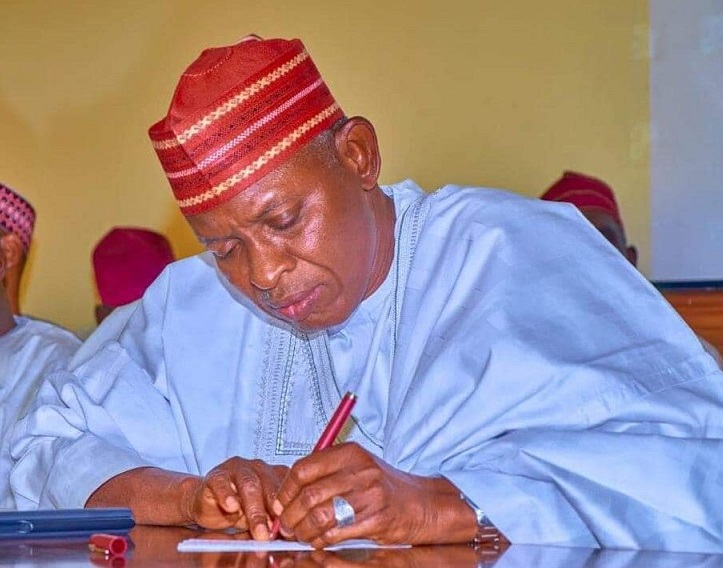
Kano State Council approves ₦4.9bn for education projects

By Hadiza Abdulkadir

The Kano State Executive Council has approved ₦4,931,962,184.11 for key projects aimed at revitalizing the education sector across the state. The approvals, made during the Council’s 33rd meeting chaired by Governor Abba Kabir Yusuf on Saturday, November 1, 2025, cover initiatives under both the Ministry of Education and the Ministry for Higher Education.

According to a statement signed by the Commissioner for Information and Internal Affairs, Comrade Ibrahim Abdullahi Waiya, the funds will be used to settle outstanding liabilities, enhance infrastructure, and improve learning facilities at all levels.

Among the major allocations is ₦1.49 billion for settling debts owed to boarding school feeding suppliers and ₦2.54 billion for the renovation of Government Technical College, Ungogo (Phase II). The Council also approved ₦270.9 million for the completion and furnishing of the E-Library at the Kano State College of Education and Preliminary Studies (KASCEPS), and ₦400 million for the procurement of office furniture and fittings at Northwest University, Kano.

Other approved expenditures include ₦308.9 million to clear liabilities owed to the National Board for Arabic and Islamic Studies (NBAIS), ₦139 million for instructional materials production by Kano Printing Press, and ₦140.7 million for accreditation exercises at Kano State Polytechnic.

The approvals, the statement noted, reflect Governor Yusuf’s commitment to revamping the education system through enhanced infrastructure, accountability, and effective resource utilization.

“These interventions demonstrate the administration’s dedication to ensuring quality education and conducive learning environments for students across Kano State,” Waiya said.

The most important kindness: To yourself, for here, and hereafter

By Aisha Musa Auyo

I preach kindness every now and then—kindness to a spouse, kids, parents, relatives, and others in our lives. But today, I want to dwell on the most crucial kindness… kindness to oneself.

This is a kindness that goes beyond this dunya (this world); a kindness that rewards you with the best of here and the hereafter. Being kind to oneself has many faces, but I’ll discuss the most important ones here:

Prioritising the Akhirah Over the Dunya

This world is merely a temporary place. Try as much as you can to resist the temptation of indulging in sins. Strive to stop any act that you would not love to die doing. Stop procrastinating regarding good deeds. We do not know when our lives will end; no one gives us notice. We owe ourselves this profound kindness: preparing for the inevitable.

The Investment of Sadaqah (Charity)

Giving out sadaqah, even if it’s merely half a date, expiates sins and prevents tragedy. We often spend a great deal on ourselves without calculation, yet when it comes to giving to others, we hold back and start calculating. What we forget is that whatever we give out is multiplied and comes back to us many times over. Whatever we spend only on ourselves ends here.

But you see, when we make other people’s lives easier, lessen their burden, or make them feel better, Allah multiplies that, and the reward is for both here and the hereafter. Whenever we spend on ourselves, let’s try to include those who are less privileged. We are not only helping others; we are being incredibly kind to ourselves beyond this dunya.

The Perpetual Reward of Sadaqah Jariyah (Ongoing Charity)

Let’s discuss Sadaqah Jariyah—a charity, in which the reward continues to reach you even after your death. We can achieve this through various means, such as investing in raising pious children, teaching the Quran, performing good deeds, drilling a source of water, contributing to an Islamic school or any other worthy cause, even if we can’t afford to sponsor it entirely, planting trees, etc.

We benefit more from this benevolence than the people it was intended for. We truly owe it to ourselves to show this type of kindness.

Cultivating Great Relationships

Cultivating good relationships with others, elevating their mood and ranks, making them feel great about themselves, and improving the quality of their lives are powerful ways we can be kind to ourselves. These are the investments that make people miss us and sincerely pray for us after we are gone. We owe this kindness to ourselves—being able to invoke the feeling of longing, missing, and praying for us when we are no longer here.

Sustaining Spiritual Well-being; keeping our mouth moist with Zikr (remembrance of Allah), Istighfar (seeking forgiveness), and Salawat (blessings upon the Prophet); reading the Quran; and constantly upgrading our knowledge and practice of our Deen (religion) is a kindness to ourselves that we should never compromise.

Integrity and Truthfulness

Saying the truth, having integrity and decency, minding one’s business, and having a halal (lawful) source of income is a profound kindness we owe ourselves, for this will be a shield from the Hellfire.

Simple, multiplied deeds

You see, a simple gesture—smiling at strangers, a kind word, an encouraging nod, removing a harmful object from the road, helping or feeding animals, or watering a plant—will go a long way in benefiting us here and hereafter. Angels are praying to Allah that whoever gives out, may Allah increase his wealth, and whoever withholds his wealth, may Allah withhold His blessings from him. So we should never forget that whatever we do, small or big, we shall receive it in multiples.

Being Intentional

One crucial thing I’d like to remind us here is to be intentional about everything we do. Let’s always ensure that our deeds and actions, big or small, are motivated by the reward of our Creator. Let every action or inaction emanate from the craving for Allah’s Rahma (Mercy) and the fear of His punishment. This, indeed, is the biggest kindness we owe ourselves.

Lemme stop here..

Aisha Musa Auyo is a doctoral researcher in educational psychology. A wife, a mother, a homemaker, a caterer, a parenting, and a relationship coach. She can be reached via aishamuauyo@live.co.uk.

Help Nigeria with technology, not threats—Kwankwaso tells Trump

By Uzair Adam

Senator Rabiu Musa Kwankwaso, the presidential candidate of the New Nigerian Peoples Party (NNPP) in the 2023 general elections, has called on U.S. President Donald Trump to assist Nigeria with modern technology to combat insecurity rather than issue threats of military intervention.

Kwankwaso made the appeal in a statement on Sunday while reacting to Trump’s recent remarks accusing the Nigerian government of failing to protect Christians and threatening military action against terrorist groups in the country.

Trump’s statement followed Nigeria’s endorsement of a two-state solution to the Middle East crisis and its condemnation of killings in Gaza—a position that reportedly sparked renewed allegations of “Christian genocide” against the country.

Kwankwaso noted that Nigeria remains a sovereign nation grappling with multifaceted security challenges affecting people of all religions and ethnic backgrounds.

“It is important to emphasise that our country is a sovereign nation whose people face different threats from outlaws across the country.

“The insecurity we face does not distinguish based on religious, ethnic, or political beliefs,” he said.

The former defence minister advised the U.S. government to deploy its influence and resources to help Nigeria address insecurity rather than make divisive statements.

“The United States should assist Nigerian authorities with advanced technology to confront these challenges, rather than issue threats that could further polarise our country,” he stated.

Kwankwaso also urged the Nigerian government to strengthen diplomatic engagement with Washington by appointing special envoys and ambassadors to protect and project Nigeria’s interests globally.

“The Nigerian government should consider appointing special envoys from among its seasoned diplomats to engage the American government.

“It is also necessary to appoint permanent ambassadors to represent our national interests on the global stage,” he advised.

He further appealed to Nigerians to remain united amid increasing international tensions, stressing that this was a time to promote unity over division.

“God bless Nigeria,” he concluded.

Rethinking the “Christian Genocide” narrative: Reflections from Wilton Park

By Dr Samaila Suleiman Yandaki

Nigeria is once again in the global spotlight in the wake of its redesignation as a Country of Particular Concern and the accompanying threat of U.S. military action by the Trump administration to save Nigerian Christians from “genocide”. This narrative is as dangerous as it is familiar, evoking the old imperial logic that simplifies and distorts our complex realities to justify external intervention. As a student of the politics of history and identity conflict, I find this portrayal beyond perturbing and perilous. 

I witnessed firsthand how such perilous narratives were debated in international policy circles when I joined other Nigerian and British stakeholders at a high-level summit at Wilton Park in February 2020 for a dialogue on “Fostering Social Cohesion in Nigeria”. Situated in the serene estate of Wiston House, Steyning, West Sussex, Wilton Park is an Executive Agency of the UK Foreign, Commonwealth and Development Office, widely recognised as a global space for peace dialogues and post-conflict reflection. The meeting was part of the UK government’s follow-up to the Bishop of Truro’s Independent Review on the persecution of Christians worldwide, in which Nigeria was identified as a major flashpoint of “religious violence.” The Truro Report asserted that Nigerian Christians are facing systematic persecution and called upon Western governments to do more to protect them. 

At Wilton Park, we were offered more than an interfaith forum to dialogue; we were given the opportunity to deconstruct the dangerous oversimplifications that have come to characterise Western discourses on Nigeria. Unlike the imperialist gimmicks and threats emerging from Washington today, the British government, through the Foreign and Commonwealth Office, convened diverse stakeholders from Nigeria and the UK – religious leaders, politicians, diplomats, academics, and civil society representatives – to deliberate on the multifaceted security challenges confronting Nigeria and explore ways of building social cohesion. I am not permitted by the Wilton Park Protocol to name participants or cite their specific interventions, but suffice it to say that, with few exceptions, those present were individuals who matter in Nigerian and British policy circles.

The participants spent three days discussing the farmer-herder crisis, the Boko Haram insurgency, and the persistent communal conflicts in the Middle Belt. What struck me most was the consensus among Nigerian participants — Muslims and Christians alike — that the “Christian persecution” framing was profoundly misleading. We emphasised that the reality was far more complex than the narrative of religious persecution suggests. The problem, as several participants observed, is not that Christians do not suffer violence, but that violence in Nigeria is indiscriminate, affecting all communities. To single out one group as uniquely persecuted is to misread the nature of the crisis. 

The Wilton Park approach reflected a subtle but significant shift– the need to appreciate the broader social, political, and environmental dynamics of violence in Nigeria. While the Truro Report relegated these factors to the background, we strongly highlighted them, showing that Nigeria’s crisis is a shared national tragedy rather than a targeted religious war. The goal was to nurture a more nuanced understanding, one that resists the reductive opposition between Muslim perpetrator and Christian victim. 

The meeting concluded on a high note with consensus around the “sensitivity and diversity of conflict narratives,” recognising that every victim’s voice deserves to be heard. It was agreed that shifting the narrative from “Muslims against Christians” and other binary categories must therefore be a priority if we are to avoid deepening existing divisions. The meeting recommended that the Nigerian government should “commission and fund independent, credible research on climate change, number of attacks, crime victims, cattle routes and patterns; develop strategy on how to use data to proactively educate, myth-bust and shape narratives for both sides of the argument; justice and peace training to be included in schools; Government of Nigeria to appoint a National Reconciliation Adviser; establish a Joint Religious Coalition to ensure accountability of government for insecurity and politicisation of conflict; develop religious engagement strategy; and commence dialogue to facilitate creating ‘Code of Conduct’ for religious leaders,” among other actionable recommendations. This later became the groundwork for further peacebuilding engagements between Nigerian and British stakeholders. The Wilton Park dialogue is a model of thoughtful engagement, the kind of thoughtful diplomacy the world requires in times of conflict, not the militarised moralism coming from Washington. 

The question is, what are the true intentions of Trump? Is he genuinely motivated by a humanitarian desire to protect Nigerian Christians, or is this another exercise in the US geopolitical and imperial crusade? History offers little reason for optimism. We know that humanitarian and messianic pretexts always precede Imperial interventions. In the 19th and 20th centuries, colonial logic was a “civilising mission”; today it is “defence of persecuted Christians”. The language changes, but the logic remains the same —define and rule, borrowing from Mahmood Mamdani. The Palestinian literary critic Edward Said describes this imperial habit of defining how others are perceived and how their suffering is interpreted. Therefore, classifying Nigeria—a complex, plural, and Muslim-majority nation—as a persecutor of Christians is a convenient casus belli for Trump, masquerading as a humanitarian concern. 

Meanwhile, I congratulate the proponents of the “Christian genocide” narrative in Nigeria and beyond. We are now officially a Country of Particular Concern, polarised and divided. As the advocates of the narrative await, with self-righteous anticipation, an American-led “rescue mission”, I want to remind them of the devastation that American invasion has brought to nations in the name of salvation: Libya, Iraq, Afghanistan, Syria, Vietnam, Somalia. Each intervention was couched in the language of freedom, yet each left behind broken societies and deepened resentment.

The “Christian genocide” narrative is doubly dangerous: while deepening domestic divisions, it legitimises foreign intervention. This is not to deny the suffering of Christians in parts of Nigeria. Their pain is real and deserves acknowledgement. But this is equally true of Muslims and others who have suffered the same fate. The question is not who suffers most, but how that suffering is framed. 

Ultimately, the Nigerian state bears the greatest responsibility for its failure to protect all its citizens. Endemic corruption, elite impunity, and the persistent inability to provide security for Nigerians have created fertile ground for such divisive narratives to thrive. Unfortunately, the citizens themselves have collectively failed to hold the government accountable for these failures. Instead, they are busying themselves competing for victimhood, thereby creating the conditions for external powers to intervene discursively and politically. It is this vacuum that the Trump administration is filling.  

The task before Nigerian scholars, faith leaders, and policymakers is to reclaim the narrative, not through denial, but through a more honest, inclusive, diplomatic and historically grounded understanding and framing of its own complex realities. The federal government must strengthen its security institutions and reassert the primacy of equal citizenship. All lives matter in Nigeria—Christian, Muslim, and traditionalist alike.

Dr Samaila Suleiman writes from the Department of History, Bayero University, Kano.
How the “Christian Genocide” narrative could cost Tinubu his 2027 re-election

By Misbahu El-Hamza

President Bola Tinubu has finally responded to the false accusation of a “Christian genocide” in Nigeria, a narrative that surfaced in late September. Yet as this claim gains traction in U.S. conservative circles, he should be more worried about his political prospects. The narrative—and U.S. President Donald Trump’s recent call to redesignate Nigeria as a Country of Particular Concern (CPC)—could give Washington both motive and cover to oppose Tinubu’s re-election in 2027, just as former President Goodluck Jonathan alleged of the Obama administration in 2015.

Former President Jonathan publicly claimed that he lost the 2015 election because of U.S. interference. Two issues broadly defined the diplomatic rift between the two governments. The first was Boko Haram’s insurgency and the abduction of the Chibok girls. In a 2018 BBC interview, Jonathan lamented that Nigerians in the U.S. joined public protests there, one of which famously featured Michelle Obama holding a placard with the slogan #BringBackOurGirls.

At the October 2025 launch of ‘SCARS: Nigeria’s Journey and the Boko Haram Conundrum,’ by former Chief of Defence Staff Gen. Lucky Irabor (retd.), Jonathan recalled: “When I was in office, one of the major scars on my government, and one I will retire with, is the issue of the Chibok girls. As Bishop Kukah said, no plastic or cosmetic surgeon will remove it.” The then-opposition under Muhammadu Buhari, which included Tinubu, exploited insecurity for political advantage, a factor that clearly contributed to Jonathan’s loss.

The second, and in my opinion, more damaging rift was Jonathan’s stance against same-sex marriage, reflecting the convictions of most Nigerians. In 2014, he signed the Same-Sex Marriage Prohibition Act, shortly after the Obama administration’s 2011 pledge to “use all the tools of American diplomacy” to promote gay rights globally. Washington’s reaction was swift. The White House warned of possible cuts to HIV/AIDS and anti-malaria funding, while Jonathan’s government held firm. Nigerians applauded him for that. But during the 2015 campaign, the Obama administration’s outreach, including direct appeals to Nigerian voters and a high-profile visit by Secretary of State John Kerry, was widely viewed as tacit support for Buhari, which many Nigerians, including Jonathan himself, believe shaped the election’s outcome.

Insecurity also played a domestic role in Jonathan’s downfall. Nigerians were increasingly alarmed by unrelenting violence—beyond Boko Haram, currently compounded by communal, ethnic, and religious clashes and by banditry mostly in northern Nigeria—that claimed hundreds of innocent lives. Regardless of how the world described it, the reality was and is still tragic. It eroded public trust and patriotism. Yet successive governments, rather than restoring security, have often appeared more concerned with foreign perceptions than with rebuilding national confidence and truly working to end the bloodshed of innocent Nigerians.

So, while Jonathan’s administration angered the Obama White House over the same-sex marriage law, many believe that Tinubu’s has irritated Washington for another reason.

In early September, U.S. Senator Ted Cruz introduced the Nigeria Religious Freedom Accountability Act of 2025 (S.2747) to the U.S. Senate. The bill seeks to sanction Nigerian officials allegedly complicit in “Islamist jihadist violence against Christians and other minorities” and those “enforcing blasphemy laws”. Blasphemy remains an offence under Nigeria’s criminal code and in the twelve northern states operating shari’a law. Yet, the Cruz bill’s language raises serious questions: how would the former officials be identified, and on what evidence? If Washington possesses proof, it has not presented any. Within Nigeria, such accusations often surface in political rhetoric but rarely withstand scrutiny.

Still, Nigeria’s greater “offence” under Tinubu—at least to American conservatives like Bill Maher, Mike Arnold, Ted Cruz, Riley Moore, and now Donald Trump—is its unwavering support for the Palestinian people. Successive Nigerian governments, whether Christian- or Muslim-led, have consistently condemned Israel’s occupation and called for a two-state solution as the only path to peace. This position, long-standing and bipartisan in Nigeria, clashes directly with Washington’s pro-Israel consensus.

After Nigeria’s firm statement at the 80th UN General Assembly in September, Maher went on his HBO show and declared, “I’m not a Christian, but they are systematically killing the Christians in Nigeria,” comparing it to Gaza and calling it “a more serious genocide.” Such claims, amplified by Trump’s rhetoric about “defending Christians,” serve U.S. political optics more than global justice. Recall Trump’s 2020 CPC designation for Nigeria. It was largely symbolic and carried no enforcement before he left office. His renewed posturing appears equally opportunistic.

Tinubu may believe U.S. pressure arises from concern for Christian victims of Islamist violence and that this aligns with Nigeria’s large Christian population. Yet the U.S. record tells a different story. The same establishment that condemns persecution in Nigeria supports Israel’s war in Gaza, where many casualties are both Muslim and Christian Palestinians.

If Nigeria accuses Washington of selective advocacy, it may find sympathy at home, but not in Washington, where lobbying interests dominate the narrative. Assuming that the “Christian genocide” argument will shield Nigeria from criticism would be a miscalculation.

Tinubu is not yet where Jonathan stood in 2015, but the parallels are unmistakable. The Obama administration’s posture during Jonathan’s re-election bid showed how U.S. influence can shape Nigerian politics. A sustained clash with U.S. policy on religious freedom and Palestine, coupled with insecurity and governance failures, could become a tipping point. Avoiding that outcome will require strategic diplomacy (which we have no doubt our president possesses), credible reform, and a domestic agenda rooted in accountability. Nigerians must see real action towards ending Boko Haram and banditry.

This moment demands political acumen and the disciplined management of both security and foreign relations. Tinubu cannot afford to repeat Jonathan’s missteps. In global politics, misreading Washington’s signals has previously cost Nigerian presidents, and history may not be kind to those who fail to learn from it.

Misbahu writes from Kano and can be reached via email: misbahulhamza@gmail.com

Trump warns Nigeria over alleged persecution of Christians, threatens military action

By Uzair Adam

US President Donald Trump has directed the United States Department of War to prepare for what he described as a “possible action” to eliminate Islamic terrorists in Nigeria.

In a post on his Truth Social account on Saturday, Trump cautioned the Nigerian government to urgently address the continued killings of Christians in the country or risk losing all forms of American aid and assistance.

“If the Nigerian Government continues to allow the killing of Christians, the U.S.A. will immediately stop all aid and assistance to Nigeria, and may very well go into that now disgraced country, ‘guns-a-blazing,’ to completely wipe out the Islamic terrorists who are committing these horrible atrocities,” Trump wrote.

He added that he had instructed the Department of War to be ready for immediate action, warning that any attack “will be fast, vicious, and sweet, just like the terrorist thugs attack our cherished Christians.”

The statement came barely a day after Trump redesignated Nigeria as a “country of particular concern,” citing what he called a Christian genocide allegedly perpetrated by radical Islamists.

Responding to the development, President Bola Tinubu rejected Trump’s decision, insisting that Nigeria remains a democracy that guarantees freedom of religion and belief as enshrined in its constitution.

Senator Ndume blasts Nigerian government over U.S. religious persecution listing

By Abdullahi Mukhtar Algasgaini

Senator Ali Ndume, representing Borno South, has accused the administration of President Bola Ahmed Tinubu and the Senate of negligence, which he claims led to the United States placing Nigeria on its list of “Countries of Particular Concern” for alleged religious persecution.

In a statement issued on Saturday in Abuja, Senator Ndume stated that both the executive and legislative arms failed to act with urgency in addressing the U.S. government’s accusations, ultimately resulting in the designation.

The senator recalled that he had previously sponsored a motion in the Senate calling for an investigation into what he termed the “baseless allegations of Christian genocide,” which later led to a resolution advising the federal government to engage the U.S. government with factual data.

The designation was announced on Friday by former U.S. President Donald Trump via his Truth Social platform, a move subsequently published on the White House’s X account.

The Nigerian government has swiftly denied the allegations, asserting that Trump’s claims do not reflect the reality within the country.

However, Senator Ndume blamed the Tinubu administration and the Senate for failing to take appropriate action since U.S. Representative Riley Moore first raised the issue, before Trump reiterated it.

He advised the government to take immediate steps to confront the U.S. administration with credible evidence that terrorists are killing people without religious discrimination.

“I have told the government before, I even sponsored a motion. Nigeria is a free country; this is not something America should do for us, but a misunderstanding and its political implications are what led to us being placed on this list,” Ndume said.

“We should confront the U.S. government with the true data and statistics. We must get them to listen to the views of the Nigerian government and the Muslim community. Muslims are also being killed. This is not a genocide of Christians; this is a killing of Nigerians in general.”

Guinea-Bissau honours Kano governor with highest medal

By Maryam Ahmad

President Umaro Sissoco Embaló of Guinea-Bissau has honoured Kano State Governor, Alhaji Abba Kabir Yusuf, with the Gold Medal of the Republic, his country’s highest national award, for promoting education and African unity.

The medal was presented on behalf of President Embaló by Guinea-Bissau’s Minister of Defence, Mr. Donisio Cabi, at a ceremony held at the Kano Government House.

Mr. Cabi praised Governor Yusuf for offering fifty scholarships to students from Guinea-Bissau, describing the gesture as visionary and consistent with the Kwankwasiyya ideals of empowerment and justice.

Governor Yusuf thanked President Embaló and reaffirmed his commitment to fostering education and African solidarity for peace and progress.

NJFP 2.0: Free labour for employers, 150K for young graduates

By Ishaka Mohammed

As a business owner in Nigeria, you can employ graduates to work for you for free, while each of them receives N150,000 from the European Union. Your role is to create a conducive environment for these young people to learn and grow over the next 12 months.

This is a marvellous opportunity created by the Federal Government of Nigeria, funded by the European Union and implemented by the United Nations Development Programme (UNDP).

The Nigeria Jubilee Fellows Programme (NJFP) was launched on August 31, 2021, to address Nigeria’s unemployment challenges by connecting talented graduates with job placement opportunities in organisations across the country—offering experience and building skills.

In the first phase of the programme, 20,000 graduates under 30 years were shortlisted in 2022, but official reports indicate that many of them were not matched with organisations due to a scarcity of interested and qualified host organisations. 

For those who were matched with organisations between 2022 and September 2025, each person was entitled to a monthly stipend of N100,000—now N150,000, effective from October 2025.

The portal is now open for NJFP 2.0. If you have an organisation registered with the Corporate Affairs Commission (CAC), this programme will greatly benefit you by boosting your visibility, providing free labour, and helping some young people in your host community achieve financial success. Visit https://host.njfp.ng/registration/, complete the application and check your email regularly.

With a reasonable number of interested and qualified host organisations, NJFP 2.0 is expected to be more successful than the first phase of the programme.

As for Nigerians under 30 who graduated not earlier than 2022 and possess the NYSC discharged or exemption certificate, this might be worthwhile. The application link is https://portal.njfp.ng/registration/.

By the way, many of those who were shortlisted in 2022 were delisted in 2025 without being matched with organisations. Consequently, interested applicants are advised to explore other means of upskilling and generating income even after being shortlisted.

A case for women’s special seats in National Assembly

By Rabi Ummi Umar

When asked whether the move to provide special seats for women in the National Assembly is worth celebrating, my answer is an emphatic yes. This milestone is long overdue, yet deeply heartwarming. 

It is one Nigerian woman who has waited for it with hope and tenacity, far too long for it to come. First introduced in the 9th National Assembly as one of five gender-related constitutional reform bills, the proposal failed spectacularly when it came up for voting in March 2022. 

At the time, it was among the five “gender bills” put forward during the fifth constitutional amendment process, all intended to address women’s issues in governance and representation.

Initially, the bill proposed 111 additional seats in the federal legislature – three special seats for women in each state and one in the FCT, spread across the Senate and House of Representatives. The current bill, however, scales this number down to 74 seats under HB 1349, addressing concerns about over-expansion of the legislature. 

Notably, it also includes a review clause, allowing for termination after 16 years. Now passed through its second reading in the House of Representatives and referred to the Committee on Constitution Review for further legislative action, the bill has gained real momentum. 

It enjoys strong backing from the Speaker of the House, Abbas Tajudeen, women’s groups, the United Nations, the United Kingdom, the European Union, and several other key stakeholders. President Bola Tinubu, in his 2023 campaign manifesto, pledged to prioritise women’s inclusion. 

The advancement of this bill is thus heartening to see, a concrete step toward keeping that pledge. It is also a step in the right direction for Nigeria, opening doors for more women to participate in leadership and decision-making processes that shape the nation.

When this bill is finally actualised, Nigeria may only regret not taking the step earlier. Women have increasingly sought meaningful opportunities to prove their worth and play an active role in the country’s development. 

The aphorism goes, “Only a woman truly knows the pain of another woman.” With more women in parliament, issues that directly affect women and children will no longer be treated superficially or dismissed as “emotional.”

Beyond that, women deserve equal rights with men, including the right to participate fully in politics and lawmaking. Their presence in the National Assembly will not only bring balance but also a sense of belonging and pride. Issues like menstrual health, rape, child abuse, female genital mutilation, and femicide would find stronger voices and greater empathy in a more inclusive legislature.

As leaders and mothers, women bring perspectives grounded in lived experience. Their contributions would enrich debates, restore balance, and deepen gender equality—paving the way for a more prosperous and equitable Nigeria.

The case for women’s representation is not an empty one. Nigerian women have already shown what is possible when given opportunities. Dr Ngozi Okonjo-Iweala, former Minister of Finance and current Director-General of the World Trade Organisation (WTO), remains a shining example of excellence on the global stage. 

Obiageli Ezekwesili, who served as Minister of Solid Minerals and later Minister of Education, earned the enduring title of “Madam Due Process” for her tireless efforts in implementing reforms. And today, young women like Maryam Hassan Bukar, a poet and the UN’s first Global Advocate for Peace and Security, are inspiring the world with their brilliance and courage.

For these reasons and more, the case for women’s special seats in the National Assembly is both urgent and undeniable. Let us continue to support women, acknowledge their contributions, and provide them with opportunities to lead and advance. 

To those fighting for the bill’s passage, thank you for your courage and resilience. And to those who will one day occupy these seats, may you excel and bring pride to Nigeria.

Rabi Ummi Umar can be reached at rabiumar058@gmail.com.