Month: October 2025

First Class or 2.1: Jigawa’s bright minds deserve place

By Muhammad Abubakar Tahir

Jigawa State has, in recent years, earned praise for its progressive policy of offering automatic employment to university graduates who finish with First Class degrees. It is a remarkable gesture, one that highlights the state government’s commitment to education, excellence, and the future of its youth.

However, as commendable as this initiative is, it also calls for reflection. The state government must review the policy to ensure that other brilliant and hardworking graduates are not left behind, particularly those with a Cumulative Grade Point Average (CGPA) between 4.0 and 4.49.

These students, though officially classified as Second Class Upper (2.1), have equally demonstrated distinction, resilience, and intellectual depth. In some disciplines — especially the technical and science-based ones — attaining a First Class degree is extraordinarily demanding. 

Yet many of these students, with CGPAs slightly below the First-Class cut-off, are as competent and deserving of opportunities as their peers who crossed the 4.5 mark. Around the world, employers and institutions recognise this nuance. Graduates with Second Class Upper degrees are widely regarded as strong performers and are eligible for both public- and private-sector roles. 

They also qualify for prestigious international fellowships and postgraduate scholarships. Indeed, scholarship programmes such as Chevening, Commonwealth, and several others typically set their minimum CGPA requirement between 3.5 and 3.7 on a 5.0 scale — comfortably within the Second Class Upper range. 

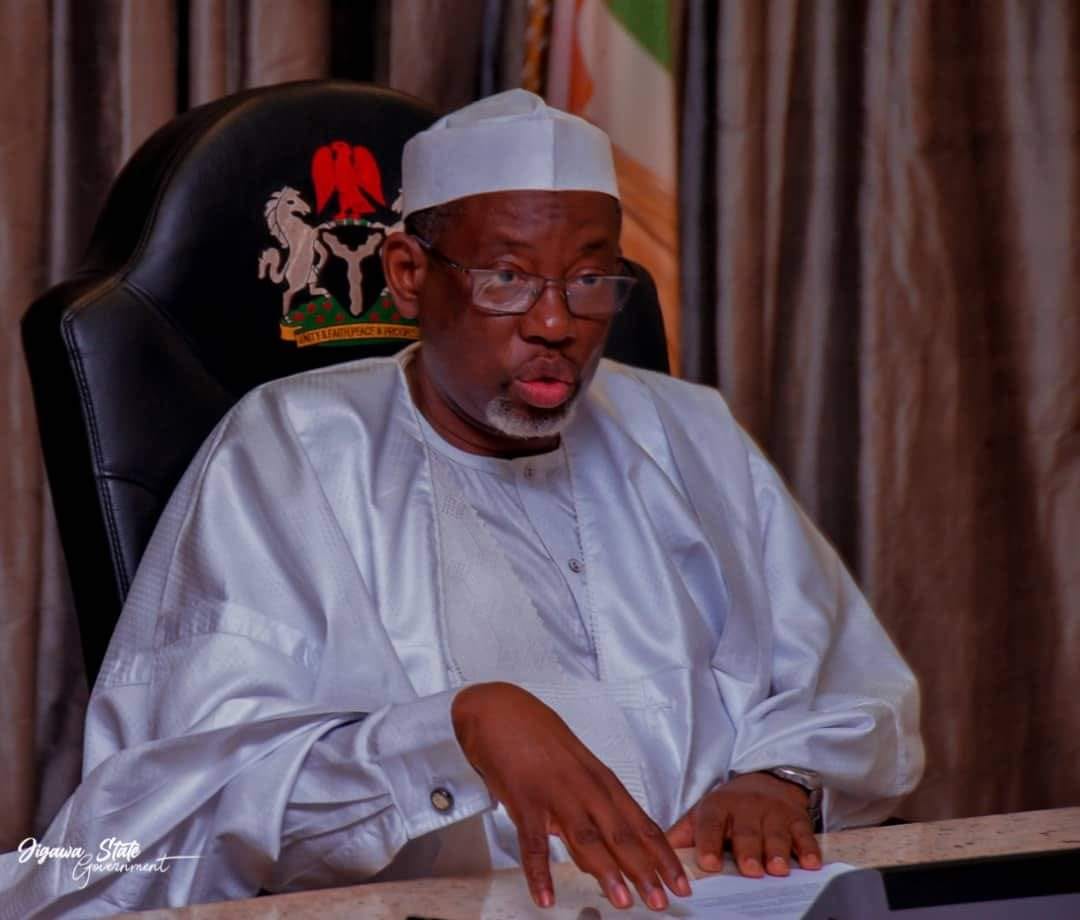
This shows that the global academic and professional community values not only top-tier excellence but also consistent, well-rounded performance. It is on this basis that Governor Mallam Umar Namadi is urged to broaden the scope of Jigawa’s First-Class employment initiative. 

By extending consideration to graduates within the 4.0 to 4.49 range, the government would not only promote fairness but also maximise the state’s pool of talent. Such an inclusive policy could be designed to include a fair, transparent screening process that rewards skill, creativity, and innovation — qualities not confined to a single grade level.

A similar example can be seen in neighbouring Kano State, where the government recently introduced a domestic scholarship scheme that also accommodates Second Class Upper graduates. Many beneficiaries of that programme come from humble backgrounds, and their stories have shown how such policies can transform lives and families. 

Jigawa State can take inspiration from this model and adapt it to its own development priorities. Governor Namadi has already demonstrated a listening and compassionate leadership style, particularly through his swift interventions during last Ramadan when he responded to citizens’ needs with empathy and urgency. 

Extending opportunities to deserving 2.1 graduates would further strengthen public confidence in his administration and reinforce his image as a people-centred leader who believes in inclusive governance.

History will not forget him if he heeds this call. His legacy will be remembered not just for rewarding excellence, but for redefining it — by recognising that excellence wears many shades. That brilliance sometimes exists just a decimal point below a First Class.

In the end, what truly defines a visionary leader is not only how he uplifts the best but how he ensures that no capable hand is left idle when there is work to be done for the good of the state.

Muhammad Abubakar Tahir is a journalist based in Hadejia, Jigawa State. He can be reached via abubakarmtahir81@gmail.com.

Obi slams $1B Lagos port spending, calls neglect of eastern ports “economic sabotage”

By Abdullahi Mukhtar Algasgaini

Peter Obi, the 2023 Labour Party presidential candidate, has strongly criticized the Federal Government’s plan to spend $1 billion (approximately ₦1.5 trillion) on modernizing the Apapa and TinCan Island Ports in Lagos, labeling the continued neglect of other major ports as “economic sabotage.”

In a statement posted on his X (formerly Twitter) handle on Friday, Obi accused the government of perpetuating a dangerous “economic imbalance” by excessively concentrating infrastructure investments in one region.

He warned that this policy sidelines critical maritime hubs in other parts of the country, specifically naming the ports in Warri, Port Harcourt, Calabar, and Onne.

The former Anambra State governor argued that equitable development of ports across the nation’s geo-political zones is essential for enhancing productivity, creating jobs, and stimulating regional economic growth that could lift millions out of poverty.

“While any effort to improve efficiency and embrace technology in our maritime sector is commendable, such an initiative must be guided by accountability, transparency, and fairness,” Obi stated.

“The Lagos modernisation project, though laudable, underscores a troubling trend of concentrating major national infrastructure in one region.”

Obi emphasized that for Nigeria to build a truly robust national blue economy, its growth must be inclusive, actively involving every region.

He also used the opportunity to call for broader reforms in the sector, including curbing corruption, streamlining bureaucracy, and implementing a paperless port system to boost global competitiveness.

Concluding his remarks, Obi urged the Tinubu administration to adopt principles of fairness and equity in its infrastructure policies.

“If prudently managed, the Lagos modernization project could serve as a model for national maritime transformation,” he conceded.

“But Nigeria must rebuild with justice, integrity, and a vision that turns us from a consuming nation into one driven by production and shared prosperity.”

Two physical proofs of Allah’s existence

By Tijjani Muhammad Musa

Many atheists, agnostics, freethinkers and others like them, their biggest tool of argument is to demand real, empirical evidence to show them of Allah’s Existence. Challenging any who believes in Allah as the Creator of the universe to give them something they can see, possibly touch, as a vital criterion or condition, not just for them to acknowledge God’s Existence, but also for them to accept Islam or any other religion, for that matter.

Many scholars would engage them in deep scholarly discussions, citing all kinds of examples and pointing to various creations and phenomena, both physical and abstract, to depict Allah SWT’s presence. Still, the atheists would bring up counter-submissions to keep themselves on their side of the argument. And on several occasions would reject all efforts to prove to them, through logic and reasoning, the existence of a Supreme Creator and Being as the architect of man’s existence.

One of such encounters had the atheist explaining away the Quran as nothing ingenious or miraculous beyond the Arabs’ known prowess for poetry, memorisation and oral transfer of information from generation to generation. Thereby negating and dismissing a fundamental point to note about the man through which the contents of the book were revealed. 

Prophet Muhammad SAWS in himself is the ultimate, undeniable, physical evidence of Allah’s existence to any who doubts that. For the duration of his life in Arabia, in the 6th century and beyond, his prophethood stands to show any denier of God’s existence (atheists, etc) that he was not on his own, but had someone behind his doings. And who is that? Muhammad SAWS gave all the answers; Allah Subhanahu Wa Ta’ala (SWT)

Actually, I’m not pointing at the poetic eloquence, memorisation capacity or storytelling prowess of the Arabs, because the Rasool SAWS was not a poet, nor the Quran a story book and his mission was not just for the Arabs, but drawing our attention to the inability of the Prophet SAWS to read or write. He was al-ummiy. That singular fact is enough to prove to anybody that the source of all his information in the Quran must be someone or something or from somewhere beyond all human dimensional existence.

And, being truthful, he did put forward the claim that he is a messenger from God (Allah) Almighty. Sent with a divine creed, a book, which he kept track of its revealed verses, in bits and pieces, verses by verses, paragraphs by paragraphs, chapters by chapters (114 of them) for 23 whole years. An ILLITERATE! That in itself is way beyond comprehension, even for a genius who was engaged in all facets of daily human activities

And again the CONTENTS of the Quran, in various fields of knowledge from within and outside of man, from within and outside the earth, from our atmosphere into outer space, from how the earth formed to its sustainance, from atoms to fingerprints, to insects, to animals, their anatomy and much more.

On the scientific knowledge front in biology, embryology, geography, medicine, physics, mathematics, aviation, space travel, oceanography, agriculture, sociology, drone war, moral ethics, future predictions, relativity of time, communication, etc. A person, uneducated or taught or discipled by any human, cannot produce such a vast amount or array of knowledge in an era when research and documentation were virtually non-existent amongst his people. It’s simply IMPOSSIBLE!

Again, consider his predictions about the advent of Ad-Dajjal, the computer, the internet, AI, the digitalisation of life, and much more. Information science knows next to nothing about. Only through trial and error does science stumble upon one small piece of knowledge after another, confessing to not knowing anything about virtually everything. A case of the blind walking in the dark, searching for something he knows not of. Even with light, only what he stumbles upon will he show.

There’s even a security code woven into the structure of the book’s contents, using the odd number 19 to mathematically safeguard the revelation from ever being corrupted, from the time of the Messenger till the end of time. Again, the book presents a challenge for anyone to bring a chapter like one in the book; if there’s any doubt about its source being from Allah! No one has yet met up. Yet, atheists will keep hyping science this, science that. What does science know? Almost nothing compared to what’s contained in the Quran, wAllahi.

How can all that knowledge across various aspects of human endeavours come from someone who was unlettered, only to be proven correct by science over the past 1400+ years and to this day? Who dares to claim such a feat, such a possibility? A man who could not differentiate A from Z or 1 to 10? Yet Muhammad SAWS attributed it all to whom? Not to himself, but to Allah SWT alone. Now, ask yourself, why would he do that? Still, some people will come and say that because they cannot see God, then He AWJ does not exist.

What more? The proof of his prophethood, THE HOLY QURAN, is here for all to see, touch, read, challenge, debunk and more for its authenticity. The Rasool didn’t say it was his making, but that it was Allah SWT’s revealed verses. And just because you want to be what… You choose to dismiss such living proof that its author is non-existent!? Aren’t atheists amazing? They have always wanted physical proof and evidence of Allah AWJ’s existence. Well, then, Prophet Muhammad SAWS is it, for one. Even if they have never seen him, at least they have heard of him. 

And if that’s not good enough for any, the Holy QURAN didn’t just fall from the sky, right? How did it come into existence, out of the blue or from an abracadabra spell?

Tijjani M. M. wrote from Kano, Nigeria.

BREAKING: Tinubu meets new service chiefs at Villa

By Anwar Usman

The president of Nigeria, Bola Tinubu, on Monday, met with the newly appointed service chiefs at the Presidential Villa in Abuja.

In attendance were the Chief of Defence Staff, Lt-Gen Olufemi Oluyede; Chief of Army Staff, Maj-Gen W. Shaibu; Chief of Naval Staff, Rear Admiral I. Abbas; Chief of Air Staff, Air Vice Marshal S.K. Aneke, and Chief of Defence Intelligence, Maj-Gen E.A.P. Undiendeye.

Recall that Tinubu made sweeping changes in the military hierarchy on Friday, October 24, 2025.

According to a statement by the President’s Special Adviser on Media and Public Communication, Sunday Dare, stated that “in furtherance of the efforts of the Federal Government of Nigeria to strengthen the national security architecture.”

According to Dare, the President appointed General Olufemi Oluyede to replace General Christopher Musa as the new Chief of Defence Staff.

The new Chief of Army Staff is Major-General W. Shaibu. Air Vice Marshall S.K Aneke is Chief of Air Staff, while Rear Admiral I. Abbas is the new Chief of Naval Staff. Chief of Defence Intelligence Major-General E.A.P Undiendeye retains his position.

The statement further revealed that, “the President, Commander-in-Chief of the Armed Forces, expresses most profound appreciation to the outgoing Chief of Defence Staff, General Christopher Musa and the other service chiefs for their patriotic service and dedicated leadership.”

Tinubu urged the newly appointed service chiefs to justify the confidence reposed in them by further enhancing the professionalism, vigilance and comradeship that define Nigeria’s Armed Forces.

Paul Biya wins Cameroon’s presidential election

By Sabiu Abdullahi

Cameroon’s long-serving leader, President Paul Biya, has been declared the winner of the country’s recent presidential election.

According to official results released by the Constitutional Council on Monday, the 92-year-old president secured more than 53 percent of the votes cast in the October 12 election.

The announcement followed violent clashes between protesters and security forces that resulted in the deaths of at least four people.

Opposition supporters had taken to the streets demanding what they described as credible election results.

President Biya, who has been in power since 1982, will now extend his rule after more than four decades of leadership.

“Cameroon’s President Paul Biya, who has led the country since 1982, has won re-election, according to official results,” the council confirmed.

The final results were announced amid heightened tensions across several regions as citizens awaited confirmation of the outcome.

More details are expected to emerge as the situation develops.

Cameroon awaits landmark election verdict

By Abdullahi Mukhtar Algasgaini

The nation holds its breath as the Constitutional Council prepares to announce the results of the presidential election, a decision that will shape Cameroon’s political future for the next seven years.

All eyes are on the outcome to see if 85-year-old incumbent President Paul Biya, one of the world’s longest-serving rulers, will extend his 43-year tenure.

The election has been a focal point for a populace deeply divided between desires for continuity and demands for change.

The announcement comes amid a tense atmosphere, with many citizens and international observers expressing hope for a peaceful and democratic conclusion to the electoral process.

The results are expected to be made public imminently.

ADC Kaduna factions clash, expel members, appoint new coalition leaders

By Abdullahi Mukhtar Algasgaini

The Kaduna State chapter of the African Democratic Congress (ADC) has announced a major shake-up, expelling several high-ranking officials and appointing new leaders for its opposition coalition.

The decisions were unveiled at a press conference held at the Golden Orange Gate Hotel in Narayi on Sunday, October 26, 2025.Senator Nenadi Usman was returned as the Chairman of the state’s opposition coalition, with Hon. Bashir Saidu reaffirmed as its Co-Chairman.

The coalition stated that the duo will serve as the “rallying point” for activities aimed at reorganizing the ADC in Kaduna State.

The move comes amidst allegations of infiltration by the ruling All Progressives Congress (APC). Coalition leaders accused the APC of sponsoring “mercenary politicians” to undermine opposition unity and impede the ADC’s growth.

As part of this alleged scheme, the group claimed that some individuals had illegally attempted to suspend the State Chairman, Elder Patrick Didam Ambut, and had instituted a court case against certain leaders, including former Governor Mallam Nasir El-Rufai and the party’s National Vice Chairman (North-West), Mallam Jaafaru Sani.

In response, the ADC State Working Committee, led by Ambut, endorsed the expulsion of nine party officials. Those expelled include the Deputy Chairman, Alh. Ahmed Tijjani Mustapha; the State Publicity Secretary, Engr. Idris Musa; and the State Legal Adviser, Danlami Dabai.

Furthermore, the coalition announced a blacklist on Hon. Adamu Ahmed Dattijo, Alh. Suleiman Abdullahi, and Senator Musa Bello for their role in initiating the court case.

The leaders accused them of acting with “ulterior motives” and “underhand dealings” with the APC, bypassing the party’s internal dispute resolution processes.

The coalition has called on ADC leaders at the national level and the general public to cease all dealings with the blacklisted individuals concerning the party’s activities in Kaduna State.

The restructuring is framed as a strategic move to build a disciplined leadership capable of uniting the people of Kaduna State to “end the current hopeless APC regime of tyranny” in the 2027 elections.

The quiet decline of memory and the increasing challenge of brain diseases in Nigeria

By Mujahid Nasir Hussain

Every human brain tells a story: of love, memory, and motion. Yet, for many Nigerians, these stories are being erased silently by diseases that steal what it means to be human. Alzheimer’s disease, Amyotrophic lateral sclerosis (ALS), Parkinson’s disease, and other neurodegenerative disorders are creeping into our society, affecting not only the elderly but, increasingly, middle-aged adults as well. Their signs often begin subtly: a forgotten name, a misplaced key, and a trembling hand, until the symptoms grow into something that shatters families and identities alike.

I am writing this piece after World Mental Health Day (October 10) to raise awareness about these devastating but often misunderstood brain disorders, and to emphasise why Nigeria must invest in research that explores the molecular roots of neurodegeneration. Behind every fading memory is a biological story waiting to be told; one that may hold the key to prevention, treatment, and hope.

Globally, neurodegenerative diseases are among the fastest-growing causes of disability and death. According to the World Health Organisation, over 55 million people currently live with dementia, and nearly 10 million new cases are recorded each year. Alzheimer’s disease accounts for about 60–70% of these cases. The burden is not only medical but also social and economic, as families face the heartache of caring for loved ones who may no longer recognise them.

In Africa, the crisis is quietly intensifying. A report by Alzheimer’s disease International estimates that by 2050, over 12 million Africans could be living with dementia, a staggering increase that health systems are unprepared for. In Nigeria, accurate statistics are scarce, but hospital reports and community surveys show a growing number of undiagnosed neurodegenerative cases among the elderly. Unfortunately, in many communities, symptoms of neurodegeneration are still seen through the lens of superstition. Some families attribute forgetfulness to witchcraft or punishment from the gods. As a result, patients are hidden away, untreated, and stigmatised, even when medical help could improve their quality of life.

But beyond the surface symptoms lies a world of molecular complexity. In every neuron, RNA and proteins work together in precise harmony, regulating gene expression and cell responses to stress. These molecules form small, dynamic structures known as RNA–protein assemblies that constantly change shape and function in response to the brain’s needs. When this spatio-temporal regulation is disrupted, the way these structures behave across time and space is disrupted, it can cause proteins to misfold and clump together. These toxic clumps interfere with brain cell function, triggering the gradual degeneration that characterises diseases like Alzheimer’s and Parkinson’s. Think of it like a city whose garbage collectors suddenly go on strike. Waste piles up, streets become impassable, and normal life grinds to a halt. That’s what happens inside the brain when these molecular systems fail. The result is memory loss, confusion, speech problems, tremors, and ultimately, the loss of independence.

Sadly, this understanding of disease mechanisms has not yet translated into practical awareness or local solutions in Nigeria. Our health sector remains focused on infectious diseases like malaria, tuberculosis, and HIV, which are undeniably urgent but overshadow chronic illnesses that also deserve attention. Neurodegenerative conditions receive very little research funding, and only a handful of Nigerian universities have well-equipped neuroscience or molecular biology laboratories. This lack of infrastructure makes it difficult for scientists to explore how environmental, nutritional, and genetic factors specific to African populations contribute to neurodegeneration.

We cannot afford to ignore this any longer. With Nigeria’s population ageing rapidly, the number of people at risk of dementia will rise sharply in the next decade. Families and caregivers already face immense emotional and financial strain. A 2023 study published in Frontiers in Public Health noted that dementia caregiving in Africa often leads to burnout, poverty, and social isolation, especially among women who bear most of the burden. This is more than a medical issue; it is a public health and human rights concern.

Raising awareness is the first step. Nigerians need to understand that persistent memory loss, tremors, or difficulty performing everyday tasks are not normal parts of ageing. They may signal conditions that require medical attention. Community health workers should be trained to identify these early signs, and hospitals should include basic neurological screening as part of routine check-ups for older adults.

The second step is research. As a physiologist, I believe that Nigeria’s greatest untapped potential lies in our young scientists and natural resources. There is growing evidence that certain plant-derived compounds, including those found in Habbatus Sauda (black seed) and other indigenous herbs, have neuroprotective properties. Exploring how these natural products influence RNA–protein interactions could open pathways to affordable treatments tailored to our local context. If supported, Nigerian research could not only advance understanding but also drive innovation in neurodegenerative disease therapy.

Finally, there is the matter of policy. The Nigerian government and health agencies must recognise brain health as a national priority. We need a National Brain Health Initiative, one that funds research, trains neurologists, supports caregivers, and integrates neuroscience into medical education. Just as we have campaigns for malaria and maternal health, we should have campaign awareness for dementia, Parkinson’s, and other neurodegenerative diseases. Without deliberate action, the human and economic costs will be overwhelming in the coming decades.

Our brains define who we are. To lose them is to lose ourselves, and yet millions are slipping away unnoticed. This World Mental Health Day, let us broaden the conversation beyond depression and anxiety to include the silent epidemic of neurodegenerative diseases. Let us replace stigma with understanding, neglect with action, and fear with hope. Nigeria must awaken to this reality — that the future of our nation depends not only on the health of our hearts and bodies but also on the preservation of our minds.

Mujahid Nasir Hussain is a physiologist and an explorative researcher in biomedical sciences with a particular focus on Molecular mechanisms underlying neurodegenerative disorders.

ICAN: Beyond achieving professional qualification

By Sunusi Abubakar

The primary aim of the Institute of Chartered Accountants of Nigeria (ICAN) is not just about producing accountants; it is about shaping the accounting profession through certified professionals who are fair, accountable, and upright. The profession itself is ultimately built on integrity, honesty, and confidentiality.

To many, passing rigorous ICAN examinations is final, but in reality, it is just a mark of resilience, dedication, and discipline. The true essence of becoming a chartered accountant lies in what one can do after achieving the qualification.

Until I became a chartered accountant, I realised that ICAN was never just about exams: it was about preparing me for continuous learning, growth, and responsibility.

According to Merriam-Webster, a professional is defined as “someone who has specialised training, practices in a recognised occupation, and upholds the standards and ethics of that field.” Going by this definition, one can see that professional life doesn’t require only certification but also continuing professional development to meet the demands of the profession.

Becoming a chartered accountant is a way forward to lifelong learning. One has to continue reading from basic accounting knowledge to Artificial Intelligence, Data Analytics, and Sustainability Reporting. One has to attend ICAN’s Mandatory Continuing Professional Development (MCPD) and enrol in short courses or seminars on tax reforms, IFRS updates, and auditing standards. A professional needs to specialise in key accounting areas such as forensic accounting, risk management, or corporate finance, and earn global certifications such as ACCA, CFA, CPA, CIMA, or CIPFA.

As AI becomes a necessity for accountants, professionals need to leverage it by developing both digital and technical skills. Learning data analytics tools like Power BI and Tableau is essential. Professionalism is not just about a certificate but about the value a professional adds in reality. A professional is expected to know everything within the scope of his profession. Leadership, skills, and global exposure are what make one a true professional.

ICAN is just a foundation, but continuous learning makes an accountant truly relevant and competitive.

Sunusi Abubakar, ACA, wrote from Gangare Quarters, Birnin Kudu, Jigawa State.

BELIEF AND DOUBT: Insightful paper sparks discussion at IIIT Kano seminar

By Muhammad Abubakar

The 207th monthly seminar of the International Institute of Islamic Thought (IIIT), Nigeria Office, Kano, was held on Sunday, October 26, 2025, featuring a thought-provoking paper titled “Belief and Doubt: Understanding the Rise of Atheism among Muslim Youth in Northern Nigeria.” The paper was presented by Dr Aliyu Alhaji Rabiu of Gombe State University.

Although attendance at the seminar was modest, the session drew keen interest from both onsite participants and others who joined virtually via Zoom. 

The presentation examined the growing trend of atheism among Muslim youth in Northern Nigeria, exploring its historical roots, contemporary drivers, and the challenges it poses to Islamic identity.

The paper generated lively engagement during the question-and-answer session, where participants raised critical theological and social questions. The session chairman, Dr Ibrahim Ilyasu Adam, and other discussants commended the presenter for addressing a sensitive yet timely subject with intellectual depth and clarity.

The IIIT monthly seminar series continues to provide an important forum for reflective discussion and scholarly exchange on issues shaping Muslim thought and society.