Month: May 2025

Customs, NIPR FCT chapter partner to promote professionalism, excellence in PR

By Sabiu Abdullahi

The Nigeria Customs Service (NCS) and the Federal Capital Territory (FCT) Chapter of the Nigerian Institute of Public Relations (NIPR) have pledged to work together to advance ethical standards, professionalism, and effective communication in the field of public relations.

This commitment followed a courtesy visit by the National Public Relations Officer of the NCS, Assistant Comptroller Abdullahi Maiwada, to the NIPR FCT Secretariat in Abuja on May 16, 2025.

Maiwada, who was accompanied by a team from the Public Relations Unit of the NCS, stated that the engagement was intended to build stronger institutional relationships and encourage the exchange of knowledge between the Service and the professional body.

“We believe that excellence and professionalism should be the hallmark of our practice of Public Relations in the Nigeria Customs Service and beyond,” he said.

He also noted that the unit he leads is powered by youthful determination and the consistent support of the Comptroller-General of Customs, Adewale Adeniyi.

In his response, the NIPR FCT Chapter Chairman, Stanley Ogadigo, applauded the NCS for its efforts in public communication, especially under the current leadership.

“We’re glad that the Comptroller-General of Customs has not disappointed us. He’s doing a great job and remains a shining example,” Ogadigo said.

He also gave assurance of the NIPR’s commitment to supporting projects aimed at raising standards in public sector public relations.

According to him, areas of cooperation would include capacity building, joint advocacy, and corporate social responsibility.During the meeting, participants explored opportunities for training, professional development, and ways to respond to the fast-changing media environment with improved public communication strategies.

Both organizations restated their commitment to continuous learning and to boosting the trustworthiness of public institutions through responsible and strategic public relations practices.

The engagement concluded with mutual assurance from both the NCS and NIPR FCT Chapter to explore beneficial partnerships that would enhance communication across the public sector.

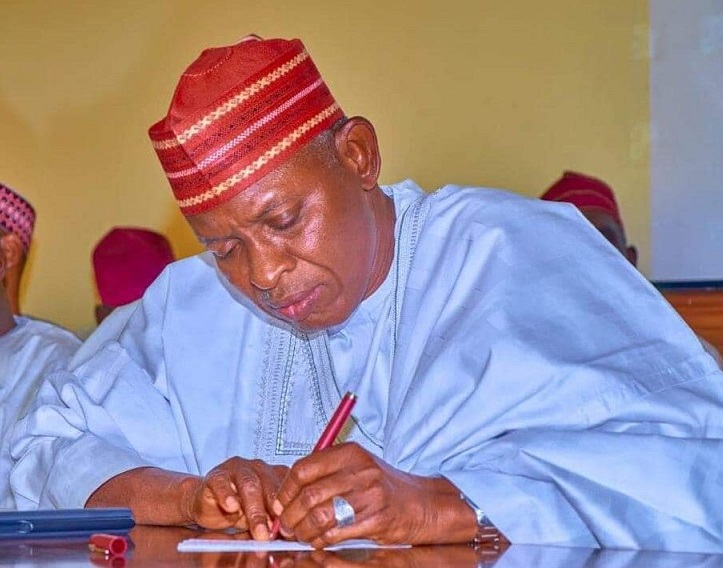
Gov Yusuf suspends aide over controversial comment on Kwankwaso’s alleged defection

By Uzair Adam

Kano State Governor, Abba Kabir Yusuf, has ordered the immediate suspension of Ibrahim Rabi’u, a Senior Special Reporter attached to the Ministry of Transportation, over what the government described as unguarded and inflammatory remarks.

The suspension followed a recent statement issued by Rabi’u, in which he allegedly spoke on the rumoured defection of Senator Rabiu Musa Kwankwaso to the All Progressives Congress (APC).

The statement, which surfaced on Saturday, was widely circulated and attributed to Kwankwaso — a claim both the former governor and the New Nigeria People’s Party (NNPP) have since disowned.

The Secretary to the State Government, Alhaji Umar Farouk Ibrahim, announced the suspension on Saturday, stating that a query has also been issued to the aide.

In a statement signed by Sanusi Bature Dawakin Tofa, spokesperson to Governor Yusuf, the government firmly distanced itself from the claim, noting that the controversial statement was made solely by Rabi’u and not on behalf of the state government.

The government reiterated that only the Commissioner for Information and Internal Affairs, Comrade Ibrahim Garba Waiya, is authorised to speak for the government, while the Director General, Media and Publicity, Sanusi Bature, speaks for the Governor.

“All political appointees are hereby cautioned against making unauthorised public statements, especially those outside their official jurisdiction,” the statement said.

It added that clearance must be obtained before issuing any comment on matters of public concern or politically sensitive issues.

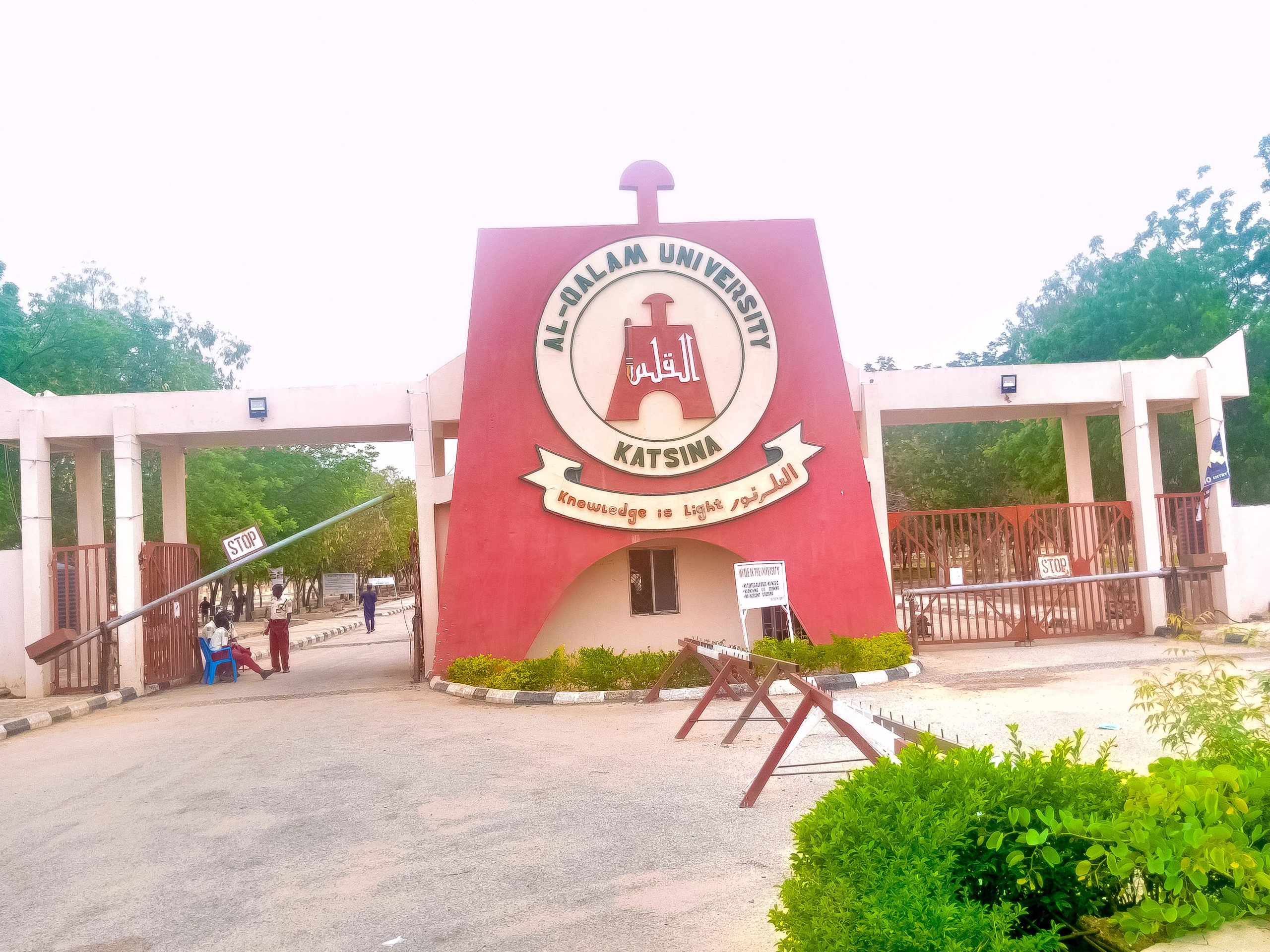
Al-Qalam University secures full accreditation for 13 programmes

By Muhammad Abubakar

Al-Qalam University Katsina has announced that thirteen of its academic programmes have received full accreditation status from the National Universities Commission (NUC), following a visitation in November 2024.

The accredited programmes span the Colleges of Humanities, Education, and Natural and Applied Sciences. 

According to a report released by the NUC, this development means that all degree programmes offered by the university now enjoy full accreditation.

The university expressed gratitude to the Katsina Islamic Foundation—its founders—as well as its Chancellor, Malam Aminu Alhassan Dantata, and members of the Board of Trustees and Governing Council for their support. 

The statement also appreciated the contributions of staff, students, and parents in achieving this milestone.

“This achievement reflects our collective dedication and the growing confidence in our institution,” the management said.

He wanted to stay until housemanship happened

By Oladoja M.O

Adeoye Hussain Chukwuebuka came in glowing, the kind of glow that only pure purpose can give. Fresh from the furnace of medical college, his results bore the scent of brilliance, his stride the rhythm of someone born to heal. His white coat shimmered in the sterile hallway lights, worn not just as a uniform, but as a covenant. His stethoscope draped around his neck like the bronze serpent lifted in the wilderness, signalling a promise of life to those on the brink of death.

He truly came in, not seeking escape or greener pastures. He came with a fire. A fire to serve, to make an impact, to stay.

But then… housemanship happened.

In just two weeks to the new life, Chukwuebuka’s glow began to dim. Not metaphorically, but literally. His cheeks, once full, shrank. His eyes, once bright, dulled. He was fatter before — not just in body, but in dreams. He came with life. The system began to drain it, slowly, ruthlessly.

At first, sleep became a luxury, unaffordable anymore. Then his sanity. Later, his joy.

Adeoye found himself in a loop of exhaustion so grave it warped reality. He would resume by 8 a.m., and wouldn’t see sleep again for 48 hours — not once, not twice, but repeatedly. As soon as he thought he could breathe, just for a minute, a call would come in — “Come to the ward”, “There’s an emergency”, “You’re needed in theatre.” Again. And again… and again.

His personal life? Hussain could see it walk off him without his approval. Even his relationship that survived the inferno of medical school was broken off simply because there was nothing left of him to give. Not even text messages. Not even voice notes. Nothing. Just like that, a life he already had in play, joyful about, phased off.

Oh! Could he even shake off one of the haunting experiences he forever wished he could have helped with? Adeoye had already been on duty for over 24 hours when an emergency struck. A baby. Not breathing. Even at his lowest point, he could not stand not doing anything to save the situation. His body moved on instinct… he rushed, assessed, and started resuscitation. But five minutes in, the rush wore off. His hands gave up. He couldn’t even lift his arms. His fingers couldn’t form pressure. His own pulse felt faint. And the baby…. The baby slipped away. Left. Not just into death, but into the cracks of a broken system.

And on the report, he had to write the truth — “Could not complete resuscitation due to extreme personal exhaustion.”

That sentence continues to haunt him.

It wasn’t just a failure of strength. It was a failure of structure. And his friends across other hospitals? They were fainting. Collapsing mid-shift. Crying in toilet stalls. Living like machines with rusting gears.

And you would think, with this superhuman sacrifice, the reward would be more than a room could contain.

But no.

The pay was barely enough to survive. But Adeoye said, and meant it — he would take less if it meant he could have a piece of his soul back. If he could breathe. If he could be human. This isn’t about money alone, but about dignity. About survival. About choosing between saving lives and watching his own slip away.

And even if he summons all the strength left in his marrow, there’s still this: no equipment. Oxygen runs out. Monitors don’t beep. Gloves tear. Syringes are blunt. Catheters are scarce. The barest minimum? A luxury. And in that darkness, they still whisper: “Do your best.”

What best? With what tools? With what strength?

Even those who still carry passion like a torch are now shivering in the cold winds of burnout. The system is crushing the very shoulders it leans on.

Why?

The answer is bitter: a workforce too thin to carry a country.

How many doctors are produced yearly? Nowhere near enough. And even among those, only a fraction secure placement for housemanship. Why? Because merit is suffocated by political interference. Only about 20% of placements are based on merit. The rest are claimed by sons of power, daughters of connections, and family friends of politicians. Many brilliant minds, like Adeoye once was, remain stranded, waiting, and wasting.

And yet, those lucky enough to be placed are punished for it. Overworked. Underequipped. Undervalued.

And Adeoye? He really didn’t want to leave. He honestly was determined to stay. He actually wanted to believe. But now? He would give anything to go.

Not for luxury.
Not for pride.
Just to survive.

This is the irony: Nigeria’s housemanship year, which is supposed to be a bridge from classroom to clinic, has become a crucible. Rather than refine, it breaks. Becomes a trapdoor instead of a launchpad. 

And this is not just about Adeoye Hussain Chukwuebuka.
It’s about hundreds. Thousands.
Many of whom came in glowing. Now walking corpses — souls intact, bodies crumbling.

They didn’t want to leave. They really didn’t.
Until housemanship happened.

Oladoja M.O writes from Abuja and can be reached at: mayokunmark@gmail.com

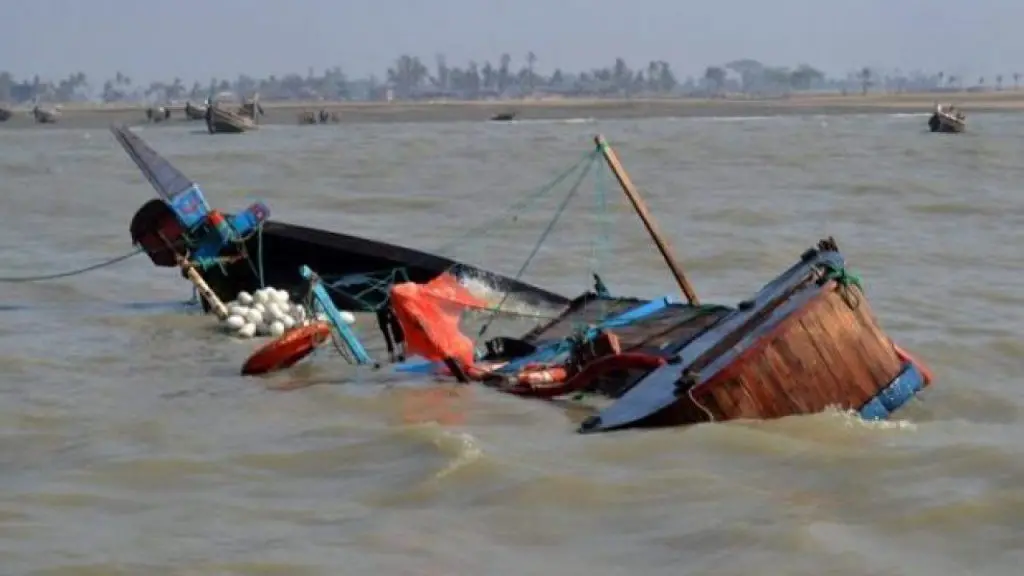
27 people die in Kwara boat accident

By Uzair Adam 

A devastating boat accident has reportedly claimed the lives of 27 passengers in Kwara State. 

The victims were said to be returning from a market trip in neighbouring Niger State when the incident occurred three days ago.

Eyewitnesses and a survivor of the mishap blamed the tragedy on overloading and a sudden heavy storm that struck at night. 

The boat, according to sources, was built to carry about 100 people but often ferries up to 300 passengers during both dry and rainy seasons.

This latest mishap comes just seven months after over 100 villagers died in a similar incident in the Gbajibo community, Kaiama Local Government Area.

Chairman of Kaiama LGA, Abdullah Danladi, confirmed the incident and led a government delegation to sympathise with the bereaved families. 

He warned that the government would no longer tolerate the recurring loss of lives on local waterways and revealed plans to establish a committee to enforce the use of life jackets and ban nighttime boat operations.

Also responding to the tragedy, the Emir of Kaiama, His Royal Highness Muazu Umar, vowed to step up awareness campaigns aimed at promoting safe practices among boat operators and passengers.

Arewa24 TV: A call for moral responsibility 

By Abbas Datti

I am worried by the increasing broadcast of music videos featuring women in revealing, indecent dressing by the popular Arewa24 television station. In sum, it has reached a tipping point where women featured in music videos are sometimes half-naked, in a provocative, obscene dressing. 

Considering its audience, Arewa24, whose programming is widely accessible to viewers of all ages, must be subjected to public scrutiny for continuously airing content that contradicts the Hausa culture and traditional values of our society.

Many of these music videos not only portray women in revealing clothing but also promote gestures and themes that are inappropriate for family viewing. The consistent exposure to such content, especially during prime time when children and young adults are most likely to be watching, raises serious questions about Arewa TV’s commitment to ethical broadcasting and social responsibility. Most of those video songs are being shown during prime time.

Our society, rich in religious moral character and cultural pride, has always upheld values that protect the dignity and modesty of individuals, particularly women. The portrayal of women in such a demeaning and objectifying manner is not only an affront to Hausa Fulani’s traditions but also sends the wrong message to younger generations.

We call on the National Broadcasting Commission (NBC) and other censorship regulatory bodies to urgently investigate some content being aired by the Arewa TV station. Strict measures should be taken to ensure that all media platforms operate within the boundaries of decency, respect, and cultural sensitivity. 

Furthermore, there is a pressing need for media houses to adopt self-regulation policies and prioritise programming that promotes positive values and Hausa cultural identity. Our religion and cultural heritage must not be compromised in the name of entertainment.

The time to act is now. Authorities must rise to the occasion and safeguard the moral fabric of the Hausa people from further extinction.

Abbas Datti writes from Kano via abbasdatti448@gmail.com.

Real Madrid sign Bournemouth defender Dean Huijsen

By Ibrahim Yunusa

Real Madrid C.F. and AFC Bournemouth have reached an agreement for the transfer of Spanish international Dean Huijsen.

The 20-year-old defender will join Los Blancos on a five-year deal, running from June 1, 2025, to June 30, 2030.

The signing comes in response to a series of injuries that have plagued Real Madrid’s backline during the 2024/2025 season.

The crisis has even forced defensive midfielder Aurélien Tchouaméni to fill in as a center-back in multiple matches.

Despite his young age, Huijsen has already built an impressive résumé.

He has featured in Italy’s Serie A with Juventus and Roma, and most recently in the English Premier League with Bournemouth.

His performances have earned him a nomination for the 2024–2025 Premier League Young Player of the Year award.

Real Madrid’s acquisition of Huijsen is seen as a strategic move to reinforce the team’s defensive depth with a promising talent poised for long-term success.

ICC prosecutor Karim Khan steps down amid sexual misconduct probe

By Muhammad Abubakar

The International Criminal Court’s (ICC) chief prosecutor, Karim Khan, has temporarily stepped down from his duties as an investigation into allegations of sexual misconduct against him gets underway.

According to a report by The Wall Street Journal, a junior staff member has accused Mr Khan of forcing himself on her—an allegation he strongly denies. The ICC has not released further details but confirmed that Mr Khan would take a leave of absence to allow for an impartial probe.

Mr Khan has recently been at the centre of international legal proceedings, having sought arrest warrants for leaders of both Israel and Hamas over alleged war crimes committed during the ongoing conflict in Gaza.

In his absence, the ICC announced that Khan’s two deputies will assume his responsibilities to ensure continuity in the Court’s operations.

The investigation is ongoing.

The names live on: Immortalizing Arewa literary and cultural icons

By Salim Yunusa 

When we were neck deep into planning for KAPFEST 1.0, we decided that we would definitely have a poetry slam. Having seasoned spoken word poets on the team who had participated, judged, or simply watched one made planning for it easier. Everyone knew what to expect and what structure would work. The poetry slam was not going to be a filler—it was going to be a central experience of the festival.

Then came the aspect of naming it. Without hesitating, I suggested we either name it the Aminu Kano Poetry Slam or the Mudi Sipikin Poetry Slam. Both names carried weight. Both men represented distinct traditions of intellectualism, activism, and the power of the word. At the end, we settled for the Mudi Sipikin Poetry Slam. It felt right. It felt timely. It felt necessary.

When I informed my friend Mukhtar that we decided to name a segment of our program after his dad, he was elated. Genuinely elated. We didn’t do it because we wanted sponsorship from the family or anything like that. We didn’t do it because we were friends with the family members. We did it because of what Mudi Sipikin stood for—creative expression, social commentary, economics, science, thought, and literary legacy.

Salim Yunusa is the founder of Poetic Wednesdays Initiative and curates the Kano International Poetry Festival. He writes from Zaria, Nigeria.

He was one of those voices that had shaped public thought and intellectual culture in Arewa for decades. So came to pass the first edition of the Mudi Sipikin Poetry Slam. Young people from different places participated. They competed. They poured their hearts out. They won cash prizes. And they made history.

Two of Mudi Sipikin’s children—Mukhtar Mudi Sipikin and Sani Misbahu Sipikin—were there physically. Mukhtar, in a touching gesture, gifted the winners beautiful textile materials. The SSA to the President also showed up and made generous cash donations. It was a moment of recognition. It was a moment of continuity. It was a moment of reclaiming history.

Then came ZABAFEST. I was pleasantly surprised when they named their poetry slam after Dr. Abubakar Imam, the famous writer and intellectual who lived in Zaria. His name, for those who know, is one of the pillars of early Northern Nigerian literature. The slam segment was electric and greatly thrilled the audience. Two of Dr. Imam’s children were in attendance, and they expressed their appreciation for the gesture. It was not just about honoring their father—it was about honoring an entire generation of thinkers who laid the foundations for what we now call Northern Nigerian literature.

And then, just yesterday, the Jos Art and Culture Festival announced that there would be a poetry slam and it would be named after Danmaraya Jos. That news made me deeply happy. Danmaraya Jos was not just a musician. He was a griot. A chronicler. A custodian of memory. And seeing young people take the initiative to immortalize his name within a literary event speaks volumes. It is not about nostalgia. It is about remembering rightly. It is about giving names their due.

During the opening ceremony of the maiden Kano International Poetry Festival in 2024, I emphasized the significance of literary festivals, stating: “Can we have enough festivals? I am thrilled that we are having literary festivals spring up in this part of the country, where we have many unsung literary heroes and heroines. You see, festivals are remarkable opportunities to educate, empower, enlighten, and entertain the public. They are a breath of fresh air, where we reignite the fires of our literary passion, cultivate new friendships and rekindle old ones, and above all, engross ourselves in rich conversations about the arts, culture, music, and poetry.”

This is why naming these events after literary icons goes way beyond immortalizing them. It is a way of preserving their contributions to the literary world. It is a method of introducing their names—and possibly their work—to younger audiences who may never encounter them otherwise. When I curated the poetry exhibition on the life of Alu Ɗan Sidi, I realized how much has been forgotten. For many attendees, it was the first time they were hearing that name, let alone engaging with the literary and scholarly contributions of the emir. But what pleased me most was how that exhibition opened a portal of learning. It sparked appreciation. It generated questions. And it even led to plans for follow-up conversations and more literary and cultural exploration on of our rich literary legacy. That is how preservation begins.

We are in a time where the literary contributions of our ancestors are being neglected or sidelined. Curriculums barely reflect their names. Public discourse often forgets them. Archives are dusty. Monuments are few. So it is refreshing—no, it is necessary—to see young people bringing back these names and personalities to life through poetry, exhibitions, festivals, and critical discussions. This is more than memory work. It is cultural survival. It is literary resistance. It is about stitching our present to our past, so that the future does not forget.

Hopefully, this growing momentum will lead to proper archiving of their works. Hopefully, it will inspire scholars to take interest in their contributions. Hopefully, it will lead to deeper appreciation and appropriate honor for their legacies, in Nigeria and beyond.

Because the names live on. Because we must speak them. Because the griots must never be forgotten.

Open letter to Governor Alhaji Abba Kabir Yusuf

Accelerating Kano’s Future Through Technology and Innovation

Your Excellency, 

I write to you with profound optimism about the transformative potential of technology and innovation to position Kano State as a beacon of progress in Nigeria and beyond. As Africa’s youth population surges, Kano, rich in culture, commerce, and human capital, is uniquely poised to harness this demographic dividend by embracing technology as a catalyst for economic growth, social equity, and sustainable development.  

Your Excellency, I recognise and commend your commendable efforts and those of the Kano State Ministry of Science, Technology, and Innovation, under the visionary leadership of the Honourable Commissioner, in laying the groundwork for transformative projects already in the pipeline. The recent establishment of the Kano State Information Technology Development Agency (KASITDA) is a particularly strategic leap forward, signalling the state’s resolve to institutionalise tech-driven growth. These efforts are a critical foundation, and I urge sustained momentum to ensure their timely execution. 

The recommendations outlined herein aim to complement and accelerate these existing plans, providing additional frameworks to attract global partnerships, amplify local talent, and unlock scalable opportunities. By building upon the Ministry’s initiatives and KASITDA’s mandate, Kano can fast-track its rise as a regional leader in technology-driven development.  

Why Technology Matters

Technology is not merely a tool but a foundation for modernisation. It drives efficiency, creates jobs, and bridges gaps in education, healthcare, governance and more. For Kano, where over 60% of the population is under 25, investing in tech equips our youth with skills to compete globally while addressing local challenges like unemployment, agricultural productivity, and access to public services.  

Globally, nations such as Rwanda and India have demonstrated that prioritising tech ecosystems can spur prosperity. Closer home, Lagos’s emergence as a start-up hub highlights the power of deliberate policy and infrastructure. Kano, with its strategic location, historical significance, and entrepreneurial spirit, can surpass these models by tailoring solutions to our unique context.  

A Blueprint for Transformation

To unlock this potential, I propose the following actionable initiatives:  

1. Establish Kano Tech City

Create a dedicated innovation district with co-working spaces, labs, and incubation hubs. Partner with organisations like Google, Alison – Free Empowerment Platform, Microsoft Africa, Altmentor and more to offer training, mentorship, and funding access. This ecosystem will nurture startups in EdTech, AgriTech, FinTech, HealthTech, etc, sectors critical to Kano’s economy.  

2. Revolutionise Education

Integrate digital skills into school curricula. Launch “Kano Code Clubs” and sponsor scholarships for students pursuing careers in STEM fields. Collaborate with Universities to offer advanced degrees in emerging technologies, ensuring a pipeline of skilled talent.  

3. Upgrade Infrastructure

Prioritise broadband expansion, especially in rural areas, and deploy solar-powered tech centres to overcome energy challenges. Reliable internet and electricity are non-negotiable for attracting global investors.  

4. Enact Innovation-Friendly Policies

Offer tax breaks for tech start-ups, streamline business registration, and establish a regulatory sandbox for testing solutions. Launch a Kano Innovation Fund to provide grants and venture capital. Some Innovation-Friendly Policies are outlined below;

-Tax Incentives & Financial Support

  • 5-Year Tax Holiday: Exempt early-stage start-ups (0–3 years) from corporate income tax, PAYE, and land use charges. 
  • Investor Tax Exemptions: Offer 100% capital gains tax relief for investments in Kano-based tech start-ups. 
  • R&D Grants: Fund 50% of R&D costs for startups in priority sectors (AgriTech, EduTech, renewable energy).
  • Kano Equity Fund: Establish a state-backed venture capital fund to co-invest in high-potential startups, matching private investments 1:1.  

-Ease of Doing Business

  • 24-Hour Start-up Licensing: Create a dedicated tech desk at the Kano Investment Agency to fast-track business registration, licenses, and permits. 
  • Regulatory Sandbox: Allow start-ups in FinTech, HealthTech, and mobility to test products for 12 months without full regulatory compliance. 
  • Land Grants: Allocate subsidised land in Kano Tech City to start-ups and investors who commit to hiring at least 60% local talent.

-Talent & Immigration

  • Tech Talent Visa: Partner with the Federal Government to expedite visas for foreign founders, engineers, and investors relocating to Kano. 
  • Residency Rebates: Offer 50% discount on residency fees for startups that train and hire 100+ Kano youths annually.  

-Market Access & Growth

  • Government Procurement Quota: Mandate 20% of state procurement contracts (e.g., e-governance tools, agri-supply chains) to be awarded to local tech startups.
  • Export Incentives: Subsidise Saas (Software-as-a-Service) startups to scale across Africa by covering 30% of their cross-border marketing costs.  

-Investor Confidence & Exit Opportunities

  • Investor Matchmaking: Host quarterly pitch sessions connecting startups with angels and global VC networks.
  • Acquisition Support: Legal and financial advisory subsidies for startups exiting to foreign or local acquirers.  

-Sector-Specific Boosts

  • AgriTech Subsidies: Free state-owned farmland for AgriTech startups piloting IoT-enabled irrigation or crop-monitoring drones.
  • AI Ethics Framework: Develop Nigeria’s first state-level AI governance guidelines to attract ethical tech firms and global grants.  

-Long-Term Stability

  • 10-Year Policy Guarantee: Legislate a “Kano Innovation Charter” to lock in incentives beyond political cycles, ensuring investor confidence. 
  • Kano Tech Ambassadors: Appoint youth innovators as global ambassadors to showcase success stories in international media.  

5. Host Annual Tech Conferences

Showcase Kano’s potential through events like “Kano Innovates,” attracting investors, entrepreneurs, and thinkers. Celebrate local success stories to inspire a culture of innovation.  

Attracting Investment

A thriving tech ecosystem signals stability and opportunity. By cultivating homegrown talent and infrastructure, Kano will attract investors seeking opportunities in untapped markets. Public-private partnerships can further de-risk investments, while success stories will generate organic interest.  

A Call to Legacy

Your Excellency, this vision demands bold leadership. Imagine a Kano where farmers use drones to monitor their crops, artisans sell their products globally via digital platforms, and students use AI to solve community problems. Championing this agenda will secure Kano’s place as a hub of African innovation, creating jobs, reducing poverty, and inspiring generations.  

The time to act is now. Let us collaborate with stakeholders, businesses, educators, and youth to build a Kano that leads, not follows.  

Abubakar Sadiq Umar writes from Kano and can be reached via email at aserdeeq@gmail.com