Month: May 2025

The misdiagnosis of a nation

By Oladoja M.O

 There is a sickness far graver than malaria, deeper than cancer, and deadlier than an undiagnosed pandemic: it is the sickness of perception. A tragic, self-inflicted malaise where men and women, intoxicated by their bitterness, misread the vital signs of a nation and call it death. 

Nigeria, that African giant, that phoenix that has refused to be buried by dust or drowned by storms, stands misdiagnosed not by its enemies, but by its sons and daughters. They call for good governance, a sacred right, yet in the same breath, they auction the dignity of their fatherland for applause from foreign balconies. Climbing the stages of international conferences not as ambassadors of hope, but as broadcasters of decay, believing that to light their ambitions, the whole house must first be burned.

Yes, there are wounds, visible scars of leadership missteps and bureaucratic fatigue. Yes, the body occasionally limps, gasping for cleaner governance, for a fresher breath of accountability. But to declare her terminally ill? To parade her on global platforms like a festering corpse before she has even sneezed her last? This is malpractice of the highest order.

And yet, even as they wail, Nigeria births victories so luminous they should blind the eyes of every doubter.

In 2024, while cynics sharpened their tongues, Nigeria quietly pulled off the Dangote Refinery miracle. The largest single-train refinery in human history roared into operation. Built on African soil, by African hands, it shattered the historic curse of crude export dependency. Now, Nigeria refines for itself, and soon, for much of Africa. That is not a dying breath. That is the heartbeat of an empire in rebirth.

Even as global markets shook and economies shrank, Nigeria executed one of the most daring economic surgeries in modern African history: unifying its foreign exchange market in 2023, consolidating multiple exchange rates into a single one. The International Monetary Fund, the World Bank, and even the Wall Street Journal stood still in reluctant applause. The Nigerian naira, which was once battered by artificial valuations, finally had its freedom to fight fair. It stumbled at first, as all warriors do. However, today, stabilisation is becoming a new reality, not a distant hope.

In health, the same nation that armchair critics mock has scored historic breakthroughs. Under the leadership of Professor Muhammad Ali Pate, Nigeria has launched one of the world’s first national rollouts of the Oxford R21 malaria vaccine, a game-changing move in a country that accounts for the highest malaria deaths globally. 

Again, Nigeria has turned pain into policy. The federal government, under this administration, declared a Health Sector Renewal Compact in late 2023 (PVAC), marshalling partnerships with global giants like the World Bank and Bill and Melinda Gates Foundation, channelling billions into revamping healthcare delivery, local vaccine production, and training health workers at an unprecedented scale. No more is health an afterthought; it is now a frontline battle Nigeria is visibly winning. While others talk, Nigeria saves lives. While others point fingers, Nigeria vaccinates its future. 

Infrastructure? While “first-world” cities debate electric railways, Nigeria’s megacity, Lagos, launched its Blue Line Rail in late 2023, the country’s first electric-powered intra-city rail system. A steel artery now pulsing through a once-choked metropolis, easing congestion, breathing new possibilities. In Kano, Rivers, Abuja, and Ebonyi States, massive roads, bridges, airports, and industrial parks rose from the dust — monuments to silent nation-building.

Policy? Courageous policies thundered through governance corridors: the subsidy removal in 2023, ending decades-old economic black hole that bled over $10 billion annually. In its place: strategic investments in health insurance for the vulnerable, transport subsidies for the poorest, and agricultural revolution initiatives. The world’s harshest critics acknowledged it, but the nation’s sons spat on it, too drunk on their self-righteous venom.

In education? Nigeria has ripped the old rulebook. In 2023, the Student Loan Act was signed into law—an audacious leap toward democratising education. For the first time, children of farmers, traders, and artisans now have a gateway into universities, polytechnics, and colleges of education without fear of crushing tuition fees. 

As of 2024, the first batch of beneficiaries has received their loans under the Nigerian Education Loan Fund (NELFUND), breathing hope into homes where education once felt like a broken dream. Now, a total of 525,936 students have registered on the loan platform, with 445,015 applicants successfully applying for financial assistance, representing an 84% success rate for student loan applications under the scheme.

Meanwhile, the accreditation of degrees has also been digitised, with Nigeria becoming the first in Africa to automate this critical gatekeeping process fully. New private universities have sprouted like fresh shoots, expanding access and excellence, whilst Nigerian universities are climbing global ranks. 

They call for “change” yet campaign on the ruins of hope itself. They drape themselves in victimhood, seeking pity instead of respect. The so-called “obedient” torch-bearers, the tribe of Peter Obi, shout of patriotism while waltzing through global forums, slandering their homeland, reducing Nigeria, a giant stirring from slumber to the caricature of a failed state, just to score a few cheap political points.

Calling out leadership is democracy; Denigrating your nation is betrayal.

One builds; the other burns.

Nigeria does not need saviours who love her only when she shines. She needs sons and daughters who hold the line when the storms rage, who sing her greatness even when she falters, who plant seeds of hope, not thorns of despair, into her soil.

To those who mistake criticism for patriotism, remember:

The world does not respect nations that cannot respect themselves.

Call out your leaders.

Demand reform.

March for justice.

But never sell your mother for the price of your pride.

Because when the dust of time settles, and history opens her immortal ledger, it will not be your complaints she remembers, it will be your loyalty.

Oladoja M.O writes from Abuja and can be reached via mayokunmark@gmail.com.
How I shook hands with a bandit leader and lived to spill the tea

By Abdulrahman Sani  

It started like any other routine assignment. A simple task in a place that, on paper, seemed no different from the others. I was sent to a remote village in the heart of the North West, tasked with completing an enumeration in a region that was increasingly known for its volatile security situation. But what I didn’t realise then was that this seemingly innocuous assignment would lead me straight into the heart of danger.

The village, Rugar Yashi, sat on the fringes of the wilderness, far from the usual path of most travellers. The journey had been long, but I arrived early enough to begin work without delay. The protocol for entering any enumeration area was clear. 

Before stepping foot into the village, I was to call my security contact to get a briefing, obtain clearance, and receive a pass that would ensure my safety. I dialled his number repeatedly, but there was no answer. I tried once more, but the line remained dead. Frustration rose within me, but it was quickly overshadowed by the realisation that I had no choice but to proceed.

I wasn’t new to the idea of security checks. Over time, I had come to view the process as a mere formality, a minor inconvenience in the grand scheme of things. Security clearance was just another uncomfortable routine, a small hurdle before getting to the heart of the work. The reality of how precarious the situation honestly was hadn’t fully sunk in. In my mind, it was just another remote village, no different from the countless others I had visited. Little did I know, I was about to step into the lion’s den.

The Village on the Edge of a Whisper

Rugar Yashi wasn’t on any tourist map. You wouldn’t stumble upon it unless you were sent there or running from something.

The place looked serene, almost cinematic. It was tucked neatly between rustling trees and the distant hum of wilderness. I walked in alone, unseen by the world, accompanied only by a curious blend of optimism and unawareness.

I didn’t meet him in the village.

I met him at a farm by accident.

He was tending to something near a stand of goruba trees. I greeted him and mentioned I needed a cutlass to slice through one of the fruits. Without hesitation, he handed me his.

It was only after I introduced myself, explaining why I had come and what I was doing, that he nodded and said simply,

“I’ll guide you.”

That was it.

No suspicion. No resistance. Just a quiet offer that, in hindsight, held far more weight than I realised.

And so we began.

He led. I followed.

At first, he was nothing more than a helpful local. His voice was calm, measured. He spoke sparingly, and when he did, it was often with a faint, unreadable smile. The villagers treated him with a mixture of casual reverence and respect. Nothing overt. Just the kind of nods, glances, and silences that said more than words ever could.

Of Questions and Rifles

As we walked through Rugar Yashi, I quickly noticed something odd. The men around us were armed. Their rifles glinted in the sun as they moved with deliberate ease. Their eyes darted around, scanning the horizon as if waiting for something—anything—out of the ordinary. Some of them offered brief nods of acknowledgement to my guide, a quiet understanding passing between them that I couldn’t quite place.

At first, I dismissed it. I assumed they were simply vigilantes, locals tasked with protecting their community. The village seemed peaceful. The people were humble. And my task was simple. What could go wrong?

We continued through the village, and I conducted my enumeration with the usual questions—family members, occupations, and living conditions. He knew exactly where to take me. At one point, I inquired about his family, which was part of the enumeration form. He smiled and said that his brother, Aliyu, was studying at ABU Zaria. I nodded and moved on.

It sounded plausible enough.

After the work was done, he walked me to the edge of the village where a group of armed men stood, exchanging hushed words and scanning the trees. As we passed, they gave us more than a passing glance. He shook my hand, gave me his contact information, and said casually,

“Call me next time before you come. It’s safer that way.”

I smiled, nodded, and walked away. The road back to the main track was quiet. Just a few goats, wind in the trees, and my own footsteps.

The Call

Then my phone rang.

It was the security contact I had been trying to reach all morning. His voice came through tense and unfiltered.

“Where are you?”

“Done. Just leaving Rugar Yashi.”

There was a pause, and then his voice dropped.

“Who did you work with?”

I gave a brief description. His voice turned sharp.

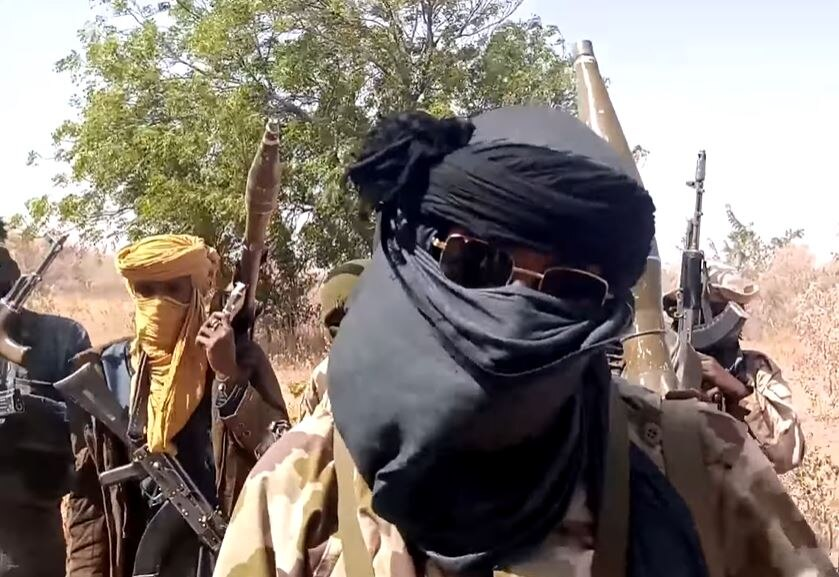
“That man you were with, Labbo Jauro? He’s one of the most notorious bandit leaders in the region. His brother isn’t at Zaria. He was killed months ago. Deep in the forests of Niger.”

Silence.

The kind that makes your spine go cold.

I had shared a blade with him and walked through the village under his protection. Sat beside him in quiet moments. All while unknowingly under the watchful eyes of armed men who could have changed the course of my story in an instant.

The glances. The nods. The stillness in the air. It all made sense now.

But at the time, I thought I was just doing my job.

Reflection on the Edge

Looking back, I wonder whether he knew what I didn’t. Whether he had already decided for me before I’d even finished cutting that goruba fruit. Or whether, by some strange twist of fate, I had walked straight into danger and was spared not by wisdom or caution, but by simple, Divine grace.

That day in Rugar, Yashi changed how I saw the work. It blurred the line between routine and risk. It reminded me that, sometimes, the man offering help in the fields may be more than just a friendly farmer.

Sometimes, he’s the one everyone else fears.

And sometimes, he’s the reason you make it back home alive.

Postscript: This story is based on a true account. The subject’s name has been omitted, and the narrative is told in the first person by the author. Specific details have been altered or excluded to protect privacy and ensure safety.

Abdulrahman Sani can be contacted via Twitter @philosopeace.

Kano judicial commission demotes registrar, penalizes others over misconduct

By Anwar Usman

The Kano State Judicial Service Commission has taken disciplinary action against a court registrar and two other staff over misconduct.

This is contained in a statement issued by Mr Baba Jibo-Ibrahim, the spokesperson of the Kano State Judiciary.

He said the decision was among the resolutions reached at the JSC’s 82nd meeting on Wednesday.

He said the commission, under its mandate to ensure discipline and integrity, adopted the recommendations of the investigation panel established by the Judiciary Public Complaints Committee.

The commission resolved to apply a series of disciplinary measures and administrative decisions.

The statement in part reads “Court Registrar Salisu Sule was demoted by one grade level after the JPCC found overwhelming evidence of misconduct in four separate complaints bordering on insults, intimidation, and abuse of office.

“The two reinstated magistrates are Chief Magistrate Mustapha Sa’ad-Datti and Chief Magistrate Rabi Abdulkadir,” Baba jibo further stated that, investigation shows that Sule consistently used the name of the judiciary to harass and intimidate the public while discharging his duties.

“The JSC had issued a warning letter to him dated Dec.19, 2024, and has now resolved to impose this stiffer sanction, demoting him by one grade level with immediate effect,” he said.

The statement added that after careful review, the Commission resolved that Mustapha Sa’ad-Datti and Rabi Abdulkadir should resume sitting and continue with their judicial duties.

“They are, however, admonished to uphold the highest standards of integrity, diligence, and professionalism in the discharge of their judicial functions,” the statement said.

Jibo-Ibrahim said Ahmad Aliyu Danmaraya, a Principal Registrar attached to the High Court Headquarters in Kano, was directed to proceed on compulsory retirement with immediate effect for acts of gross misconduct.

“The JPCC found Danmaraya guilty of forging an affidavit, affixing the High Court stamp and seal, and inscribing a fake receipt number, knowing fully well that he is not a commissioner for oaths,” he said.

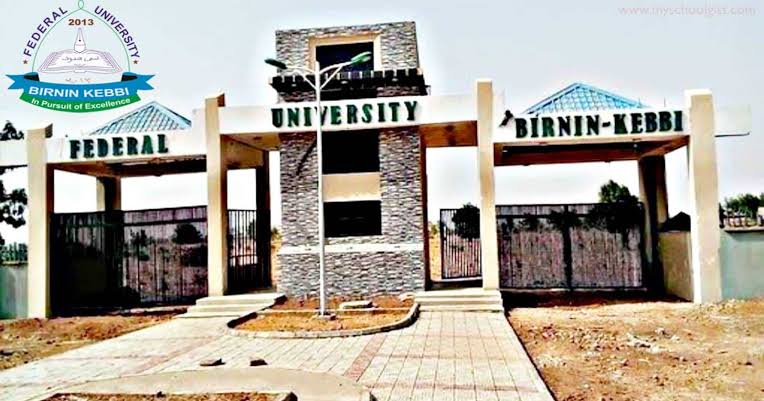
Federal University Birnin Kebbi gets new registrar, four professors

By Muhammad Abubakar

The Governing Council of Federal University Birnin Kebbi (FUBK) has approved the appointment of Barrister Abdulkadir Abubakar as the new Registrar of the University for a five-year term.

The decision was made at the Council’s 29th meeting held on Thursday, May 22, 2025, under the leadership of the Pro-Chancellor and Chairman of Council, Col. Abdulmumini Aminu (Rtd.). The appointment follows the recommendation of the Joint Senate and Council Selection Board.

Barr. Abdulkadir brings to the position 18 years of experience in university administration. He joined FUBK in 2015 as a Senior Assistant Registrar and became Deputy Registrar in 2022. Before this, he served at Kebbi State University of Science and Technology, Aliero, and at the College of Basic and Advanced Studies, Yelwa-Yauri.

A legal practitioner with a Master’s degree in Petroleum Law and Policy from the University of Dundee, UK, Abdulkadir also holds a Bachelor of Law in Common and Islamic Laws from Usmanu Danfodiyo University, Sokoto. He was called to the Nigerian Bar in 2009.

Until his recent appointment, he headed the Legal Unit of FUBK and served in various administrative capacities, including TETFund Desk Officer and Assistant Secretary to the Council.

In a related development, the Council also approved the promotion of four academic staff to the rank of Professor and three others to Associate Professor. The newly promoted Professors include Dr. Bello Bala Diggi (Intellectual History), Dr. Mohammed Bashar Danlami (Virology), Dr. Muhammad Muazu Yusuf (Development Economics), and Dr. Yahaya Tajudeen Olarenwaju (Cell Biology and Genetics).

The new Associate Professors are Dr. Halima Muhammad Bande (Business Administration), Dr. Abdullahi Umar (Geography), and Dr. Ali Sherrif Kabara (Accounting).

The appointments of Professors Diggi and Danlami are effective from January 1, 2024, while those of Professors Yusuf and Olarenwaju take effect from January 1, 2025.

A brief tribute to Malam Maikudi Cashman

By Muhsin Ibrahim

Talk about Kannywood and, often, some people who are scarcely literate or have little knowledge of film will dismiss the entire industry as a sanctuary for good-for-nothing folks. But that is not always true.

I first met the late Malam Umar Maikudi (also known as Cashman) at the 2019 Kano Indigenous Languages of Africa Film Market and Festival (KILAF) conference. We connected immediately, discussed various issues, and ultimately exchanged phone numbers.

Although Malam was old enough to be my father, we maintained a relatively cordial relationship. He would send me some of his writings, and I would send him mine in return. We also met a few more times during subsequent editions of the KILAF conference. I am sure Alhaji Abdulkarim, the CEO of Moving Image and the organiser of KILAF, will dearly miss Cashman.


He was among the few brilliant individuals blessed with the talent to blend theory and practice seamlessly, and he excelled in both. 

Malam was a lecturer at Nuhu Bamalli Polytechnic, Zaria, and President of the Motion Picture Practitioners Association of Nigeria (MOPPAN). 

Malam was a bridge between Kannywood and Nollywood, as he featured in films from both industries. Many Kannywood viewers may not be very familiar with him, though.

Cashman only recently started featuring in more mainstream Kannywood productions, such as Gidan Badamasi and Labarina. As a lawyer in the latter (Labarina), who is expected to code-switch and code-mix, you can tell this actor is definitely educated. He was.

His death is a significant loss to his family, of course, and to the Nigerian entertainment industry. May Allah forgive his shortcomings and grant his loved ones the fortitude to bear the loss, amin.

Muhsin Ibrahim, PhD, is an academic and writes about Nigerian films. He can be contacted via muhsin2008@gmail.com.

CGC Adeniyi named vice chair of NRMG advisory body at Nigeria PR Week

By Sabiu Abdullahi

The Comptroller-General of Customs, Bashir Adewale Adeniyi, MFR, has been appointed as the Vice Chair of the Body of Advisers of the Nigeria Reputation Management Group (NRMG).

The appointment was announced during the ongoing 2025 Nigeria Public Relations Week (NPRW) in Uyo, Akwa Ibom State.

This year’s NPRW, organised by the Nigerian Institute of Public Relations (NIPR), began on May 19 and will run until May 23.

The annual gathering brings together communication professionals, government officials, and other key players to explore how effective communication can support national development.

The Minister of Information and National Orientation, Alhaji Mohammed Idris, formally opened the event on Tuesday, May 20. In his remarks, he restated the administration’s dedication to using strategic communication as a means of strengthening nation-building and drawing investment.

CGC Adeniyi’s new role shows the Nigeria Customs Service’s (NCS) growing influence in the field of public communication.

Adeniyi welcomed the opportunity to contribute to the NRMG’s efforts.

“I consider it a privilege to be part of this important national assignment,” CGC Adeniyi said. “I have full trust in the capacity of this group, and I believe that with the calibre of individuals involved, a lot can be achieved in reshaping how Nigeria tells her story to her people and the world.”

He will work alongside other prominent figures, including Channels Television Chairman John Momoh, who now serves as Chair of the NRMG advisory group.

Together, the advisory team is expected to support the NRMG’s aim of presenting a unified and credible image of Nigeria both locally and internationally.

Also representing the NCS at the event, the agency’s National Public Relations Officer, Assistant Comptroller Abdullahi Maiwada, presented a paper titled “Advances in Government, Policy and Regulatory Communication.”

His presentation stressed the need for deliberate, multi-platform communication strategies in the public sector. He also shared how the NCS is adopting modern tools to improve public trust and operational transparency.

“The changing dynamics of governance and policy implementation require us to speak clearly, truthfully, and strategically. At Customs, we’ve learned that people don’t just want to be informed, they want to be understood and engaged,” Maiwada noted.

AVM Ibrahim Umaru’s appointment: Square peg in a square hole

By Sani Surajo Abubakar

At the commencement of the 28th Kano State Executive Council on Monday 19th of May, 2025, held at Kwankwasiyya City, Governor Abba Kabir Yusuf presided over the swearing-in of Air Vice Marshal (AVM) Ibrahim Umaru (rtd.) as the new commissioner of Internal Security and Special Services.

His nomination, screening and confirmation by the Kano State House of Assembly and subsequent swearing-in followed the resignation of the pioneer Commissioner of the Ministry some few weeks back.

The new commissioner was the immediate past Director-General of the Special Service Directorate, Kano Government House, responsible for coordinating the operations of security agencies and other engagements critical to safer living in the state.

Before his debut in the government business of Kano State, he was a retired Airforce Officer with vast experience in peacekeeping operations and national assignments both locally and internationally.

He is passionate and committed to youth empowerment and entrepreneurship skills development, with a firm belief that empowering youth will help improve the living standard of the state’s residents and boost rapid socioeconomic development and prosperity.

As a retired Air Vice Marshal, his new position as commissioner will bring a wealth of experience from his illustrious military career in curbing security challenges in the state.

 Indeed, his sojourn as Director-General of the Special Service Directorate and subsequently as commissioner underscores the state government’s commitment to harnessing expertise from various fields to drive progress.

The appointment of Air Vice Marshal (AVM) Ibrahim Umaru as Commissioner in Kano State Government has sparked widespread interest and debate. As a seasoned security expert, AVM Umaru’s induction into the state executive council is seen by many as a strategic move to leverage his expertise in bolstering security and development initiatives in the state.

Many observers view AVM Umaru’s appointment as fitting, given his background and the current security challenges facing Kano State. His experience in security matters is expected to significantly contribute to the state’s efforts in maintaining peace and stability.

The appointment seems to align perfectly with the needs of the state, making it a case of a “square peg in a square hole.”

With AVM Umaru on board, the Kano State Government will likely benefit from his strategic insight and operational expertise. His role could be pivotal in enhancing Security Measures.

He will also utilize his military background to strengthen security frameworks and responses, advise on policy matters, provide informed counsel on security and development policies, and Facilitate dialogue and cooperation between security agencies and local communities.

AVM Ibrahim Umaru’s appointment appears well-considered, aligning his skills with the state’s needs. As he takes on this new role, expectations are high for meaningful contributions to Kano State’s security and development landscape. Only time will tell how effectively he navigates the complexities of his new position, but the outlook seems promising.

Congratulations, AVM, and may your appointment yield positive results for our dear state, Kano.

Sani is the Deputy Director of Public Enlightenment at the Kano Government House.

Nigerians stranded in Saudi Arabia: Reps urge government to take action

By Anas Abbas

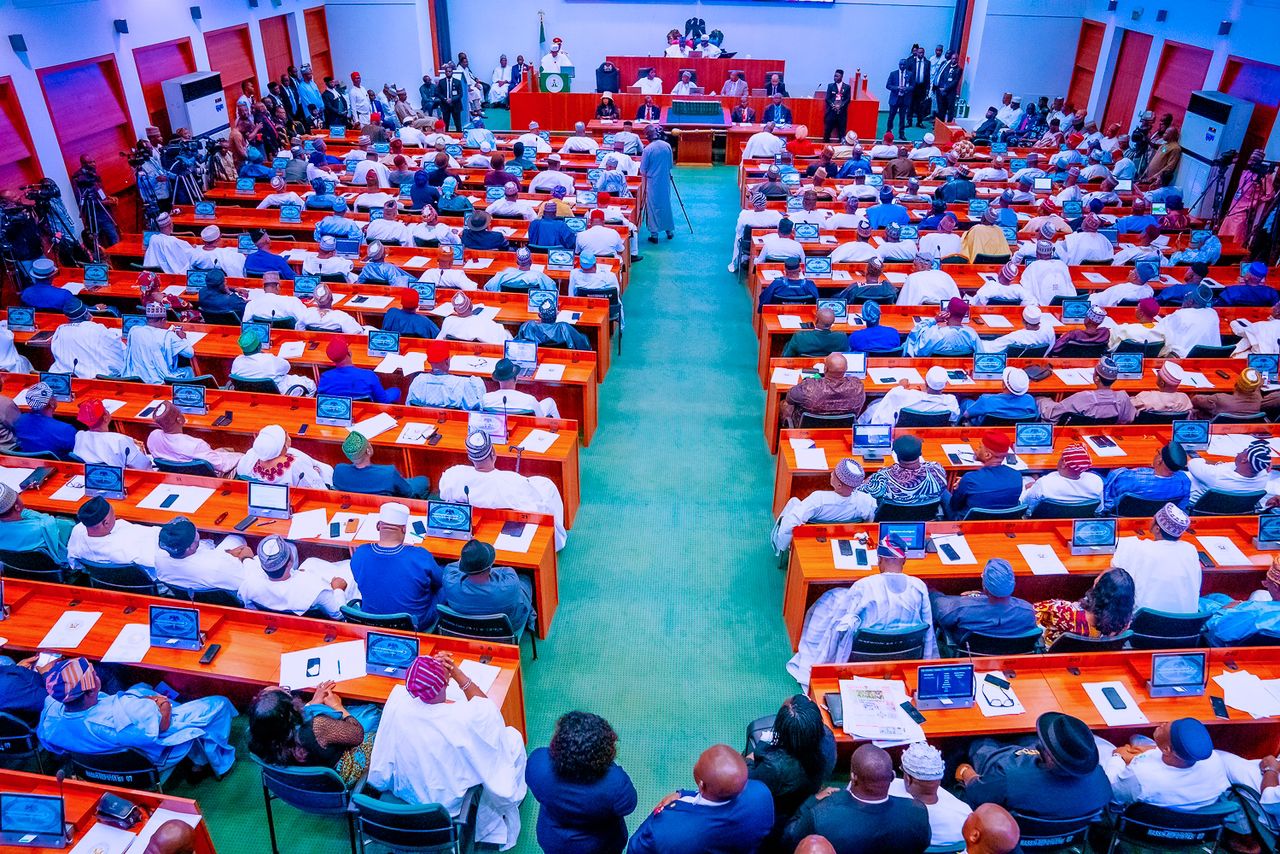
In a significant move, the House of Representatives has urged the federal government to take action to assist Nigerians residing in Saudi Arabia who have been adversely impacted by recent labour and immigration reforms implemented by Saudi authorities.

This call for intervention came during a plenary session on Wednesday, following a motion presented by Rep. Muhammad Bello Shehu (NNPP, Kano). 

Rep. Shehu highlighted that the Saudi government introduced substantial reforms in August 2024, which have had a profound effect on labour laws, impacting numerous Nigerians who have lived in the country for years and often support large families.

The reforms include changes to the definitions of “Assignment” and “Resignation,” the discontinuation of work permit renewals for domestic workers, and various regularisation processes. As a result, many Nigerians have lost their jobs, while others are burdened with exorbitant fees for renewing their documents and work permits.

“Some domestic workers, including drivers, have been laid off and are unable to afford the renewal fees. Many find themselves unable to leave the country due to outstanding overstays,” Rep. Shehu explained.

He also noted that the Urban Renewal aspect of the reforms has further complicated matters, as affordable rental properties have been demolished to make way for urban development, exacerbating the hardships faced by these individuals and forcing their children out of school.

The lawmaker also criticised, particularly the Ministry of Foreign Affairs, for not sufficiently engaging with Saudi authorities to secure an amnesty window for affected citizens or propose viable solutions for their evacuation and return to Nigeria.

In light of these challenges, Rep. Shehu urged Saudi officials to consider granting amnesty to Nigerians who wish to return home. 

Following the motion’s adoption, the House directed its committees on Foreign Affairs, Interior, Diaspora, and Muslim Pilgrimage to collaborate with the Executive Arm. They are tasked with negotiating an amnesty option for those willing to return and ensuring their safe evacuation, with a report due back to the House within six weeks.

Academic, MOPPAN president Maikuɗi Cashman passes away

By Abdullahi Mukhtar Algasgaini

Mallam Umar Maikuɗi (popularly known as Cashman), a lecturer at Nuhu Bamalli Polytechnic, Zaria, and President of the Motion Picture Practitioners Association of Nigeria (MOPPAN), has passed away after a prolonged illness. He died this evening at the Ahmadu Bello University Teaching Hospital (ABUTH).

Colleagues, associates, and the entertainment industry mourn his passing, praying for Allah’s forgiveness and for him to be granted Al-Jannah al-Firdaws.

Until his death, Maikuɗi was an active academic and a key figure in Nigeria’s motion picture industry.

Funeral arrangements will be announced by the family.

Kano censorship board shuts down 8 open theaters for violating regulations

By Abdullahi Mukhtar Algasgaini

The Kano State Censorship Board has revoked the licenses of eight open theaters for repeatedly violating operational guidelines.

The Board’s Executive Secretary, Alh. Abba El-Mustapha, announced the decision after a management meeting, citing failure to comply with regulations.

The affected theaters include:

1. Hamdala Entertainment (Ungoggo)

2. Lady J. Entertainment (Sanya Olu)

3. Dan Hausa Entertainment (Sanya Olu)

4. Ni’ima Entertainment (Zungeru)

5. Ariya Entertainment (Abedi Sabon Gari)

6. Babbangida Entertainment (Balatus)

7. Harsashi Entertainment (Ebedi Sabon Gari)

8. Wazobiya Entertainment (Sanya Olu)

Abdullahi Sani Sulaiman, the Board’s Information Officer, stated that the action reaffirms the government’s commitment to enforcing entertainment laws.

The Board, mandated to regulate open theaters, has previously suspended defaulters to ensure industry compliance. Authorities warned that further violations would attract stricter penalties.