Month: May 2025

Prominent Kaduna pastor Azzaman David dies in road crash

The Christian community in Nigeria has been thrown into mourning following the death of Reverend Azzaman David, a popular Kaduna-based preacher and staunch Christian faith advocate.

Rev. Azzaman, who was the senior pastor of The King Worship Chapel and Ministry, Inc., died on Saturday in a fatal car accident while traveling from Makurdi, Benue State, back to Kaduna.

His death has caused deep shock through the religious community, particularly among young Christians and scholars who followed his theological discussions online.

Though details surrounding the incident are still emerging, Rev. Mohammed Mohammed, a close associate of the late cleric, confirmed his passing via a Facebook post.

“REV Azzaman Azzaman had an accident on his way back from Makurdi. He died alone in the car. May he rest in peace. May the Lord comfort us in the name of Jesus,” the post read.

Known for his strong presence on Facebook, Rev. Azzaman gained widespread recognition for his approach to religious debates, often engaging Muslim scholars and atheist thinkers.

Tributes have continued to pour in since news of his passing broke.

He is survived by his wife and children. Funeral arrangements have not yet been made public.

President Tinubu approves key appointments across federal agencies

By Abdullahi Mukhtar Algasgaini

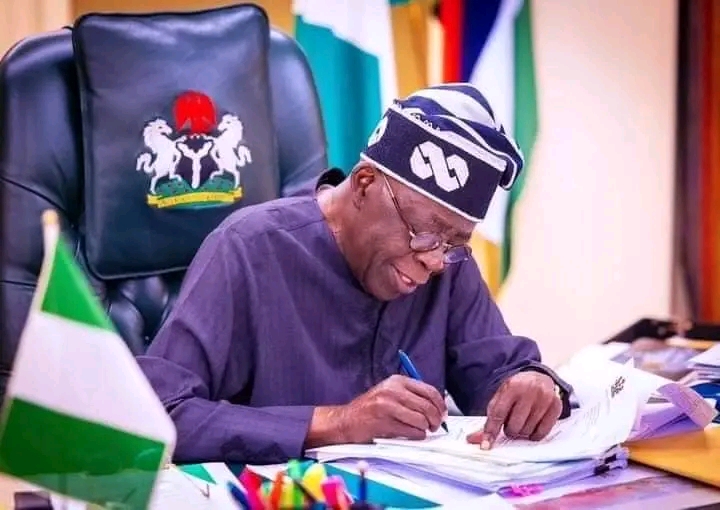
President Bola Tinubu has approved the appointments of several prominent Nigerians to head key federal agencies and institutions. The appointments, which reflect a mix of political, professional, and regional considerations, aim to strengthen governance and service delivery across sectors.  

Among the notable appointees are former Senate President Sen. Ken Nnamani (Enugu) as Chairman of the Nigerian Institute for Policy and Strategic Studies (NIPSS), and former Edo Deputy Governor H.E. Philip Shaibu as Director-General of the Nigerian Institute of Sports.

Other appointments include Omobolanle Akinyemi Obe (Ondo) as DG of the National Senior Citizens Centre, Dr. Segun Aina (Osun) as DG of the Academic Staff College of Nigeria,

and former Senate President Sen. Anyim Pius Anyim (Ebonyi) as Chairman of the National Merit Award Committee. 

Additionally, Hon. (Dr.) Asabe Vilita Bashir (Borno) was named DG of the National Centre for Women Development, while Sen. Jalo Zarami (Yobe) and Hon. Dr. Joseph Haruna Kigbu (Nasarawa) were appointed as Federal Commissioners in the National Population Commission

The President expects the new appointees to bring their expertise and commitment to advancing Nigeria’s developmental goals in their respective roles.

Niger police rescue four hostages from kidnappers

By Anas Abbas

The Niger Police Command has announced the successful rescue of four individuals who were kidnapped from Sarkin-Pawa in the Munya Local Government Area of the state.

The announcement was made in a statement by the Public Relations Officer, SP Wasiu Abiodun, on Saturday in Minna.

According to reports from the News Agency of Nigeria, the kidnapping incident occurred on February 20 at approximately 10 PM, when armed assailants targeted Hayin-Dogo and Dangunu villages.

During this attack, one Usman Daina and four others were taken hostage. Daina was released after two days, but the remaining victims were held captive until their recent escape.

Following the incident, a joint security team launched a series of operations aimed at rescuing the abducted individuals.

Their efforts culminated in success on May 22 around noon, when the victims Deborah Daina, Gambo Amos, Cyprus Titus, and Satti Iko managed to escape from their captors due to the sustained pressure from the security forces.

The rescued individuals were promptly taken to a medical facility for evaluation and treatment before being reunited with their families.

Commissioner of Police for Niger State, Adamu Elleman, praised the joint security team’s bravery and commitment, which led to the successful rescue operation.

He reiterated the police’s dedication to ensuring the safety and security of all citizens in the region.

FG warns against deepfake videos, images targeting president

By Abdullahi Mukhtar Algasgaini

The Nigerian Federal Government has expressed concern over the creation and circulation of deepfake videos depicting the President in a negative light, aimed at tarnishing his reputation.

Mohammed Idris, Nigeria’s Minister of Information, cautioned citizens against using artificial intelligence to manipulate images and videos of the country’s leaders for malicious purposes.

In a report by The Nation, an independent newspaper, the minister stated, “We have observed the use of AI-generated content in both appropriate and inappropriate ways. Imagine sitting somewhere, and someone takes your image, edits it onto another body, and spreads it to damage your reputation.”

He further noted the trend of distorting statements made by the President or other officials, saying, “We’ve seen situations where the President’s words are twisted to mean something entirely different, or where a minister’s statement is misrepresented.”

The minister assured that the government is closely monitoring the situation, emphasizing, “We are exploring ways to sanitize social media platforms without infringing on freedom of speech.”

The warning comes amid growing global concerns over the misuse of AI to spread disinformation and manipulate public perception.

2027 elections or surviving in 2025?

By Abdulhakeem Yetu Zakari

Across Nigeria today, the earth is wet with the blood of innocents. Villages are raided without warning, highways have become death traps and communities live in a cloud of constant fear.

Yet, even as the nation bleeds, much of the political class appears more fixated on the 2027 elections than on saving lives in 2025.
Insecurity has become a cruel backdrop to political ambition—a painful reminder that, for many leaders, the pursuit of power still matters more than the safety and survival of the people.

The current administration, led by President Bola Ahmed Tinubu, was elected on a promise to restore security and revive the nation’s economy. But less than two years into his tenure, insurgency, banditry, and economic instability have remained stubbornly persistent.

What was supposed to be an era of renewed hope has turned into a daily struggle for survival for millions of Nigerians. Despite interventions by security agencies, no significant improvement has been recorded.

Families are displaced from their homes. Schools are shut down. Markets are abandoned. Mass graves are dug with horrifying regularity.
States such as Zamfara, Benue, Plateau, and Borno have become synonymous with unending violence.

Our beloved Nigeria—once full of hope and promise—is fast becoming a theatre of tragedy. Critics argue that government efforts have been largely reactive instead of proactive. Intelligence failures are frequent.

Security operations often come late. Many see a dangerous lack of political will to tackle the root causes of insecurity: endemic poverty, chronic youth unemployment, and deep ethnic divisions.
Without addressing these underlying issues, peace will remain a distant dream.

Yet, even as insecurity deepens, political calculations for 2027 are already underway. Massive defections are occurring across political parties as politicians jostle for advantage and consolidation of power.

Instead of emergency summits on security, we see strategic meetings on how to win elections.
The people, who ought to be the priority, are pushed to the margins of political discourse. Their cries are drowned by the noisy drumbeats of political ambition.

Nigerians deserve better. They deserve leaders who value their lives more than the pursuit of office. They deserve leaders who recognize that every life lost is a national tragedy, not just a statistic.

If current trends continue unchecked, by the time the 2027 elections arrive, Nigeria may have paid a price in blood too heavy to bear—and whatever victory is achieved will be a hollow, shameful one.

Nigeria stands today at a crossroads. The choices made in security, governance, and leadership over the next year will determine whether the country finds its way back to the path of stability and progress—or slips even deeper into violence and despair.

As the blood of innocent Nigerians continues to soak the ground, one question cries out louder than any campaign slogan: Who will listen? Who will act? And when?

The time to choose between survival and ambition is now. Nigeria cannot afford to wait until 2027 to find out what path we chose.

ISWAP attacks Gajibo military base in Borno, kills 6 CJTF members

By Abdullahi Mukhtar Algasgaini

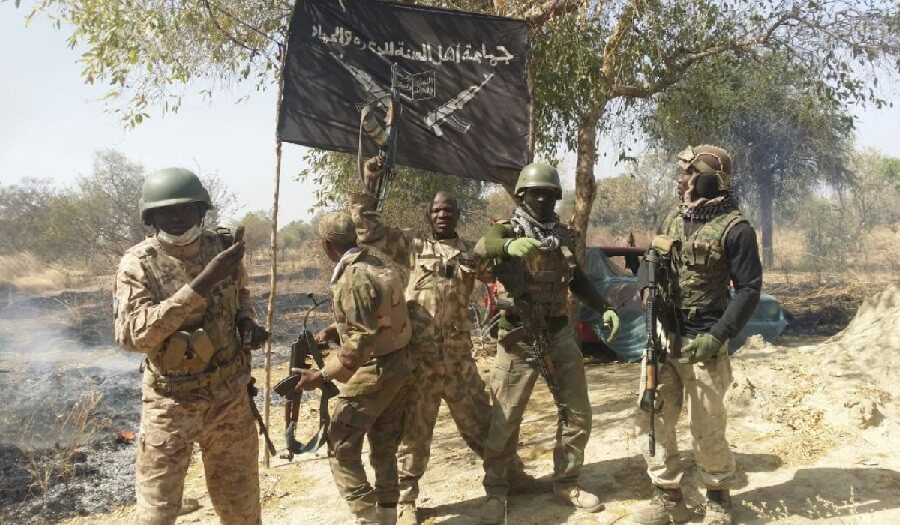
The Islamic State West Africa Province (ISWAP) has released a chilling video confirming its deadly attack on a military base in Gajibo, Borno State, on Thursday.

The footage, published by the Islamic State’s Amaq News Agency, shows two military vehicles engulfed in flames and six motorcycles seized by the terrorists.

Local sources report that six members of the Civilian Joint Task Force (CJTF) were killed in the assault.

The attack appears to be part of a coordinated operation, as another ISWAP unit was simultaneously headed toward Damboa.

Security experts warn that ISWAP is growing increasingly bold, capitalizing on security vulnerabilities in northeastern Nigeria.

The latest assault highlights the persistent threat posed by the terrorist group in the region.

Authorities have yet to issue an official statement on the incident as tensions remain high in the area.

Governor Yusuf orders automatic employment for 84 foreign-trained graduates

By Muhammad Abubakar

Governor Abba Kabir Yusuf has directed the automatic employment of 84 foreign-trained graduates into the Kano State Civil Service, following his administration’s full settlement of their outstanding fees at Near East University, Northern Cyprus.

The graduates, who had been abandoned mid-study after the previous government withdrew scholarship funding, were recently issued their certificates after the state paid N2.24 billion in arrears to the university.

Addressing the students at the certificate presentation ceremony in Kano, Governor Yusuf said the graduates would be immediately absorbed into public service. “These students have suffered enough. Now, they will be given the opportunity to contribute to the growth of our state,” he said.

Among the beneficiaries are medical doctors, nurses, dentists, pharmacists, computer scientists, and biomedical experts — all of whom earned degrees under immense hardship.

The governor’s action is seen as both a humanitarian and developmental gesture, aimed at harnessing the skills of foreign-trained professionals while restoring faith in government-backed education programs.

Education experts have praised the move, describing it as a practical step toward addressing youth unemployment and reversing the brain drain trend.

Tinubu’s economic reforms drive customs revenue to ₦1.3 trillion in first quarter of 2025 — CG Adeniyi

By Sabiu Abdullahi

The Nigeria Customs Service (NCS) has announced that it generated a record-breaking ₦1.3 trillion in revenue during the first quarter of 2025.

This figure marks more than double the ₦600 billion collected within the same period in 2023.

Comptroller-General of Customs, Bashir Adewale Adeniyi, attributed the significant increase to a range of reforms introduced under President Bola Tinubu’s Renewed Hope Agenda.

These comments were disclosed in a soon-to-be-released State House documentary commemorating the President’s second year in office.

According to Adeniyi, the improved revenue performance stemmed from the application of advanced technology, more efficient port operations, tighter control of revenue losses, and an increased emphasis on accountability within Customs operations.

“We collected ₦1.3 trillion in Q1 2025 alone. This is not due to higher import volumes. Imports have dropped due to foreign exchange constraints. What has changed is efficiency, transparency, and enforcement,” Adeniyi said.

He revealed that the Service is nearing the launch of the E-Customs Modernisation Project.

Valued at $3.2 billion, this initiative aims to fully digitise Nigeria’s cargo processing, monitoring, and payment systems across ports and border points.

“We’re laying the foundation to move from a manual, paper-based system to a fully digital service. The E-Customs Project is central to our future. Once fully deployed, we project it will add $250 billion in cumulative revenue over 20 years,” he explained.

The Comptroller-General also spoke about the recent introduction of the Authorised Economic Operator (AEO) Programme, which allows verified importers to enjoy expedited clearance and reduced congestion at ports.

“It’s about trust and efficiency. If you’re compliant, you get green-lane treatment. This is how modern customs systems work globally,” he stated.

In addressing smuggling and loss of revenue, Adeniyi confirmed that the Service had intensified enforcement and recovered over ₦64 billion from previously undervalued or wrongly assessed imports in the past nine months.

He added that major smuggling networks operating through Seme, Idiroko, Katsina, and Sokoto borders have been dismantled.

He noted the effectiveness of joint patrol operations conducted with the Nigerian Army, Department of State Services (DSS), and the Police.

“We’re no longer just chasing smugglers in the bush. We’re using data, surveillance drones, and port intelligence to act in real-time. Once systemic leakages are now being plugged,” Adeniyi said.

To improve trade facilitation and reduce logistics costs, the NCS is accelerating the implementation of the National Single Window — a unified digital platform that will enable importers and exporters to complete transactions with all government agencies from one portal.

“Right now, you deal with up to 15 agencies manually. With the Single Window, you’ll do it all online, in one place. This will slash clearance time and costs,” the Customs chief explained.

He noted that for compliant importers, clearance durations at Apapa and Tin Can Ports have already dropped from 21 days to between 7 and 10 days.

He added that the Service has introduced fast-track procedures for agricultural exports and is partnering with the Nigerian Export Promotion Council (NEPC) to streamline export processes in line with the government’s non-oil export strategy.

Governor Yusuf settles N2.24bn debt, rescues 84 stranded students in Cyprus

By Muhammad Abubakar

Governor Abba Kabir Yusuf of Kano State has brought relief to 84 students abandoned in Northern Cyprus after settling a massive N2.24 billion debt owed to Near East University, paving the way for the release of their academic certificates.

The students were part of a foreign scholarship scheme initiated by former Governor Rabiu Musa Kwankwaso but were left in limbo when the succeeding administration halted funding. The withdrawal left them unable to pay tuition and accommodation fees, effectively trapping them in a foreign country without support.

Governor Yusuf, during a ceremony in Kano, described the situation as a national embarrassment and expressed satisfaction at resolving the crisis. “This marks the end of years of hardship, uncertainty, and humiliation for our children abroad,” he said.

The affected students, including 28 medical graduates and others in health and engineering disciplines, faced legal threats, eviction, and exclusion from classes during the years of neglect. Their ordeal sparked widespread concern both locally and internationally.

Stakeholders have commended the governor for the intervention, calling it a timely and compassionate move to restore dignity and hope to the affected families.

20 arrested for hacking JAMB results

By Hadiza Abdulkadir

The Department of State Services (DSS) and the Nigerian Police have arrested 20 suspects in Abuja for allegedly hacking into the servers of the Joint Admissions and Matriculation Board (JAMB) and the National Examination Council (NECO) to manipulate UTME scores.

The suspects, part of a larger syndicate of over 100 members, reportedly charged candidates between ₦700,000 and ₦2 million to obtain inflated results. Many are said to operate private schools and special centres used for the fraud.

Sources indicate that the group aimed to discredit JAMB’s Computer-Based Testing (CBT) system and discourage its future use by other examination bodies, such as WAEC and NECO.

The arrests follow JAMB’s release of the 2025 UTME results, in which over 78% of candidates scored below 200 out of 400. 

Registrar Ishaq Oloyede earlier cited server faults affecting nearly 380,000 candidates, prompting a resit exam from May 16.