Month: May 2025

Lawyers urge NASS to take over Benue, Zamfara States assemblies due to crisis

By Abdullahi Mukhtar Algasgaini

Over 1,000 lawyers under the Save Benue and Zamfara Coalition staged a peaceful protest at the National Assembly on Tuesday, demanding the legislative body invoke constitutional powers to take over the functions of the Benue and Zamfara State Houses of Assembly.

The lawyers cited alleged interference by state governors and prolonged internal crises, which they claim have rendered the assemblies dysfunctional.

In Zamfara, 10 lawmakers have reportedly been suspended since February 2023 after raising concerns over insecurity, while in Benue, 13 legislators were suspended for allegedly defying Governor Hyacinth Alia’s directive to remove the state’s Chief Judge.

Led by Barr. Sambari Benjamin, the coalition urged Senate President Godswill Akpabio to invoke Section 11(4) of the 1999 Constitution, which empowers the National Assembly to legislate for a state when its assembly is incapacitated.

The lawyers warned that failure to act could lead to a state of emergency in both states and potentially destabilize the National Assembly.

They called for immediate intervention to safeguard democracy.

Spotify pays ₦58 billion to Nigerian artists in 2024, doubling previous year’s earnings 

By Maryam Ahmad

Nigerian musicians earned over ₦58 billion from Spotify in 2024, more than double the amount paid in 2023. This marks a significant rise in global interest in Nigerian music, particularly Afrobeats.

According to Spotify, over 1,900 Nigerian artists were added to editorial playlists in 2024, and Nigerian music was streamed globally for more than 1.1 million hours. Listeners also created around 250 million playlists featuring Nigerian artists.

Spotify’s Sub-Saharan Africa director, Jocelyne Muhutu-Remy, said the platform remains committed to helping Nigerian artists grow and earn from their work.

Trump administration offers $1,000 incentive for migrants to “self-deport”

By Muhammad Abubakar

In a controversial move, the Trump administration has announced a new policy offering $1,000 to undocumented migrants who voluntarily leave the United States. The initiative, branded as a “self-deportation incentive,” is part of broader efforts by the administration to reduce the number of migrants residing illegally in the country.

According to Department of Homeland Security officials, the program aims to ease pressure on immigration detention centres and reduce deportation costs. Eligible migrants must meet certain criteria, including passing background checks and agreeing to leave the country within a set timeframe.

Critics have called the policy coercive and dehumanising, arguing that it targets vulnerable populations who may feel forced to leave under economic pressure. Supporters, however, defend the measure as a cost-effective and voluntary alternative to formal deportation proceedings.

The offer has sparked fresh debate on immigration policy as the administration continues to advocate for tighter border controls and enforcement.

It remains unclear how many migrants will take up the offer or how the program will be monitored in practice.

Modern Slavery or missed strategy? A second look at the controversial Hon. Ganiyu Johnson’s medical retention bill

By Oladoja M.O

In recent years, the word “Japa” has become an emblem of escape, a chant of hope, and sadly, a whistle of despair. Particularly in Nigeria’s healthcare sector, the mass exodus of young, vibrant medical professionals has left our system gasping for air. What we face is not just a brain drain—it’s a heart drain. And in the middle of this haemorrhage lies a controversial bill, once proposed by Honourable Ganiyu Abiodun Johnson, now buried under the backlash of public outrage.

But was the bill completely out of line, or was it simply unfinished thinking?

It is no longer news that Nigeria’s doctor-to-patient ratio falls miserably short of the World Health Organisation’s recommendation. Yet what may not be so widely understood is that the stressful, overburdening conditions often cited as a reason to “Japa” are partly the consequences of those who have already left. One person’s departure makes another’s stay unbearable. The domino effect deepens.

While the most effective and lasting solutions lie in long-term efforts—revamping the economy, tackling insecurity, and fixing systemic rot—we must also admit that time is of the essence. The house is on fire, and we need water now, even if the fire truck is on its way.

There’s this question of “can patriotism be stirred in a broken system?”

Critics often point to a profound lack of patriotism among the youth, and it’s not unfounded. But when young Nigerians have watched corruption erode public trust, when they are owed salaries, and when survival is a struggle, can we honestly ask for blind loyalty? Still, the bitter truth remains: if patriotism isn’t growing naturally in this climate, maybe it needs to be carefully engineered, not through coercion, but through incentivised responsibility. 

The original bill proposed tying Nigerian-trained doctors and dentists to a mandatory five-year practice before granting full licensure. It sparked nationwide uproar, accused of being coercive, discriminatory, and even unconstitutional. The medical council body argued that such a condition could only apply to those whose education was publicly funded. And frankly, they had a point.

However, what if the bill didn’t force, but inspired commitment instead? Clearly, the strategy to curb this heartbreaking issue lies between the government and the various governing councils of these professions. After an extensive and wide brainstorming, it is my opinion that the following recommendations should be weighed and given consideration;

Let the Medical and Dental Council adopt a digital licensing model that is highly secure and tamper-proof, implement a differential licensing fee, where those practising within Nigeria pay subsidised rates (e.g., ₦50,000).

In contrast, those seeking international practice pay a premium (e.g., ₦250,000). Substantial penalties for forgeries should be introduced, ranging from travel bans to long-term suspension from practice. Also, full international licensing should probably be accessible only after 5 – 8 years of verified practice in Nigeria, but with allowances for truly and genuinely exceptional circumstances.

Each Local Government Area (LGA) can be mandated to sponsor at least two candidates annually for critical medical professions, especially medicine and nursing. This would ensure that the selection is need-based and done after national admission lists are released to prevent misuse by those already financially capable. Aside from other ongoing state or philanthropic sponsorships, this alone could inject an extra 1,500–2,000 health professionals yearly into the system.

Beyond the Medical Residency Training Fund (MRTF), the government can introduce provisions for payment of residency program fees, subsidies for first and second fellowship exams, partner with international and local equipment companies to provide cutting-edge residency exposure, and full sponsorship for mandatory travel during training with conditions of local practice attached. More importantly, it should be to the core interest of the government to streamline the bureaucracy around MRTF disbursements to reduce frustration and improve compliance.

For these health professionals committed to staying, the government can introduce affordable credit schemes for cars and home ownership. This strategy speaks not just of comfort but dignity and hope, ensuring these professionals see a future here. A doctor with a home loan and a dependable car is more likely to stay and build a life.

Relatively, in a bid to arrest some unnecessary uproar from various other professions, the government can broaden the application of similar strategies to other key professions facing mass emigration, like pharmacy, engineering, and IT. Let emphasis be on this is a quick-response initiative and not a substitute for long-term development, and also communicate clearly that staying doesn’t mean stagnation but service with reward.

No one can deny that Nigeria’s system is in a broken state, and no young professionals should be intentionally shackled to that broken system. It is also true that patriotism cannot be forced, but it can be nurtured. These professionals can, however, be valued, supported, and invited into a new contract of service, not as slaves to a nation, but as partners in rebuilding her.

Therefore, before we completely dismiss the Hon. Ganiyu Johnson Bill as modern slavery, perhaps we should ask: did it simply lack the right lens? With the right blend of compassion, policy, and investment, could it become a promise and not a prison?

Oladoja M.O writes from Abuja and can be reached at mayokunmark@gmail.com

HURIWA slams presidency over denial of Nigeria’s poverty crisis

By Abdullahi Mukhtar Algasgaini

The Human Rights Writers Association of Nigeria (HURIWA) has criticized the Presidency for dismissing concerns raised by the President of the African Development Bank (AfDB), Dr. Akinwunmi Adesina, about Nigeria’s worsening poverty levels.

In a statement on Monday, HURIWA’s National Coordinator, Emmanuel Onwubiko, described the Presidency’s response as “childish” and “politically twisted,” accusing it of deflecting from the harsh realities faced by Nigerians.

Adesina, during a recent event in Lagos, stated that Nigeria’s per capita income had dropped from $1,847 in 1960 to $824 today, indicating that Nigerians were poorer now than at independence.

However, the Special Adviser to the President on Information and Strategy, Bayo Onanuga, disputed the figures, claiming Nigeria’s GDP per capita in 1960 was $93 and only improved in the 1970s due to oil revenue.

HURIWA urged President Bola Tinubu to acknowledge the alarming poverty rates instead of denying them.

The group cited a World Bank report revealing that over 75% of rural Nigerians live below the poverty line, with urban poverty at 41.3%.

Onwubiko argued that Nigeria in the 1960s had better infrastructure, education, and job opportunities compared to today’s economic struggles, worsened by corruption and poor governance.

He questioned why the Presidency was disputing Adesina’s assessment instead of addressing the crisis.

HURIWA called for urgent action to tackle poverty, inflation, and insecurity, warning that continued denial would only deepen the suffering of Nigerians.

Over 75% of 2025 UTME candidates score below 200 – JAMB

By Hadiza Abdulkadir

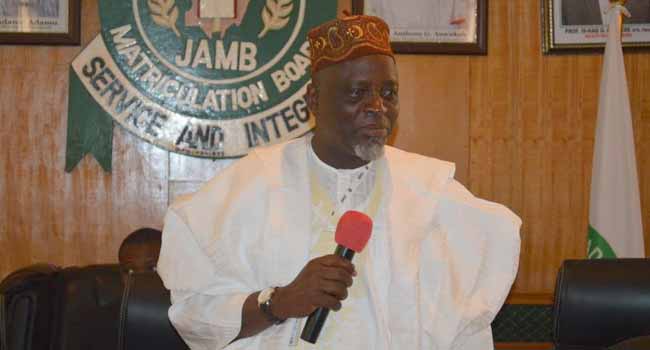
The Joint Admissions and Matriculation Board (JAMB) has revealed that more than 75% of candidates who sat for the 2025 Unified Tertiary Matriculation Examination (UTME) scored below 200 out of the total 400 marks.

The Registrar of JAMB, Prof. Ishaq Oloyede, made this known while presenting the 2025 UTME analysis during a briefing in Abuja. According to him, the performance trend highlights the urgent need for improved learning outcomes and a reassessment of educational standards across the country.

“The results indicate a worrying decline in overall performance, with only a quarter of candidates scoring 200 and above,” Oloyede stated. He attributed the low scores to poor preparation, over-reliance on malpractice, and inadequate teaching methods in some schools.

Education stakeholders have been urged to address the root causes of the poor results, with JAMB reiterating its commitment to upholding examination integrity and improving access to higher education based on merit.

Social media influencer arrested for Naira abuse in Kaduna  

By Abdullahi Mukhtar Algasgaini

The Economic and Financial Crimes Commission (EFCC) has apprehended Muhammad Kabir Sa’ad, a social media content creator, for allegedly abusing the Naira.  

The suspect, known as @youngcee0066 on TikTok and Instagram, posted a video showing him throwing Naira notes on the ground, stepping on them, and daring EFCC officials to arrest him in Hausa.  

Acting on intelligence, operatives from the Kaduna Zonal Directorate tracked him down in the Tudun Wada area and took him in for questioning.  

EFCC officials confirmed that Sa’ad will be prosecuted once investigations are concluded. The arrest serves as a warning against the misuse of the national currency.

Jonathan pays heartfelt tribute to Yar’Adua, 15 years after his passing

By Hadiza Abdulkadir

It has been fifteen years since Nigeria lost one of its most respected and selfless leaders, President Umaru Musa Yar’Adua. 

Today, Nigerians across the nation reflect on the life and legacy of a man whose brief presidency profoundly impacted the nation’s democratic and developmental journey.

Former President Goodluck Ebele Jonathan, who served as Yar’Adua’s vice president and later succeeded him, paid a heartfelt tribute to his late friend and leader. 

In his message on social media, Jonathan described Yar’Adua as a patriot and a servant leader who was driven by a commitment to unity, justice, and national progress.

“President Yar’Adua’s life was defined by service and selflessness,” Jonathan stated. “Whether as a teacher, governor, or president, his stewardship was guided by hard work, patriotism, accountability, commitment to justice and adherence to the rule of law.”

Yar’Adua’s presidency was marked by his efforts to reconcile a divided nation, foster unity among its people, and mobilise collective action towards building a just and peaceful Nigeria. Though his time in office was cut short by illness, his administration is remembered for significant reforms and a leadership style rooted in humility and inclusion.

Jonathan praised Yar’Adua for his unwavering dedication to democratic ideals and for laying a foundation of peace and accountability. “Fifteen years after his passing, he continues to stand as a reference for good leadership and a legacy of impact,” Jonathan remarked.

As the nation remembers President Yar’Adua, many Nigerians continue to honour his contributions to building a better country and celebrate the enduring example he set in public service.

Nigeria Customs college graduates 50 officers from Junior Course 21

By Sabiu Abdullahi

Fifty officers of the Nigeria Customs Service have successfully completed the Junior Course 21 at the Nigeria Customs Command and Staff College (NCCSC), Gwagwalada.

The intensive three-month programme was designed to boost the management capacity of mid-level officers within the Service.

Activities marking the end of the course began with a regimental dinner held on Wednesday, 30 April 2025.

The formal graduation ceremony followed two days later, taking place on Friday, 2 May 2025, at the Ahmad Makarfi Hall within the College premises.

The Comptroller-General of Customs, Adewale Adeniyi, was represented at both events by Deputy Comptroller-General (DCG) Suleiman Chiroma, who is in charge of the Training and Doctrine Command (TRADOC).

In his address to the graduating officers, DCG Chiroma praised their dedication and resilience.

He encouraged them to remain steadfast in the values of discipline, integrity, and professionalism.

“The College has equipped you with the requisite knowledge for higher staff and command responsibilities,” he said. “Your value to the Service and your fatherland has been greatly enhanced, and you are now better prepared to contribute meaningfully to the attainment of our strategic objectives.”

Assistant Comptroller-General (ACG) Oluyomi Adebakin, who serves as the College’s Commandant, also spoke at the event. She congratulated the officers and reminded them of the institution’s high standards.

“The Nigeria Customs Service has invested significantly in your development. You must make the most of this opportunity. The College maintains zero tolerance for indiscipline and mediocrity will not be celebrated,” she stated.

The ceremony featured the award of certificates and the conferment of the Passed Junior Staff Course (PJSC) qualification on the officers.

The graduates expressed appreciation for the training, noting its positive impact on their leadership and operational skills.

The officers are now expected to assume key responsibilities across various commands and units, contributing to the Service’s national mandate.

Nigeria’s North and its leadership mirage

By Usman Muhammad Salihu,

Northern Nigeria stands at a defining moment in its history. Once the bastion of decisive leadership and cultural resilience, the region is now plagued by a crisis of governance. 

The distinction between “leaders of the North” and “leaders in the North” has never been more pronounced. Leaders of the North carry the burden of the region’s progress on their shoulders, while leaders in the North are mere seat-fillers—occupants of political positions without a true sense of duty.

Unfortunately, today’s reality leans heavily towards the latter. The region is flooded with individuals who wear the titles of governors, senators, ministers, and traditional rulers. Yet, their leadership amounts to little more than self-interest, political survival, and personal ambition. 

The result? Northern Nigeria remains stuck in a cycle of poverty, illiteracy, and insecurity, trailing behind the rest of the country on almost every developmental index.

Banditry, kidnapping, and insurgency have become rampant, turning villages into ghost towns and leaving countless families in mourning. Youth unemployment and economic hopelessness have skyrocketed, while education continues to suffer, with millions of children out of school. 

Rather than prioritising sustainable policies, these leaders dish out empty rhetoric, making grand promises while doing little to uplift the people they claim to serve.

Hunger has become a political tool—wielded not as a crisis to be solved, but as a mechanism of control. Those who once enjoyed three square meals now struggle to afford even one. 

Yet, instead of confronting the root causes of poverty, many politicians prefer the optics of distributing bags of rice. They would rather keep the people hungry and dependent than invest in mechanised agriculture, industrialisation, or skills development. 

A well-fed, independent populace questions leadership. A starving one is easier to manipulate. Beyond economic woes, northern lives have become increasingly devalued, even beyond the region. 

The recent horrific killing of at least 16 northern travellers in Edo State is a chilling reminder of the dangers of mob justice and ethnic profiling. These victims, mostly Hausa hunters heading for Sallah festivities, were mistaken for kidnappers and brutally lynched. 

Their truck was torched, their bodies consumed by fire in a scene reminiscent of a lawless state. Such tragedies expose the colossal failure of leadership at all levels. 

A country with strong institutions and responsible governance would not permit the extrajudicial slaughter of innocent citizens. Figures like former Vice President Atiku Abubakar and activist Omoyele Sowore have rightly condemned the killings, while Edo State Governor, Monday Okpebholo, has ordered investigations. 

But the crucial question remains: Will justice be served? Or will this atrocity, like so many before it, fade into oblivion? Meanwhile, traditional institutions that once provided stability and moral guidance in the North have been hijacked by political interests. 

The reckless creation of new emirates and first-class chiefdoms is no longer about strengthening governance—it is about settling scores, wielding influence, and further fracturing the region.

Northern Nigeria is rich in potential, yet without sincere leadership, it will remain shackled to poverty, insecurity, and stagnation. The people must awaken to their power, demanding accountability and choosing leaders based on competence rather than ethnicity, religion, or political patronage.

A true leader does not throw food at his people; he empowers them to produce their own. He does not buy votes with handouts; he builds an economy where citizens can thrive without begging. 

The North needs statesmen who will champion food security, support industrial growth, and create jobs, not politicians who prey on hunger for electoral gain.

Above all, northern lives must matter—not just to those in power, but to the nation. If the cycle of mob justice and ethnic profiling continues unchecked, Nigeria risks deepening its fractures beyond repair. 

Leadership is not about occupying an office but securing justice, progress, and dignity for all. So, the question lingers: Will Northern Nigeria continue to be ruled by leaders in the North who exploit suffering, or will true leaders emerge to break this cycle of failure? 

The answer lies in the hands of the people.

Usman Muhammad Salihu is a PRNigeria Fellow.