Month: May 2025

Kano bans live political programmes

By Hadiza Abdulkadir

The Kano State Government has imposed an immediate ban on all live political programmes aired by media organisations in the state.

As Kano Times online news media reported, the decision was announced during a quarterly stakeholders’ meeting organised by the Ministry of Information and Internal Affairs. The meeting, chaired by the Commissioner for Information, Comrade Ibrahim Abdullahi Waiya, brought together government officials and media executives.

In a statement signed by Sani Abba Yola, Director of Special Duties at the ministry, the ban aims to prevent the spread of inflammatory content that could jeopardise the state’s cultural and religious harmony.

“We are not trying to stifle political dissent,” Comrade Waiya told the gathering. “Our objective is to protect the sanctity of our cultural and religious values.”

Further measures were introduced during the meeting. All individuals invited for interviews on media platforms must now sign an undertaking committing to avoid abusive, defamatory, or culturally insensitive remarks.

Presenters have also been directed to avoid provocative questions or gestures that might provoke defamatory or damaging statements against individuals or the state.

Waiya acknowledged a recent decline in the use of inflammatory language on air, crediting the ongoing collaboration between the ministry and media houses for the improvement.

He also disclosed that the government has rolled out sensitisation campaigns targeting political presenters, media commentators, and members of the Council of Friday Imams to promote responsible public discourse.

“We want to ensure that all public communication is done with integrity—free of defamation and in a way that protects the reputation of Kano State,” Waiya said.

NAHCON closes registration for 2025 hajj as airlift of pilgrims begins May 9

By Abdullahi Mukhtar Algasgaini

The National Hajj Commission of Nigeria (NAHCON) has announced the closure of registration for the 2025 Hajj pilgrimage, with no further applications being accepted after May 2, 2025.

The decision was made to allow the commission to focus on the smooth airlift and welfare of pilgrims.

NAHCON Chairman, Professor Abdullahi Saleh Usman, secured an extension for registration beyond the initial March 25 deadline, but the process has now officially ended.

Any payments made after May 2 will be refunded.

The first batch of pilgrims is set to depart Nigeria on May 9, with the inaugural flight taking off from Owerri, Imo State.

Air Peace will transport 315 pilgrims from Imo, Abia, and Bayelsa states. Imo State Governor, Senator Hope Uzodimma, will host the event, with Vice President Senator Kashim Shettima attending as Special Guest of Honor.

NAHCON’s advance team arrived in Owerri on May 7 to oversee final preparations. A total of 40,671 pilgrims registered under the government quota for this year’s Hajj.

On the first day of airlift, four flights will depart simultaneously: Max Air from Bauchi, two FlyNas flights from Kebbi and Osun (via Lagos), and another from Niger State.

These flights will carry 2,528 pilgrims to Madina.

Further updates will be provided as the pilgrimage progresses.

Borno governor bans sales of alcohol, accuses security personnel of fueling crime

By Abdullahi Mukhtar Algasgaini

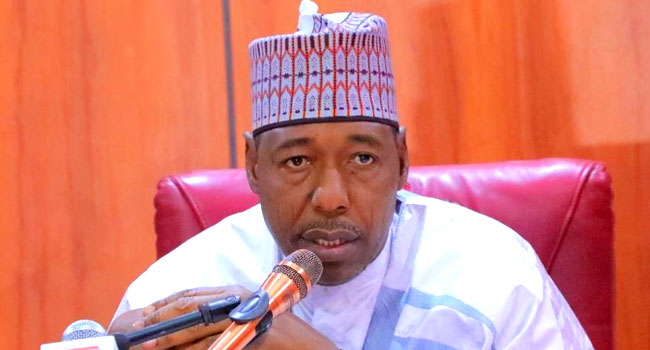
Borno State Governor, Professor Babagana Zulum, has imposed a ban on the sale of alcoholic beverages and blamed security personnel, including military and police officers, for enabling criminal activities in the state.

Speaking on Tuesday during the inauguration of a reconstituted committee to tackle illegal hotels, brothels, and criminal hideouts, Zulum accused dismissed and serving security officers of promoting crimes such as radicalism, prostitution, and drug abuse.

“Most of these criminal acts are committed by dismissed and even active security personnel, alongside civilians. There should be no sacred cows if we want to end terrorism and other vices,” Zulum stated.

The governor’s ban follows rising cases of cult clashes, theft, and violent crimes linked to alcohol consumption.

The new committee includes military, police, and civilian task force members to enforce the crackdown.

The move raises questions about its impact on state revenue, particularly amid ongoing debates over tax reforms championed by Zulum and other northern leader.

About the Katsina lavish wedding

By Prof. Abdussamad Umar Jibia

Some years ago, a group of students from Kaduna state came to my office, lamenting how Muslim elders imposed a Christian candidate on them and rigged him into power. They even told how an Emir and some elders called Islamic scholars and warned them against remonstration in their preachings. “How can we bear this disgrace?” my students were frustrated.

I said, “You can solve the problem and make governance difficult for the imposed Governor”. The young people paid attention, expecting an “academic” solution to their problem. “The Governor cannot rule Kaduna state alone. Since the majority are against him, why not look for and beat up anyone who accepts his political appointment?” I offered.

My students looked at one another and said, “Sir, there will be chaos and mass arrest”. Poor them, they want to bring change, are not happy with what is happening, and are afraid of arrest. “The alternative is to support the unpopular Governor and struggle for your share of the haram”, I finalised the discussion.

In the case of my Kaduna state students, the problem was election rigging, even though there was relative peace in their state, at least up to that time. In the case of Katsina people, it has been killing, kidnapping, rape, stealing, etc. How have the people reacted to the politicians they elected to solve the problem of insecurity? 

Several people have asked why they no longer see my comments on insecurity, and I always reply that I am busy with other things. I am busy, but not too busy to write a few paragraphs to express my opinion. However, it reached a point where I began to ask, as far as insecurity is concerned, who is the culprit? Whom should I write to blame? The Government? The military? The masses?

Going by the advice I gave Kaduna youth, one would expect that no elected politician would have the guts to go to any community ravaged by insecurity in Katsina or nearby states. Unfortunately, that is not the case. I saw people who lost some of their closest relatives to banditry staunchly supporting a politician, whose actions mean that their losses do not matter. Bandits displaced a community, but I saw their youth on social media actively supporting politicians who were giving public money to bandits in the name of the peace agreement.

If you are actively fighting for those victims through writing or interviews, and you offend any politician, you should be ready to get a good beating from some of the banditry victims if that is what would please the politician.

So, whom should I blame? Do the people take no blame? What of the military? Should I write to blame the masses as weak as they are? Should I write to condemn the military as strongly as they are? Should I not be afraid of arrest like my Kaduna students? If I offend the military, and you must surely offend them if you will tell the truth about insecurity, who would bail me out when I am arrested and tagged a troublemaker or any name they decide to give me?

The cheapest people to blame are the politicians. Everybody is against them. Public money is in their hands, and they are spending it on weddings and musicians, just like we witnessed in Katsina. But are all the people criticising them sincere? Would they not do the same if they were in their position? Some of these things were the reason Nigerians voted PDP out ten years ago, and the “saints” they elected are doing the same.

If you are expecting me to continue directing my blame to politicians, you will be disappointed. While they have their fair share of the blame for insecurity, we also have our share as victims. 

The masses should take my advice to the Kaduna youth if they can. They can only beat the politicians or join them. For the politicians, I have no words. Only the masses can deal with them if they take the first side of my advice. For me, I shall keep mum about the military because I am a coward.

For other Nigerians, continue to enjoy yourselves before insecurity reaches your side. I pray it will not.

Prof Abdussamad Umar Jibia wrote via aujibia@gmail.com.

Military uncovers network smuggling fuel to Boko Haram in Borno

By Abdullahi Mukhtar Algasgaini

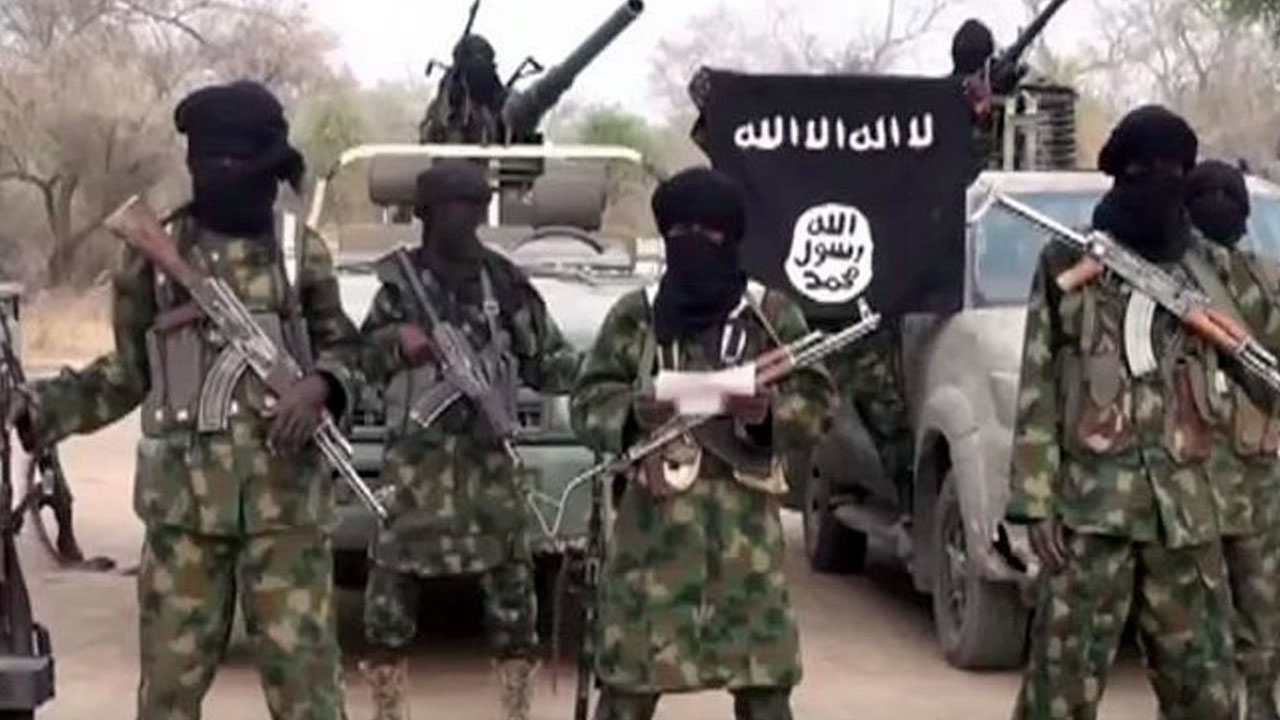
Troops of Operation Hadin Kai have uncovered a fuel-smuggling operation allegedly supplying Boko Haram insurgents in Borno State and neighboring Cameroon.

During a raid on Hadiza and Sadiq Filling Station in Maiduguri, soldiers caught workers loading 500 jerrycans of fuel, suspected to be destined for terrorist hideouts.

Intelligence reports indicate that smugglers often use modified vehicles to transport petrol to insurgent camps near Pulka and Cameroon’s border areas.

Several suspects were arrested and reportedly confessed to delivering fuel to terrorism-linked locations, though they denied knowing the recipients.

Military sources condemned the act, labeling the perpetrators “economic saboteurs” aiding terrorism.

Authorities have vowed to intensify surveillance and prosecute all collaborators, warning that such sabotage of national security will not be tolerated.

Army captain, soldier slain in fresh BH attack in Borno

By Uzair Adam

An army captain and a soldier have been killed following a fresh attack by Boko Haram insurgents in Izge community, Gwoza Local Government Area of Borno State.

The terrorists reportedly stormed the community around 1 a.m. on Wednesday and engaged troops in a gun battle.

Confirming the incident, the Emir of Gwoza, HRH Alhaji Mohammed Shehu Timta, said the attackers met strong resistance from the military and local security groups.

“It’s true that my people in Izge community came under Boko Haram attack around 1 a.m. Unfortunately, a captain and a soldier paid the supreme price,” he said.

He, however, noted that the joint efforts of the military, Civilian JTF, local hunters, vigilantes, and community members led to the killing of three insurgents.

He added that the attackers abandoned more than 10 motorcycles and weapons before fleeing into the bush, where security operatives are currently pursuing them.

While praying for the souls of the fallen soldiers, the monarch applauded their bravery and sacrifice in defending the area.

“May Allah (SWT) grant the departed souls Jannatul Firdaus. Our gallant men are still in the bush, sacrificing their lives to maintain peace,” he said.

He also appreciated the Borno State governor, Prof Babagana Umara Zulum, for the consistent logistics support and urged the federal government to equip security operatives with advanced technological tools to fight terrorism.

The North East region has witnessed a spike in insurgent attacks. On Saturday, at least four soldiers were killed in an attack on the 27 Task Force Brigade in Buni Yadi, Gujba LGA of Yobe State, where equipment was also destroyed.

That attack occurred less than a day after the North East Governors Forum met in Damaturu, adopting a multidimensional approach to address insecurity in the region.

Buni Yadi is about 65 kilometers from Damaturu and is the hometown of the state governor, Mai Mala Buni.

The latest assault comes two weeks after President Bola Tinubu charged service chiefs to end the persistent killings.

Senate plans national security summit to address worsening insecurity

By Uzair Adam

In response to the escalating security challenges across the country, the Nigerian Senate has resolved to convene a two-day National Security Summit in Abuja, bringing together key stakeholders from all levels of government and traditional institutions to chart a path toward improved national safety.

The summit, according to the Senate, will serve as a platform for generating actionable recommendations aimed at reforming Nigeria’s security architecture.

It is expected to influence policy direction, with the Senate urging the Federal Government to consider and implement proposals emerging from the discussions.

The decision to organize the summit followed a motion titled “Urgent Need for a National Security Summit,” presented during plenary by Senator Ibrahim Jimoh, who represents Ondo South and chairs the Senate Committee on Inter-Parliamentary Affairs.

The motion was co-sponsored by Senators Zam Titus (Benue North-West), Peter Onyeka Nwebonyl (Ebonyi North), and Ngwu Osita (Enugu West).

While presenting the motion, Senator Jimoh linked the country’s worsening security issues to global instability, referencing the impact of the Russia-Ukraine war, strained North-South relations, and economic tensions like the U.S. tariff war.

He noted how these global developments have intensified food insecurity and disrupted efforts to achieve Sustainable Development Goals (SDGs).

Jimoh also expressed deep concern about the persistent violence within Nigeria, highlighting the spread of banditry, terrorism, and kidnapping across both urban and rural areas.

He urged a strategic shift in Nigeria’s approach to combating insecurity, calling for enhanced intelligence gathering, increased military funding, and non-military solutions.

Citing historical political unrest in Nigeria, including the 1953 Kano riots and electoral crises of the 1980s, Jimoh stressed the importance of proactive measures as the country approaches another election cycle.

He reiterated President Bola Tinubu’s commitment to national peace and encouraged alignment with the administration’s “Renewed Hope Agenda.”

The Senate emphasized that the upcoming summit would not be the first of its kind. Former Senate President Ahmad Lawan had also convened a similar initiative during the 9th Assembly, which laid groundwork for national security dialogue.

Lawan had pointed to the Senate’s role in guiding conversations toward sustainable solutions.

The new summit is anticipated to build on previous efforts and deliver comprehensive, practical strategies to restore peace and security across Nigeria.

Kano govt blames water crisis on abandoned, vandalised facilities from Ganduje era

By Uzair Adam

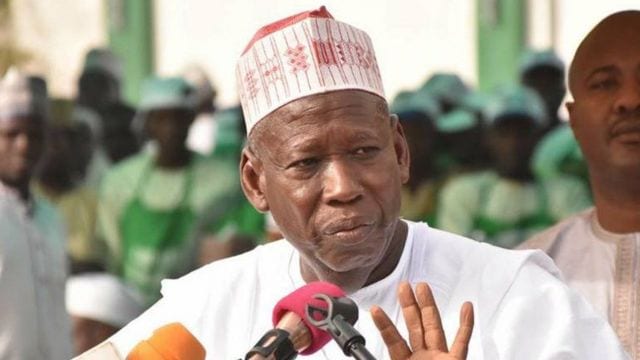
The Kano State Government says it inherited multimillion-naira water facilities in a state of disrepair and vandalism from the previous administration led by former Governor Abdullahi Ganduje—an issue it blames for the persistent water shortages across the state.

The State Commissioner for Water Resources, Hon. Haruna Doguwa, made this known while leading journalists on a tour of major water works.

He cited the Kano water works built in 1930 and the Challawa water works established in 2016 by former Governor Rabiu Musa Kwankwaso among the affected facilities, alleging they were abandoned and vandalized during Ganduje’s tenure.

Doguwa revealed that over 12 kilometers of water pipelines connecting the Kano River to these facilities were uprooted, while critical equipment such as control room devices and raw pumps were stolen.

He estimated the total cost of restoring the facilities at around \$10 million.

“The first water works had a 20-million-litre daily capacity before it was vandalized in 2016, resulting in severe water scarcity in the state. The damage there alone is worth about \$3.5 million,” he said.

He also noted that the Intel 6 water facility, with a 350-million-litre daily capacity and responsible for half of Kano’s water supply, was similarly vandalized, with pumps worth about N500 million each allegedly sold off.

Currently, the state only manages to produce 300 million cubic meters of water daily, far short of the 700 million required.

To address the shortfall, the government is working to rehabilitate the affected facilities and expand the Wudil and Joda water works.

Once completed, Doguwa said water production would increase to 500 million cubic meters per day.

The Managing Director of the Kano State Water Board, Garba Ahmed, also highlighted that key areas such as Dorayi, Kofar Pompo, Kabuga Rijiyar Zaki, Janguza, BUK, and Goron Dutse are among the worst hit by the ongoing crisis.

In a related move to control exploitation, Doguwa met with leaders of tanker drivers and water vendors to propose fixed rates for water sales.

He gave a seven-day deadline to reach an agreement on fair pricing for tank and jerrycan water supplies.

India launches missile strikes on Pakistan, tensions escalate

By Muhammad Abubakar

India has launched missile strikes on nine locations across Pakistan and Pakistan-administered Kashmir, targeting what it described as “terrorist infrastructure.” The strikes come amid heightened tensions between the two nuclear-armed neighbours following a deadly militant attack in Indian-administered Kashmir last month that claimed 26 lives.

Pakistan reported that at least eight people were killed and 35 injured in the strikes. Authorities in Islamabad condemned the assault as an “unprovoked, blatant act of war,” accusing India of deliberately targeting civilian areas.

In response, Pakistan claimed to have shot down five Indian fighter jets, though Indian officials have yet to confirm any such losses.

The incident marks a dangerous escalation in a region with a long and volatile history, raising fresh concerns about stability and the risk of broader conflict.

18-Year-old wife arrested for stabbing husband to death in Kano

By Abdullahi Mukhtar Algasgaini

The Kano State Police Command has arrested an 18-year-old woman, Saudat Jibril, for allegedly killing her 30-year-old husband, Salisu Idris, by slitting his throat with a sharp knife.

The incident occurred in the early hours of Tuesday, May 6, at their residence in Farawa Quarters.

Upon receiving a distress call, the Commissioner of Police, CP Ibrahim Adamu Bakori, immediately dispatched detectives to the scene.

The victim was rushed to Aminu Kano Teaching Hospital but was pronounced dead on arrival.

Saudat Jibril is currently detained at the State Criminal Investigation Department (CID) and will be charged with culpable homicide.

CP Bakori warned that the police will not tolerate violent crimes in the state, assuring the public of a thorough investigation and swift justice.