Month: May 2025

JAMB admits errors in 2025 UTME

By Uzair Adam 

The Joint Admissions and Matriculation Board (JAMB) has acknowledged making errors that negatively affected candidates’ performance in the 2025 Unified Tertiary Matriculation Examination (UTME).

This admission was made by the Board’s Registrar, Prof. Ishaq Oloyede, during a press briefing held on Wednesday in Abuja.

Oloyede stated that, “What should have been a moment of joy has changed due to one or two errors.”

The Daily Reality reports that this comes amid growing concern over the mass failure recorded in the 2025 UTME. 

It was gathered that out of the 1.9 million candidates who took the examination, more than 1.5 million reportedly scored below 200 out of a possible 400 marks—representing over 75 per cent of all candidates.

Some affected candidates have expressed intentions to take legal action against the Board.

More details to follow…

The new ASUU president and the body language of the political class

By Prof. Abdelghaffar Amoka

Breaking news yesterday was that Consultant Psychiatrist Comrade Chris Piwuna has been elected as the new president of the Academic Staff Union of Universities (ASUU) for a two-year term. The fact that he is a psychiatrist is unsettling to the political class, who, rather than injecting the necessary funds to improve our education sector, choose to embezzle money they do not need.

The post on the Facebook page of Mahmud Jega, a media aide to President Bola Ahmed Tinubu during the campaign for the 2023 election, is an indication that the news of the newly elected president is unsettling. He said Chris should examine the heads of ASUU members for choosing a strike as an option to make the government perform its responsibility to the university they willingly established and are still establishing. Earlier today, someone was thanking his Senator on Facebook for his bill to establish the Federal University of Agriculture, Kura in Kano State. 

Whose head needs to be checked by a psychiatrist? The one fighting for the survival of public universities or the one who makes all the promises, then gets to the office, but chooses to steal public funds, an amount they can’t spend for the rest of their life. In the 21st century, we have one of the worst education and health sectors. Our people now travel to Ghana, as well as to Niger and Sudan, to study. Hunger is now a pride. One of them recently acknowledged that they are aware we are hungry and referred to it as “Hunger for Change.”

Who should we take to Prof. Piwuna’s psychiatric clinic for a mental health evaluation? As people wonder about the cause of the massive and mindless corruption in the country, as we watch public institutions collapse, they feel that corruption within the political class may be a mental issue. According to Punch of 16th December 2016, the first person who made this recommendation over 30 years ago was Prof. Adeoye Lambo, a famous psychiatrist and a former Vice-Chairman of the World Health Organisation. He was astounded by the level of corruption at the time. 

Well, the corruption was child’s play then compared with what we have now. Mrs. Farida Waziri, the former EFCC boss, was reported to have also recommended psychiatric examination for politicians, citing the reason that the grand corruption we see in our public life is a hackneyed recommendation. So, the psychiatric test recommendation for politicians is not a new call. 

Despite the justification for the strike over the last two years and the members’ vote in a referendum, the ASUU leadership has attempted to apply diplomacy to avoid the strike. That has produced a strike-free 2 years. They have been lobbying and begging for the last 2 years. But what have academics got? Many people can’t afford to fuel their cars to go to work. So, what’s the alternative to the strike? Maybe instead of striking to force the government to fund tertiary institutions they willingly established, we should just manage what we have like that till they are no longer manageable, like our public primary schools? Please educate us on a practical alternative to strike. 

The Nigerian university system was once a beacon in West Africa. If corruption is the reason why there are not enough funds to make our universities what they used to be, who needs to queue in their Agbada to see a psychiatrist? The people (political class) who have kept the universities in their present state, or the people (ASUU) whose fight over the years gave our universities a semblance of a university? 

Irrespective of our political affiliation, I think we need to set our sentiment and hatred for ASUU aside and sit back to reflect on the state of education. As a former academic, journalist, and associate of the political class, Mahmud Jega should join hands with ASUU to urge the government to take the necessary steps for the education sector. The North is the worst hit, and coincidentally, Mahmoud Jega is from the North. We need public education institutions at all levels that are of high quality for their students. As the immediate past president of ASUU stated during the ASUU NDC in Benin a few days ago, we cannot build a knowledge-based economy without a sound education system.

We can’t continue this way. The status quo is unsustainable. The most powerful weapon against poverty, extremism, and ignorance is not the bullet, but the book. The time to act is now. Nigeria must return to the classroom—rebuild it, empower it, and invest in it—for therein lies the salvation of the nation.

I don’t like strikes, Mahmud Jega doesn’t like strikes, but I was left with no other options aside from a strike. And a strike is the only thing that has kept our universities functional to date. So, can Mahmud propose an alternative that will work even better than a strike? 

The test I think we need to do for ASUU members is to find out why they are fighting very hard to ensure that public universities do not collapse. They could have chosen to be like our refinery workers who watch the collapse of the refineries and earn a fat salary without refining a drop of crude oil. 

In conclusion, no matter the hatred, Mahmud Jega cannot pretend that he does not understand the situation of our educational institutions. I would like to encourage him to utilise his influence and pen to help facilitate an education summit by this government. As Prof Attahiru Jega proposed at ASUU NDC at the University of Benin a few days ago, the stakeholders of the Nigerian project need to meet and discuss the sort of tertiary education system they want and then agree on the funding model. 

Prof. Amoka wrote from Ahmadu Bello University (ABU), Zaria.

Nigeria’s porous borders pose security risks—Speaker Abbas warns

Speaker of the House of Representatives, Rt. Hon. Abbas Tajudeen, has called for tighter border controls and warned that Nigeria’s porous borders leave it vulnerable to spillover crises from other West African nations.

Speaking at a lecture titled ‘National Resilience and Security in the 21st Century’ at the National Defence College in Abuja, Abbas stressed the need for stronger regional cooperation and internal cohesion to tackle security threats.

“Porous borders mean Nigeria’s security is tied to that of its neighbours,” he said.

He advocated for joint patrols, regional standby forces, and initiatives like grazing corridors to enhance stability.

The Speaker highlighted challenges across Africa, including insurgencies, coups, economic instability, and climate change, but noted the continent’s resilience, citing recovery efforts in Rwanda and Sierra Leone.

He outlined a three-phase strategy for national resilience: mitigation (preventive measures), adaptation (crisis response), and recovery (rebuilding).

He pointed to Nigeria’s National Security Strategy and Disaster Management Framework as key tools but urged deeper inter-agency collaboration.

Abbas also emphasized ECOWAS’ role in crisis management, referencing past interventions in Liberia and The Gambia, while acknowledging recent coups as a test for the bloc.

“True resilience requires political will, resources, and public preparedness,” he said. “By strengthening security and resilience together, Nigeria can safeguard its future.”

ASUU strike paralyses KASU

By Sumayyah A. Usman

Academic activities have been paralysed at the Kaduna State University, KASU, Kaduna, as the strike embarked upon by the institution’s branch of Academic Staff Union of Universities, ASUU, enters its third week.

TDR visits to the two campuses at Kaduna and Kafanchan revealed that both lecturers and students were not in the classes and many students seized the opportunity of the strike to travel home.

However, some few students were found at the institution’s sport complex engaging in sport activities It would be recall that on April 24th, 2025, the union branch declared a “total, comprehensive & indefinite” strike action in response to several unfulfilled promises made by the Kaduna State Government.

Uba Sani initiates power restoration in Kagarko LG after years of darkness

By Sumayyah A. Usman

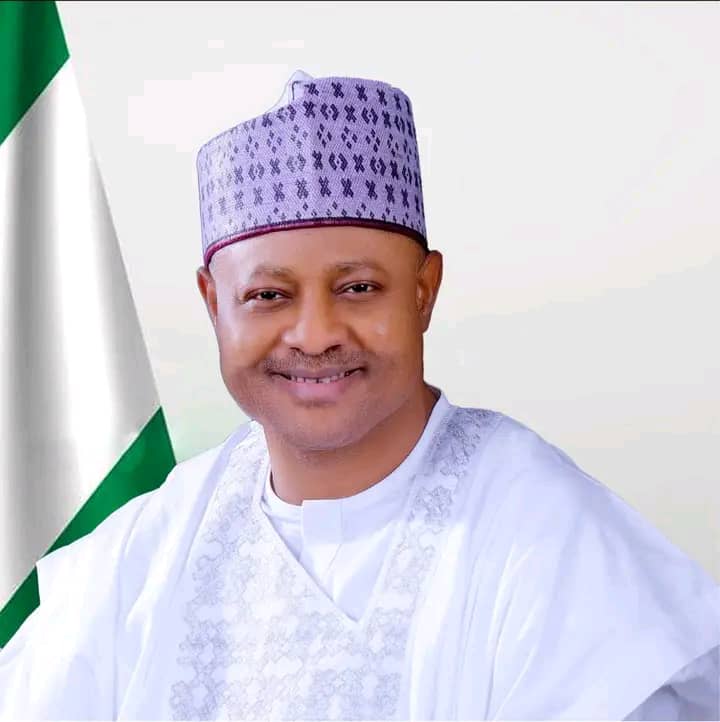
The Kaduna State Governor, Senator Uba Sani, on Monday launched the power supply reconnection project in Kagarko Local Government Area, in a move seen as a major step towards the actualization of his campaign promise during the 2023 electioneering campaigns.

The governor who was represented by the Kagarko LG Chairman, Honourable Muhuyideen A. Umar, said the reconnection project would help alleviate power challenges faced by residents as well as boost economic activities and the overall quality of life of the people of the LG.

He further stated that “the project is in line with the promise made by Governor Uba Sani to restore power supply in Kagarko after years of darkness”.

He assured residents that with the availability of needed materials, equipment.and commitment from the workers, the job would be completed in record time.

According to reports electricity supply had been disrupted for over two years in the local government area as a result of vandalism.

But news of the reconnection was warmly received by Kagarko residents, who expressed their gratitude to the governor for his efforts to restore power.

By Anas Abbas

The Federal Capital Territory Minister, Nyesom Wike, has expressed concerns that the Peoples Democratic Party (PDP) risks losing the 2027 presidential election to President Bola Tinubu unless it revises its zoning system.

During a live media interaction on Monday, Wike highlighted the party’s failure to adhere to its constitutional guidelines regarding the zoning of both the Chairmanship and presidential candidacy.

This statement comes on the heels of a recent induction ceremony led by former Senate President and Chairman of the PDP Board of Trustees, Adolphus Wabara, where former governors Samuel Ortom of Benue State, Ifeanyi Ugwuanyi of Enugu State, and 38 other members were welcomed into the party’s Board of Trustees.

Since the conclusion of the 2023 elections, the PDP has been grappling with significant internal turmoil.

Tensions escalated following a confrontation between Governor Sim Fubara and former Governor Nyesom Wike in Rivers State, compounded by ongoing leadership disputes in the South-South region and the unresolved position of National Secretary, which has been vacant since December 2024.

Efforts to mend these divisions have been made by various top party organs, including the National Working Committee, Board of Trustees, National Executive Committee, and Governors Forum.

However, these initiatives have only served to deepen existing fractures within the party, further fragmenting state and zonal chapters.

Amidst this, several party members have chosen to defect to the All Progressives Congress (APC).

A significant shift occurred on April 23, when Delta State Governor Sheriff Oborevwori, former Governor Ifeanyi Okowa, and other prominent officials transitioned to the APC, delivering a substantial blow to the PDP’s reputation and diminishing its prospects for the upcoming 2027 general elections.

Be vigilant, enemies aren’t sleeping, CDS tells troops amid ongoing threats

By Anwar Usman

The Chief of Defence Staff, General Christopher Musa, has urged operatives of Operation Fasan Yanma not to allow enemies to strike them.

In his remarks, the CDs through Rear Admiral Olusanya Bankole, delivered the message to troops of the Nigerian Army’s 8 Division.

He appreciated their proactive efforts in tackling insecurity in the North Western states, especially under Operation Fasan Yama.

Speaking on Tuesday during a strategic civil-military cooperation visit at the Giginya Barracks in Sokoto, Bankole, representing the CDS, issued a passionate call for heightened vigilance and unity among security services, emphasizing that “the battle you are fighting is a just one, don’t sleep, because your enemies are not sleeping.”

Musa further appreciated the Division for its commitment to protecting Nigeria’s territorial integrity, preserving civilian lives, and reinvigorating ties with host communities.

“We receive weekly briefings at Defence Headquarters, and the 8 Division keeps coming up for praise. The CDS has asked me to personally commend your GOC and every officer under Operation Fasan Yama for a job well done,” Bankole said.

He reiterated the need for inter-agency collaboration, gender sensitivity, and respect for human rights, noting that the ongoing war on banditry Android insurgency requires both military strength and civilian trust.

He further stated that “Let people run to you, not away from you. The best intelligence comes from the civilians you protect,” he added.

The General Officer Commanding of the 8 Division, Major General Ibikunle Ajose, while responding highlighted the importance of people-centric operations.

Other activities that took place at the even includes; sensitisation lecture on human rights, gender-based violence, and military ethics, aimed at reinforcing the professionalism and accountability of troops in conflict zones.

Ajose emphasised that their mission is not just military, but moral.

“As protectors of the vulnerable, we must embody empathy, discipline, and justice. Today’s engagement strengthens our collective resolve,” he said.

Kano university shuts female hostels over safety, morality concerns

By Sabiu Abdullahi

The management of Maryam Abacha American University of Nigeria (MAAUN) has announced the closure of two female hostels in Kano State due to security and disciplinary issues.

In a statement released on Monday, Dr. Hamza Garba, the institution’s Vice President of Campus Life, disclosed that the university had withdrawn its approval for Al-Ansar Indabo female hostels situated along UDB Road and Hotoro in the Kano metropolis.

“I am directed by the management to write, inform, and bring to the attention of our esteemed parents and students that the university has withdrawn its approval for Al-Ansar Indabo female students hostels located at UDB Road and Hotoro,” the statement read.

According to Dr. Garba, the hostels had failed to meet the university’s standards regarding the operation of private accommodations for students.

He stated that several infractions had been observed, including immoral conduct, insufficient access to water and electricity, incidents of student violence, movement of students during late hours, and cohabitation with unidentified individuals.

“These issues pose a serious threat to the well-being of our students,” he added.

The university reiterateed that the decision was part of its broader efforts to ensure students live in a safe and morally sound environment.

All students residing in the affected hostels have been directed to move out immediately after the ongoing semester examinations.

The university cautioned them against returning to or having any connection with the hostels for their own protection.

“Management is working closely with relevant security agencies to ensure total compliance with the directive,” the statement added.

Parents and students seeking information on authorized and safe hostel alternatives have been advised to contact the Office of the Vice President, Campus Life, via the official email address — vp-campuslife@maaun.edu.ng.

MAAUN also made it clear that it would not be liable for any consequences that may arise from ignoring this directive.

Kano to equip 200 schools with 50,000 computers

By Hadiza Abdulkadir

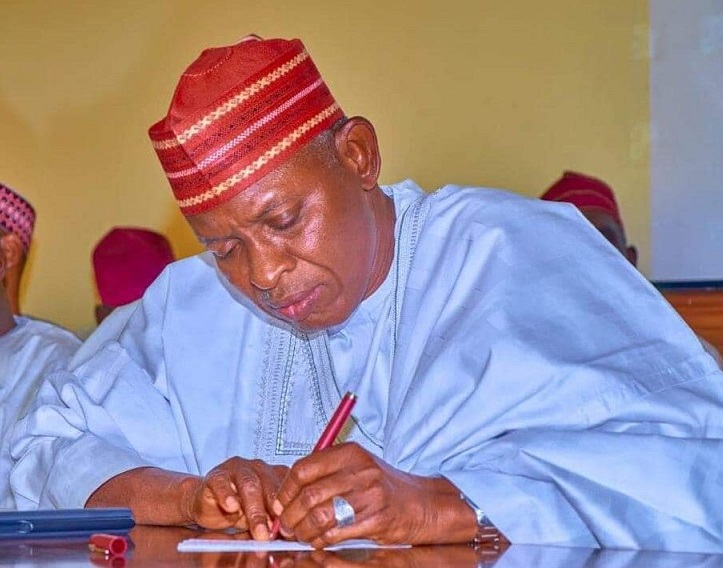
Governor Abba Kabir Yusuf has announced that 200 public schools in Kano State will each receive 250 computers, totalling 50,000 units, under a major digital education initiative supported by the World Bank through the AGILE Project.

The distribution, aimed at bridging the digital divide in education, was announced during the flag-off ceremony for instructional materials distribution held in Kano.

“Our goal is to bridge the digital divide and ensure our students are not left behind in this era of technological advancement,” the governor said.

According to Sunusi Bature Dawakin Tofa, the governor’s spokesperson, the initiative is expected to boost digital literacy among students and enhance the overall quality of education in the state.

“This is a transformational investment in our future. It will improve access to technology and empower thousands of students with the tools they need for academic success,” Bature said in a statement on Monday.

Governor Yusuf reaffirmed his administration’s dedication to promoting inclusive and innovative education through investments in digital tools and resources.

Kano Govt to solarise 200 public schools

By Hadiza Abdulkadir

In a bid to provide stable electricity and improve learning conditions in public schools, Governor Alhaji Abba Kabir Yusuf has announced plans to solarise 200 public schools across Kano State.

The initiative, unveiled during the official flag-off ceremony for the distribution of instructional materials to schools, is part of the World Bank-supported Adolescent Girls Initiative for Learning and Empowerment (AGILE) Project.

Governor Yusuf stated that the installation of solar power systems would ensure uninterrupted electricity supply, thereby creating a conducive environment for learning and digital education.

“This effort is part of our broader commitment to modernise education infrastructure and ensure that our students are learning in environments that support innovation and growth,” the governor said.

His spokesperson, Sunusi Bature Dawakin Tofa, noted in a statement issued Monday that the intervention aims to eliminate power-related challenges that have long hindered the use of technology in public schools.

The solar project is expected to enhance teaching and learning outcomes while supporting other digital initiatives planned by the state government.