Month: April 2025

Adewale Adeniyi named Public Service Person of the Year 2024

By Sabiu Abdullahi

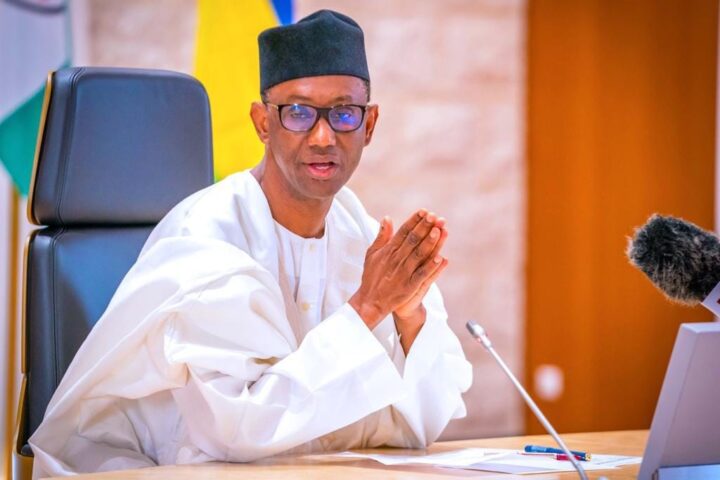
The Comptroller-General of the Nigeria Customs Service (NCS), Adewale Adeniyi MFR, has received the “Public Service Person of the Year 2024” award at the 17th Leadership Conference and Awards, held in Abuja.

The recognition celebrates his impact since assuming office as head of the NCS.The Leadership Group, which hosted the event, said Adeniyi emerged as the winner following a thorough evaluation that considered the performance of more than ten high-ranking public officials.

In a statement released by the organisers, the award was conferred on him for his “transformative leadership of the Nigeria Customs Service (NCS), ushering in a new era of transparency, operational efficiency, and improved revenue generation that has significantly contributed to Nigeria’s economic stability.”

Adeniyi attended the ceremony with his wife, Kikelomo Adeniyi, and some senior Customs officers. In his remarks, he thanked the organisers for the recognition and promised to intensify efforts toward trade facilitation, revenue improvement, and anti-smuggling initiatives.

Acknowledging the contributions of his colleagues, he said: “This award is not just about me; it reflects the collective commitment to transparency, efficiency, and national development.”

He restated his focus on modernization, enhancing trade processes, and raising revenue, while underlining the importance of accountable leadership and border control in ensuring national security.

Adeniyi received the award alongside notable figures such as Aliko Dangote, FCT Minister Nyesom Wike, and governors Umo Eno (Akwa Ibom), Umar Namadi (Jigawa), Bala Mohammed (Bauchi), and Abba Yusuf (Kano).

Also honoured were some senators and key players in the private sector.

Forest critical to Ekiti food security agenda – Oyebanji

By Hadiza Abdulkadir

Ekiti State Governor Mr Biodun Oyebanji has described sustainable forests as critical to his administration’s food security agenda.

Speaking in Ado Ekiti at the 2025 International Day of Forests, the Governor reaffirmed his commitment to sustainable forest management and environmental conservation.

Oyebanji, represented by the State Head of Service, Dr. Folakemi Olomojobi, spoke on the theme “Forests and Food” and emphasized the crucial role of forests in biodiversity conservation, climate change mitigation, and food security. 

The Governor stated that forests are not only sources of timber but also sustain livelihoods, ensuring food security for millions of people.

He urged a unified commitment to preserving the state’s forest resources to ensure the sector significantly contributes to the economic development of the state.

In his remarks, the Vice Chairman of the State House of Assembly Committee on Environment, Hon. Oladele Ogunsakin, hailed the inclusion of environmental sustainability as a sub-agenda in the 6-pillar of the Oyebanji-led administration.

Ogunsakin emphasised the importance of enhancing afforestation efforts, urging all stakeholders to engage actively in forest conservation.

Additionally, the Commissioner for Environment and Natural Resources, Erelu Tosin Aluko-Ajisafe, praised the Governor Oyebanji-led administration for its dedication to forest preservation aimed at enhancing food production.

Aluko-Ajisafe, represented by the Ministry’s Permanent Secretary Mr. Tunde Balogun, praised the courage of Non-Governmental Organizations for raising awareness about the importance of discouraging deforestation and bush burning.

Earlier, the Chairman of the State Forestry Commission, Mr. Idowu Akinlabi, stated that the annual celebration aims to highlight the various values of forests and to share experiences on how forests and trees enrich lives and theenvironment.

Akinlabi, who noted that preserving the forest was necessary for food security, called on communities and individuals to support the government in protecting the ecosystem.

In his remarks, the Executive Secretary of Ekiti State Forestry Commission, Mr. Sunday Adekunle, thanked the governor for his steadfast support of forestry initiatives in the state. 

Adekunle raised concerns about deforestation and overlogging in some communities in the northern part of the state, warning that this could lead to environmental degradation.

While urging collaborative efforts to combat deforestation in the state, the Executive Secretary announced the distribution of 100 seedlings to each participating school to foster a culture of environmental conservation among young people.

The event was attended by key government officials, including the Commissioner for Information, Rt. Hon. Taiwo Olatunbosun; the Permanent Secretary in the Ministry of Agriculture and Food Security, Mr. Babatope Ojo; and his counterpart in the Ministry of Environment and Natural Resources, among others.

Assessing Ribadu’s claim: Has insecurity reduced by 90% in Nigeria?

By Zayyad I. Muhammad

Nigeria’s National Security Adviser (NSA), Mallam Nuhu Ribadu, recently claimed that the country has recorded over 90% improvement in security under President Bola Ahmed Tinubu’s administration. He made this assertion in Jos, Plateau State, during a press briefing following a strategic meeting with the Commander of Operation Safe Haven, Major General Folusho Oyinlola. The meeting was convened after a deadly gunmen attack on the Bokkos community, which tragically claimed the lives of hundreds of residents.

Given the context of recent violence, Ribadu’s statement sparked mixed reactions from across the political spectrum. Critics argue that the NSA’s comments are aimed at shaping public perception as politicking for the 2027 general elections approaches. They view the remarks as part of a broader political narrative to build confidence in the administration. On the other hand, supporters commend Ribadu for leading an effective national security strategy, asserting that the improvements are tangible and worth acknowledging.

However, beyond partisan sentiments and political interests, it is essential to examine Ribadu’s claim from an objective standpoint grounded in verifiable data and realistic context. Security issues are too critical to be reduced to rhetoric, hey must be measured by real outcomes that affect the lives of everyday Nigerians.

Regardless of our political leanings, there have been undeniable improvements in some of Nigeria’s most dangerous zones. For example, the Birnin Gwari–Lagos highway in Kaduna State, which was shut for nearly a decade due to the menace of armed bandits, has now reopened to motorists, especially heavy-duty vehicles that previously avoided the route. The once-abandoned Birnin Gwari cattle market, inactive for over ten years, is now gradually returning to life with commercial activity.

Similarly, the Abuja–Kaduna highway, previously infamous for rampant kidnappings and ambushes, is now operational 24 hrs under constant military and police surveillance. Other major highways, such as the Kaduna–Kano expressway and the Jos–Akwanga–Lafia–Abuja corridor, now also witness 24-hour vehicular movement, marking a sharp contrast to the fear and hesitation that characterized travel in these areas just a few years ago.

Still, it’s important to remember that security is both delicate and dynamic. A full year of relative peace can be overshadowed by a single horrific incident. Groups like Boko Haram, ISWAP, and various bandit factions, such as the Lakurawa and Ansaru cells, still carry out attacks on soft targets in rural and semi-urban areas. While the overall frequency and scale of these attacks may be decreasing, their sporadic nature continues to pose serious challenges.

Between 2022 and 2024, several Nigerian security and intelligence agencies have reported significant gains. The Defence Intelligence Agency (DIA) indicated a 65% reduction in overall crime and criminality nationwide since May 2023. This figure is based on cumulative data from military operations, police reports, and inter-agency assessments.

The Department of State Services (DSS), particularly in the Federal Capital Territory (FCT), recorded a significant decline in high-profile crimes, including kidnappings, armed robberies, and terrorist threats, through 2023 and into early 2024.

The Nigeria Police Force also published extensive data on its security efforts: between 2023 and early 2024, police operations led to the arrest of 30,313 suspects linked to serious crimes such as kidnapping, armed robbery, cultism, and banditry. In the same period, 1,984 illegal firearms were recovered, along with 23,250 rounds of ammunition. Additionally, 1,581 kidnapped victims were successfully rescued across various states.

The proliferation of small arms and light weapons has long fueled Nigeria’s insecurity. However, between 2022 and 2024, the National Centre for the Control of Small Arms and Light Weapons (NCCSALW) recorded historic achievements. In February 2023, the Centre announced that it had recovered more than 10,000 small arms and light weapons from non-state actors during nationwide disarmament operations. By February 2024, the total number of retrieved weapons had increased to 20,000 firearms and over 60,000 units of ammunition.

Furthermore, in September 2024, the NCCSALW undertook the destruction of 30,132 recovered weapons, ranging from decommissioned and unserviceable arms to illicitly owned firearms.

The Nigerian Armed Forces, particularly the Army, have achieved notable success over the past three years. Between 2022 and 2025, military operations resulted in the neutralization of more than 8,034 terrorists across various theatres of operation, including the North-East, North-West, and North-Central regions. In February 2024 alone, 105 terrorists were eliminated during targeted counterterrorism operations. and 140 capture

A total of 6,376 kidnapped victims were rescued from insurgent enclaves and bandit hideouts in 2024 alone, thanks to joint operations involving the Army, Air Force, and local vigilante groups. These successes have contributed significantly to restoring public confidence in the state’s ability to respond to threats.

Additionally, by December 2024, the Nigerian military had dismantled numerous terrorist camps and degraded the operational capabilities of insurgent groups in several flashpoints. More than 20 high-profile bandit leaders and commanders were eliminated in precision operations, including:

 1. Ali Kachalla (Ƙawaje)

 2. Kachallah Dogo Kwaddi

 3. Lawali Dodo

 4. Ɓoderi

 5. Sani Wala-birki

 6. Kachallah Hana-Zuwa

 7. Damina

 8. Kachalla Sani Dangote

 9. Kachalla Adamu

 10. Halilu Sububu

 11. Baleri

 12. Modi Modi

 13. Kachalla Mai Shayi

 14. Kachalla Tsoho Lulu

 15. Ibrahim Nagure

 16. Kachalla Makore

 17. Bulak

 18. Tukur Sharme

 19. Hassan Ɗantawaye

 20.Ɗan-Isuhu

These names had long terrorised communities, operated illegal taxation systems, and masterminded large-scale abductions. Their deaths signal a turning point in Nigeria’s war against insecurity—at least in the short to medium term.

Critics, supporters, and objective observers alike hold valid perspectives on Ribadu’s claim. Security cannot be judged solely by statistics or isolated incidents—it must be assessed holistically, with a view to sustainability. While it would be inaccurate to declare total victory over insecurity, the data and field reports suggest that Nigeria is making measurable, strategic progress.

As Nigeria continues to grapple with complex internal threats, public expectations remain high. Citizens want not just temporary relief but long-term stability. Ribadu’s statement may be politically timed, but the figures back up his assertion, at least in terms of trend and direction. Whether or not one agrees with the 90% figure, one thing is clear: the tide appears to be gradually turning in favour of the state.

The challenge now is to sustain these gains, institutionalise reforms, and ensure that security is perceived and lived by every Nigerian in every part of the country.

Zayyad I. Muhammad writes from Abuja via zaymohd@yahoo.com.

Two women drown in Gezawa pond after work—Kano fire service

By Uzair Adam

Two women have died after reportedly drowning in a pond in Gezawa Local Government Area of Kano State.

The Kano State Fire Service confirmed the incident in a statement issued on Wednesday by its Public Relations Officer, Alhaji Saminu Abdullahi.

Abdullahi explained that the service received a distress call around 11:15 a.m. on Tuesday from a local vigilance group, reporting that two women had drowned.

According to the statement, relatives of the deceased told the vigilance group that the victims were workers at a hibiscus (Zobo) processing company and had gone to the pond after closing from work.

“Our rescue team was immediately dispatched to the scene, and we successfully recovered the corpses from the pond,” the statement said.

The remains of the victims were later handed over to Musa Garba, a police constable at the Gezawa Police Division.

The Fire Service urged residents to avoid open water bodies to prevent similar tragedies.

64 communities now under bandits’ control—Plateau Governor

By Uzair Adam

Governor Caleb Muftwang of Plateau State has decried the escalating insecurity in the state, revealing that no fewer than 64 communities have been overtaken by bandits.

Speaking during an appearance on Channels Television’s Politics Today, the governor described the situation as a form of genocide, allegedly perpetrated by terrorist groups backed by unidentified sponsors.

“I can tell you in all honesty that I cannot find any explanation other than genocide sponsored by terrorists,” he said, adding that security agencies must uncover the identities of those behind the acts.

Muftwang explained that the affected communities, located within Bokkos, Barkin Ladi, and Riyom Local Government Areas, had been previously attacked in 2023.

Despite efforts by residents to rebuild, he lamented that renewed assaults have now forced them out, with their lands being occupied and renamed by the assailants.

“As I am talking to you, there are not less than 64 communities that have been taken over… People are living there conveniently on lands they pushed others away from,” he said.

The governor further noted that the nature and scale of the violence indicate an organised effort, stressing the need for coordinated security action.

He said, “If these attacks have been going on for close to 10 years, it tells you that there is a deliberate, conscious attempt to clean out population. I am sure that in the coming days, the security agencies will work together, not at cross purposes but in unison.”

He reiterated that the violence in Plateau has gone beyond farmer-herder clashes, asserting that the crisis is the handiwork of organised criminal elements bent on destabilising the state.

“The aim of the enemy is to throw the state into gloom and mourning but we will rise above their intent,” he assured.

“This is not a farmer-herder issue… it is organised crime by malicious elements who do not want peace to reign.”

Muftwang concluded by expressing hope for divine victory and reaffirmed his administration’s resolve to resist the forces of instability.

Ribadu warns against ransom payments as rescued Kaduna victims regain freedom

By Abdullahi Mukhtar Algasgaini

The National Security Adviser (NSA), Mallam Nuhu Ribadu, has strongly advised families against paying ransoms to kidnappers, stating that it only fuels criminal activities.

His warning came as over 60 hostages, recently freed in Zangon Kataf, Southern Kaduna, were handed over to the Minister of Defence, Mohammed Badaru Abubakar, in Abuja on Tuesday.

The rescued victims, including a civil service Deputy Director and a relative of Bishop Matthew Hassan Kukah, had spent over a month in captivity.

Ribadu commended the military and security agencies for their efforts, crediting President Bola Tinubu’s support for recent successes. Defence Minister Badaru urged the public to provide actionable intelligence to aid security operations.

One freed captive, Adesiyam Michael, recounted his traumatic ordeal and called for youth rehabilitation to deter crime.

The operation is part of ongoing efforts to dismantle kidnapping networks nationwide.

Kano Emirate names new officials in latest reshuffle

By Abdullahi Mukhtar Algasgaini

In a recent reshuffle within the Kano Emirate, key members of the royal family have been elevated to higher positions, signaling a renewed focus on leadership and tradition.

Alhaji Mannir Sanusi Bayero has been promoted from Wamban Kano to the prestigious title of Galadiman Kano, marking a significant step in his royal duties.

Meanwhile, Alhaji Kabiru Tijjani Hashim, formerly Turakin Kano, has been elevated to Wamban Kano, reinforcing his role in the emirate’s governance.

Alhaji Mahmud Ado Bayero, previously Tafidan Kano, has now been promoted to Turakin Kano, highlighting his increasing influence.

In fresh appointments, Adam Lamido Sanusi (Ashraf) takes on the title of Tafidan Kano, while Alhaji Ahmed Abbas Sanusi has been named the new Yariman Kano.

The changes aim to strengthen the emirate’s leadership, ensuring continuity and progress in Kano’s traditional governance.

When police become predators in uniform

By Abdulhakeem Yetu Zakari

Police officers are sworn to protect, yet too often they become the very predators that citizens fear. The recent case of police extortion at Murtala Muhammed International Airport, highlighted by an editorial in the Nigerian Tribune on Friday, March 14, 2025, is just one of many disturbing examples.

A traveler, on his way out of the country, found himself at the mercy of uniformed officers who accused him of internet fraud merely because they discovered a love letter on his phone. What should have been a routine encounter quickly escalated into an ordeal—one that concluded with him being extorted of ₦260,000 through a POS transaction. 

The money was sent to an account linked to a suspect, a method that has become all too common in these shakedown operations. This brazen misconduct is more than just a stain on the reputation of the Nigerian police; it is a cancer eating deep into the fabric of society. 

When those responsible for law enforcement become the enforcers of lawlessness, to whom do citizens turn? Police extortion in Nigeria has evolved from sporadic bribes into a well-organized criminal enterprise embedded within the force. Officers who should be defending the rights of the people now act like rogue agents, preying on innocent citizens. 

The danger of this menace extends beyond financial loss—it breeds fear and resentment and erodes trust in the justice system. For many Nigerians, the fear of encountering police officers has surpassed the fear of encountering criminals. When citizens approach a police checkpoint, they are not concerned about security but about how much money they might have to part with to evade harassment, intimidation, or even arbitrary detention. 

Those who resist are often brutalised, falsely accused of crimes, or threatened with trumped-up charges. Some do not make it out alive. Every incident of extortion further damages the already fragile relationship between the police and the public. Citizens who are supposed to rely on law enforcement for protection now view officers with suspicion and fear. 

This loss of trust has far-reaching consequences—not just for individuals but for national security. When the public distrusts the police, cooperation in fighting actual crime diminishes. People become reluctant to report crimes, knowing that the very officers they turn to may exploit or even implicate them falsely. 

This weakens overall law enforcement efforts and emboldens actual criminals. On the international stage, these acts of extortion paint Nigeria as a nation where corruption is deeply entrenched. Foreign travellers and investors hear stories of police preying on citizens, and it raises concerns about safety, governance, and the rule of law. 

Who would want to visit or invest in a country where law enforcement officers act like criminals? I do not speak as an outsider to this reality—I, too, have been a victim. In December 2024, in Ajaokuta, Kogi State, my friend and I stepped out to buy something from a nearby store. Suddenly, police officers appeared and singled out my friend, accusing him of an unspecified crime. 

They found nothing incriminating, yet they threatened him and demanded a “bail” fee—right there on the roadside. No station, no paperwork, just a blatant extortion scheme. Having heard too many similar stories, I knew better than to linger. I ran. Because in Nigeria, when the police grab you, guilt or innocence does not matter. What matters is how much money they can extract before letting you go.

This is the harsh reality that many Nigerians face daily. Whether traveling abroad or simply walking down the street, citizens are easy targets for extortion. The very people meant to ensure safety have transformed into predators, shaking down those they vowed to protect. This must stop. 

I urge the relevant authorities to impose strict penalties on officers who misuse their power. There should be an independent complaints system where victims of police extortion can safely report cases without fear of retaliation. Surveillance and monitoring systems must be implemented, especially at known extortion hotspots such as airports and major highways.

If decisive action is not taken, police extortion will continue to thrive, deepening the distrust between the people and law enforcement. The Nigerian police force still has an opportunity to redeem itself, but it must act swiftly and decisively to purge corrupt elements from its ranks. If the police are no longer our protectors, then who will save us from them?

Abdulhakeem Yetu Zakari is interning at PRNigeria and can be reached at: abdulhakeemzakari7@gmail.com.

80-year-old woman’s murder: Anambra police arrest two suspects

By Anas Abbas

The Anambra State Police Command has arrested two suspects in connection with the tragic murder of an 80-year-old woman in Ihiala, Anambra State.

The suspects, identified as Chidiebere Igboanugo and Emmanuel Ibeabuchi, are both residents of Umunwaji Ogboro, Ihiala.

According to a statement from the police spokesman, SP Tochukwu Ikenga, the investigation into the crime began following a complaint received on April 2, 2025.

The victim, Mrs. Theresa Igbojonu, was found tied by her legs and mouth before being killed. In addition to the heinous act, the suspects allegedly stole her black CG motorcycle, which has since been recovered by the authorities.

SP Ikenga reported that on April 5, 2025, a joint security team conducting patrols in Ihiala arrested Igboanugo after he was spotted riding the stolen motorcycle by the victim’s son at Ezego junction.

During questioning, Igboanugo revealed Ibeabuchi’s involvement, leading to his arrest on April 7, 2025.

The Commissioner of Police has instructed that the case be transferred to the State Criminal Investigation Department in Awka for a thorough investigation.

Authorities are also urged to intensify efforts to apprehend the fleeing suspects.

Once the investigation is complete, the arrested individuals will be charged in court for their alleged involvement in this tragic incident.

Wike hosts suspended Rivers lawmakers in UK

By Anwar Usman 

The Minister of the Federal Capital Territory, Nyesom Wike, hosted suspended Rivers state house of assembly lawmakers in the United Kingdom on Monday.

The Senior Special Assistant to the Minister on Public Communications and Social Media, Lere Olayinka, posted on X.com on Tuesday that the lawmakers, who are in the UK for “legislative capacity building,” were hosted to a dinner by the minister.

He stated that “Yesterday, the FCT Minister, Nyesom Wike, hosted Rivers State House of Assembly members who are in the United Kingdom for Legislative Capacity Building, to a dinner.

Reports have it that on Sunday, the suspended Rivers lawmakers, led by the Speaker, Martins Amaewhule, departed Nigeria for a tour in the United Kingdom.

Amaewhule was said to have declared open the 10th Rivers Assembly Legislative Tour of the United Kingdom on Friday.

He emphasized that the legislative tour would allow the House to learn new things outside Nigeria, which would improve members’ capacity for the tasks ahead.

On March 18th, President Bola Tinubu declared a state of emergency in Rivers State and suspended Governor Siminalayi Fubara, Deputy Governor Prof Ngozi Odu, and members of the state House of Assembly.