Month: March 2025

NBA condemns ‘unconstitutional’ removal of Rivers State officials under emergency rule

By Abdullahi Mukhtar Algasgaini

The Nigerian Bar Association (NBA) has strongly criticized President Bola Ahmed Tinubu’s declaration of a state of emergency in Rivers State, describing the purported suspension of the state’s democratically elected officials as unconstitutional.

In a press release issued on March 18, 2025, the NBA expressed grave concerns over the President’s decision to suspend Governor Fubara, his deputy, and members of the Rivers State House of Assembly for six months, citing political tensions and pipeline vandalism as reasons for the emergency declaration.

The NBA emphasized that Section 305 of the 1999 Constitution, which governs emergency proclamations, does not grant the President the power to remove elected officials.

According to the association, such actions violate Nigeria’s federal structure and democratic principles.

The Constitution outlines specific conditions for declaring a state of emergency, including war, imminent danger, or a complete breakdown of public order—none of which, the NBA argues, are met by the current political crisis in Rivers State.

The association also noted that a state of emergency requires approval from the National Assembly within two days if in session, or ten days after reconvening, to remain valid.

The NBA called on lawmakers to reject any unconstitutional ratification of the emergency measures and warned that suspending elected officials sets a dangerous precedent for Nigeria’s democracy.

The NBA urged all stakeholders, including the judiciary, civil society, and the international community, to monitor the situation closely and ensure that constitutional norms are upheld.

It reaffirmed its commitment to defending the rule of law and protecting Nigeria’s democracy from executive overreach.

Legal experts condemn Rivers State emergency declaration as unconstitutional

By Hadiza Abdulkadir

The federal government’s declaration of a state of emergency in Rivers State has sparked widespread criticism, with legal experts and political analysts condemning the move as unconstitutional and politically motivated.

Prominent legal practitioner Abba Hikima, Esq. argues that President Bola Tinubu lacks the legal authority to suspend a democratically elected governor, deputy governor, and the members of the State House of Assembly. He insists that both Nigerian law and judicial precedents explicitly prohibit such actions.

“There’s nothing in the law or practice of proclamation of a state of emergency in Nigeria that empowers the president to suspend elected officials. Several judicial precedents outrightly prohibit this, and the president is not unaware,” Hikima said.

He further lamented a growing trend in Nigeria where those in authority deliberately violate the law to weaken their opponents. According to him, victims of such unconstitutional acts are often forced into long and uncertain legal battles, with little hope of enforcing favorable judgments.

State of Emergency Justification Questioned

Hikima also questioned the rationale behind declaring a state of emergency in Rivers, arguing that the conditions required for such a measure have not been met.

“There is no actual breakdown of law and public order in Rivers State that necessitates extraordinary federal intervention. Several states in Northern Nigeria currently face worse security challenges, yet the president has not declared a state of emergency there,” he said.

While clarifying that he is not advocating for emergency rule in any part of the country, Hikima described the Rivers case as unfair, unwarranted, and driven by political motives rather than genuine security concerns.

Violation of Democratic Principles

The lawyer also criticized the appointment of a sole administrator to oversee the state’s affairs, pointing out that the president himself admitted that no government can function without all three arms.

“By appointing a sole administrator who will act as both lawmaker and executor, the president has contradicted his own statement. This move goes against the spirit of Nigeria’s legal and political system,” Hikima added.

Under a state of emergency, the federal government assumes temporary control over certain state functions, which could include deploying security forces, restricting rights such as movement and assembly, imposing curfews, or directing state resources toward security operations. However, Hikima warns that this latest declaration sets a dangerous precedent for Nigeria’s democracy.

National Assembly Urged to Resist Approval

With the National Assembly in session, Hikima has called on lawmakers to reject what he describes as a “brazen constitutional overreach.”

“The National Assembly has the power to prevent this embarrassment. The state of emergency can only come into effect after being approved by both houses with a two-thirds majority. Lawmakers have 48 hours to stand against this unconstitutional action,” he said.

As debate rages over the legality and necessity of the state of emergency in Rivers State, all eyes are now on the National Assembly to determine the next course of action.

JUST IN: Tinubu declares state of emergency in Rivers, suspends Fubara, deputy for 6 months

By Anwar Usman

President Bola Tinubu has suspended the Governor of Rivers State, Siminalayi Fubara and his deputy, Mrs Ngozi Odu for six months.

The president stated this while addressing the country on the current political crisis in the state.

The president was quoted saying “By this declaration, the Governor of Rivers State, Mr Siminalayi Fubara, his deputy, Mrs Ngozi Odu and all elected members of the House of Assembly of Rivers State are hereby suspended for an initial period of six months,” he said in a nationwide broadcast on Tuesday.

Details later…

Mesut Özil banned from Werder Bremen over controversial tattoo

By Sabiu Abdullahi

Former Arsenal and Werder Bremen midfielder, Mesut Ozil, has reportedly been banned from returning to his former Bundesliga club due to a tattoo that has sparked controversy.

The 36-year-old, who played for top clubs like Arsenal, Real Madrid, Schalke, and Fenerbahce, retired from professional football in June 2023 at the age of 34.

However, his recent display of a tattoo featuring a grey wolf and a flag with three crescent moons has led to his exclusion from Werder Bremen.

The symbols associated with Ozil’s tattoo are linked to far-right groups that promote “anti-semitism, far-right extremism, and ultra-nationalism.”

As a result, the German club has distanced itself from the former player.

According to Bild, Werder Bremen recently left Ozil off the guest list for a tribute event honoring former star Diego Ribas.

The two footballers had played together at Bremen before Ozil secured a transfer to Real Madrid in 2010.

Lamine Yamal becomes first Spain player to fast during Ramadan

By Muhammad Sulaiman

Spanish football prodigy Lamine Yamal is set to make history as the first player in the Spain national team to observe fasting during Ramadan while on international duty.

According to reports, the 16-year-old winger has chosen to fast as a mark of respect for his family’s Muslim traditions.

Despite his young age, Yamal has already made headlines as one of the most promising talents in European football, and his commitment to both his faith and his career has drawn admiration from fans.

The Barcelona star’s decision highlights the growing diversity within Spanish football, as well as the increasing visibility of Muslim athletes who balance professional sports with religious observances.

Spain’s coaching staff is expected to accommodate Yamal’s needs during the fasting period, as has been the case with Muslim players in other top European teams.

Ramadan, the holiest month in Islam, involves fasting from dawn to sunset, posing a unique challenge for athletes. However, many Muslim footballers have successfully managed their performance during the holy month.

Yamal’s choice to fast reflects not only his personal devotion but also the broader cultural representation within Spain’s national squad.

Wike revokes PDP’s new secretariat land over unpaid dues

By Uzair Adam 

The Minister of the Federal Capital Territory (FCT), Nyesom Wike, has revoked the land allocated for the new National Secretariat of the Peoples Democratic Party (PDP) in Abuja’s Central Business District.  

The Daily Reality reports that the 12-story building, which has remained uncompleted for two decades, was initially estimated to cost N16 billion when construction began in 2008. 

Despite raising over N62 billion through fundraisers and electoral activities, the project remains unfinished.  

A letter confirming the revocation, signed by the Director of Land Administration, Chijoke Nwankwoeze, on behalf of the minister, was addressed to the PDP National Chairman. 

Dated March 13, 2025, the letter cited the party’s failure to pay annual ground rents for 20 years—spanning from January 1, 2006, to January 1, 2025—as the reason for the decision.  

The letter referenced several public notices issued by the FCT Administration since 2023, urging allottees to clear outstanding dues on their properties. 

It also cited Section 28, Subsection 5 (a) and (b) of the Land Use Act, which grants the government the authority to revoke land over breaches of the terms of occupancy.  

With the revocation now in effect, the land has reverted to the FCT Administration, which plans to take immediate possession. As of the time of filing this report, PDP had yet to issue an official response.

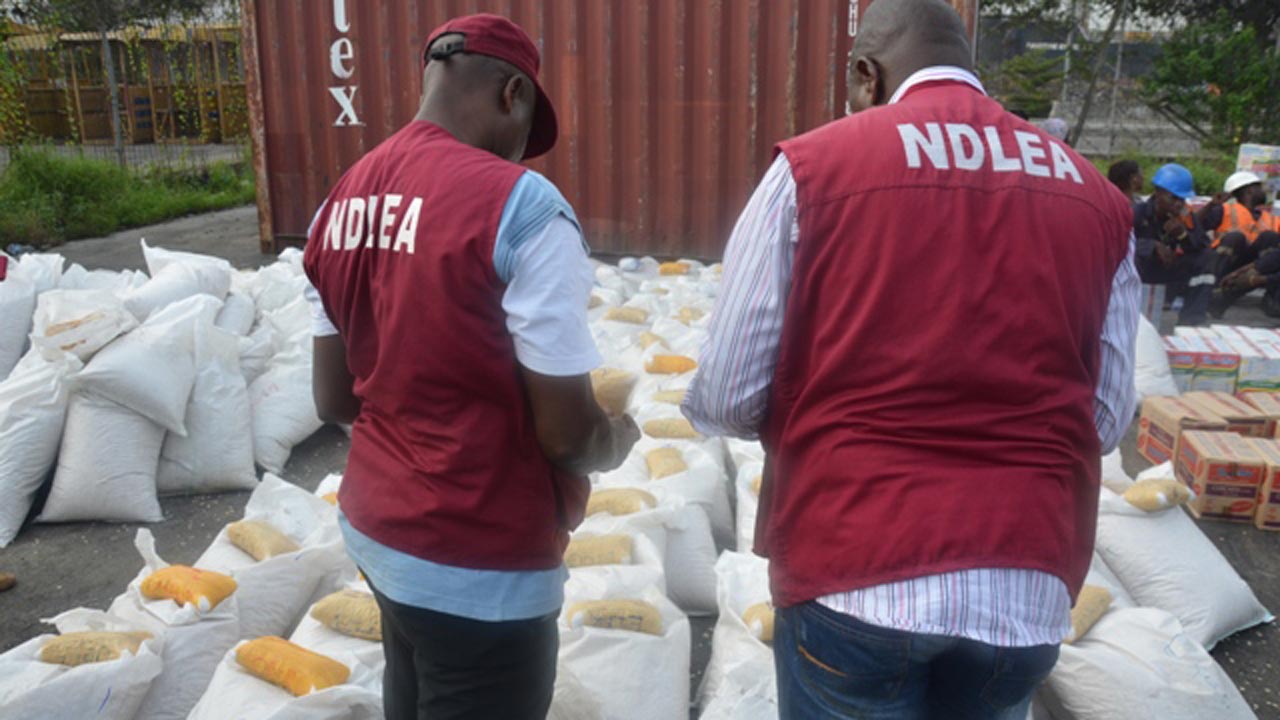
Crushing Drugs: NDLEA’s success stories under WADA

By As-sayyidul Arafat Abdulrazaq 

The War Against Drug Abuse (WADA) in Nigeria, led by the National Drug Law Enforcement Agency (NDLEA), is a vigorous effort to combat a problem that has been undermining the country’s social fabric. Launched on June 26, 2021, under the Buhari administration, it focuses not only on apprehending drug dealers—although there is a significant emphasis on that—but also on a comprehensive strategy to reduce both the supply and demand for illicit drugs through enforcement, education, and community action.

Nigeria’s drug problem is severe. Cannabis, codeine, tramadol, and methamphetamine (locally known as “ice” or “mkpuru mmiri”) are widespread, particularly among young people. According to the United Nations Office on Drugs and Crime (UNODC), cannabis leads the list, followed by opioids and cough syrups containing codeine. This is not merely a health crisis; it also fuels crime, cultism, and insurgency, as groups like Boko Haram are reportedly financing their operations through drug trafficking.

WADA’s strategy divides into two lanes. On the supply side, the NDLEA’s Offensive Action, which began in January 2021, has been relentless. Under Brig. Gen. Buba Marwa’s leadership, the agency has achieved significant victories: over 57,792 arrests, 10,572 convictions, and more than 10 million kilograms of drugs seized since he took charge. 

The demand side is where WADA’s heart is on the demand side: prevention through awareness. They’ve rolled out sensitization campaigns in schools, mosques, churches, markets, and workplaces nationwide and given lectures at places like Maku Grammar School in Oyo or Jama’atu Islamiyya in Kogi State.

How did they do it? Through grassroots hustle and smart partnerships. NDLEA’s 36 state commands collaborated with local leaders, traditional rulers, youth groups, and the Association of Local Governments of Nigeria (ALGON) to host talks and rallies. The “Save Our Families” campaign in 2024 distributed drug test kits to parents to prevent the drug abuse crisis from affecting homes.

The results are clear. By mid-2024, over 13,000 people will have received counseling or rehab, a significant increase from just 599 in 2020, with 8,129 individuals receiving assistance last year alone, according to LEADERSHIP on February 25. This reflects individuals choosing change because they’ve heard the message. In Imo State, after a talk in 2024 at Owerri-Aba Primary, teachers began to look for warning signs. 

In Kaduna State, a February 24 event prompted residents to pledge for drug-free neighborhoods, resulting in a significant increase in calls to NDLEA’s helpline by early 2025. In Kano, where Brig. Gen. Buba Marwa highlighted 1.07 millionusers during the launch of a sensitization campaign against drug abuse, domestic violence, and the illicit drug trade organized by the National Orientation Agency (NOA) in Kaduna, Marwa discussed Almajiri children, aiming to reduce the number of young people that dealers can target, which could decrease crimes such as gang fights and theft.

This year, WADA’s sensitization efforts are making a significant impact in schools and communities. Lectures were held at the Federal Cooperative College in Ibadan on February 20, warning students about the dangers of drugs. Additionally, there is an ongoing initiative in the FCT with new area commands in Kwali and Kuje aimed at spreading the message further. They are maintaining the momentum from 2024, during which they reached over 1.8 million people alone.

But it is not all solved. Drugs still flow, and poverty keeps some trapped. However, with over 10 million kilos seized,including 25 tons destroyed in Kogi this week, the NDLEA combines this effort with outreach to make a difference. WADA’s success lies not only in the drugs they intercept; it’s also in the minds they influence. This fight demonstrates that Nigeria can push back step by step, with a plan that is working.

Looking ahead, the NDLEA could strengthen its capabilities by adopting modern technology. Currently, the NDLEA relies significantly on human intelligence and physical operations. Their officers, including the elite Strike Force established in 2021, carry out raids, patrols, and manual inspections at airports, seaports, borders, and highways. However, these efforts, while effective, are basic compared to what will be available in 2025. 

Traffickers are adapting by hiding drugs in compressors, duvets, and even soap bars, as seen in recent busts. Drones, for instance, are not widely mentioned in their operations, yet they could scour remote cannabis farms or stash points along the border. Digital tracking, AI, and data analytics to map online drug deals or shipping patterns seem to be underutilized.

As-Sayyidul Arafat Abdulrazaq is Corp member at the Center for Crisis Communication and can be reached at as.sayyid21@gmail.com.

U.S. deports Rhode Island doctor over alleged Hezbollah ties

By Hadiza Abdulkadir

U.S. authorities have deported a Rhode Island doctor, Rasha Alawieh, to Lebanon after allegedly discovering “sympathetic photos and videos” related to Hezbollah on her cellphone, officials announced Monday.

Dr Alawieh had been living in the United States for several years. Officials said forensic analysis of her deleted files revealed images and footage of the late Hezbollah leader, as well as militant activities.

Authorities did not specify whether she had direct ties to the group, but her presence in the U.S. was deemed a security concern. She was deported last week following an investigation.

The case underscores the heightened scrutiny of potential security threats, as officials continue to monitor individuals with suspected extremist affiliations.

Gov Yusuf warns property owners in Kwankwasiyya, others to reside in their buildings or risk revocation

By Uzair Adam

Governor Abba Kabir Yusuf of Kano State has directed property owners in Kwankwasiyya, Amana, and Bandirawo cities to occupy their properties within three months or risk having them revoked.

The directive was announced in a statement by the governor’s spokesperson, Sunusi Bature Dawakin Tofa, on Monday.

It follows the swearing-in of the new Commissioner for Housing Development at the Kano Government House.

“We must continue developing our state, and these three cities were established with that vision in mind. To all property owners in these areas, I am giving a clear directive: either occupy your properties or risk revocation,” Governor Yusuf stated.

He urged those unable to relocate to consider renting out their properties, emphasizing the government’s commitment to ensuring the areas thrive.

“We want these cities to flourish, which is why we have provided all necessary infrastructure, including roads, water, and 24-hour electricity.

“The Governor’s Lodge is also situated in Kwankwasiyya, and I am already operating from there. If you have any complaints, reach out and talk to the Governor,” he added.

Governor Yusuf also announced that the State Ministry of Housing Development would take over the current Housing Corporation headquarters, while the Corporation would be relocated to Kwankwasiyya City to bring the government closer to the people.

Tinubu appoints Bishop Kukah as pro-chancellor of federal varsity in Kaduna

By Abdullahi Mukhtar Algasgaini

President Bola Tinubu has announced the appointment of Bishop Matthew Kukah, the Catholic Bishop of Sokoto Diocese, as the Pro-Chancellor and Chairman of the Governing Council of the Federal University of Applied Sciences, Kachia, Kaduna State.

The appointment is part of efforts to strengthen the leadership of the newly established institution.

In addition to Bishop Kukah, President Tinubu appointed key principal officers for the university, including Prof. Qurix Williams Barnabas as Vice Chancellor, Sanusi Gambo Adamu as Registrar, Ibrahim Dalhat as Bursar, and Prof. Daniel Abubakar as University Librarian.

Other members of the Governing Council include Mr. Thomas Etuh (North Central), Chief Fabian Nwaora (South East), Prof. Femi Taiwo (South West), and Zarah Bukar (North East).

The appointees were selected based on their distinguished careers, leadership experience, and commitment to advancing education in Nigeria.

President Tinubu urged them to leverage their expertise to position the university as a center of academic excellence and research, in line with the administration’s Renewed Hope Agenda.

The Federal University of Applied Sciences, Kachia, formerly known as Nok University, was renamed following the federal government’s takeover of its assets.

The university is set to admit its first cohort of students in September 2025.

President Tinubu called on the new leadership to provide visionary guidance and lay a strong foundation for the institution’s growth.