Month: March 2025

Nuhu Ribadu for President 2031?

By Zayyad I. Muhammad

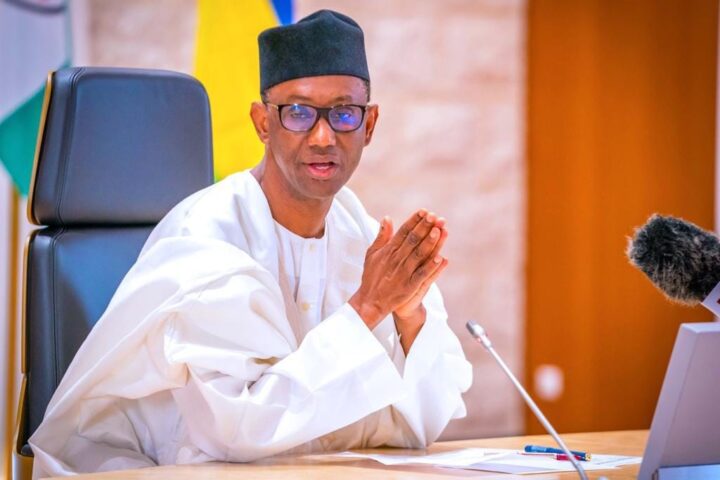
The Nigerian political landscape is never short of intrigue, speculation, and high-stakes maneuvering. The latest storm centers around Mallam Nuhu Ribadu, Nigeria’s National Security Adviser (NSA), and allegations made by his ‘former’ ally and friend, Mallam Nasir El-Rufai, the former governor of Kaduna State.

El-Rufai has accused Ribadu of secretly positioning himself for a presidential bid in 2031, alleging that he is working to eliminate key northern politicians before the elections. In an Arise TV interview, El-Rufai said:

“Somebody wants to destroy my reputation. Why? Nuhu Ribadu wants to be president in 2031. He has to eliminate every northerner that he thinks is on the radar.”

These allegations have sparked intense debate, given Ribadu’s current position as the NSA, one of the most powerful offices in the country. The role demands absolute loyalty to the sitting president, and any sign of personal political ambition would be politically dangerous.

However, Ribadu has vehemently denied the claims, dismissing any suggestion that he is planning a presidential run in 2031. In his response, he stated:

“For the avoidance of doubt, I want to put it on record that I have never discussed running for president in 2031 with anybody.”

Currently, President Bola Ahmed Tinubu is in the second year of his first term and is widely anticipated to run for reelection in 2027. If he wins, his administration would extend until 2031. Considering this timeline, it seems premature for anyone in Tinubu’s inner circle—particularly someone in such a sensitive position as the NSA—to be planning a presidential bid so early.

To be fair to Ribadu, every seasoned political observer knows he is too intelligent and experienced to make such a politically reckless move. Launching a presidential campaign while still serving in a crucial role would create unnecessary distractions, fuel rivalries, and generate deep animosities within the government. It would also call his loyalty to Tinubu into question.

So why is Ribadu being linked to 2031?

First, his close relationship with President Tinubu has earned him the title of Tinubu’s golden boy (Dan Fulani). His reputation as a disciplined, intelligent,  experienced, and competent leader makes him a natural contender in any discussion about potential successors. Any rising political figure will inevitably attract speculation in a political climate where future ambitions are often carefully managed behind closed doors but widely discussed publicly by everyday people.

Second, the political class understands that succession planning is always at play, even when not publicly acknowledged. While Ribadu may not currently campaign for the presidency, political opportunities can arise unexpectedly. Nigerian politicians are known for their ability to seize the moment when the circumstances align, even if it was not originally in their plans.

Politics is unpredictable, and today’s denials can quickly become tomorrow’s declarations. Whether or not Nuhu Ribadu harbors presidential ambitions, the reality is that he possesses the qualities of a strong contender—experience, credibility, and proximity to power. If the opportunity presented itself, would he take it?

Only time will tell. But one thing is sure: The road to 2031 has already begun, and the political maneuvering will only intensify in the coming years.

Zayyad I. Muhammad writes from Abuja via zaymohd@yahoo.com.
Governor Lawal Dauda: Redefining the concept of good governance in Zamfara State

By Jamil Jetta

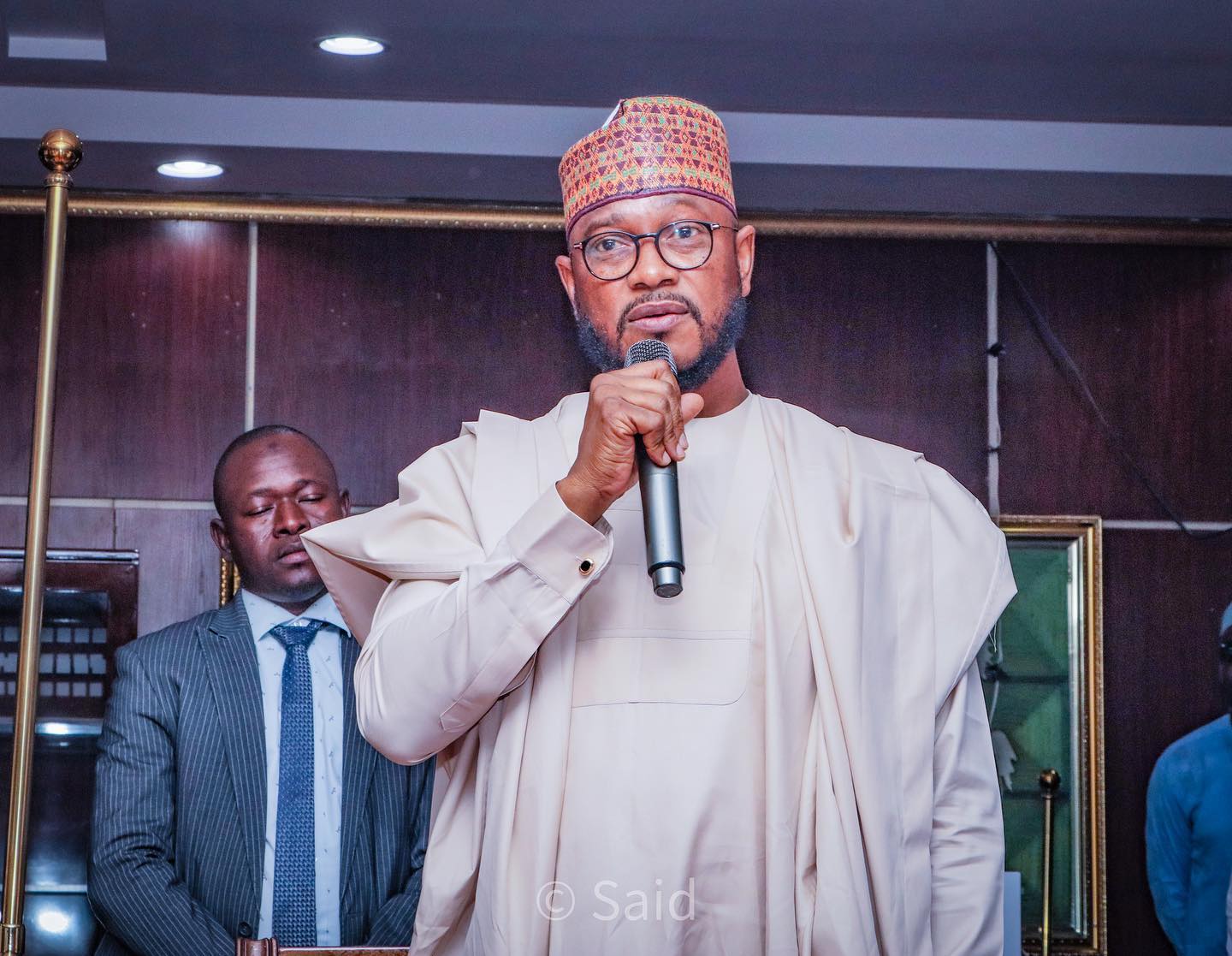
Since assuming office as the Governor of Zamfara State, Alhaji Lawal Dauda has demonstrated an unwavering commitment to restoring the lost glory of the state, particularly in the critical areas of education, security, and infrastructure.

His administration has prioritized human development, aligning with the robust manifesto of the People’s Democratic Party (PDP), which emphasizes the importance of empowering citizens and fostering sustainable growth.

Through strategic and deliberate interventions, Governor Dauda has begun to rewrite the narrative of Zamfara, transforming it from a state plagued by insecurity and underdevelopment to one of hope and progress,positioning it toward becoming an examplar of greatness.

Remarkably, one of the most notable achievements of Governor Dauda’s administration is his dedication to revamping the education sector. Recognizing that education is the bedrock of development, he has launched strategic initiatives aimed at restoring the state’s educational system to its former glory.

His administration has invested heavily in the renovation of dilapidated schools, provision of learning materials, and training of teachers to enhance the quality of education.

Additionally, scholarship programs have been introduced to support indigent students, ensuring that financial constraints do not hinder access to education. These efforts have not only improved enrollment rates but also rekindled hope among parents and students who had previously lost faith in the system.

Hid decision to settle outstanding WAEC and NECO Examination debts was greeted with profound joyIn the area of security, Governor Dauda has implemented a zero-tolerance policy against banditry, kidnapping, and other forms of criminality that have plagued Zamfara for years.

His administration’s security blueprint focuses on collaboration with security agencies, community engagement, and the use of technology to combat crime. This multi-pronged approach has led to a significant reduction in violent attacks, allowing farmers to return to their fields and businesses to thrive once again.

The governor’s commitment to restoring peace has not only saved lives but also revived the state’s economy, which had been crippled by years of insecurity.

Despite the protracted security challenges that has led to the deaths of thousands of innocent citizens and collateral co-efficient, Governor Dauda has made remarkable strides in infrastructure development. His administration has embarked on the construction and rehabilitation of roads, bridges, and public buildings, improving connectivity and access to essential services.

These projects have not only enhanced the quality of life for residents but also created employment opportunities, thereby stimulating economic growth. The governor’s focus on infrastructure underscores his belief that development is possible even in the face of adversity.

Governor Dauda has also prioritized the welfare of civil servants and pensioners, recognizing their contributions to the state’s development. His administration has ensured the timely payment of salaries and cleared arrears owed to pensioners, providing much-needed relief to retirees who had long been neglected.

Furthermore, the governor has introduced agricultural initiatives aimed at boosting food production and creating wealth for farmers. By providing farmers with improved seedlings, fertilizers, and modern farming equipment, his administration has empowered them to increase productivity and contribute to the state’s food security.

Piquantly, Governor Lawal Dauda’s achievements in education, security, infrastructure, and civil service welfare reflect his unwavering commitment to the development of Zamfara State.

His strategic interventions have not only addressed immediate challenges but also laid a solid foundation for sustainable growth. As he continues to implement his robust manifesto, there is no doubt that Zamfara is on the path to reclaiming its lost glory and becoming a model of progress in Nigeria.

Governor Dauda’s leadership serves as a beacon of hope, proving that with determination and vision, even the most daunting challenges can be overcome.

Jamil Shuaib Jetta is former Aspirant for Kaduna State House of Assembly. He can be reached via jamilshuaib57@gmail.com 6 March, 20256 Ramadan, 1446AH.

Kano govt begins reconstruction of dilapidated roads

By Anwar Usman

The Kano State Governor, Abba Kabir Yusuf, has announced the reconstruction of 17 dilapidated roads in the Kano metropolitan area as part of his urban renewal agenda for the city to meet a mega city status.

The governor said the effort is to make Kano state “one of the finest mega cities in Nigeria.”

This is contained in a statement released by the Spokesperson to the governor Sanusi Bature DawakinTofa and distributed to journalists on Saturday.

The statement in part read that, “The Governor flagged off the reconstruction of Club Road as part of 17 Urban Renewal Projects in Kano Metropolis held at Nassarawa Local Government Area on Saturday”.

“I feel highly delighted, I feel happy and I feel fulfilled, as your governor who made a promise during our NNPP electioneering campaign, especially in the metropolis, we made a promise when elected, by the Grace of Almighty Allah we are going to make Kano in terms of infrastructural development as one of the best cities in Nigeria,” Yusuf was quoted as saying.

“Today, we are flagging one of the gigantic projects for the rehabilitation of dilapidated metropolitan roads which were deliberated and approved by the State Executive Council,” the governor hinted.

Yusuf noted to the people of the state that any project under his administration would meet global standards before being handed over.

He expressed satisfaction with the quality of work being executed by the contractor and appealed to him to maintain the standard.

The governor said contractors should expect his unplanned visits to the site anytime to ensure accountability.

On the other hand, the Commissioner of Works and Infrastructural Development Marwan Ahmad said the Urban Renewal Programme for Kano Metropolis was initiated by Governor Abba Kabir and approved by cabinet members.

He said this particular project begins from Club Road to Ashton Road to Airport Road to Murtala Mohammed Road respectively.

Christmas and Easter Holidays: Why our school system should be reviewed

Prof. Abdussamad Umar Jibia

Throughout the week, discussions have arisen following the Christian Association of Nigeria’s (CAN) rejection of the closure of schools in some predominantly Muslim states in the North. In that context, I came across another article published by the Daily Trust on the same topic, written by a Muslim, or at least someone with a Muslim name; I cannot ascertain his faith.

This morning, I took some time away from assessing my students to read the articles. It is unfair to respond to a statement that one has not read. 

I read the press release by CAN a few times over, hoping I might find some wisdom. Unfortunately, I couldn’t. CAN is its usual self, apprehensive of anything Islamic out of fear of losing relevance. 

Christianity in Nigeria, as I often say, is merely surviving due to the presence of Islam. For instance, if Muslims were to cease going on hajj, all the Christian pilgrims’ boards, including the central one in Abuja, would naturally wither away. It is only when Muslims discuss Shariah that Christians recall the existence of Ecclesiastical law, which many of them know little about. The examples are numerous.

This time around, CAN understands that closing schools “for an extended period disrupts academic schedules and threatens the educational advancement of millions of students”. What CAN has forgotten is that Nigerian schools have always been closed for the same “extended period” of at least one month since our colonial days for Christian festivals. In fact, the Nigerian school calendar is designed to close all schools for at least two weeks each for Easter and Christmas celebrations. 

The Christian holidays have been officially recognised and embedded in our school calendar in a so-called secular country. If CAN were concerned about religious balance, as they falsely claim, they would have advocated for the cancellation of the Christmas and Easter holidays and proposed something neutral.

Archbishop Daniel Okoh, the signatory to the press release, wanted Nigerians to believe that the closure of schools during Ramadan would compromise the education of Christian children and devalue Christian communities in the North. This is an admission by the CAN President that the education of Nigerian Muslim children has always been compromised and that Nigerian Muslims have no value in Nigeria since their children are forced to remain out of schools for Christian festivals.

I am waiting for the CAN President and his team to go to court as they have threatened. What I would like to assure them is that Nigerian Muslims are now wiser. CAN hasn’t yet seen anything. All traces of Christianity as imposed on other Nigerians must be removed from our national life. It is just a matter of time.

The opening argument of the Daily Trust writer is that there is no single injunction in Islam mandating the closure of schools during Ramadan. I wish he would tell us where Islam mandates the closure of schools for Christmas and Easter. Islam is a complete way of life. Isn’t that what he is trying to argue? Does Islam not prevent us from blindly copying Jews and Christians?

From the beginning, Muslims have paid for the unity of the North and, indeed, Nigeria with their religion and, in some instances, their blood. This must stop at some point. If we are to remain united, then the rights of Muslims must be acknowledged and granted.

The people who colonised us were Christians. This explains why Christianity is ingrained in almost every aspect of our national life. Now that Muslims are expressing dissent, some people are calling for unity. A shared Northern identity? Yes. One Nigeria? Yes. One religion? No, we are Muslims and will not continue to accept the imposition of another religion upon us.

Finally, let me call on our Governors and, indeed, the Federal Government to embark on a comprehensive reform of our school system to align it with our values and beliefs. All neocolonial items should be removed.

Prof. Abdussamad Umar Jibia can be contacted via aujibia@gmail.com.

NSA commends customs for proactive border security measures

By Sabiu Abdullahi

The National Security Adviser (NSA), Malam Nuhu Ribadu, has praised the Nigeria Customs Service (NCS) for its proactive efforts in securing the nation’s borders and facilitating trade.

Ribadu made this commendation when the Comptroller-General of Customs (CGC), Bashir Adewale Adeniyi MFR, paid him a courtesy visit at his office in Abuja on Thursday.

During the meeting, Adeniyi showed the NCS’s adoption of advanced technology, such as Geospatial technology, to enhance surveillance, intelligence gathering, and enforcement at Nigeria’s land and maritime borders.

Speaking these efforts, the NSA stated, “The Customs Service has demonstrated a commendable commitment to modernization and efficiency in securing our borders. Integrating advanced technology into border management is a step in the right direction and aligns perfectly with our broader national security objectives.”

In his response, Adeniyi expressed gratitude for the NSA’s recognition of the service’s efforts. He reaffirmed the NCS’s commitment to using technology to curb smuggling, trafficking, and other transborder crimes.

“We are committed to deploying cutting-edge solutions to combat smuggling, trafficking, and other transborder crimes,” Adeniyi said.

“Our goal is to ensure that our borders are secure, while also facilitating seamless and legitimate cross-border transactions.”

He also explained that the NCS’s technology-driven strategies are designed to align with international best practices while addressing Nigeria’s unique border security challenges.

“Technology remains the key to effective border management in today’s rapidly evolving security landscape,” Adeniyi noted.

“We will continue to invest in advanced technology and build strategic partnerships to enhance our border security and trade facilitation efforts.”

The NSA assured Adeniyi of continued support for the NCS’s modernization drive and emphasized the importance of collaboration in intelligence sharing and operational coordination.

The meeting stated the need for inter-agency cooperation in addressing security threats and maintaining national stability.

Tinubu appoints Jega as adviser on livestock reforms

By Hadiza Abdulkadir

President Bola Tinubu has appointed former INEC chairman, Professor Attahiru Jega, as his adviser and coordinator forthe Presidential Livestock Reforms. This was announced by Special Adviser Bayo Onanuga. 

Jega was the INEC chairman from 2010 to 2015 and previously co-chaired the Presidential Livestock Committee alongside Tinubu.

In July, Tinubu established a new Ministry of Livestock Development to address the farmers-herders crisis, based on the recommendations of the National Livestock Reforms Committee. 

Jega, 68, is also a member of the International Elections Advisory Council and chairs the Governing Council of Sa’adatu Rimi University of Education in Kano State. 

Jega’s appointment aims to support ongoing livestock reforms in Nigeria.

Shekau, notorious bandit leader, killed in rival ambush

By Abdullahi Mukhtar Algasgaini

A notorious bandit leader known as Shekau, operating around the Narewo River bank in Kachia Local Government Area (LGA) of Kaduna State, was ambushed and killed by a rival faction led by bandit leader Shumo.

The attack, carried out on March 5, 2025, was in retaliation for a previous assault by Shekau, who had reportedly seized Shumo’s weapons and killed several of his fighters.

Intelligence sources revealed that Shekau and some of his lieutenants were killed during the ambush.

The deceased bandits were later buried by individuals identified as Yellow Million, Baba Kusa, and an imam from Kabode village in Kachia LGA.

While bandit activities in Kaduna have significantly decreased due to the non-kinetic efforts of the state government and security agencies, ongoing rivalries among bandit factions have intensified, leading to multiple casualties in recent times.

CJN seeks judicial collaboration to take Nigeria out of FATF grey list

By Anwar Usman

The Chief Justice of Nigeria, Justice Kudirat Kekere-Ekun, has called on judges to play a significant role in the fight against financial crimes and ensure that the nation’s legal system does not become a facilitator of illicit financial flows.

She made this call in Abuja during a sensitisation programme on anti-money laundering, combating the financing terrorism, and countering proliferation financing risk assessment for the Judiciary.

This was contained in a statement issued on Friday by the Senior Special Assistant on Media to the CJN, Tobi Soniyi.

According to the statement, the CJN reiterated the need for collaboration between the judiciary, lawyers, law enforcement, and anti-money laundering agencies to ensure Nigeria’s removal from the Financial Action Task Force list of Jurisdictions Under Increased Monitoring, commonly referred to as the “Grey List.”

Kekere-Ekun stated that, “The success of any AML/CFT regime is based on the good rapport that exist among key stakeholders. The Judiciary, the Nigerian Bar Association, law enforcement agencies, anti-money laundering institutions, and financial regulators must work in concert to ensure a holistic and coordinated response to financial crimes.”

She further highlighted the negative impact of Nigeria’s continued presence on the Grey List, noting that it has imposed significant economic constraints, undermining investor confidence, financial transactions, and the broader economic outlook.

Kekere-Ekun expressed satisfaction with the workshop’s diverse participation, including key regulatory stakeholders, which she described as a reflection of the collective commitment to strengthening Nigeria’s AML/CFT framework.

On his part, the Deputy British High Commissioner to Nigeria, Mrs. Gill Lever, reaffirmed the United Kingdom’s commitment to supporting Nigeria in fighting against money laundering, noting that Nigeria loses over $16 billion annually as a result of money laundering.

If I were Ganduje: A call for reconciliation and statesmanship

By Samira Usman Adam

Politics is a game of interests, influence, and sometimes, survival. But above all, it is about leadership and leading people with wisdom, fairness, and strategic foresight. At this critical point in Dr. Abdullahi Umar Ganduje’s political career, one thing is clear: his ability to build more friends than enemies will define his legacy far beyond his tenure in office.

Just recently, Ganduje received a vote of confidence from the All Progressives Congress (APC) leadership, a significant gesture considering the turbulence surrounding his political journey. 

This is not just a lifeline; it is an opportunity he must seize to prove himself as more than just a money monger, as critics often describe him. If I were in his shoes, my approach would be simple: mend fences, consolidate power through unity, and rewrite my political narrative.

Power is Fleeting, but Influence Lasts

One of politicians’ biggest mistakes is believing that power alone is enough to sustain relevance. The reality, however, is that power is temporary, but influence, built through meaningful relationships, lasts far longer. 

Ganduje must realise that his current standing within the APC is not just about political loyalty but also about how he navigates relationships, particularly in Kano and at the national level.

If I were him, I would prioritise reconciling with those I have wronged, whether within the party, in Kano politics, or even in the opposition. Political grudges only create unnecessary enemies, and in a democracy, today’s enemy might be tomorrow’s ally. The greatest leaders recognise this and act accordingly.

Rewriting the Narrative: Beyond Money Politics

Ganduje’s name has been tarnished by allegations of corruption, with many reducing his political identity to financial controversies. Whether true or not, perception is powerful in politics. Now, with a renewed opportunity, he must take intentional steps to reshape how people perceive him.

If I were Ganduje, I would focus on key strategies:

 1. Promote issue-based politics: Shift away from financial influence and instead foster discussions on governance, policy, and party unity.

 2. Public Engagement and Transparency: Tackle concerns regarding governance and finances directly. The more open and accountable a leader seems, the more trust they can restore.

 3. Legacy Projects: Even beyond active governance, supporting meaningful initiatives in education, infrastructure, and youth empowerment can reshape how history remembers him.

Building Bridges for Political Survival

At this stage, every political move must be calculated with the future in mind. As a former governor, Ganduje still retains considerable influence in Kano politics, but influence without consolidation amounts to little. If I were in his position, I would engage in high-level bridge-building, both within the APC and beyond.

 • Reunite Factions Within APC Kano: The state remains politically divided, and without unity, APC’s strength in Kano could diminish.

 • Engage with Political Opponents: There is nothing undignified about reconciling with former rivals. In fact, it exemplifies true leadership.

 • Strengthen National Alliances: The political landscape is unpredictable, and having allies beyond Kano is crucial for long-term relevance.

Final Thoughts

The vote of confidence that Ganduje received is not merely a validation; it is an invitation to prove himself, to lead differently, and to transition from being perceived as a controversial figure to a respected statesman. 

If I were him, I would spend the next phase of my career doing exactly that: making more friends than enemies, consolidating my influence, and ensuring that my name, when written in history, is associated with strategy, leadership, and reconciliation rather than controversy.

This is the opportunity of a lifetime. Will he take it?

Samira Usman Adam wrote via sammyranoh@gmail.com.

Borno: Education commissioner Wakilbe tours schools

By Rukayya Abubakar Othman

Commissioner of Education Engineer Lawan Abba Wakilbe continued his school supervision tour, visiting the Mafa, Dikwa, and Ngala Local Government Areas. He was accompanied by Bukar Sheriff Kime, Zonal Deputy Director of Monguno Zone, other educational board members, and the local education secretary. 

Engineer Wakilbe commenced his tour at Ngom Primary and Junior Secondary School, where he also visited Government Day Secondary School, Vocational Enterprise Institute, Central Primary, and Junior Day Secondary School in Mafa local government.

During the visit, the Commissioner expressed concern regarding the low student turnout and the high absenteeism among teachers, emphasising the necessity for immediate improvement.

Engineer Lawal Wakilbe, during his visit to Dikwa Government Day Secondary School, Shehu Sanda, Central, Kalaa Garu Primary, and Junior Day Secondary School, inspected the completed teachers’ quarters and the ongoing construction of the Higher Islamic School. 

During his visit to Dikwa, Engineer Lawan commended the attendance of teachers and students, and distributed learning materials and dignity kits to adolescent girls.

Commissioner Lawan Abba Wakilbe, on the second day of his visit to Gamboru, inspected Government Day Secondary School Gamboru, Gamboru Central, and Ndjamaina Primary and Junior Secondary School.

Engineer Wakilbe also inspected the Higher Islamic College Gamboru and Ladari Primary School. At Wulgo, heexamined the completed secondary school project, as well as the Primary and Junior Secondary School Wulgo.

The commissioner commented on the dedication of Ngala Education Secretary, Bulama Kole Bunu, and the Principal of Government Secondary School Gamboru, Mohammed Hamidu Talaki, during the distribution of learning materials and dignity kits to students.

This tour underscores the Borno State Government’s commitment to enhancing education quality and infrastructure across the state.