Month: March 2025

The eternal quartet: Understanding the hadith debate in northern Nigeria

By Ibraheem A. Waziri

Last week, the Muslim online community in Northern Nigeria was abuzz with a debate between two prominent scholars: Shaykh Prof. Ibrahim Saeed Ahmad Maqari, Imam of the National Mosque, and Shaykh Prof. Sani Rijiyar Lemo, a well-known teacher and writer. They are discussing hadiths—sayings of the Prophet Muhammad—and their reliability. 

Maqari insists that only Mutawatir hadiths, which are passed down by many narrators, are certain. In contrast, Ahad hadiths, coming from fewer narrators, lack certainty; Da’if hadiths are doubtful; and Maudu’ hadiths are fabricated. Rijiyar Lemo argues that Ahad hadiths with strong chains—like those found in Bukhari or Muslim—are as trustworthy as Mutawatir hadiths, also rejecting both Da’if and Maudu’ hadiths.

This may appear to be a new split in Islam, but it isn’t. It’s an old debate reemerging, reflecting four fundamental ways we think: reason, belief, doubt, and rejection. Maqari and Rijiyar Lemo each adhere to one of four classic Muslim paths. Let’s simplify it to demonstrate that this isn’t a crisis—it’s just part of our nature.

The Scholars’ Stances: Old Roots, Modern Voices

Maqari aligns with the Ash’ari and Maliki approach. He’s cautious: only Mutawatir hadiths, widely shared and undeniable, confirm the Prophet’s words, especially for core beliefs. Ahad might be true but aren’t certain, Da’if are shaky, and Maudu’ are fabrications. His stance is logical, demanding solid proof.

Rijiyar Lemo takes the Athari and Salafi route. He’s straightforward: Ahad hadiths with strong chains are as good as Mutawatir—no need for a crowd if the narrators are reliable. He discards Da’if and Maudu’, trusting the vetting process.

This echoes a thousand years of Muslim thought, split into four theological groups—Mu’tazila, Ash’ari, Maturidi, Athari—and four legal schools—Hanafi, Maliki, Shafi’i, Hanbali. Maqari’s Ash’ari/Maliki; Rijiyar Lemo’s Athari/Salafi. The others linger in the background, forming four ways to see faith.

 The Fourfold Lens: A Universal Impulse

This isn’t just about hadiths—it’s how we view everything, through four lenses:

– Reason: “Prove it—how many narrators? Are they solid?” Maqari’s fans value his logic, insisting on Mutawatir’s wide agreement for certainty over Ahad’s limited sources.

– Belief: “My scholar says it’s true.” Rijiyar Lemo’s supporters trust a single Sahabi’s word if the chain is sound, no extra proof needed—just faith in the process.

– Doubt: “Are we sure? What if it’s wrong?” Questions linger for those unsure about either side.

– Rejection: “This is outdated nonsense.” Some walk away entirely.

Northern Nigeria’s Muslim online space shows all four: some cite Mutawatir facts for Maqari, others trust Rijiyar Lemo’s Salafi roots, a few question both, and some dismiss it outright. These align with the four schools, too. Picture a grid—reason on one side, revelation on the other—yielding four pairs:

– Reason + Reason: Hanafi and Mu’tazila  

  Hanafis use analogy and judgment for rules; Mu’tazila apply logic to beliefs like free will. They’re strict: theology needs Mutawatir or Ahad with three-plus narrators; rules use authenticated Azizi (strong Ahad). Reason leads.

– Reason + Revelation: Maliki and Ash’ari

  Malikis mix reason with Medina’s practices; Ash’aris back faith—like God’s traits—with logic. Maqari fits here: Mutawatir for beliefs, authenticated Ahad for rules like prayer times. Revelation guides reason.

– Revelation + Reason: Shafi’i and Maturidi

 Shafi’is prioritize hadiths and Qur’an, sorted logically; Maturidis use reason within scripture’s bounds. Mutawatir for theology, authenticated Ahad for rules like fasting. Revelation’s first, reason aids.

– Revelation + Revelation: Hanbali and Athari

Hanbalis stick to texts; Atharis take the Qur’an and hadiths as is. Rijiyar Lemo’s here: authentic Mutawatir or Ahad work for both beliefs and rules. Revelation rules.

Maqari’s Ash’ari/Maliki stance demands Mutawatir for certainty; Rijiyar Lemo’s Athari/Salafi view accepts authentic Ahad.

Four Across the Ages

Four isn’t just in this debate—it’s a pattern across time and cultures. In the West, psychologist Carl Jung saw four as a symbol of wholeness, like in mandalas or personality types—thinking, feeling, sensing, and intuiting. Stephen R. Covey’s four quadrants divide tasks by urgency and importance, offering a complete way to manage life. Game theory maps four outcomes—win/win, win/lose, lose/win, lose/lose—covering all possibilities in decisions, much like Karl Popper’s fourfold reasoning tests ideas through trial, error, doubt, and rejection. Four directions—north, south, east, west—guide us; four elements—fire, earth, air, water—once explained the world; four schools shape Islam. Even a Sudanese Sufi song by Abdurrahim Albur’iy, Misr al-Mu’mina, celebrates four in nature and Islamic history:

“We call upon You with the four and the four books,  

And the 114 surahs [Qur’an],  

With the six angels and the four noble ones,  

With our Prophet Muhammad and the four caliphs,  

And the six after them and the four imams,  

And the seven jurists and our four poles,  

The pegs of the earth in the four directions,  

The substitutes and the ten chiefs in four,  

Preserve my three and four limbs,  

And keep our four sides from the resting place,  

Remove the body’s illness in its four temperaments,  

Bless our week until Wednesday (fourth day),  

The ninety days of the year in four,  

And our seven seas and our four rivers,  

We are saved from four and gathered with four.”

Fours—caliphs, books, rivers—tie faith and life together across time.

Philosophy Meets Faith: Why Four?

Why four? It’s simple and complete. Two (yes/no) is too basic, three (yes/maybe/no) lacks balance, and five’s cluttered. Four’s just right: two ways to agree (reason, belief), one to question (doubt), one to reject. Like a square, it’s steady, covering all sides—seen in nature, history, and our debates.

Nothing New Under the Sun

Don’t let Northern Nigeria’s Muslim online space hype fool you—this is old news. Ash’ari scholars like al-Ghazali sought proof, like Maqari; Athari ones like Ibn Taymiyya trusted texts, like Rijiyar Lemo. Mu’tazila favored reason; Maturidi blended it with faith. Four schools, four views—same as today.

It’s loud now because Maqari’s at the National Mosque, and Rijiyar Lemo’s books reach many. People care about the Prophet’s words. But it’s not a new split—just two notes in an old four-part tune.

Takeaway: Embrace the Quartet

Don’t worry about this debate. It’s not Islam breaking—it’s alive, with views fitting four natural slots: Maqari’s logic, Rijiyar Lemo’s trust, plus doubt and rejection. Next time Northern Nigeria’s Muslim online space heats up—over hadiths or anything—spot these four: thinkers, believers, questioners, and naysayers, blending into many combinations. It’s how we work. Maqari and Rijiyar Lemo pick two corners of a square we’ve all been drawing forever. It’s not chaos—it’s our pattern.
‘I’m still a loyal APC member’—ex-President Buhari

By Anas Abbas

Former President Muhammadu Buhari has publicly reaffirmed his allegiance to the All Progressives Congress (APC), expressing his desire to be recognized as a loyal member of the party.

In a statement released on March 13, 2025, Buhari reiterated his dedication to the APC, the political party that facilitated his two terms in office.

“I am an APC member and I like to be addressed as such,” Buhari stated, underlining his commitment to promoting the party.

He expressed gratitude for the support he received from the APC throughout his presidency, describing it as the highest honor he could receive.

Buhari also acknowledged the efforts of the party’s founding members, highlighting their sacrifices in establishing a robust political platform aimed at safeguarding Nigeria’s constitution and democracy.

He reiterated that these foundational efforts should be cherished and nurtured.

The former president’s remarks come at a time when discussions among party leaders are ongoing, though he refrained from referencing any specific individuals or current issues within the party.

Nigerian police arrest Elrufa’i’s ex-commissioner after defection to SDP

By Abdullahi Mukhtar Algasgaini

Ja’afar Ibrahim Sani, a former commissioner under the administration of ex-Governor Nasir El-Rufai, has been arrested by security operatives in Kaduna State.

The arrest, which occurred in the wake of his defection from the All Progressives Congress (APC) to the Social Democratic Party (SDP), has raised eyebrows.

Sani, who served as Commissioner for Local Government, Education, and Environment, was reportedly detained on the orders of the state government.

While the full details of the arrest remain unclear, sources indicate that police officials were involved in the operation.

Notably, Sani was the individual nominated by El-Rufai to replace him as a Minister in 2023, but his nomination was blocked by the Senate following security reports from the State Security Service.

His political journey has been marred by controversies, including opposition from the current Governor of Kaduna, Uba Sani, who disagreed with El-Rufai’s choice for the position.

In a letter dated March 10, 2025, Sani announced his departure from the APC, citing his disillusionment with the party’s leadership, which he accused of drifting away from its founding progressive ideals.

Husband, wife arraigned for ₦197m fraud, impersonating Katsina First Lady

By Hadiza Abdulkadir

The Economic and Financial Crimes Commission (EFCC) has arraigned a couple, Baba Sule Abubakar Sadiq and Hafsat Kabir Lawal, along with two others, Abdullahi Bala and Ladani Akindele, for allegedly defrauding victims of ₦197,750,000 by impersonating the Katsina First Lady, Fatima Dikko Radda. They were charged before Justice Amina Bello of the Kaduna State High Court on March 10, 2025, for obtaining money by false pretense, money laundering, and stealing.

The EFCC alleged that Hafsat posed as the Katsina First Lady to deceive victims into a fake currency exchange deal. She and her accomplices allegedly obtained ₦89 million from a victim under the pretense of exchanging it for $53,300, with the funds deposited into Abdullahi Bala’s account. Investigations further revealed that her husband, Sadiq, provided her with SIM cards registered under the name “Fatima Dikko Radda” on Truecaller to aid the scheme.

All defendants pleaded not guilty. The EFCC’s counsel, Bright C. Ogbonna, opposed their bail applications, arguing they were not yet ready for hearing. Justice Bello ordered their remand in a correctional facility and adjourned the case to March 17, 2025, for the hearing of bail applications.

The EFCC stated that Hafsat fraudulently collected a total of ₦197.75 million from a bureau de change operator, claiming to have $118,300 to sell. The funds were allegedly laundered through various means. The case continues as the EFCC pushes for justice.

House of Representatives approves tax reform bills, awaits Senate approval

By Abdullahi Mukhtar Algasgaini

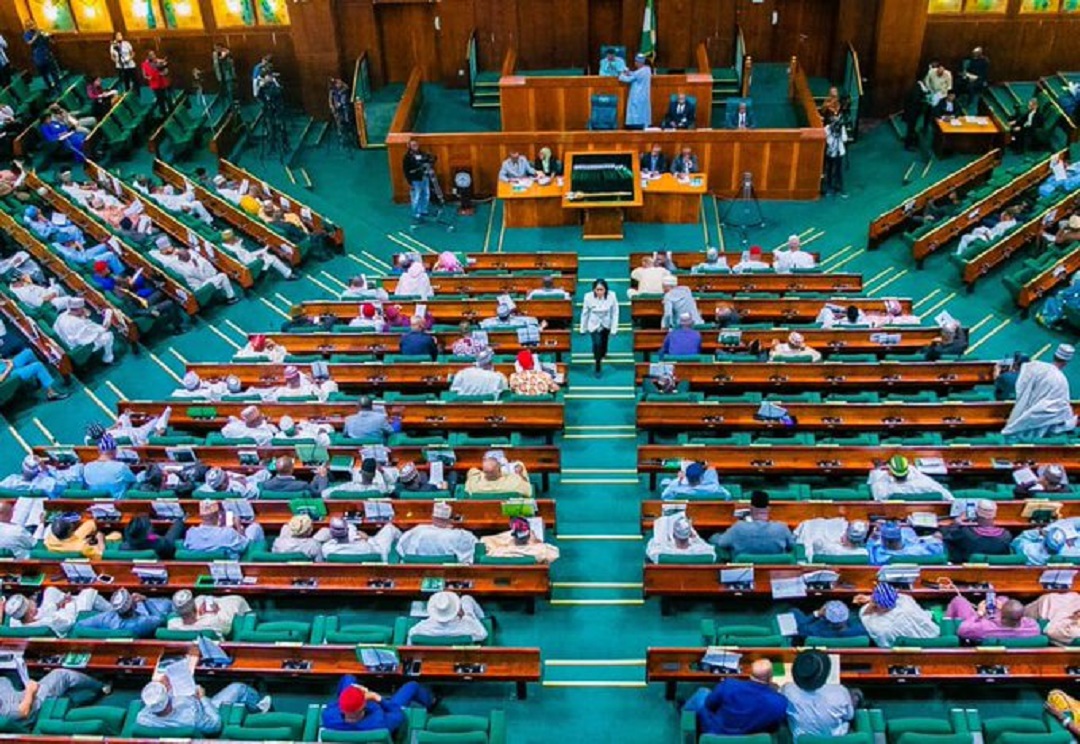
The House of Representatives has approved four crucial tax reform bills during its session on Thursday in Abuja. 

The bills, which are now awaiting Senate concurrence, include the Nigerian Tax Bill, the Tax Administration Bill, the Revenue Tax Board Bill, and the Nigerian Revenue Service Establishment Bill.

James Abiodun Faleke, Chairman of the House Committee on Finance, highlighted the thorough process that led to the bills’ adoption. Over 80 key stakeholders participated in public hearings, and an eight-day retreat was held to debate the clauses. 

Faleke expressed confidence that the tax reforms would result in widely accepted laws and thanked lawmakers and House leadership for their support.

“We cannot continue using outdated tax laws that no longer meet our business, survival, and revenue needs,” Faleke emphasized, referring to the existing tax laws, some of which date back to 1959.

Deputy Committee Chairman Saidu Abdullahi praised Speaker Tajudeen Abbas for fostering consensus among stakeholders and ensuring that input from all geopolitical zones was considered. 

He added that the recommendations reflect the contributions of various groups and that the final version resulted from extensive consultation.

Ikeagwuonu Ugochinyere, an opposition member, also lauded the reform process, highlighting its transparency and the adjustments made to reflect public interests better. He assured the reforms would expand the tax base, enhance revenue collection, and protect small businesses.

Benson Babajimi, a lawmaker from Lagos, noted that all concerns from various stakeholders, including issues like inheritance tax and VAT, were carefully addressed during the legislative process.

With the House’s approval now secured, the tax reform bills await the Senate’s concurrence.

Kano govt settles eight months’ salary arrears for 2,369 street sweepers

By Uzair Adam

The Kano State Government has cleared eight months’ salary arrears for 2,369 street sweepers, reaffirming its commitment to improving workers’ welfare and environmental sanitation.

The official disbursement took place on Wednesday at the Coronation Hall, Government House, where Governor Abba Kabir Yusuf, represented by the Commissioner for Environment and Climate Change, Dr. Dahir M. Hashim, handed out ATM cards loaded with the payments.

Dr. Hashim explained that the government had earlier disbursed one month’s salary to ease the workers’ financial burden while working on a sustainable payment system.

“Today, all outstanding payments have been settled, and moving forward, salaries will be paid promptly every month, In Sha Allah,” he assured.

He urged the sweepers to remain dedicated to their duties and continue supporting the administration’s efforts to maintain a cleaner and healthier Kano.

He also highlighted the crucial role of street sweepers in the government’s urban renewal initiatives.

Dr. Hashim noted that upon assuming office, the administration inherited a backlog of six months’ unpaid salaries for the workers, which later increased to eight months.

He reiterated that the settlement of these arrears aligns with the government’s broader efforts to modernize the city and enhance public infrastructure.

Plans are underway to introduce mechanized street cleaning, with daily road washing expected to commence within the next three to four months.

Additionally, the government has screened the workers and opened bank accounts for them, ensuring future payments are made simultaneously with other government employees.

He further revealed that Governor Yusuf had directed the renewal of uniforms and the provision of protective gear, including face masks and shoes, for the sweepers.

Some beneficiaries expressed gratitude for the payment, with Dayyaba Abubakar from Kumbotso Local Government thanking the governor for his support, while Salisu Sani described the salary settlement as a great relief.

‘I left APC with Buhari’s consent’ – El-Rufai reveals

By Uzair Adam

Former Kaduna State Governor, Nasiru El-Rufai, has revealed that his decision to leave the ruling All Progressives Congress (APC) was made with the knowledge and approval of former President Muhammadu Buhari.

In a statement posted on his verified Facebook page on Monday, El-Rufai confirmed his defection to the Social Democratic Party (SDP).

Speaking in an interview with BBC Hausa on Wednesday, he disclosed that he sought Buhari’s counsel before making the move, emphasizing that he often consulted the former president on political matters.

“There are certain people I consult before making major decisions, and I always follow their advice. Former President Muhammadu Buhari is one of them. I met with him on a Friday, informed him about my decision to leave the APC, and asked for his prayers and blessings, which he gave,” El-Rufai said.

He also recalled instances during his tenure as Kaduna governor when he sought Buhari’s input on key appointments, including commissioner nominations.

“Before appointing my commissioners, I presented the list to Buhari for review, to check if any of them had ever insulted him. “He laughed, thanked me, and told me to proceed with my appointments,” he added.

President Tinubu appoints new ambassadors after 18-month diplomatic hiatus

By Hadiza Abdulkadir

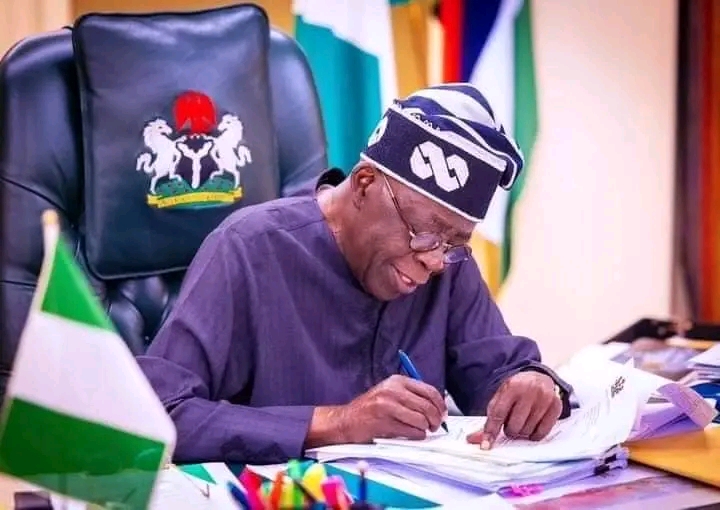
President Bola Ahmed Tinubu has approved the appointment of new ambassadors to represent Nigeria in its foreign missions. This ends an 18-month diplomatic vacuum that began after all ambassadors were recalled in September 2023.

The recall, which impacted both career and non-career ambassadors, was due to funding constraints and a wider restructuring of Nigeria’s diplomatic engagements. However, sources within the presidency confirm that the financial issues have now been resolved, clearing the path for new appointments.

The selection process for the new envoys is already underway, with security agencies conducting background checks on nominees before their formal announcement and confirmation. The move is expected to restore Nigeria’s diplomatic presence globally and strengthen bilateral relations with key partners.

Nigeria currently operates over 100 embassies and high commissions worldwide, and the prolonged absence of ambassadors has raised concerns about the country’s foreign policy direction. Despite these challenges, President Tinubu’s administration has prioritized economic recovery, allocating N302.4 billion ($198.3 million) in the 2025 budget for Nigeria’s foreign missions.

During meetings with foreign leaders, President Tinubu assured that vacancies would be filled soon, recognizing the need for a strong diplomatic corps to advance Nigeria’s global interests. The new appointments are expected to refresh Nigeria’s foreign policy and enhance its influence internationally.

Observers note that the new ambassadors will foster economic partnerships, attract foreign investments, and promoteNigeria’s image abroad. With their deployment approaching, stakeholders are watching how the diplomatic team navigates the global landscape to advance Nigeria’s interests.

From despair to hope: How Kashifu Inuwa transformed my life

By Umar Jahun

As a young graduate emerging from university, I found myself adrift in a sea of uncertainty. Despite my academic achievements, the harsh realities of the job market left me feeling despondent and questioning my future. 

I grew up in a community where there is a glaring gap between the older and younger generations. Despite having somany individuals in positions of power and influence, they lack the willingness to mentor and guide the younger ones. This absence of mentorship has had far-reaching consequences, contributing to the high rate of unemployment among young people in our community.

Although I thought that the presence of numerous individuals from our town in high-ranking positions, both within and outside the state, should theoretically provide us with a wealth of opportunities, the reality is that many of these individuals seem disconnected, leaving us to navigate the challenges of career development and personal growth on our own.

Many young people in our community are struggling to find jobs, despite possessing the necessary qualifications and skills. This leaves them stuck in a cycle of unemployment, uncertainty, and self-doubt.

It was during this tumultuous period that I crossed paths with Kashifu Inuwa Abdullahi, a man whose intervention altered the course of my life. My encounter with him was serendipitous yet transformative.

Kashifu Inuwa Abdullahi, a prominent Nigerian technocrat, currently holds the position of Director-General of the National Information Technology Development Agency (NITDA). With over twenty years of experience in both the public and private sectors, Kashifu has played a key role in advancing Nigeria’s digital transformation.

But then, when DG Kashif Inuwa entered my life, everything changed. His kindness, guidance, and unwavering support not only secured me a job in one of Nigeria’s top agencies, but also instilled in me a sense of purpose and direction.

DG Kashifu’s impact on my life cannot be overstated. At a time when I had lost hope, he saw potential in me that I didn’t even recognize in myself. He took me under his wing and connected me with opportunities I wouldn’t have had access to otherwise. His influence helped shape me into the person I am today.

The job he secured for me was more than just a source of financial stability; it was a springboard for personal growth and development, exposing me to new challenges, skills, and experiences that have been invaluable in shaping my career. 

What I admire most about Kashif Inuwa is his selflessness and generosity. He didn’t have to help me, but he chose to. He invested time, effort, and resources in me. This kindness has left an indelible mark on my life. He is more than just a benefactor; he is a role model, a mentor, and a constant source of inspiration.

Reflecting on DG Kashifu’s transformative impact on my life, I am filled with gratitude and a deep sense of responsibility. I owe him a debt of gratitude that I can never fully repay.

His influence on me has been nothing short of profound. He gave me purpose, direction, and a chance to succeed. I will forever be grateful for his kindness, guidance, and support. Kashifu is a shining example of the impact one person can have on another’s life.

His selflessness, kindness, and dedication have inspired countless people. Unfortunately, individuals like him are rare, and I often think, “I truly wish we had more like him, or someone like him, in our midsts.”

This is not just a fleeting thought; it is a heartfelt desire that stems from the realization that exceptional individuals have the power to transform communities. When someone with a strong sense of social responsibility and a willingness to serve others is present, it can have a ripple effect, inspiring others to follow in their footsteps.

May Allah’s blessings be upon Kashifu Inuwa. I extend my heartfelt wishes for his continued success, growth, and prosperity.

Umar writes from Jigawa State via daddyjahun@gmail.com.

Embracing life’s fluidity: Finding strength in change

By Abubakar Aminu Ibrahim

Life is so fluid. What once seemed overwhelming, embarrassing, or deeply significant often appears trivial with time. As we move forward in life, we begin to see past experiences in a different light, realising that our worries were not as permanent as they seemed.

As individuals, we evolve our understanding, emotional strength, and ability to handle challenges. Situations that once troubled us may later become sources of amusement because we have outgrown them. This shift in perception is a sign of personal development and an indication that hardships do not last forever.

Time itself plays a crucial role in shaping how we interpret past experiences. Pain and hardship, no matter how intense, tend to fade as new experiences replace them. Reflecting on past struggles with a sense of humour proves that time has a healing effect and that difficult moments are only temporary.

When we understand this concept, we can approach life with more ease and patience. If we can recognise that today’s problems may seem small in the future, we will be less burdened by stress and anxiety. Instead of worrying excessively, we can develop a lighter approach to life, embracing challenges with confidence and optimism.

I recently gave a talk (a book review) about worry and anxiety. One powerful insight I gained from the session is that challenges are not only inevitable but also an integral part of life. A great way to avoid devastation from calamities is to be emotionally prepared for them. 

Imagine two people walking toward a corner—one is aware that there is a dog ahead, while the other is not. When the dog suddenly barks, the informed person remains calm, anticipating the encounter, while the uninformed one may panic and even stumble into another danger.

This is how mental preparedness can help us navigate life’s uncertainties more easily. By acknowledging that challenges are a natural part of our journey, we diminish their power to destabilize us, allowing us to confront difficulties with confidence, adaptability, and flexibility.

Take life easy; the way you laugh at yesterday today is how you’ll laugh at today tomorrow!

Abubakar wrote from Katsina via abubakarmuhammadaminu21@gmail.com.